-
-
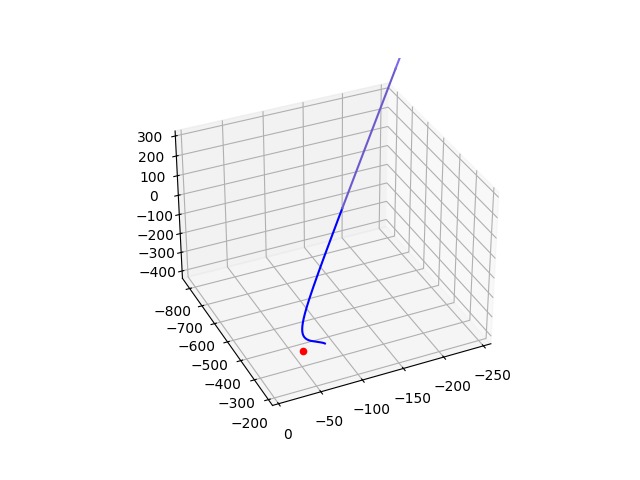
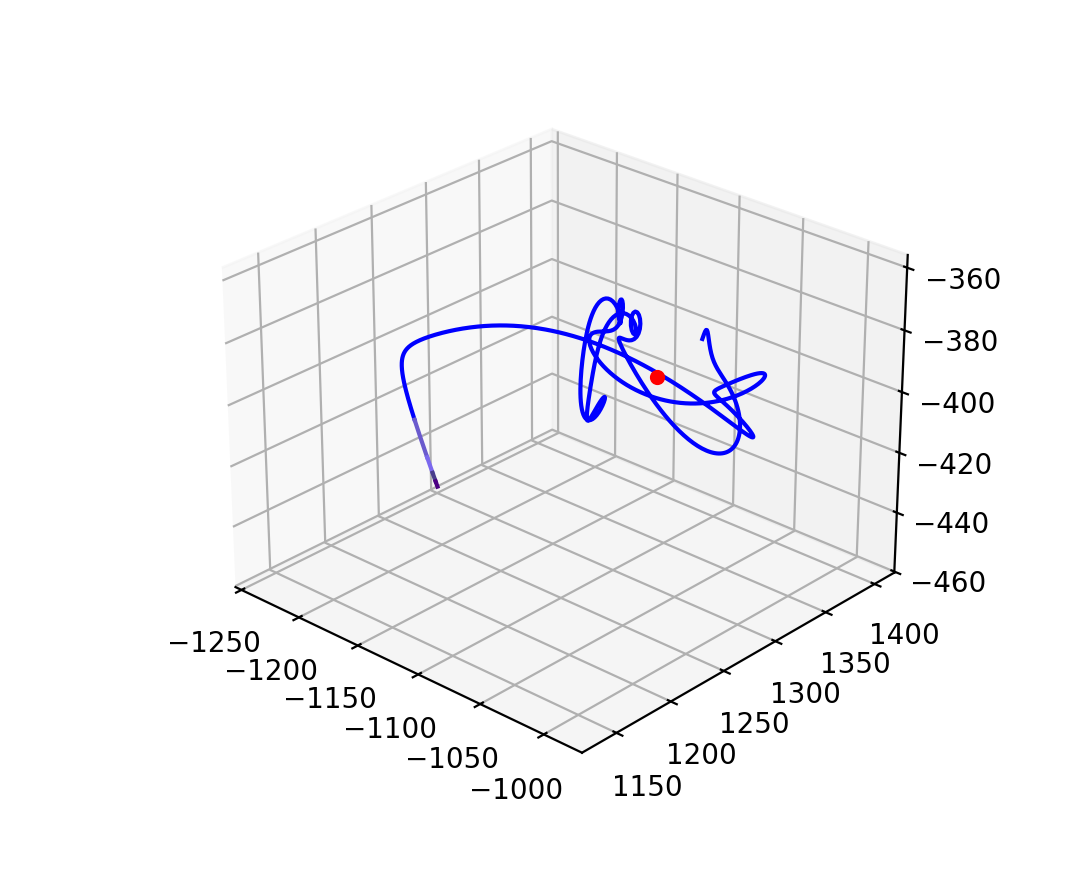
Deflection of a particle into space
-
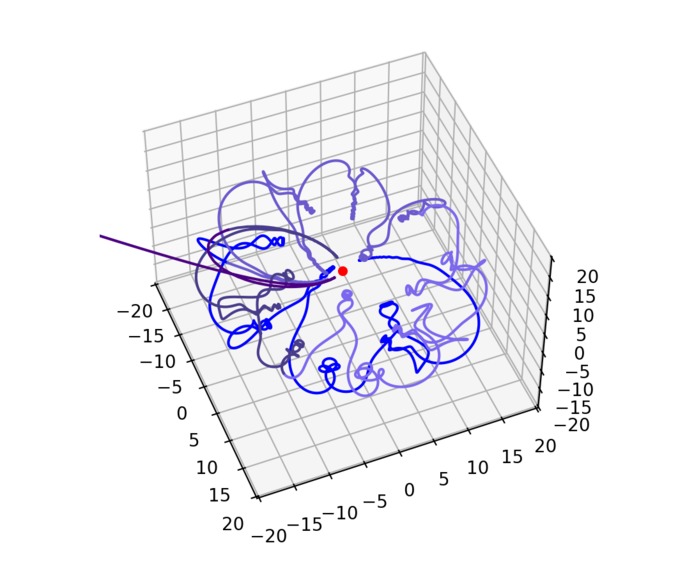
Particle exhibiting Van Allen ring effect
-
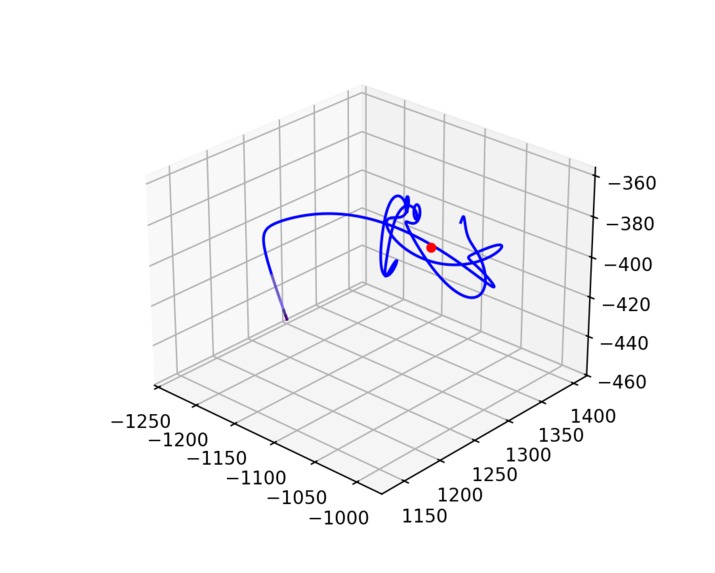
Velocity of a particle in earth's magnetosphere
-
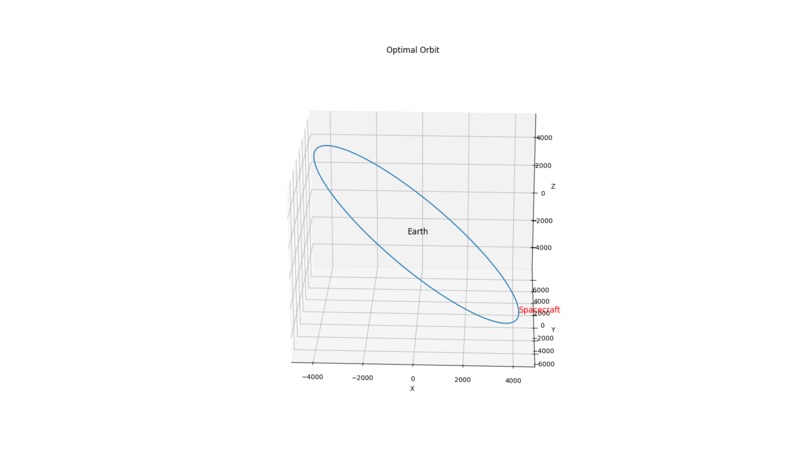
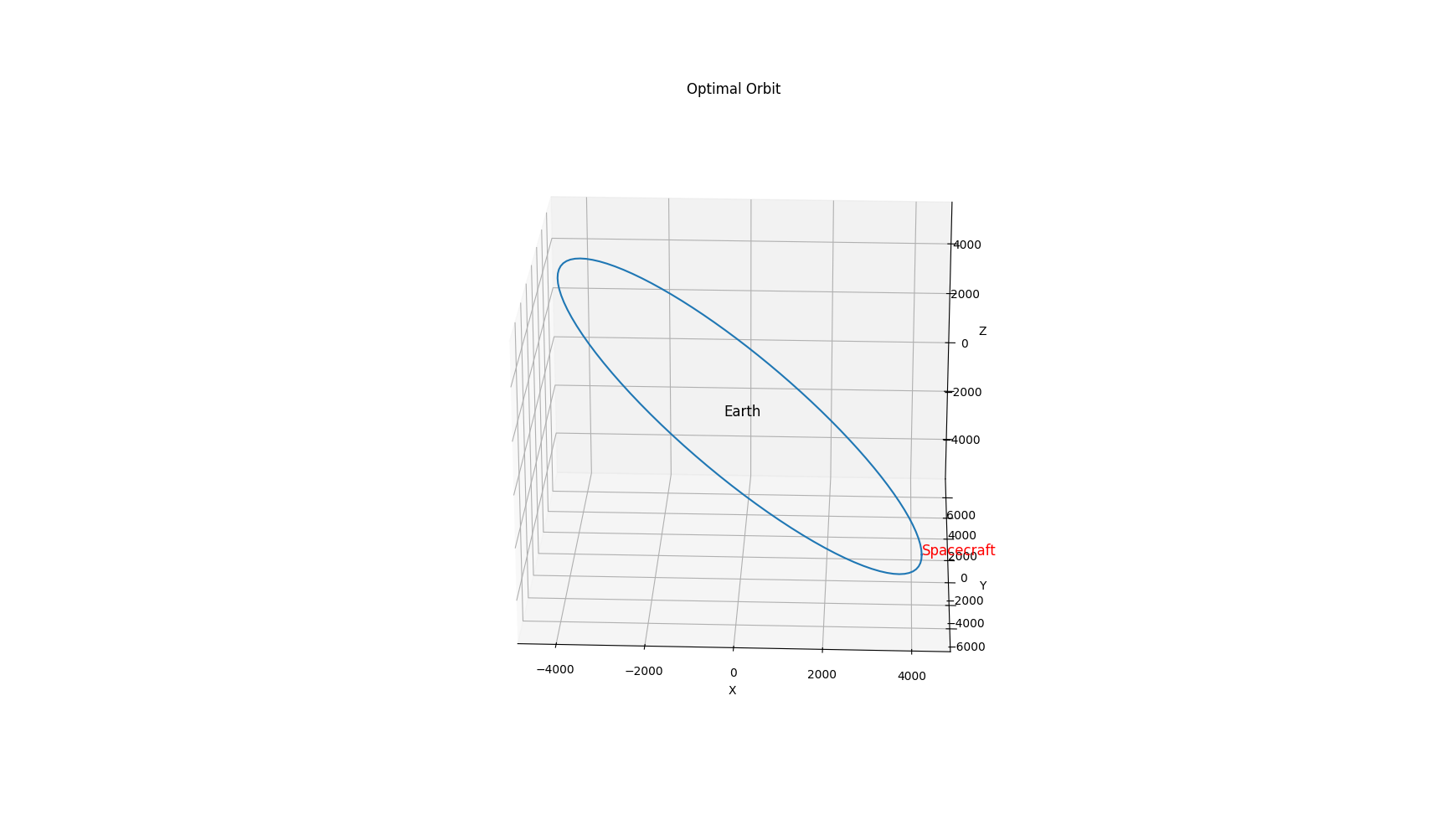
Optimal Satellite Orbit with minimum radiation exposure


Inspiration
Our initial inspiration was from a wide range of topics and field
We initially attempted to make a model that mapped the radiation over the moon’s surface. Having found a database from NASA’s Lunar Reconnaissance Orbiter, we wanted to make a heatmap of radiation over time on the moon’s surface. This would tell us where areas of lower radiation concentration exist giving us information on exposure risks on the lunar surface.
We wanted to model different sources of possible radiation and compare it to NASA’s measured amounts of radiation on the moon's surface. If we could model a number similar to the measured amounts by NASA rovers, we could find a list of factors that need to be considered for space exploration.
Upon further research of this topic, we realized that this project was both infeasible and not as impactful as we thought it would be.
Firstly, the data from the lunar rover was extremely difficult to decode, with much of the data being outdated, missing, or in obscure formats. Next was the challenge of modeling solar radiation, the main source for radiation for the moon. This was made difficult due to the earth’s magnetosphere, which deflected solar radiation and solar winds to a different degree depending on the position of the Earth and moon.
As a result, we decided to instead shift our focus to the direct modeling of solar particles through earth’s atmosphere. We were particularly inspired upon learning of Van Allen belts, which are areas where solar wind particles become trapped due to the earth’s magnetic field.
What it does
Our project simulates the path of solar wind particles through Earth’s magnetic field, with the goal of describing particle movement from different entry angles and the position of Van Allen belts, areas in which particles become trapped due to the magnetic field. Additionally, we use information from Earth’s magnetosphere and particle movements to find optimal satellite trajectories to reduce damage from solar wind and other forms of radiation.
How we built it
We utilized python to simulate the path of a charged particle using the Runge-Kutta method (RK4). Much of the background math and physics was a result of hours of research, where we learned about methods to describe Earth’s magnetic field, properties of solar wind, and interactions between subatomic particles and Earth’s magnetosphere. We used MatPlotLib to construct visualizations of particle paths and velocity.
We also found the optimal elliptical orbit for a spacecraft given bounds on its semimajor axis, eccentricity, and inclination angle. We did this by then traversing through all elliptical orbits within these bounds and for each orbit, calculating the total radiation exposure by adding up the solar irradiance at each point on the orbit (using the formula for solar irradiance at an arbitrary point in space).
Challenges we ran into
One of the biggest challenges we ran into was modeling how the Earth’s magnetosphere is affected by solar winds. Due to the inconsistent nature of solar winds, this is especially difficult to measure. Accurate models also need to consider the rotation of the sun and advanced topics in magnetism such as magnetic reconnection, which we weren’t able to do in a short hackathon timeframe.
One specific issue that caught us off guard was a misreading of the initial position graphs. We struggled for a long time because our velocity graphs (which looked amazing and had circular chaos representative of the Van Allen ring) and our position graph (which appeared to be one straight line) did not match. We spent hours trying to resolve this issue, creating a second calculation method to find the position which gave the same result. Ultimately we found that the issue lay in the scaling of our matplotlib graph. After the particle was ejected from the earth’s magnetosphere it continued to move in a straight line which was much larger than the initial circular movement around earth. Ultimately we fixed this by setting the plot to be bounded by -100 to 100 earth radii.
Accomplishments that we're proud of
Our proudest accomplishment was successfully modeling alpha particle behavior in a dipole environment. Magnetic field interactions are especially difficult to visualize—the concept of force perpendicular to velocity isn’t observed in everyday life nor taught until high school. Being able to visualize a particle outline Van Allen belts around earth was very satisfying and definitely a highlight of this project.
What we learned
Through this 2-day hackathon, we learned a lot about astrophysics, magnetism, and working together as a team. We found direct applications of high school physics (Lorentz Force), calculus (Deriving B-Field), vector math, and computer science (Runge-Kutta), which was very cool. We also found ways to visualize our simulated data using 3d plotting functions in matplotlib giving us particle movement and animated sequences.
What's next for Radiation Tracker and Orbit Optimizer
Our magnetic field model utilizes the dipole model of the Earth's magnetic field which is a first-order approximation. The actual magnetic field is much more complicated because it has to take account of bow shock (a squishing of Earth’s magnetic field facing the sun and stretching on the dark side of Earth) caused by solar wind. A possible consideration is to utilize the Tsyganenko magnetic field model. We attempted to utilize a database for this model however the pull requests were far outdated and the provided source code was in FORTRAN. We can also optimize our code further which would allow us to run multiple simulations at incoming angles from the sun giving a more accurate model for solar wind.

Log in or sign up for Devpost to join the conversation.