-
-
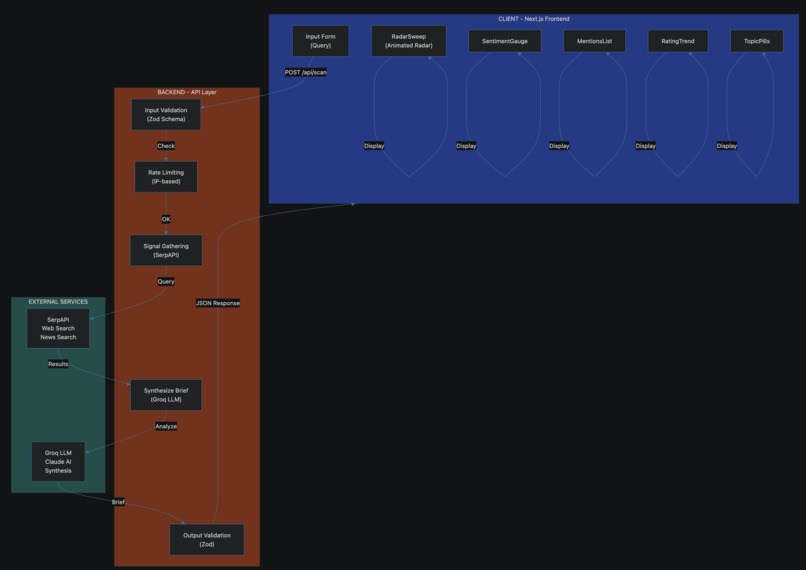
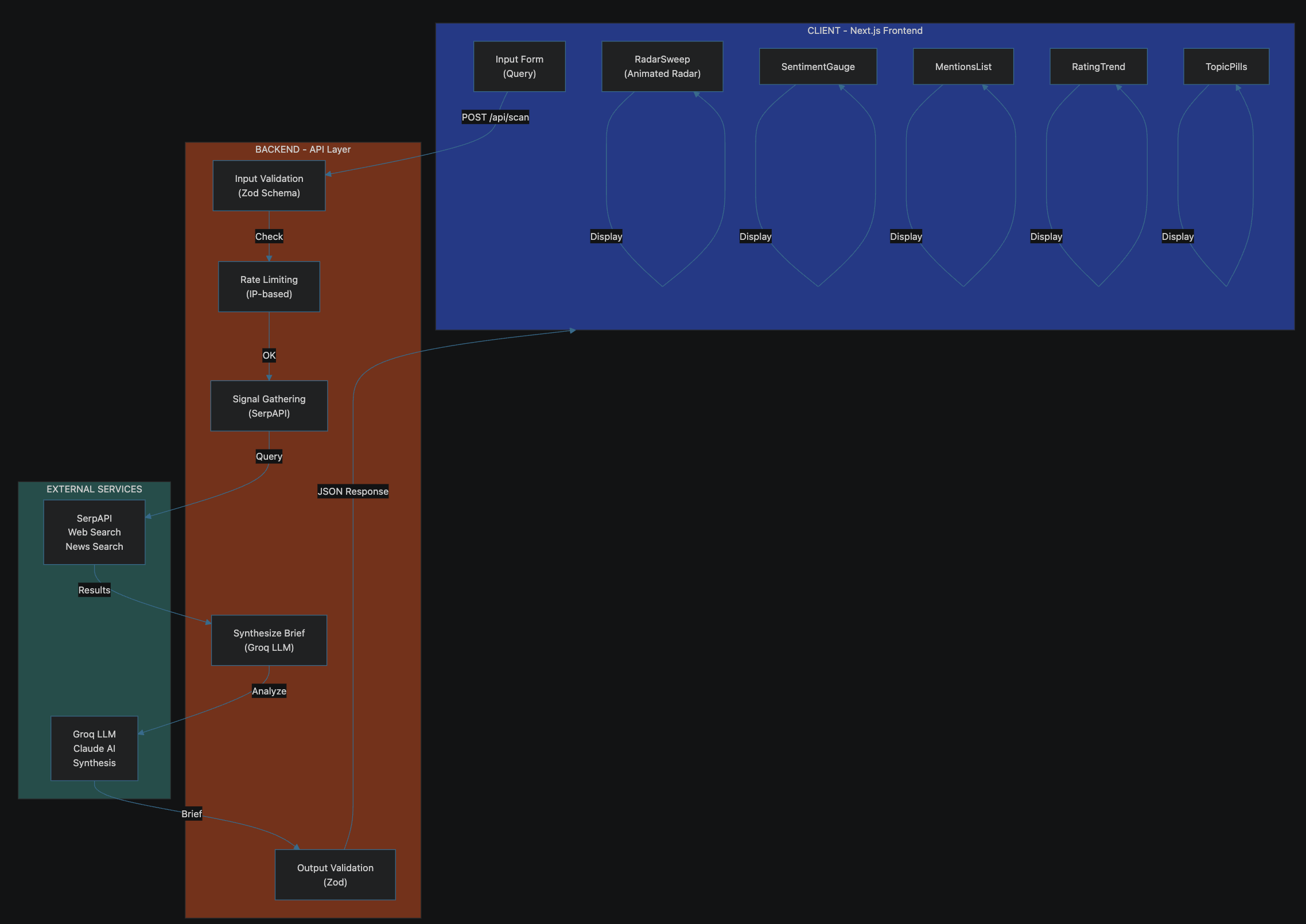
Software Architecture
-
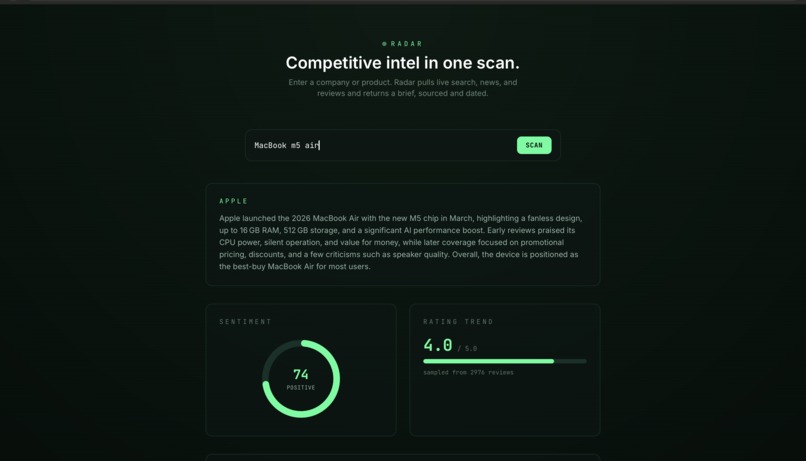
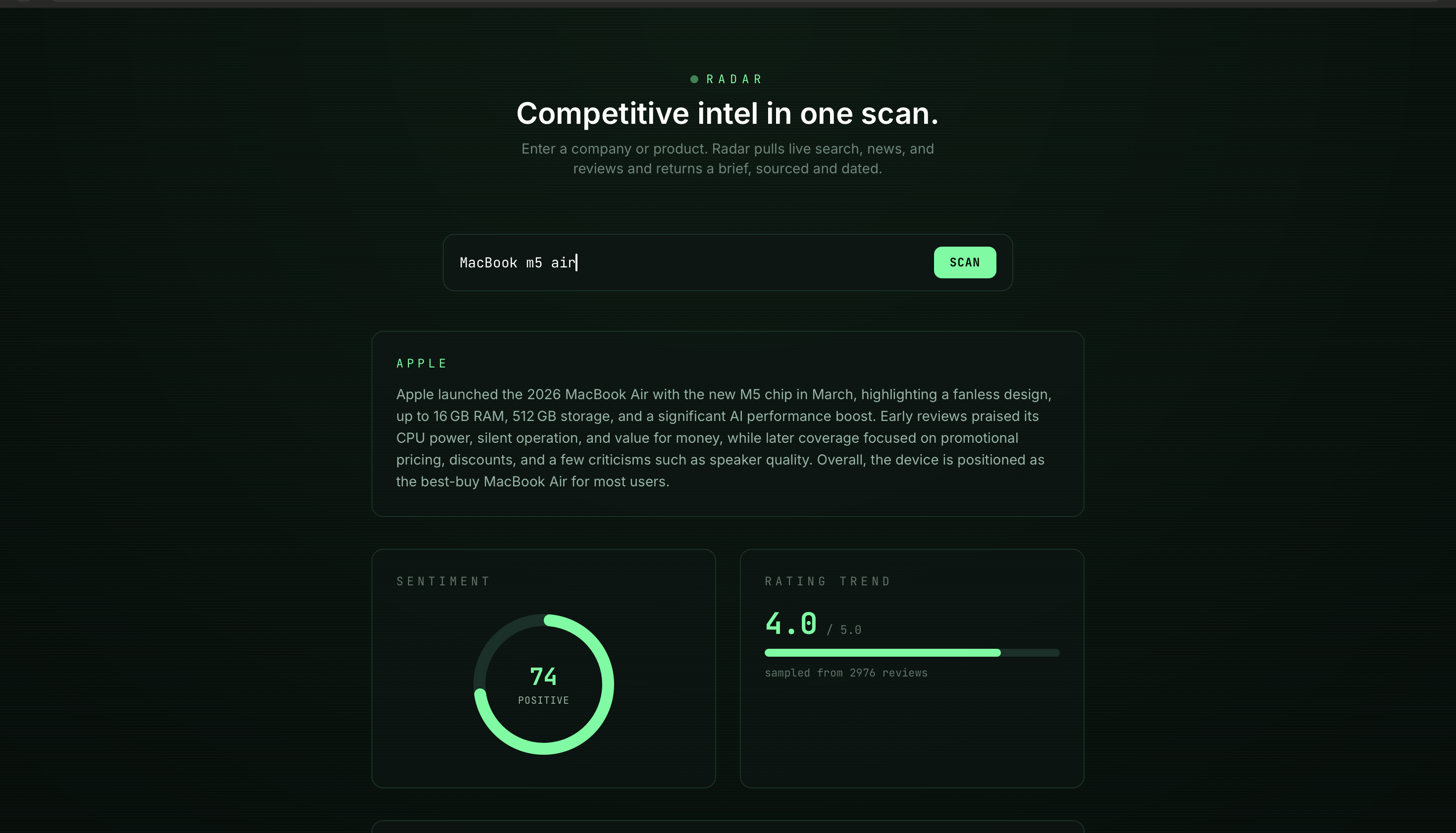
Positive Search Report
-
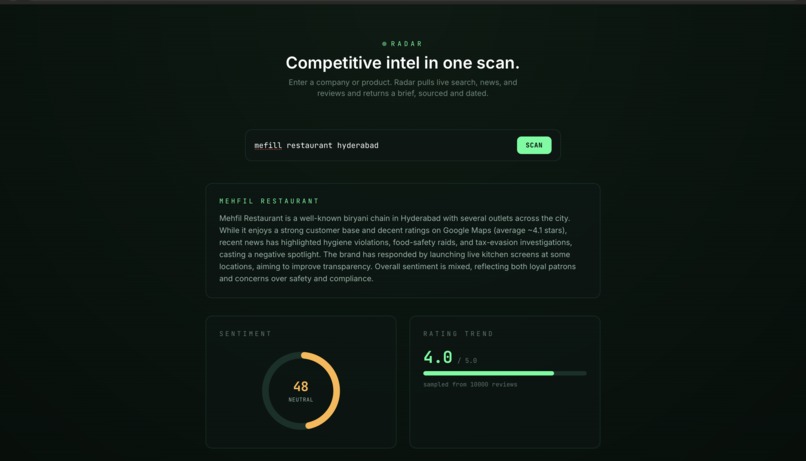
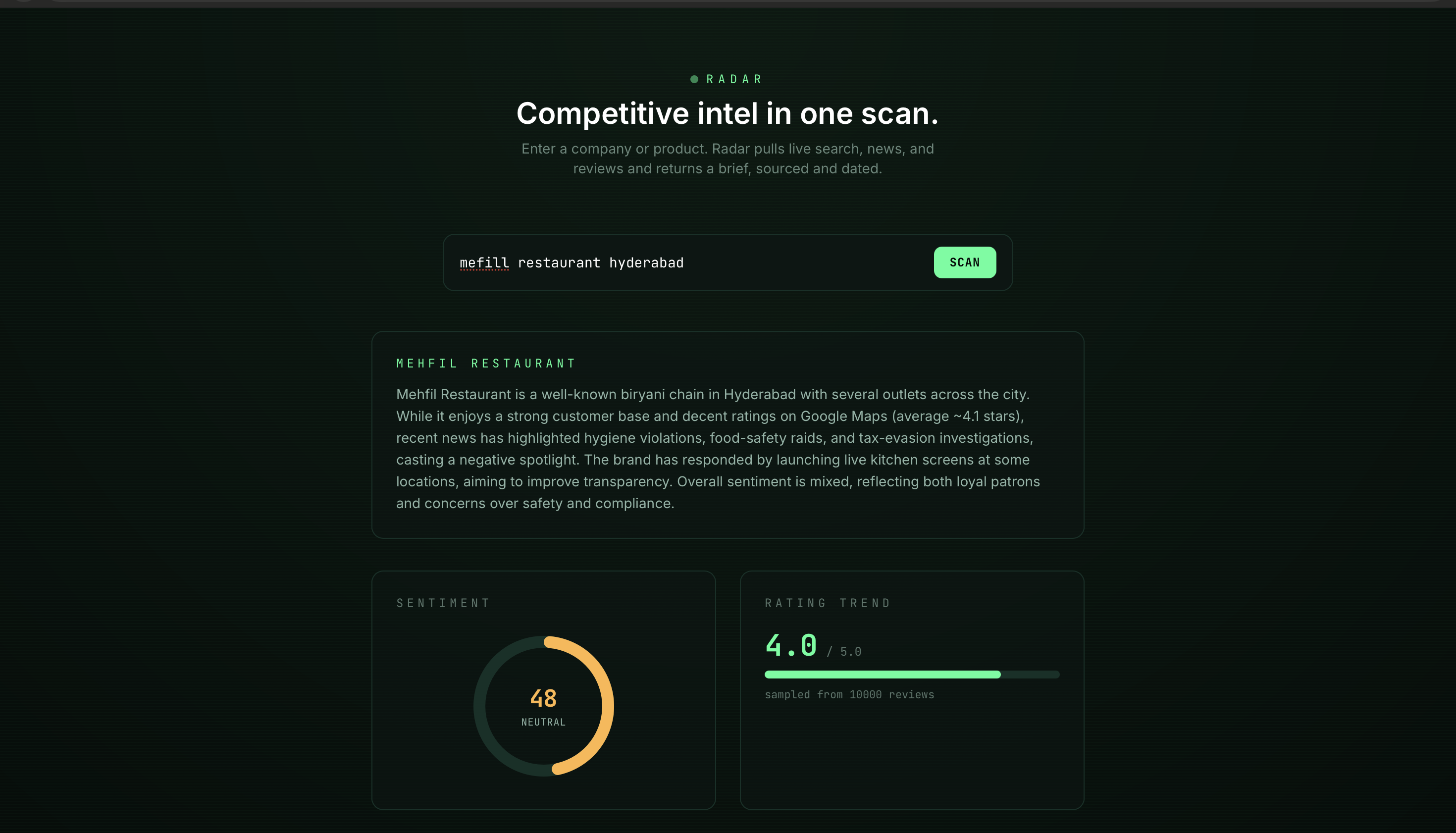
Negative Search Report
Inspiration
I bought clothes from a relatively new online store. The ratings, reviews, and product photos looked great, so I placed an order. What arrived was completely different from what was advertised. Later, I searched Google and Reddit and found many people reporting the same issue. The information existed, but it was scattered across different websites. That experience inspired me to build Radar.
What it does
Radar helps users make better purchase decisions. Enter a product, brand, or company name, and Radar scans Google Search, News, and Maps, then generates a concise report with sentiment, recent mentions, ratings, and key discussion topics.
How we built it
We built Radar using Next.js, SerpApi, Groq, Framer Motion, Recharts, and Zod. SerpApi fetches live information, Groq analyzes it, Zod validates the output, and the frontend presents the results through an interactive radar-style interface.
Challenges we ran into
The biggest challenge was consistency. Generic LLMs have no live data and no repeatable structure. The same prompt can produce different answers. We solved this by using a fixed retrieval pipeline and structured outputs.
Accomplishments that we're proud of
We built a complete product that combines live web data and AI analysis into a single report. Users no longer need to search multiple websites to understand a product or brand.
In testing with 6 real users, all found value in the product, and several expressed willingness to pay for it because it significantly reduced their research time and effort.
What we learned
We learned that information is not the problem. Information overload is. We also learned that reliable AI products need validation and structure, not just powerful models.
What's next for Radar
We plan to add price tracking, sentiment monitoring over time, source credibility scoring, and watchlists for products and brands. Radar will evolve from a search tool into a continuous intelligence platform.
Built With
- api
- groq
- next.js
- node.js
- react
- recharts
- router
- serpapi
- typescript
- zod


Log in or sign up for Devpost to join the conversation.