-
-
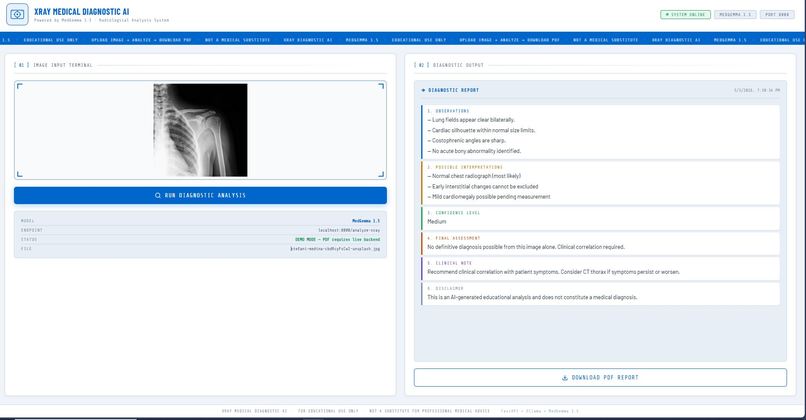
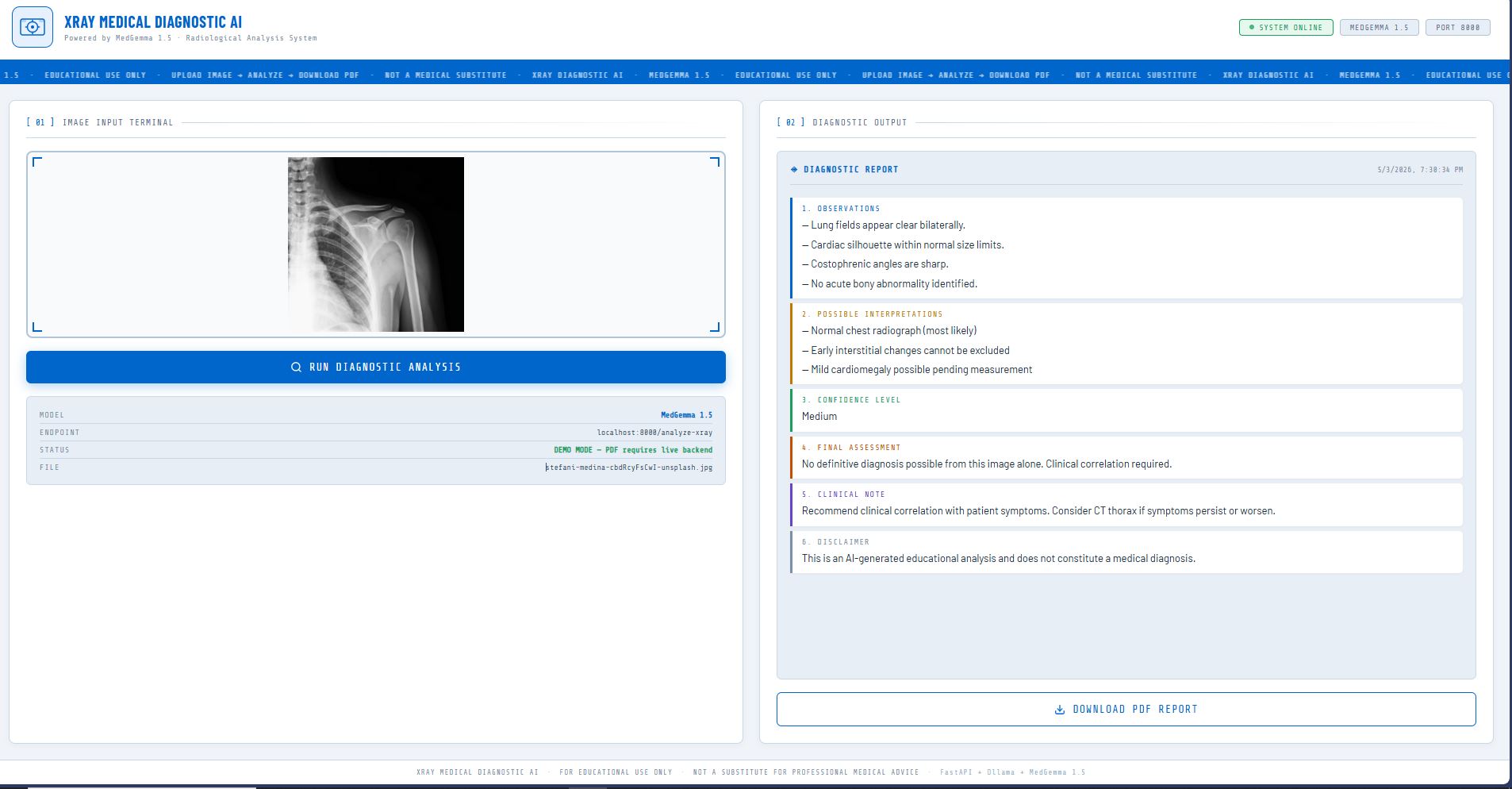
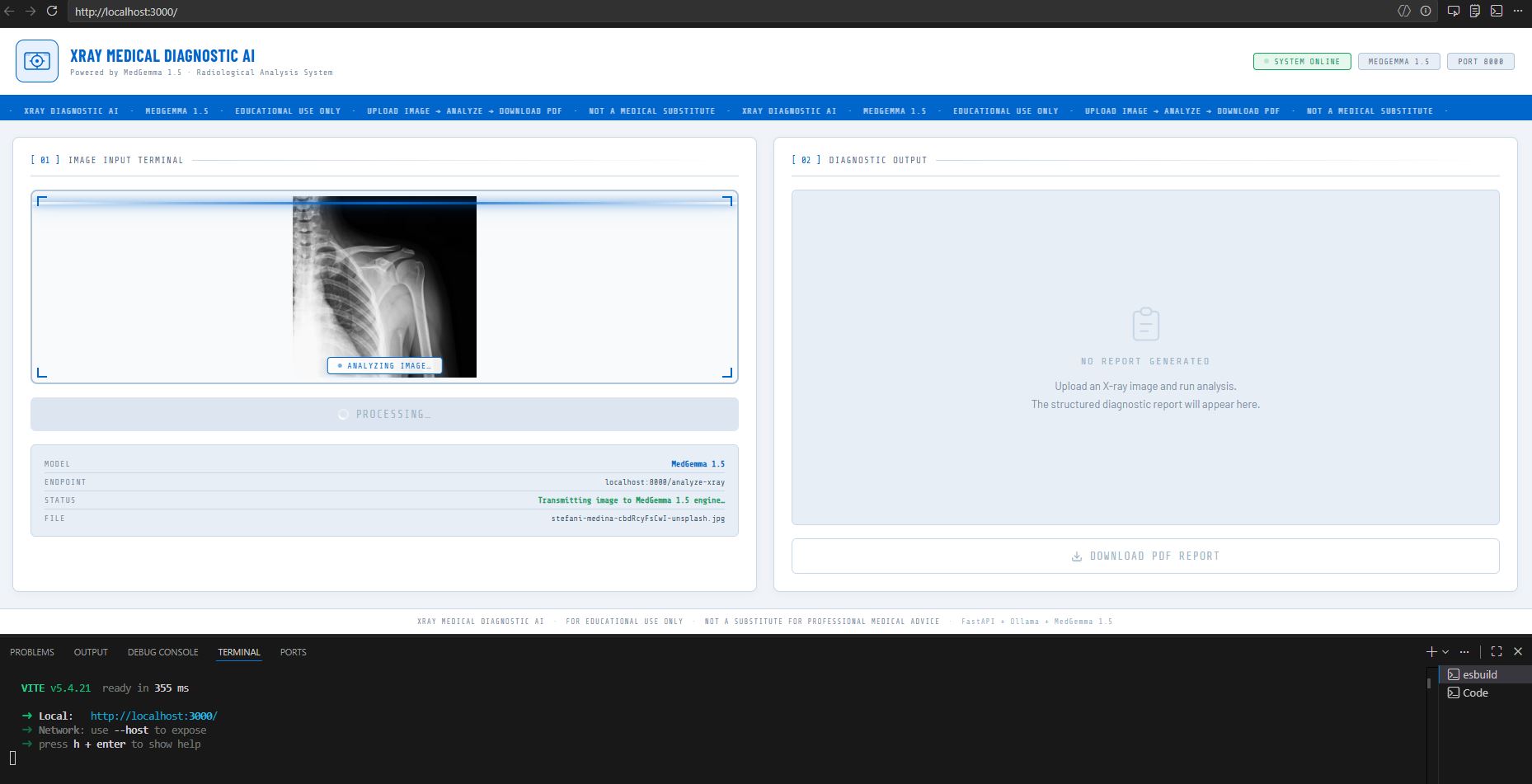
frontend
-
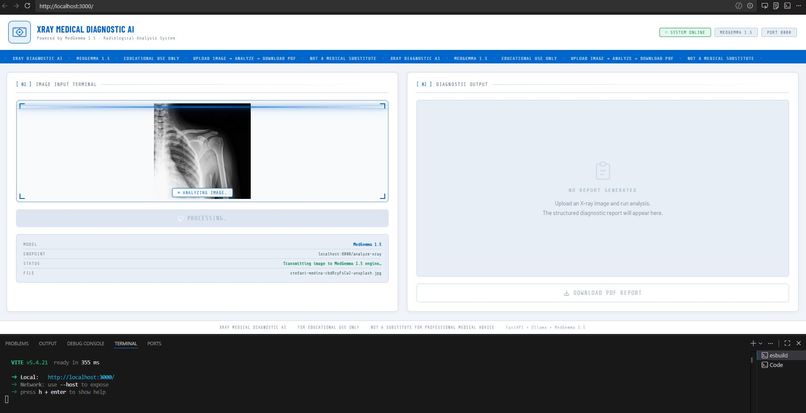
frontend
-
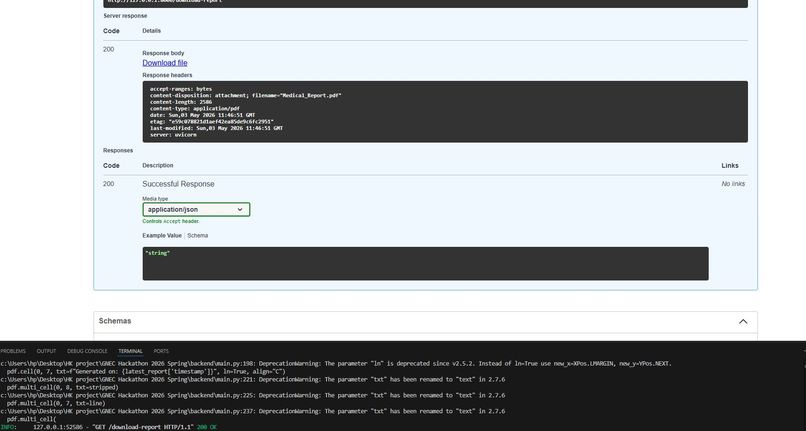
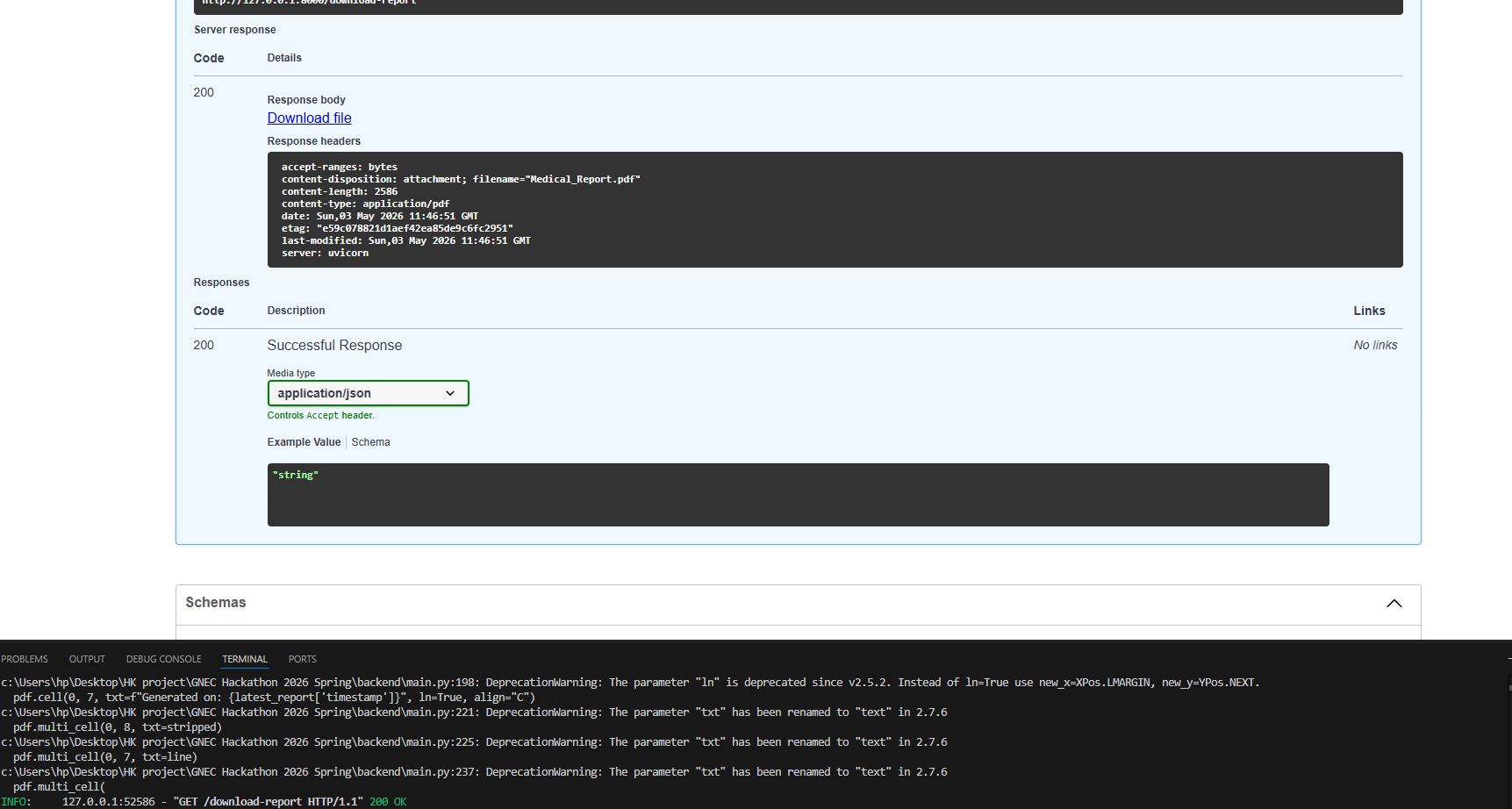
backend
-
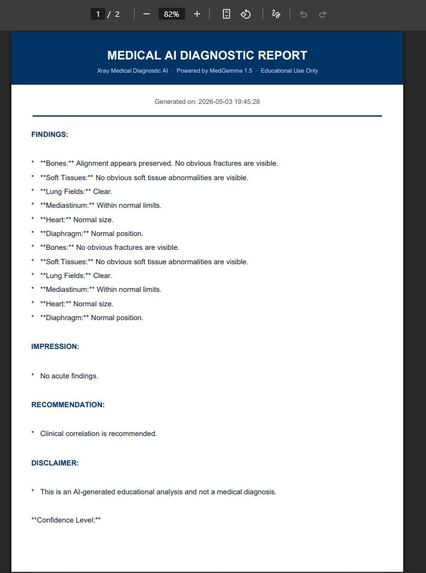
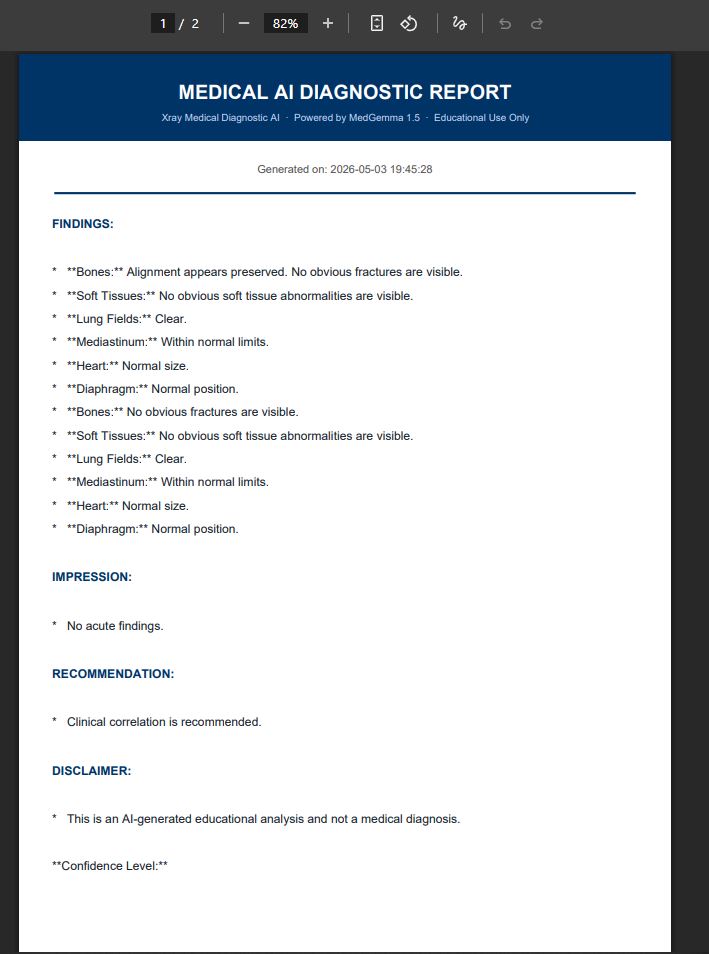
MEDICAL AI DIAGNOSTIC REPORT
1- Inspiration
RadAI was inspired by the growing role of AI in healthcare and the difficulty students face when learning X-ray interpretation. I wanted to build a system that makes medical imaging easier to understand and more accessible, especially for beginners.
2- What it does
RadAI is an AI-powered learning system that:
Accepts an uploaded X-ray image Uses AI to analyze the image Generates a structured educational explanation Produces a downloadable PDF report
It focuses on learning and explanation, not medical diagnosis.
3- How we built it Backend: FastAPI AI Engine: Ollama + MedGemma 1.5 Frontend: HTML, CSS, JavaScript PDF Generation: FPDF
Flow: User → Upload Image → FastAPI → AI Model → Structured Output → PDF Report
4- Challenges we ran into AI model latency causing timeouts (504 errors) Handling large X-ray images efficiently Integrating vision AI with backend smoothly Ensuring structured and reliable AI output Managing synchronous vs asynchronous API calls
5- Accomplishments that we're proud of Built a fully working AI + backend system Successfully integrated local AI (no cloud) Generated structured medical-style reports Designed system for educational impact, not just output
6- What we learned How to integrate AI models into backend systems Importance of system design for long-running tasks Handling API errors and debugging real-world issues Structuring AI prompts for better results Building scalable backend architecture
7- What's next for RadAI — AI X-ray Diagnostic System Improve model accuracy with real datasets Add interactive AI chat for students Implement RAG with medical knowledge Highlight regions of interest in X-rays Optimize performance and reduce latency Add voice-based explanations
Built With
- css
- fastapi
- html5
- javascript
- medgemma
- ollama
- python


Log in or sign up for Devpost to join the conversation.