-
-
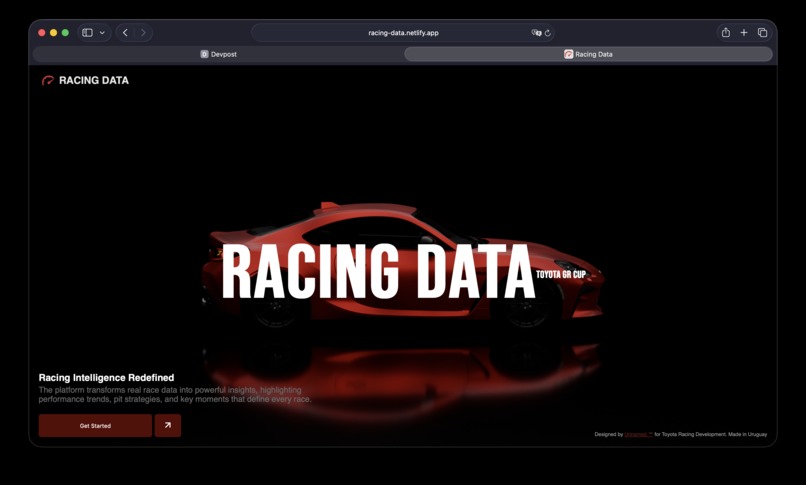
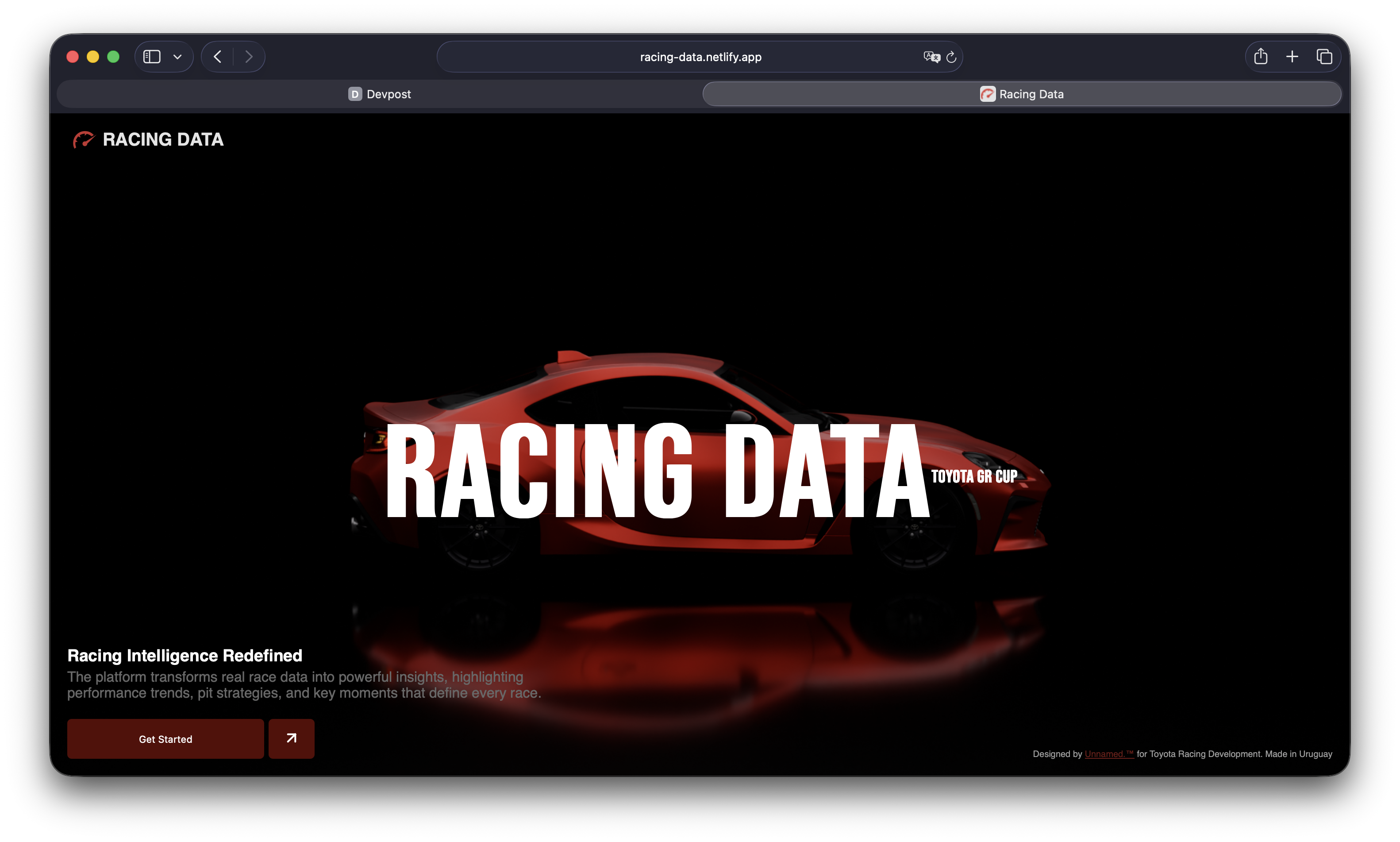
App Home Page
Inspiration
Motorsport is full of data, but most drivers never get to see it in a way they can understand. They know when a lap feels good or bad — but not why. Small mistakes, braking too early, or losing momentum in a sector are hard to detect without proper tools.
Racing Data was born from that gap. My goal was to create an intuitive, AI-powered platform capable of turning raw TRD telemetry into actionable insights that any driver can instantly understand.
What we built
Racing Data is a web platform that analyzes a driver’s performance using official TRD datasets. It transforms speed, throttle, braking, and timing data into:
- AI-generated performance score (0–100)
- AI race summary, giving a general snapshot of the driver’s race
- Position table, showing the selected driver's finishing place in context
- Telemetry visualization, compared against the race-average driver profile
- Sector analysis, comparing best sectors to sector records and analyzing average telemetry within each sector
The platform is fast, simple, and designed for drivers who want clarity — not spreadsheets.
How it works
1. Home → Race selection
The user starts on a minimal homepage. They select a race (for the MVP, two races are loaded, but the system is fully scalable to any season).
2. Driver selection
After choosing a race, the user selects a driver. Only then does the platform begin its analysis — everything is personalized.
3. Dashboard
Once a driver is selected, Racing Data generates:
- AI Performance Score: A quick indicator of overall performance.
- AI Race Summary: A general narrative describing how the race went for that driver based on their data.
- Position Table: Shows 11 key positions from the race, including the driver’s exact finishing position.
4. Telemetry View
Telemetry charts show:
- Speed
- Throttle pedal position
- Brake pressure
- And more
All telemetry is calculated relative to the race’s average driver profile, allowing direct comparison between the selected driver and the “average” performer of that race.
5. Sector Analysis
The race is divided into Sector 1, Sector 2, and Sector 3.
For each sector, the platform:
- Compares the driver’s best sector to the sector record of the event
- Computes average telemetry within the sector’s time window, helping reveal where improvements were possible
- Highlights where time was gained or lost
This gives drivers a clear understanding of how they performed, not just what their times were.
Challenges we faced
- Data complexity: TRD datasets are large, raw and not directly usable. Processing them into structured telemetry and timing required careful design.
- Performance: Visualizing telemetry without slowdowns demanded optimization and caching.
- AI integration: Generating meaningful summaries and performance scores required fine-tuning prompt engineering to avoid hallucinations.
- Scalability: Although the MVP uses two races, the backend had to be built with full season support in mind.
What we learned
- How to transform motorsport telemetry into understandable insights
- How to build a clean front-end experience on top of a powerful data pipeline
- How to merge AI-generated analysis with technical data in a safe, controlled way
- How to design with clarity and simplicity as priorities
What’s next
Racing Data can grow in many directions:
- Deeper AI recommendations
- Real-time lap comparison tools
- More advanced telemetry visualization
- Driver-to-driver comparisons
- Support for full multi-season datasets
This project is just the start — the goal is to make race analysis simple, visual, and accessible for everyone.
Built With
- imovie
- javascript
- netlify
- openai
- python
- react
- render
- vscode


Log in or sign up for Devpost to join the conversation.