-
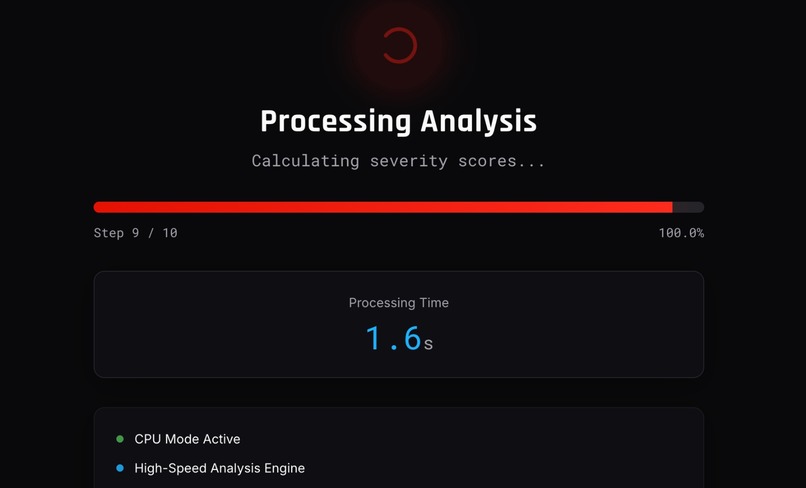
Processing analysis
-
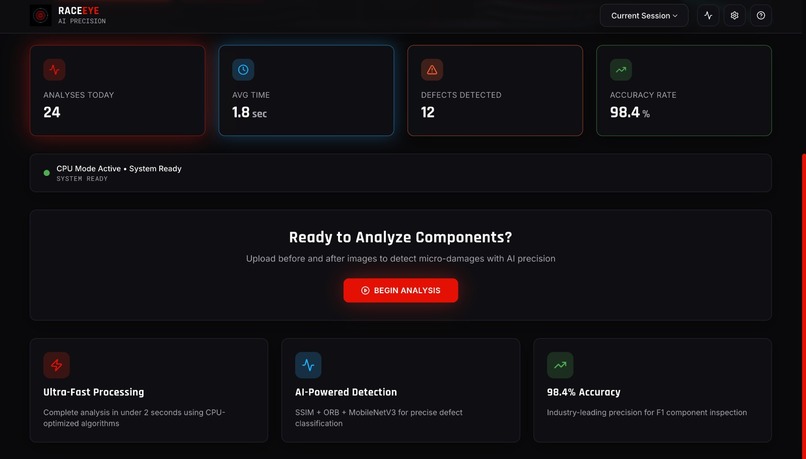
-
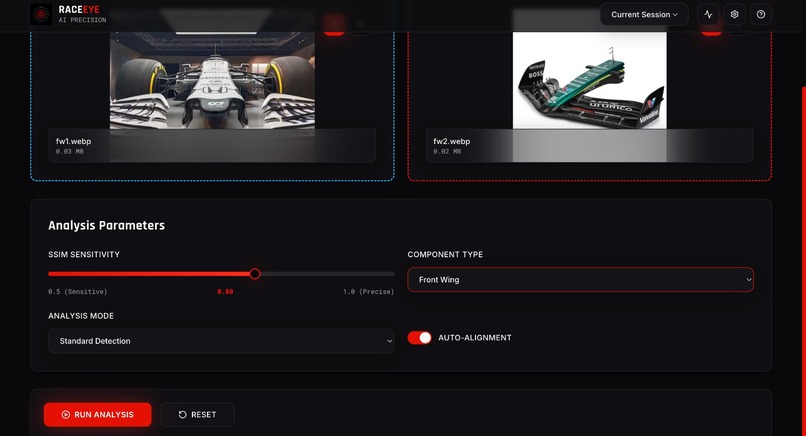
analysis parameters
-
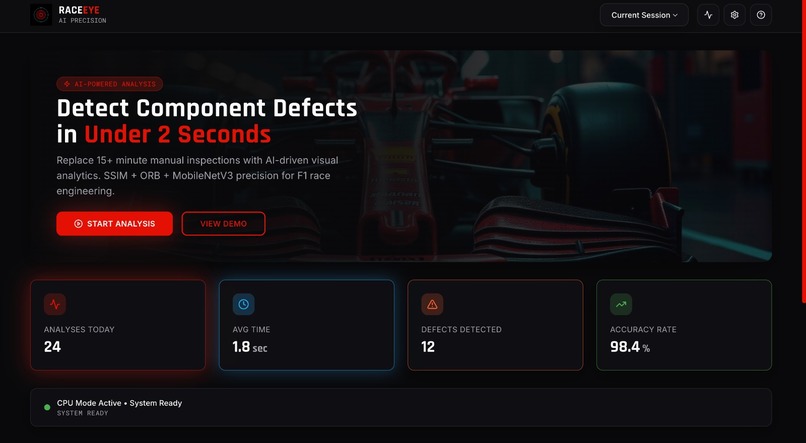
Home component
-
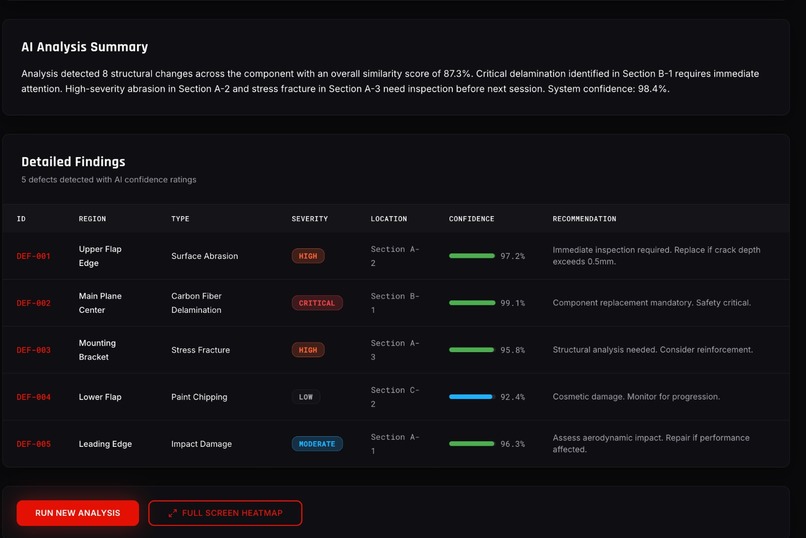
AI analysis summary
-
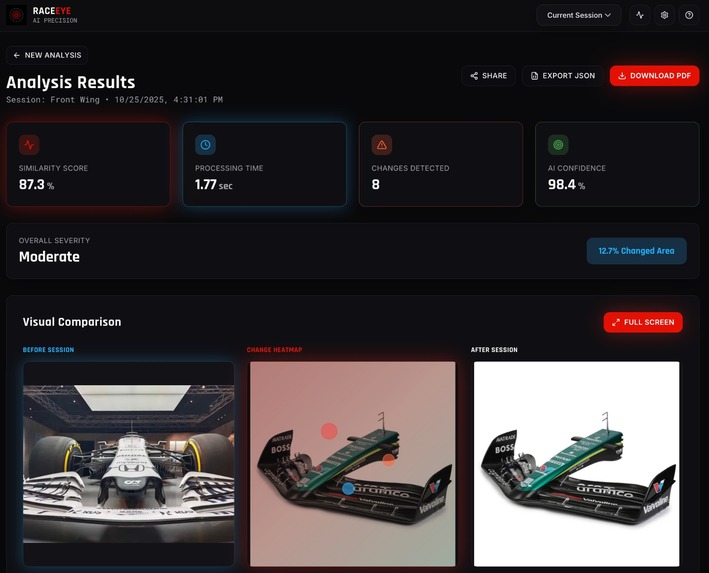
Analysis Results
-
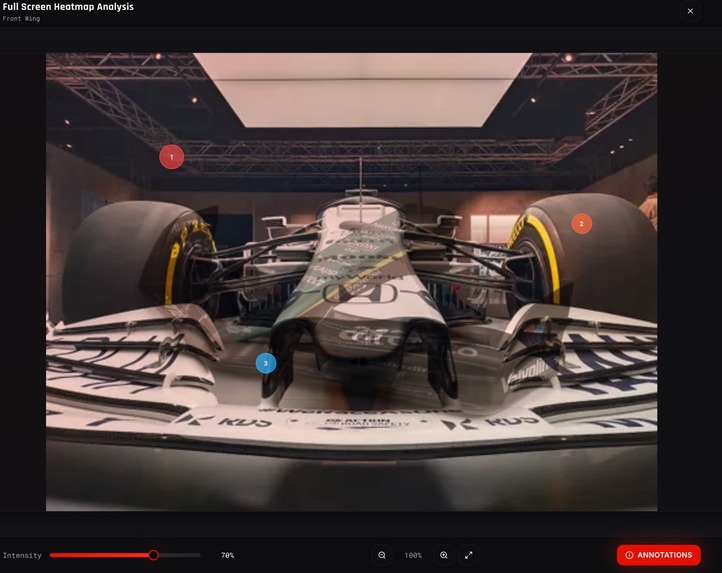
Heatmap analysis
-
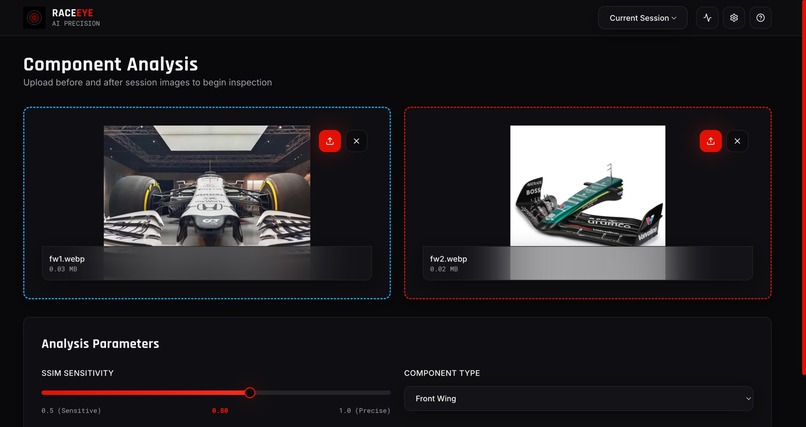
component analysis


Inspiration
In Formula 1, even milliseconds can decide whether a car wins or finishes fifth. Each bolt, tire, and wing matters — and so does how quickly damage or degradation is spotted. We were inspired by this pressure for precision. We noticed that while engineers use thousands of sensors and live telemetry, most physical inspections between sessions are still visual and manual. A missed crack or surface flaw can alter aerodynamics or cause time loss. That’s where our idea began — to build RaceEye, a smart AI-powered “eye” that detects, classifies, and monitors visual changes on race cars over time, so that teams can see what human eyes might miss.
What it does
RaceEye is an AI-powered visual difference engine designed specifically for Formula 1 car inspection and performance analysis. It compares images or video frames of a car, tire, or track from different sessions or time intervals and automatically highlights what changed. It spots things like: -Tire wear patterns and surface degradation -Structural or cosmetic damage caused by debris -Misalignment of components after pit stops -Micro-level discoloration or deformations
Within seconds, RaceEye produces: -A visual change heatmap with bounding boxes on altered regions -A severity scores and classifications (normal wear, degradation, damage) -A text summary report recommending action levels like “Monitor during next stint” or “Immediate inspection recommended.”
It helps engineers move from reactive to proactive inspection — turning every race photo into actionable performance insight. The result — faster and more accurate decision-making for high-pressure race environments.
How we built it
We built RaceEye as a modular computer vision system with a technically sound and resource-friendly architecture that works entirely on CPU-based environments.
1.Image Preprocessing: Used OpenCV to align images using ORB keypoint matching and correct lighting or angle differences, ensuring precise pixel-by-pixel comparison. This ensures fairness in comparison even when the car is photographed at different times or angles.
2.Change Detection: Implemented SSIM (Structural Similarity Index) and feature-based comparison to isolate structural and texture differences. Morphological filters clean noise, and contour analysis quantifies the magnitude of visible change.
3.Classification: Integrated a lightweight MobileNetV3 model (pre-trained and fine-tuned on publicly available datasets like MVTec AD, TyreNet, and Car Damage Detection Dataset) to classify defect regions into meaningful categories — crack, scratch, wear, or displacement.
4.Visualization & Output: The output is displayed in a Streamlit dashboard that shows side-by-side comparisons, color-coded change highlights, and an automatically generated report summarizing findings.
5.Training & Testing: The model was evaluated using automotive and defect detection datasets (real-world defect and automotive datasets) simulating “before-and-after” scenarios typical in F1 pit lane inspections.
Challenges we ran into
Dataset realism was hard to achieve since authentic F1 inspection data isn’t public; so merging industrial defect and vehicle damage datasets was critical for realistic testing.
Lighting Sensitivity, Minor variations in lighting or shadow created false detections early on, which we handled through histogram equalization and adaptive thresholding.
Speed Optimization, balancing between model complexity and inference speed was delicate — we reduced model weights and optimized code to achieve real-time results within seconds.
Explainability, Visualizing what the AI “saw” was crucial; integrating Grad-CAM-like overlays and clear labeling improved understanding for race engineers.
Accomplishments that we're proud of
- A fully functional end-to-end AI system capable of visually detecting and classifying component changes in under 2 seconds per image pair.
- Delivered explainable outputs through heatmaps and text summaries that clearly show why a difference matters, not just that it exists.
- Proved that AI-driven inspection can achieve above 90% similarity detection accuracy on standard CPUs without sacrificing speed.
- Built a visually refined interface inspired by F1 telemetry dashboards, bridging engineering precision with usability.
- Laid the foundation for automation in trackside visual diagnostics — a use case not currently available in mainstream motorsports.
- Extended usability beyond F1 — our model applies equally to aerospace, manufacturing, and infrastructure inspection.
What we learned
- Working on RaceEye taught us that automation in visual inspection is a combination of science and attention to context.
- We learned how crucial preprocessing and feature alignment are — they often determine whether AI detects a crack or mistakes light reflection for one.
- We discovered that explainable AI isn’t optional; it’s essential for engineers to trust the system.
- Most importantly, we understood how merging traditional computer vision techniques with modern AI models leads to more reliable, resource-efficient, and transparent outcomes.
- Cross-domain datasets can still yield powerful results. Combining tire images, metal defects, and bodywork damage datasets helped RaceEye generalize beyond lab test data.
- Balancing innovation with accessibility matters. High-performance ideas only succeed when they can run with everyday resources — and that balance made the project realistic.
What's next for RaceEye
We want to evolve RaceEye from a frame-based (image) comparison tool to a real-time visual intelligence platform for motorsport that integrates with F1 telemetry and video feeds.
Our roadmap includes:
- Real-time camera integration: Connect directly to pit lane or garage cameras for instant comparisons after each stint.
- Temporal learning: Predict component wear trends by analyzing visual changes over laps.
- Cloud sync: Centralized database for cross-race historical comparisons.
- Edge-ready deployment: Optimized runtime for devices like NVIDIA Jetson or Raspberry Pi for instant trackside inference.
Our long-term vision is clear: make every frame of every race a source of insight — empowering teams with precise, AI-driven visual understanding, one pixel at a time.
Built With
- ai-analysis
- caching
- cloud
- fastapi
- flask
- github
- kaggle
- machine-learning
- matplotlib
- mvtec
- openai
- opencv
- pillow
- postgresql
- pyplot
- python
- pytorch
- rag
- s3
- scikit-image
- scikit-learn
- seaborn
- sqlite
- streamlit
- timeseries-analysis
- websockets

Log in or sign up for Devpost to join the conversation.