InspiratiAbout the Project
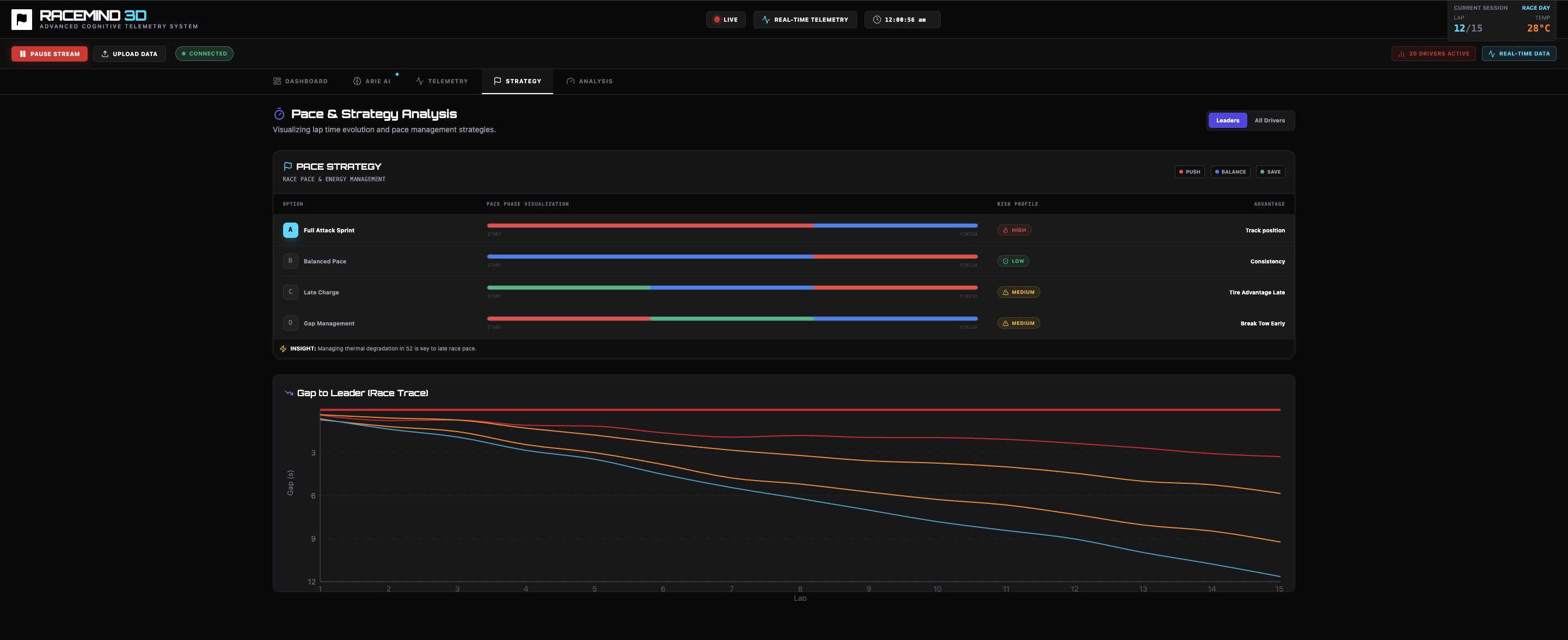
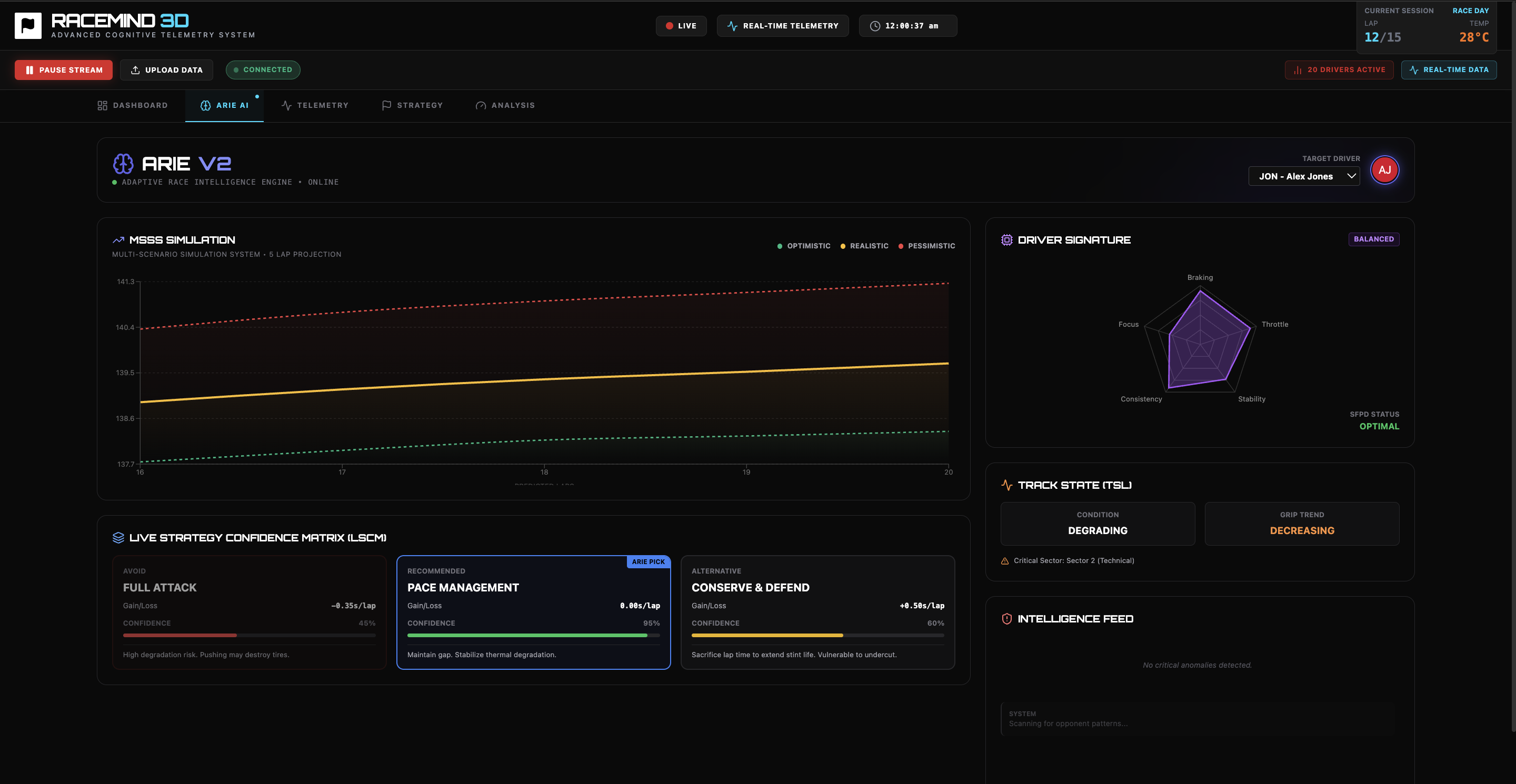
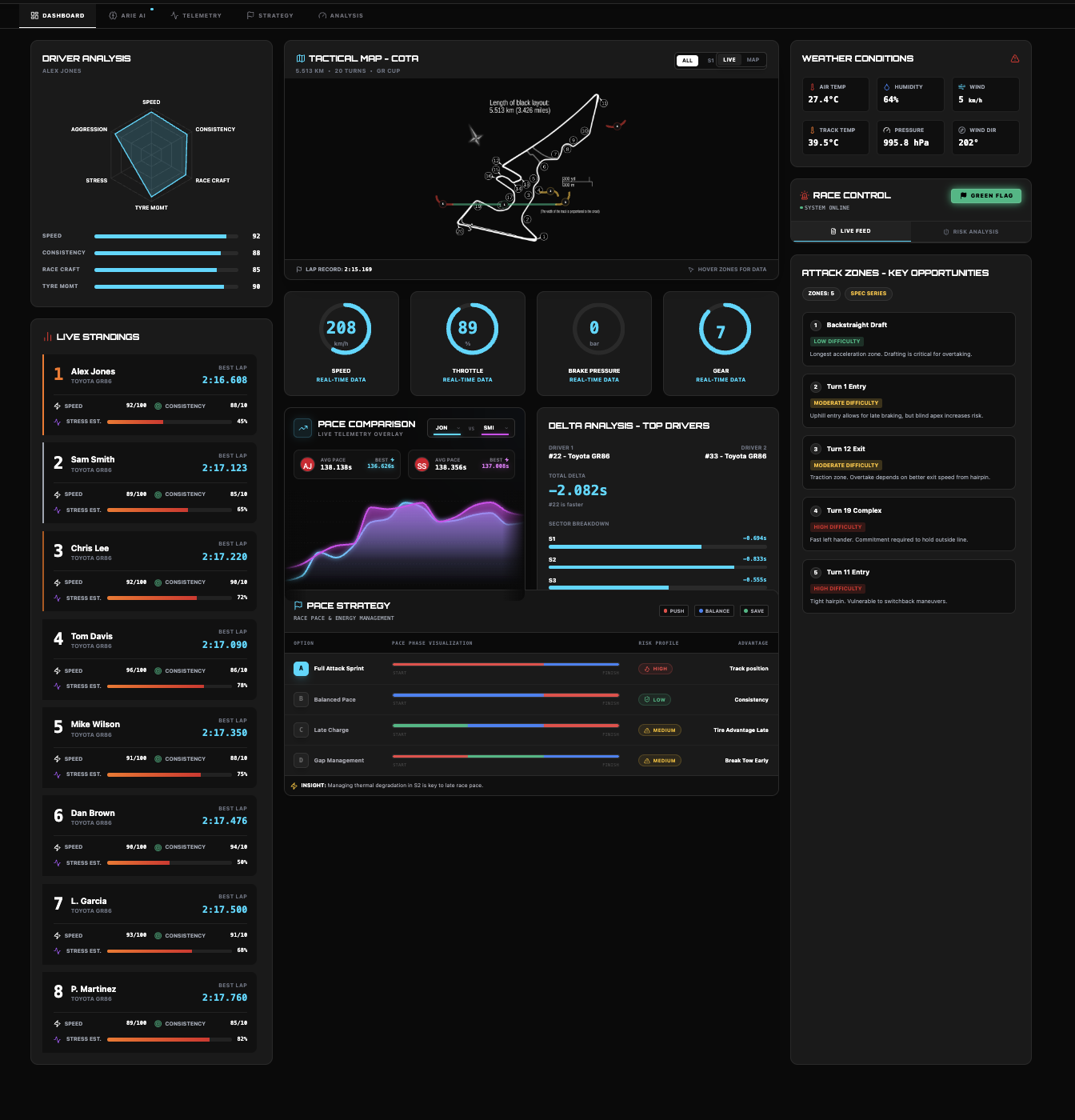
RACEMIND 3D is a predictive race-intelligence system designed for the Toyota GR Cup. It shifts motorsport analytics from descriptive to predictive, using ARIE-V2 to forecast pace, understand driver behavior, detect fatigue, and provide real-time strategic recommendations. The goal was to build an intelligent engineering tool that answers the one question traditional dashboards cannot: “What will happen next?”
What Inspired the Project
Spec-series racing depends entirely on driver skill, not car performance. This makes small insights—fatigue, micro-errors, pace variations—extremely important.
Real race engineering fascinated me, especially how elite teams use forecasting and simulation.
I wanted to bring F1-level intelligence to a feeder series like the GR Cup, using telemetry and AI.
The idea of a virtual strategist capable of explaining decisions in real time inspired ARIE-V2.
What I Learned
How to process high-frequency telemetry and convert it into meaningful signals.
Designing a clean data pipeline for prediction and simulation.
Time-series forecasting, scenario modeling, and anomaly detection. Mathematical modeling like tyre-degradation behavior:
Δ 𝑡
deg
𝑘 ⋅ ln ( 1 + lap ) Δt deg
=k⋅ln(1+lap)
Building multi-module AI systems (ARIE-V2).
Using Google AI Studio (Gemini) for real-time strategic reasoning.
Creating race-engineer style responses with contextual constraints.
Developing fast, readable dashboards for race-pressure environments.
How I Built the Project
Cleaned and validated telemetry data to ensure GR Cup compliance (no DRS, no tyre compounds, no unsupported metrics).
Built ARIE-V2, which includes:
Lap forecasting
Scenario simulation
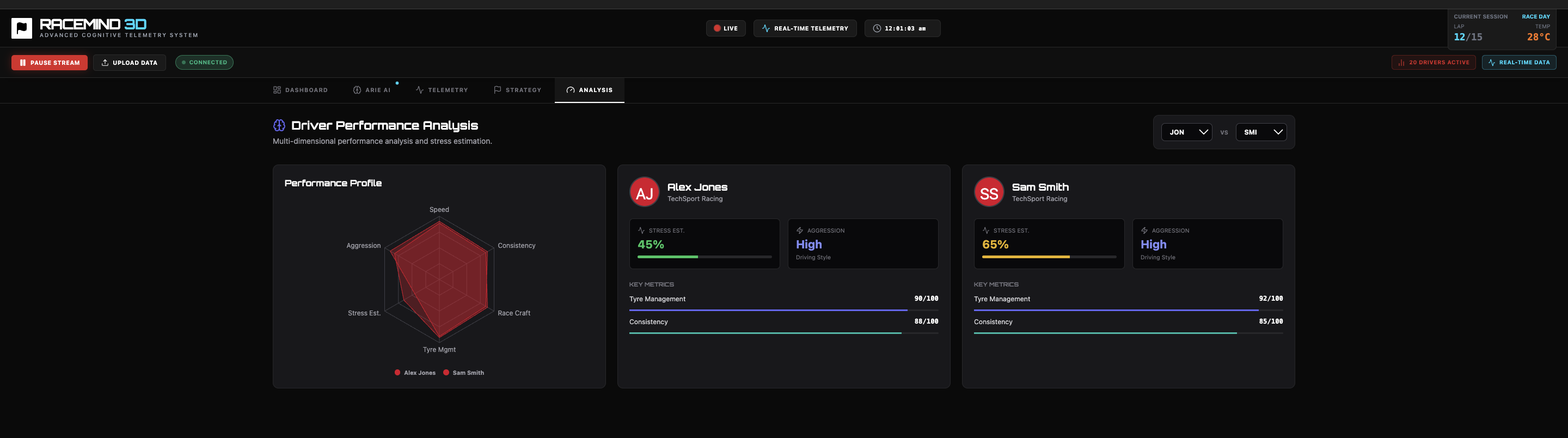
Driver behavior mapping
Fatigue detection
Opponent threat analysis
Track-state learning
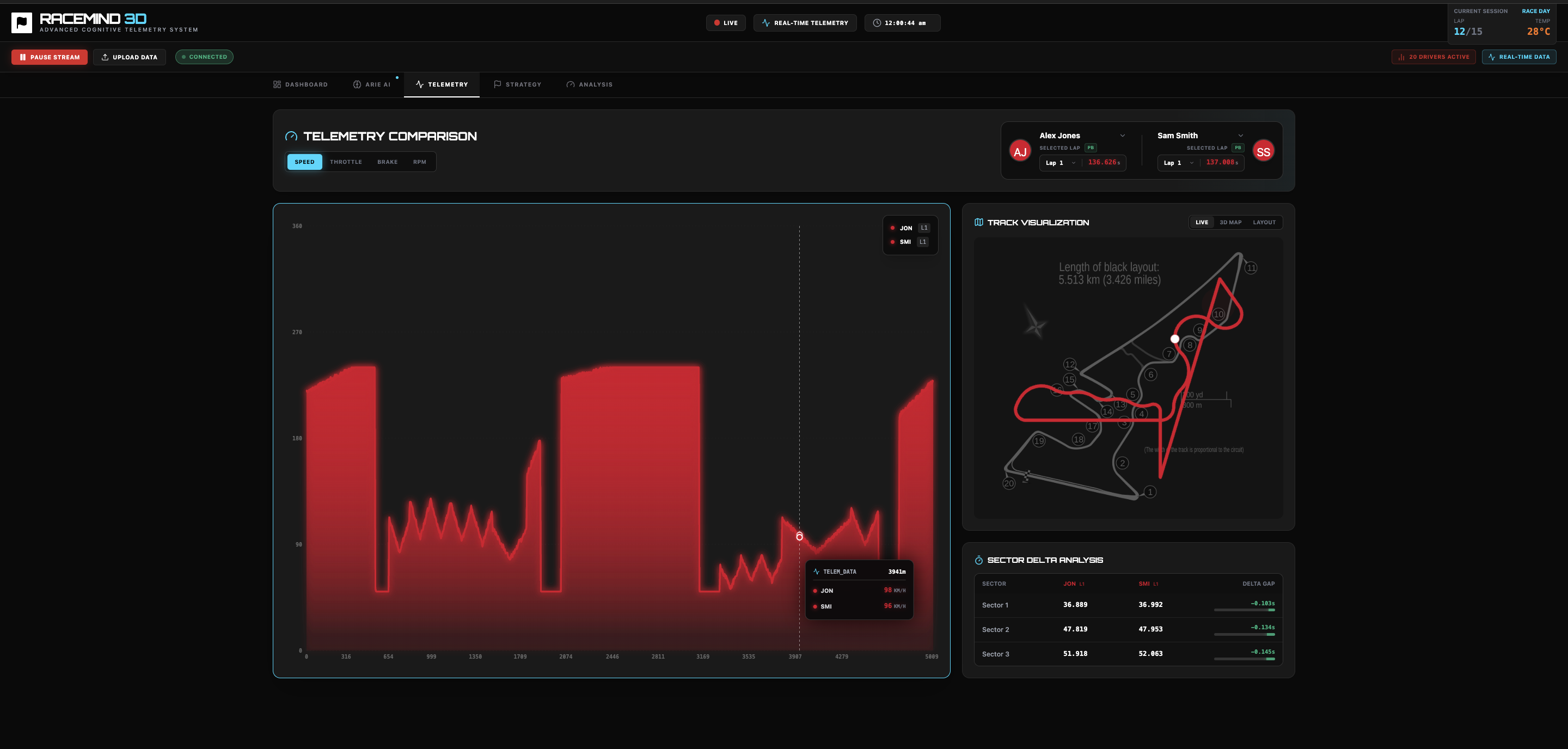
Implemented real-time visualization with React, TypeScript, and Three.js.
Designed sector delta tools, telemetry overlays, and behavior scoring.
Integrated Google AI Studio for the AI Race Engineer module.
Built a complete decision-support system with strategic recommendations.
Created a fully deployed app inside Google AI Studio for judges to test.
Challenges I Faced
Ensuring every prediction was dataset-driven—no assumptions allowed.
Removing all F1-specific logic and rebuilding GR-spec logic from scratch.
Extracting fatigue patterns using only telemetry (no biometric sensors).
Achieving stable predictions with limited historical samples.
Maintaining performance while running multi-scenario simulations.
Building a UI that remains readable, structured, and usable during real-time race pressure.
Making the AI Race Engineer produce strictly accurate, non-hallucinated, context-aware explanations.on
Built With
- cloud
- fastapi
- firebase
- functions
- github
- javascript
- numpy
- pandas
- python
- pytorch
- react
- recharts
- scipy
- three.js
- typescript
- websockets

Log in or sign up for Devpost to join the conversation.