-
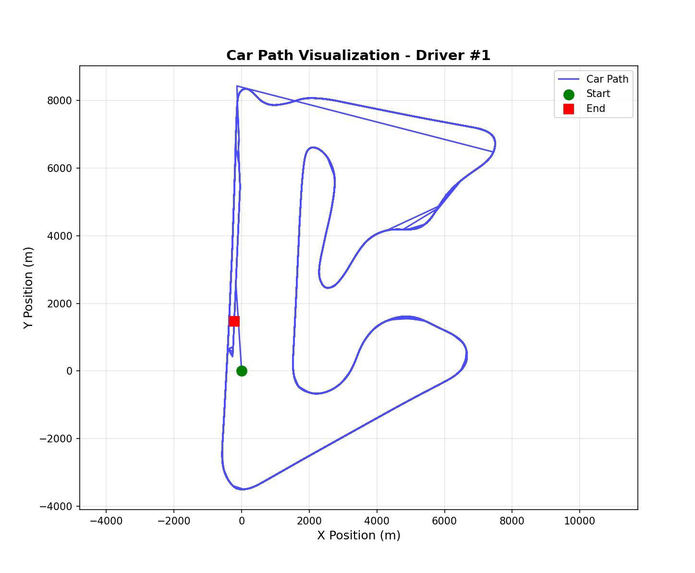
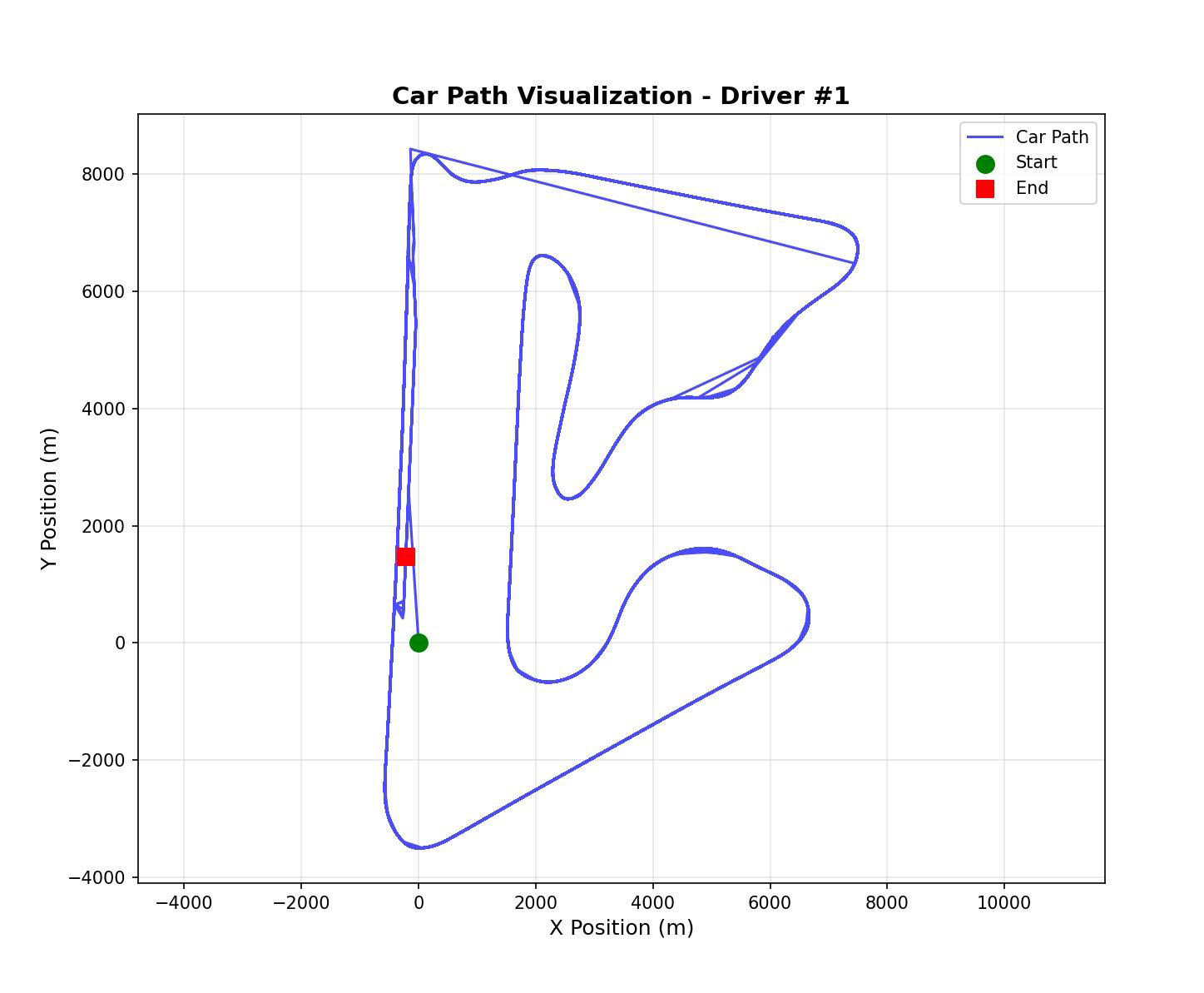
Scraped telemetry and generated track path for a driver during a Formula 1 Race in 2024.
Inspiration
Formula 1 broadcasts show incredible racing, but much of the spatial context like car positioning, racing lines, gaps, and pace, gets lost on a flat screen. Inspired by products like Lapz and the rise of spatial computing, we wanted to explore what it would look like to bring the race off the broadcast and into an interactive 3D space that fans could explore from home.
What it does
Race Space reconstructs a real Formula 1 race in a manipulatable 3D environment using real telemetry data. A car moves along an accurate track model based on actual race data, allowing users to spatially explore the race and better understand car movement, pace, and positioning in three dimensions.
How we built it
We started with no prior experience in 3D modeling or telemetry visualization. In under 24 hours, we learned Blender from scratch, sourced real Formula 1 telemetry data, and mapped that data to a 3D track model. We processed telemetry using Python, converted positional data into usable paths, and synced that data with animations in Blender to produce a working 3D race visualization driven entirely by real race data.
Challenges we ran into
One of the biggest challenges was translating raw telemetry into smooth, accurate racing lines. Real-world data is noisy, incomplete, and not designed for visualization. We also had to learn how to align coordinate systems between telemetry data and 3D models, and how to synchronize timing so the car movement matched the race progression realistically.
Accomplishments that we’re proud of
- Learning 3D modeling and animation from scratch in under 24 hours
- Successfully animating a Formula 1 car using real telemetry from a real race
- Creating an accurate track-following path rather than a simple outline animation
- Proving that real race data can be meaningfully synchronized with a 3D spatial model
What we learned
We learned how complex real-world telemetry data is, and how much processing is required to turn it into something visually accurate. We also gained hands-on experience with 3D pipelines, coordinate mapping, animation syncing, and the fundamentals of spatial visualization for sports analytics.
What’s next for Race Space: Spatial Formula 1 Visualization
Next, we want to improve path accuracy, support multiple cars simultaneously, and move from offline animation to real-time playback. Long-term, Race Space is designed to transition into true augmented and spatial reality platforms. This will bring Formula 1 races fully into the viewer’s space through devices like the Apple Vision Pro.


Log in or sign up for Devpost to join the conversation.