-
-
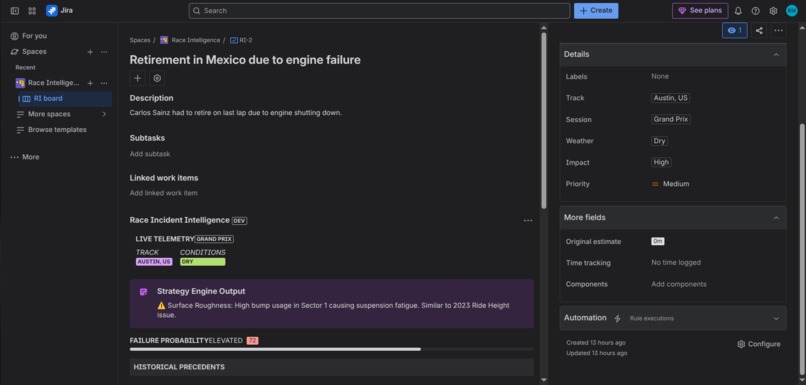
Full integration into the Jira Issue view
-
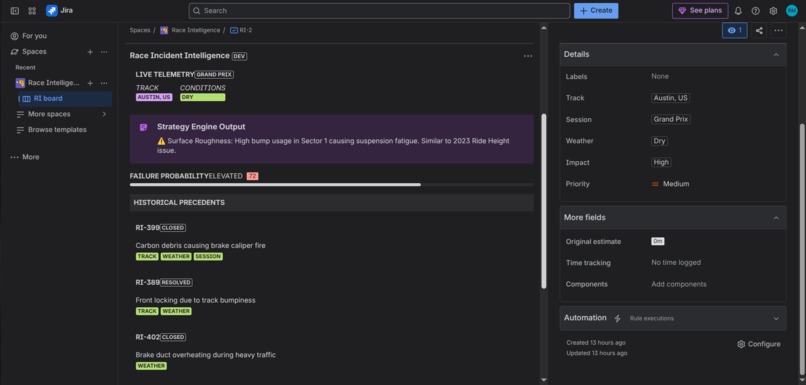
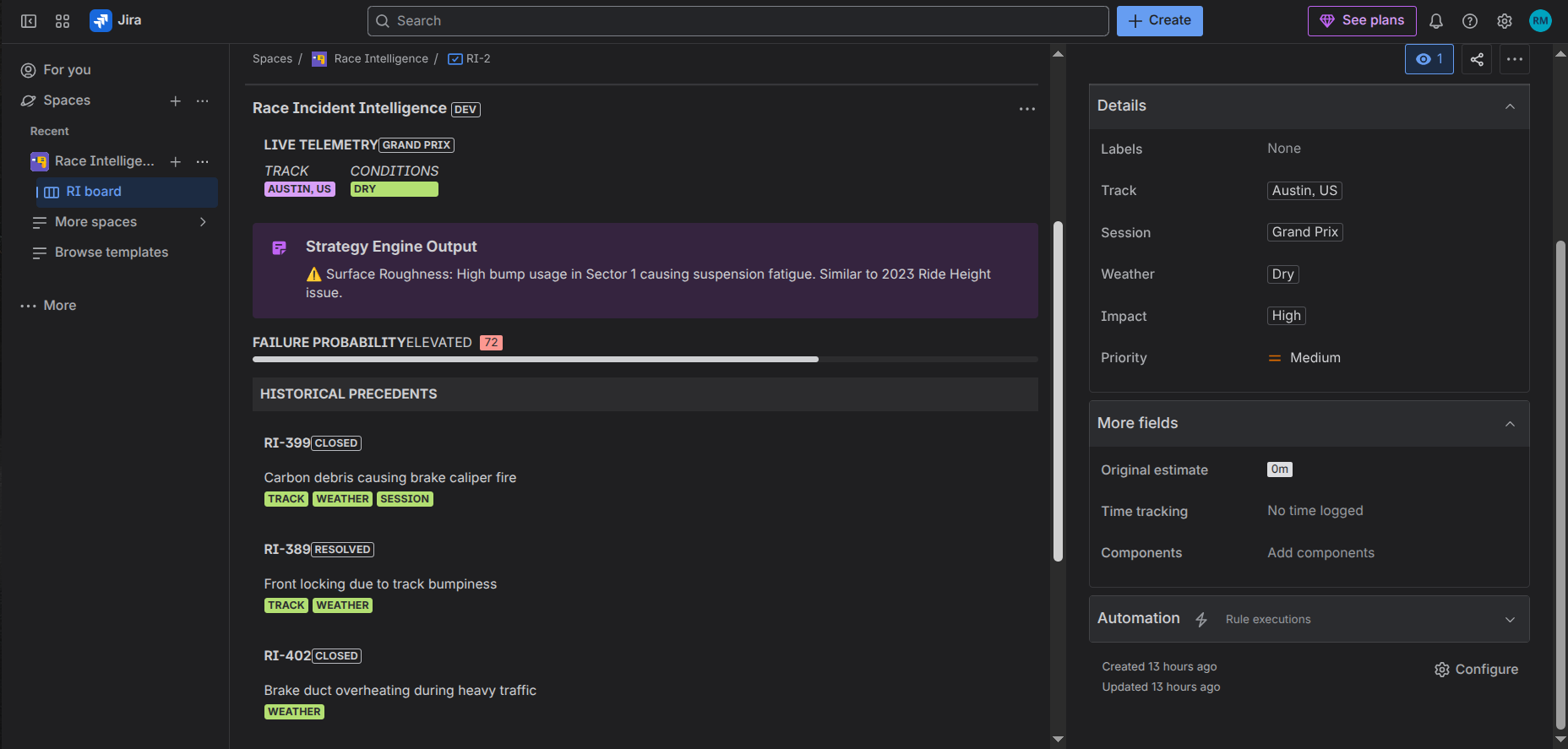
Context-aware AI insights based on track and weather telemetry
Inspiration
Formula 1 teams like Williams operate in extremely high-pressure, data-intensive environments. During a race weekend, incidents, penalties, weather changes, and on-track events are constantly discussed, but often captured in unstructured ways such as notes, chats, or ad-hoc logs.
We were inspired by how software teams handle production incidents: with structured metadata, clear workflows, and searchable history. Race Incident Intelligence System applies the same mindset to motorsport, treating race incidents as first-class operational data rather than scattered observations.
What it does
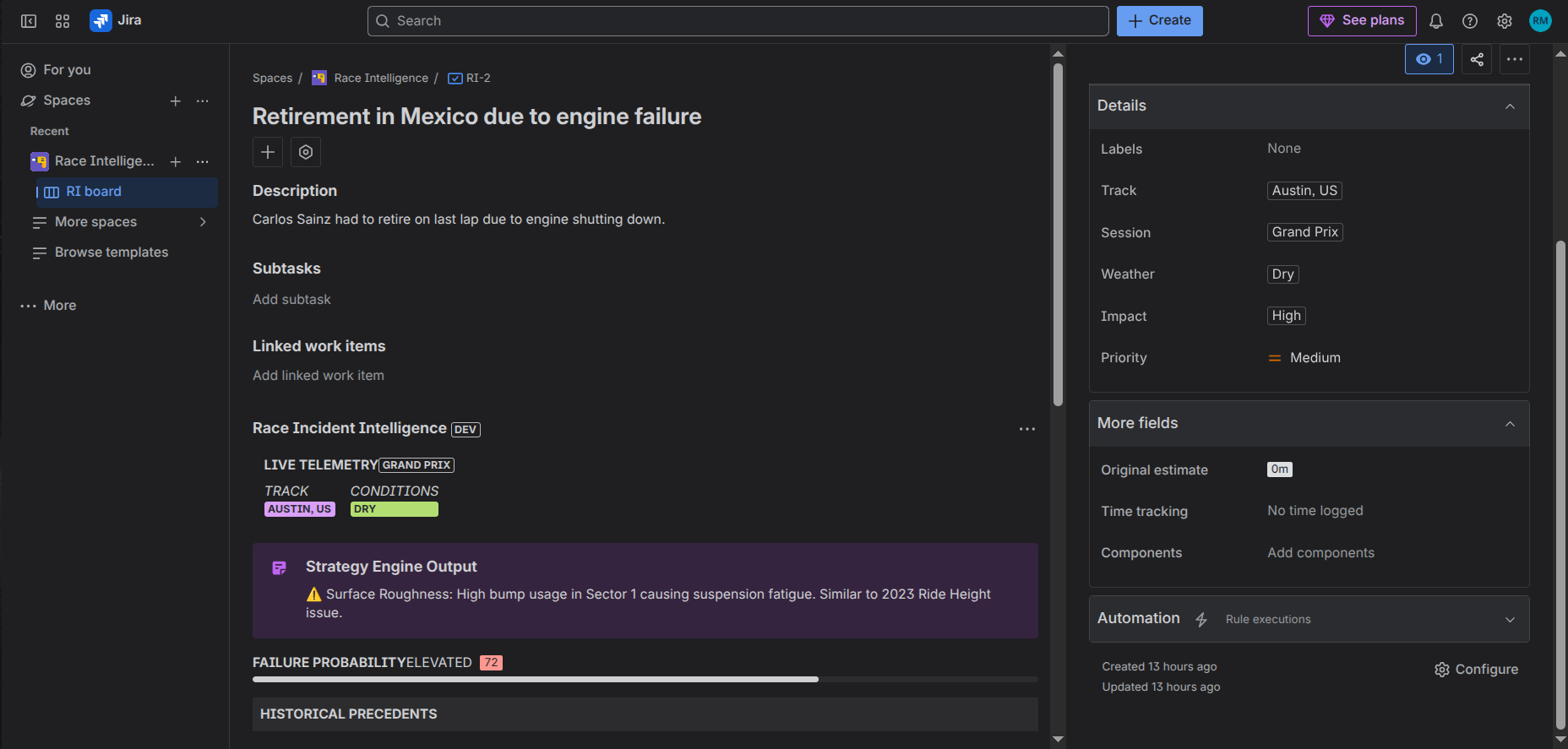
Race Incident Intelligence System provides a structured way to log, track, and analyze race incidents.
Each Race Incident records:
- Track
- Session (Practice, Qualifying, Race, etc.)
- Weather conditions
- Impact level
This allows teams to quickly surface high-impact incidents, identify patterns across tracks or conditions, and perform data-driven post-race analysis instead of relying on anecdotal recall.
How we built it
The project is built on Jira Software, extended using Atlassian Forge.
Key design choices:
- A custom work type (
Race Incident) instead of overloading generic issues - Structured select-list fields for consistency and analytics
- A Company-managed Jira project for full control over schemas and screens
- Secure backend access using Forge’s
asApp()execution model to query incident data programmatically via JQL
This setup makes the system both operationally useful and automation-ready.
Challenges we ran into
- Correctly configuring Jira’s work types, schemes, and screens so custom fields appeared reliably
- Understanding the difference between user context vs app context in Forge (
asUser()vsasApp()) - Navigating Forge app installation, identity, and permissions when accessing Jira data securely
- Designing a model realistic enough for real F1 teams while keeping it lightweight for a hackathon
Accomplishments that we're proud of
- Designing a domain-specific incident model that maps cleanly to real motorsport workflows
- Successfully extending Jira with a custom work type and structured intelligence fields
- Building a Forge app that securely accesses incident data as an application, not just a user
- Turning a general-purpose issue tracker into a focused race incident intelligence system
What we learned
- Structured data enables insights that free-text logs cannot
- Enterprise tools like Jira are extremely powerful when modeled correctly
- Security and permissions in real-world systems are layered and must be reasoned about carefully
- Forge encourages a least-privilege, automation-first approach that fits operational intelligence use cases well
What's next for Race Incident Intelligence System
Future improvements could include:
- Dashboards showing incident trends by track, weather, or impact
- Automated alerts for critical incidents during race weekends
- Integration with telemetry, steward decisions, or external race data feeds
- Historical analysis across multiple races or seasons for teams like Williams

Log in or sign up for Devpost to join the conversation.