-
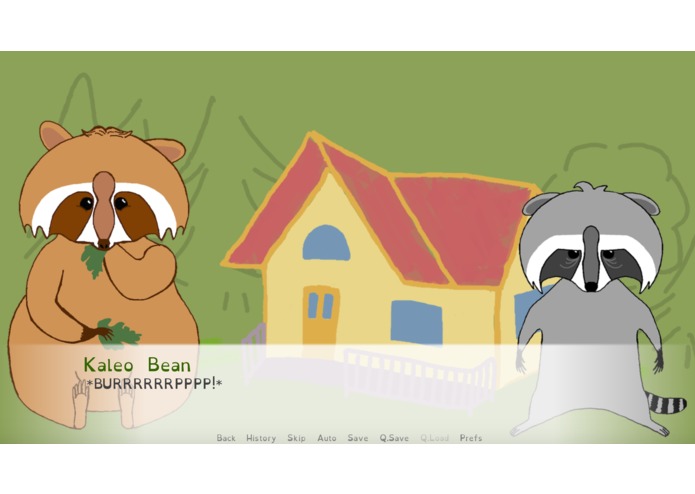
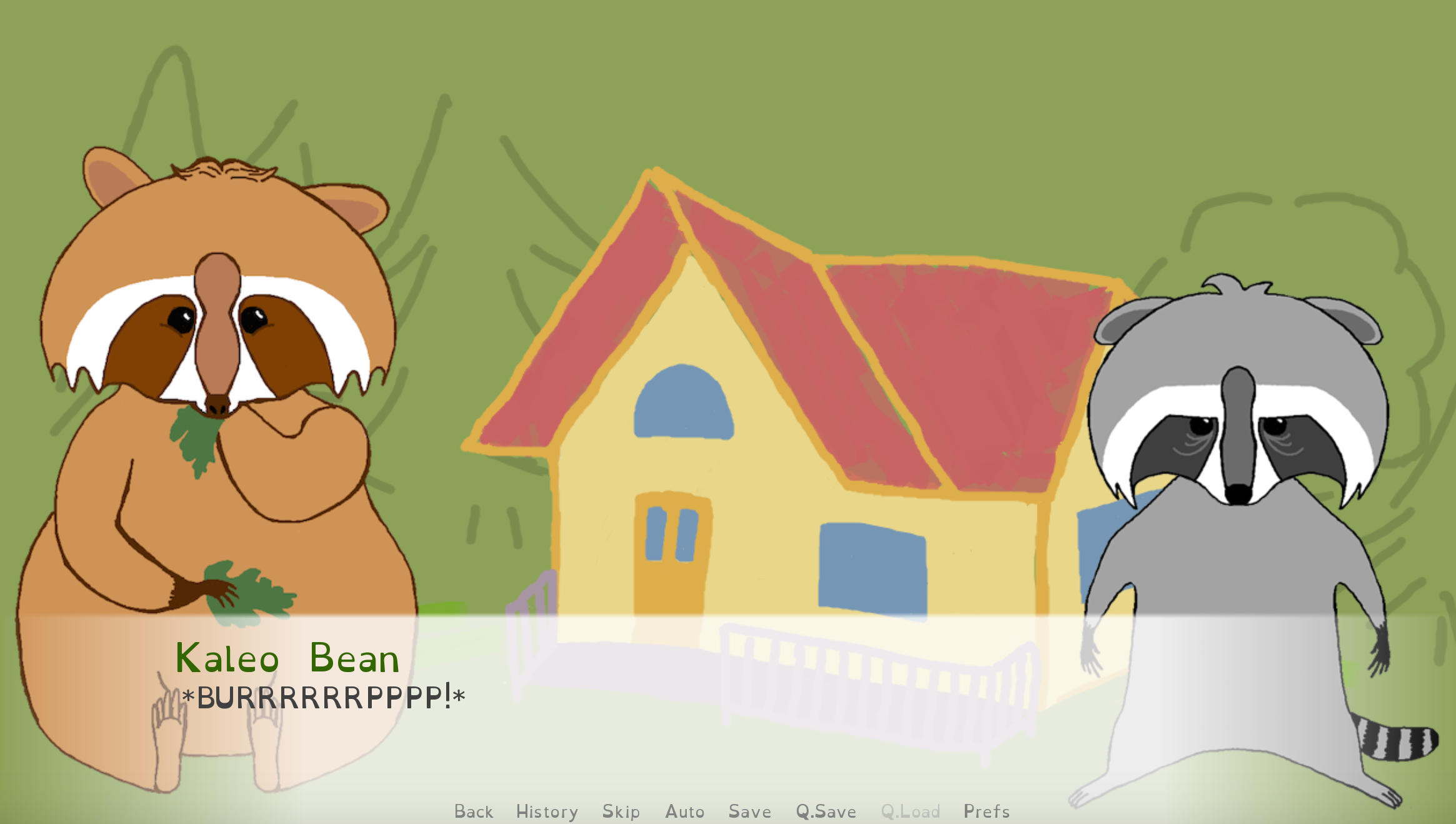
Protagonist speaking with suspect #1.
-
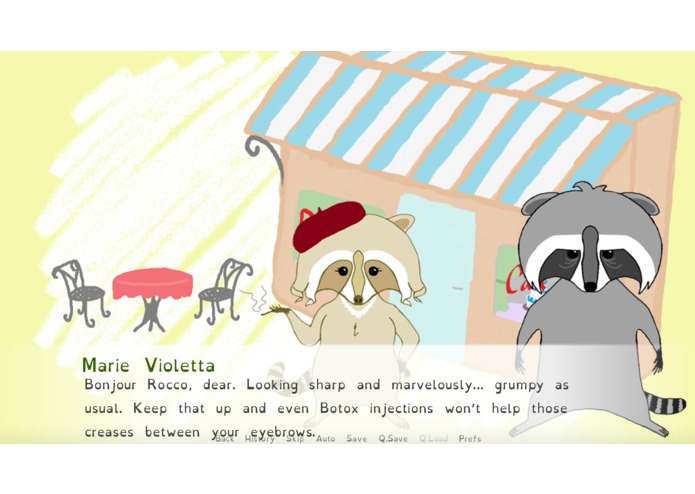
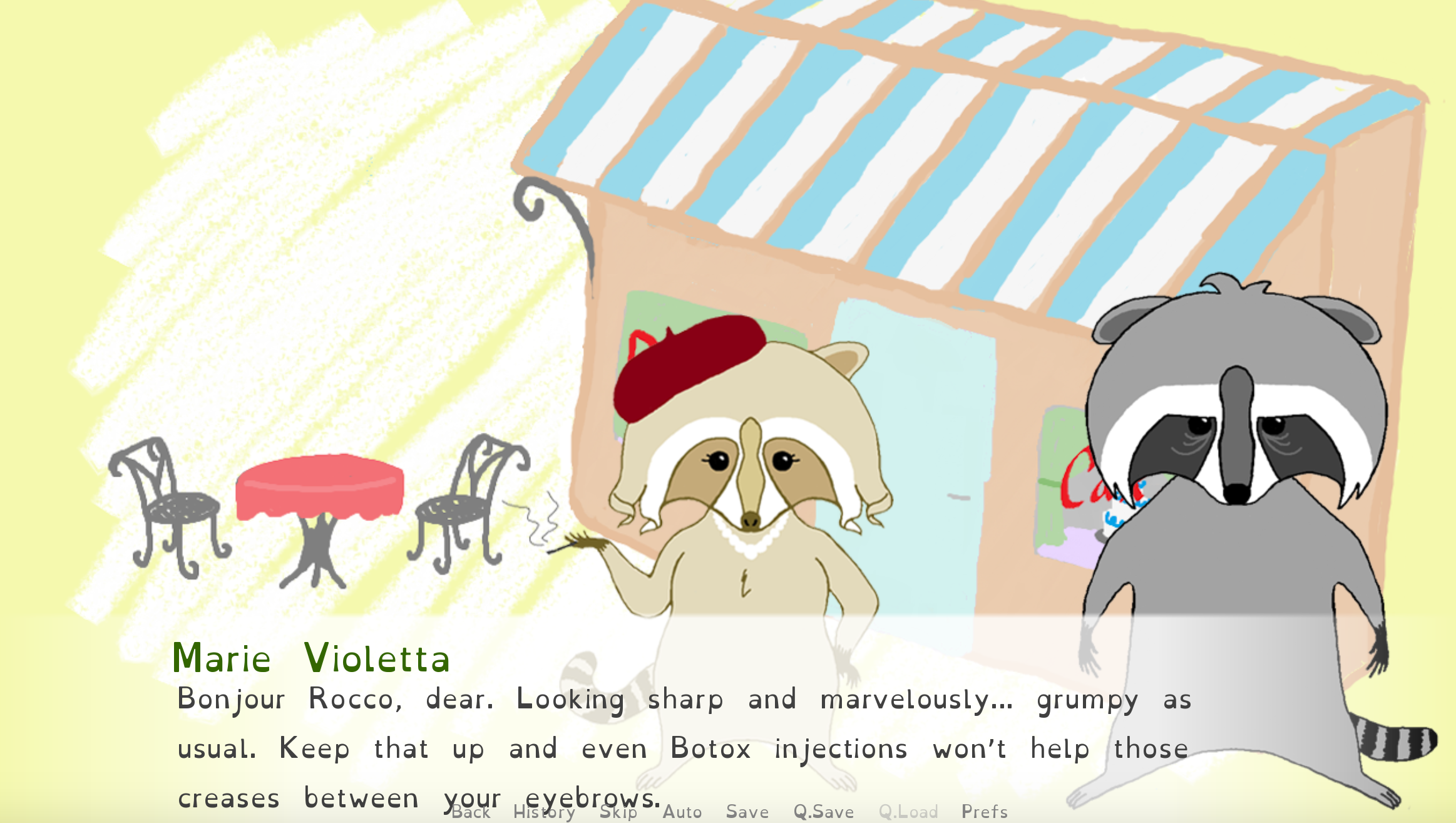
Protagonist speaking with suspect #2.
-
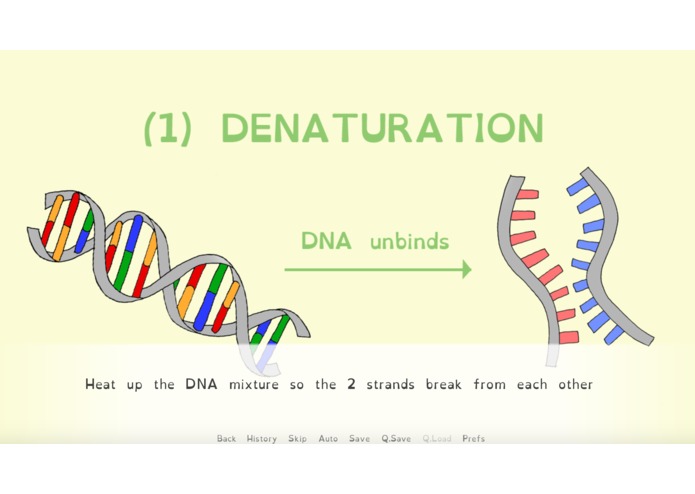
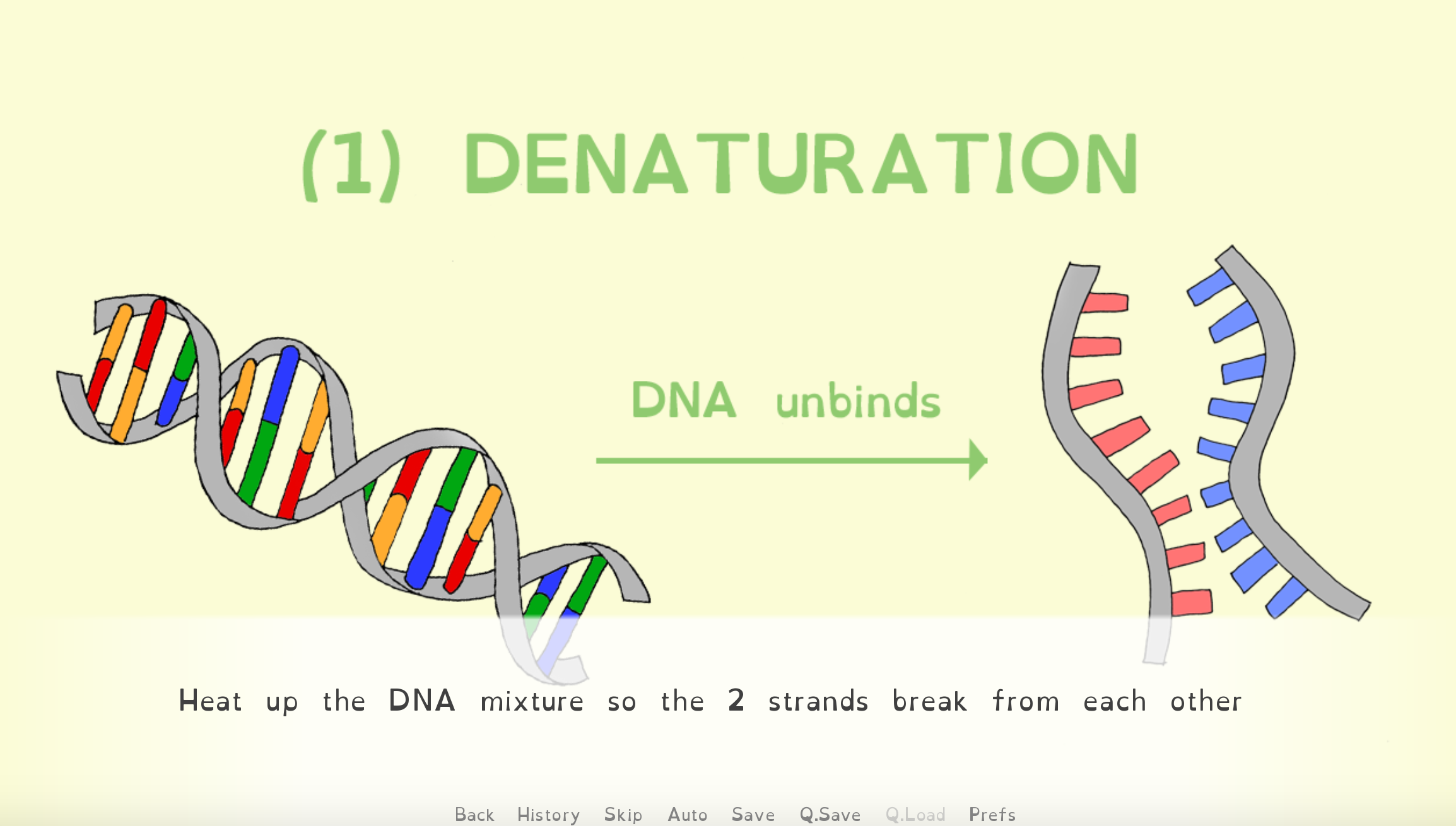
Learning PCR.
-
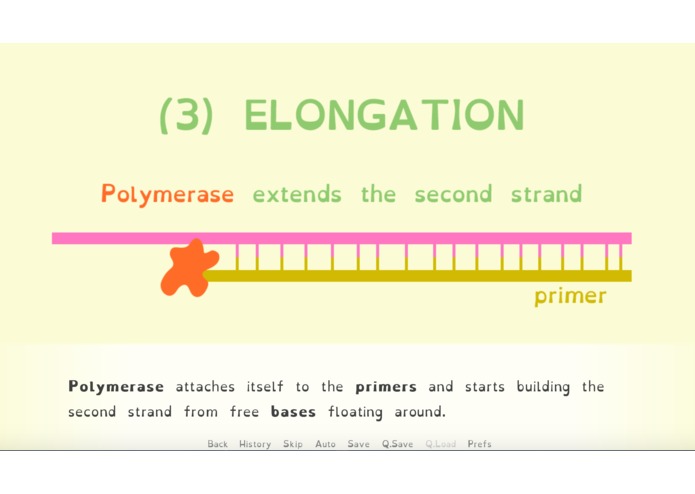
Learning PCR.
-
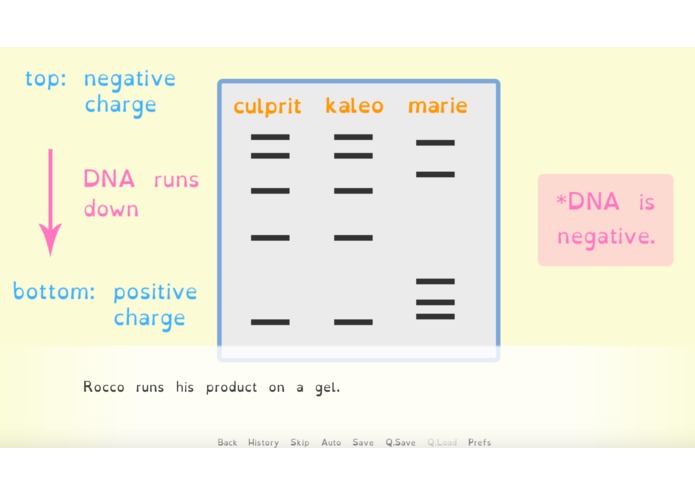
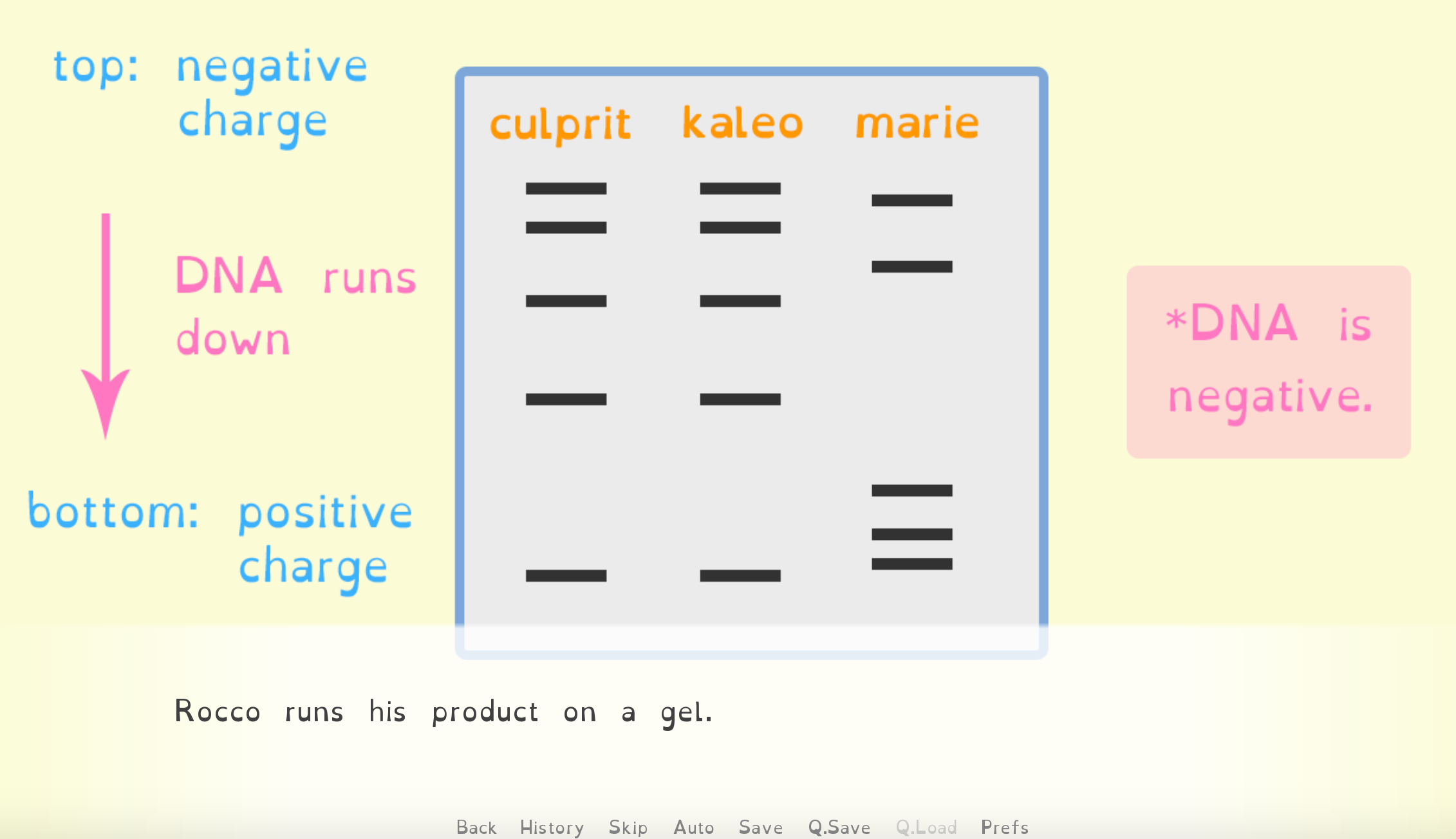
Who was the culprit?
RACCOONIES
Fun Educational Interactive Story to Teach Biology Research!
Inspiration
Biology research, and any research, is an intimidating field to jump into. One of our team members struggled during her first in-lab research experience, in where she felt discouraged to continue pursuing research because the subject appeared uninviting and too difficult. However, after mastering certain molecular biology protocols, many student researchers know that research is not as ghastly as it seems. In fact, the material is fairly easy!
What It Does / Overview
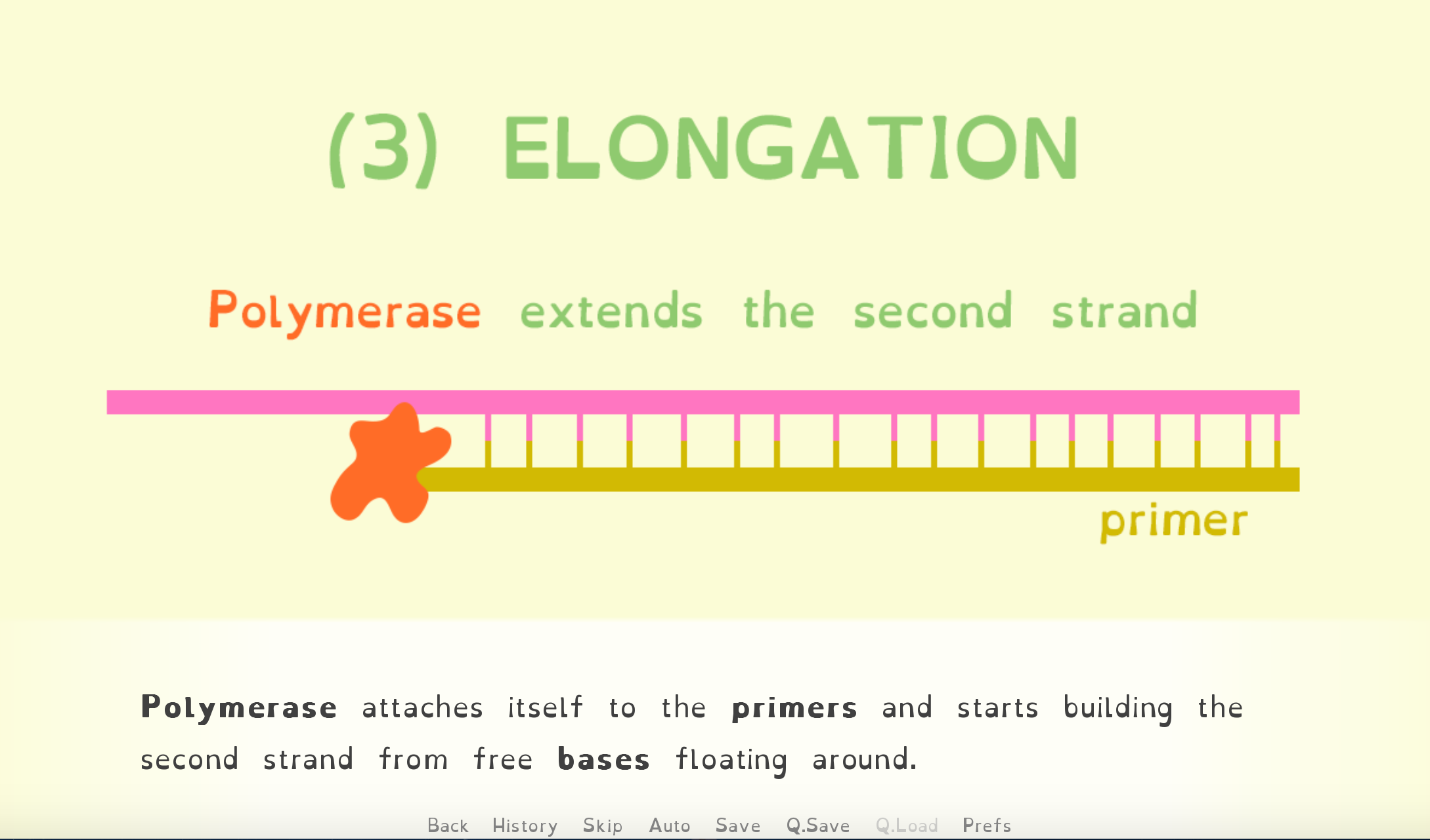
Raccoonies is developed by an interdisciplinary team of students majoring in Biology, Cognitive Science, and Computer Science. It uses a story about raccoons with fun personalities in order to help non-biologists visualize the applications and purpose of one of the most significant biological procedures.
It uses a "choose-your-own-adventure" element and goes through a friendly story about a raccoon in order to explain an important and popularly used molecular biology technique (polymerase chain reaction) in biology research. We wanted to bridge together all types of learning (visual, auditory, and kinesthetic).
How We Built It
The story was built and constructed using a python-based engine. The background art was hand-drawn, scanned through an iPhone and colored in Paint. All the characters were drawn in Paint. :)
Challenges
It was freezing.
It would have definitely been helpful if more members knew how to use graphic design applications, like Photoshop. It would have save a lot of time - reducing the noise and focusing on the line art took a lot of time and coloring was a rather slow process.
We originally had a much more complicated version of the story thought out - where we specified the details of the molecular biology technique (down to the degrees of the temperature). We realized mid-Saturday that it was hard to understand for our teammates who were unfamiliar with the process, which defeated the purpose of what the game was supposed to do in the first place.
Accomplishments We're Proud Of
- We drew everything by hand! Mostly in Paint!! And they looked really nice!!! Creating digital art without using layers is definitely challenging, and it takes a talented teammate like ours to do that.
- It's pretty complete! While it wasn't too complete by the time SD Hacks ended, we've made some quick fixes to improve it. You can probably learn the basics of PCR in about 5 minutes.
- The characters are hilarious and fun, and the story is random. We love that.
What We Learned
We all learned different things, but there were some people's skills who could have been used better (in the sense that we used them inefficiently) and there was definitely miscommunication to the final vision of the game between the writer, the artists, and the coder. A lot of time was lost over those miscommunications.
Even though Python is an easy programming language, it still takes careful precision to make the art display the way you want to.
Staying in positive spirits can be challenging, but important. It's important to enjoy the process, not solely focus on the goal. :)
What's Next
Smooth out the transitions. Improve the art. Incorporate character movement for a more immersive experience. Add more levels of complexity toward understanding the subject.
COGNITIVE SCIENCE APPLICATIONS OF THE GAME
We really tried to design this to be as educational and easy to learn as possible!
Color Psychology: Many research papers[1] have suggested that the use of "red" colors may be more discouraging towards learning, and other colors may promote creativity. We tried to use learning-friendly colors.
Dyslexia-Friendly Font: As a game dedicated to teaching to a broad audience, we wanted to be inclusive and cater to as big of an audience as we could. Additionally, many researches have suggested that using unfamiliar font styles improves content retention within the learner, while using familiar font styles (like Arial) was less effective.
Music for Retention: Using music in a certain manner can increase memory retention because it involves more sensory modalities - it involves more regions of the brain. It can induce context effect, which may improve user memory on the content material when they hear that specific music. (It's like how we remember the alphabet using a song!)
[1] link
Built With
- paint
- python-based-engine
- traditional-art

Log in or sign up for Devpost to join the conversation.