-
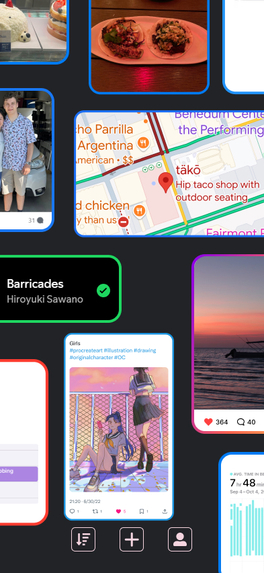
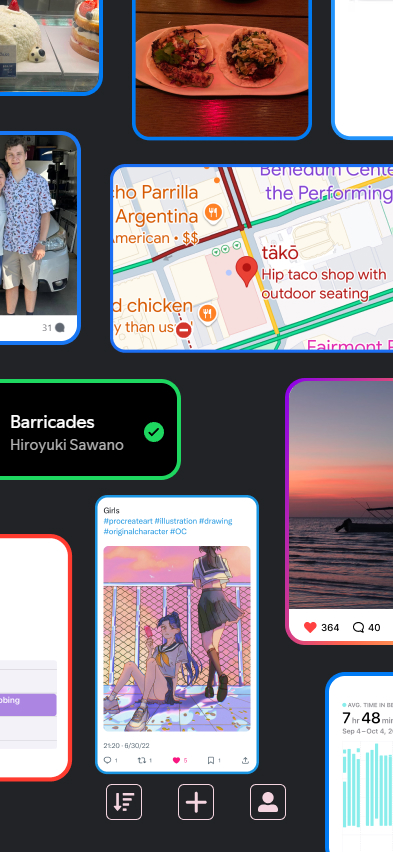
Stored activity
-
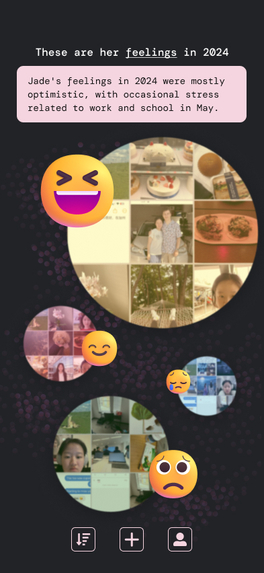
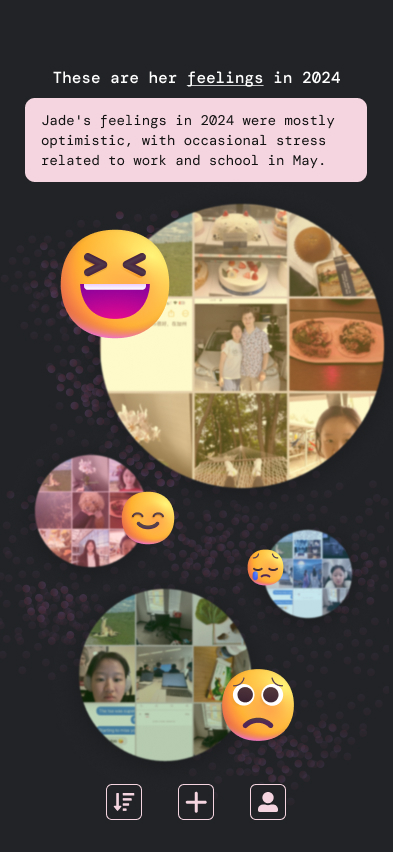
Emotions map
-
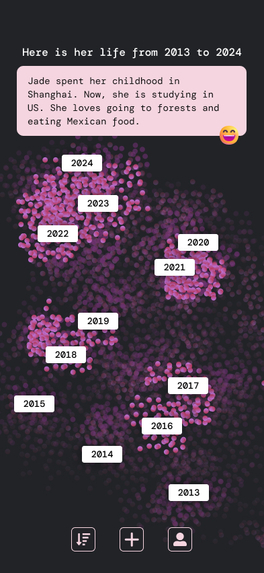
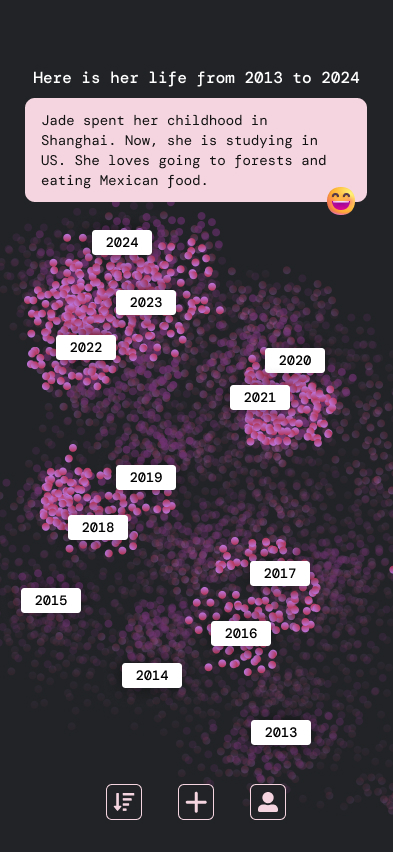
Activity through the years
-
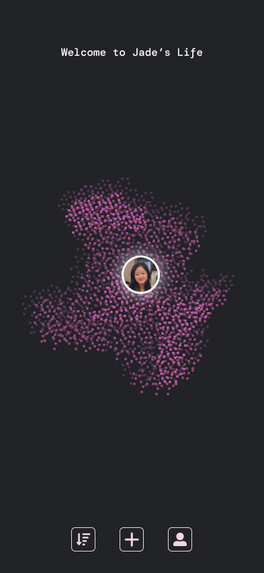
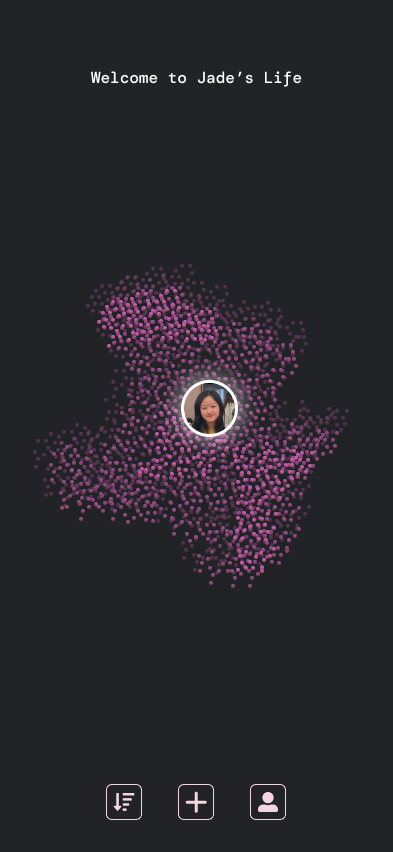
Start of the rabbit hole
Inspiration
The idea behind Rabbit Hole emerged from the overwhelming amount of digital content people accumulate across multiple platforms, from social media to photo storage apps. We wanted to create a meaningful way for users to reflect on their life experiences by compiling scattered data into a cohesive, personalized story. The inspiration came from a desire to blend technology with personal introspection, allowing users to take a deep dive into their life journey.
What it does
Rabbit Hole gathers data from various apps on your phone, including social media, photos, maps, and more, with the user's explicit permission. The app then compiles this data into a beautifully visualized life book, offering summaries of the user's experiences, emotions, and key events. The user can explore specific years to reflect on what they did, where they were, and how they felt, all through a dynamic and immersive interface.
How we built it
We used Figma to create the high-fidelity prototype of Rabbit Hole. The app's design features intuitive interactions and a vibrant, engaging interface, offering users a smooth experience as they explore their digital life journey. We focused on ensuring that the visuals reflected the emotional and narrative elements of a lifebook, with special attention to user-friendly design principles.
Challenges we ran into
One of the biggest challenges we faced was designing an innovative and engaging data visualization that could both entertain and inform users. Initially, we struggled with the traditional linear timelines. To solve this, we chose to categorize the data into bubbles, representing themes like "loved ones," "work," "vacation," and "health." This decision not only made the design more visually appealing but also allowed for a more intuitive exploration of the user’s life story.
Accomplishments that we're proud of
We’re proud of creating a sleek and immersive prototype that reflects a real user’s life in a meaningful way. The smooth animations and categorized bubbles allow users to interact with their data effortlessly, creating a dynamic, personal experience. Most importantly, we’ve successfully turned abstract data into something personal and emotional, allowing users to reflect on the people, places, and moments that matter most to them.
What we learned
Through this project, we learned the importance of balancing design and functionality, particularly when it comes to data visualization. User experience was our priority, and we gained valuable insights into how to take complex, often scattered data and transform it into something people can easily relate to. We also learned the significance of user consent and privacy when dealing with personal data, ensuring that the app prioritizes transparency and user control.
What's next for Rabbit Hole
In the next phase, we plan to move beyond the design prototype and begin implementing Rabbit Hole as a functional app. This will involve integrating more apps and data sources, such as health apps, productivity tools, and journaling apps. We’re also exploring the use of AI to help analyze users' data and provide deeper insights into their emotions and behaviors over time. Our goal is to make Rabbit Hole a tool that not only helps users reflect on the past but also aids in personal growth, helping them better understand patterns and trends in their daily lives.
Built With
- figma


Log in or sign up for Devpost to join the conversation.