Inspiration
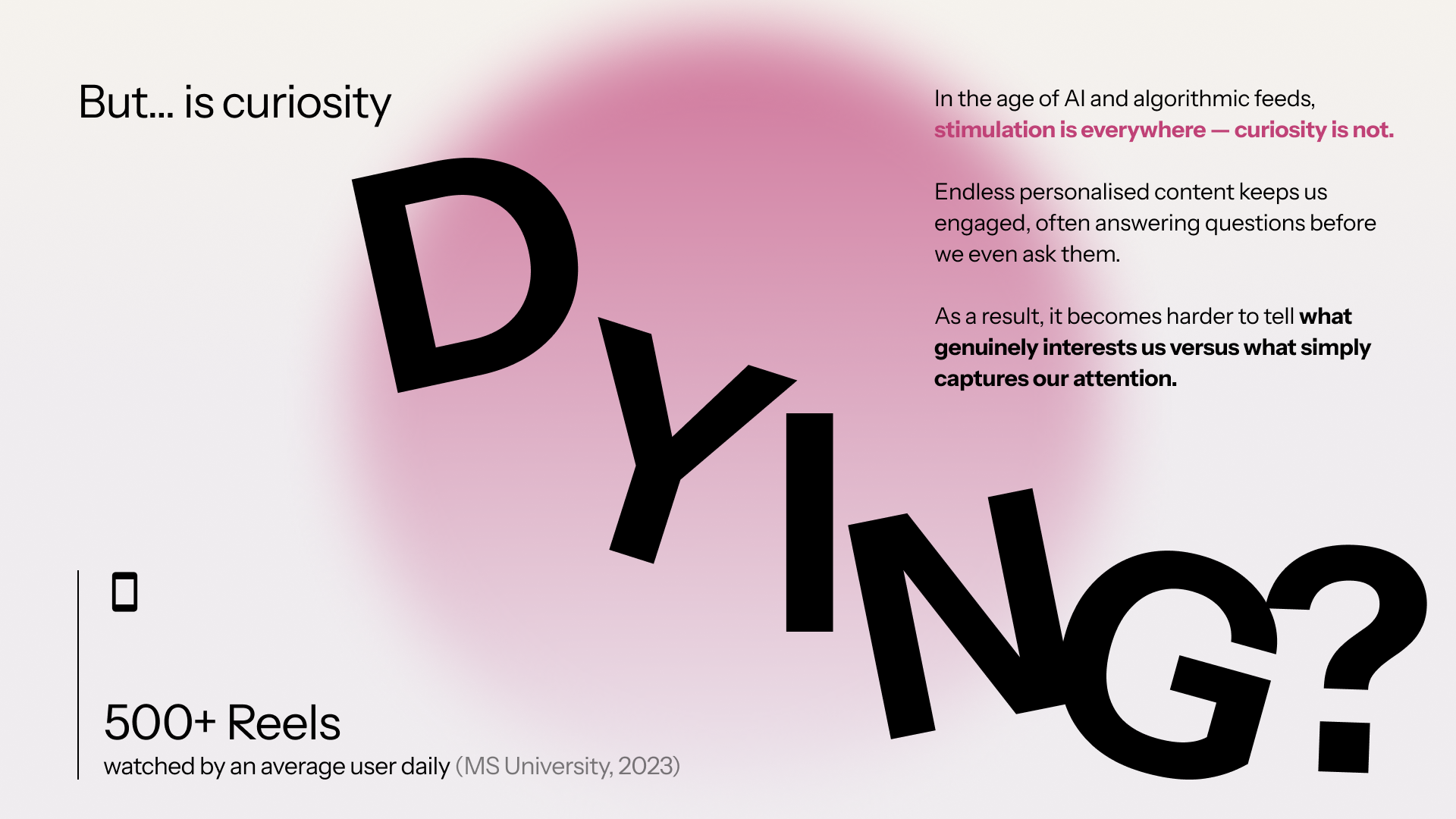
We were inspired by how AI tools and algorithm-driven platforms today often bypass cognitive thinking and curiosity. Reflecting on our own experiences with social media, we realised that as children we naturally explored anything that sparked our interest. In contrast, modern digital environments tend to turn curiosity into passive consumption rather than deeper exploration.
What it does
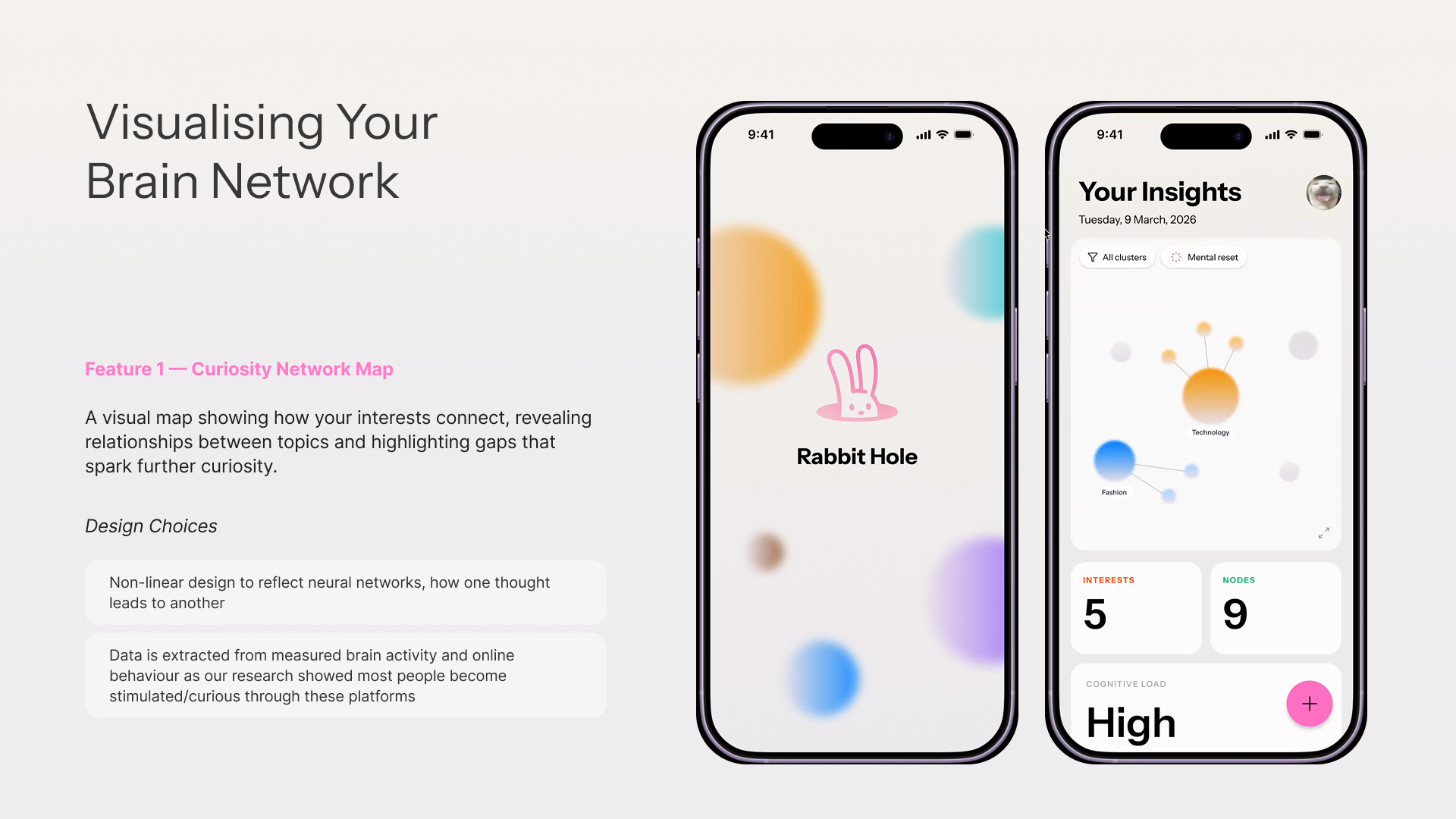
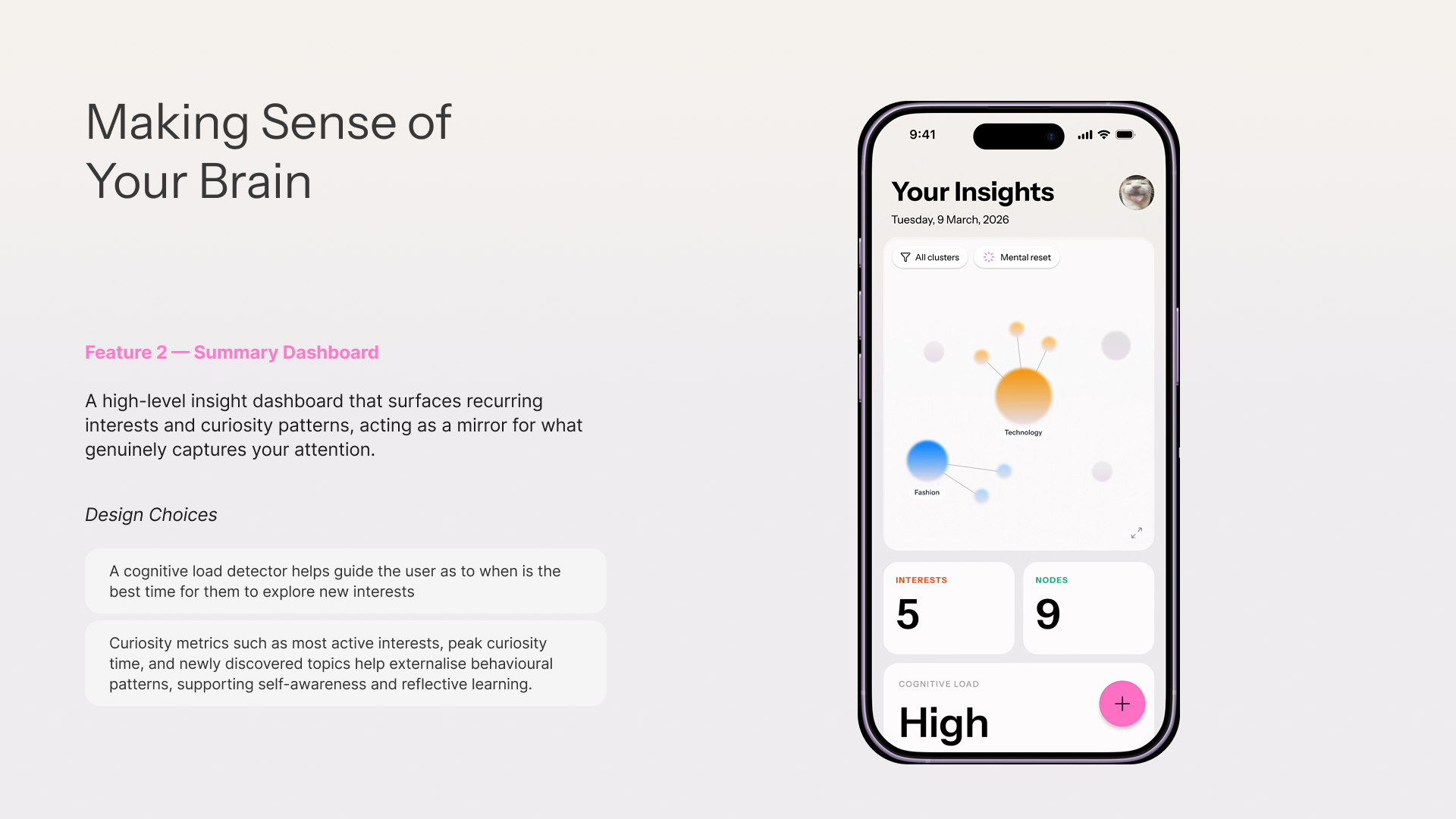
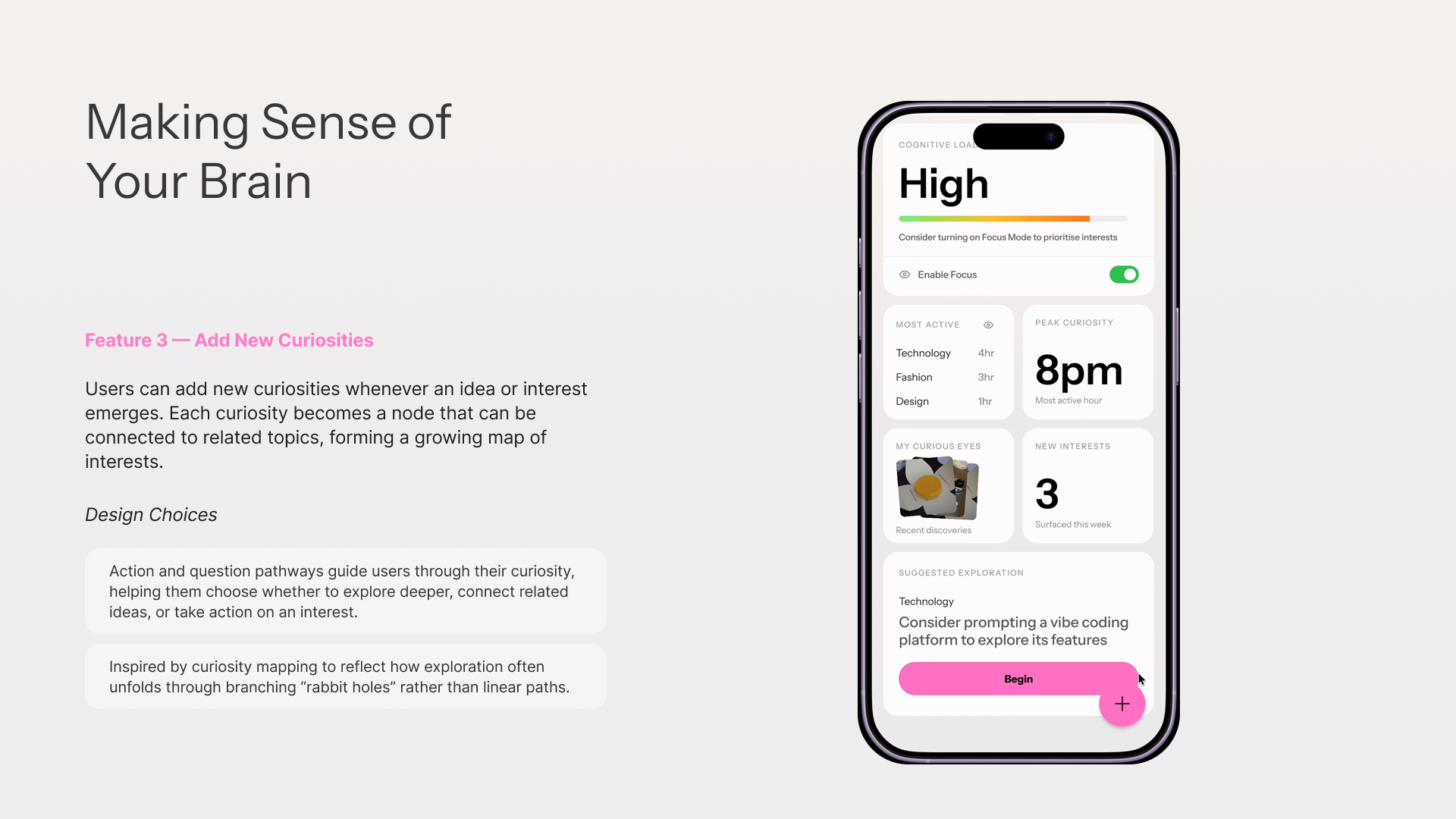
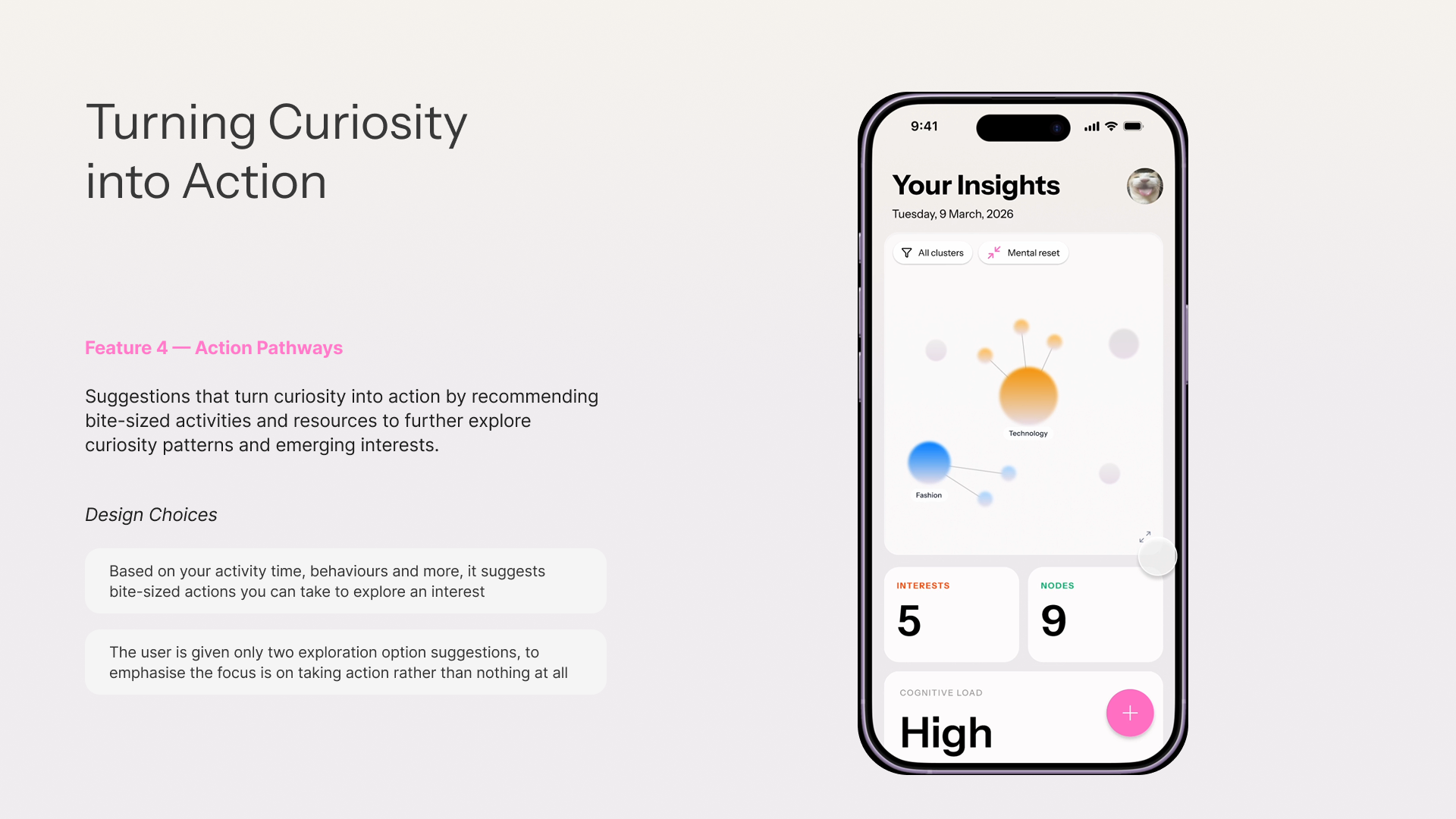
Rabbit Hole reveals the hidden patterns behind a person’s curiosity. By analysing digital traces such as saved posts, paused content, and recurring topics, it surfaces what users are genuinely interested in. It then visualises these interests and suggests small, actionable ways to explore them further.
How we built it
We began by exploring our problem space and conducting primary research to understand how curiosity manifests today. Through surveys, interviews, and diary studies, we identified key insights about the gap between curiosity and action. We then ideated solutions and rapidly prototyped our concept using Figma Make, iterating through multiple versions and user testing to refine the final experience.
Challenges we ran into
Learning to prompt and prototype with Figma Make was a new skill for our team. Additionally, visualising something as abstract as curiosity and neural patterns was challenging. Rapid prototyping helped us experiment with different visual approaches and better communicate the concept.
Accomplishments that we're proud of
We’re proud of how we visualised curiosity, an abstract cognitive process, into a clear and interactive system. The curiosity network map helped translate complex behavioural signals into something users could easily understand and explore.
What we learned
This project introduced us to speculative design and how imagining future technologies can help address present-day problems. We also learned that having a clear concept and strong team alignment early on greatly accelerates the design process.
What's next for Rabbit Hole
Future versions of Rabbit Hole could explore new sensing technologies, such as wearable haptic devices, to detect curiosity signals in real time. These could help extend the system beyond digital behaviour and capture curiosity as it emerges in the physical world.
Built With
- aftereffects
- chatgpt
- claude
- figjam
- figma
- figmamake


Log in or sign up for Devpost to join the conversation.