R3AI - AI-Powered Robotic Cleanup Simulation
Inspiration
R3AI was inspired by two goals: exploring how robotics and AI can work together in simulation software and addressing a local community problem: waste buildup and environmental cleanliness. We wanted to build something technically innovative and socially meaningful.
Our solution simulates an autonomous cleanup robot that scans an area, identifies trash, determines what it can carry, and plans an efficient waste collection route.
What We Built
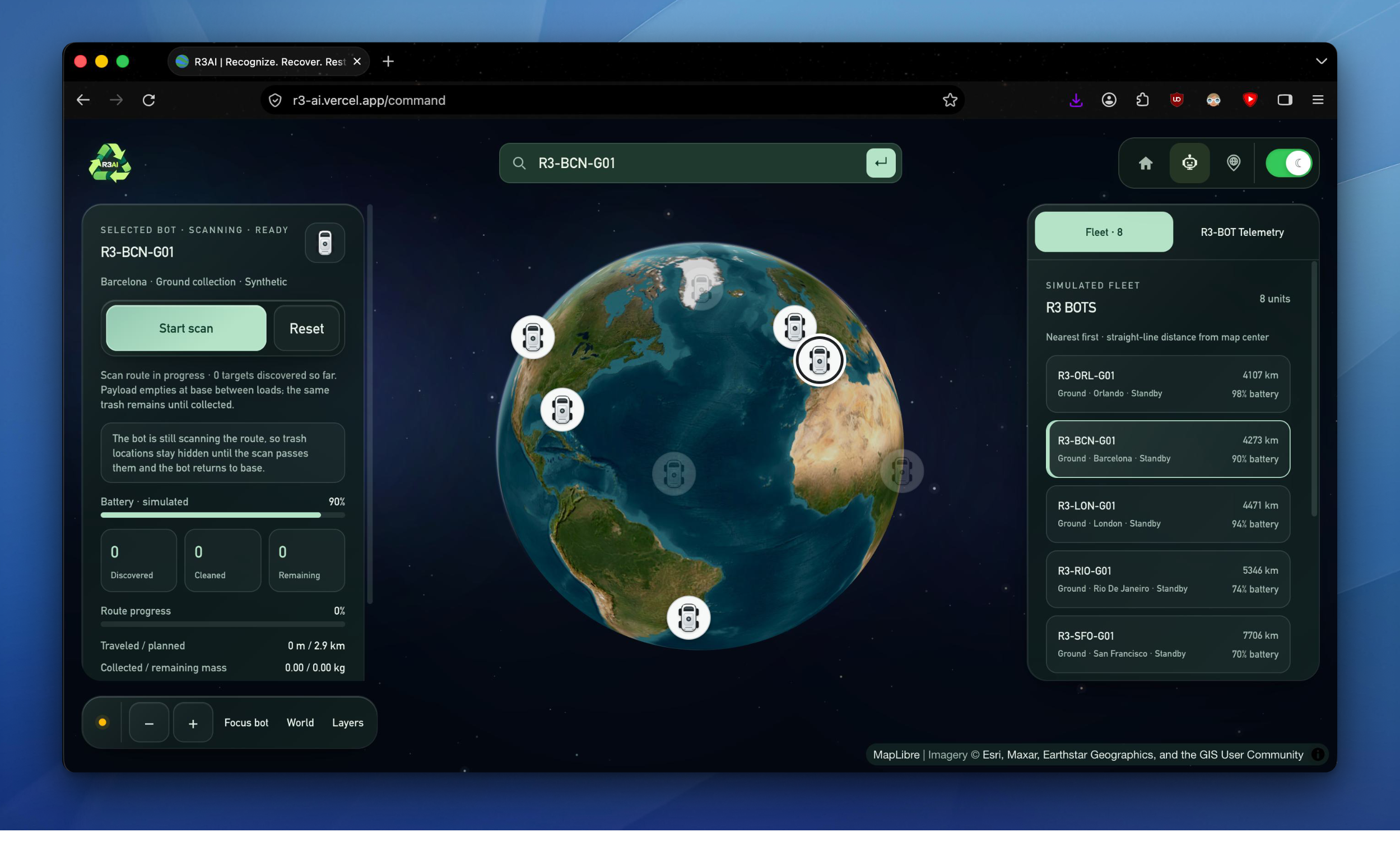
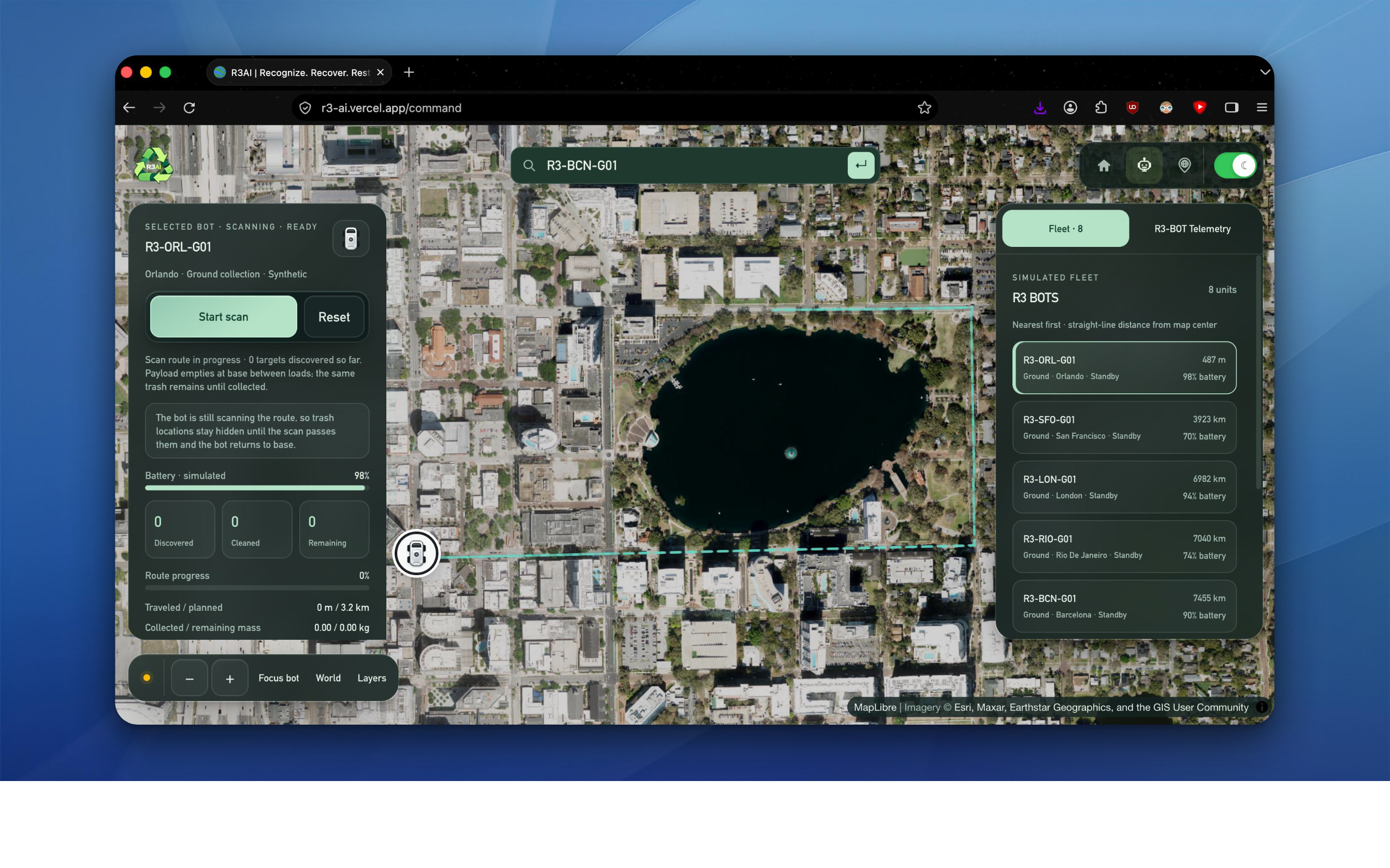
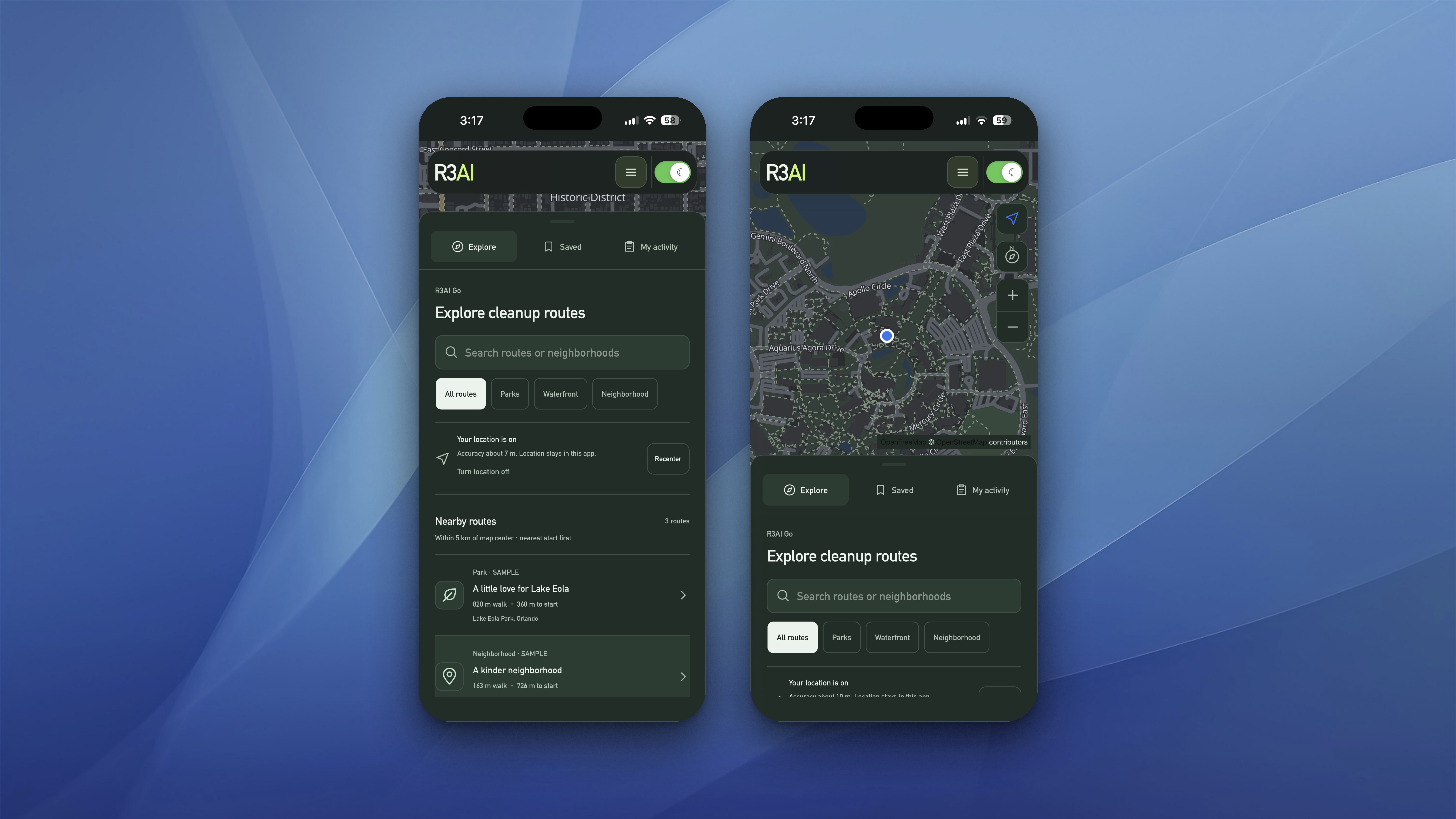
R3AI is a simulation-based cleanup platform that integrates AI-powered object detection, optimization algorithms, route planning, and an interactive web interface.
The project combines three main ideas:
- Recognize -> identify trash in a target area using computer vision.
- Recover -> plan and simulate robot collection runs subject to storage, size, and weight constraints.
- Restore -> show the environmental impact and operational performance of cleanup missions.
Furthermore, the project focuses on four main concepts:
- AI-Powered Trash Detection: Integrated Hugging Face's YOLO26n model to identify common waste objects, such as water bottles.
- Intelligent Collection Planning: Implemented multidimensional tabulation-based knapsack logic to prioritize trash collection while respecting the robot's storage capacity.
- Route Optimization: Integrated OSRM to retrieve optimized routes for navigating the cleanup area.
- Interactive Simulation: Developed a web-based interface that visualizes scanning phases, route planning, collection runs, and overall cleanup progress.
What We Learned
One of our biggest takeaways was understanding the complexity of integrating AI perception, optimization algorithms, and robotics-style simulation into a unified workflow.
We also explored the trade-offs between simplified optimization models and more physically realistic approaches, particularly when accounting for storage constraints in two-dimensional space. Additionally, we learned how important clear data visualization and thoughtful frontend design are to making complex simulation processes understandable.
Challenges
- AI Detection Accuracy: Improving the quality and reliability of trash detection.
- Storage Optimization: Adapting knapsack-based selection logic to a robot with two-dimensional storage constraints.
- Simulation Realism: Balancing realistic behavior with implementation complexity, particularly when considering a full 2D rectangular-packing heuristic.
- Frontend Complexity: Designing a clean, intuitive interface to communicate simulation data and robot behavior effectively.
Impact
R3AI allowed us to explore how AI-powered perception, algorithmic optimization, and robotics simulation can work together to address environmental challenges. By combining these technologies in an interactive platform, we demonstrated a potential approach to making autonomous waste collection smarter, more efficient, and more accessible to simulate and evaluate.
Built With
- html
- javascript
- maplibre
- next.js
- python
- typescript
- yolo


Log in or sign up for Devpost to join the conversation.