-
-
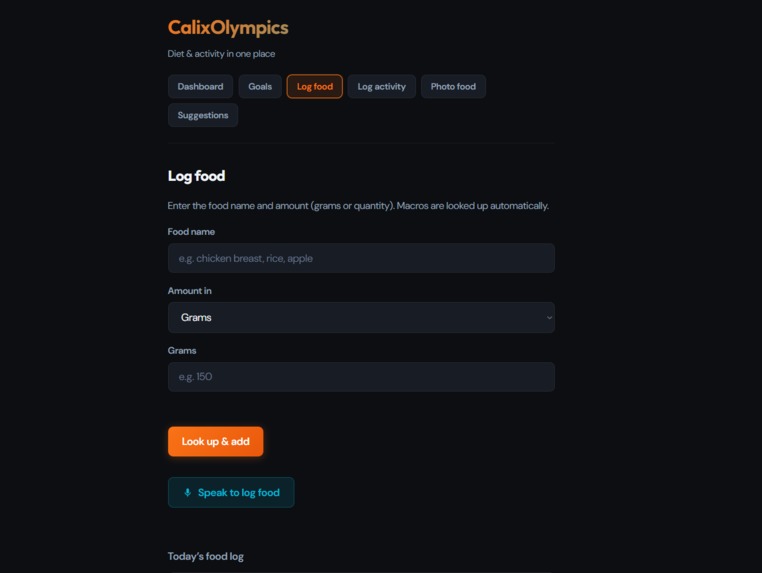
CalixOlympics App
-
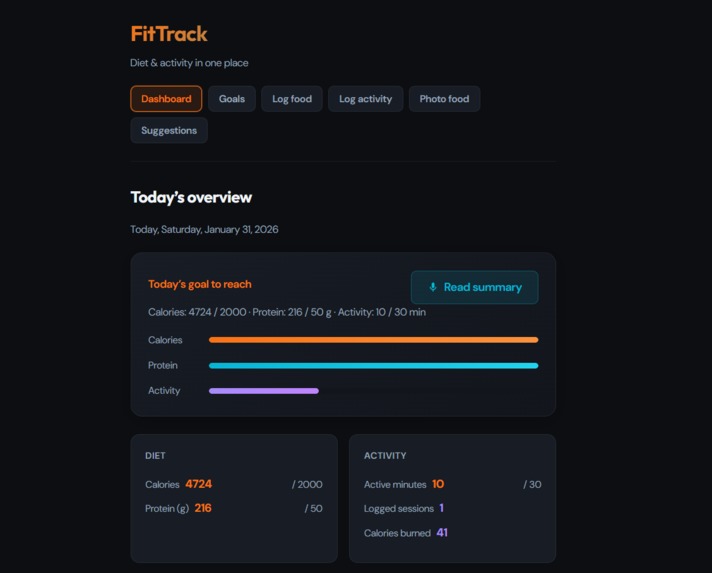
Website Picture
-
-
-
-
-
Calixo Latest


🏔️ AI, Fitness Tracking, and High-Performance Sport
Inspiration
The inspiration behind these projects came from a shared question: how can technology help people perform better under demanding physical conditions? This question applies not only to everyday fitness, but also to elite environments such as the Winter Olympics, where small differences in preparation, recovery, and consistency can determine success or failure.
Winter Olympic athletes train in high-intensity cycles that require careful management of energy intake, physical load, and recovery. Missing long-term patterns in nutrition or activity can lead to fatigue, injury, or inconsistent performance. These projects explore how AI-driven tracking and autonomous systems can transform raw data into meaningful insight that supports sustainable, high-level performance.
Project 1: AI-Powered Nutrition and Activity Tracking App (Fittrack)
GitHub: https://github.com/azkh357/CalixOlympicsSite
Overview
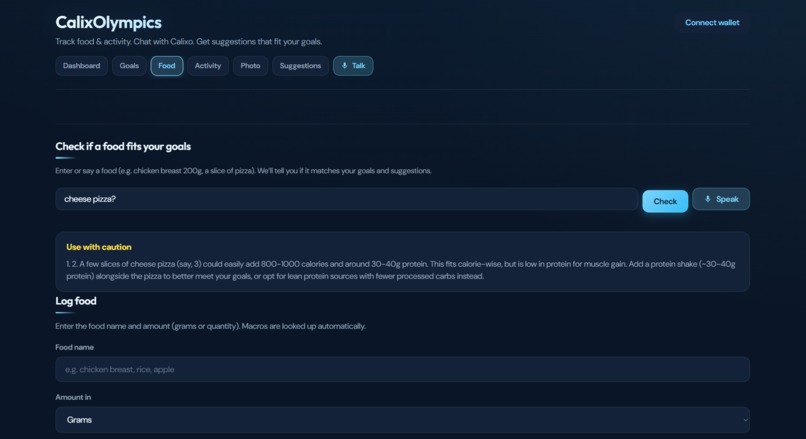
The nutrition and activity tracking app allows users to log daily meals and physical activity. Instead of evaluating individual days, the app uses AI to analyze trends over time, identifying patterns related to consistency, energy balance, and activity levels. This long-term approach reflects how elite athletes track performance across weeks and months rather than focusing on single sessions.
Please note: the app CalixOlympics works perfectly locally and is also hosted on render.com at the following domain: calixofitnesssite.onrender.com.
Application to Winter Olympic Athletes
For Winter Olympic athletes in sports such as bobsleigh, speed skating, and alpine skiing, performance depends on sustained energy management and recovery. Trend-based fitness tracking helps athletes identify under-fueling, over-training, or inconsistencies before performance declines.
By analyzing this balance over time, athletes and coaches can adjust nutrition and training plans proactively to support peak performance.
How It Was Built
- Designed a structured system for logging meals and physical activity
- Stored and processed user data to enable long-term analysis
- Applied AI techniques to identify meaningful patterns rather than daily fluctuations
- Focused on presenting insights that encourage sustainable habits
What I Learned
- AI provides the most value when applied to long-term trends
- Consistency is a stronger indicator of performance than short-term results
- Effective fitness tools must balance accuracy with usability
Challenges Faced
- Handling incomplete or inconsistent user data
- Avoiding overly complex metrics that reduce clarity
- Designing insights that motivate rather than discourage users
Project 2: Autonomous Robotic Car Inspired by the Winter Olympics
GitHub: https://github.com/azkh357/r36
Overview
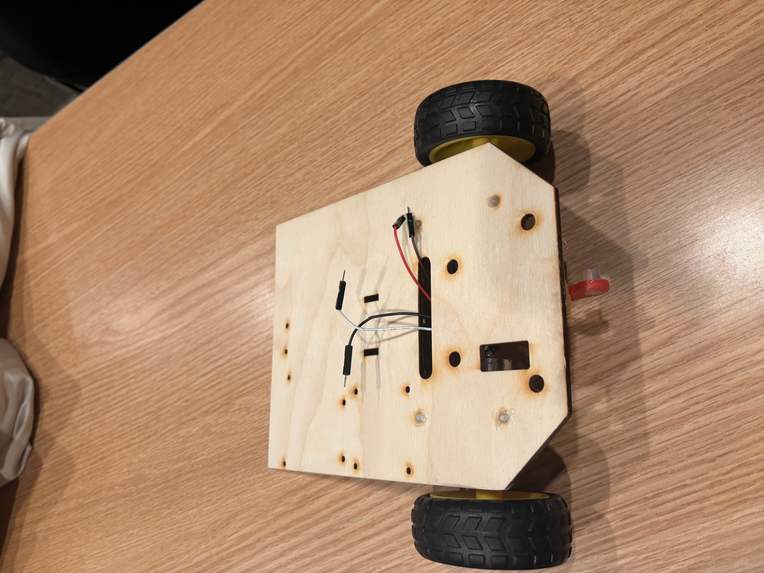
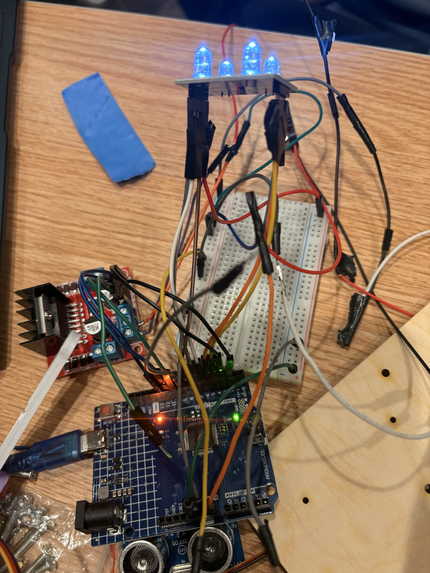
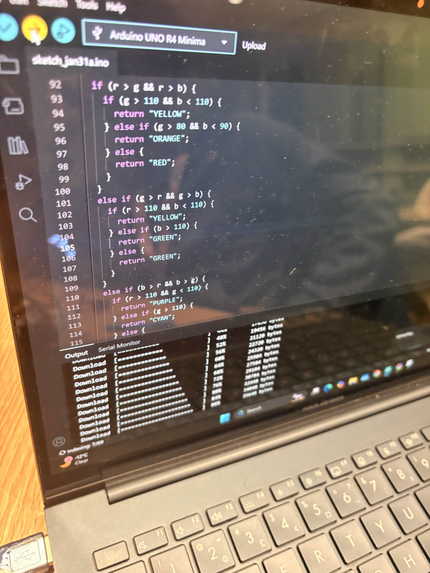
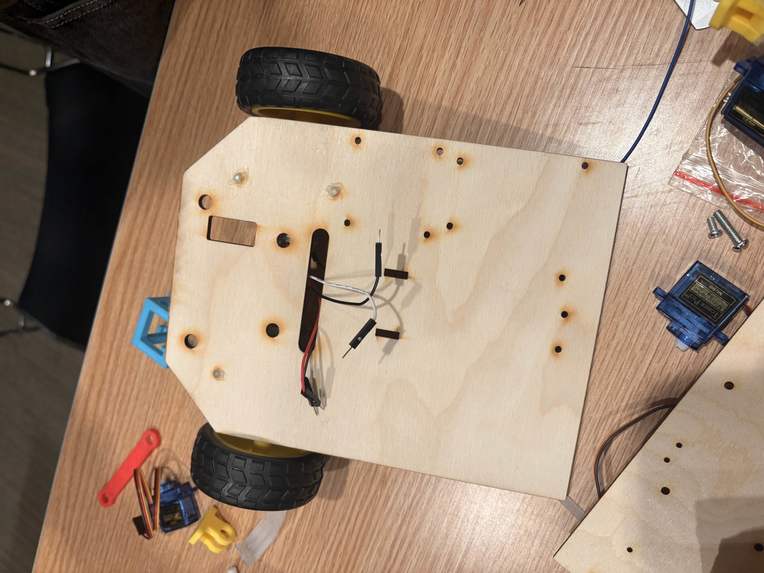
The autonomous robotic car was designed to simulate the challenges of high-speed Winter Olympic sports such as bobsleigh and speed skating. The goal was to create a system capable of moving at high speed while maintaining control, where small errors could lead to instability or failure.
System Design
- Sensors continuously monitored the environment
- Real-time control logic adjusted speed and direction dynamically
- Stability was prioritized alongside speed
- Repeated testing and refinement improved consistency and performance
Connection to Athlete Performance
Just as Winter Olympic athletes rely on constant feedback to adjust technique during competition, the robotic car demonstrates how autonomous systems improve through iterative feedback loops. Small corrections made in real time lead to improved reliability under demanding conditions.
What I Learned
- High-speed systems require careful balance between responsiveness and stability
- Real-world testing reveals challenges not seen in simulations
- Iterative refinement is essential for reliable autonomous behavior
Challenges Faced
- Tuning sensor sensitivity without over-correcting
- Maintaining control at high velocity
- Translating theoretical control logic into real-world performance
Final Reflection
Together, these projects demonstrate how AI and autonomous systems can support both everyday fitness and elite athletic performance. Whether analyzing long-term health trends or maintaining stability in a fast-moving system, the key insight is the same: sustained performance depends on understanding patterns, responding to feedback, and refining systems over time.
Built With
- cursor
- elevenlabs
- elevenlabs-api
- gemini-api
- javascript
- mongo-db-api
- oceandigital-api
- openrouter
- react
- snowflake-api
- solona-api
- terminal


Log in or sign up for Devpost to join the conversation.