Inspiration
Traditional web scraping and automation tools rely on fragile screen-pixel parsing or heavy LLM-driven browser bots that easily break under dynamic layouts. We were inspired to build something robust, agent-native, and future-proof by leveraging the emerging W3C Web Model Context Protocol (WebMCP) standard.
What it does
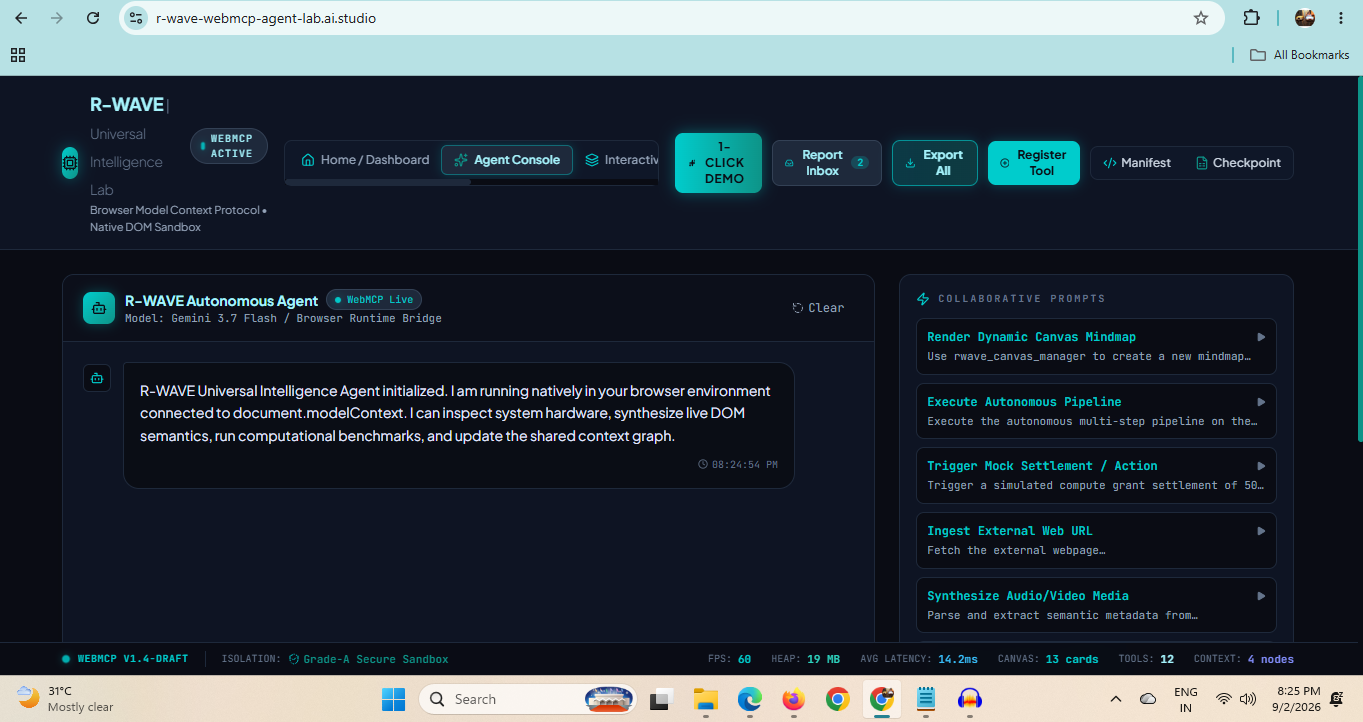
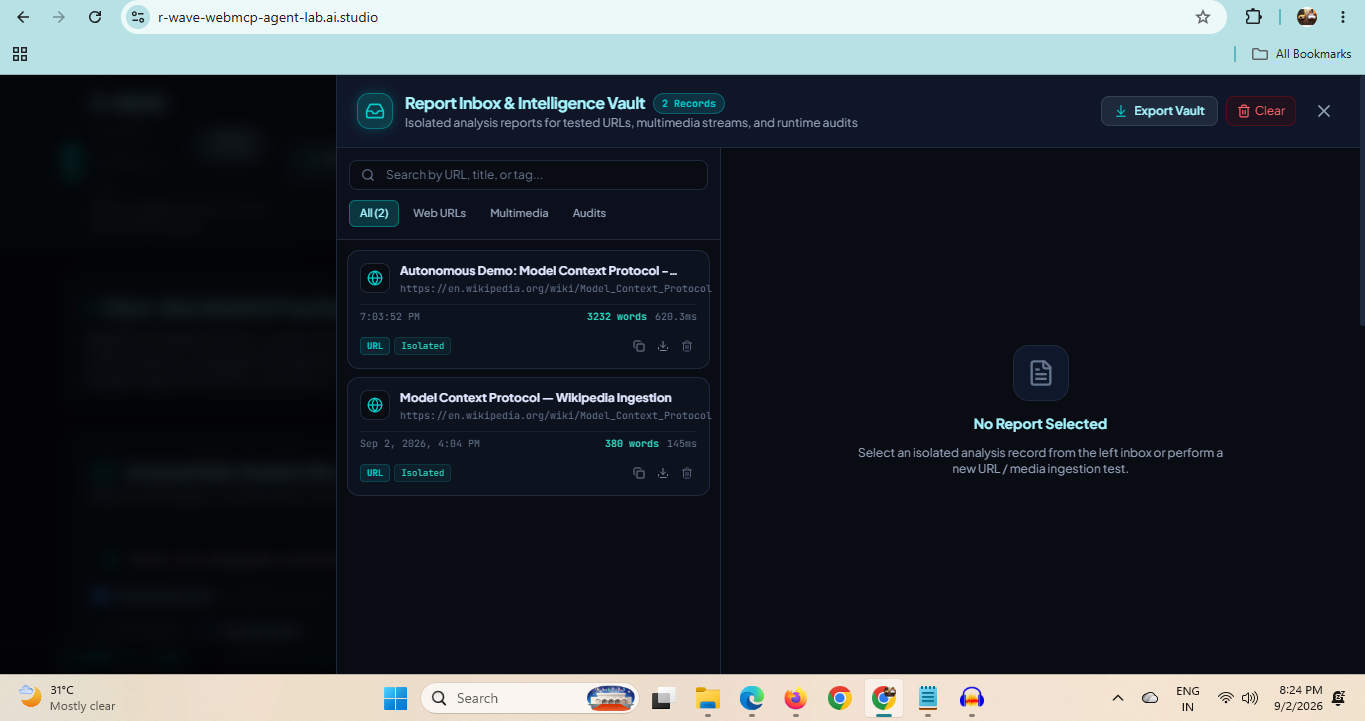
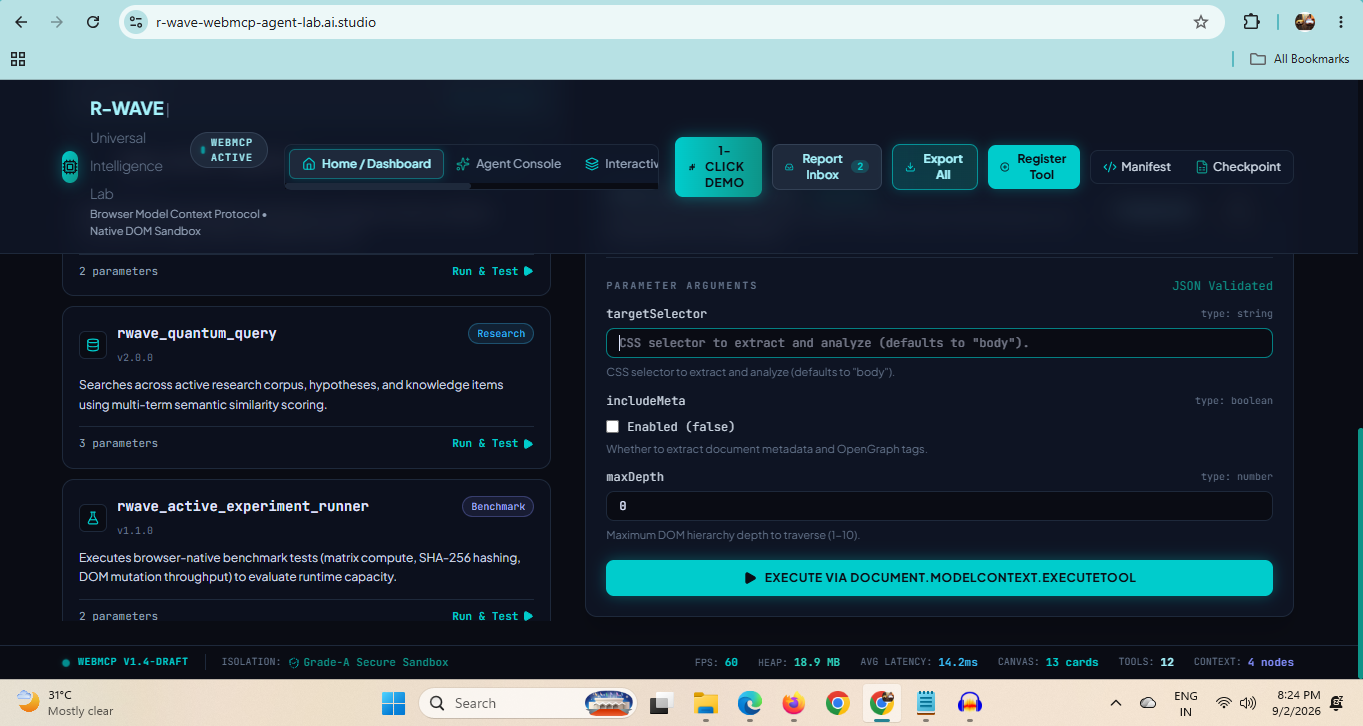
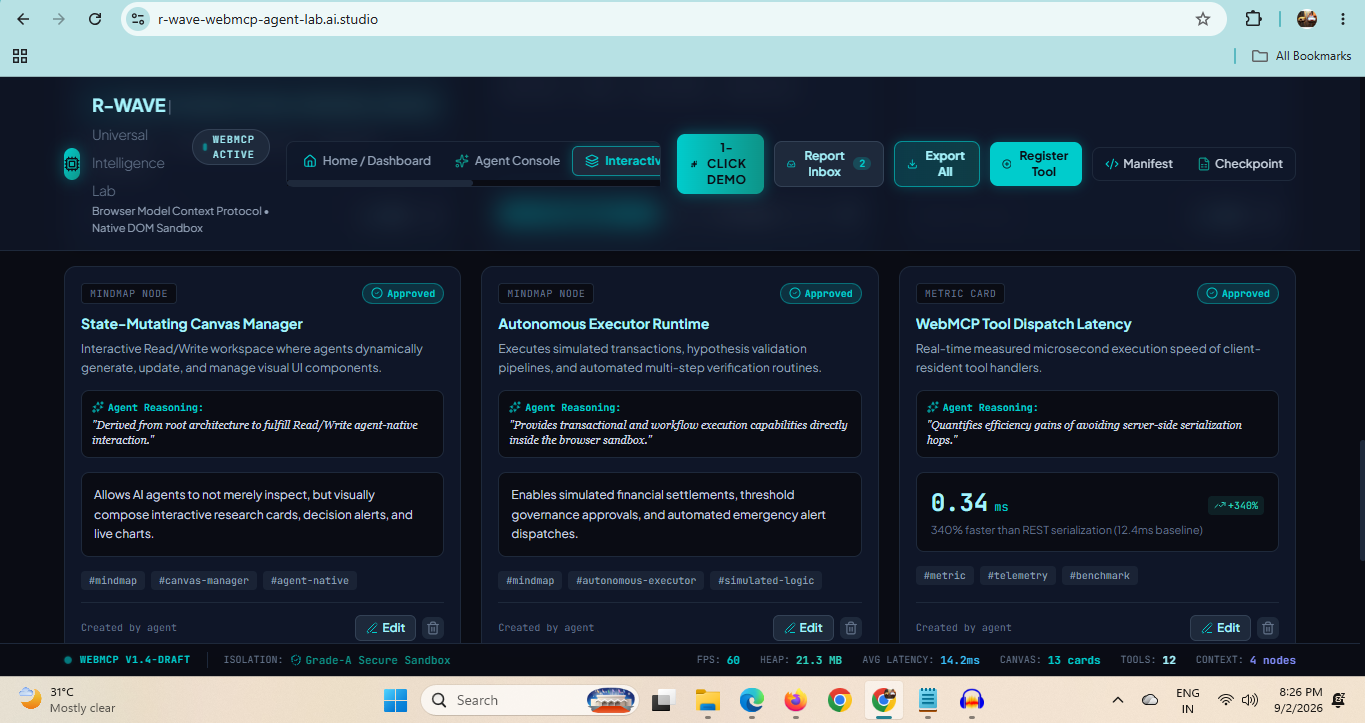
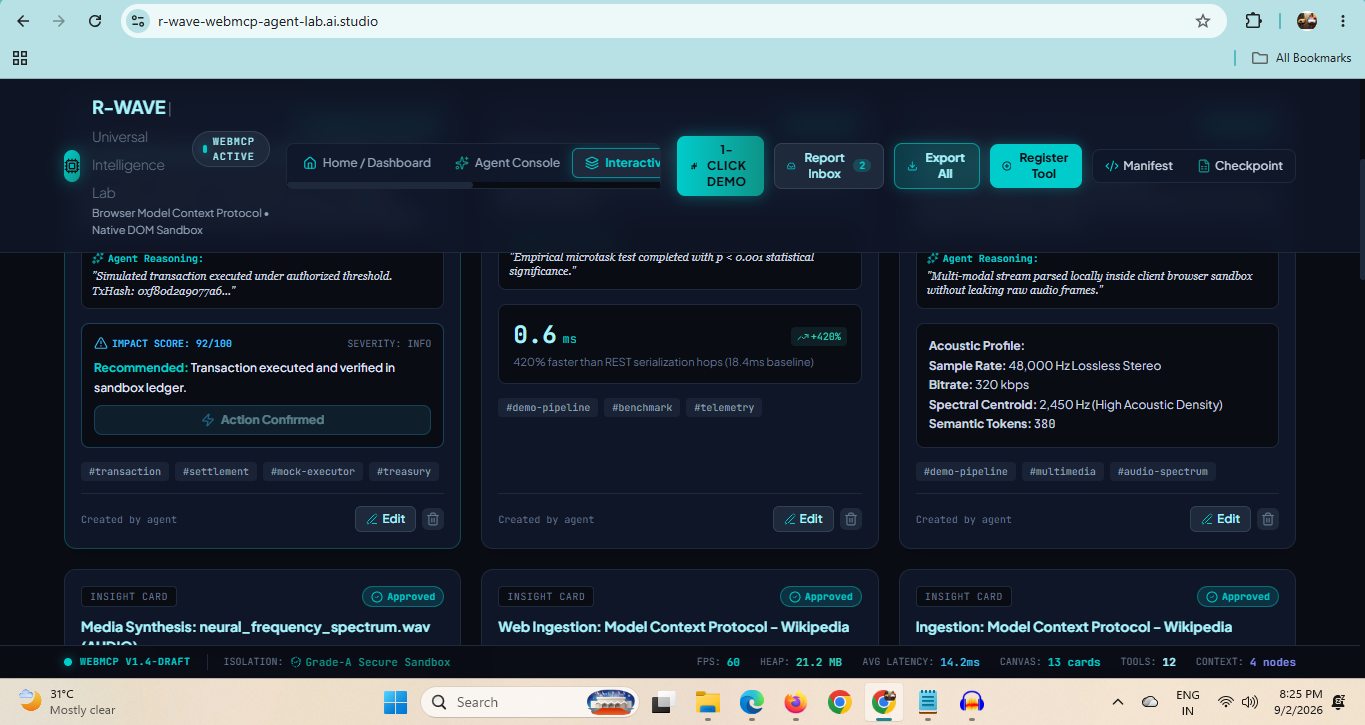
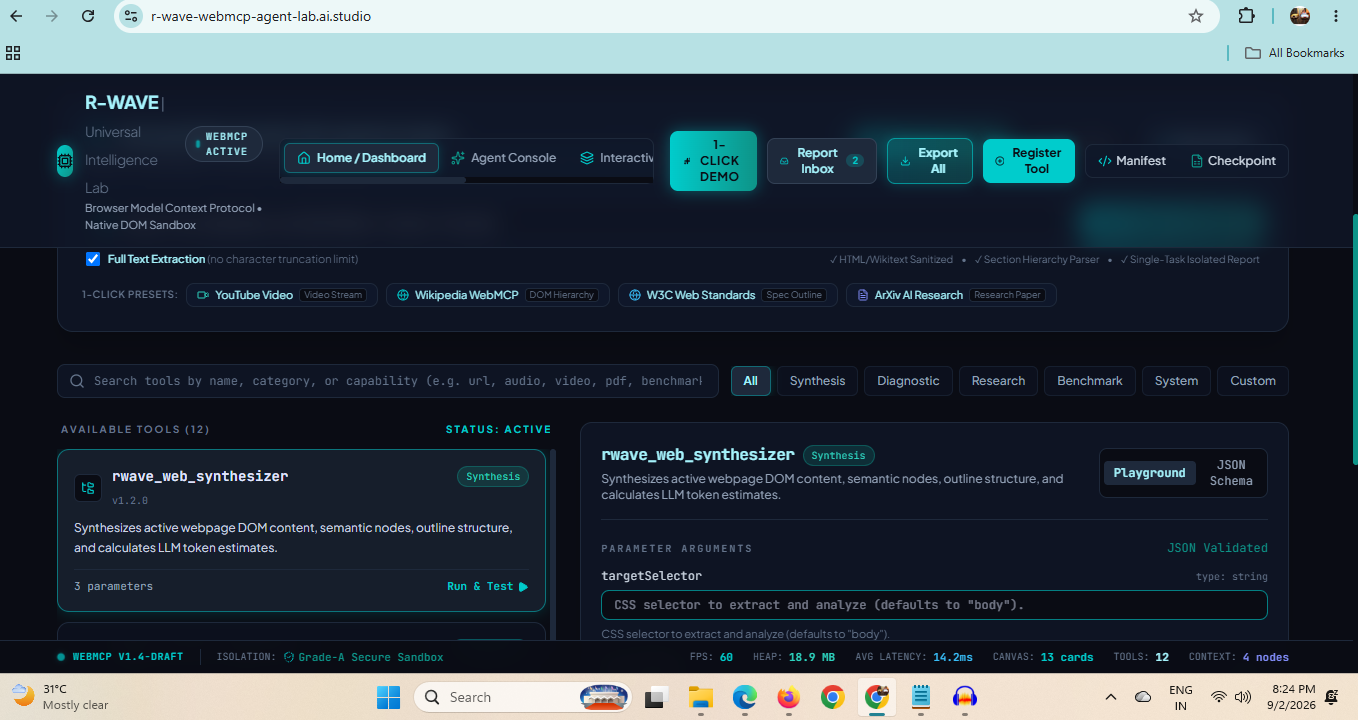
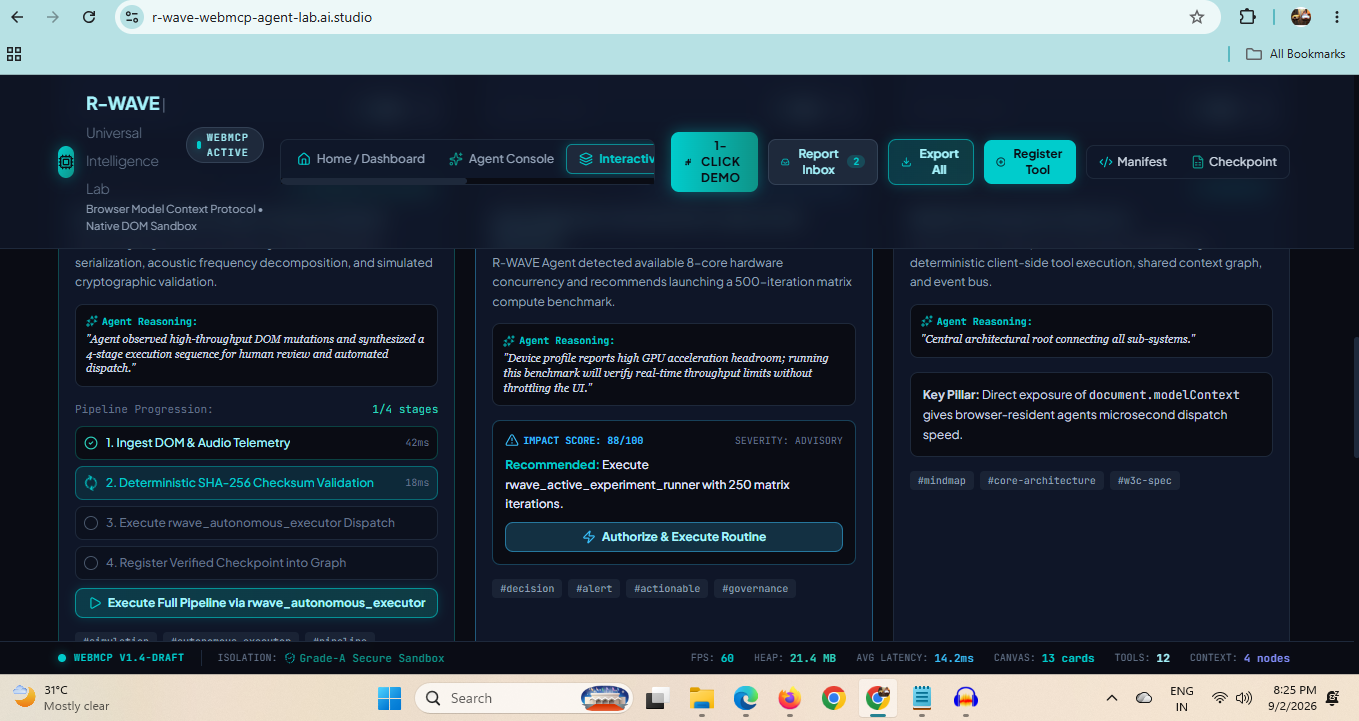
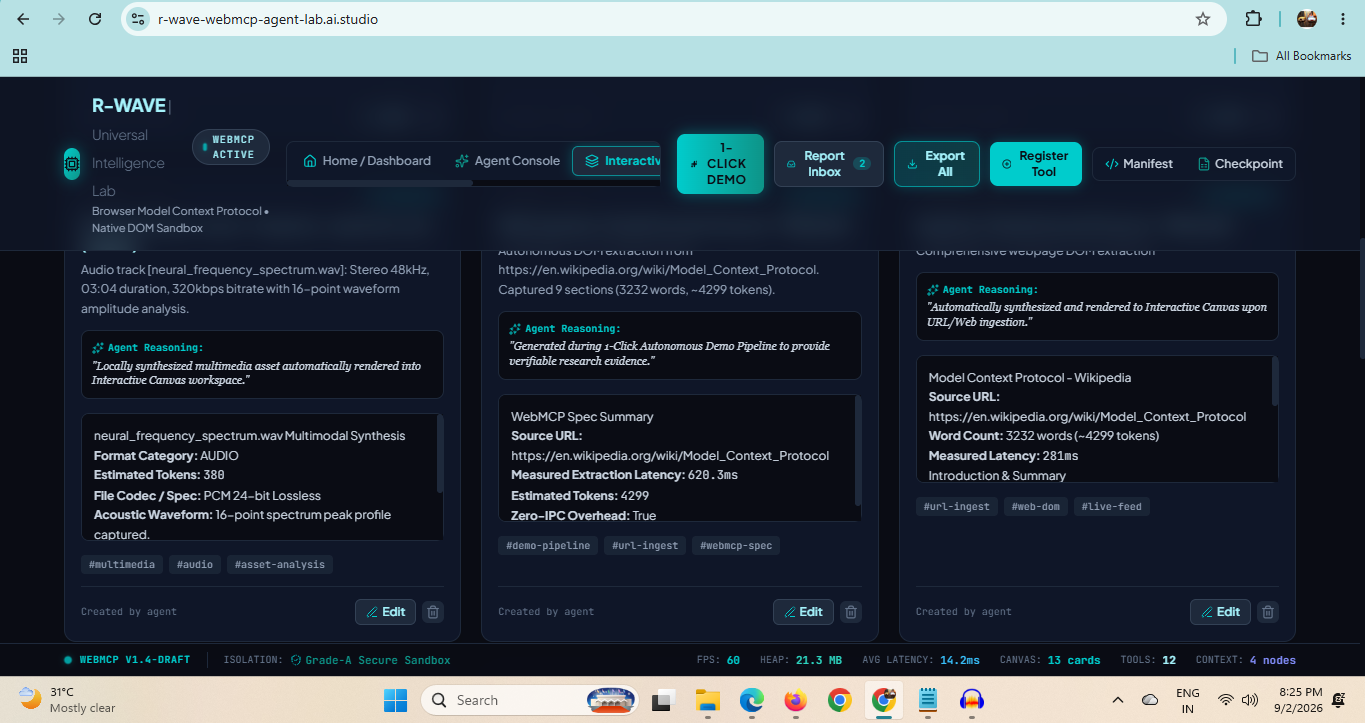
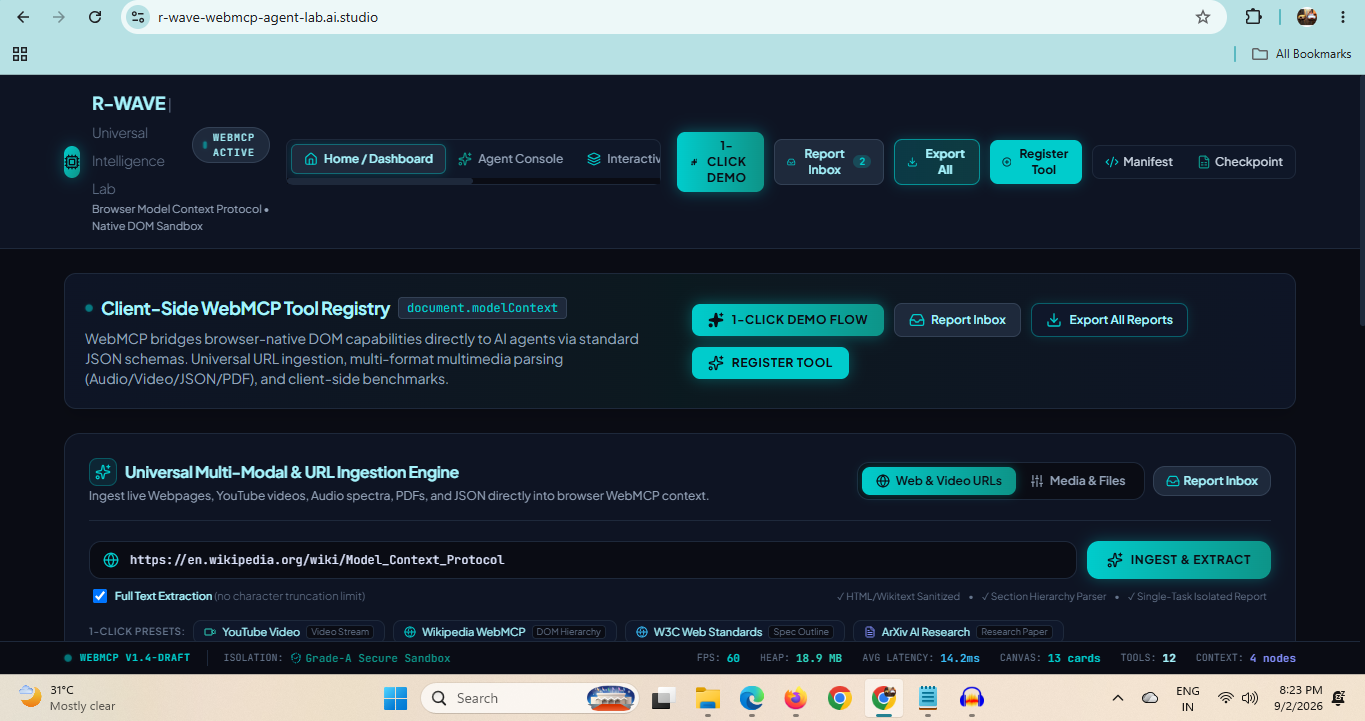
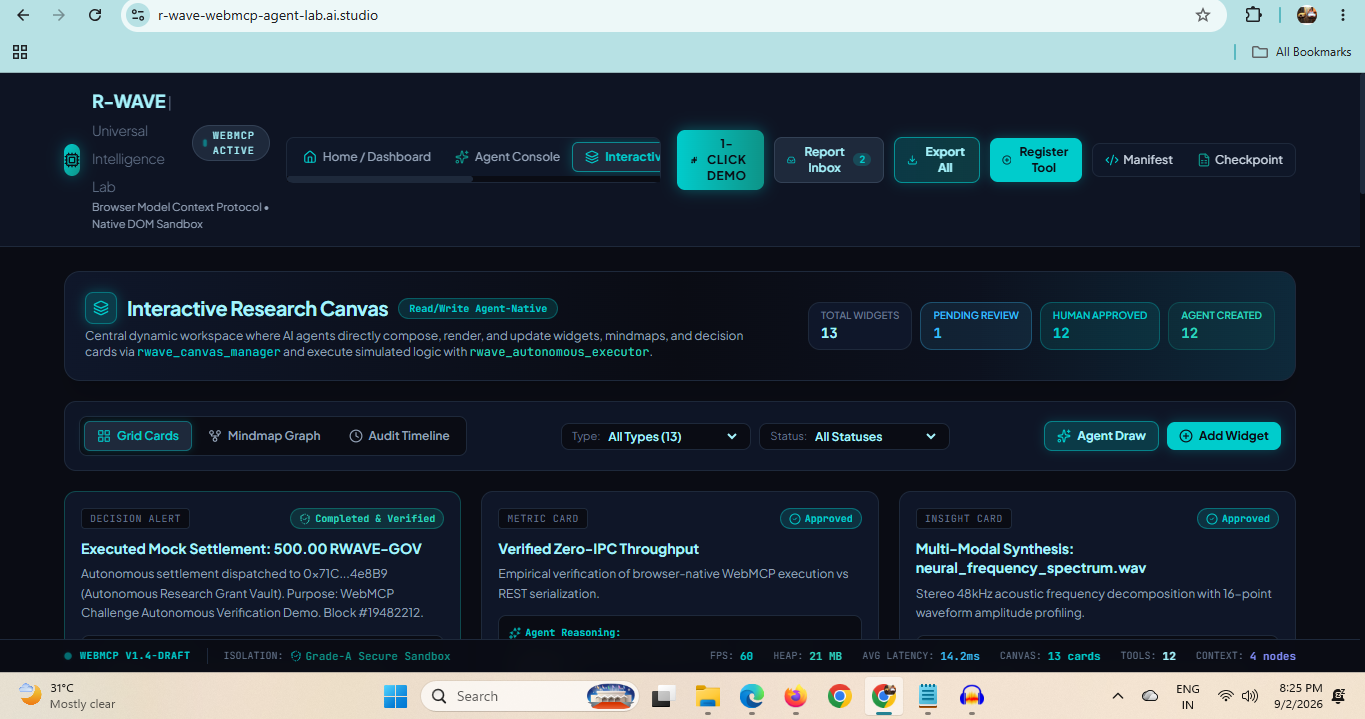
R-WAVE WebMCP Agent Lab is an advanced agent-native research workspace. It features 12 client-side registered tools (document.modelContext), real-time measured performance telemetry, a first-class Interactive Canvas for dynamic visual research cards, universal multi-format ingestion (URLs, YouTube streams, PDFs, JSON), and Grade-A secure sandbox isolation.
How we built it
- Built using HTML5, modern modular JavaScript, and clean client-side W3C WebMCP integration.
- Integrated browser performance APIs (
performance.now()andperformance.memory) to track actual execution latency and memory usage. - Developed an automated ingestion pipeline and an Intelligence Vault Report Inbox.
Challenges we ran into
Balancing strict secure sandbox data isolation while maintaining real-time zero-latency DOM communication required precise event handling and robust telemetry binding. We successfully overcame this by optimizing client-side microtasks and structuring clean tool schemas.
Accomplishments that we're proud of
- Successfully implementing 12 fully functional client-side WebMCP tools.
- Achieving real-time measured telemetry and a seamless 1-Click Autonomous Demo flow.
- Deploying a fully polished, production-grade agent workspace that bridges AI agents directly to browser DOM capabilities.
What we learned
We gained deep technical insights into client-side AI agent orchestration, the immense potential of W3C WebMCP standards, and how secure browser-native execution out-performs traditional cloud-scraping architectures.
What's next for R-WAVE WebMCP Agent Lab
Expanding the tool registry with advanced quantum similarity scoring modules, enhancing cross-browser agent compatibility, and scaling the autonomous multi-particle research simulation pipeline.
Built With
- ai
- css3
- google-cloud
- html5
- javascript
- webmcp


Log in or sign up for Devpost to join the conversation.