-
-
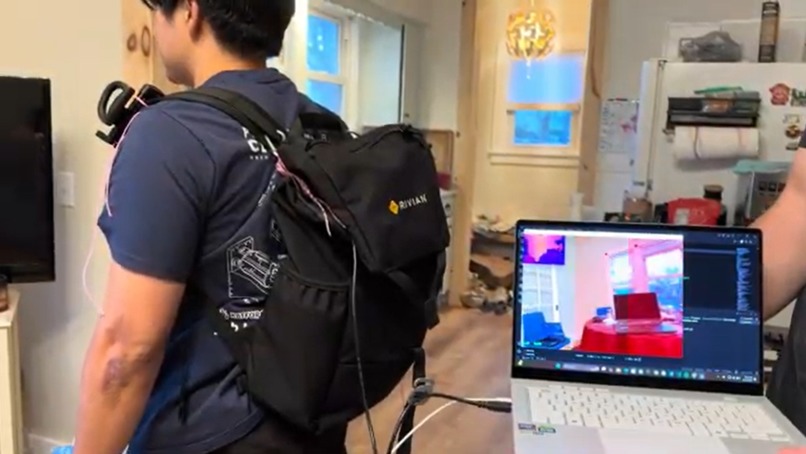
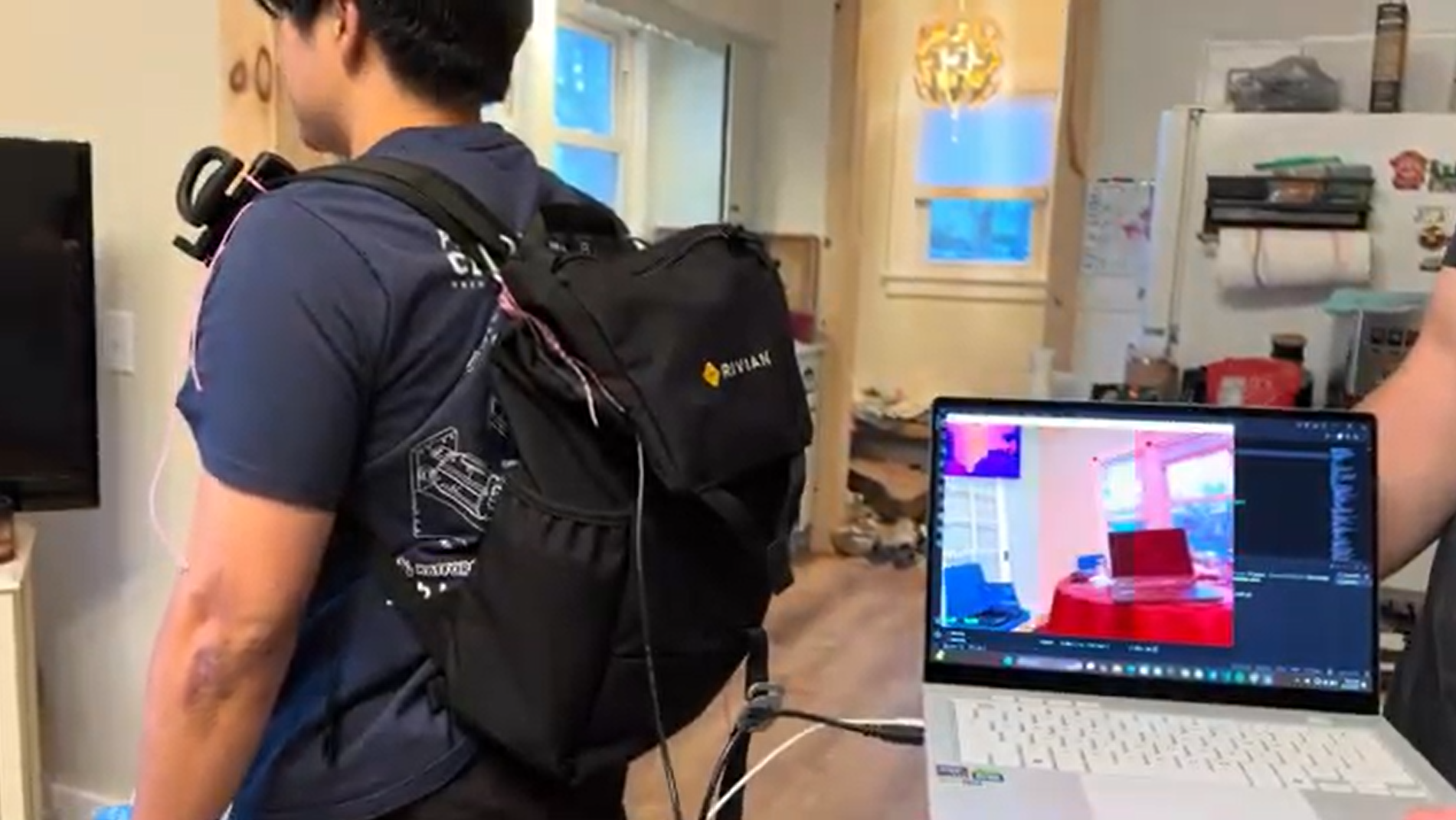
Backpack + LiDAR System
-
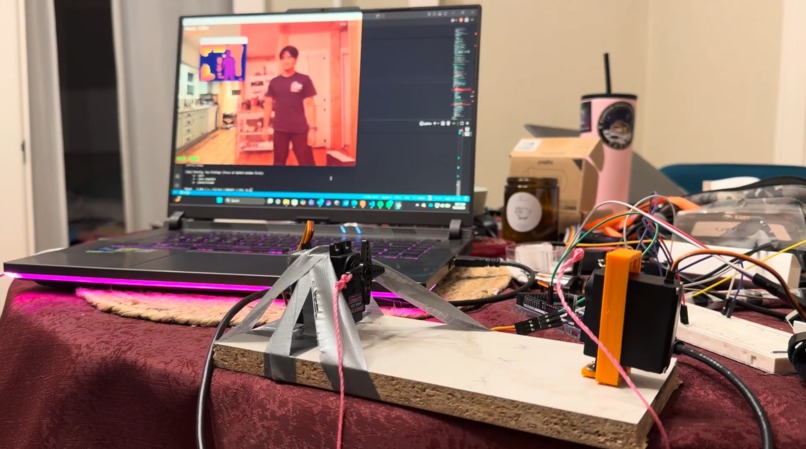
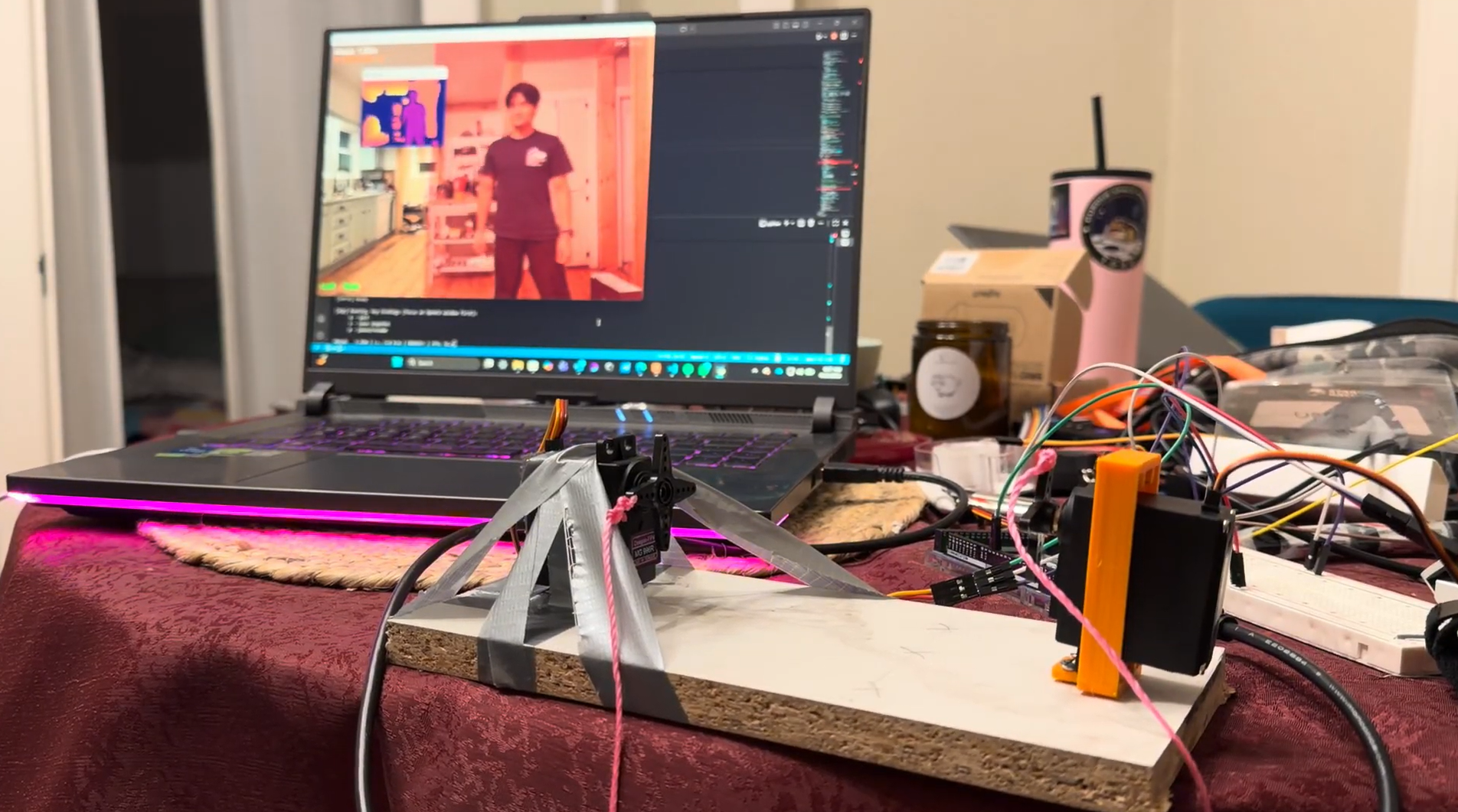
Exposed Hardware
Inspiration
We were inspired by the challenges visually impaired individuals face when navigating everyday environments. While tools like canes are effective, they don’t always detect low or unexpected obstacles just beyond reach. We wanted to create a system that provides continuous, intuitive guidance—something that actively helps users move safely and confidently through space.
What it does
R.E.M.Y. is a wearable backpack that detects obstacles in real time and guides users using physical feedback. When an object is detected, motors embedded in the backpack gently tug on strings attached to the left or right backpack straps to steer the user away from danger. If an obstacle is directly ahead, both straps activate to signal the need to stop or adjust direction.
How we built it
We built R.E.M.Y. by combining depth sensing, software processing, and mechanical actuation. Using an iPhone-based depth sensing system, we captured real-time environmental data and processed it through a Python script. This script analyzed obstacle proximity and converted it into simple directional commands. These commands were sent to a microcontroller, which controlled servo motors connected to the backpack straps to generate the guiding tugs.
Challenges we ran into
One of our biggest challenges was setting up reliable real-time communication between devices, particularly getting the depth data stream working and ensuring compatibility between software versions. We also faced difficulties with hardware integration, including motor control and consistent feedback due to faulty or out-of-stock hardware. These issues could easily be solved for a true product with more time and purchasing power.
Accomplishments that we're proud of
We are proud that we built a fully functional system that translates real-time environmental data into intuitive physical guidance. Creating a wearable solution that users can interact with naturally, and successfully integrating sensing, computation, and mechanical output within a short timeframe, was a major accomplishment for our team. The most impressive accomplishment for our team was that we were able to work cohesively, even on such a tight deadline and with such vast issues, and pull together a product that can someday help real people.
What we learned
Through this project, we learned how to integrate hardware and software into a cohesive system. We gained experience working with real-time sensor data, microcontrollers, and translating complex inputs into simple, meaningful outputs. We also learned the importance of designing with the user in mind and keeping systems simple, reliable, and intuitive.
What's next for R.E.M.Y.
Next, we would focus on improving the system’s reliability and portability by removing the need for a laptop and integrating all processing into a compact embedded system. We would also refine the feedback system to make it more precise and comfortable, explore additional sensing methods, and test the product with real users to better tailor it to their needs. We would also like to increase our grid, from the current 3 grid system to a continuous grid, enabling for precise rotation of the servo motors to identify required aggressiveness of the turning for the user. Additionally, we would like to implement ground detection features, which through audible cues, enable the user to identify what type of terrain they are going to be walking into.


Log in or sign up for Devpost to join the conversation.