
Inspiration
Radiation exposure poses serious risks to human health, especially in highly contaminated areas. I wanted to create a solution that allows for safe and efficient radiation assessment without putting people in danger. Inspired by the need for remote environmental monitoring, I developed R.E.C.S to collect and analyze soil samples while keeping operators at a safe distance.
What it does
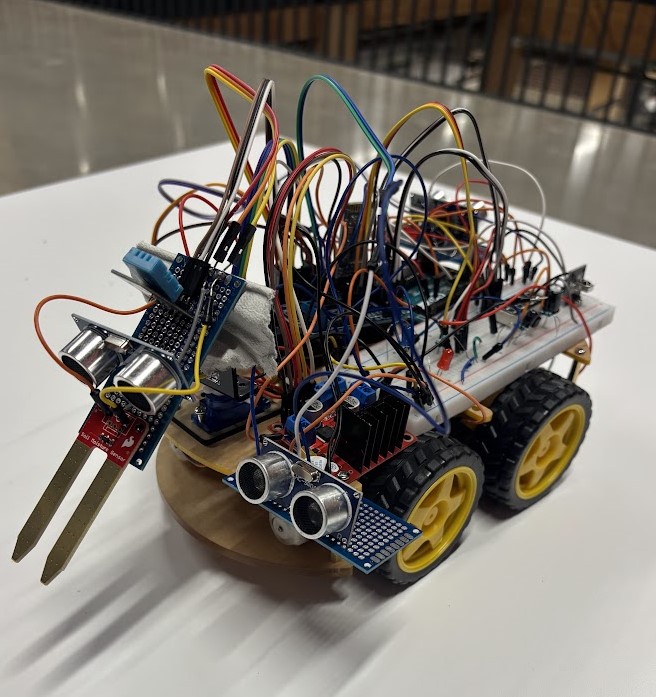
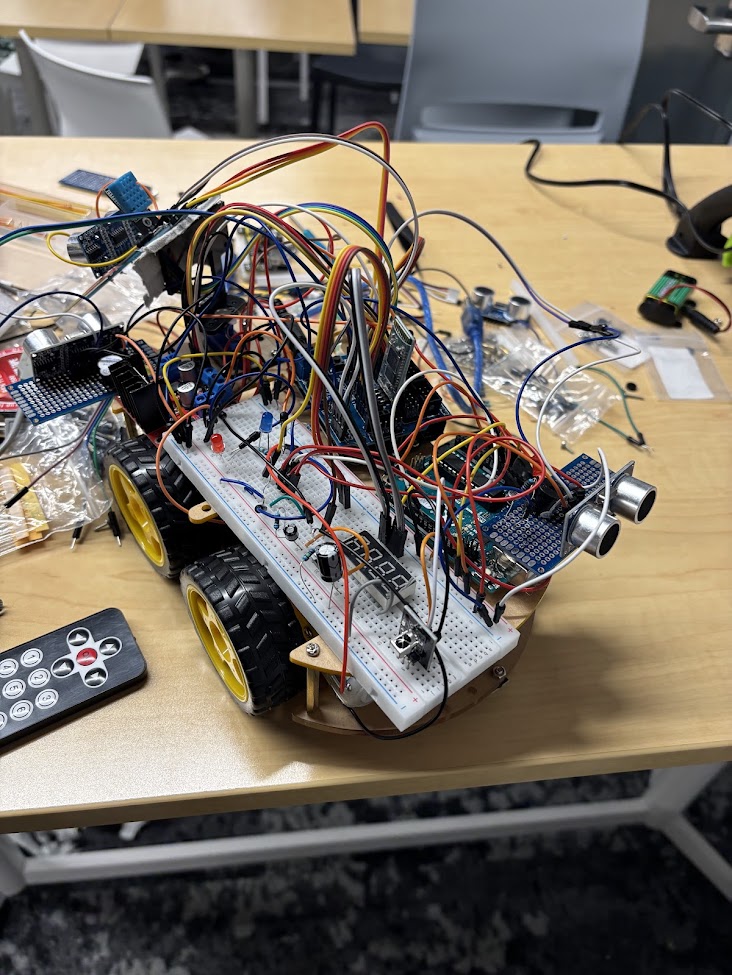
R.E.C.S (Radioactive Examination & Collection of Soil) is a remote-controlled Arduino robot designed to measure radiation levels in contaminated areas. It gathers soil data, monitors temperature, navigates obstacles, and displays real-time radiation levels, minimizing human exposure.
How we built it
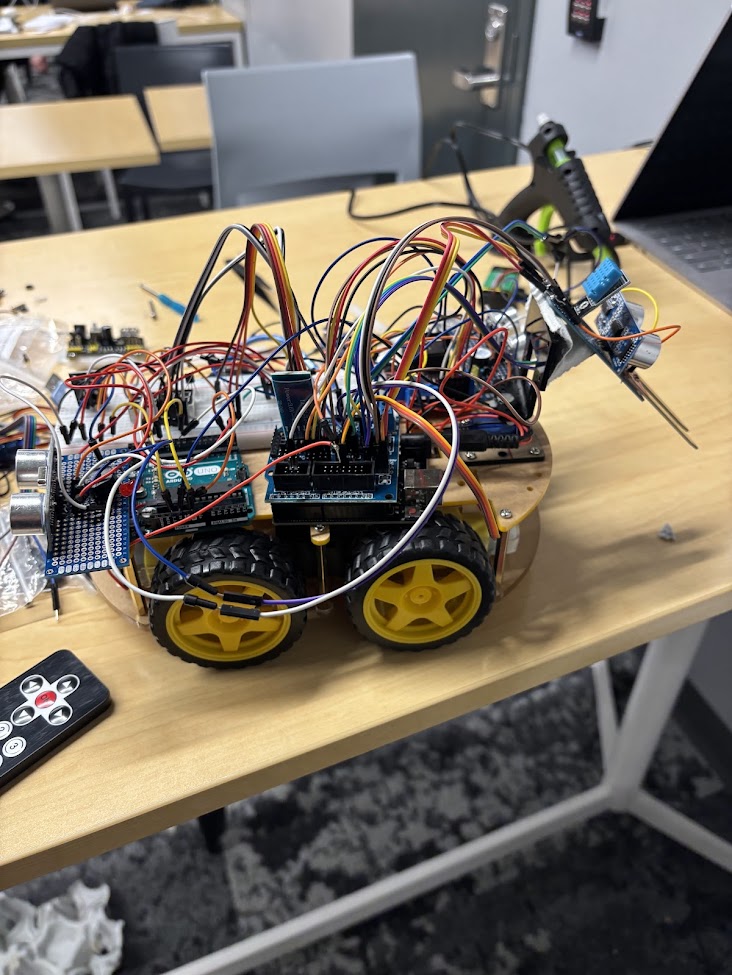
The robot is equipped with multiple sensors:
- A soil sensor for radiation detection
- A temperature sensor for environmental monitoring
- Front and rear ultrasonic sensors for navigation and obstacle avoidance
- An Arduino distance sensor to ensure accurate soil measurements
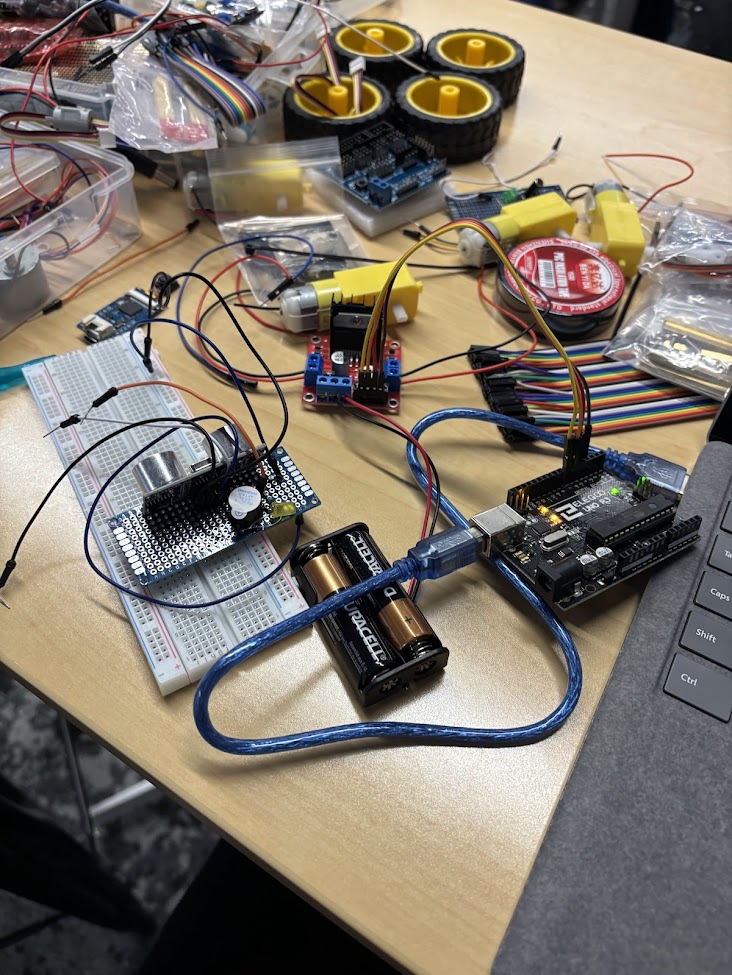
A servo motor adjusts the sensor arm for precise data collection, while a numeric display provides real-time radiation readings. The entire system is controlled via Bluetooth, allowing remote operation from a safe distance.
Challenges we ran into
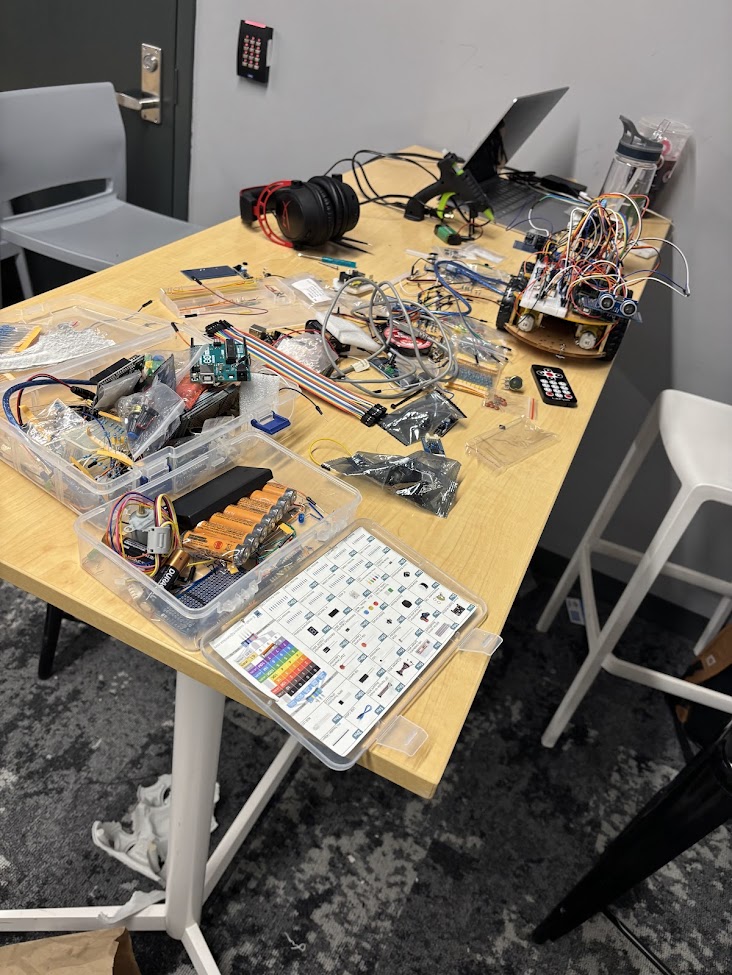
One challenge was ensuring the accuracy of soil measurements while keeping the robot stable on uneven terrain. Integrating multiple sensors and managing power consumption were also technical hurdles. Fine-tuning the servo motor for precise sensor positioning required multiple adjustments.
Accomplishments that we're proud of
Successfully integrating multiple sensors and achieving real-time radiation monitoring was a significant achievement. Developing a functional and remote-controlled robot that enhances safety in hazardous environments is something I’m proud of.
What we learned
I gained valuable experience in sensor integration, power management, and remote control systems. Troubleshooting hardware and fine-tuning the robot’s movement also improved my problem-solving skills.
What's next for R.E.C.S (Radioactive Examination & Collection of Soil)
Future improvements include adding GPS tracking for better navigation, enhancing autonomous capabilities, and integrating a more advanced radiation sensor for higher accuracy. Expanding data storage and wireless data transmission would further improve its usability for field research.

Log in or sign up for Devpost to join the conversation.