Inspiration
EcoSense was a response to the growing frustration people feel with how confusing and overwhelming recycling and sustainability can be in everyday life. While people are aware of the worsening state of our home, it’s more difficult to be aware of what can be recycled, how their actions impact the planet, or where to even start. The new generations especially feel the pressure of solving problems they didn’t create, like climate change and pollution. EcoSense is designed to alleviate some of this stress through its simple, scan-based system that instantly provides clear, actionable insights on recycling, sustainability, and carbon impact, greatly contributing to the lives of everyday users.
What it does
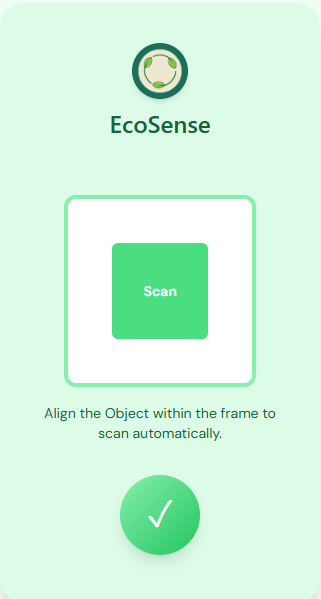
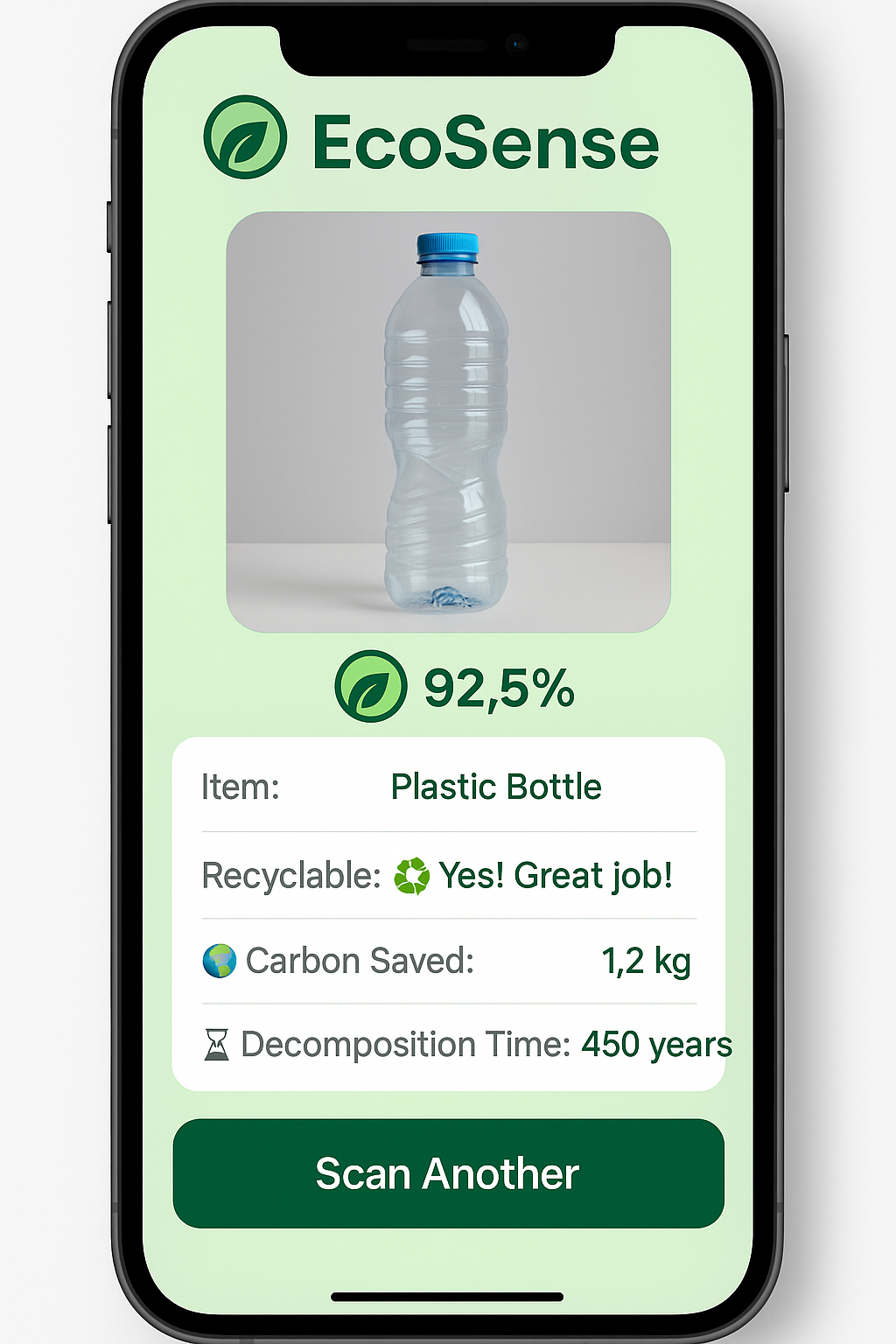
Ecosense is an easy to use app which allows users to take a photo of an object to understand the recyclability, carbon footprint, and sustainability of the material. Additionally, users can gain knowledge on how to recycle the material in question, and what impact their contribution can make. Through the information it provides, the app aims to influence more people into using renewable materials and saving the environment.
How we built it
We believe that making a framework before getting into a project is crucial since we were able to divide and conquer throughout the project. We had two main aspects we aimed to cover, frontend and backend. The frontend part of the team worked on the user interface of our application, making sure that it is easy to navigate through and looks sophisticated. The backend part worked on flask servers, which were easy to use for Python. The other part included data processing: using TensorFlow to create a machine learning algorithm to identify and distinguish between materials scanned through the app, and the database: using MongoDB to save statistics and user information. All of our coding took place through visual studio code.
Challenges we ran into
One challenge we ran into was when we tried to scan an object, the phone usually cannot connect to the same server as the host computer. After multiple attempts and hours of debugging, we found a solution using a module that helped us generate a public link. There was a challenge within this, too, as the specific module called Ngrok couldn’t be downloaded. After finding out another alternative, we got past this stage. We have faced multiple challenges for the past 36 hours, but we got through the challenges by working together and finding alternative solutions.
Accomplishments that we're proud of
One of the biggest technical challenges that we faced was generating a working public URL that allows users to access our app from their phones. Working under a strict deadline increased the pressure and working under such circumstances definitely proved to be a challenge. However, we eventually did manage to get a public URL to work, which proved to be a major accomplishment for all of us.
What we learned
The experience behind this hackathon was overall very educational for all of us. We were able to learn a lot about collaborating as a group of people with a variety of backgrounds in coding. A key factor that helped us cooperate was communication and understanding each other’s perspectives. On the technical side of things, we learnt about different commands on visual studio code and were able to gain experience in using machine learning algorithms in our application.
What's next for EcoSense
While EcoSense currently provides users with useful information on carbon impact and insights on recycling and sustainability, we plan on expanding its reach and impact on users by incorporating a feature that provides users with information on the impact an object has on animal depopulation. In other words, it will inform users on the drastic destruction of animal populations through the manufacturing of a scanned object.


Log in or sign up for Devpost to join the conversation.