-
-

handcrafted art
-
Logo
-
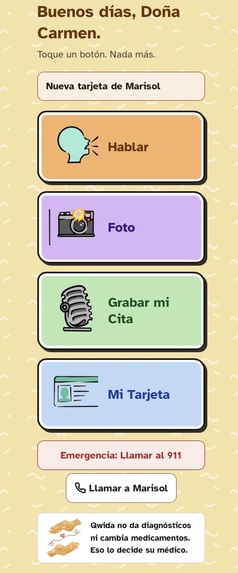
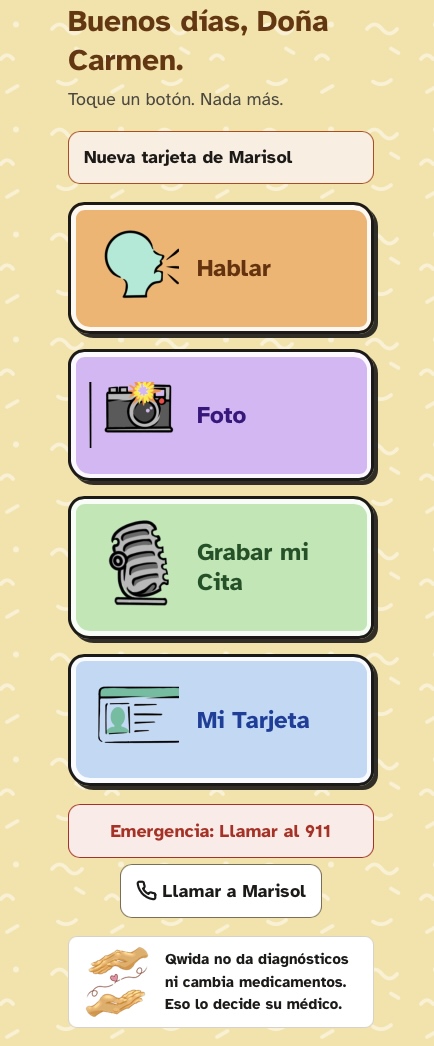
Patient UI
-
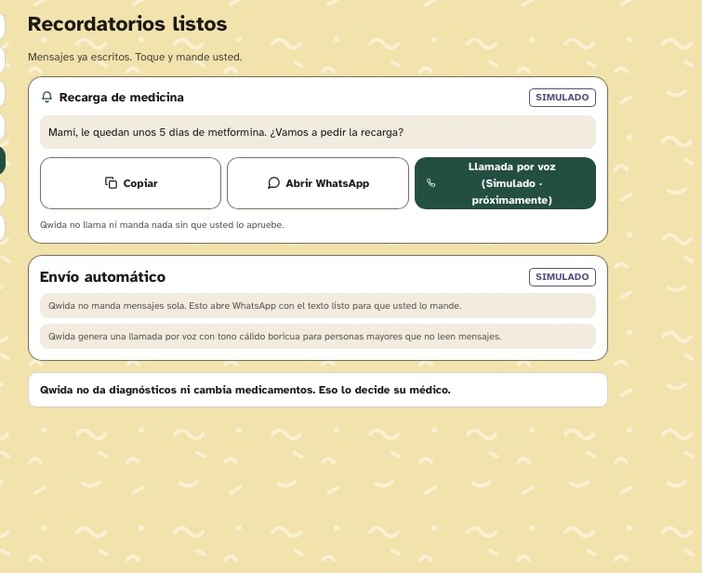
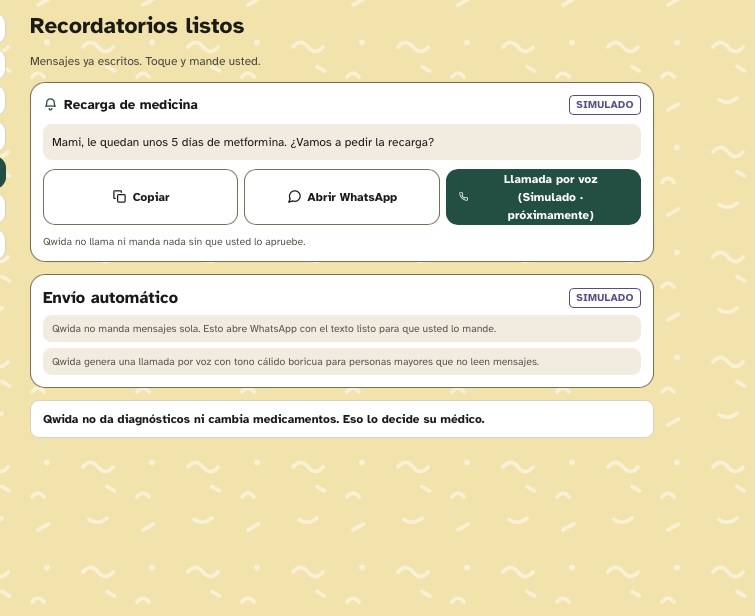
reminders
-
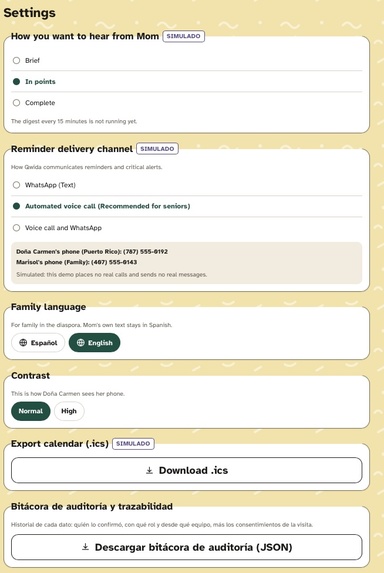
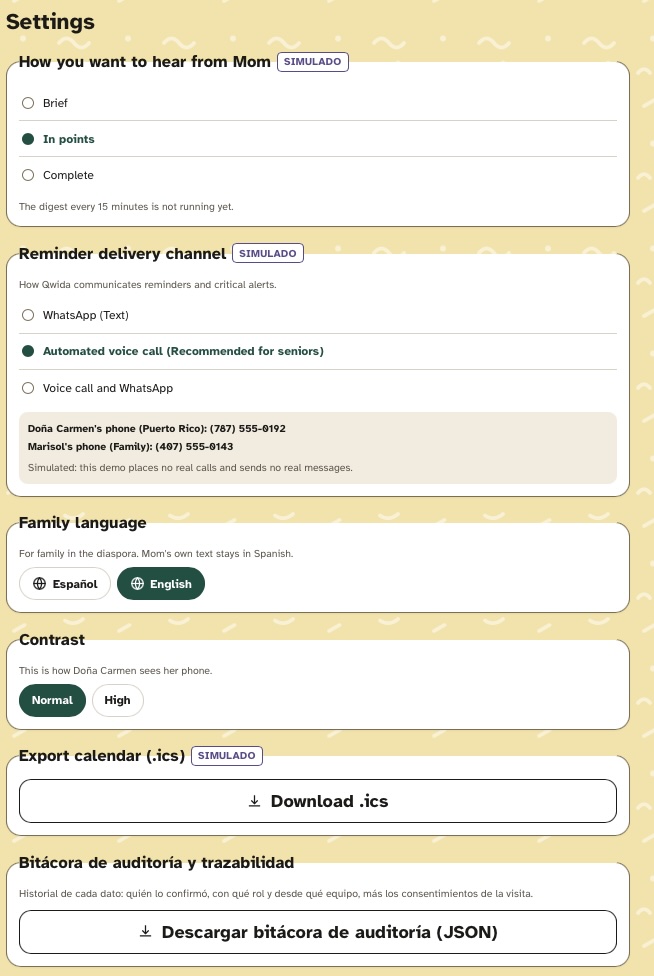
settings screen with options to choose how to communicate with family member and frequency of notifications
-
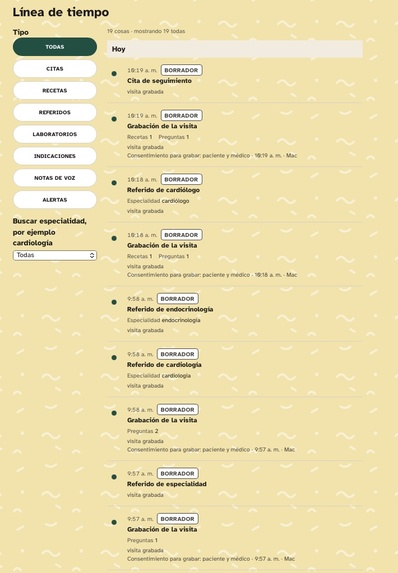
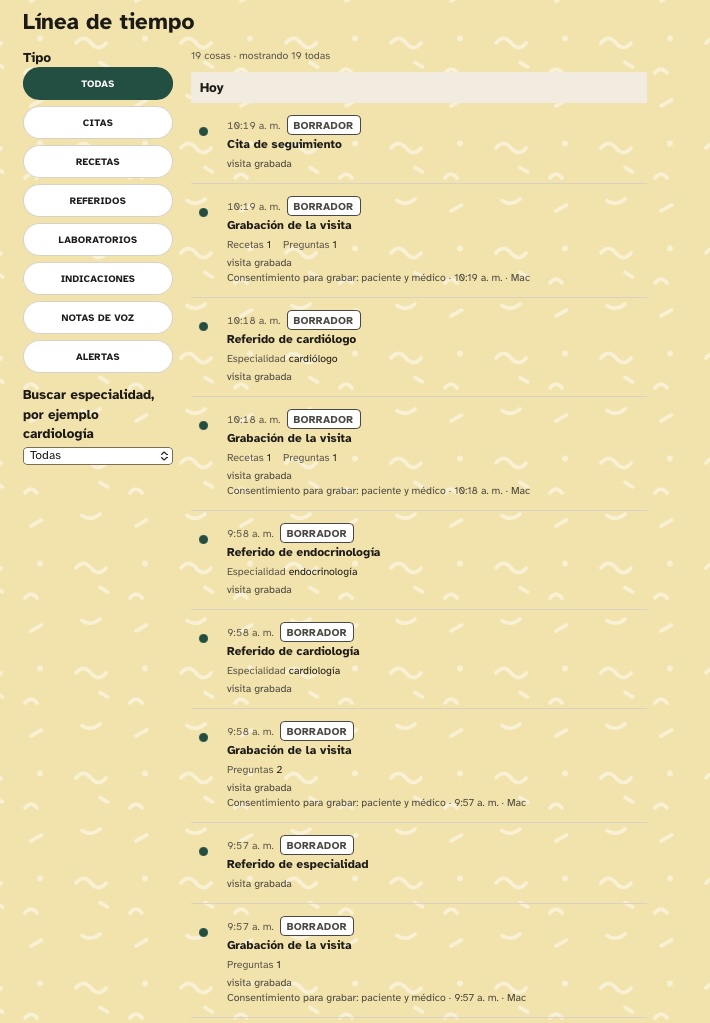
timeline view
-
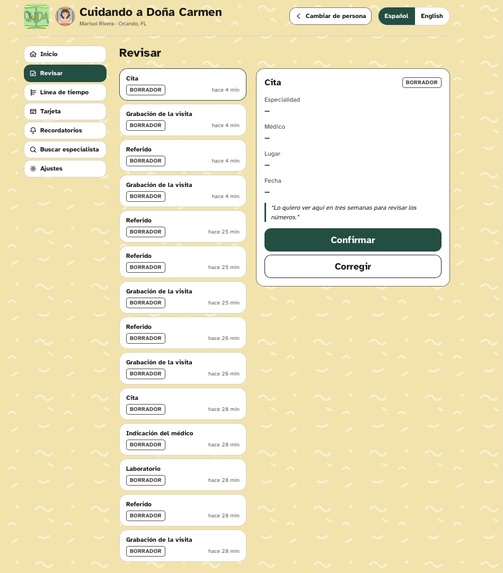
check event of patient
-
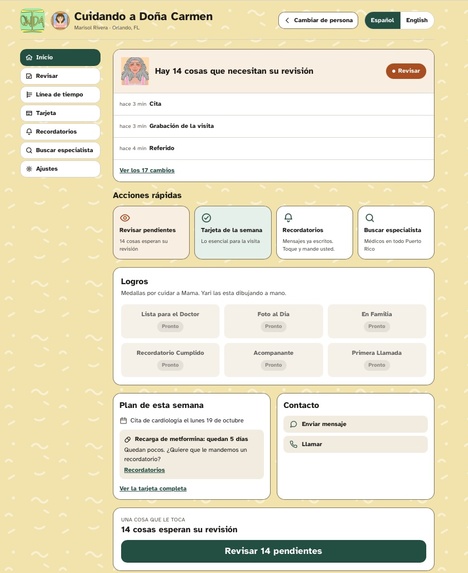
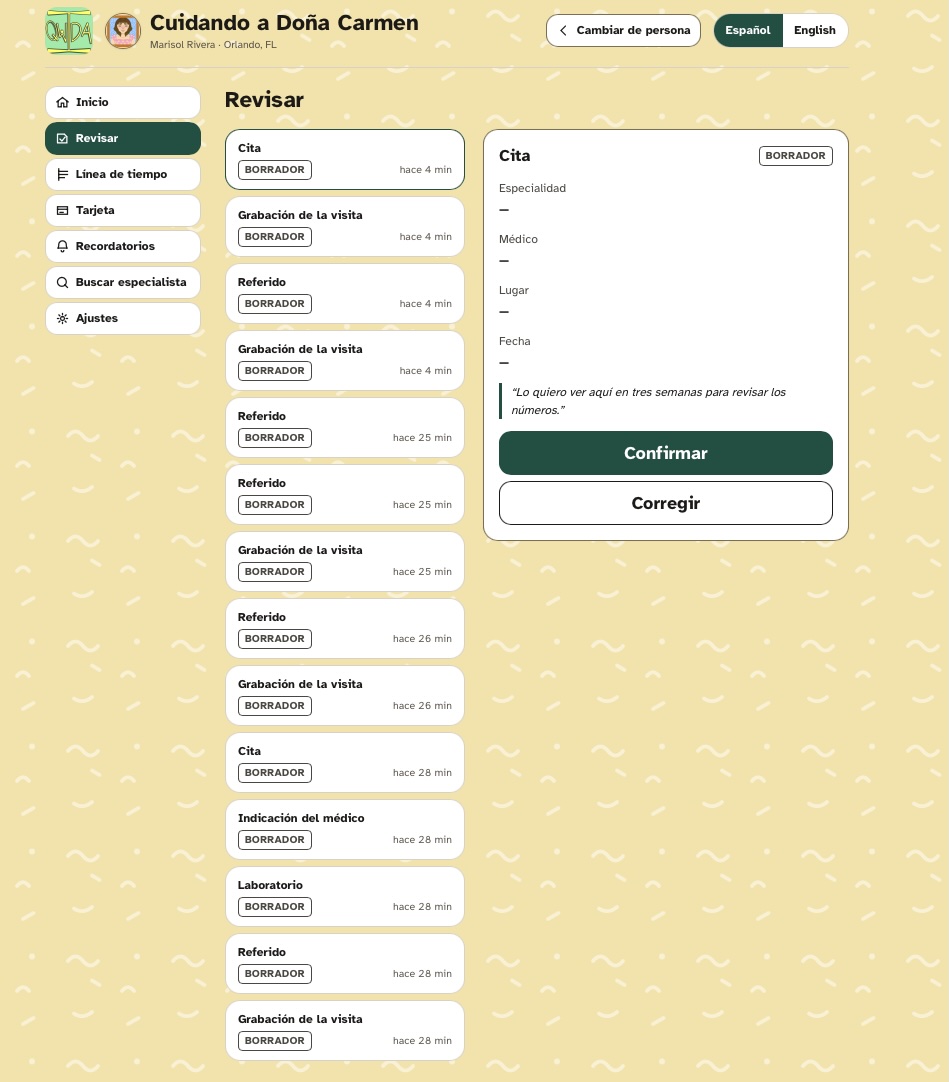
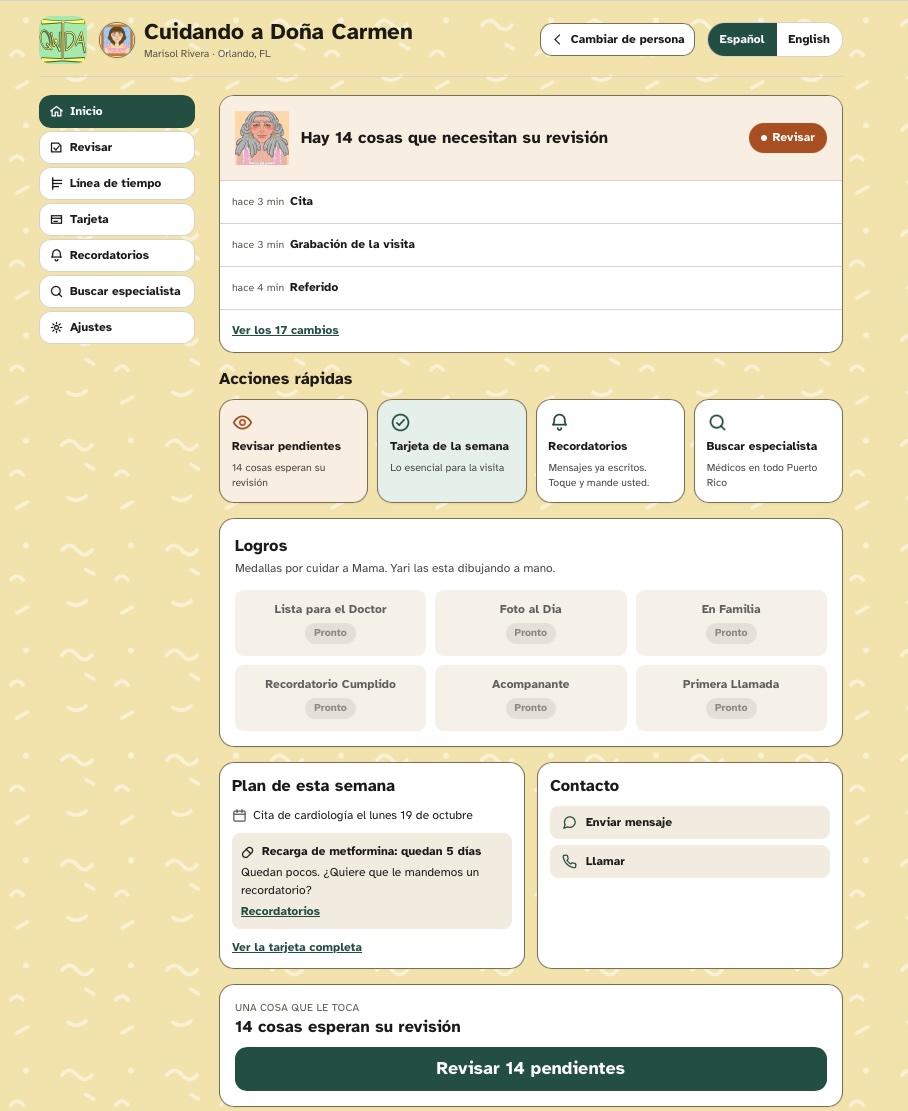
Family side ui
-
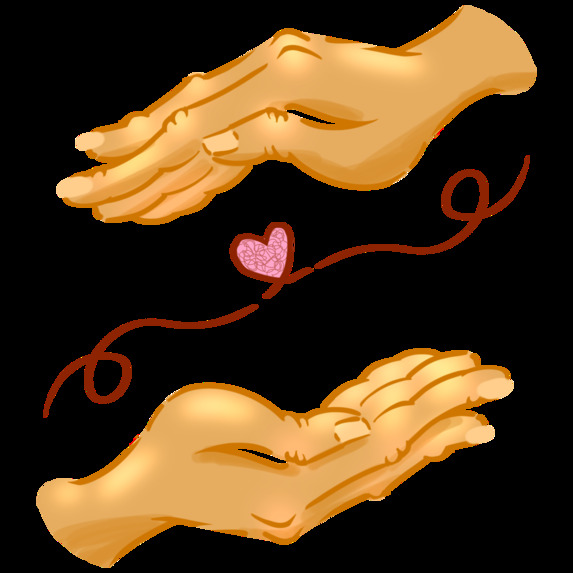
beautiful art invites the demographic with care
-

art can be customized later on for a more personalized experience
-
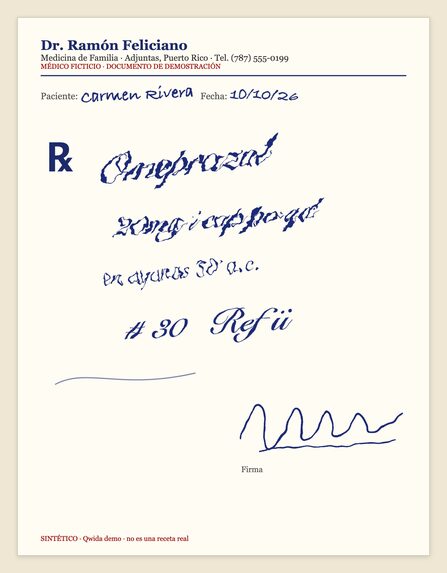
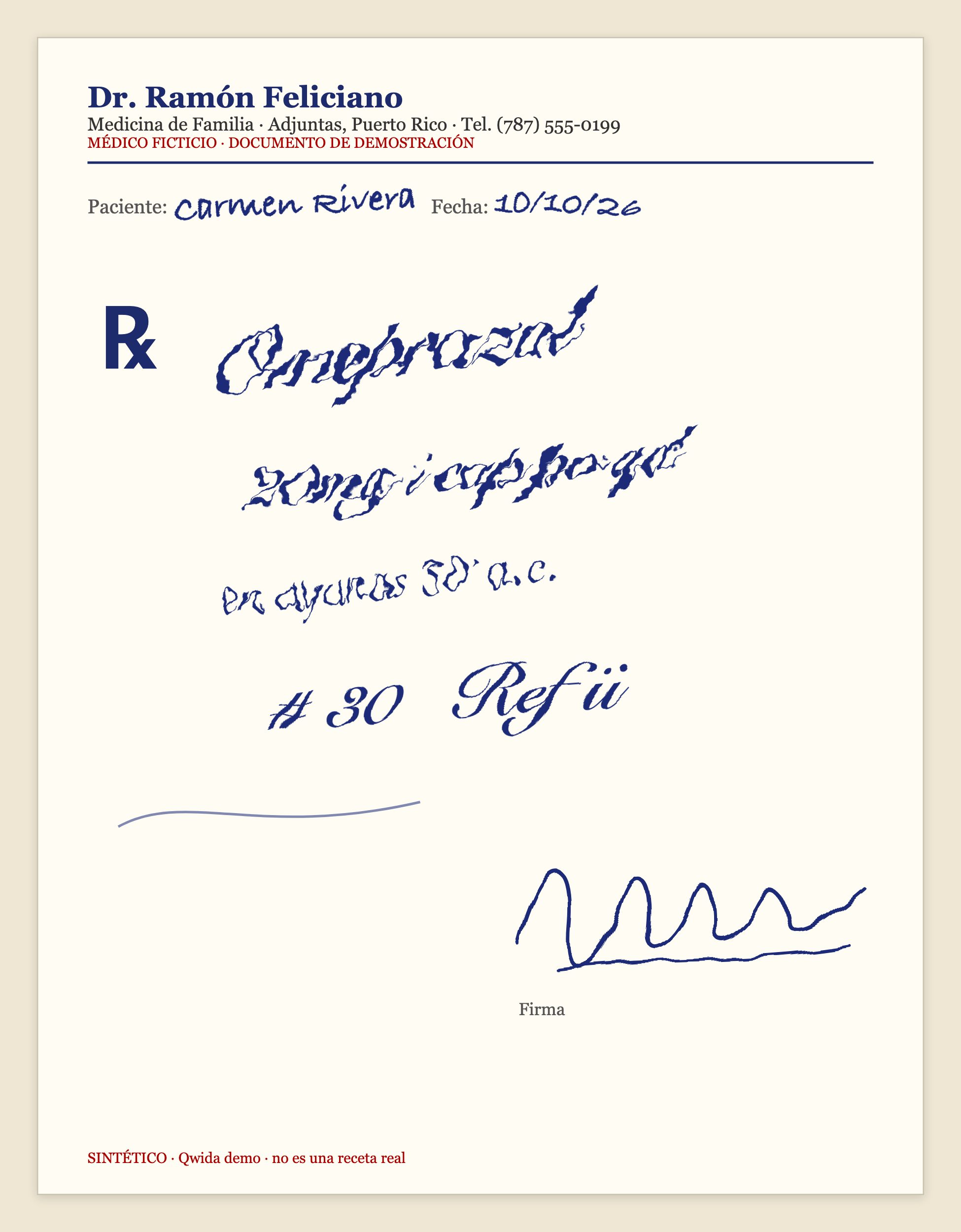
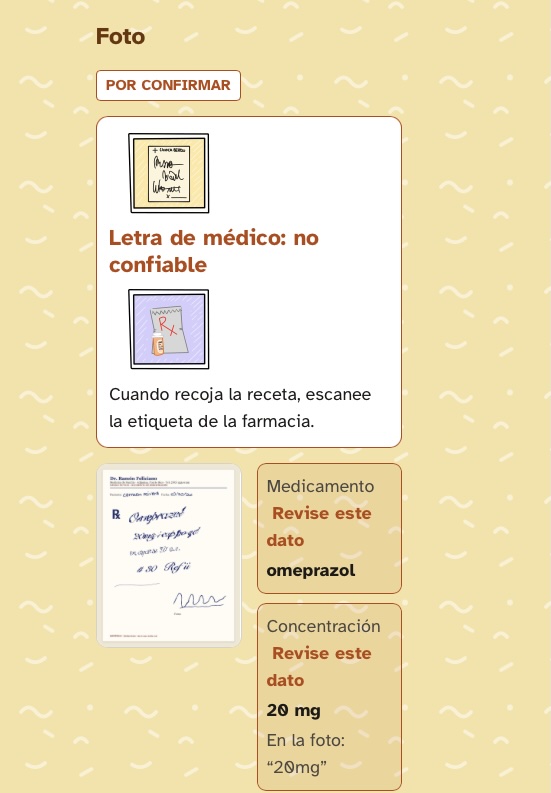
unintelligible prescription
-
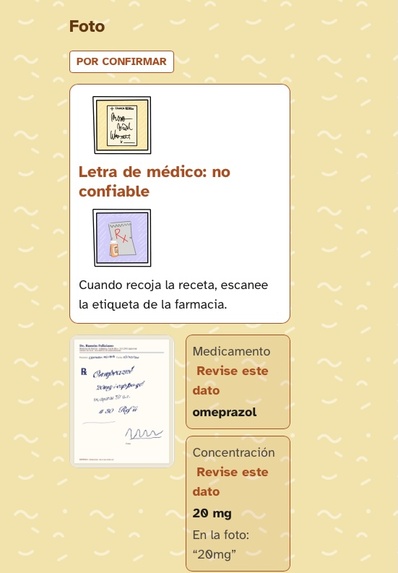
prescription rejection
-
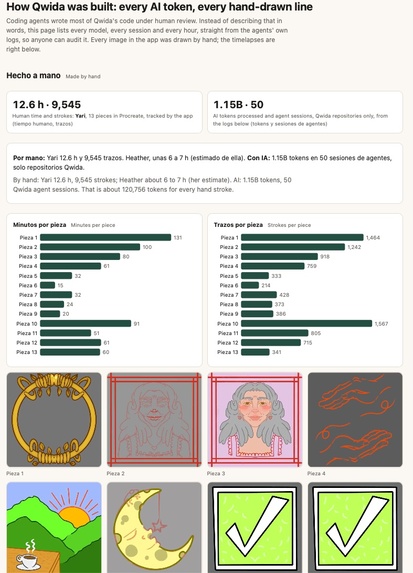
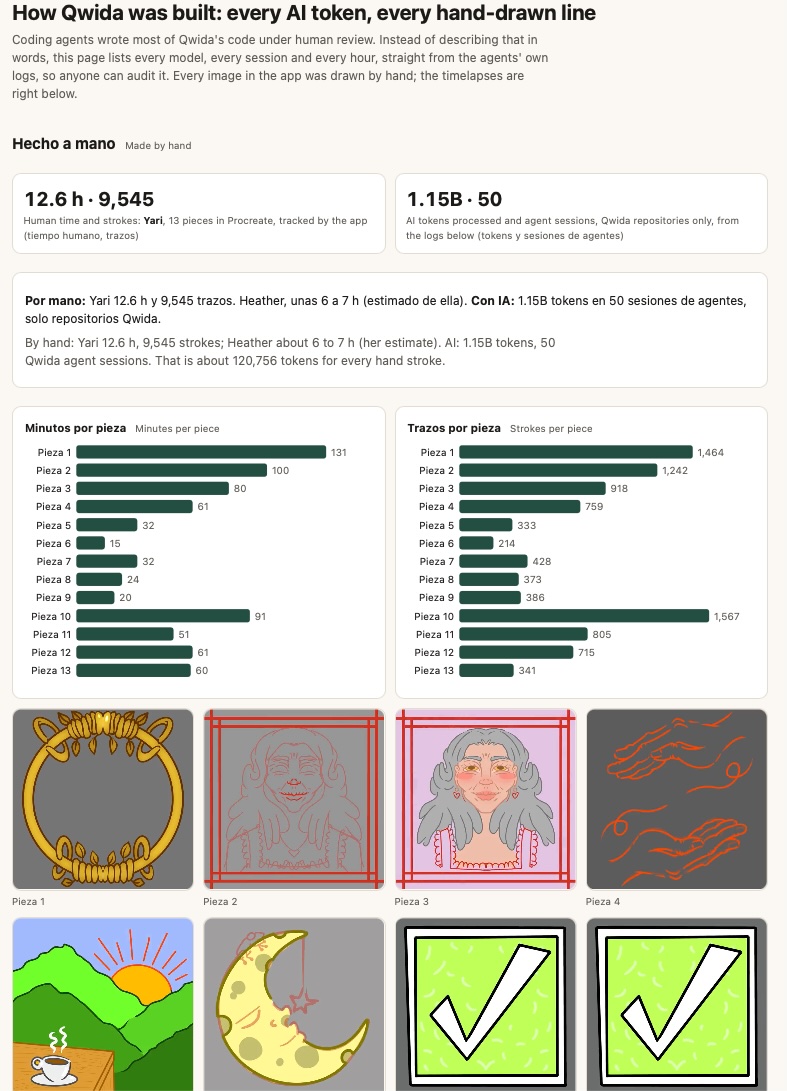
tool and effort dashboard
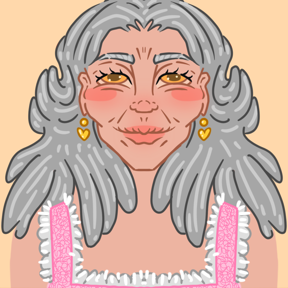


Inspiration
We wanted to apply AI to a meaningful healthcare challenge affecting an often-overlooked population. About one in four Puerto Rico residents is 65 or older (24% in 2023 Census estimates, up from 13% in 2010), and many rely on family caregivers who may live elsewhere on the island or on the mainland.
We focused on the challenges of coordinating care across distance, providers, and family members. Recognizing the barriers to broader healthcare system integration, we prioritized solutions that could provide immediate value without requiring significant changes in provider workflows or technology adoption.
Our persona made it concrete. Doña Carmen (synthetic, not a real patient) is 78 and lives in Adjuntas; her daughter Marisol lives in Orlando. After a cardiology visit, Carmen holds a prescription in a doctor's handwriting nobody is sure they can read, a referido that stops being valid in 90 days, and instructions nobody wrote down. Marisol hears about it two days later, if Carmen remembers.
Our tagline is the whole idea: "Cuidar de cerca, aunque estés lejos."
What We Built
Qwida is an AI-powered, family-centered care coordination companion designed to help older adults and their caregivers manage healthcare together.
The solution focuses on organizing healthcare information, interpreting provider communications, identifying next steps, and supporting coordination among family members. Our approach emphasizes accessibility for older adults and practical support for caregivers, regardless of location.
It is a free, Spanish-first web app that opens on the phone she already has, with no login and nothing to install:
- Patient side (Mamá): Four big buttons.
- Grabar mi cita: Records the doctor visit after both patient and doctor consent.
- Foto: Reads a pharmacy label, a referido, or a prescription.
- Hablar: Sends a voice note to the family.
- Mi tarjeta: Shows one simple week card, read aloud on request.
- Family side (Marisol): Everything Mamá captured arrives as a draft (
BORRADOR). The family confirms each item, sees it on a timeline (citas, recetas, referidos, laboratorios, and the doctor's own instructions), edits the week card, and sends it to Mamá's phone. Onboarding ends with a WhatsApp link to set up Mamá's phone in three steps. - From one visit recording: Qwida drafts new prescriptions, referidos, lab orders, the next appointment, and anything else the doctor said, always quoting the doctor's exact words ("si se le hinchan los pies, me llama enseguida"). A dose the doctor never said is flagged as missing, never guessed.
- Photos: A handwritten prescription is never trusted: it is marked
"Letra de médico: no confiable"and no schedule is built from it. The printed pharmacy label, once a person confirms it, becomes the medication schedule. A referido displays an active 90-day countdown. - The Fence: Fixed, non-generated text: "Qwida no da diagnósticos ni cambia medicamentos. Eso lo decide su médico." Emergency words trigger "Si es una emergencia, llame al 911" before any extraction model runs. If Mamá asks whether she can stop a pill, Qwida refuses and routes the question directly to the family.
- Real doctors, not invented ones: The doctor search uses real public data from MedSeek PR, with more than 700 licensed providers across the island, filterable by specialty and town.
How We Built It
Our team combined three complementary disciplines: human-centered design and business strategy, UI/UX and visual design, and technical development.
We worked in parallel, using AI throughout the process for problem analysis, concept development, technical exploration, and implementation. Claude Opus supported technical development, while other AI tools, PowerPoint, and Canva supported workflow design, visual exploration, and storytelling.
We maintained frequent alignment across workstreams, sharing and challenging AI-generated outputs to integrate our different perspectives. We also engaged hackathon mentors to validate assumptions, assess feasibility, and identify potential gaps.
An important aspect of our approach was using AI not only to accelerate individual work, but to connect thinking across disciplines.
What that looked like in practice:
- Stack: Next.js, React, TypeScript, and Tailwind CSS deployed as a progressive web app (PWA) on Vercel. The Vercel AI SDK calls OpenAI (
gpt-4o-transcribefor speech-to-text andgpt-4ofor reading visits, photos, and drafting the week card) under strict schemas, with a labeledSIMULADOfallback if the provider fails. Upstash Redis holds the shared care record.- Measured on the live site: Voice note in $\sim 2\text{--}3\text{ s}$, label in $\sim 4\text{--}5\text{ s}$, full visit in $\sim 7\text{ s}$, and a 5-minute visit in $\sim 20\text{ s}$.
- Safety in code, not in prompts: The Fence, the emergency banner, the handwriting refusal, and every status badge are deterministic rules and fixed copy. AI only drafts; nothing becomes true until a person confirms it. Every confirmation records who, with which role, from which device, and when; recording consent is stored with the visit. Qwida keeps the transcript, never the audio file.
- Tested: 372 unit tests, 30 synthetic safety cases spoken in Puerto Rican Spanish voices (58 of 60 passed, clean and over a simulated phone line), and an 8-step end-to-end test covering the complete demo path.
- A team of people and agents: A private war room repo held research, decisions, and handoffs that every agent read first. Claude Code (Opus and Sonnet), the Antigravity CLI with Gemini, and OpenCode worked in parallel terminal panes (Herdr), passed messages through an agent mailbox (PioRelay), and shared memory across machines (Hindsight). Simulated judge panels, scored by a model that had not built the feature, highlighted what to fix next. People made every decision and every push.
- Made by hand: Yari drew every illustration in the app in Procreate (12.6 hours and 9,545 strokes across 13 pieces, with time lapses). Heather built the pitch deck by hand in Canva ($\sim 6\text{--}7\text{ hours}$). Both are published at qwida.vercel.app/ledger, alongside every AI token the agents used (1.15 billion tokens, mostly cache reads, across 50 sessions) and every API and tool utilized.
Challenges We Faced
Our primary challenge was prioritization. We identified numerous opportunities to improve care coordination but needed to balance user value, technical feasibility, and the limited time available for development.
We also had to account for Puerto Rico's healthcare environment, where fragmented processes and varying levels of technology adoption can limit the practicality of otherwise promising solutions.
Finally, we needed to translate a broad product vision into a focused prototype and a clear three-minute demonstration.
Our team addressed these challenges through continuous collaboration, rapid iteration, mentor feedback, and a shared commitment to the core user problem.
Key breakthroughs:
- Handwriting is not a data source: Our first instinct was to read the prescription and build a schedule. We flipped it: handwriting is flagged as untrusted, and only the confirmed pharmacy label becomes the source of truth.
- Models fail quietly, so we tested with real audio and real photos: On our last night, a neatly handwritten prescription came back from the model categorized as a printed label, which would have marked it trusted; now, a "label" without a pharmacy name and Rx number is treated as handwriting. A recording that caught almost no sound returned an echo of our vocabulary hint, drafting referidos nobody mentioned; now, an echo saves nothing and prompts the user to record again.
- Honesty under time pressure: Our simulated judges marked us down whenever a claim went further than the code. We cut those claims and explicitly labeled every simulation on screen.
What We Learned
- Human-centered problem definition matters: Starting with personas and real-world use cases helped us evaluate AI capabilities based on their practical value rather than technical novelty.
- Different perspectives produce different AI outcomes: Our respective backgrounds influenced how we prompted AI, interpreted its outputs, and identified opportunities. Cross-reviewing those outputs strengthened our collective thinking.
- Effective collaboration requires both autonomy and alignment: Working independently within our areas of expertise while maintaining shared ownership of the vision allowed us to move fast without sacrificing integration.
- Feasibility shapes innovation: We learned to distinguish between what AI could theoretically enable and what could realistically deliver value within existing healthcare constraints.
- Trust comes from showing the human step: The moment a draft becomes confirmed by a person is the product, not a detail.
What's Next
Our next priority is to validate Qwida's core workflows with older adults and family caregivers, refine the user experience, and expand capabilities based on demonstrated needs and technical feasibility.
We see opportunities for deeper provider integration over time while maintaining our original focus: making healthcare coordination more manageable for families without requiring systemic change as a prerequisite.
Concrete next steps:
- Pilot (a plan, nothing signed): A 60-day trial with one clinic or CUD and a few dozen volunteer families, free of charge. Primary metric: After each visit, did the family know the plan (medicines, labs, next appointment) within 24 hours?
- Measure the AI with real voices: Calculate Word Error Rate (WER) on elderly Puerto Rican Spanish speech with consenting volunteers (moving beyond synthetic voices).
- Clinical and compliance path: Clinician review of safety rules, per-user authenticated accounts and access control, Business Associate Agreements (BAAs) with every data provider, and HL7 FHIR integration.
- Prototype on 100% synthetic data: Verify that zero real patient information exists in the app, the repo, or the demo environment.

Log in or sign up for Devpost to join the conversation.