-
-
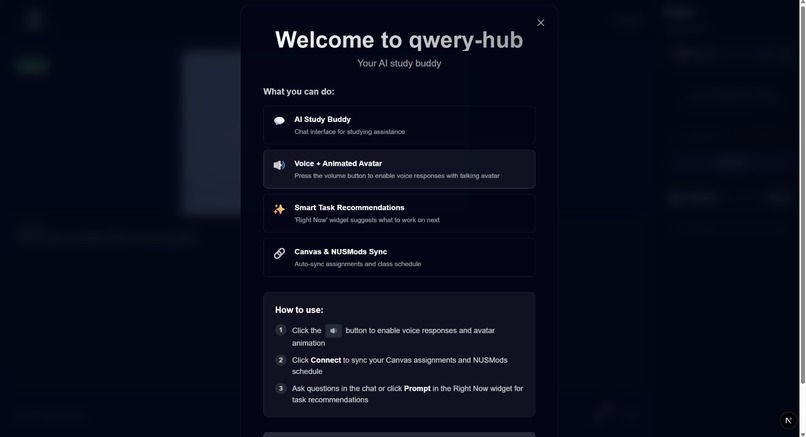
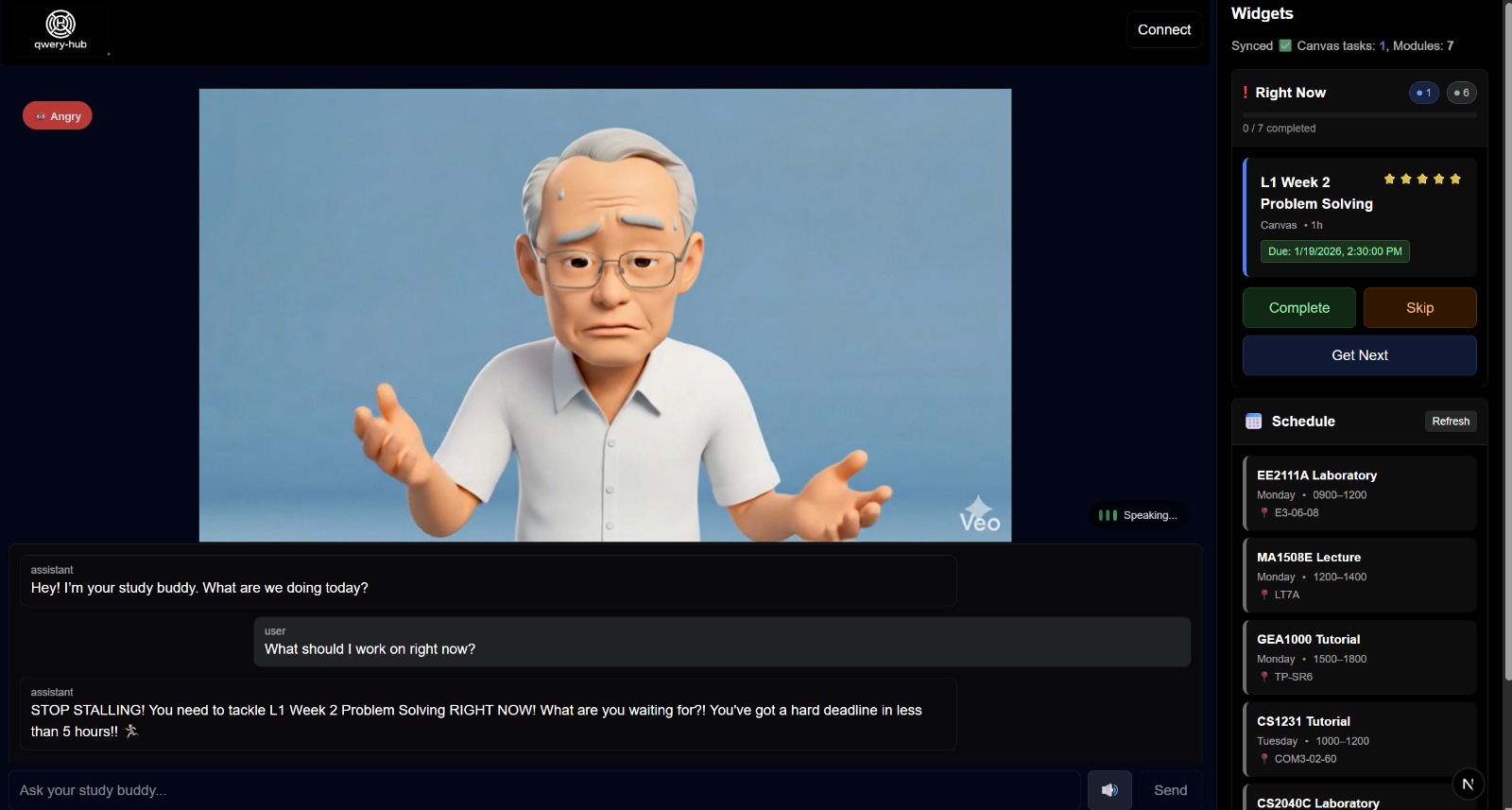
Landing Page
-
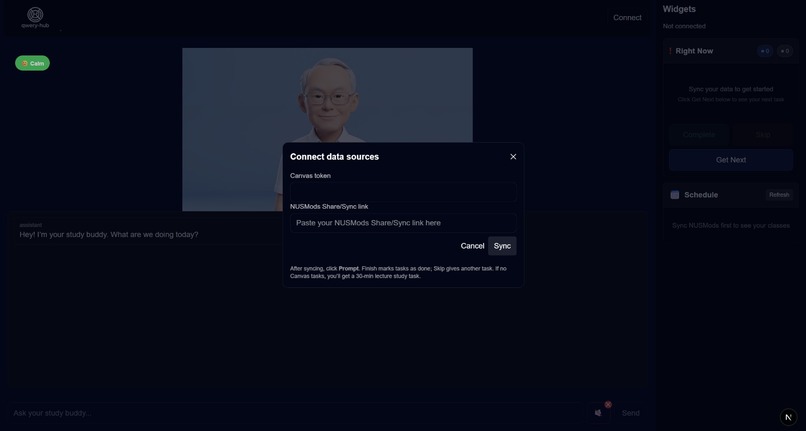
Sync Page
-
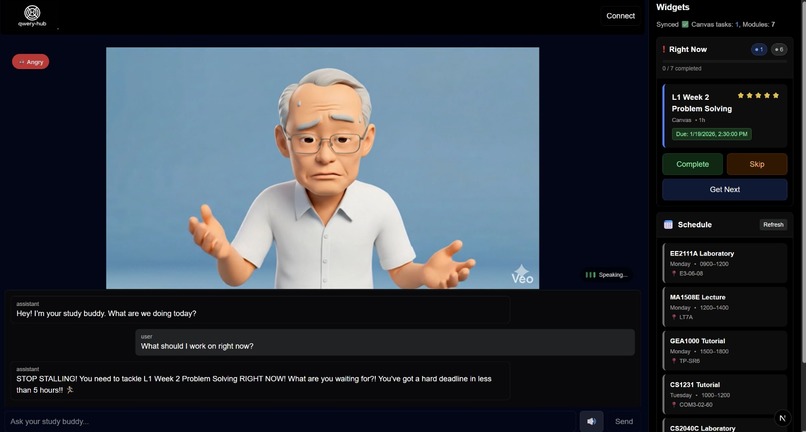
Prompt Example
-
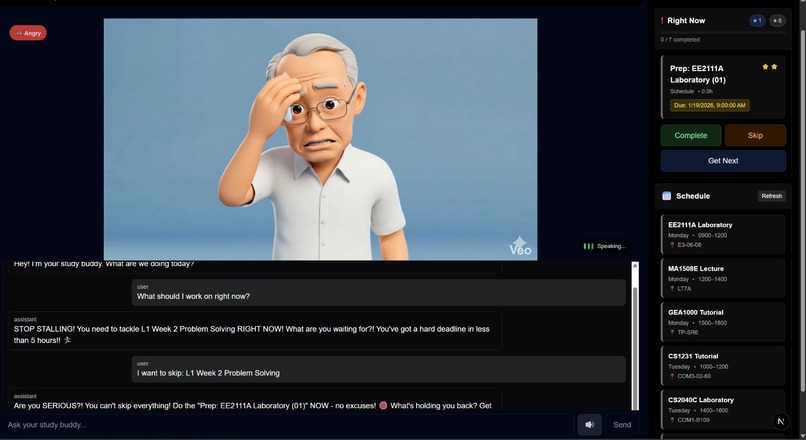
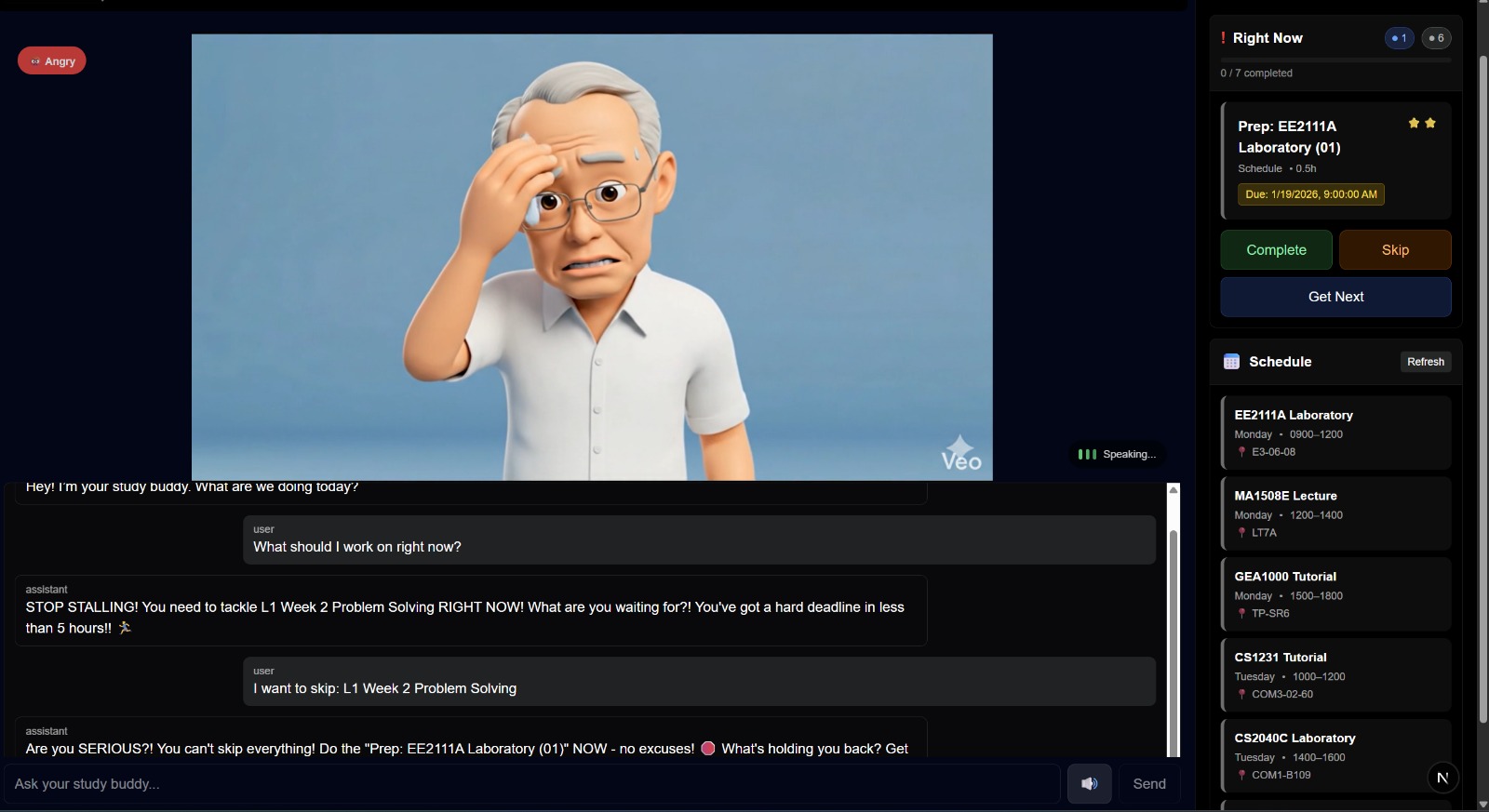
Skip Example
-
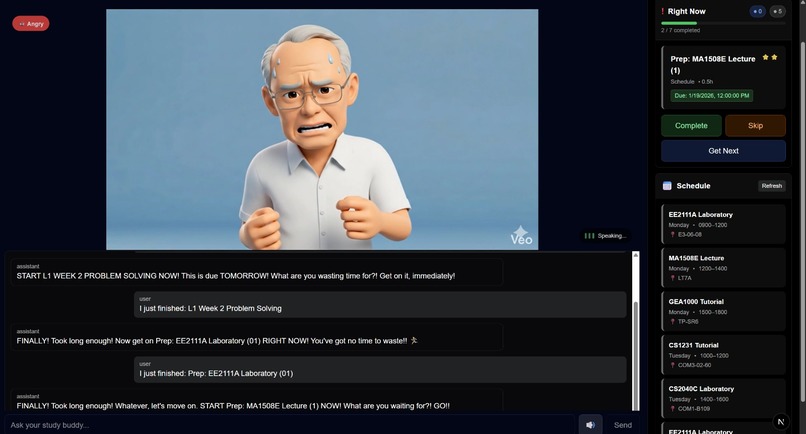
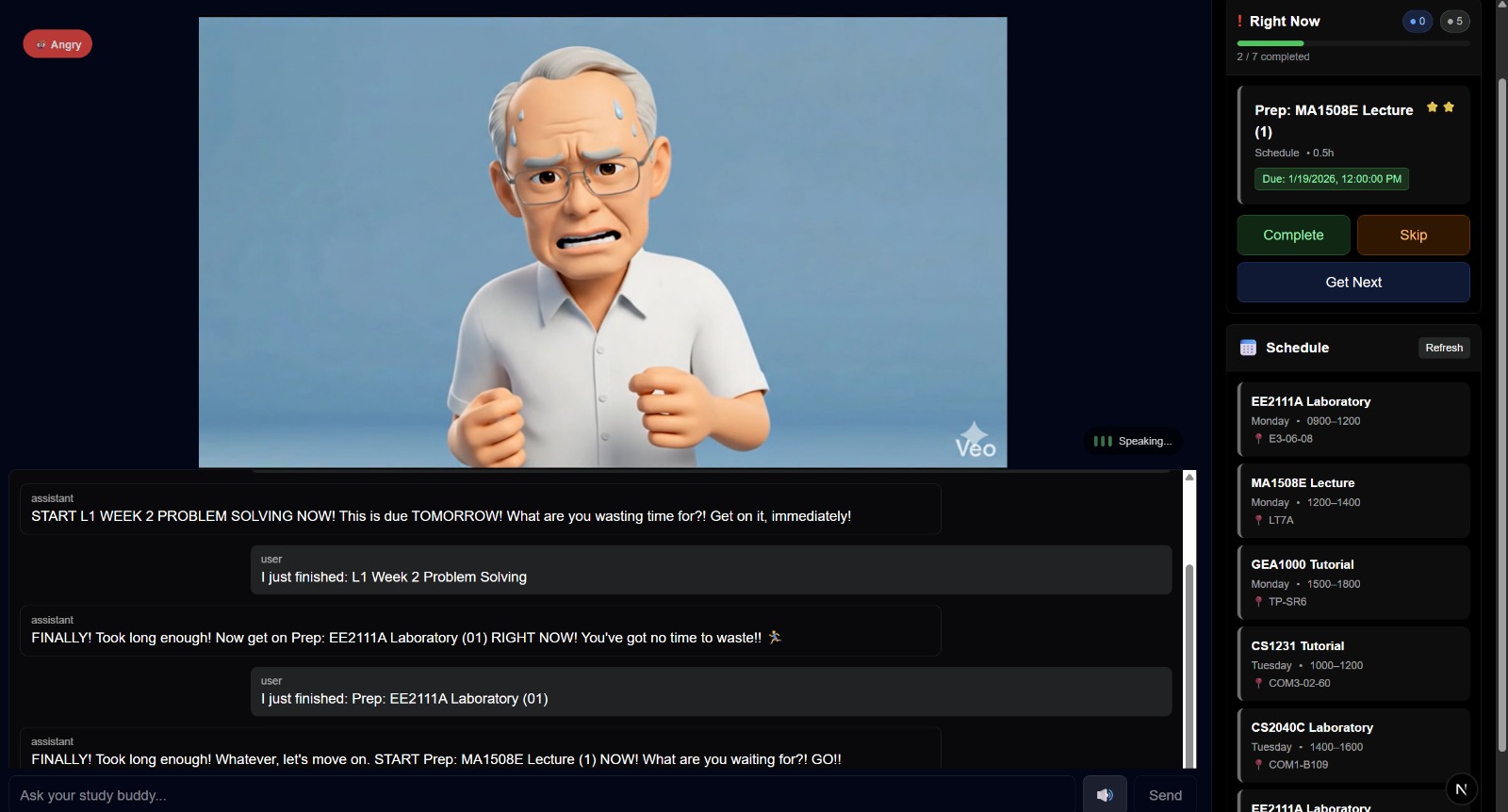
Completed Example
-
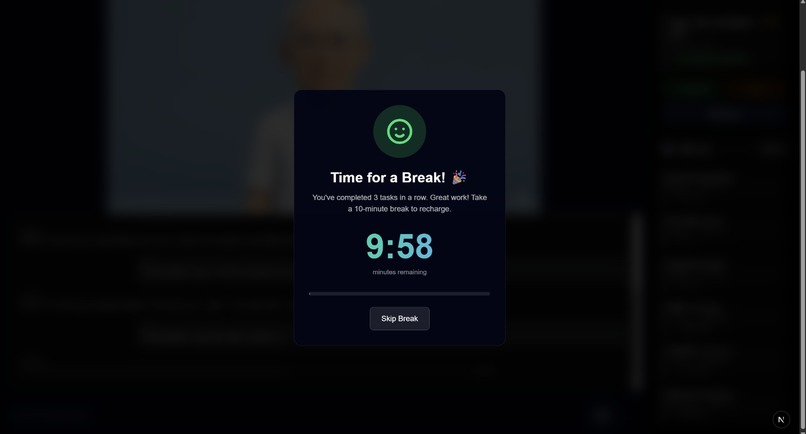
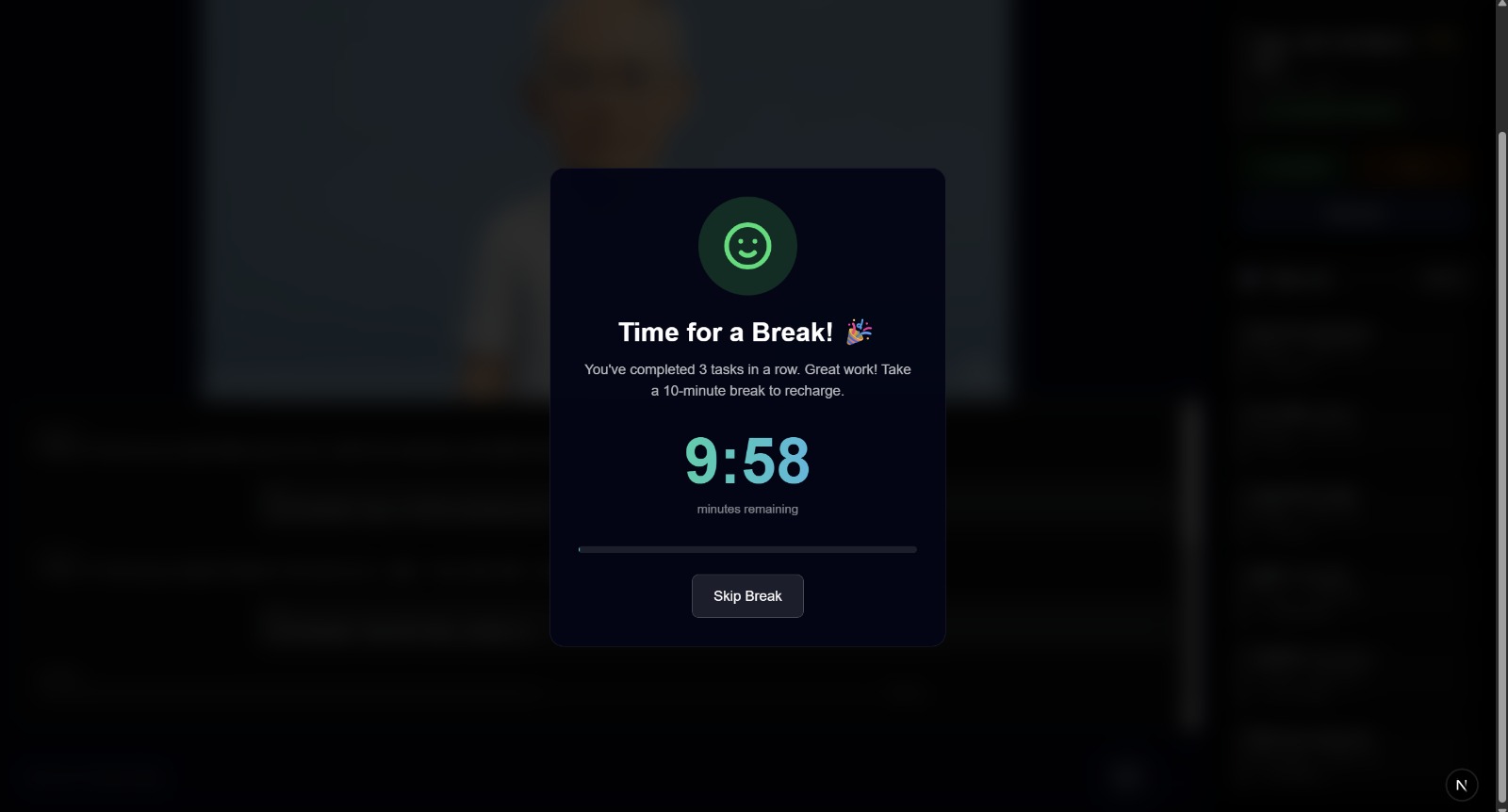
Break Page
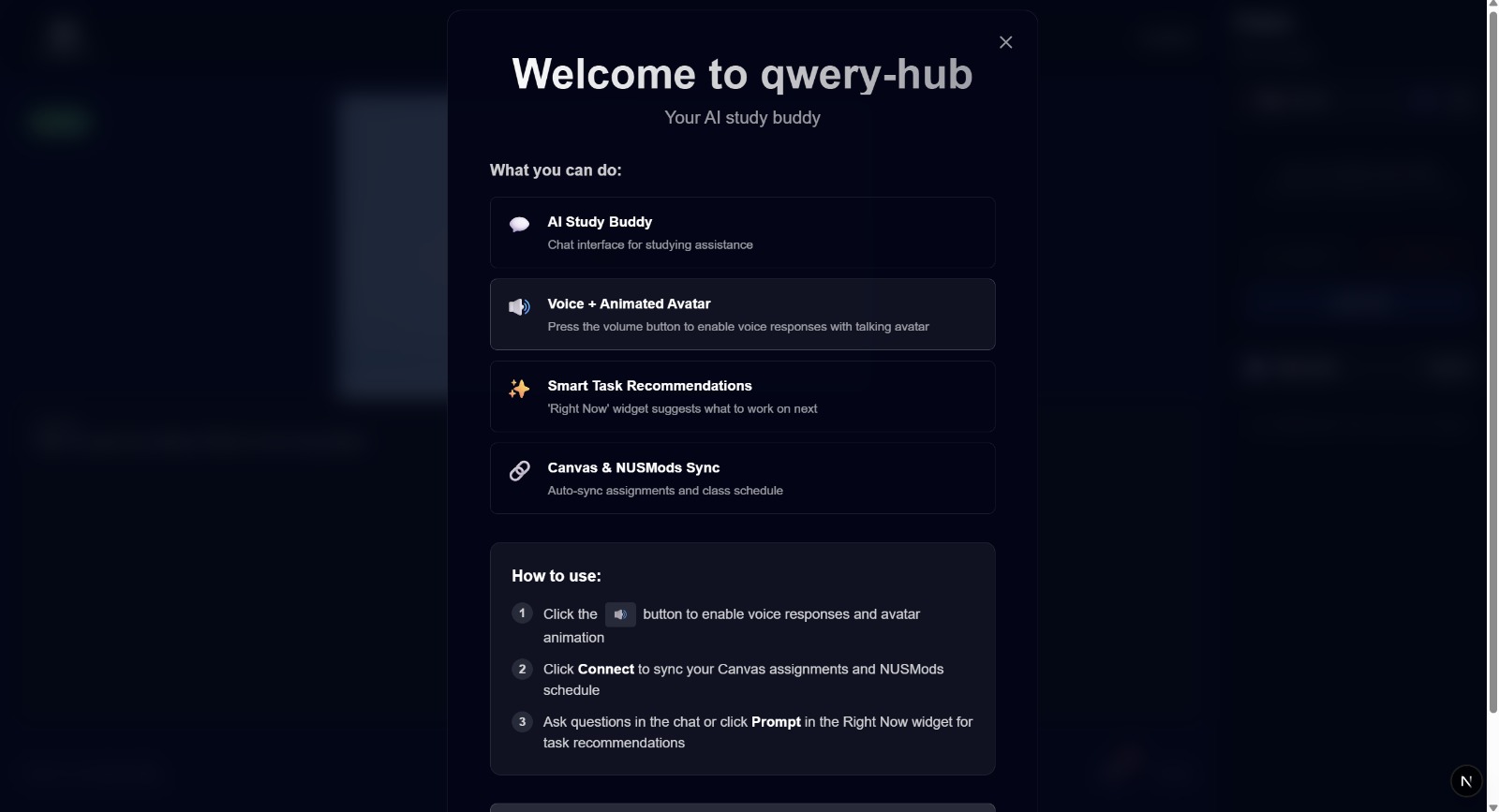
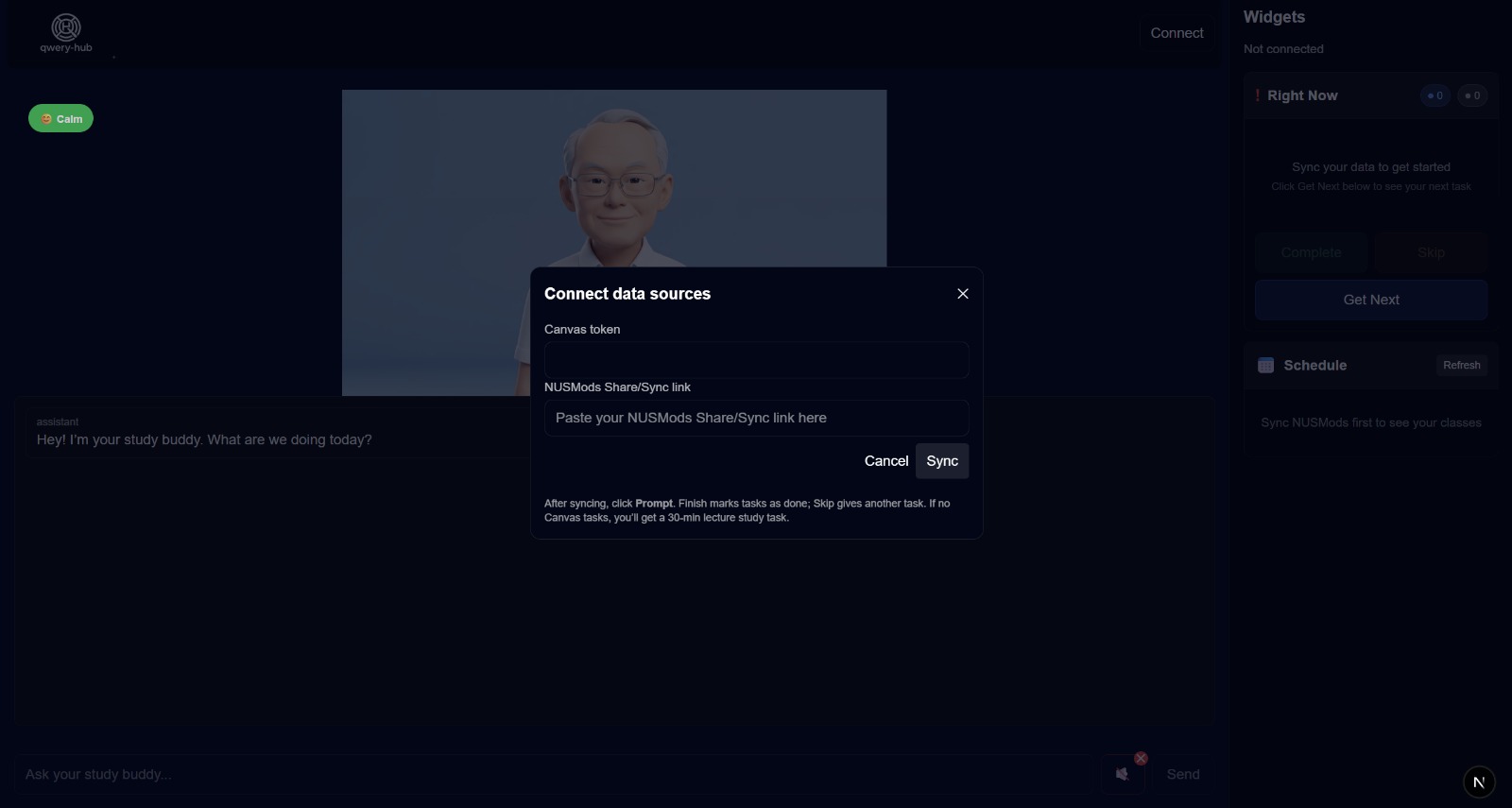
Inspiration
The original idea behind qwery-hub started much smaller. We initially wanted to build a Canvas extension with a single feature: a “Right Now” widget that tells students what assignment they should work on next. While working on this idea, we realized that the problem wasn’t limited to Canvas alone. Students constantly switch between platforms: Canvas for assignments, NUSMods for schedules, and separate tools for planning or motivation. The “Right Now” concept worked, but it needed more context to be genuinely useful. This led us to rethink the project as a centralized academic hub instead of a browser extension.
What it does
At its core is the Right Now widget, which analyzes real academic data — including Canvas assignments and NUSMods schedules — to recommend a single, actionable task at any moment. The recommendation updates dynamically when tasks are finished or skipped, and avoids repeatedly suggesting work from the same module.
How we built it
At the core of qwery-hub is the Right Now widget, which remains the foundation of the project. It: Recommends a single, actionable task at any moment, adapts in real time when tasks are completed or skipped, avoids repeatedly suggesting work from the same module, and falls back to meaningful study suggestions when no assignments are pending. Around this core, we added quality-of-life features that make the hub more practical: upcoming class schedules pulled from NUSMods, automatic aggregation of Canvas assignments, a conversational interface with optional text-to-speech, and a modular, widget-based layout designed for future expansion.
Challenges we ran into
One major challenge was ensuring that the Right Now widget remained reliable as the system grew. As more features were added, it became harder to maintain the correct state when tasks were skipped, finished, or re-synced. Another challenge was balancing personality and usefulness. The avatar needed to feel motivating without becoming distracting, which required careful tuning of tone and interaction flow.
Accomplishments that we're proud of
This was our first hackathon, and we honestly didn’t expect the project to come together as well as it did. We’re proud that we were able to take a simple idea — a “Right Now” task recommender — and evolve it into a fully working academic hub with real integrations, dynamic task logic, and an AI-powered interface. Seeing the system adapt correctly when tasks are finished or skipped was a big milestone for us.
What we learned
- A small, focused idea can benefit from being placed in a broader ecosystem
- Productivity tools are most effective when they reduce choices, not add them
- AI works best when paired with deterministic logic
- Quality-of-life features significantly improve user trust and retention
What's next for qwery-hub
- Longer-term planning alongside the “Right Now” engine, so students can see both immediate and upcoming priorities
- Personalized recommendations based on study habits, energy levels, and past behavior
- Additional integrations with other academic platforms and tools
- More widgets built around the same hub concept, such as revision tracking or exam preparation support
- Refinement of the AI companion, including different motivational styles and better contextual explanations
Built With
- canvas-api
- next.js
- node.js
- nusmods-api
- openai-api
- react
- tailwind-css
- tts
- typescript


Log in or sign up for Devpost to join the conversation.