-
-
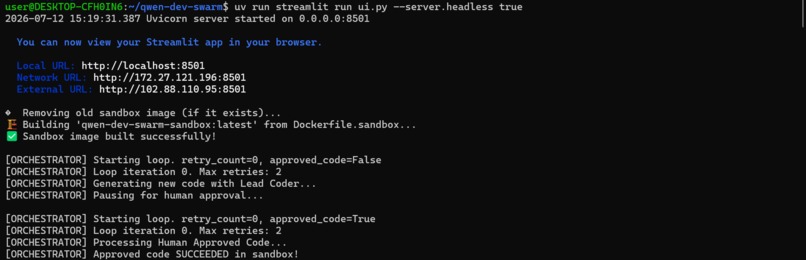
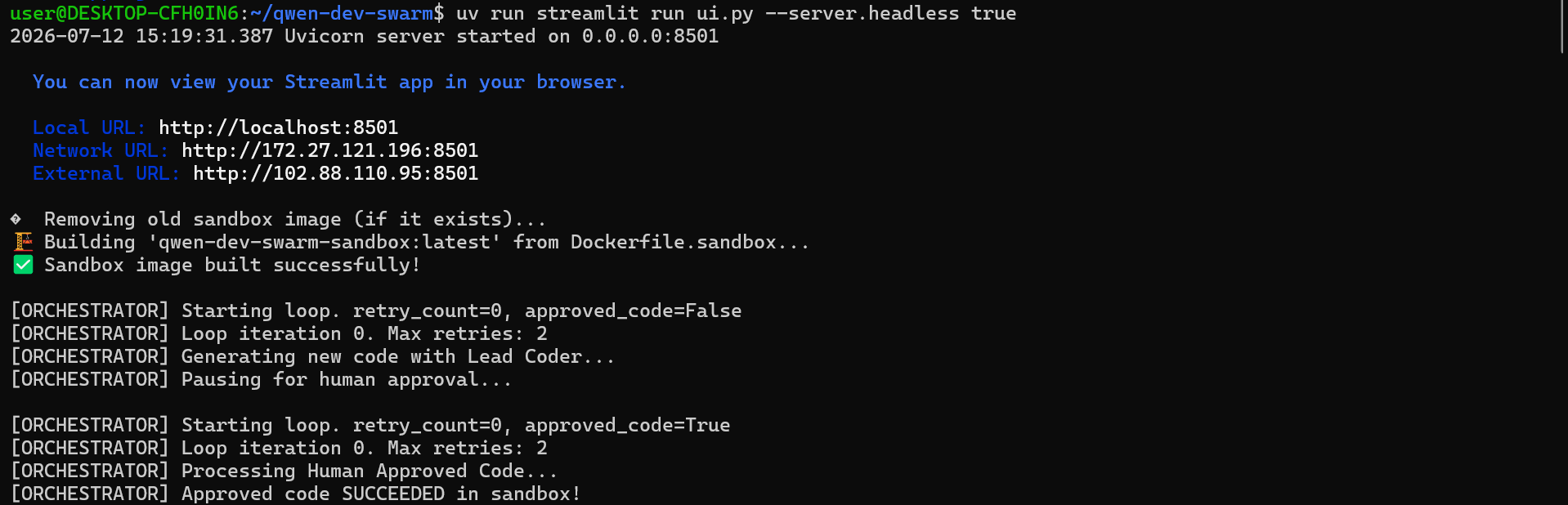
output of run
-
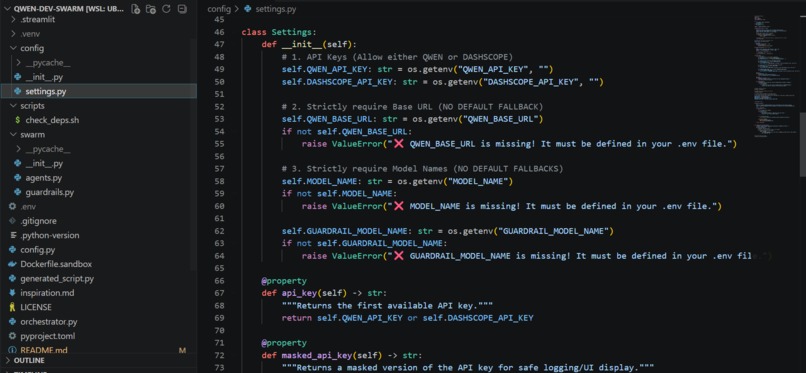
alibaba api use 2
-
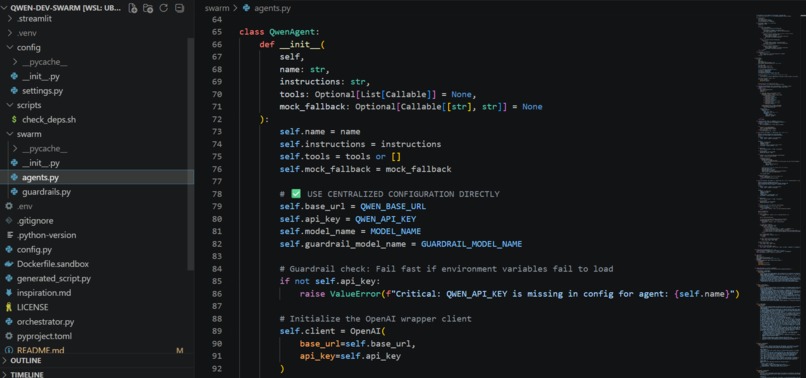
alibaba api use 3
-
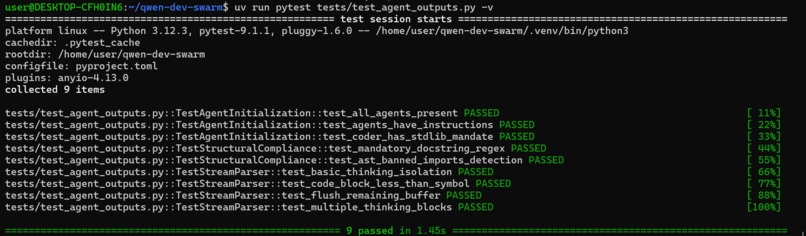
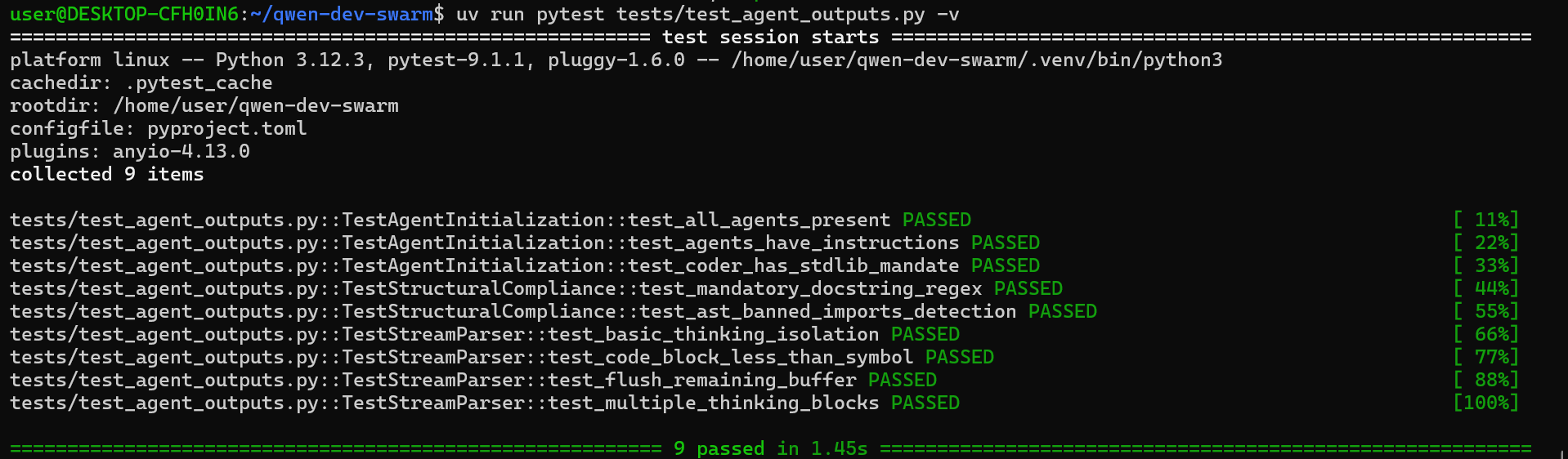
test_agent_outputs
-
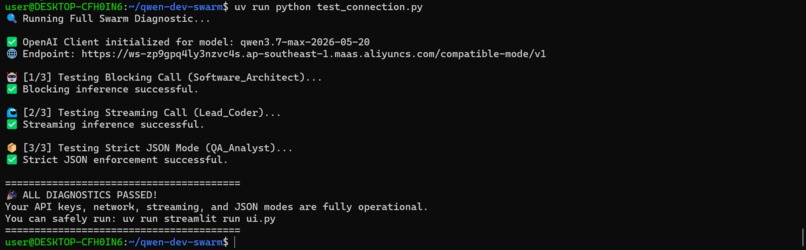
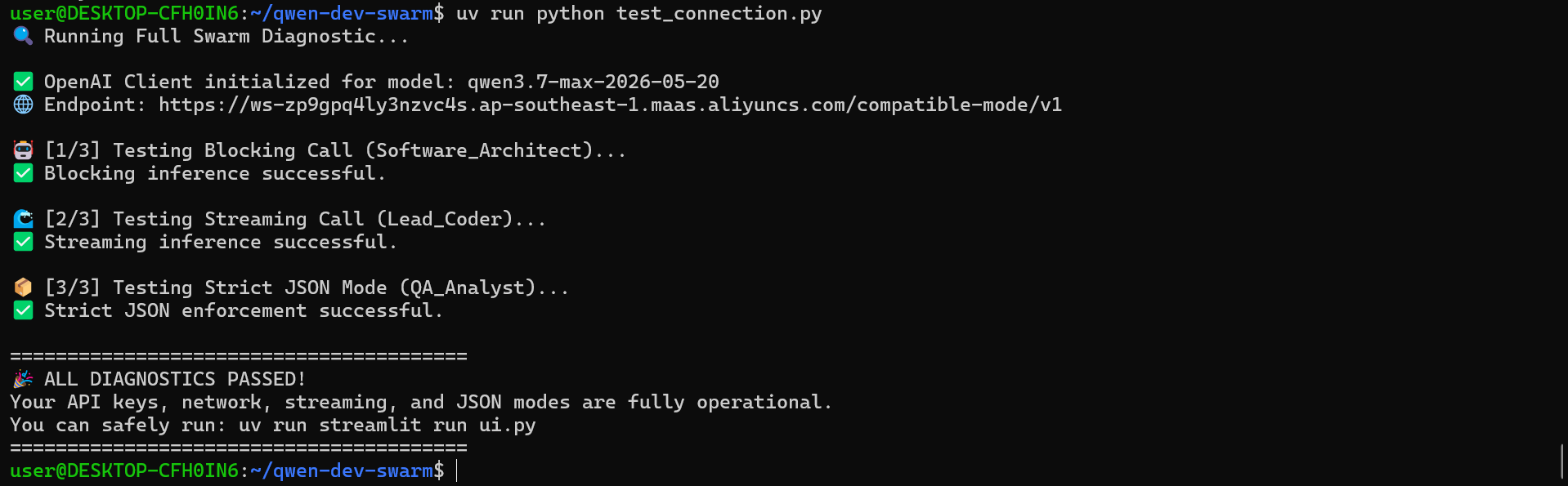
test_connection
-
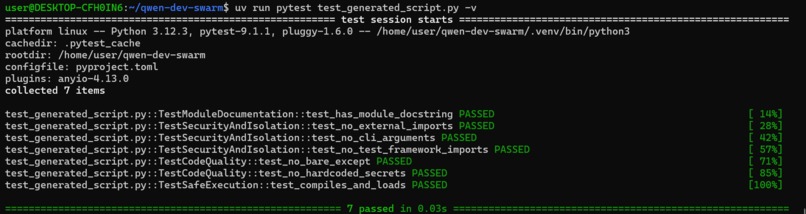
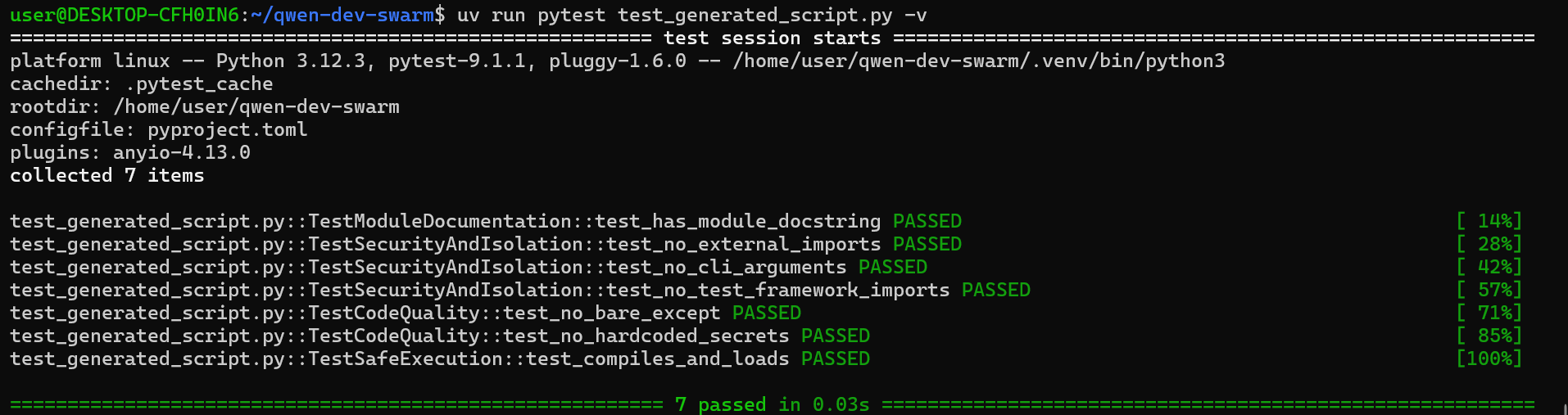
test_generated_script
-
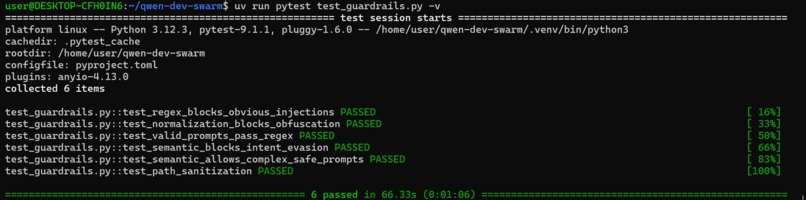
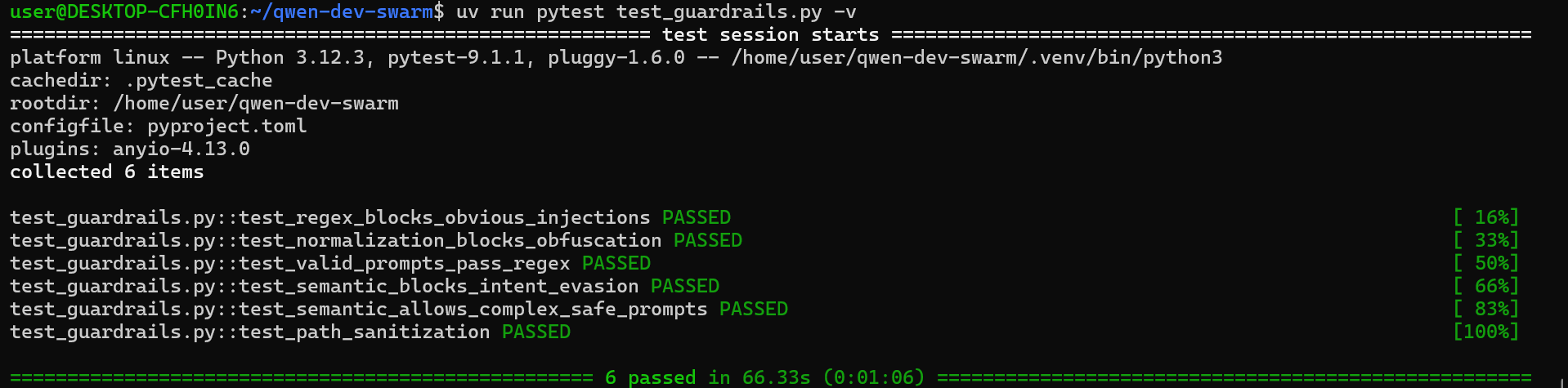
test_guardrails
-
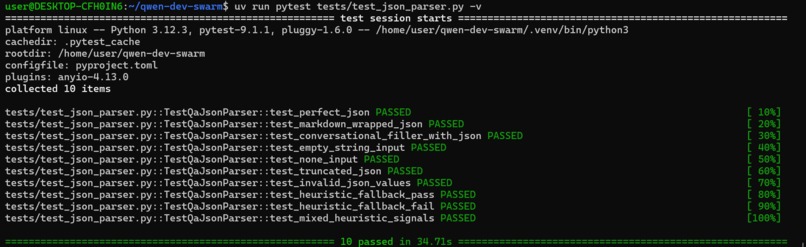
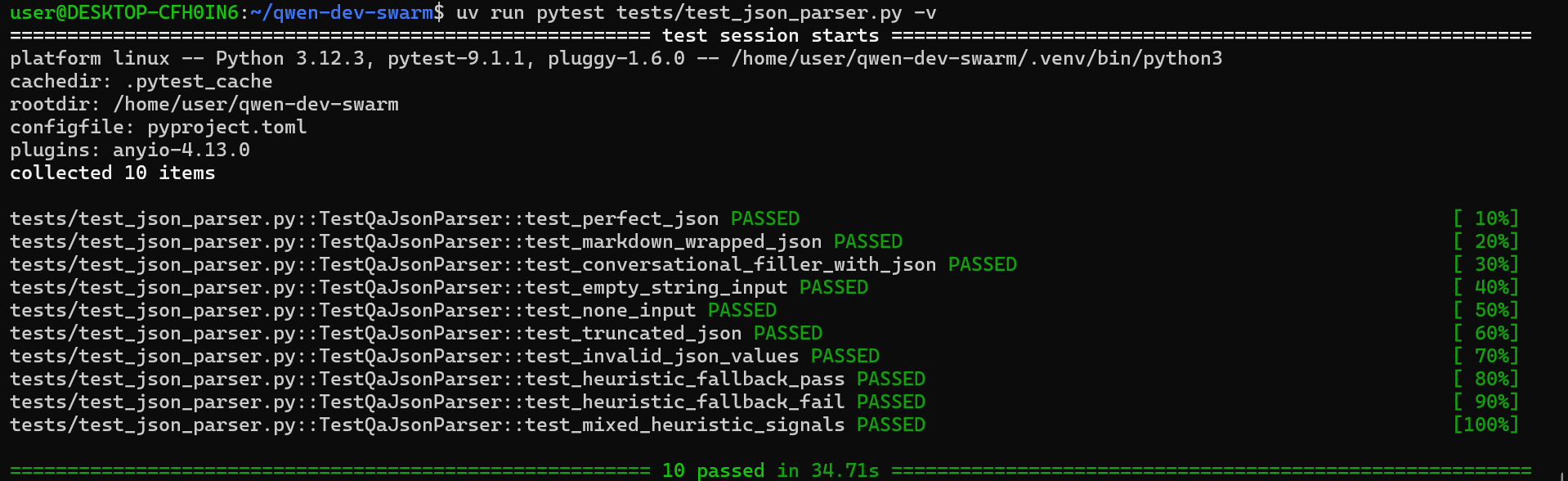
test_json_parser
-
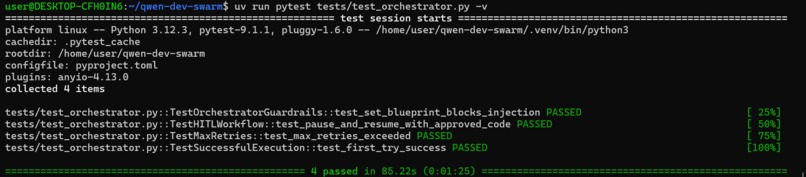
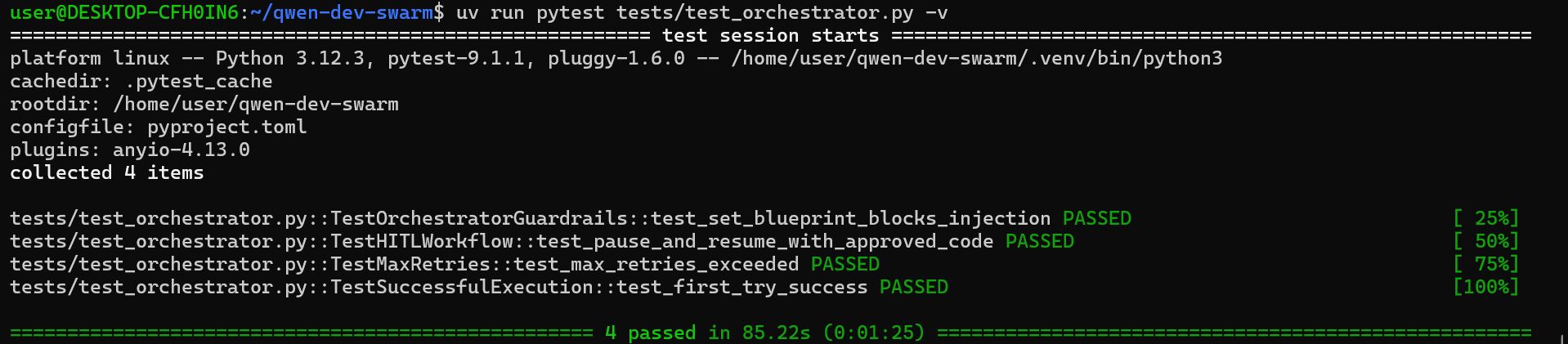
test_orchestrator
-
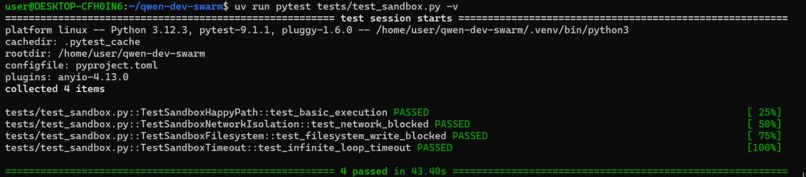
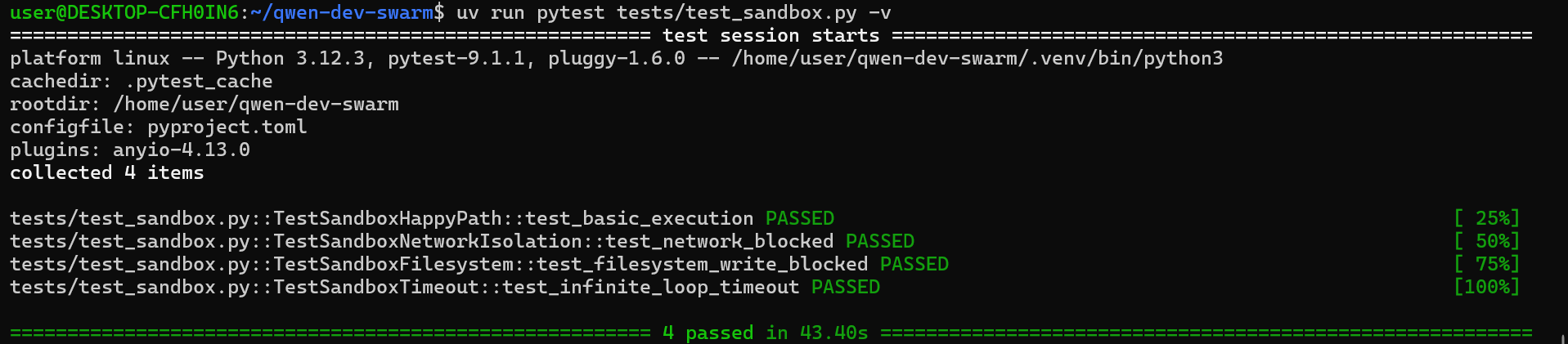
test_sandbox
-
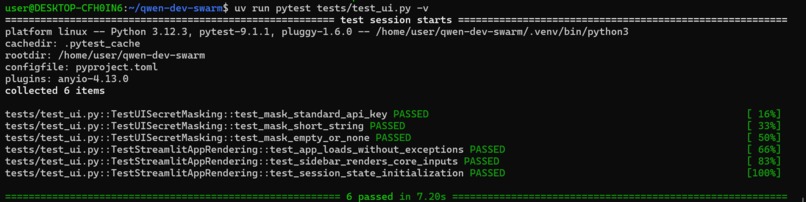
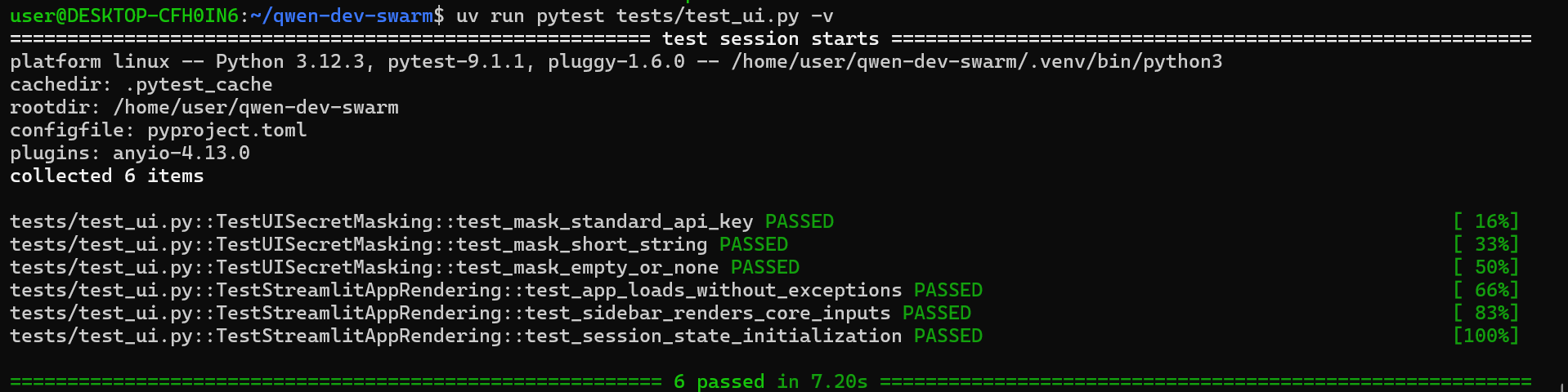
test_ui
-
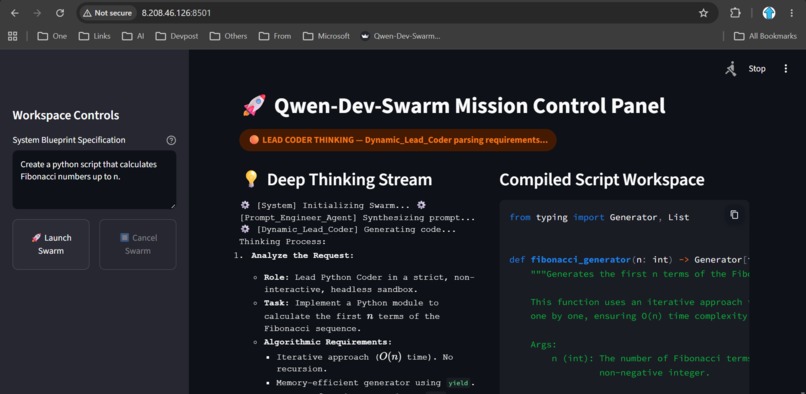
ui_with_alibaba
-
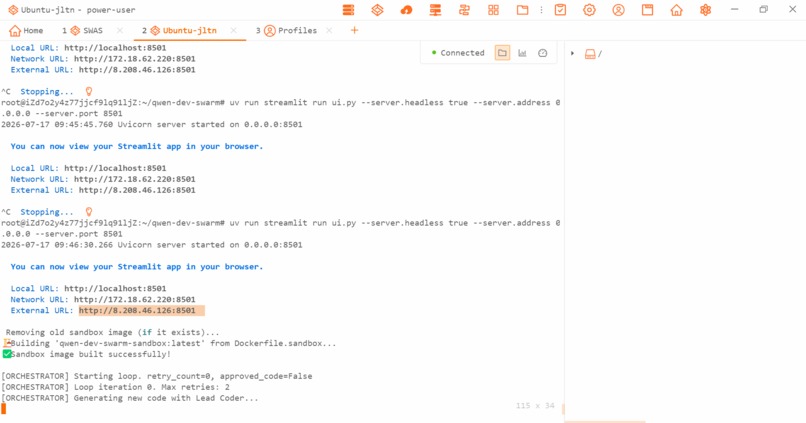
ui_with_alibaba
-
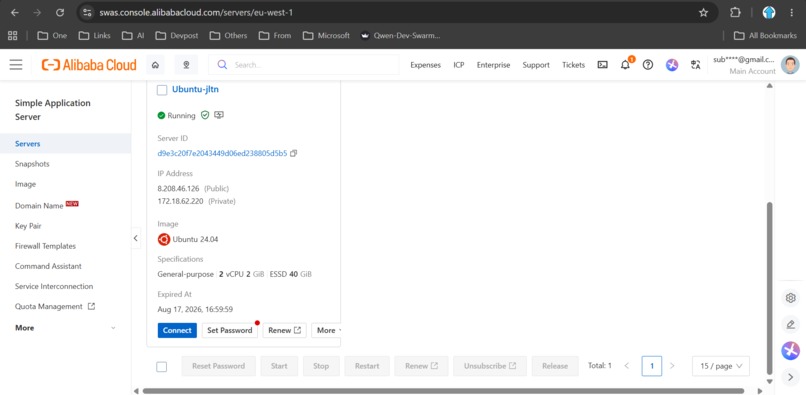
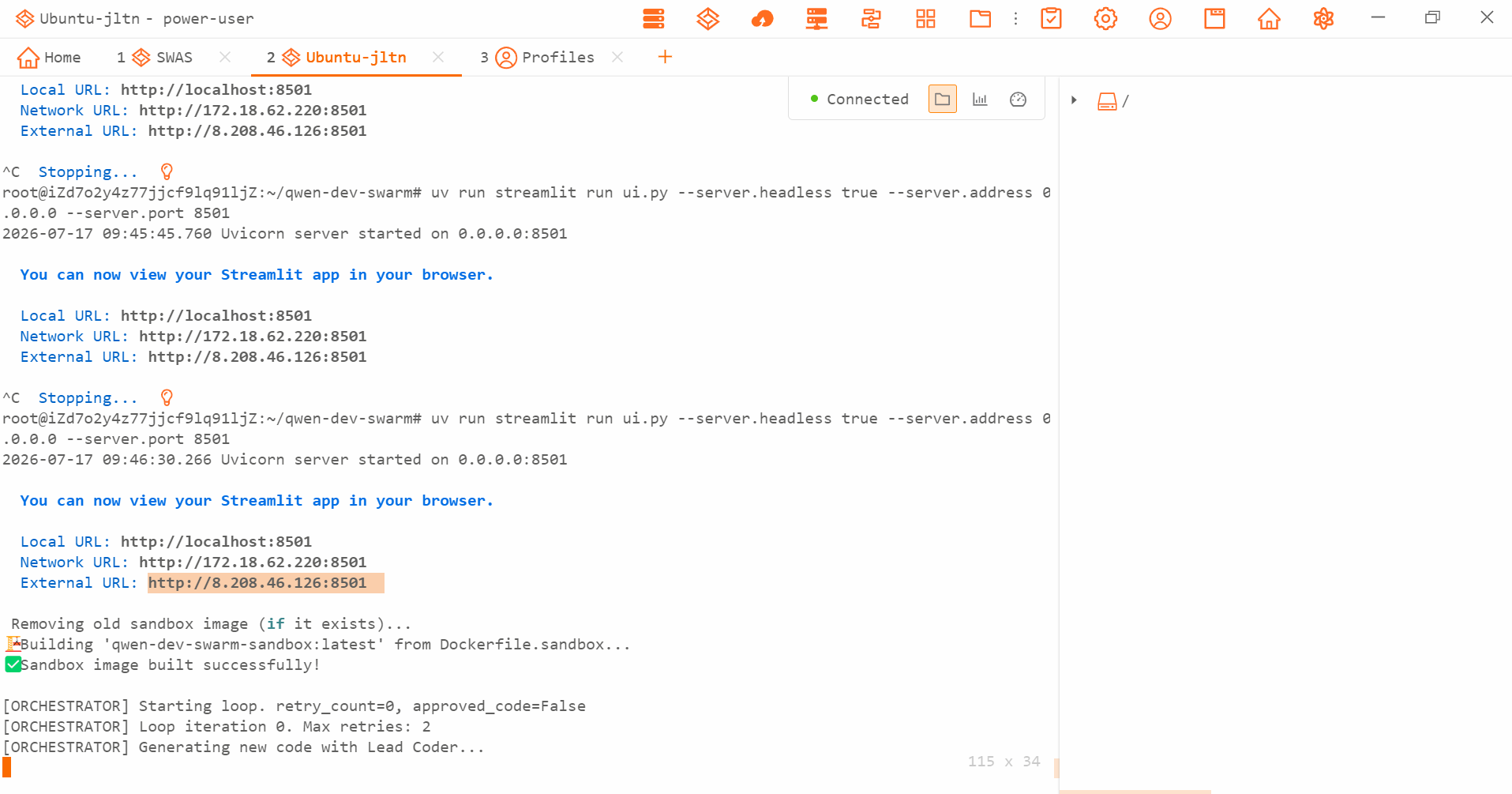
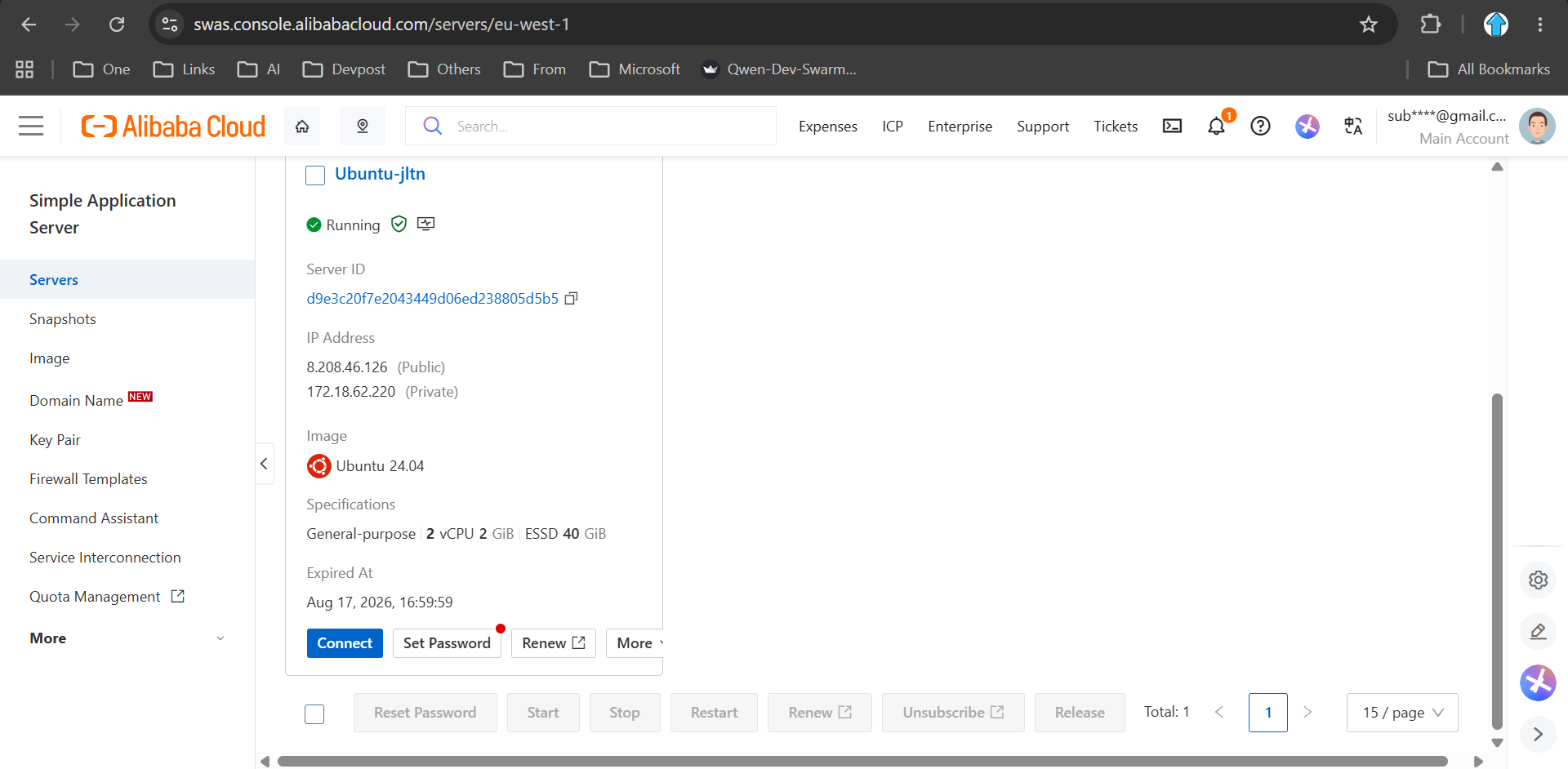
alibaba_sas
Qwen-Dev-Swarm Inspiration
🌟 Inspiration
The genesis of Qwen-Dev-Swarm stemmed from a recurring frustration in modern AI-assisted development: LLMs excel at generating syntactically correct code, but consistently fail at producing production-ready artifacts. Snippets often lack defensive typing, skip edge-case handling, ignore security best practices, and omit deterministic tests.
I wanted to bridge the gap between "AI code snippet" and "verifiable, deployable software" by treating code generation not as a single-shot prompt, but as a formalized engineering pipeline. Inspired by CI/CD guardrails, multi-agent orchestration research, and zero-trust execution models, I set out to build a system that doesn't just write code, but architects, audits, tests, secures, and self-corrects until it meets strict production standards.
🧠 What I Learned
Building this project was a deep dive into the intersection of LLM orchestration, systems security, and stateful workflow design:
Multi-Agent Orchestration vs. Monolithic Prompts: Splitting responsibilities across specialized agents (Architect, Coder, Reviewer, Security_Auditor, QA_Analyst) drastically improved output quality. The separation of concerns reduced context pollution and enabled targeted feedback loops.
True Sandbox Isolation: I learned that
docker runalone is insufficient for security. True isolation requires a combination of flags:--network none,--read-only,--user 1000:1000,--pids-limit, andcgroup-enforced memory/CPU caps. The attack surface A approaches zero when:
(net = ∅) AND (fs = ro) AND (uid = 0)
- Streaming LLM Responses & Buffer Management: Parsing
<thinking>tags and code blocks in real-time requires a non-blocking state machine. A naive buffer causes deadlocks when LLMs output<in code. I implemented a safe-length buffer where:
B_safe = max(|tag|) - 1
ensuring zero character latency while preserving tag boundaries.
Robust JSON Extraction: LLMs rarely output perfect JSON. I learned to build a multi-stage parser with regex fallback, bracket extraction, and heuristic scoring rather than relying on
json.loads()alone.Human-in-the-Loop (HITL) State Persistence: Pausing an async generator mid-stream without losing context required careful state serialization. The orchestrator now maintains a persistent state dictionary that survives UI pauses and retry resumptions.
️🛠️ How I Built It
The project was constructed iteratively across seven architectural phases:
1. Core Agent Engine (swarm/agents.py)
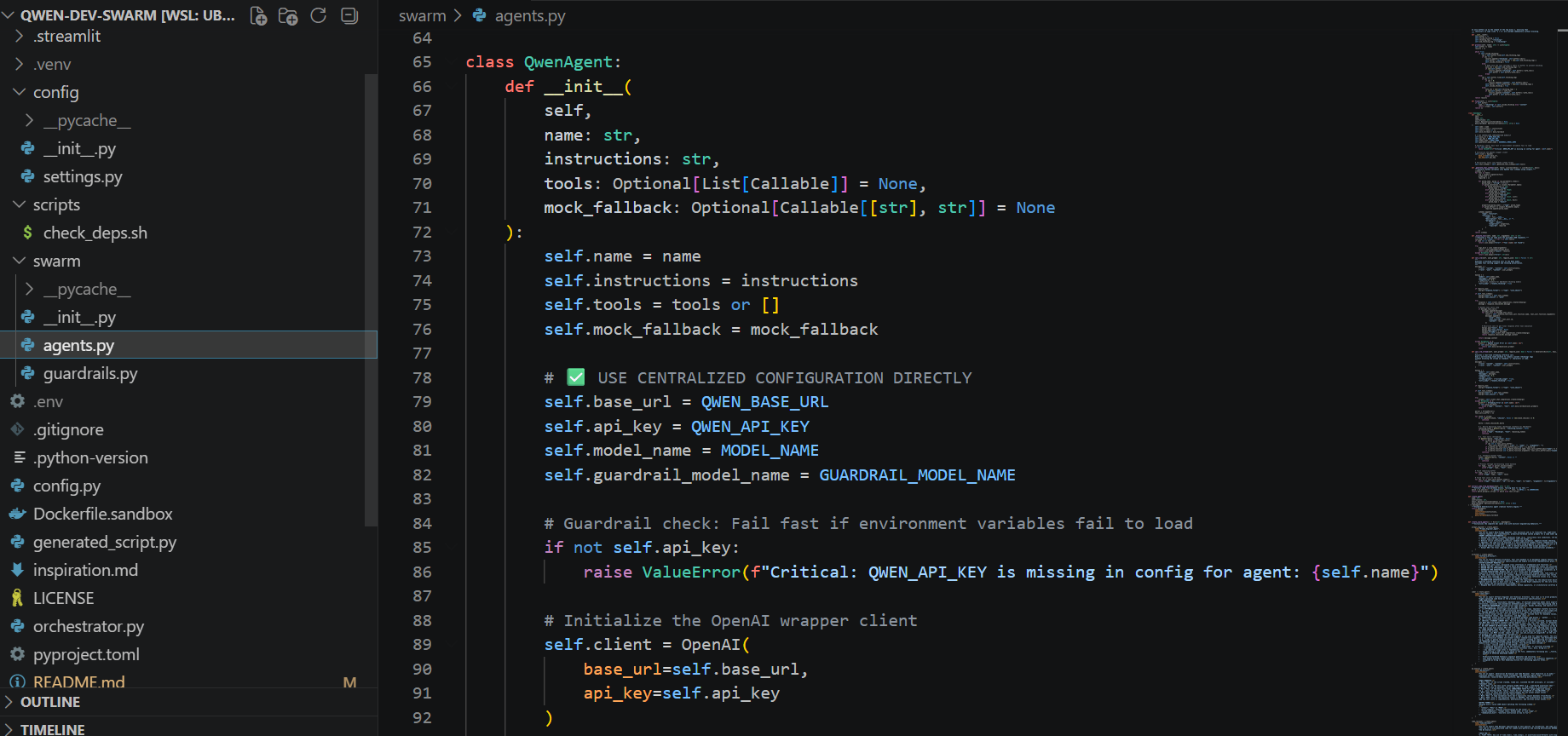
Built a QwenAgent class with streaming inference, tool-calling support, and a non-blocking StreamParser. Implemented deterministic agent factories to instantiate specialized roles with hardened system prompts.
2. Secure Execution Sandbox (sandbox.py + Dockerfile.sandbox)
Designed a minimal Alpine/Debian-based container with pytest pre-installed. Configured strict runtime flags to enforce read-only filesystems, network isolation, and resource caps. All code execution routes through this sandbox before touching the host.
3. Multi-Layer Prompt Defense (swarm/guardrails.py)
Implemented a 3-tier guardrail system:
- Layer 1: Unicode normalization & zero-width character stripping
- Layer 2: Regex heuristic matching against known injection patterns
- Layer 3: Semantic LLM scoring using a fast auxiliary model
The composite guardrail function is defined as:
G(x) = True ⟺ [L₁(x) = PASS] AND [L₂(x) = PASS] AND [L₃(x) = PASS]
4. Orchestrator & Self-Correction Loop (orchestrator.py)
Engineered the state machine that manages generation, sandbox execution, QA analysis, and retries. Implemented bounded retry logic where:
n ≤ N_max
with decaying hint injection to prevent oscillation. Added mandatory HITL checkpoints before any sandbox execution.
5. Swarm Expansion
Added Software_Architect, Code_Reviewer, Test_Generator_Agent, Security_Auditor_Agent, and Documentation_Agent. Each agent enforces domain-specific constraints (e.g., deterministic tests, O-notation complexity checks, vulnerability scanning).
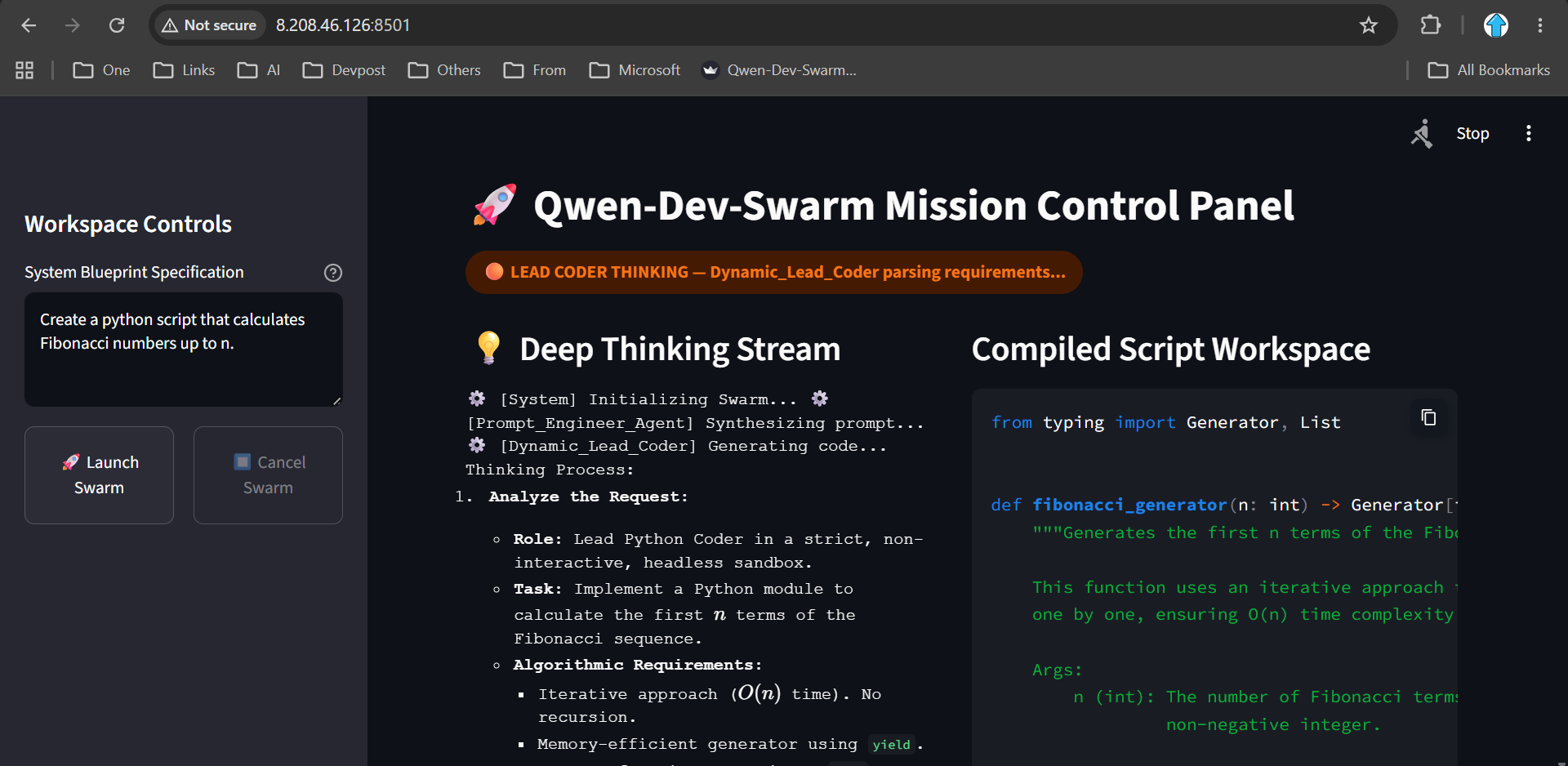
6. Mission Control UI (ui.py)
Built a Streamlit dashboard with real-time token streaming, deep-thinking visualization, interactive approval buttons, and state-aware resumption. API keys are masked using:
k_display = k[4] + ... + k[-4:]
to prevent leakage.
7. Hardening & Polish
Integrated uv for cryptographic dependency locking, enforced .env permission checks (chmod 600), added mandatory module docstring validation via regex, and implemented path traversal sanitization:
sanitize_path(p) → basename(p)
🧗 Challenges Faced & Solutions
| Challenge | Root Cause | Solution |
|---|---|---|
| Infinite Retry Loops | QA feedback sometimes caused the Coder to oscillate between two flawed implementations. | Implemented bounded retries n ≤ N_max with a convergence threshold. If Δ_error < ε for 3 iterations, the loop forces a structural rewrite. |
| Sandbox Resource Leaks | Early Docker runs allowed unlimited PIDs and memory, enabling fork bombs. | Enforced group limits: --memory=512m --cpus=1.0 --pids-limit=50. Added --tmpfs /tmp:noexec to block binary drops. |
| Streaming Parser Deadlocks | LLMs output < in comparisons (e.g., if a < b:), causing the <thinking> buffer to hang. |
Built a non-blocking state machine with safe-length buffering: only retain B_safe characters. |
| Flaky AI-Generated Tests | Tests used time.time() or assertLess(elapsed, threshold), causing CI failures. |
Added explicit guardrails in Software_Architect and Code_Reviewer prompts forbidding time-based assertions. Enforced value-correctness tests: assert_f(x) = y_known. |
| Prompt Injection Evasion | Attackers used Unicode escapes, zero-width chars, and semantic role-play to bypass regex. | Implemented 3-tier defense. Semantic layer uses a fast model to compute intent confidence: **P(malicious |
| HITL State Loss on Pause | Stopping the generator mid-stream dropped context, forcing full regeneration. | Serialized orchestrator state into self.state dict. UI yields await_human_approval events and resumes via approved_code injection without resetting retry counters. |
🪞 Final Reflection
Building Qwen-Dev-Swarm transformed my understanding of what it takes to move from "AI-assisted scripting" to autonomous, verifiable software engineering. The project proved that with strict guardrails, true isolation, and iterative self-correction, LLMs can be elevated from creative typists to reliable engineering partners.


Log in or sign up for Devpost to join the conversation.