Inspiration
Building autonomous AI agents for finance usually hits a wall very quickly: real-time data access. Most financial APIs are fragmented across multiple vendors, require separate subscriptions, have strict rate limits, and need custom schemas that break dynamic agent workflows. We wanted to build a single infrastructure layer where an agent could simply state its financial intent in plain language and instantly discover, test, and execute the exact API call it needs to complete its analysis.
What it does
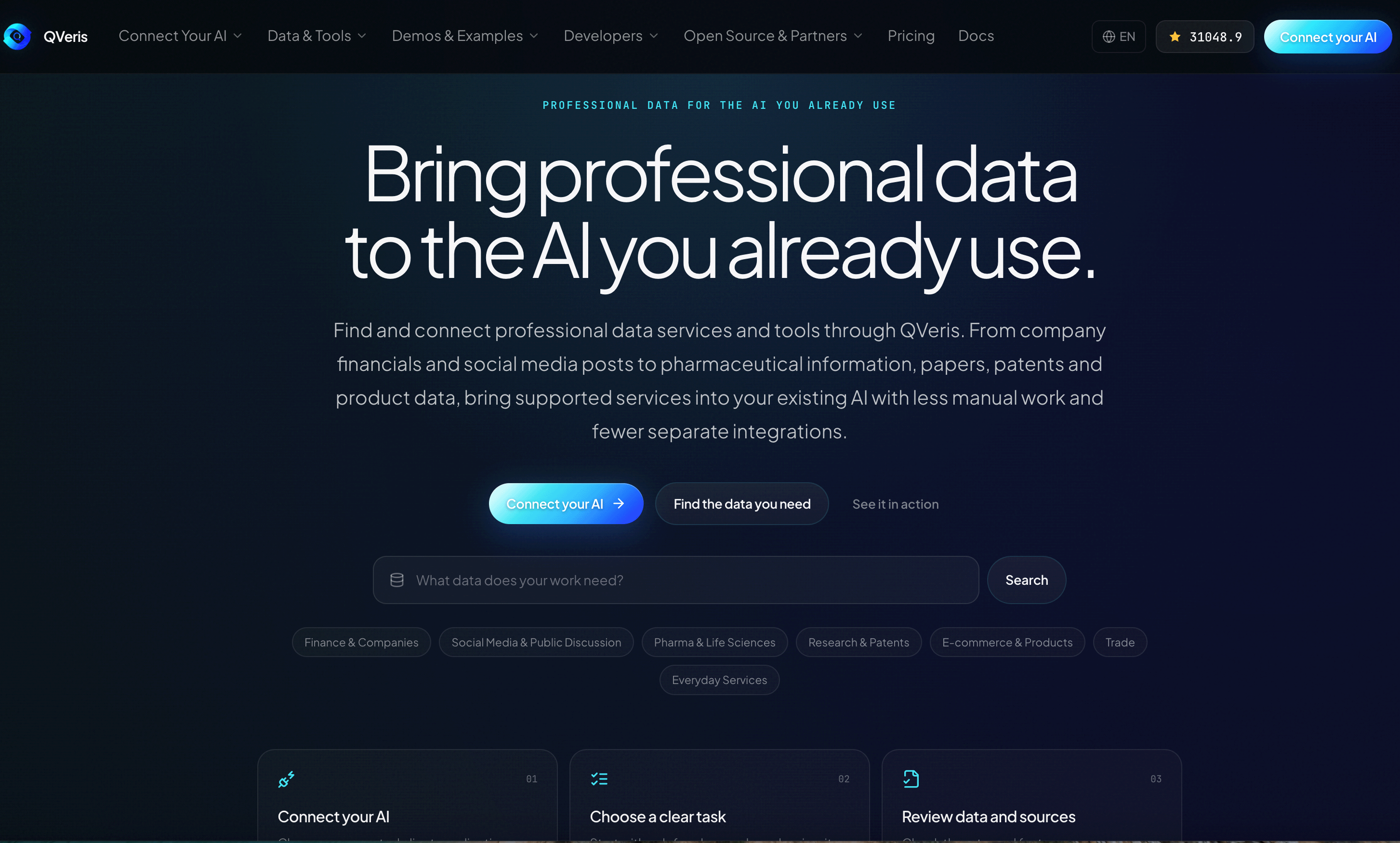
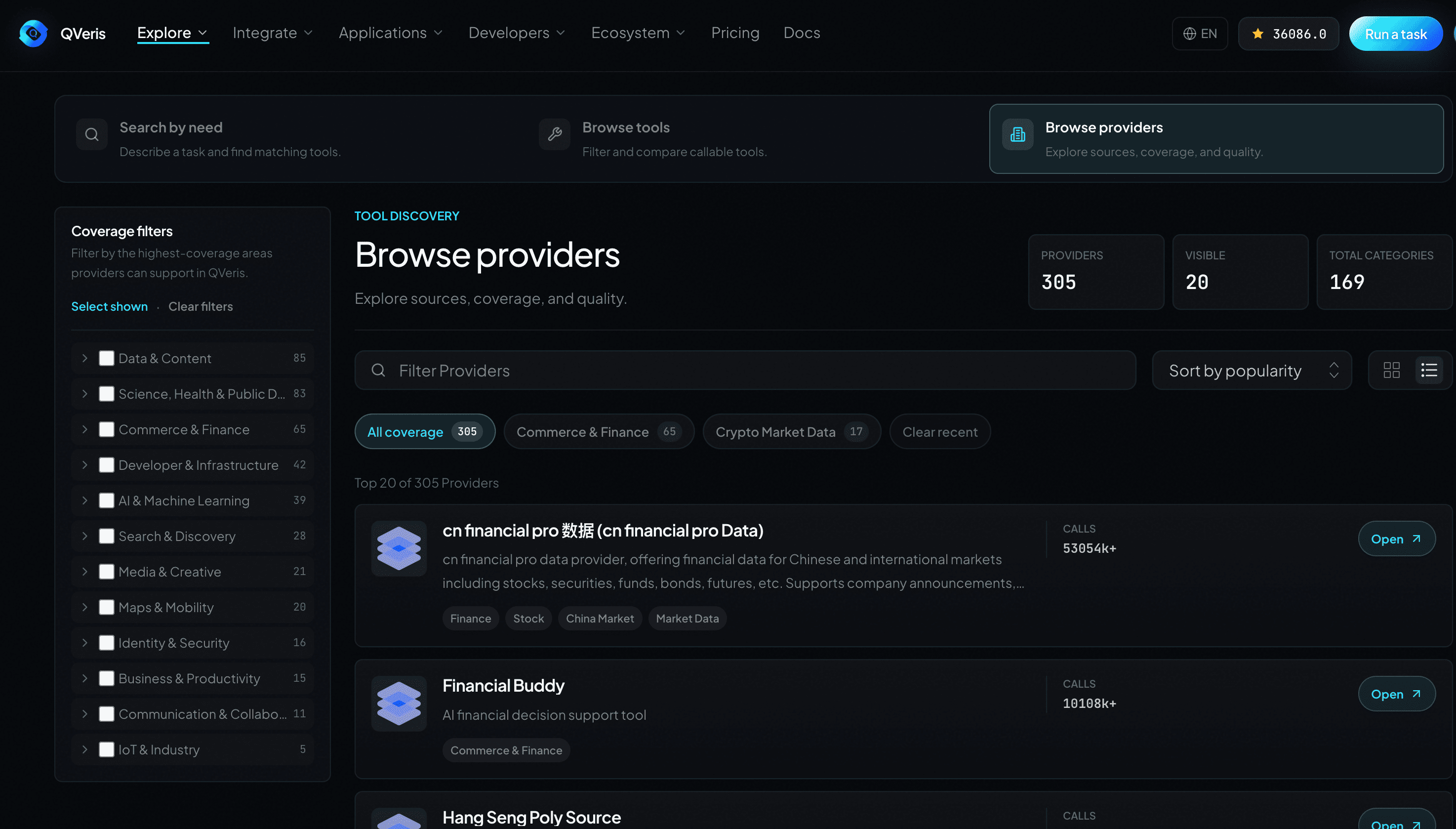
QVeris is an AI agent infrastructure platform equipped with financial data APIs designed for market analysis and investment research. Across its network, it links developers and AI agents to more than 10,000 live capabilities, tools, and external data sources.
The platform operates on an intuitive Discover, Inspect, and Call workflow:
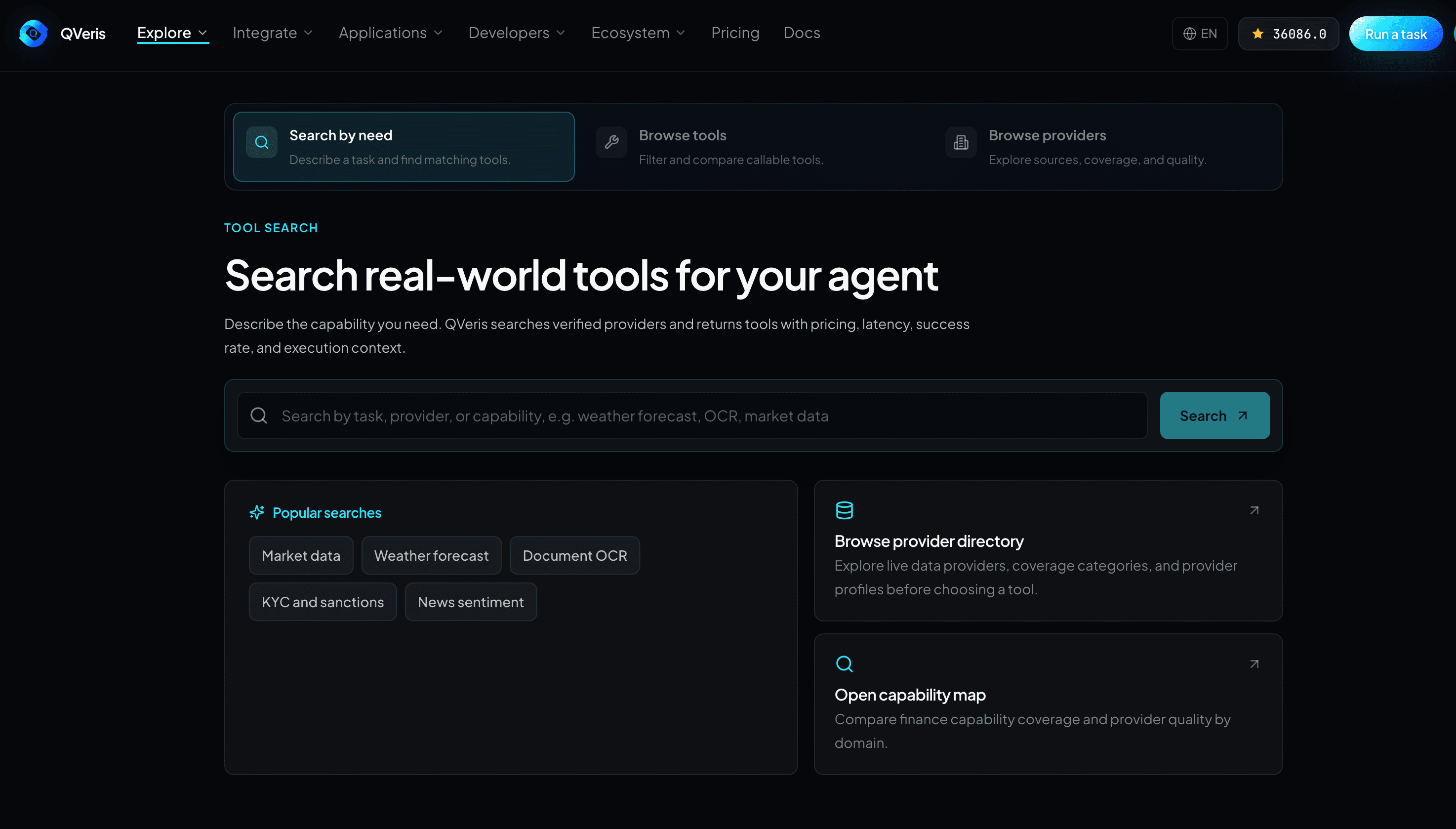
- Discover: Agents describe what data they need using natural language to find matching capabilities dynamically.
- Inspect: Agents check schemas, parameters, pricing, and latency before triggering an execution.
- Call: The agent calls the tool and receives structured JSON payloads for downstream reasoning.
Through a unified interface, agents can retrieve real-time market prices, company financials, valuation multiples, analyst estimates, macroeconomic indicators, yield curves, on-chain crypto analytics, and sentiment or news signals.
How I built it
We built QVeris with developer ergonomics and agent interoperability at the core:
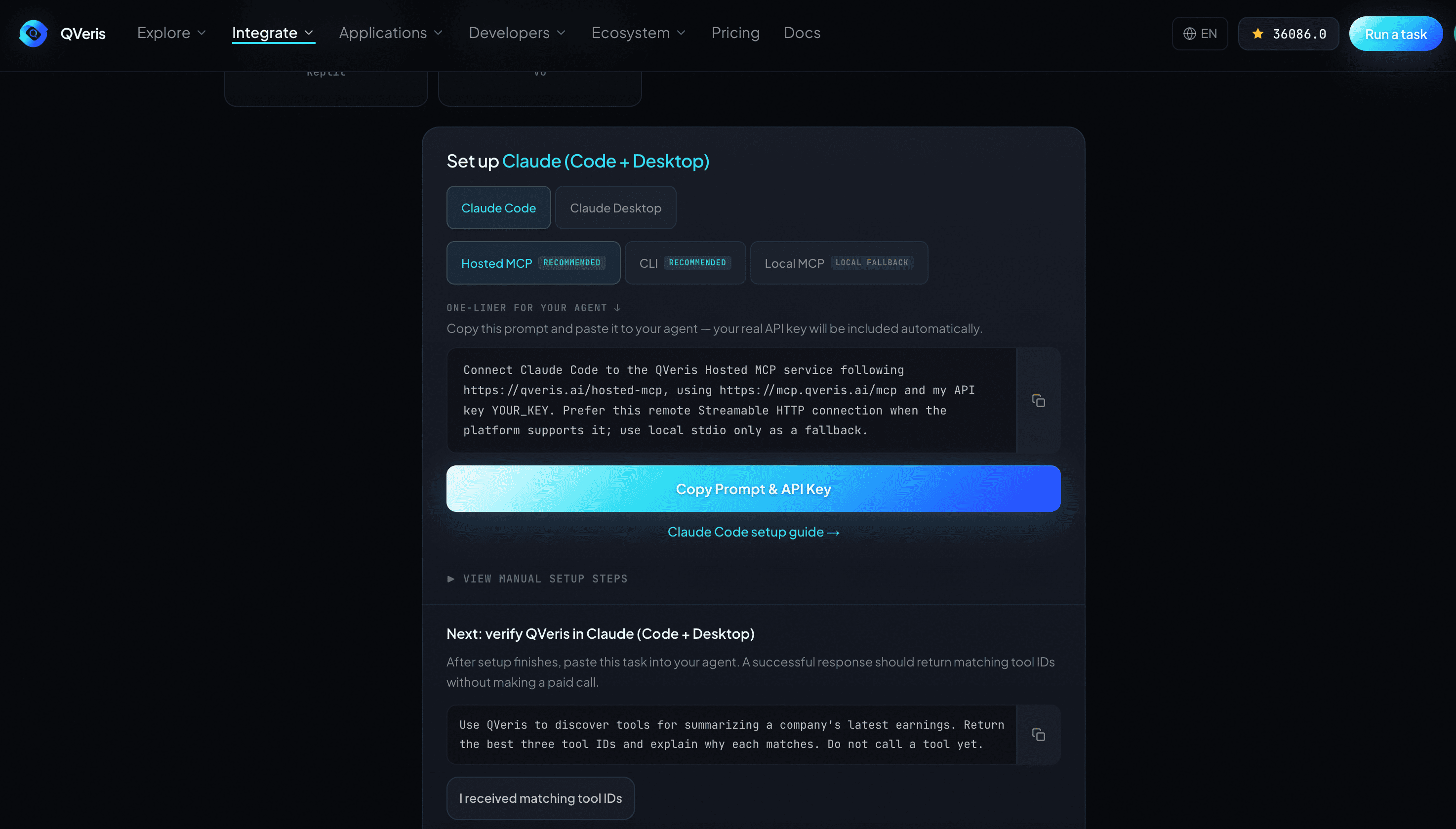
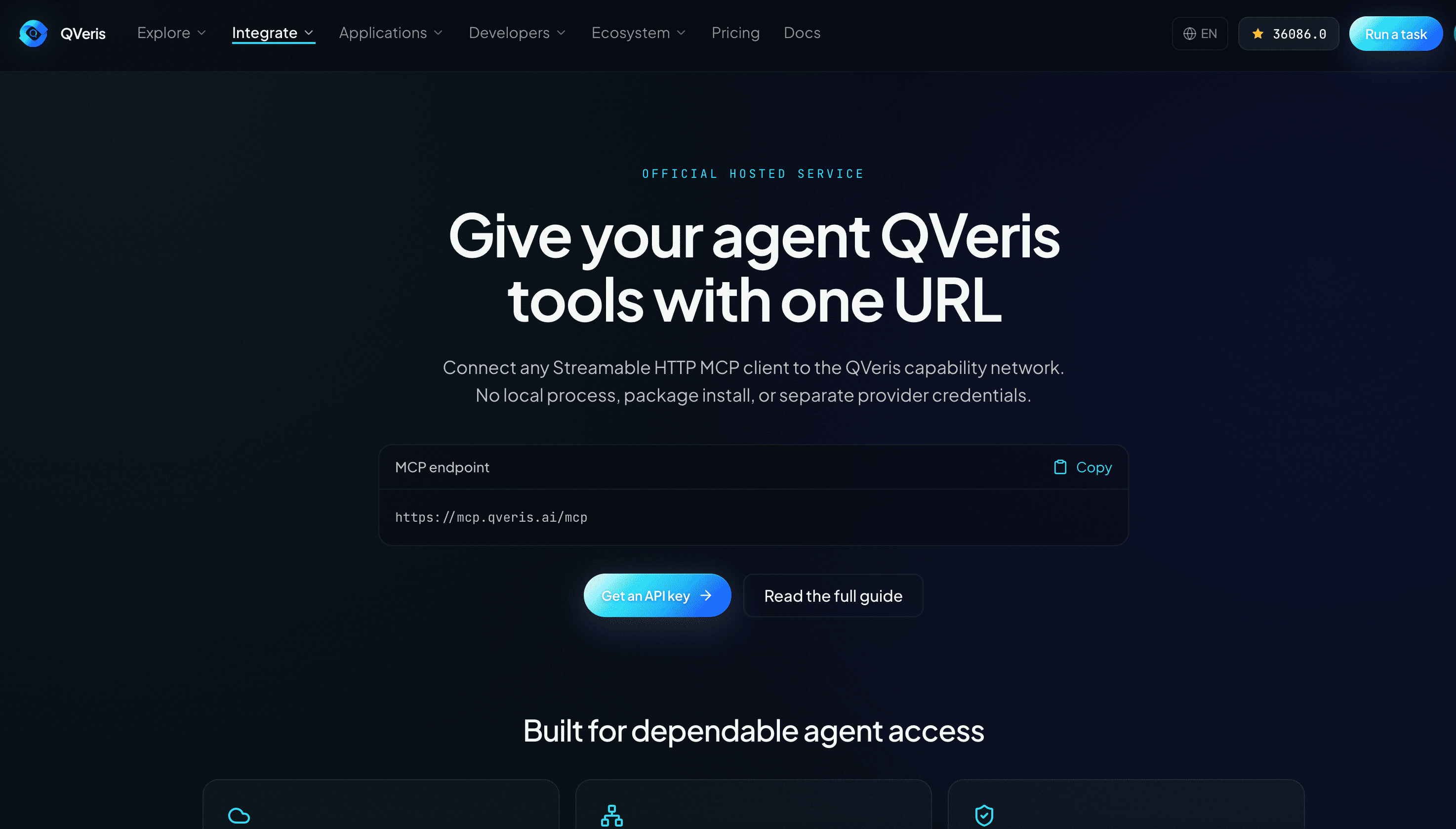
- Model Context Protocol (MCP): Implemented both hosted and local MCP servers so agents in environments like Cursor, Claude Desktop, and custom MCP clients can tap into our tool network natively.
- Multi-Language SDKs: Provided Python and JavaScript SDKs alongside a robust REST API and CLI to fit any standard developer stack.
- Open Source Agent Toolkit: Built the open-source QVeris Agent Toolkit to provide developers with turnkey integration components and workflow templates.
- Granular Ledger: Built a real-time credits ledger and usage monitoring system to manage pay-as-you-go tool execution transparently.
Challenges I ran into
- Tool Discovery Latency: Enabling an agent to search through a catalog of over 10,000 capabilities without slowing down runtime inference required fine-tuning our semantic indexing and retrieval engine.
- Standardizing Heterogeneous Financial Data: Normalizing data formats across varied sources (macro indicators, order books, corporate filings, and on-chain metrics) into clean, agent-digestible schemas took significant data pipeline engineering.
- Usage and Cost Predictability: AI agents can easily get stuck in expensive execution loops if left unchecked, so we had to design strict parameter inspection and verification checkpoints prior to capability execution.
Accomplishments that I'm proud of
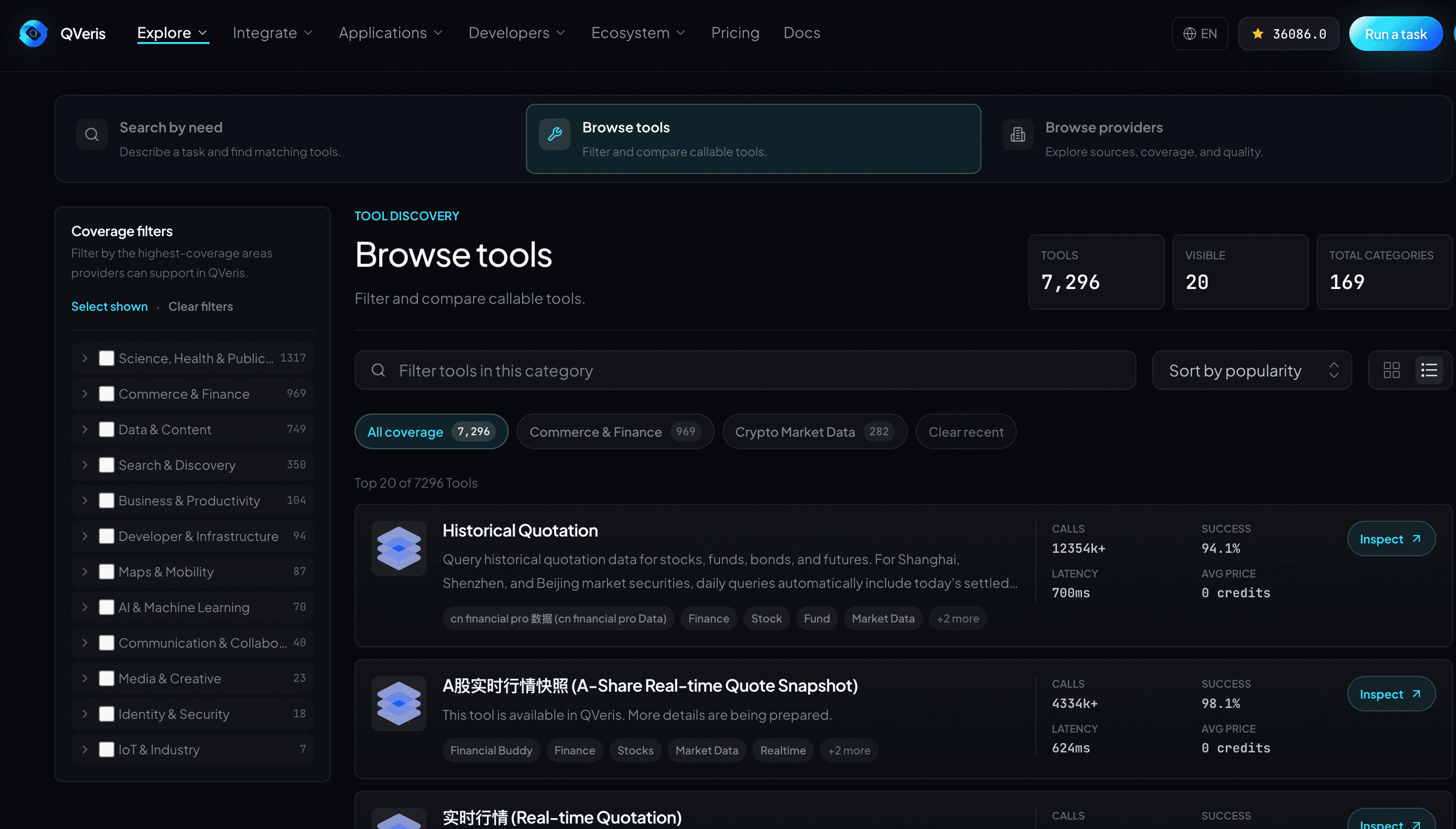
- Unified 10,000+ real-world tools into a single coherent interface with zero monthly platform subscription barriers.
- Successfully launched hosted and local MCP support, making setup seamless across popular developer tools and code editors like Cursor.
- Made discovery and inspection completely free, lowering the barrier for developers building agent prototypes.
What I learned
Autonomous agents do not just need raw API documentation; they need runtime metadata. Providing parameter validation, dynamic pricing info, and performance metrics directly inside the model's context window makes the difference between an agent that hallucinates an invalid request and one that reliably executes high-stakes financial queries.
What's next for QVeris AI
- Expanding our catalog of alternative financial signals, specialized quantitative models, and institutional-grade risk metrics.
- Rolling out more zero-configuration integrations for popular multi-agent orchestration frameworks.
- Deepening community contributions and pre-built workflows within our open-source Agent Toolkit.
Built With
- nextjs
- postgresql
- vercel