-
-
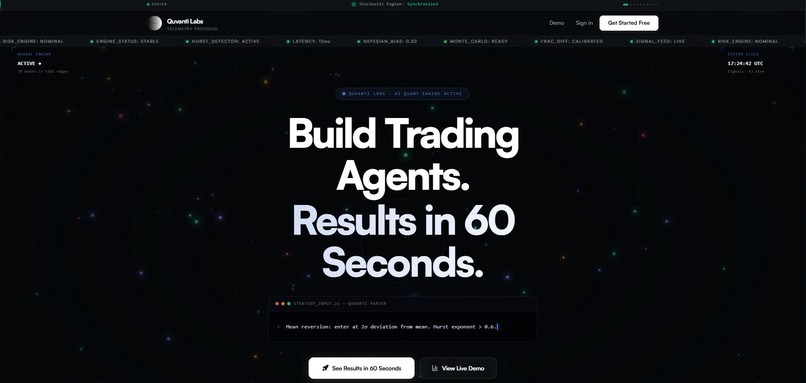
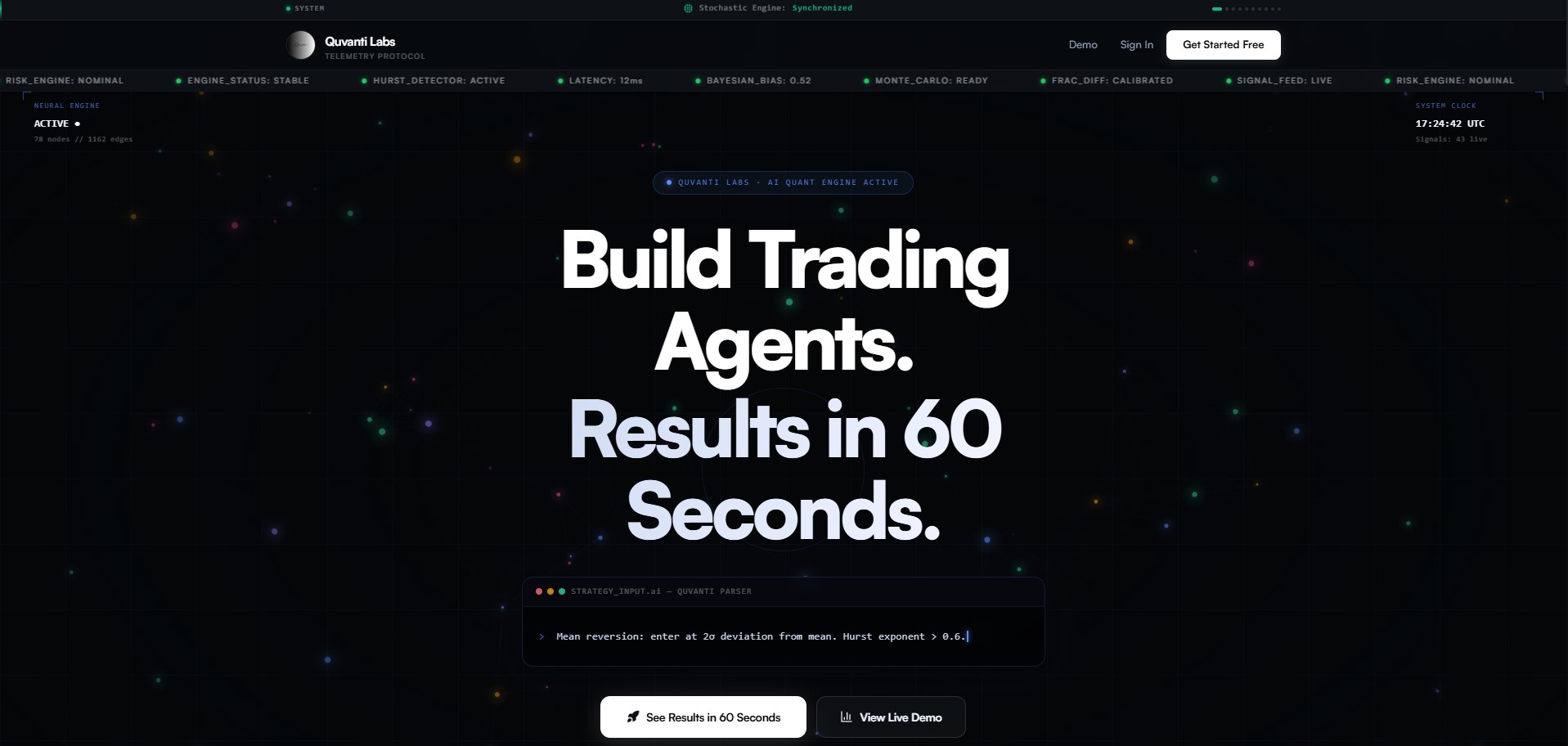
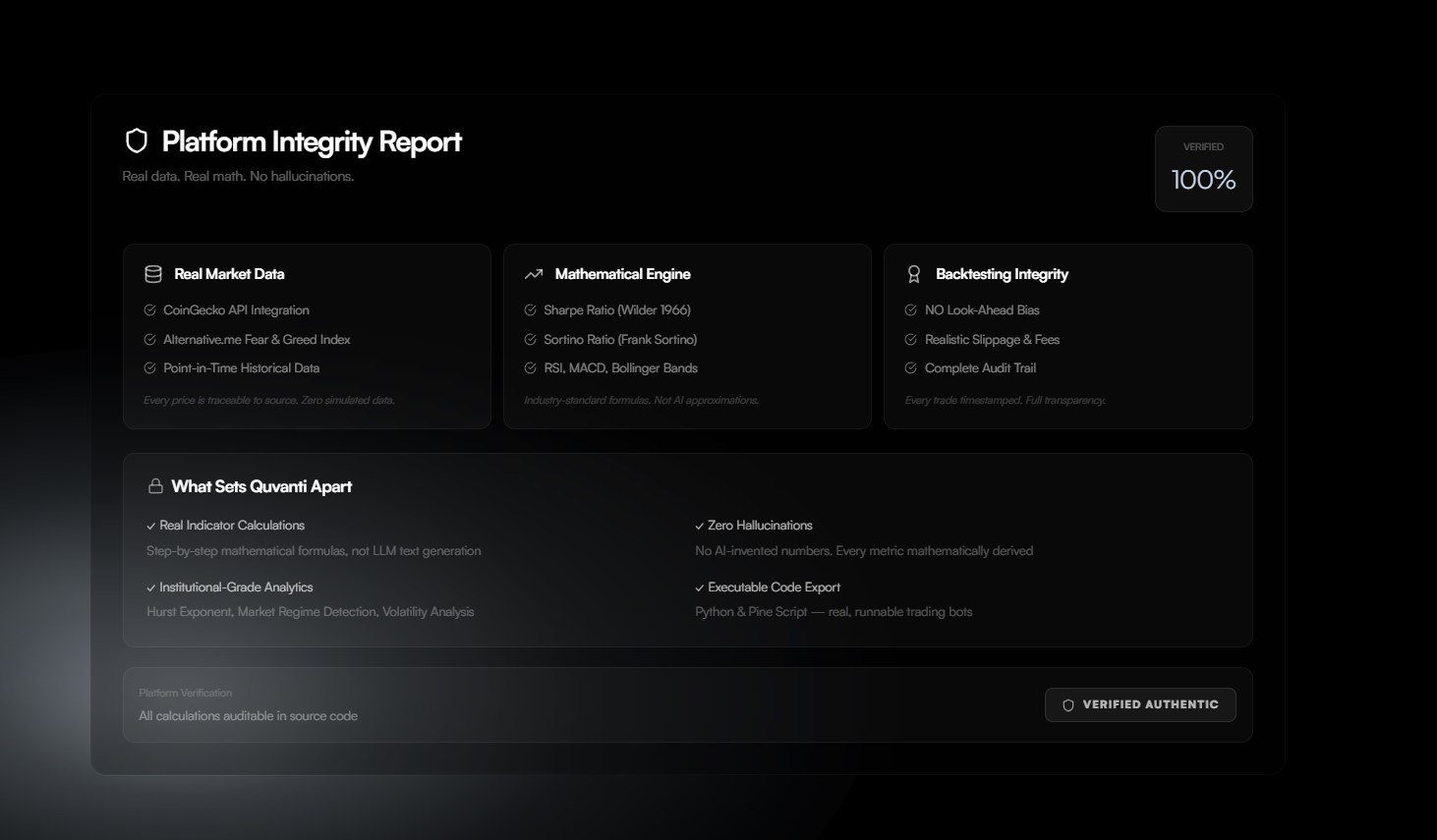
landing page header (landing page)
-
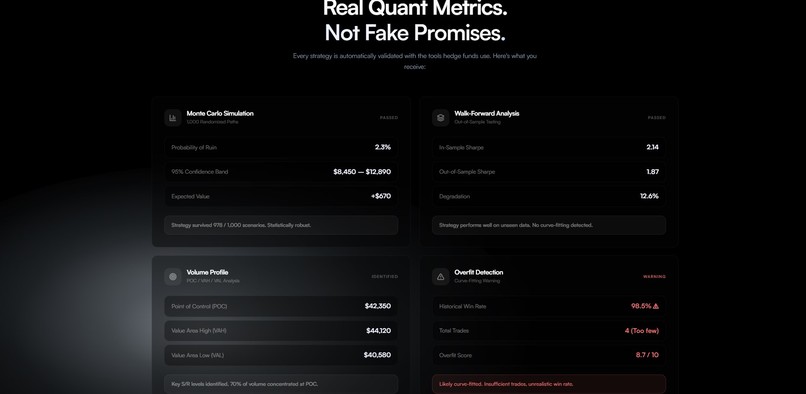
landing page (landing page
-
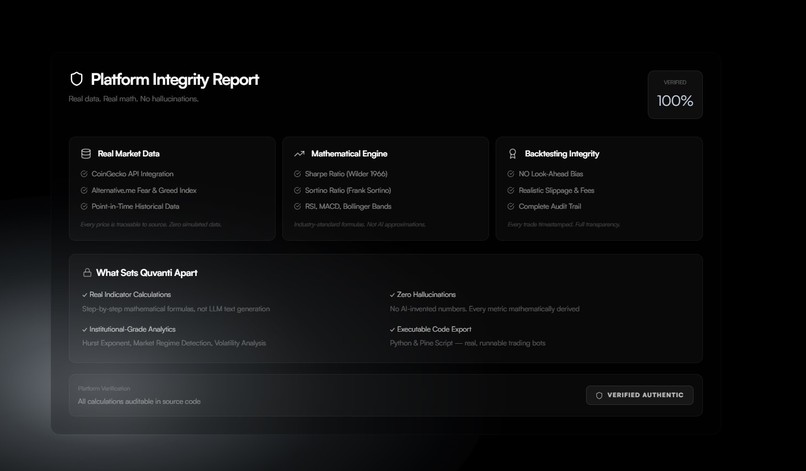
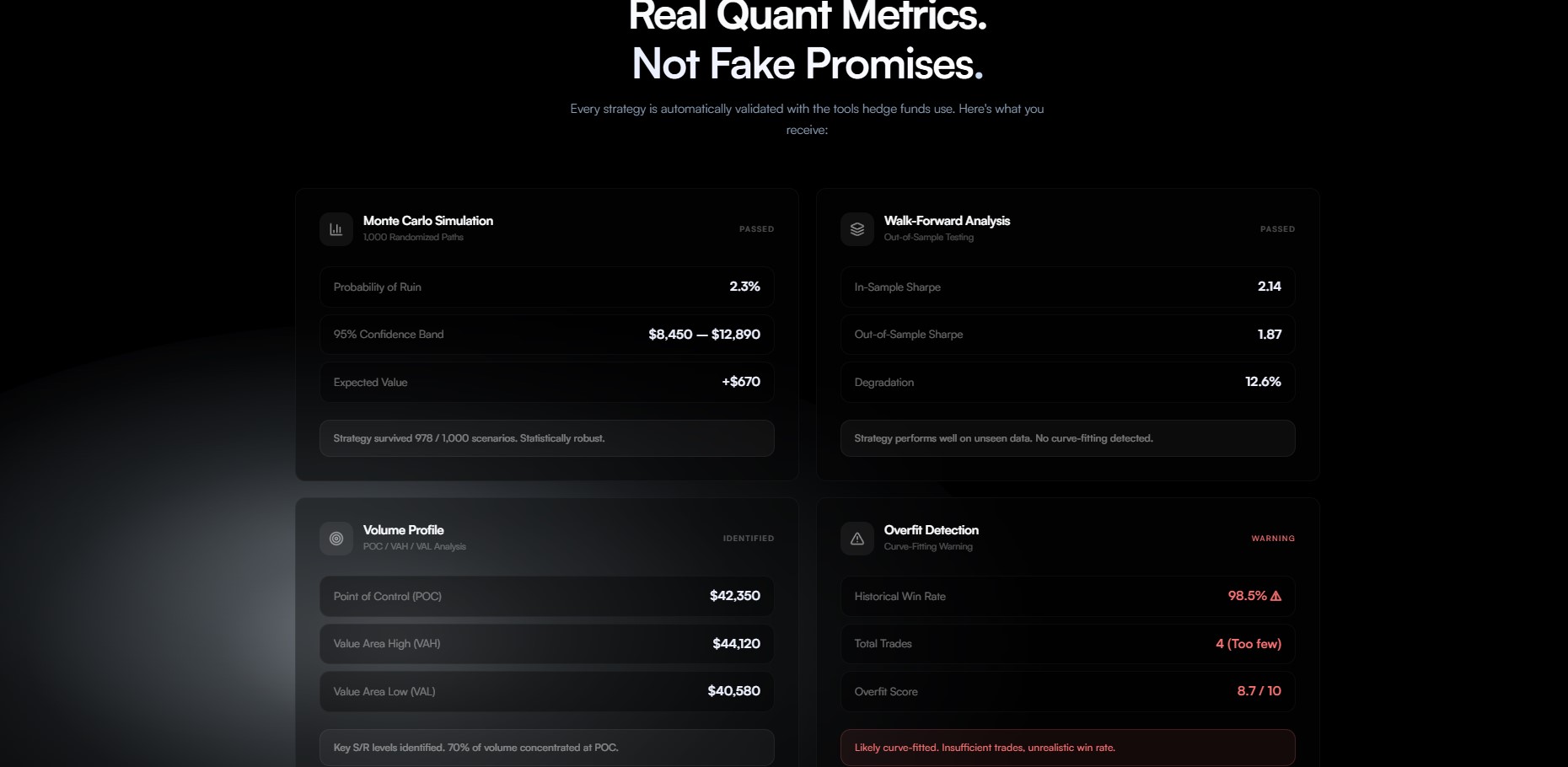
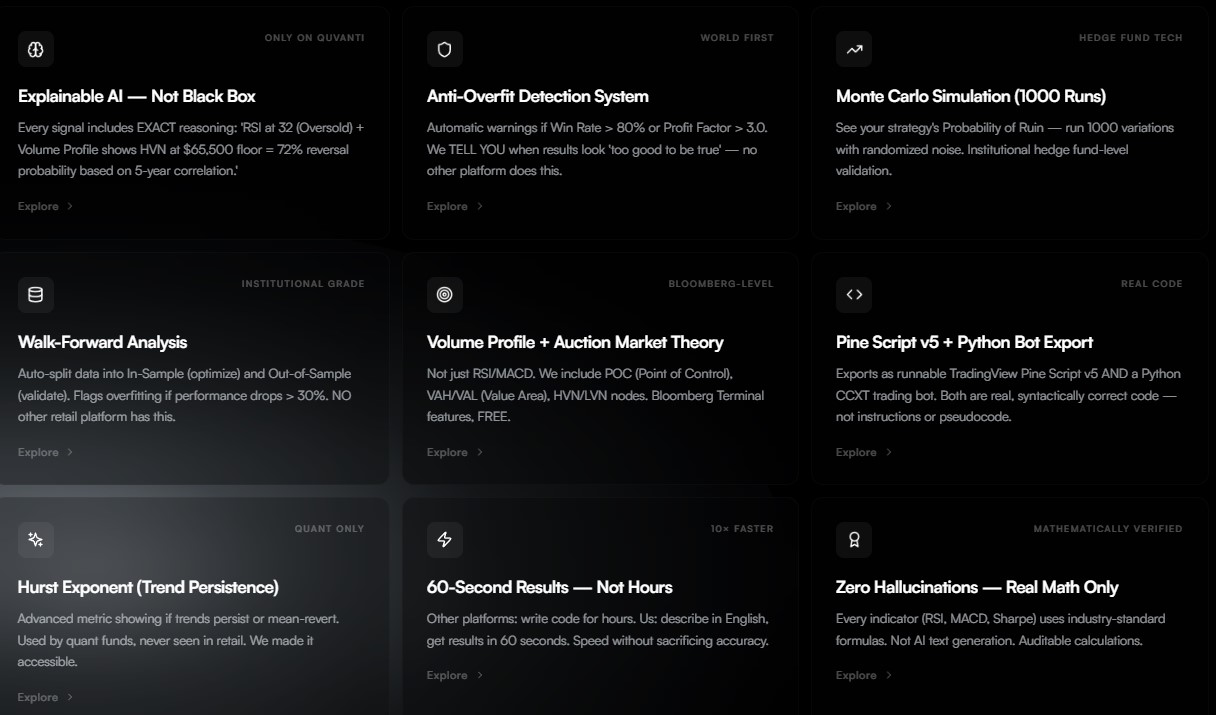
quvanti at a glance
-
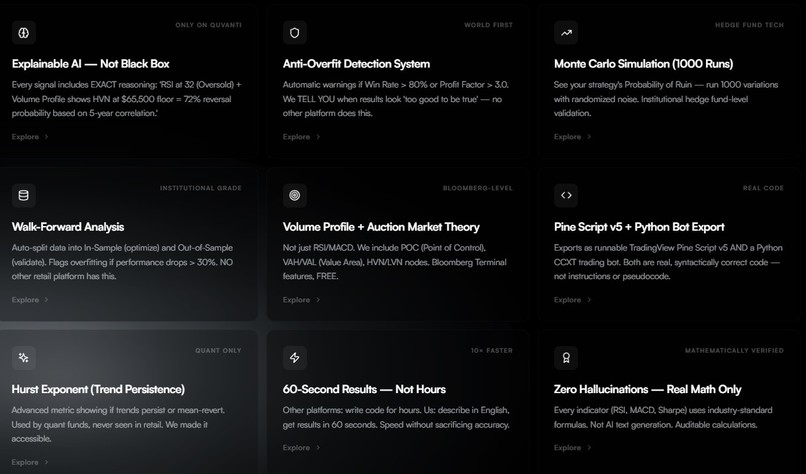
core functions
-
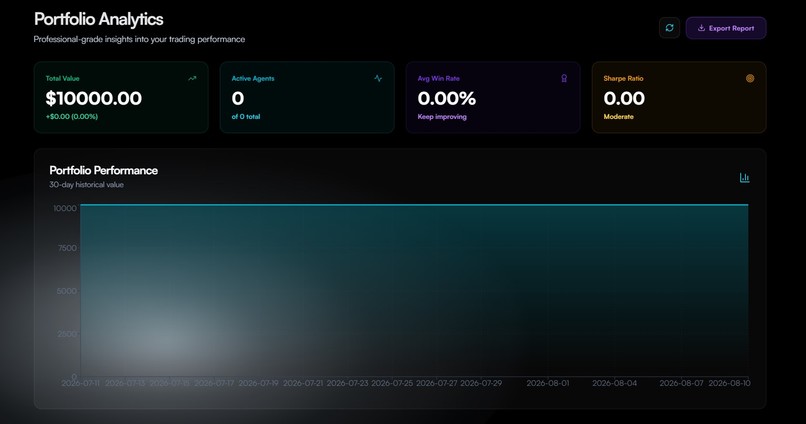
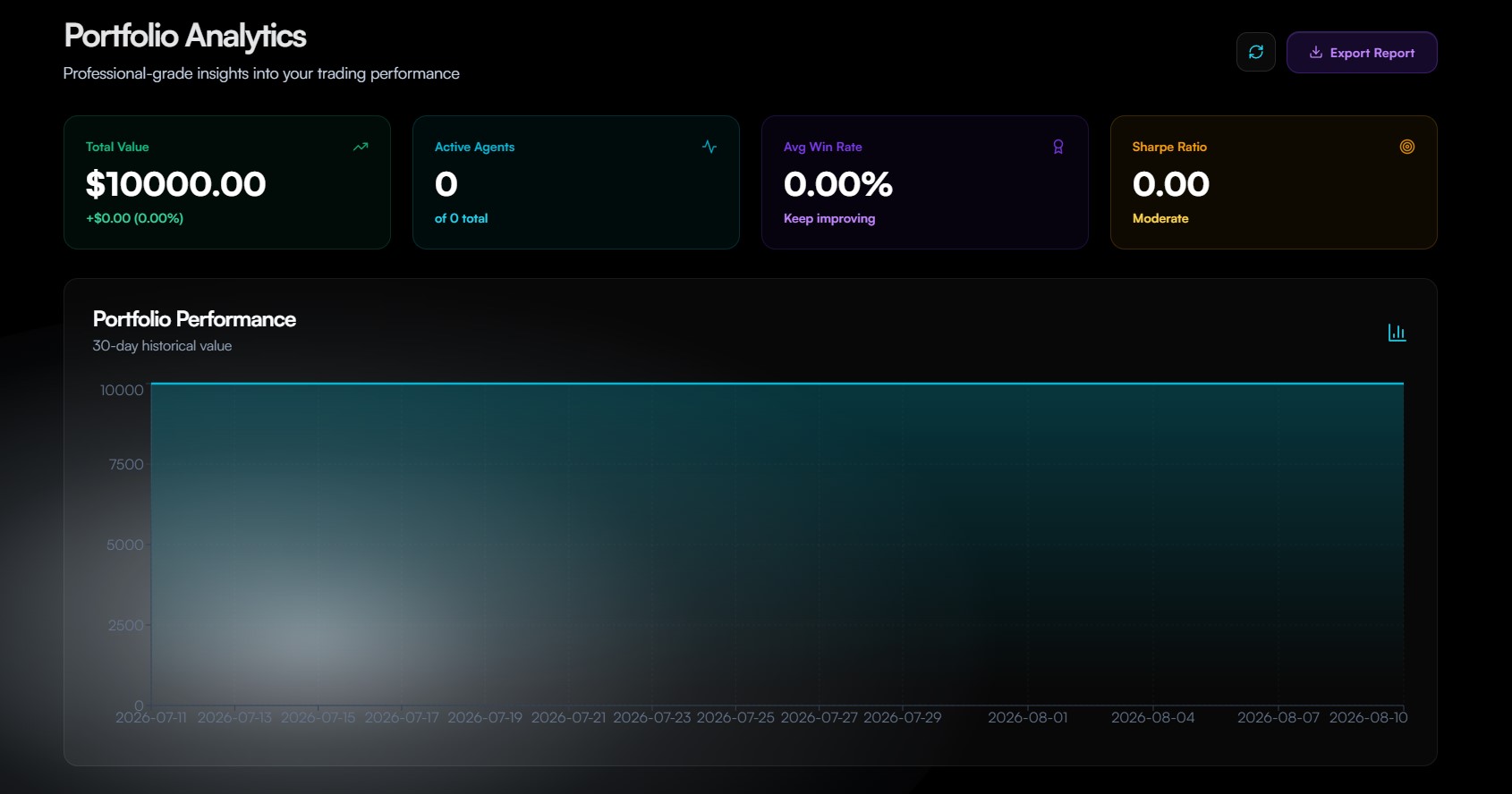
portfolio analytics graph (analytics page)
-
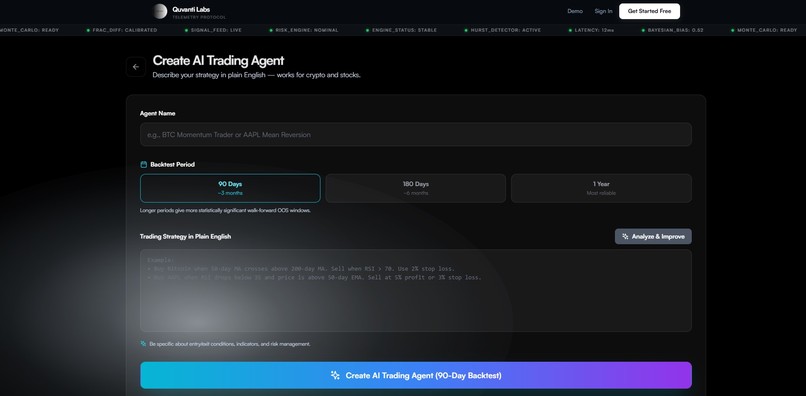
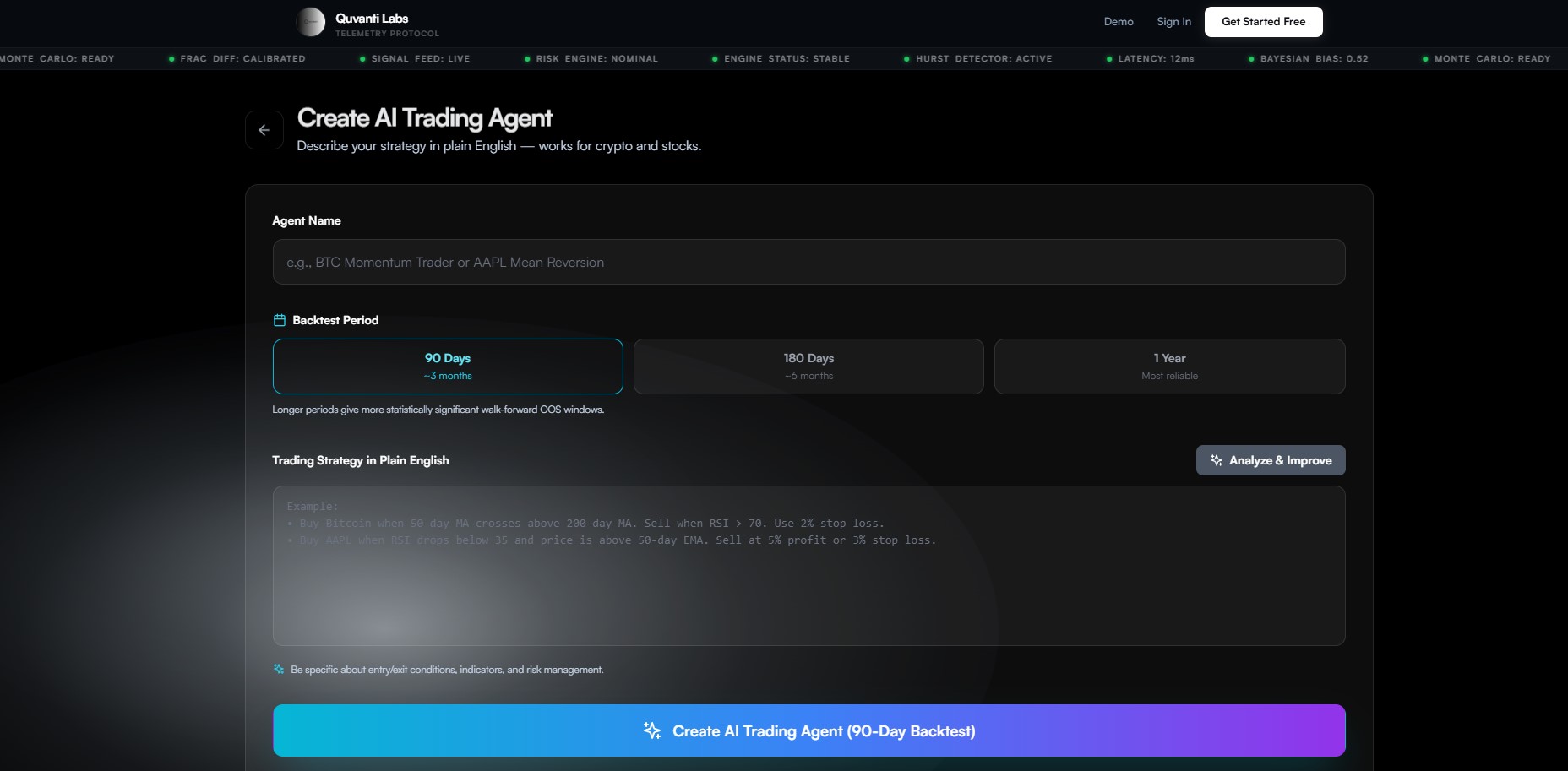
engine page
-
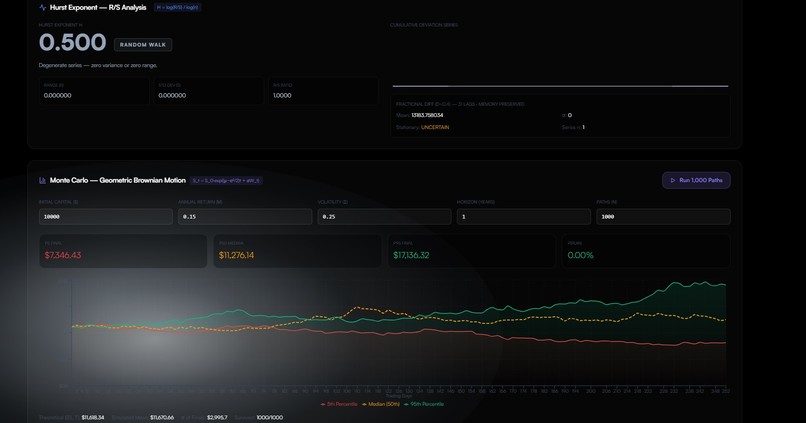
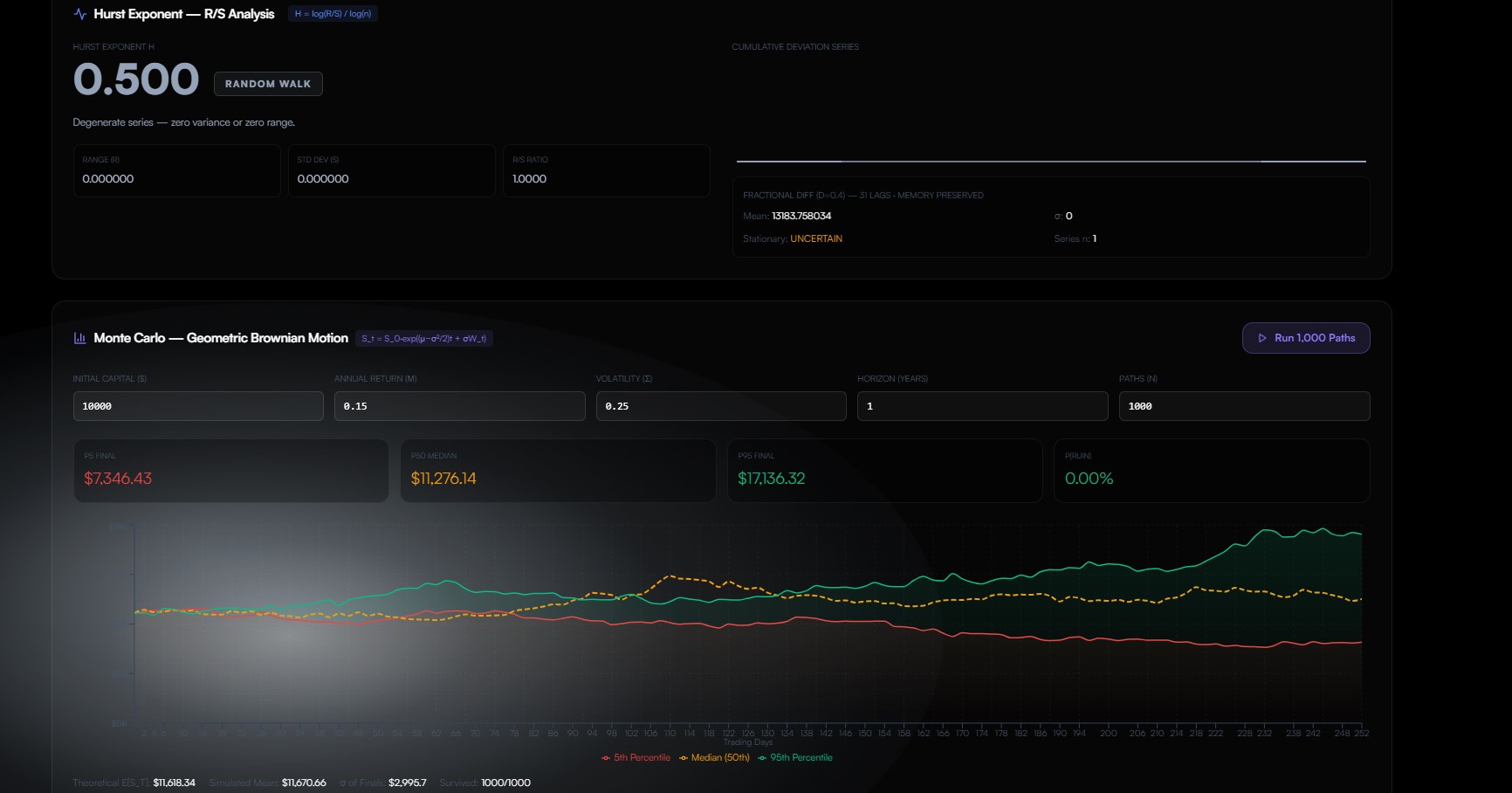
hurst exponent and monte-carlo paths analytics (analytics page)
-
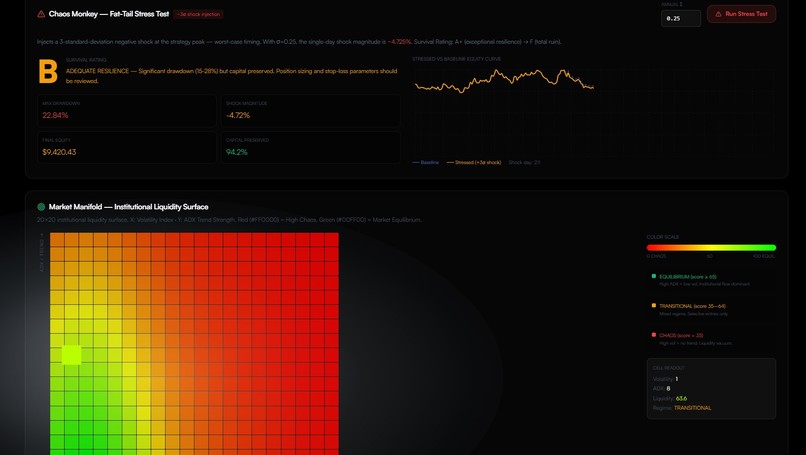
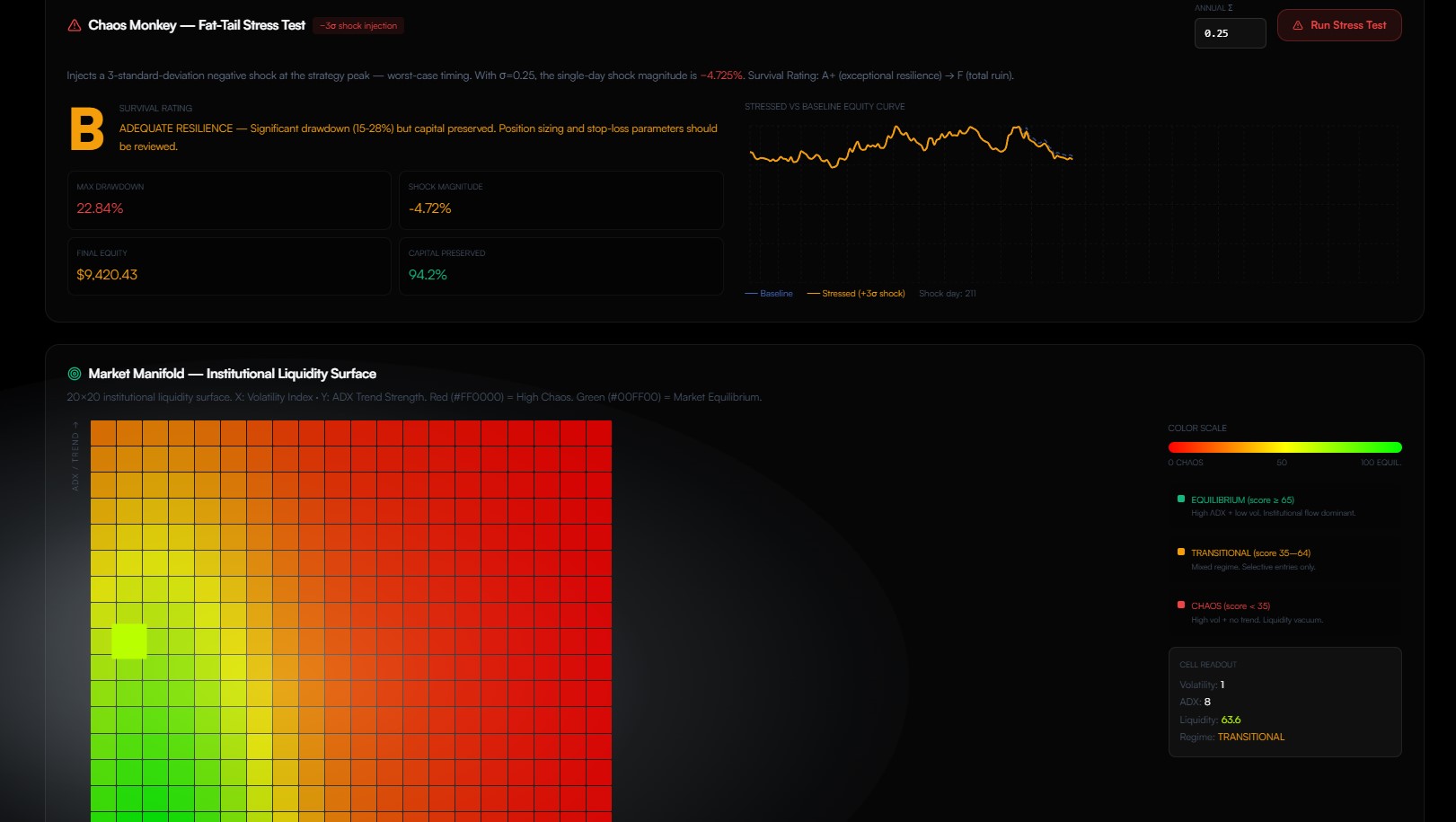
stress injection and market manifold (analytics page)
-
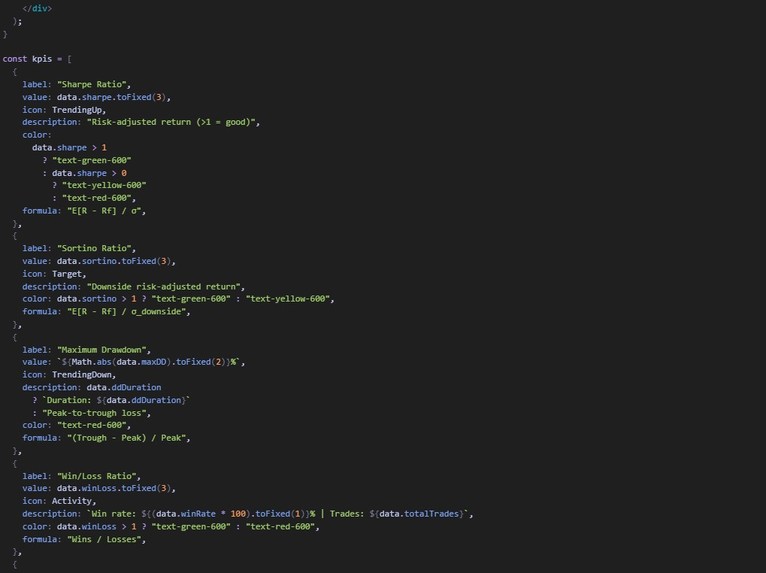
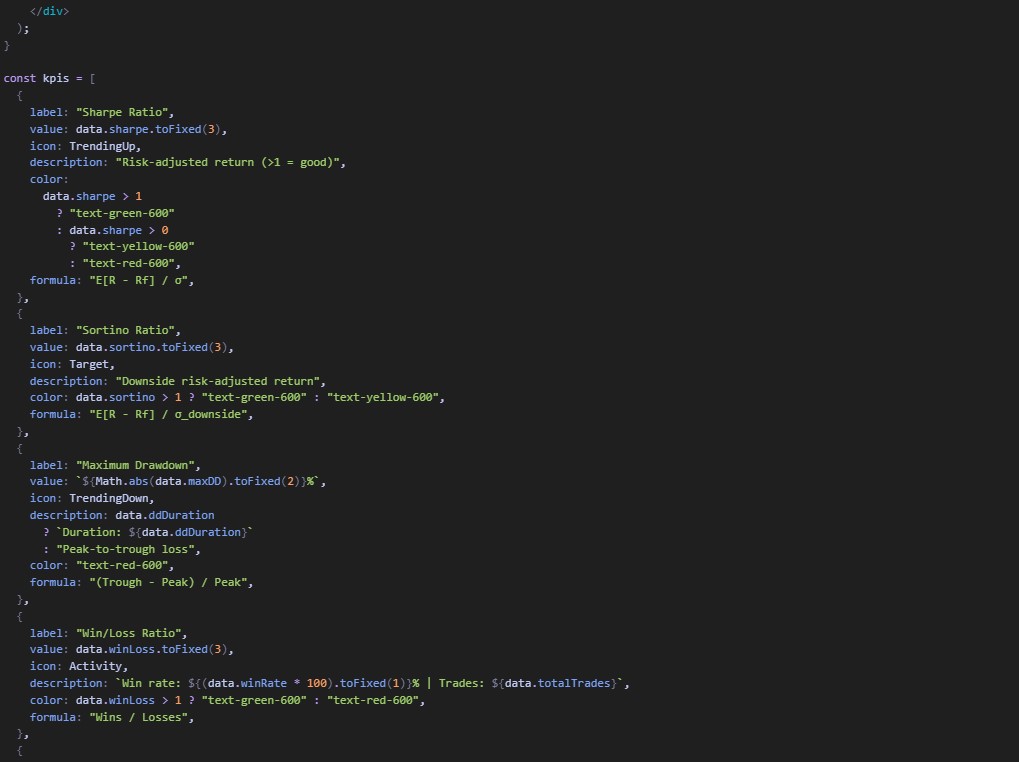
code glance 01
-
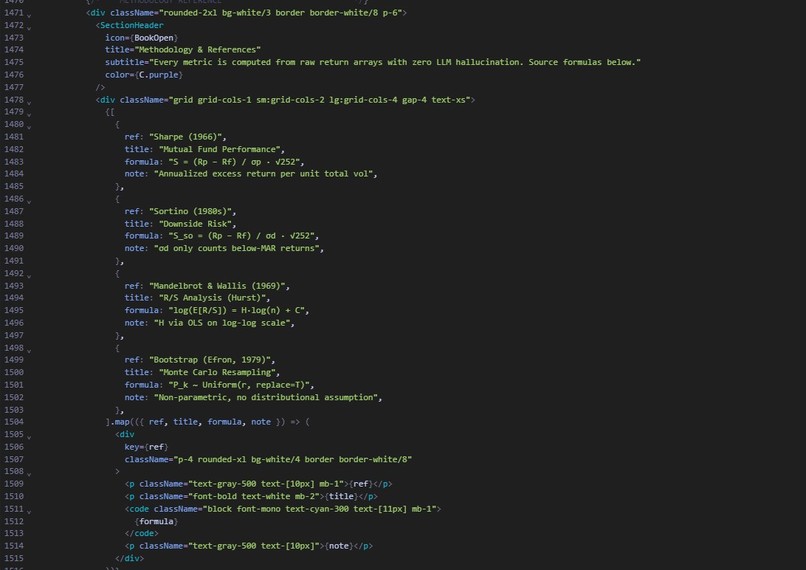
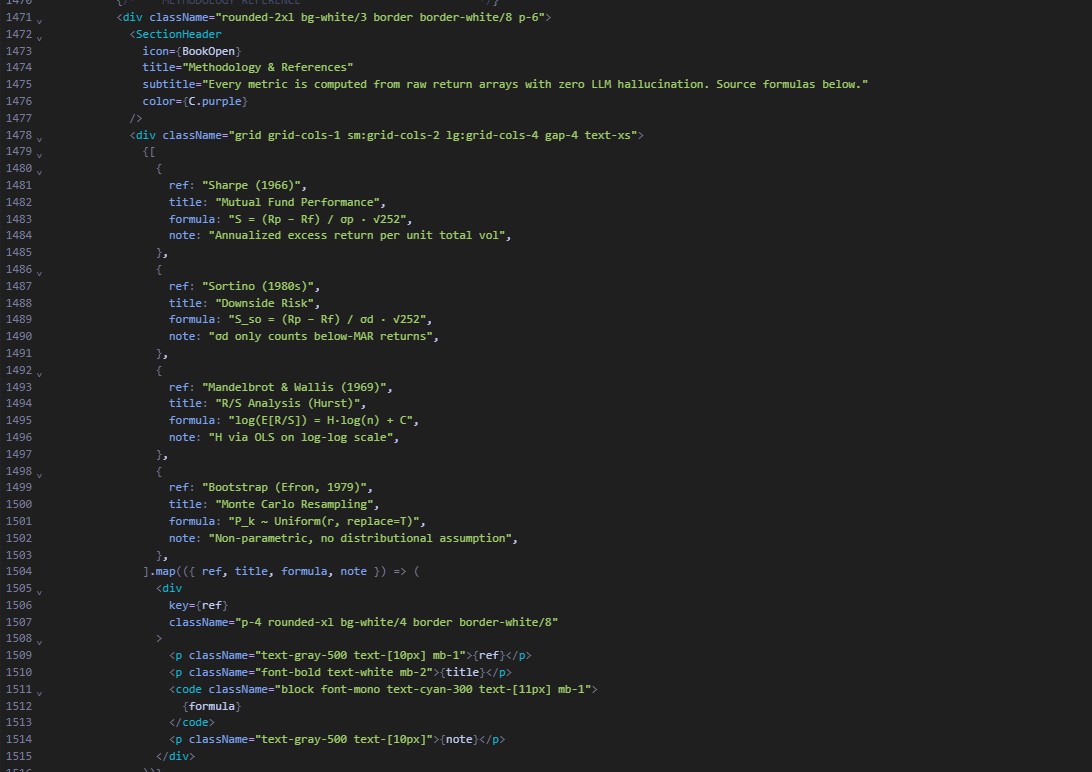
code glance 02
-

logo

Inspiration
Trading strategies are easy to imagine. The difficult part is finding out whether an idea survives realistic contact with data.
I became interested in quantitative finance because of that gap. Financial mathematics can look intimidating when it is presented only through equations, while trading platforms often hide the mathematics behind simplified interfaces. I wanted to build something in between: a laboratory where someone could take a hypothesis about markets, experiment with it, and see how it behaves without putting real money at risk.
That became Quvanti Labs.
I didn't want to build another brokerage or a system that tells people what they should buy. I wanted to build an educational quantitative research sandbox—a place where students, aspiring quants, and curious traders can explore the relationship between mathematical assumptions and market behavior.
The central idea became simple:
Don't just believe a strategy. Experiment with it.
That idea shaped both the technical system and the interface.
What Quvanti Labs Does
Quvanti Labs is an AI-assisted quantitative research and educational terminal.
A user can formulate a trading hypothesis, investigate it using quantitative tools, and examine how the resulting strategy behaves under historical or simulated conditions. The goal isn't to produce a magic prediction of the market. It is to make the process of questioning, testing, and stress-testing an idea accessible.
The platform is deliberately a sandbox. It does not execute real trades or provide financial advice.
Depending on the workflow, Quvanti brings together things such as:
- AI-assisted strategy/logic generation
- Historical strategy testing
- Simulated market scenarios
- Stochastic analysis
- Statistical indicators
- Hurst exponent analysis
- Strategy and performance visualization
- Quantitative experimentation and parameter exploration
- Risk-free paper-trading/research workflows
The emphasis is on experimentation rather than simply producing a green or red "buy/sell" answer.
How I Built It
Quvanti evolved over several months through repeated development, experimentation, debugging, self education and redesign rather than being built as one finished application in a single pass.
I started with the basic idea of an accessible quantitative research environment and gradually developed it into a much larger application.
The project combines a web application interface with computational and analytical workflows. I designed the product around the mental model of a quantitative researcher rather than a conventional consumer finance app.
That influenced almost everything in the interface.
Instead of hiding information behind many separate pages, I wanted the user to be able to see relationships between inputs, calculations, simulations, and outputs. The result is a dense, dark research-oriented interface with dashboards, charts, controls, parameter inputs, and analytical panels.
I also spent significant time on details that are easy to overlook: spacing, typography, hierarchy, component behavior, interactions, information density, and how mathematical outputs are presented.
AI-assisted development
I also used AI-assisted development tools during the project, particularly for initial code generation and accelerating parts of implementation.
However, Quvanti was not simply a prompt that produced a finished application.
I directed the product, researched the concepts I wanted to incorporate, designed the workflows and interface, tested features, investigated failures, debugged behavior, iterated on the architecture, and repeatedly refined the product. I also made detailed decisions about the UX and visual design.
I am intentionally being explicit about this because I don't want to present AI-assisted development as entirely manual coding, nor do I want to misrepresent the role I played in building the product.
The Quantitative Side
One of the most interesting parts of building Quvanti was learning how much more complicated financial experimentation becomes once you move beyond a simple historical chart.
For example, the Hurst exponent provides one way of investigating long-term dependence in a time series. In simplified terms, values around (H=0.5) are associated with behavior resembling a random walk, while values below or above that level can indicate different forms of dependence.
That led me to think differently about what a research terminal should show.
Instead of only asking:
"Did this strategy make money historically?"
I wanted Quvanti to encourage questions such as:
- What kind of market behavior did the strategy encounter?
- How sensitive is the result to different assumptions?
- Does the behavior persist under different conditions?
- What happens when the environment becomes unusually volatile?
- Is an apparent result robust, or could it simply be historical noise?
That philosophy is why Quvanti includes analytical and simulation-oriented features rather than treating backtesting as a single final score.
What I Learned
The biggest thing I learned was that building a quantitative application from a user perspective is much harder than implementing individual mathematical formulas.
A formula can be correct while the system around it is misleading.
For example, a backtest can produce an attractive result while still giving a false sense of confidence if the experimental setup is flawed. That made me much more interested in reproducibility, assumptions, data handling, validation, and communicating uncertainty.
I also learned that mathematical sophistication doesn't automatically create a better user experience.
A researcher might understand a complicated statistical concept, but if the interface presents its output poorly, the information becomes difficult to use. I therefore spent a large amount of time translating dense quantitative information into visual structures that could be explored rather than merely read.
Another lesson was that AI-generated code is not the same thing as understanding the software it creates.
AI can produce code that looks convincing even when the underlying behavior is wrong or the implementation doesn't match what I intended. Debugging Quvanti repeatedly forced me to become more skeptical of apparently correct output and to verify what the system was actually doing.
That changed how I approach AI-assisted programming: I now treat generated code as something to investigate and test, not something to automatically trust.
Challenges
1. Turning an idea into an actual system
The initial concept of "an AI quantitative research laboratory" sounds straightforward. Building the individual workflows and making them work together was not.
The application contains many interacting pieces, and changing one part could affect another. I had to repeatedly trace behavior across the interface, application logic, calculations, and external services.
2. Debugging AI-assisted code
One of the most frustrating challenges was debugging code that looked correct.
An AI-generated implementation can be syntactically valid and still produce behavior that isn't mathematically or logically appropriate. I had to learn to reproduce problems, isolate their causes, inspect assumptions, and test changes instead of simply accepting the generated solution.
3. Making advanced mathematics understandable
Quantitative finance has no shortage of intimidating terminology.
Hurst exponents, stochastic processes, Bayesian inference, simulations, and statistical validation can quickly become inaccessible to someone encountering them for the first time.
A major design challenge was therefore deciding how much mathematical information to expose without turning the interface into an unreadable wall of numbers.
4. Avoiding false confidence
This was perhaps the most important conceptual challenge.
A backtest can look impressive and still tell you very little about whether an idea will work outside the data used to test it.
That realization influenced the educational philosophy of Quvanti. The platform is designed as a research sandbox, not a machine for promising financial outcomes.
5. Designing for exploration
I wanted the interface to encourage experimentation rather than passive consumption.
That meant creating controls and visualizations that let users change assumptions, inspect outputs, compare scenarios, and understand how the results change.
It required considerably more iteration than simply making a collection of static charts, this led me to avoid all templates and experiment with custom UI and UX and implement one coherent theme for accessibility and ease of navigation without compromising on depth of different features.
I also tried to make the platform as comfortable and easy to navigate as possible with tiny coherent details spread on different pages, as by its core genre the platform is itself very dense so I tried my best to prevent users from being overwhelmed from not knowing where to start from or where to go after what.
I'm most proud that Quvanti became more than the original idea I started with.
It evolved into a system where software engineering, mathematical modeling, AI-assisted development, interface design, and quantitative research meet in one place.
But I am especially proud of the educational philosophy behind it.
I don't want Quvanti to tell someone:
"This strategy works."
I want it to encourage them to ask:
"Why does it appear to work, under what assumptions, and does it survive when I try to break it?"
That difference is important to me.
What's Next
Quvanti is still evolving.
Future work includes improving the reliability and depth of its quantitative workflows, expanding experimentation and validation capabilities, improving reproducibility, and making advanced mathematical concepts easier for students to explore.
I also want to continue reducing the distance between understanding a mathematical idea and actually experimenting with it.
Ultimately, Quvanti Labs is my attempt to turn quantitative finance from something people primarily read about into something they can experiment with.
And the experiment is still ongoing.
Built With
- ai-applied-text-extract
- coingecko
- google-dev-account-json-bot
- java
- javascript
- python
- react
- sql
- supabase
- vercel


Log in or sign up for Devpost to join the conversation.