-
-
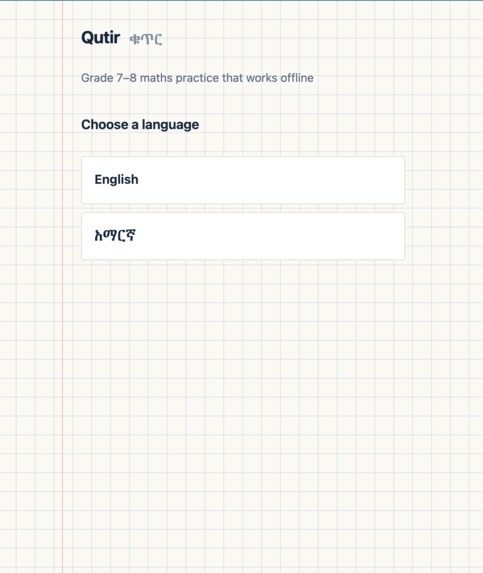
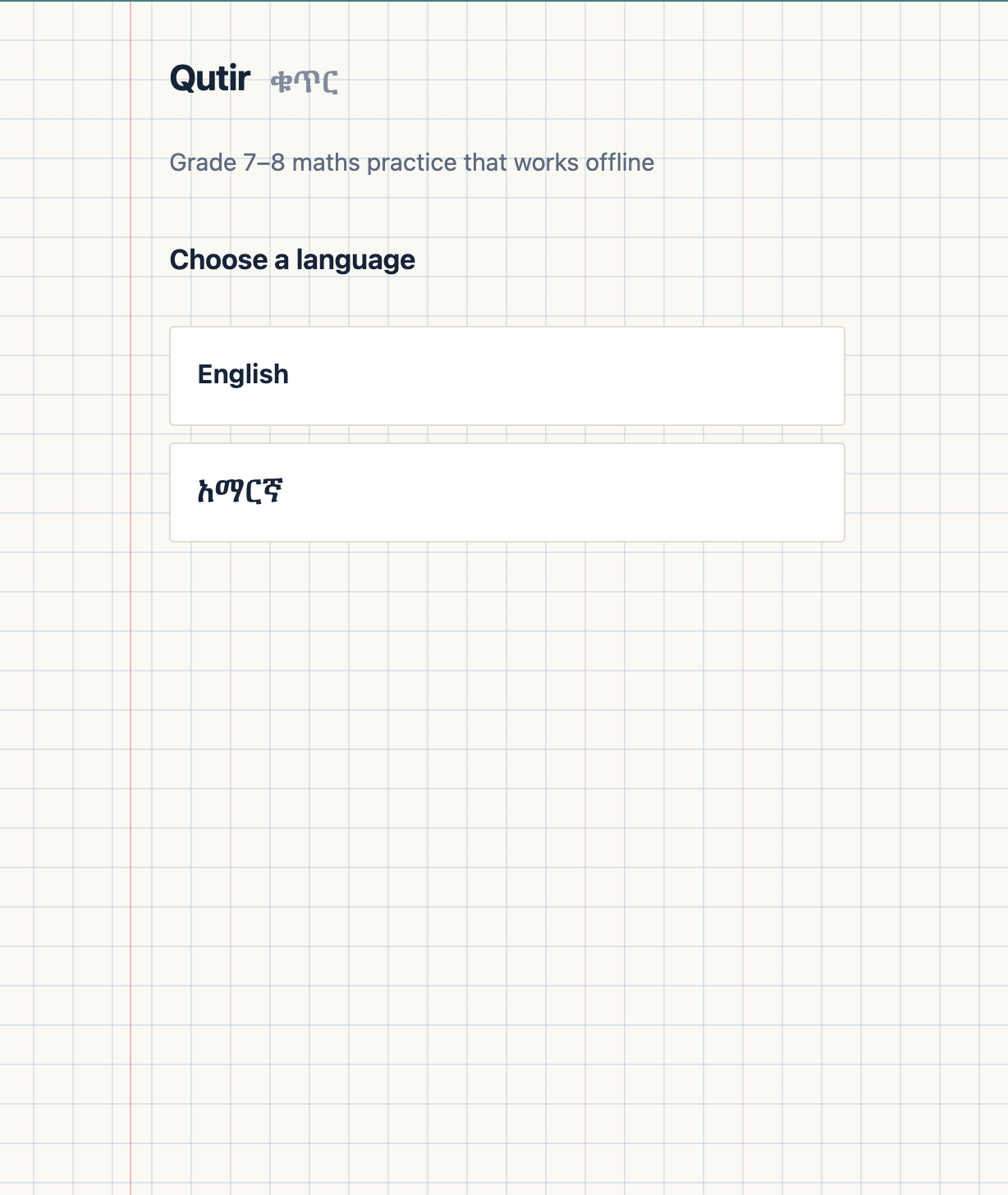
Landing page
-
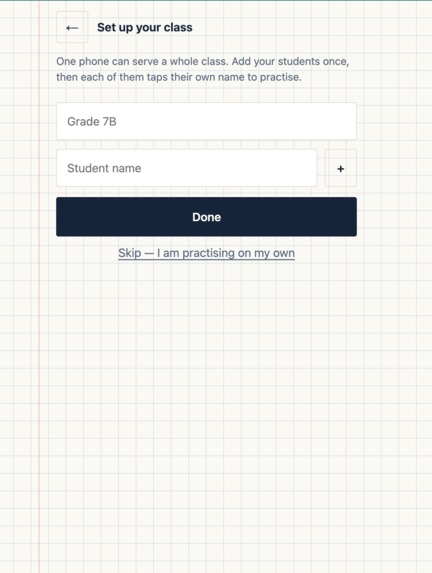
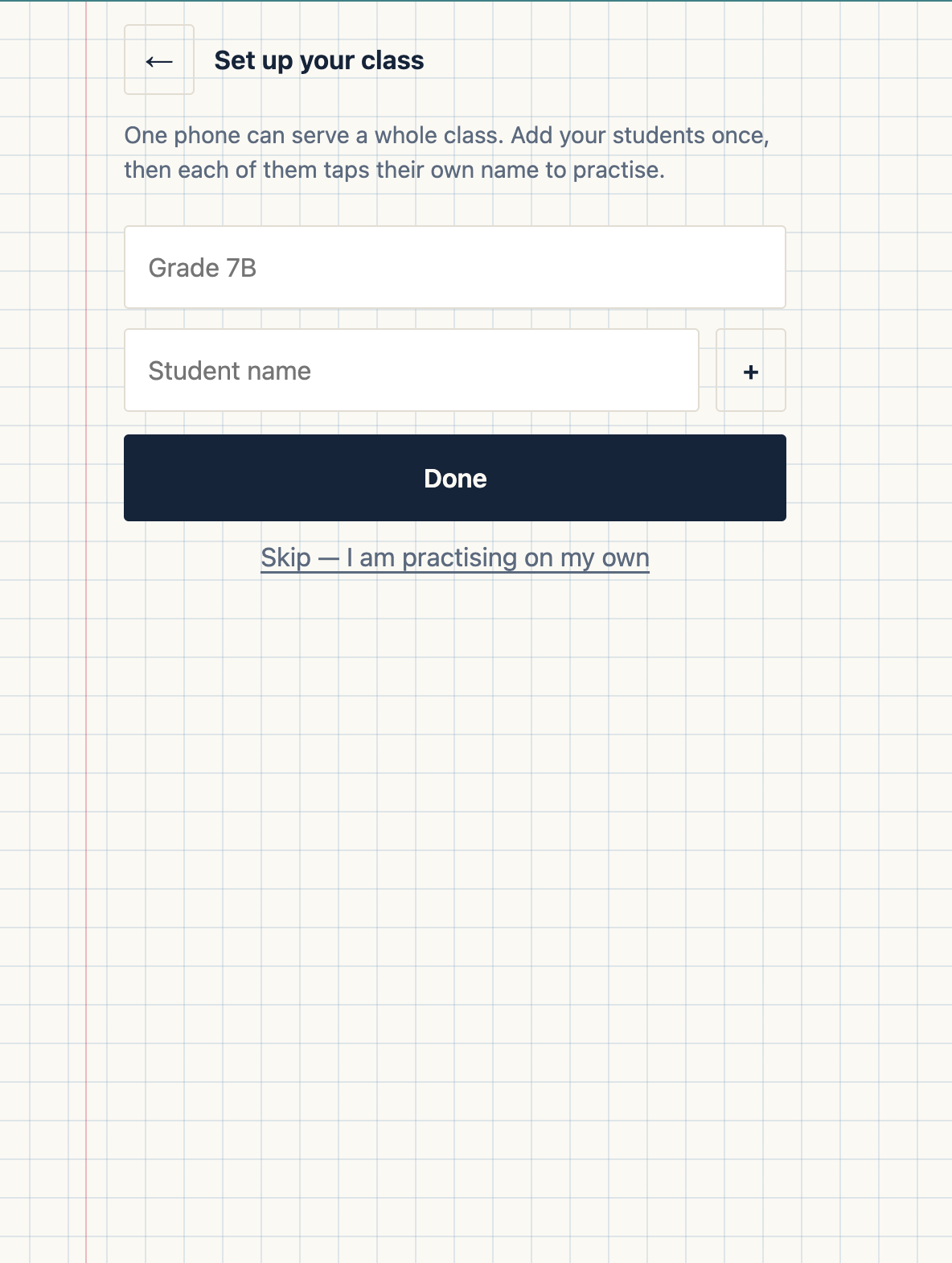
Setup for class and adding student name
-
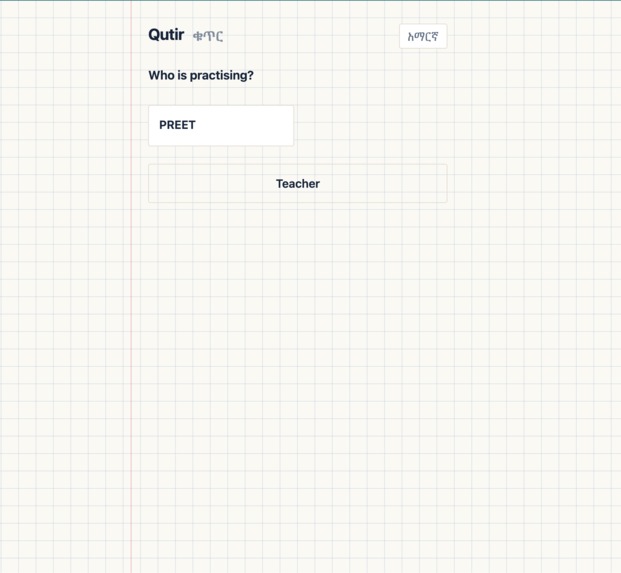
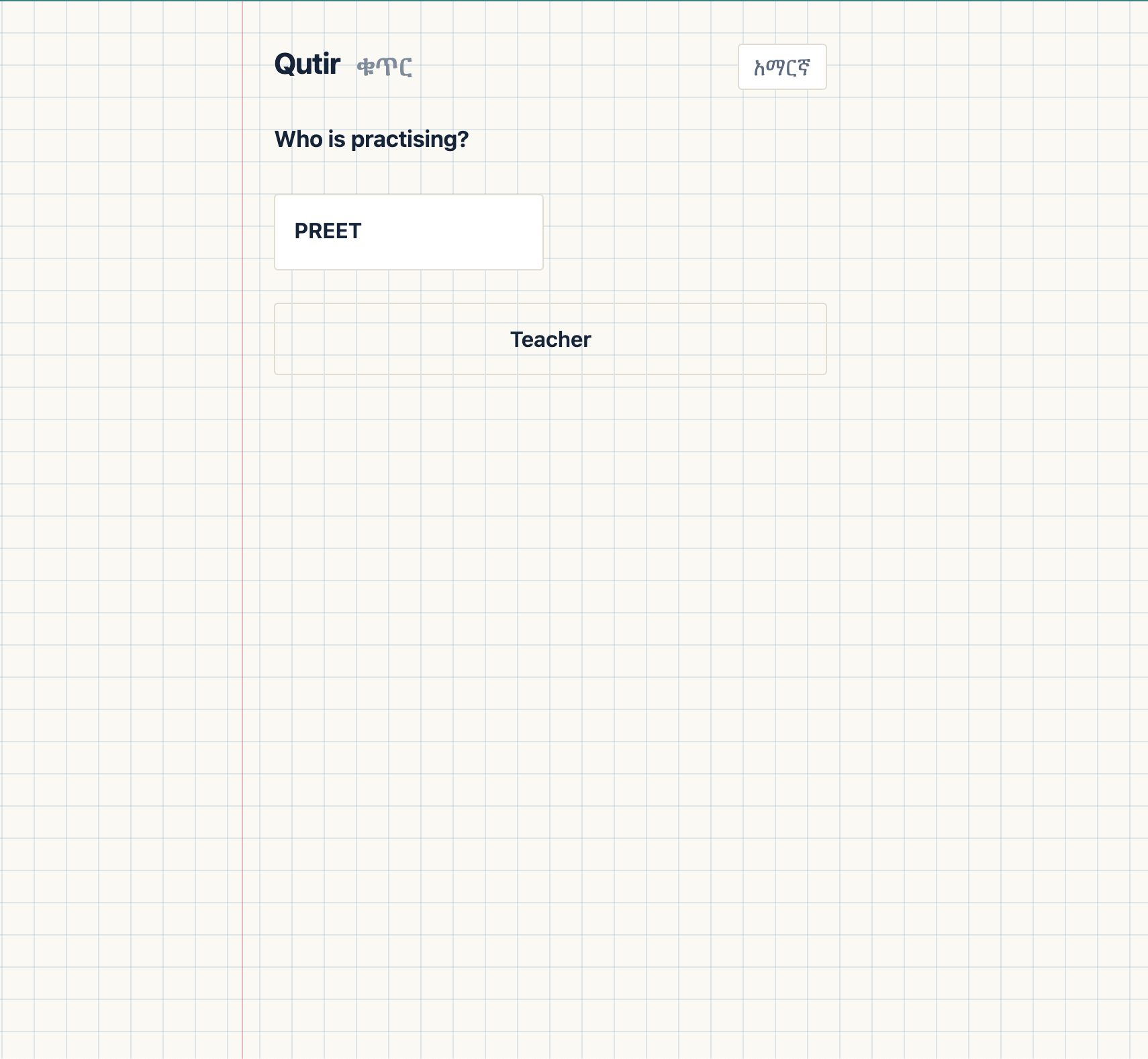
Class practice ready
-
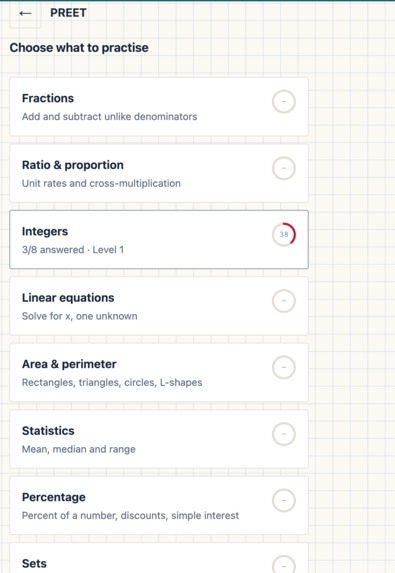
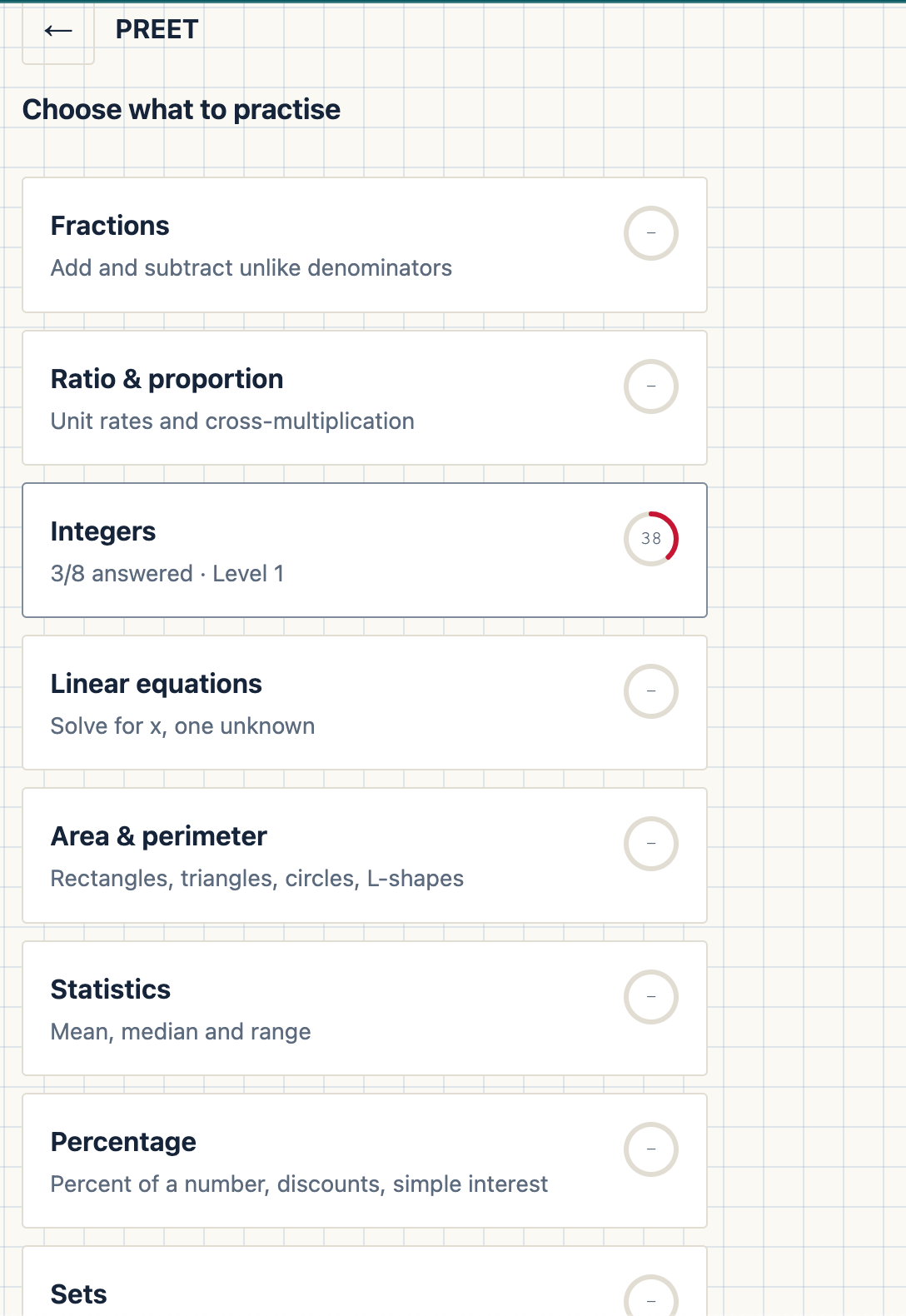
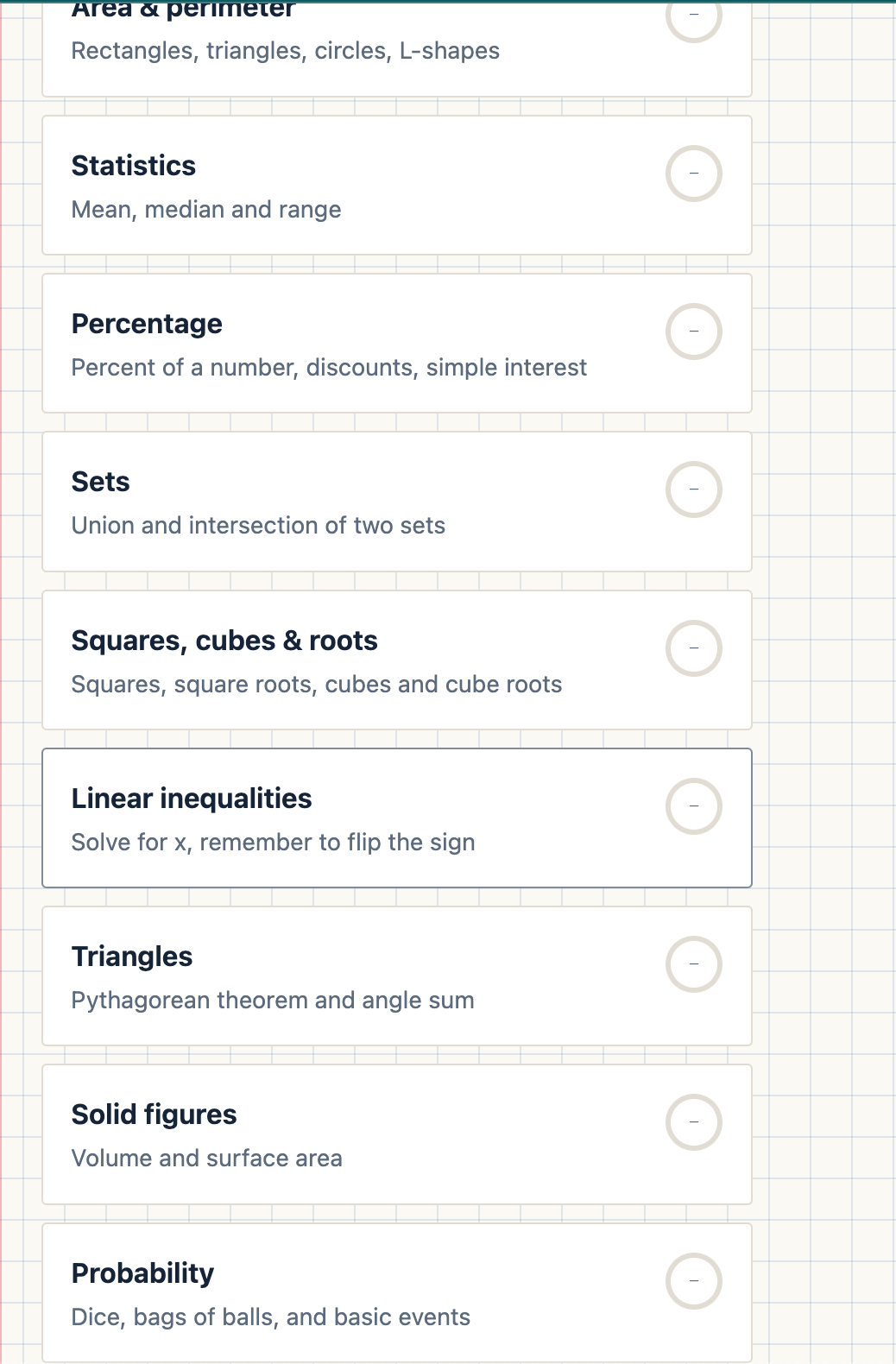
Maths topics
-
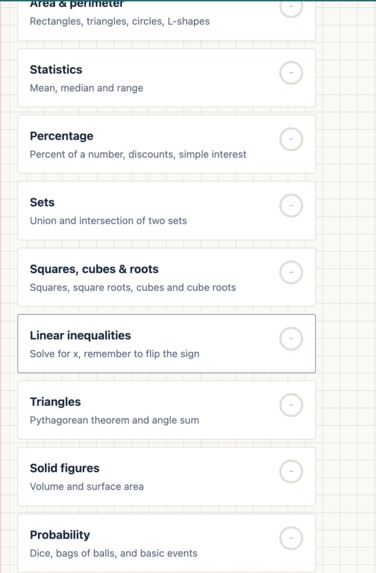
Index of each topic
-
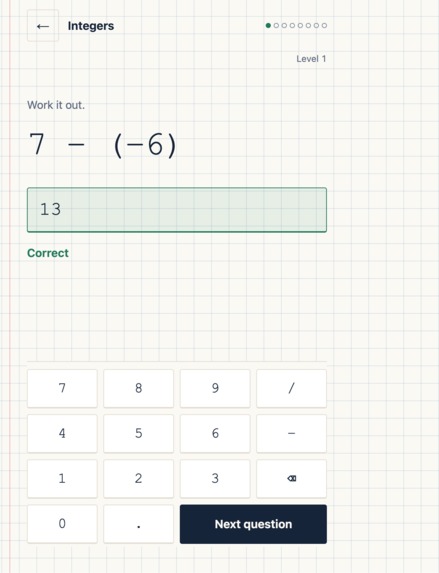
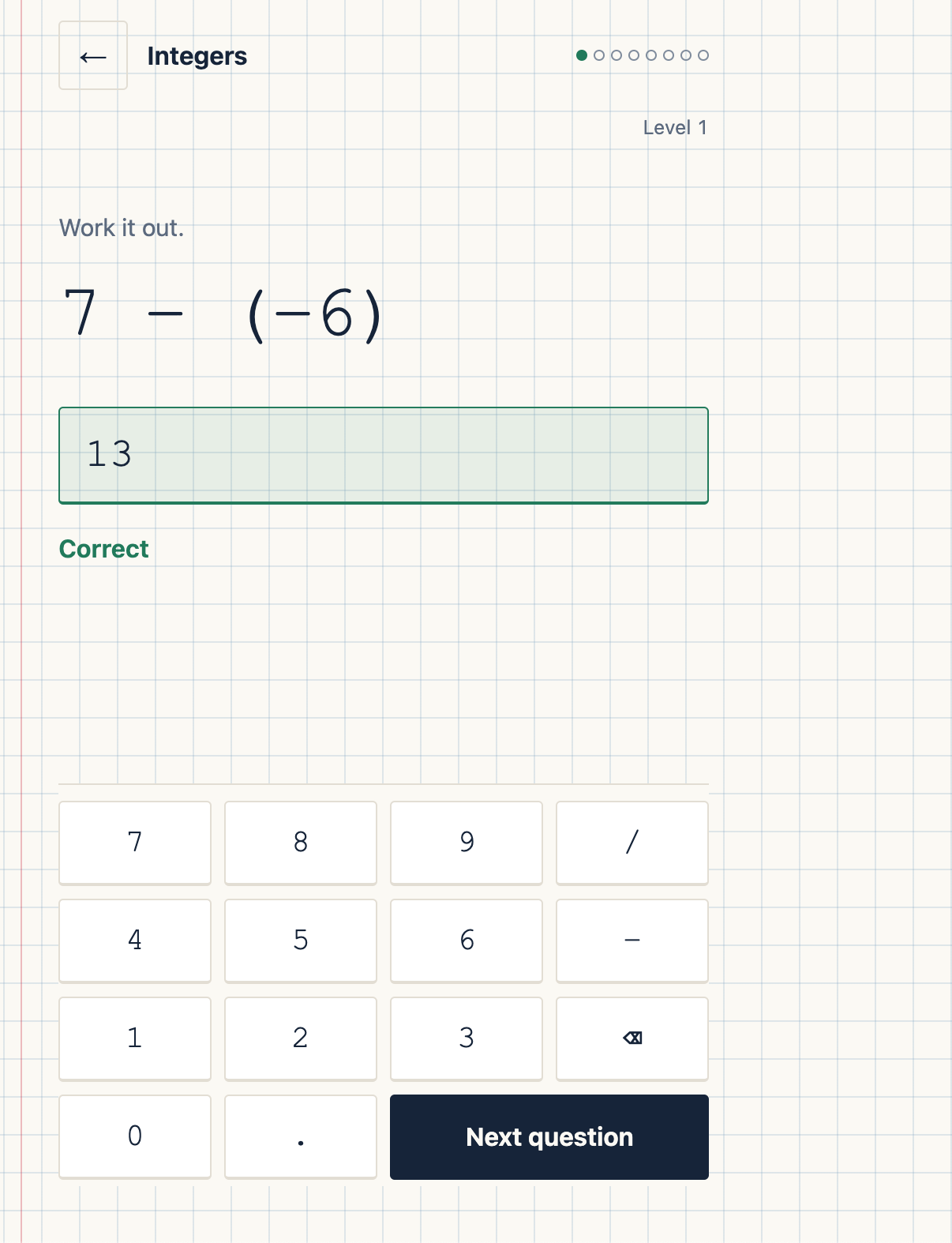
Question
-
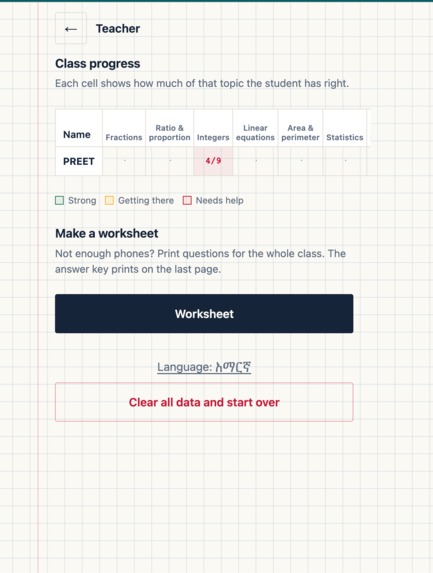
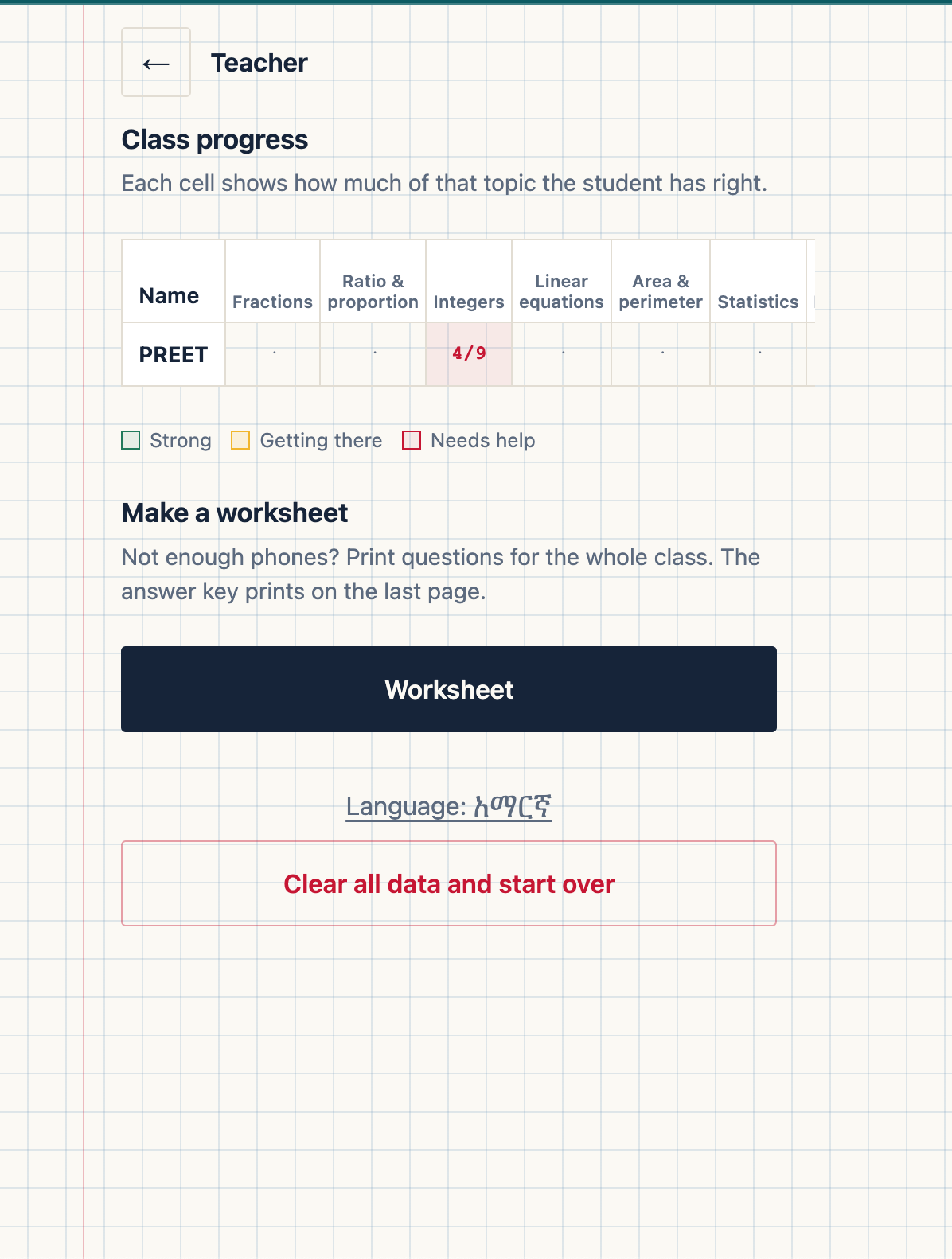
Teacher section
-
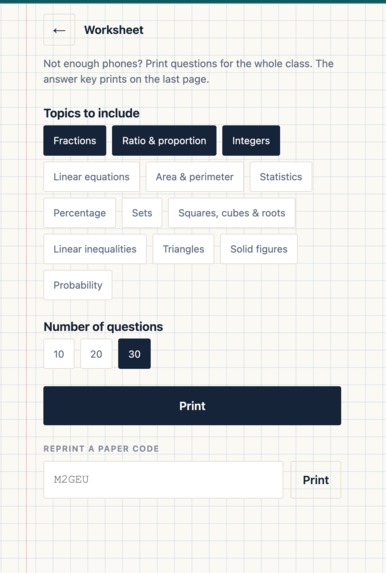
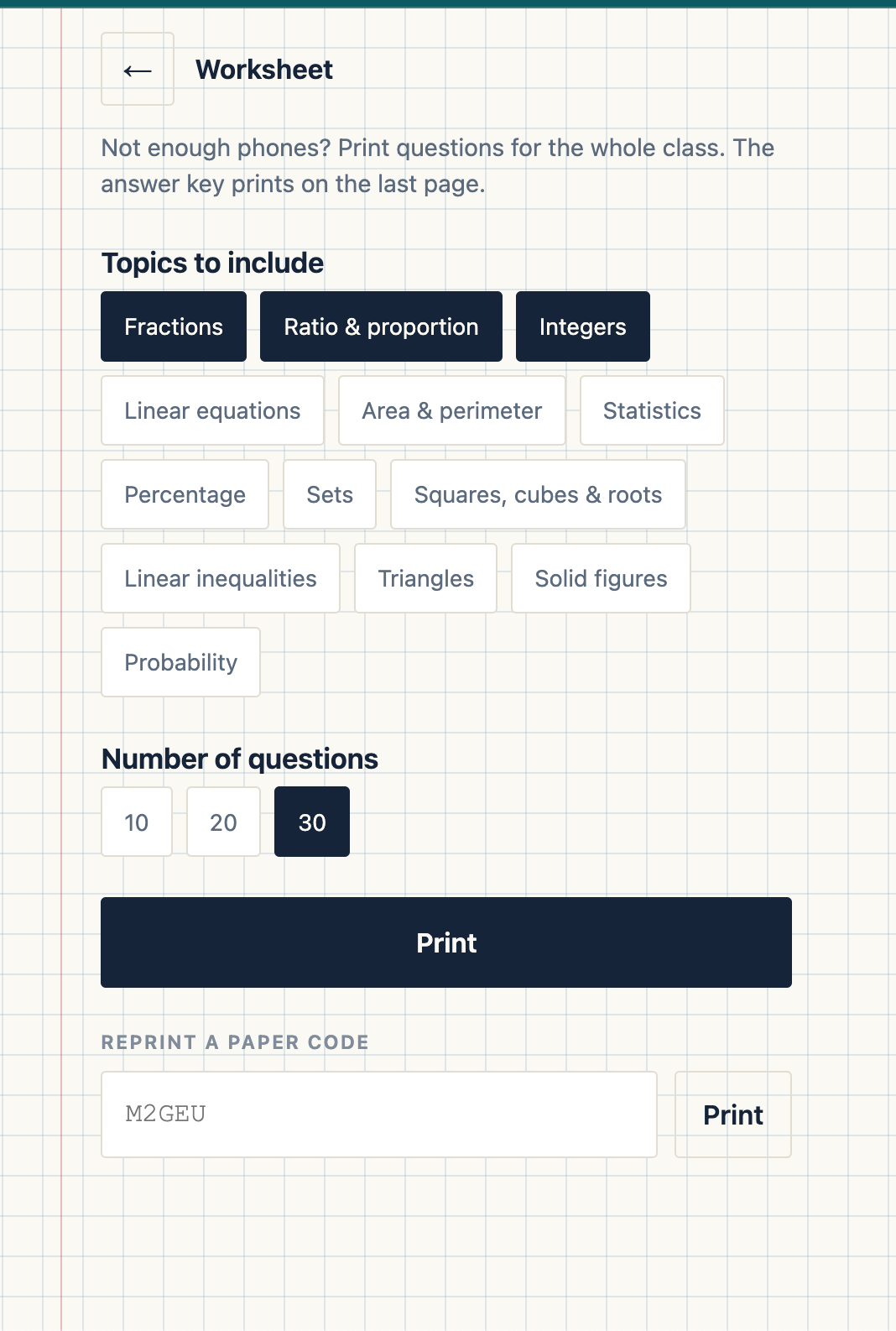
Worksheet generator of all topics
-
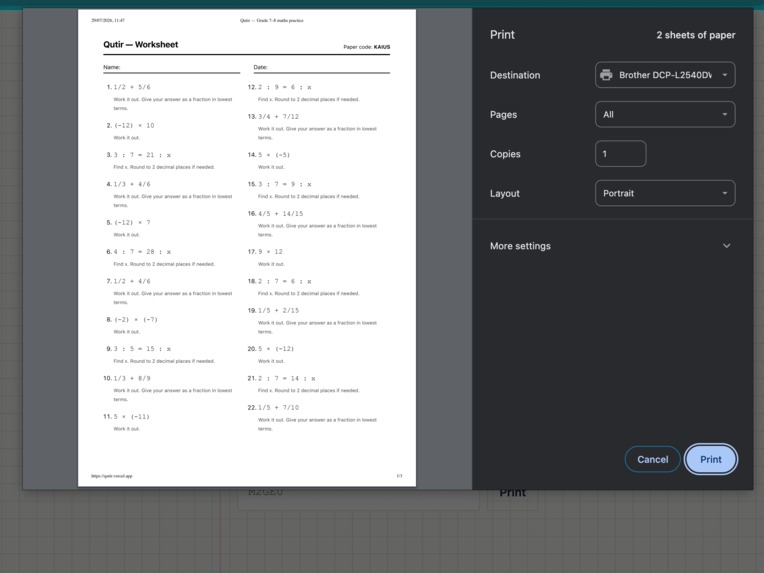
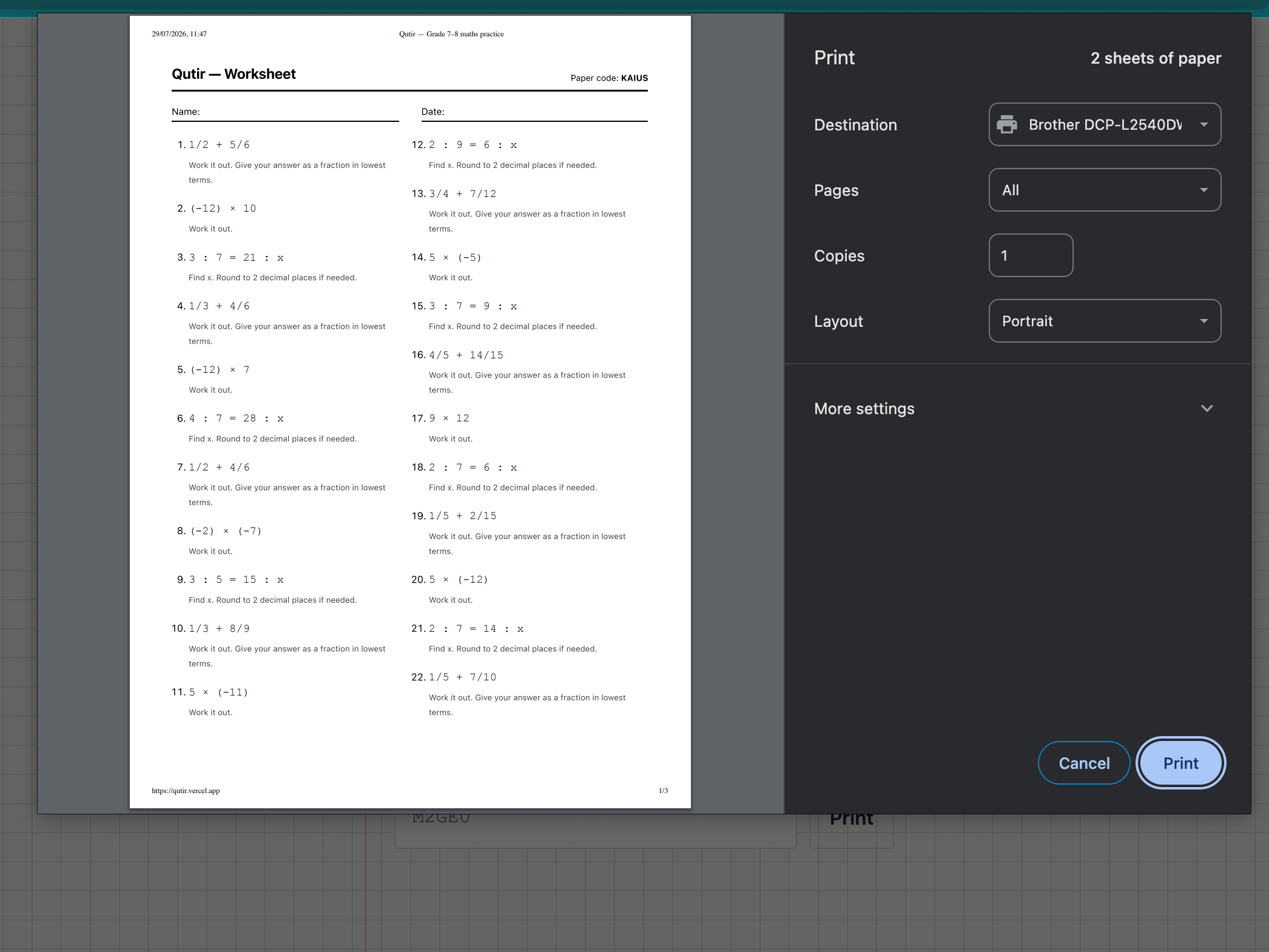
Printable worksheet with answer key
Inspiration
Most educational apps are built for classrooms where every student owns a device, has an internet connection, and can create an account. Many Grade 7–8 classrooms in Ethiopia look very different. A teacher may have one shared phone for the entire class, unreliable internet, and limited time to prepare lessons.
Instead of asking "What more features can we add?" we asked a different question:
"What has to be true for a maths learning app to actually work in this classroom?"
The answer became the foundation of Qutir.
- It must work completely offline.
- It must work on a single shared device.
- It must not require logins or accounts.
- It must support both students and teachers, not just individual learners.
Every design and engineering decision followed these principles.
What it does
Qutir (ቁጥር) is an offline-first Progressive Web App (PWA) for Grade 7–8 mathematics. Because it is a web application, it runs on phones, tablets, laptops, and desktop computers directly in the browser without requiring a backend server.
Built for real classrooms
The teacher sets up the classroom only once by creating a class and entering student names.
There are no student accounts, no usernames, and no passwords.
When practice begins, students simply tap their own name from the classroom list and start solving questions. Their progress is automatically saved under their name, making the experience simple enough for shared classroom devices.
Adaptive mathematics practice
Students currently practise 13 curriculum-aligned mathematics topics, including Fractions, Ratio & Proportion, Percentages, Linear Equations, Geometry, Statistics, Probability, Sets, Triangles, Solid Figures and more.
Questions are procedurally generated, so students receive unlimited practice instead of repeating the same question bank.
Difficulty automatically adapts during every session:
- Three correct answers increase the level.
- Two incorrect answers reduce the difficulty.
This keeps practice challenging without becoming frustrating.
Learn from mistakes
Instead of simply marking an answer as wrong, Qutir teaches the method.
Incorrect answers receive a familiar teacher-style red correction, and the complete worked solution appears step by step, helping students understand how the answer is reached rather than simply seeing the correct result.
Teacher Dashboard
Teachers can instantly monitor the entire classroom.
Every student's progress is tracked by their name, allowing teachers to view topic mastery, identify struggling students, monitor classroom performance, and reset progress whenever required.
Instead of checking notebooks one by one, teachers immediately know who needs additional support.
Printable Worksheets
Not every lesson has access to a device.
For those situations, Qutir can generate printable worksheets directly from the application.
Every generated worksheet includes:
- A completely new set of randomly generated questions.
- A full answer key on the final page.
- A unique worksheet code.
That worksheet code allows teachers to regenerate the exact same worksheet later, making it easy to reprint lost papers or distribute identical copies without storing large PDF files.
Works completely offline
After the first visit, everything runs directly inside the browser.
There is:
- No internet requirement
- No backend server
- No cloud database
- No API requests
- No login system
The application continues working entirely offline, making it suitable for classrooms where connectivity may disappear for days.
How we built it
Qutir is built entirely using Vanilla JavaScript (ES Modules), HTML5 and CSS3, with no frontend framework and no backend.
A Service Worker transforms the application into an offline Progressive Web App, while LocalStorage stores classroom information and student progress locally on the device.
At the heart of the application is a procedural mathematics engine. Instead of downloading questions from a server, every exercise is generated locally from mathematical templates.
Each generated question automatically produces:
- the question,
- the correct answer,
- and a complete worked solution.
Because questions are generated rather than stored, students receive unlimited practice without requiring internet access or maintaining large question banks.
Worksheet generation uses a seeded pseudo-random number generator, allowing the same worksheet to be recreated later from its unique worksheet code.
To ensure correctness, automated tests independently verify approximately 58,000 generated mathematics questions and simulate complete classroom workflows including setup, student practice, teacher dashboards and worksheet generation.
Challenges we ran into
Generating random questions was easy.
Generating questions that are always mathematically correct, curriculum appropriate, and produce clean educational answers was significantly harder.
Many randomly generated equations create awkward fractions or decimal answers that distract students from the concept being taught.
Instead of generating questions first, we generate the solution first and then construct the question around it. This guarantees meaningful practice while keeping every worked solution correct.
Designing an application that works equally well with one shared phone, multiple devices, or no devices at all also required rethinking traditional classroom software workflows.
Accomplishments that we're proud of
We're proud that Qutir solves real classroom problems rather than ideal ones.
- A single phone can serve an entire classroom.
- Students never need accounts or passwords.
- Teachers track progress simply by student names.
- Unlimited questions are generated completely offline.
- Printable worksheets include answer keys and reproducible worksheet codes.
- The complete application remains lightweight enough to run on low-end Android devices.
Most importantly, we built a tool that respects teachers' existing classroom workflow instead of forcing them to change how they teach.
What we learned
Working under strict constraints improved the product.
Removing internet dependency led us to procedural question generation.
Removing accounts naturally produced a classroom roster that better matches how schools actually operate.
Supporting classrooms with no available devices inspired printable worksheets, which became one of the application's most practical features.
We learned that good educational technology is not about adding more features—it is about removing barriers between teachers, students and learning.
What's next for Qutir — ቁጥር
Our roadmap focuses on making the platform even more useful for schools.
Next we plan to:
- Add classroom export and import so teachers can move student progress between devices.
- Expand beyond the current 13 curriculum topics.
- Improve Amharic translations with native educator review.
- Add Oromo and Tigrinya language support.
- Introduce richer teacher analytics while keeping the application completely offline.
Our long-term vision is to make Qutir a lightweight mathematics platform that any school can use, regardless of internet connectivity, device availability or technical infrastructure.


Log in or sign up for Devpost to join the conversation.