-
-
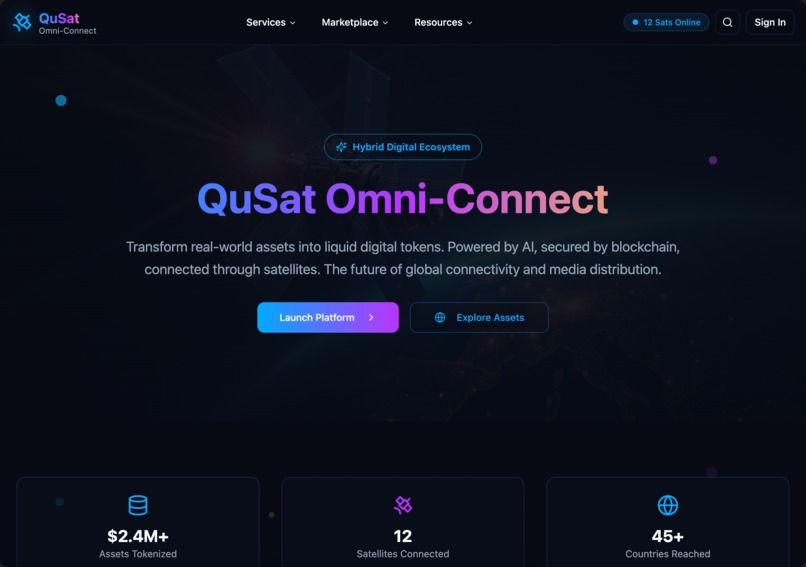
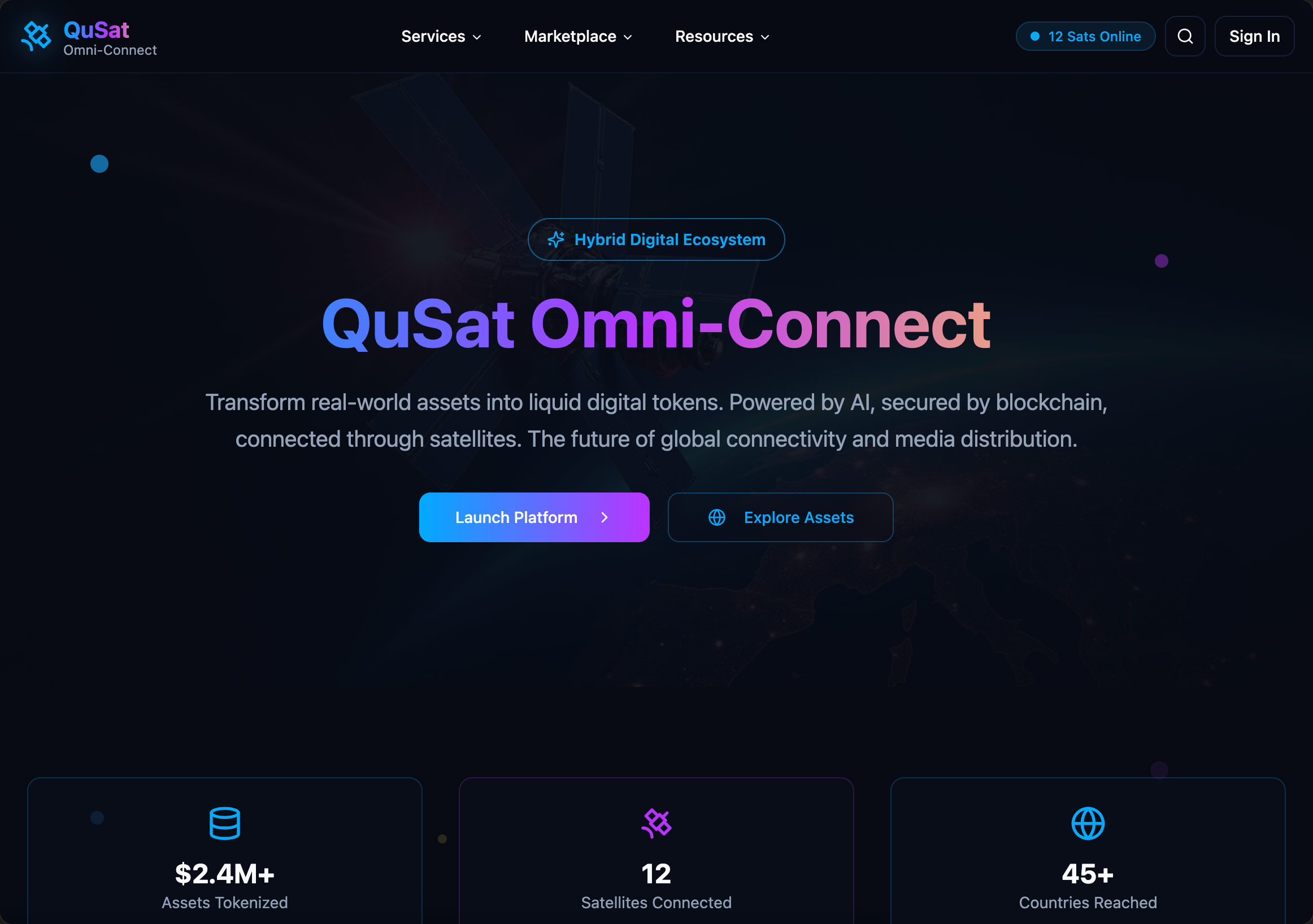
Hero
-
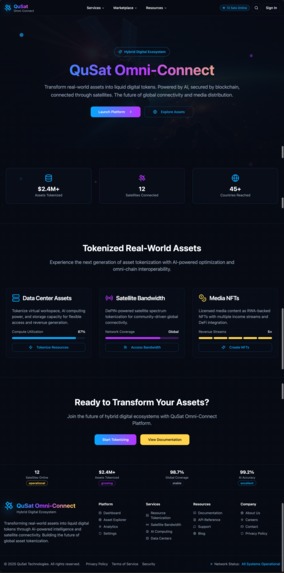
Landing Page
-
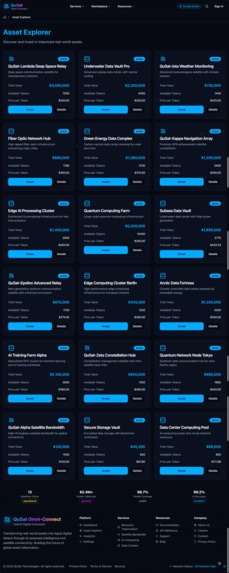
Asset Explorer
-
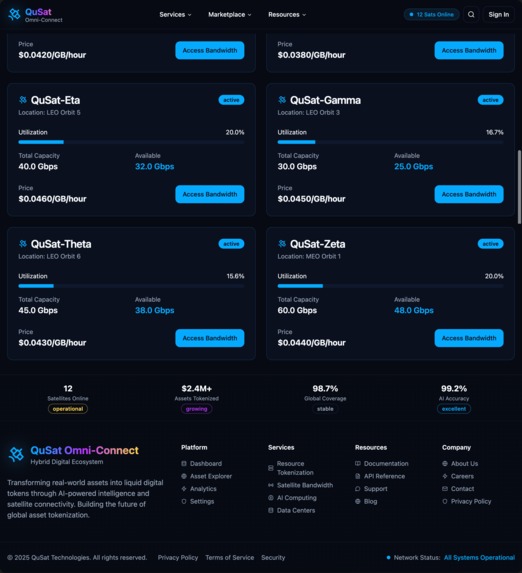
Bandwidth Access
-
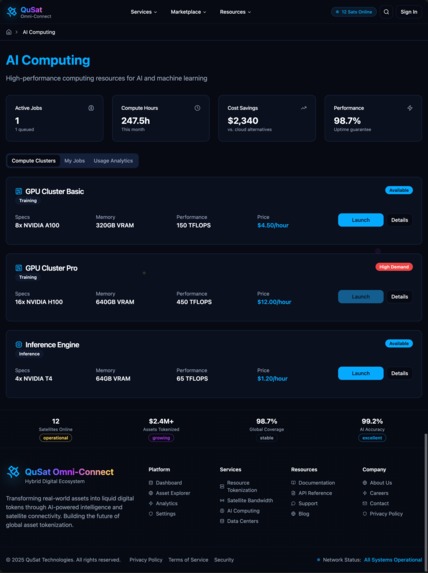
AI Computing
-
Asset Marketplace
-
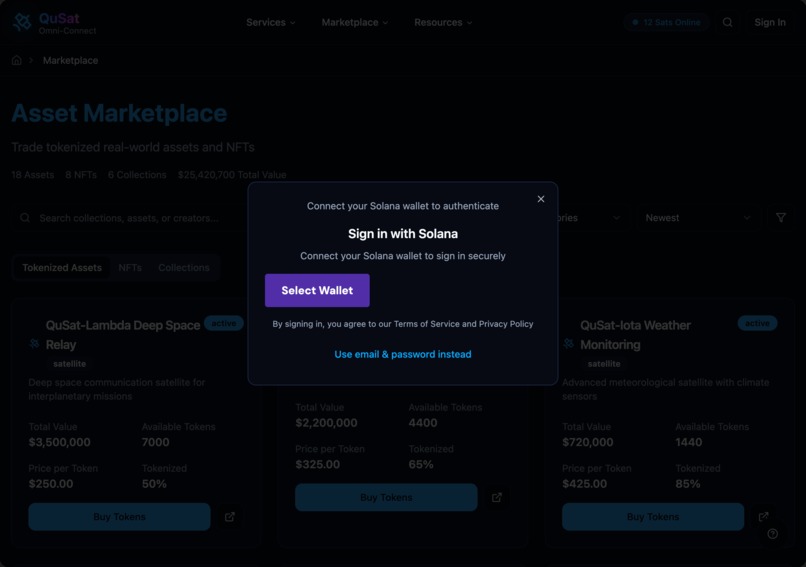
Solana Login
Inspiration
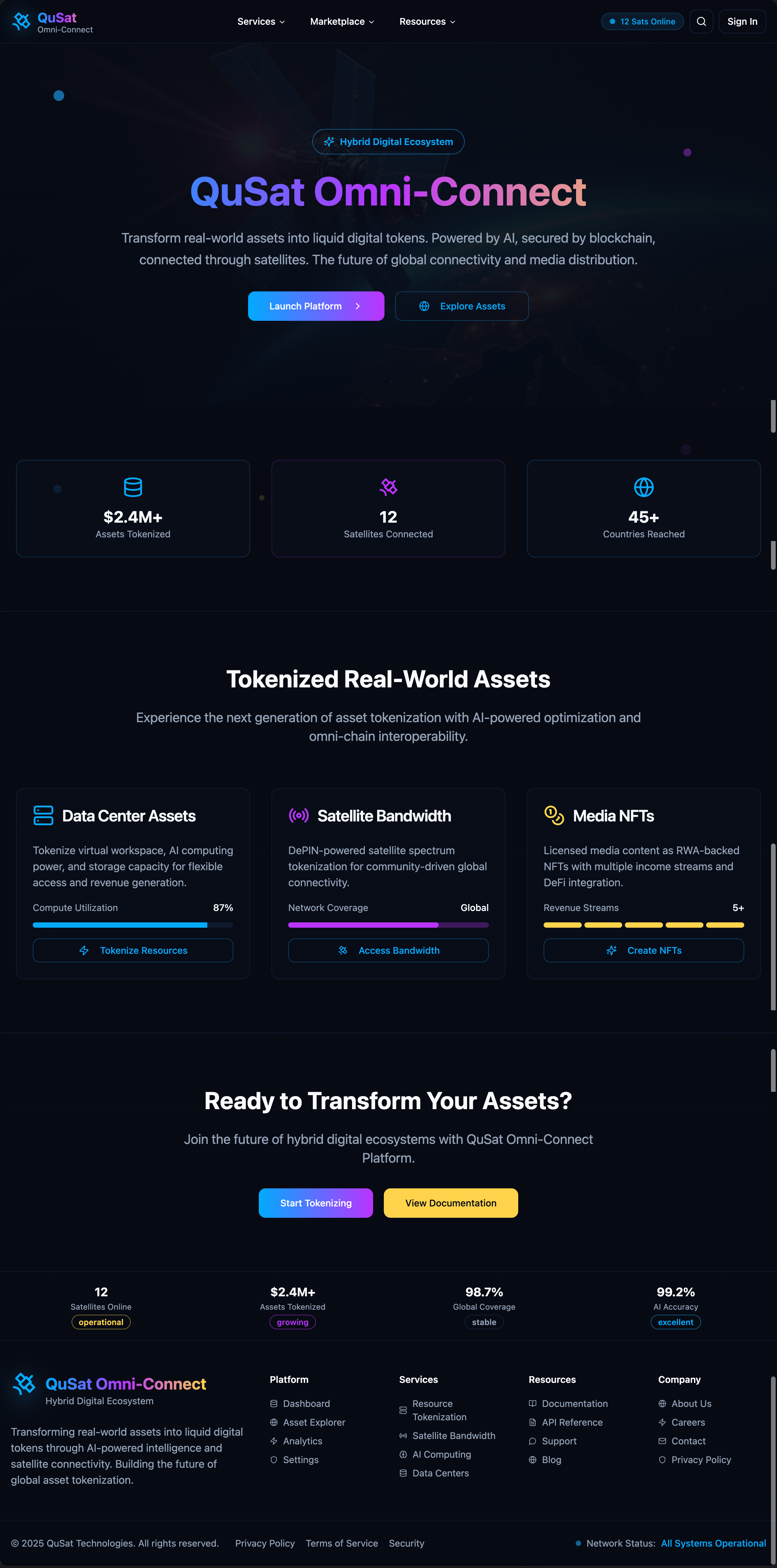
QuSat Omni-Connect was born from the vision of democratizing access to quantum satellite infrastructure. As space technology advances and quantum computing becomes more prevalent, we recognized a critical gap: the lack of a unified platform for managing, trading, and accessing quantum satellite resources. We were inspired by the potential to create a Web3-native ecosystem where satellite operators, researchers, and enterprises could seamlessly collaborate, tokenize resources, and build the future of space-based quantum computing.
What it does
QuSat Omni-Connect is a comprehensive platform that bridges quantum satellite technology with blockchain innovation. The platform enables users to:
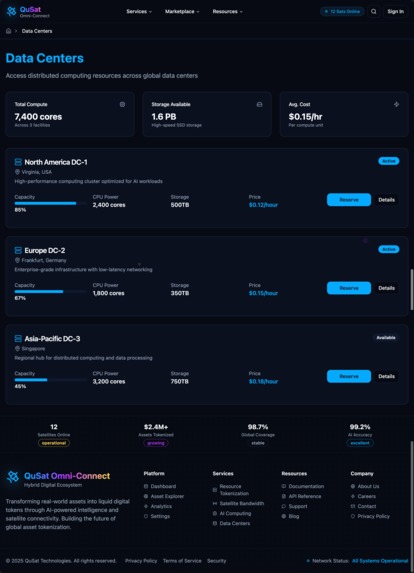
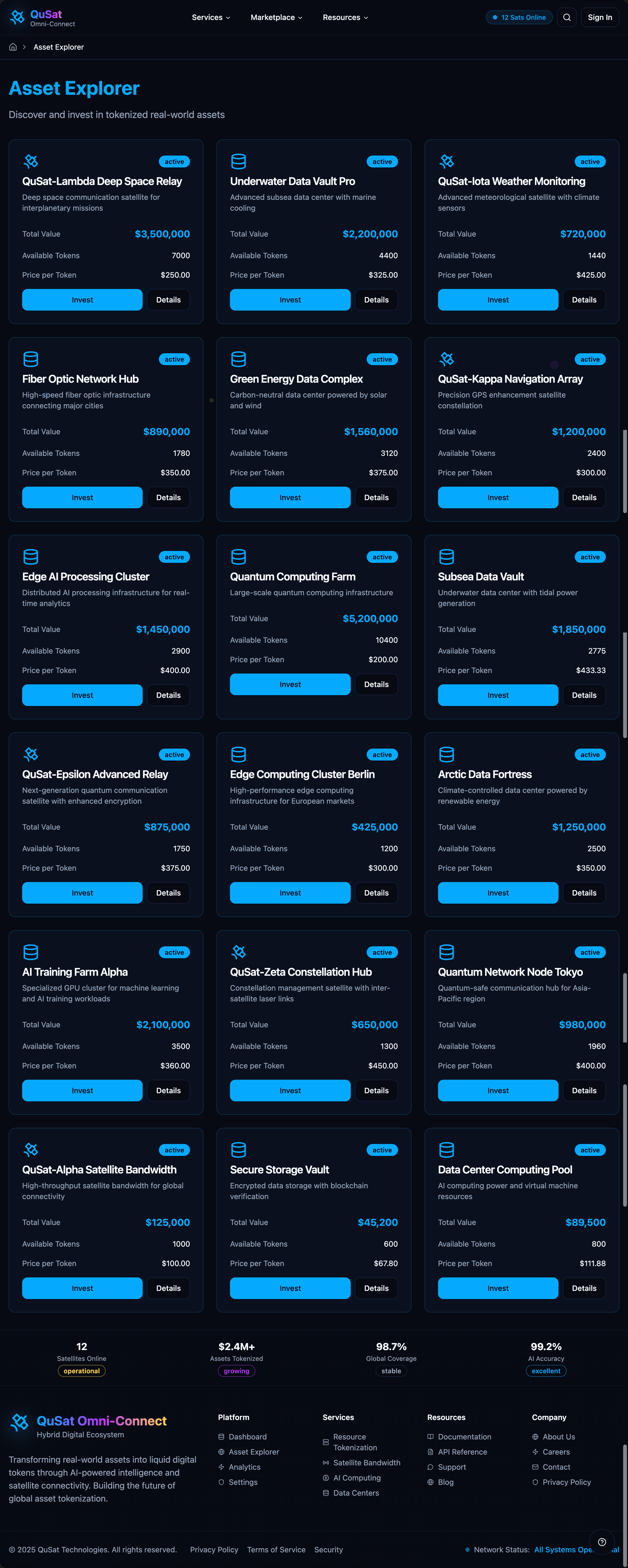
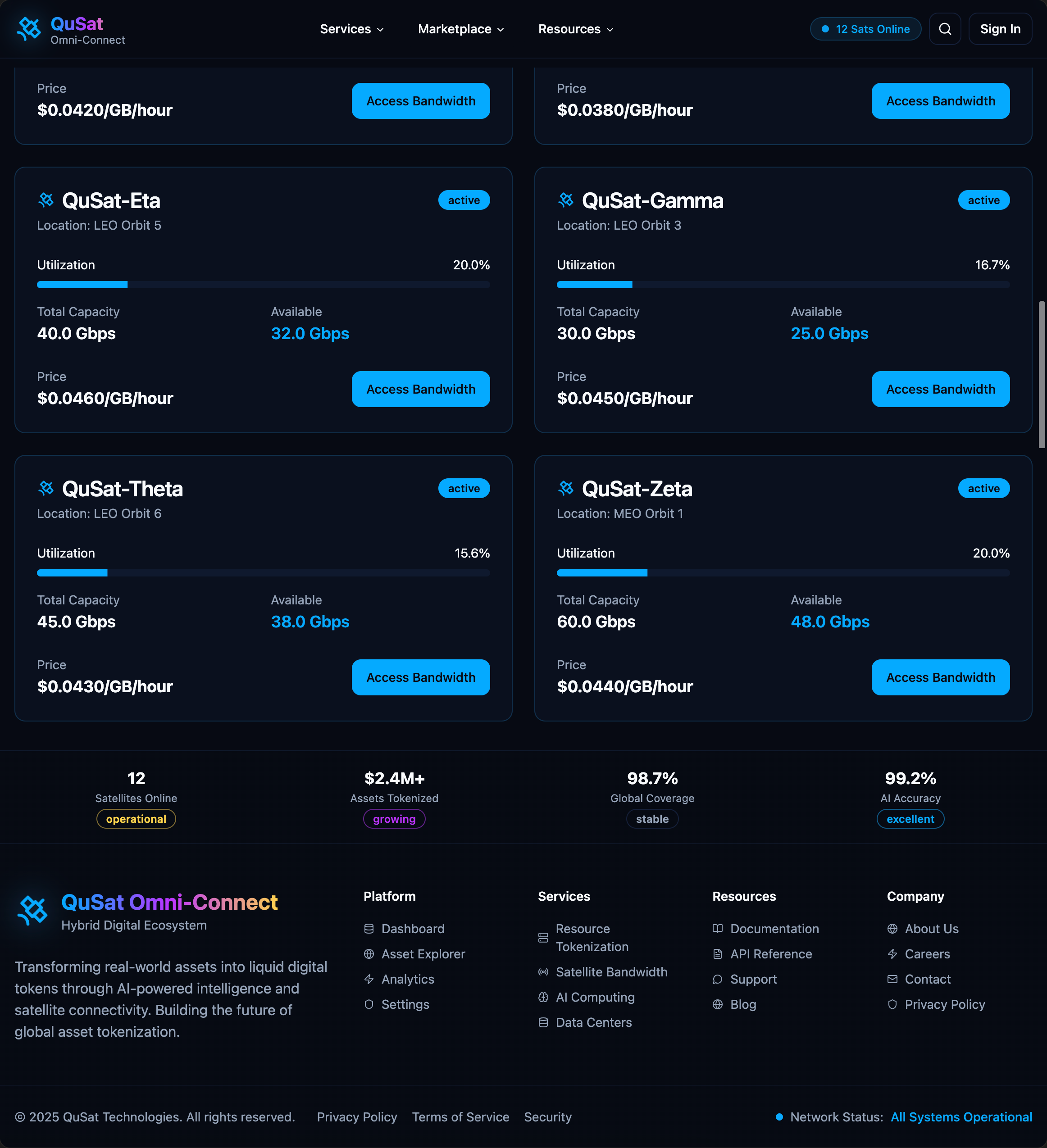
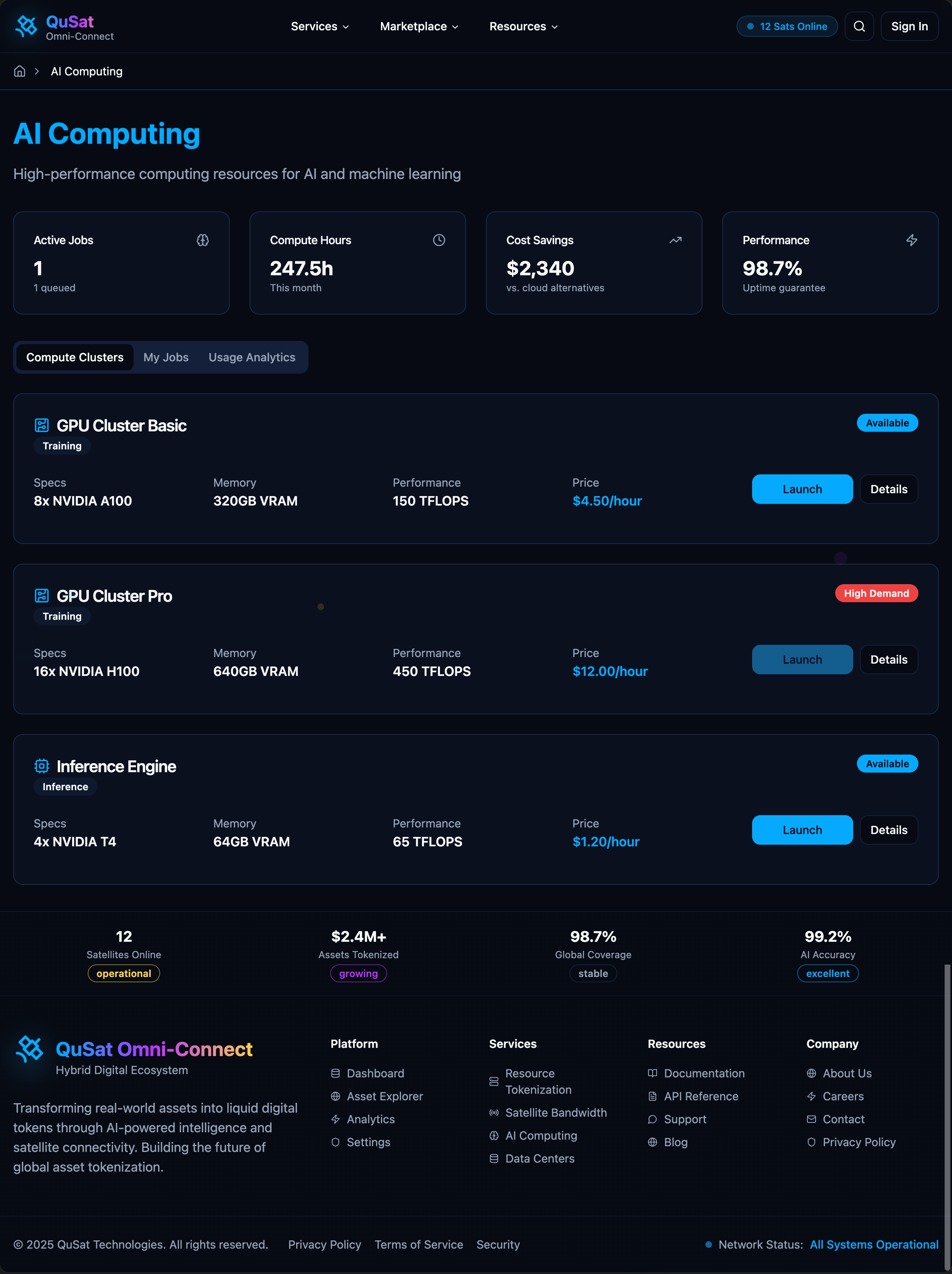
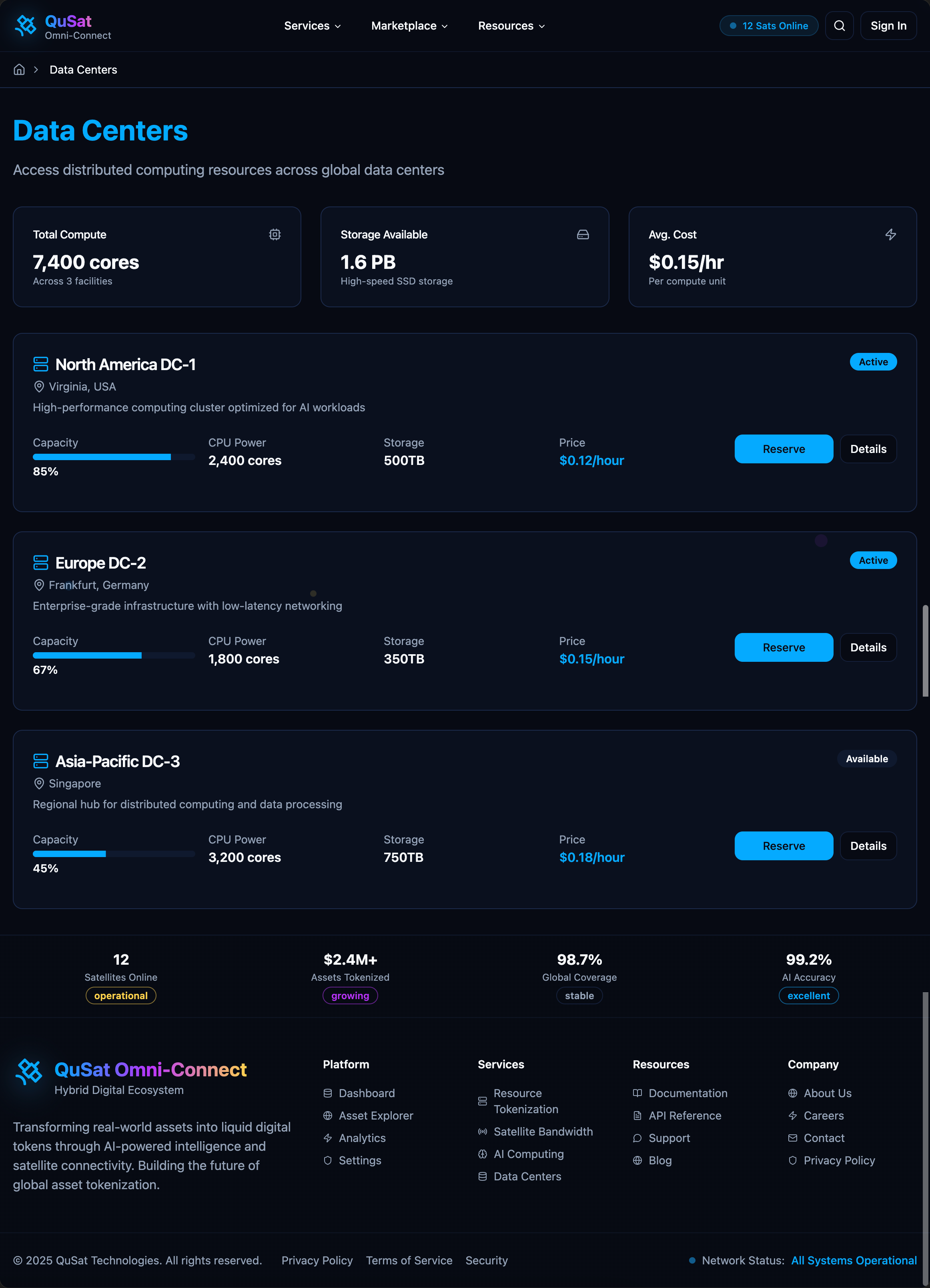
Resource Tokenization: Convert satellite bandwidth, computing power, and data storage into tradeable NFTs Marketplace Trading: Buy, sell, and trade quantum satellite resources in a decentralized marketplace Multi-Wallet Authentication: Support both traditional email/password and Solana wallet authentication (SIWS) Role-Based Access: Tailored experiences for regular users, creators, and administrators Asset Management: Track and manage owned satellite resources and NFT collections Real-Time Analytics: Monitor platform usage, resource utilization, and market trends AI Computing Integration: Access distributed quantum computing capabilities across satellite networks Data Center Coordination: Manage ground-based infrastructure that interfaces with satellite systems
How we built it
We architected QuSat Omni-Connect using cutting-edge technologies to ensure scalability, security, and user experience:
Frontend Architecture:
React 18 with TypeScript for type-safe, component-based development Tailwind CSS with a custom design system for consistent, responsive UI React Router for seamless single-page application navigation Tanstack Query for efficient data fetching and caching Authentication & Security:
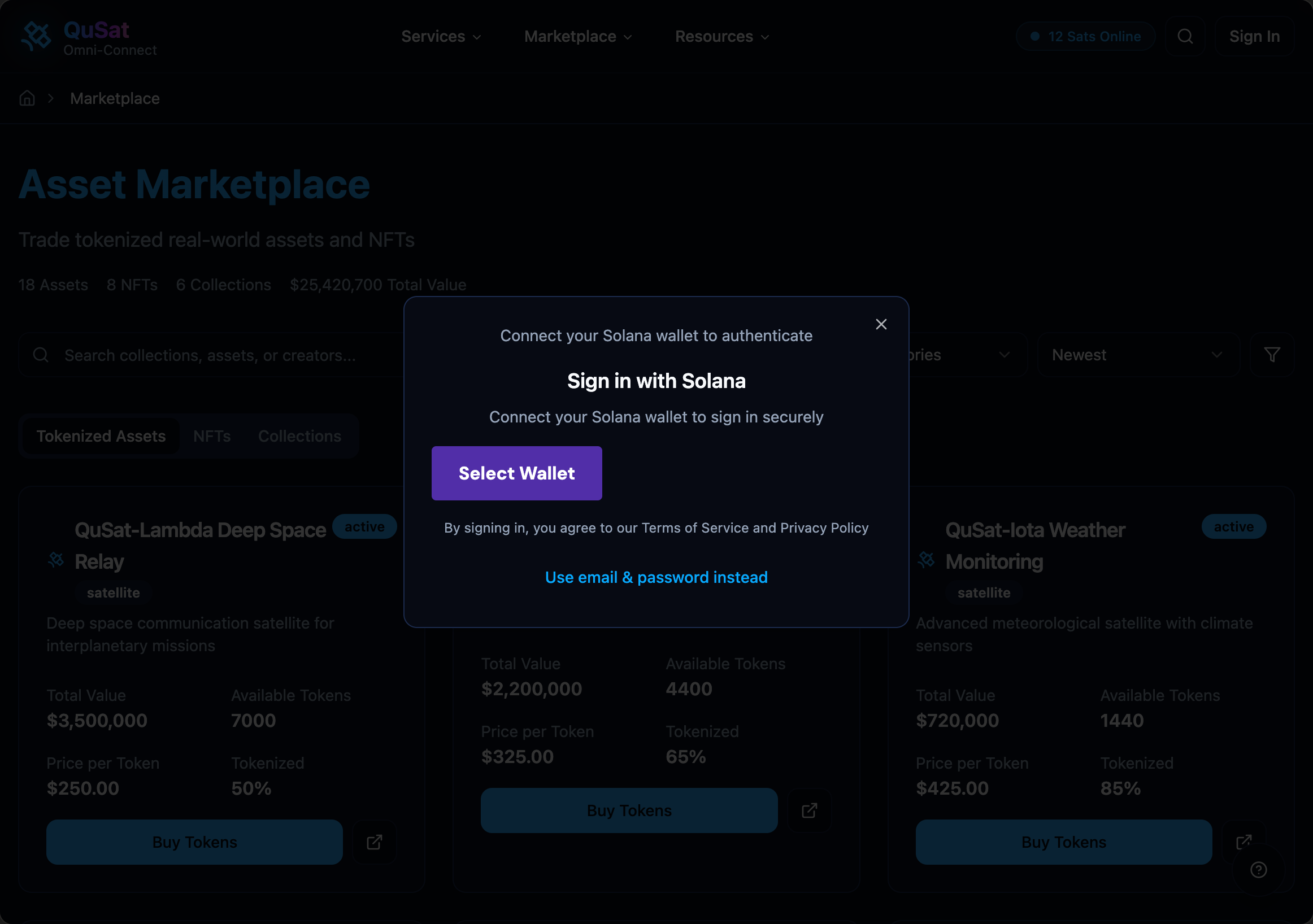
Generic Auth for traditional authentication flows Solana Web3.js integration for blockchain-native Sign-in-with-Solana (SIWS) Row-Level Security (RLS) policies for data protection Role-based access control with admin, creator, and user permissions Session timeout handling and security monitoring Backend Infrastructure:
Supabase as the primary backend-as-a-service PostgreSQL database with optimized schemas for user profiles, roles, and assets Edge Functions for serverless compute and Solana signature verification Real-time subscriptions for live data updates Blockchain Integration:
Solana wallet adapters supporting Phantom, Solflare, and other major wallets Ed25519 signature verification for secure authentication NFT marketplace smart contracts (planned integration) Tokenization protocols for satellite resource representation
Challenges we ran into
Router Architecture Conflicts: Initially encountered React Router duplication errors when integrating multiple authentication providers. Resolved by carefully structuring the component hierarchy and ensuring single Router instances.
Solana Integration Complexity: Implementing Sign-in-with-Solana proved challenging due to browser environment constraints with CommonJS modules. Required switching from require() statements to ES6 imports for proper Vite compatibility.
Authentication Flow Coordination: Balancing traditional email authentication with Web3 wallet authentication required careful state management and user experience design to provide seamless transitions between authentication methods.
Role-Based Access Control: Implementing granular permissions across different user types while maintaining security and preventing recursive RLS policy issues required strategic database function design.
Real-Time Data Synchronization: Ensuring consistent state across authentication providers, user sessions, and real-time updates demanded careful orchestration of multiple data sources.
Accomplishments that we're proud of
Seamless Multi-Modal Authentication: Successfully integrated both traditional and Web3 authentication methods with a unified user experience Comprehensive Security Implementation: Built robust role-based access control with session management and timeout handling Scalable Architecture: Created a modular, component-based architecture that supports rapid feature development Web3-Native Design: Implemented proper SIWS following EIP-4361 standards with secure signature verification User-Centric Interface: Designed an intuitive platform that makes complex satellite resource management accessible Real-Time Analytics: Built admin dashboards with live monitoring capabilities for platform oversight
What we learned
Blockchain Integration Complexity: Web3 authentication requires careful consideration of browser environments, module systems, and security implications beyond traditional authentication methods.
State Management Sophistication: Managing authentication state across multiple providers and maintaining security requires sophisticated state management patterns and careful component lifecycle handling.
User Experience Design: Balancing the complexity of satellite resource management with intuitive user interfaces demands iterative design and user feedback integration.
Security-First Development: Implementing proper RLS policies and authentication flows from the ground up is crucial for Web3 applications handling valuable digital assets.
Modular Architecture Benefits: Building with reusable components and clear separation of concerns significantly accelerates development and maintenance.
What's next for QuSat Omni-Connect
Smart Contract Integration: Deploy Solana smart contracts for automated resource trading, staking mechanisms, and governance token distribution.
Satellite Network Expansion: Partner with satellite operators to onboard real quantum satellite resources and expand the marketplace inventory.
AI-Powered Resource Optimization: Implement machine learning algorithms to optimize resource allocation, predict demand, and enhance trading recommendations.
Mobile Application: Develop React Native mobile apps for on-the-go resource management and trading notifications.
Cross-Chain Compatibility: Expand beyond Solana to support Ethereum, Polygon, and other blockchain networks for broader user accessibility.
Enterprise APIs: Build comprehensive APIs for enterprise integration, allowing large organizations to programmatically manage satellite resources.
Governance DAO: Implement decentralized governance mechanisms allowing token holders to vote on platform developments and resource allocation policies.
Real-Time Satellite Monitoring: Integrate with satellite telemetry systems for live resource status updates and automated service level agreements.
QuSat Omni-Connect represents the convergence of space technology, quantum computing, and blockchain innovation—creating new possibilities for how we access and utilize space-based infrastructure in the digital age.


Log in or sign up for Devpost to join the conversation.