-
-

1024x1024 app icon
-
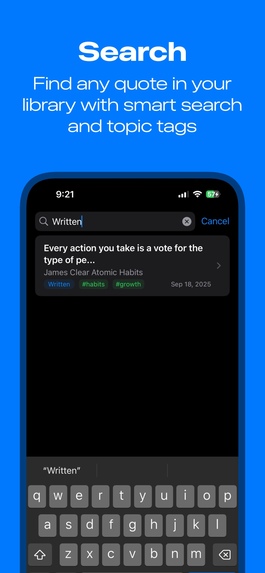
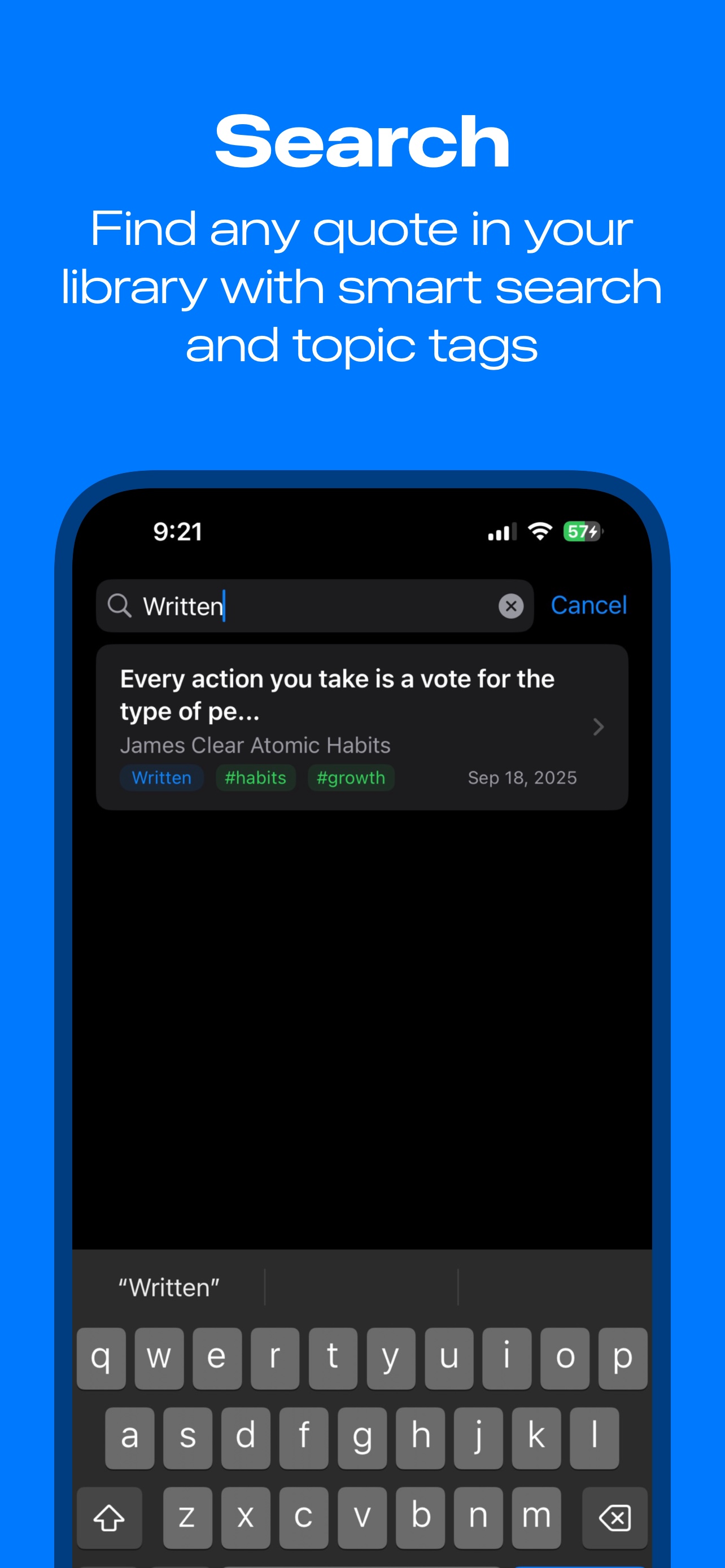
Promo 2 - Search
-
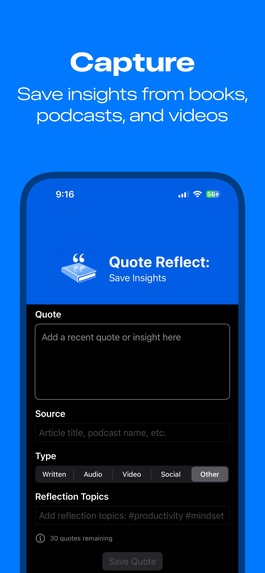
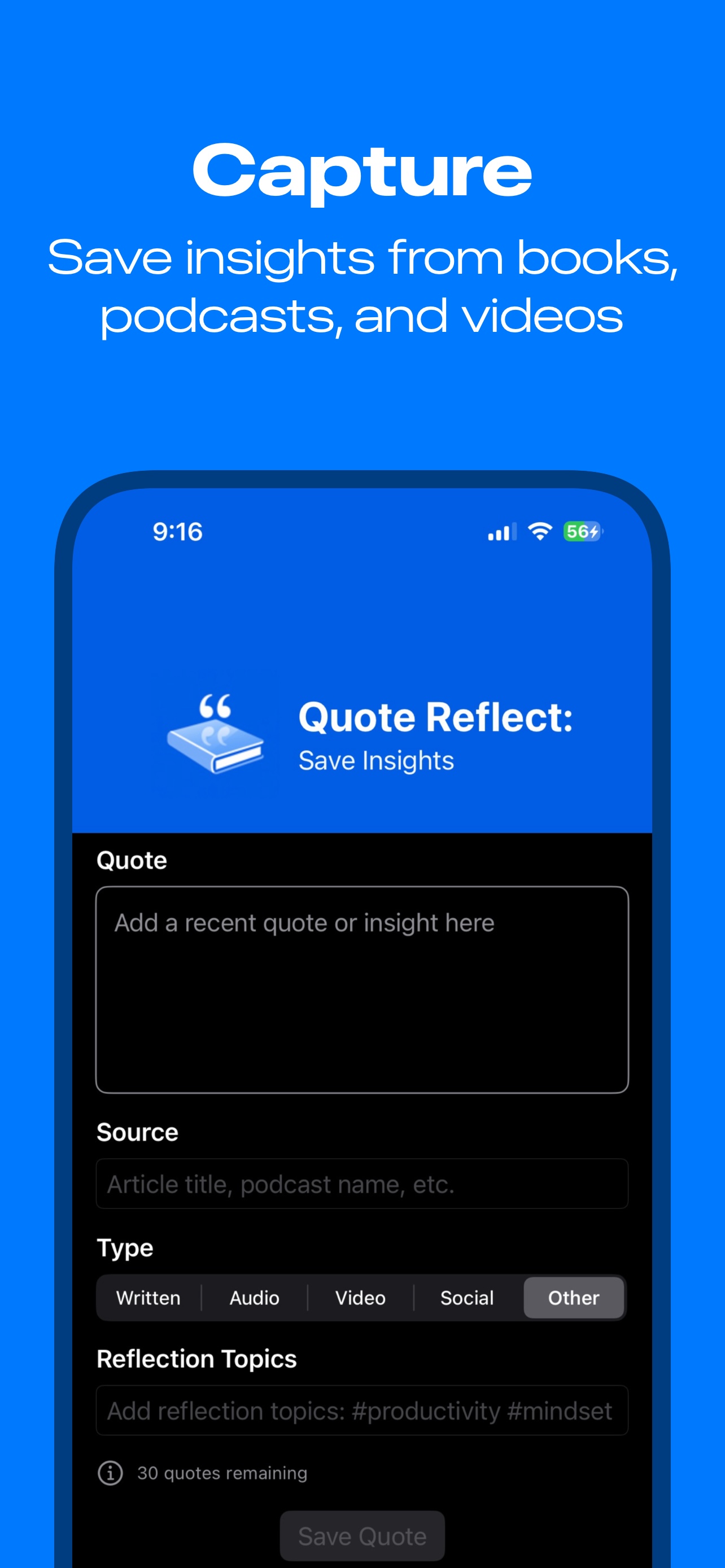
Promo 1 - Capture
-
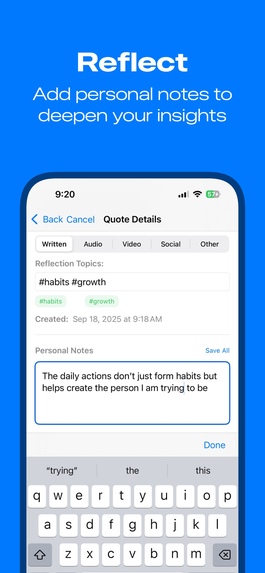
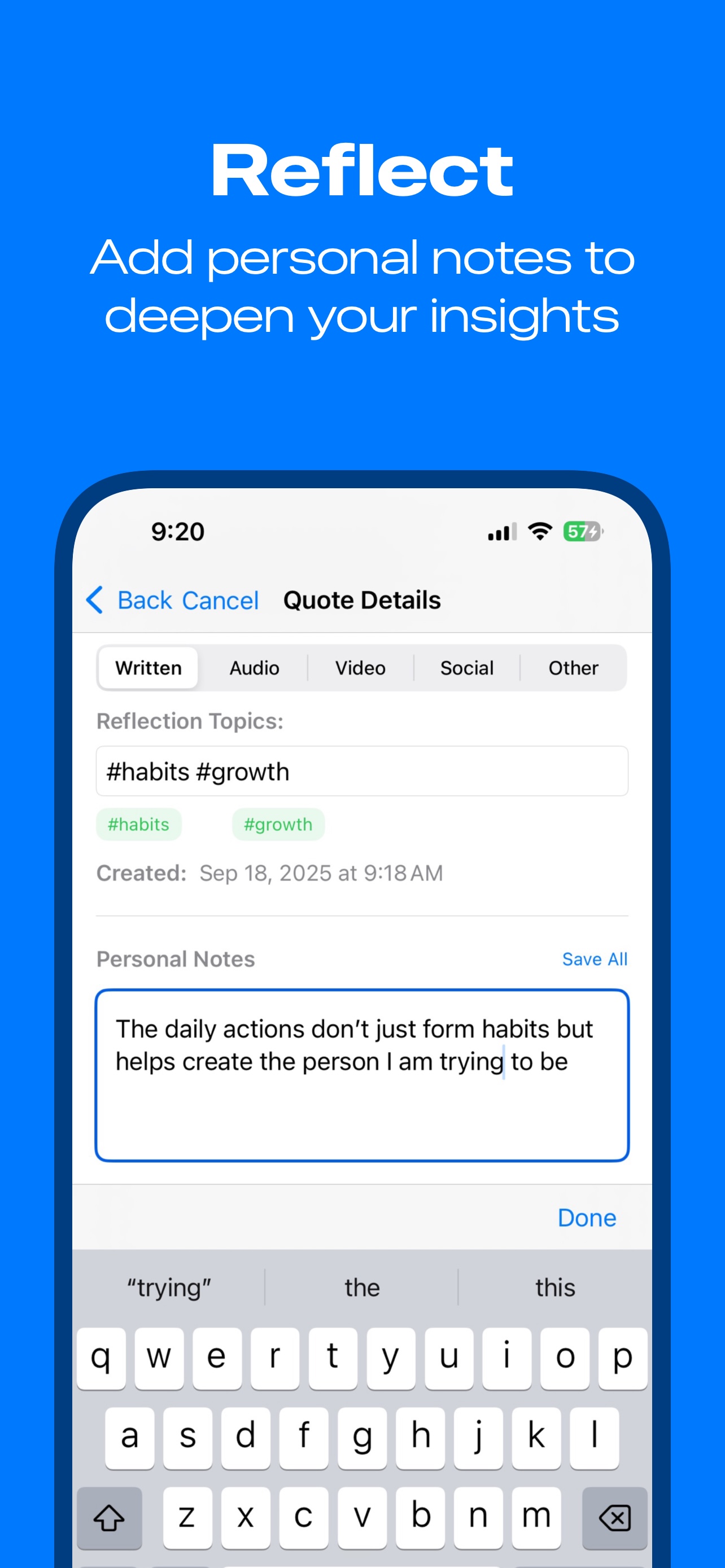
Promo 3 - Reflect
-
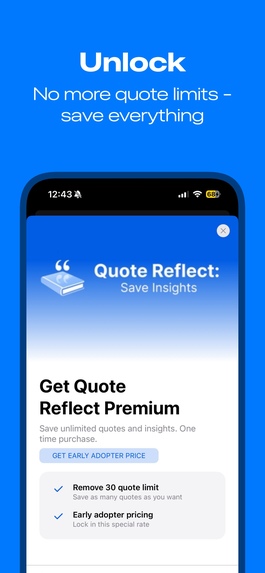
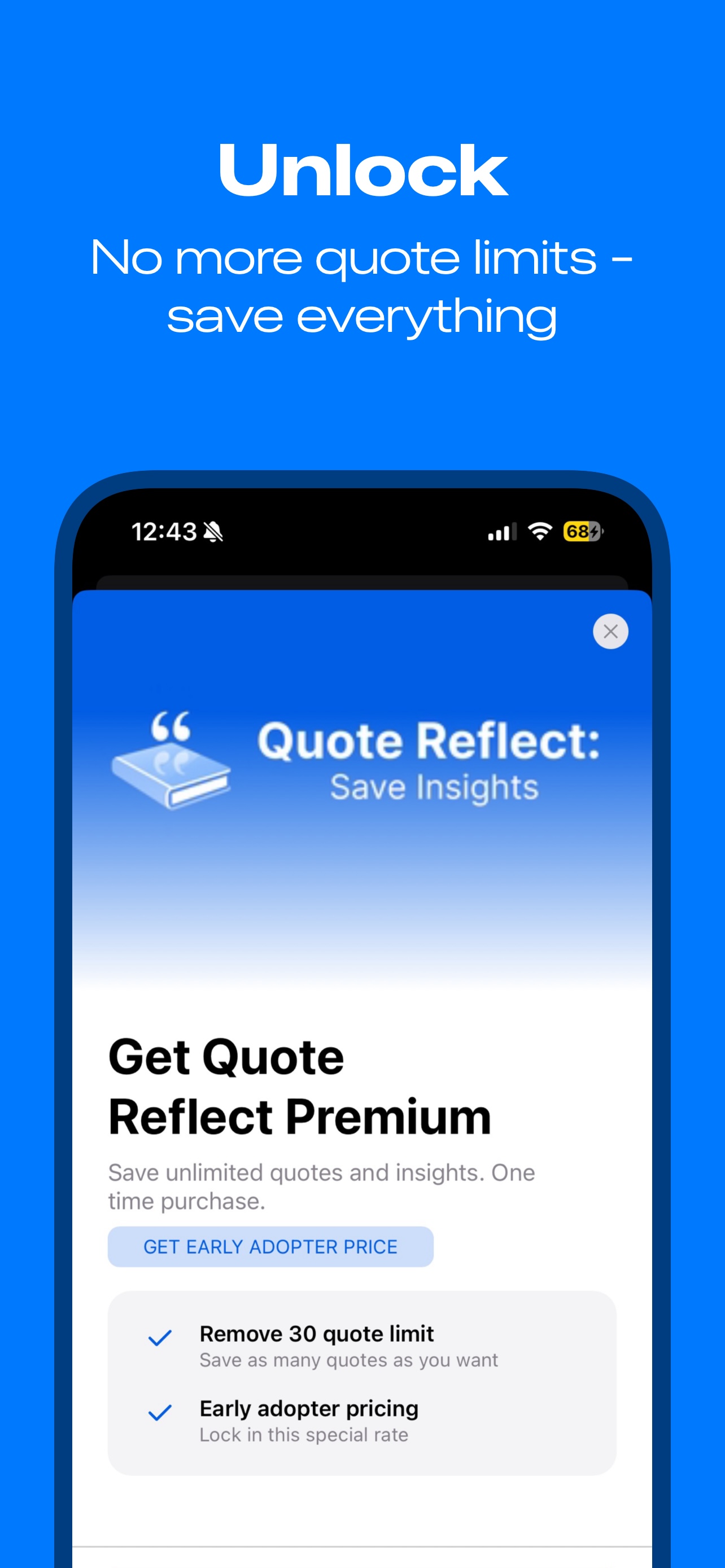
Promo 4 - Unlock
-
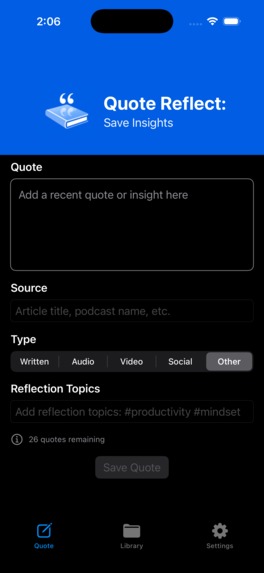
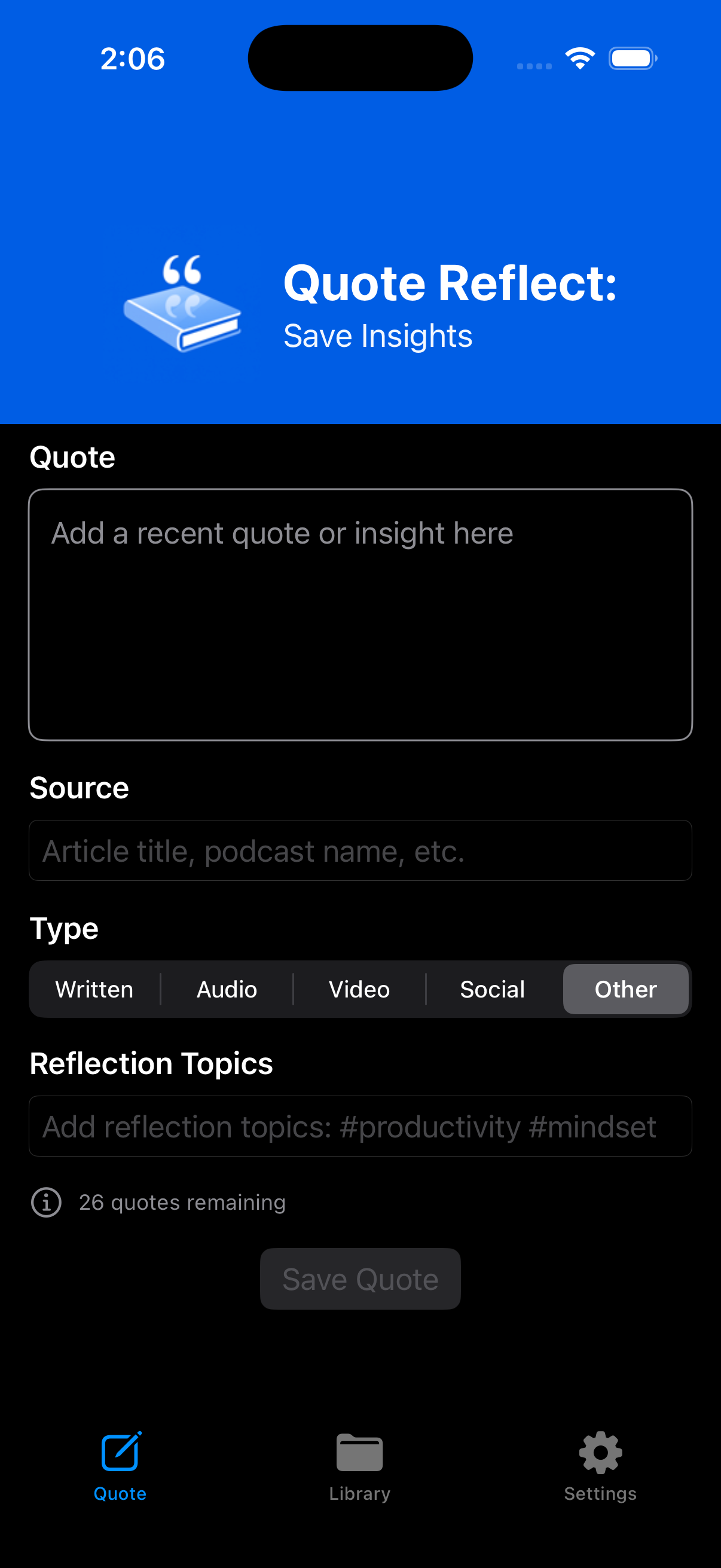
No bezel 1 - Main quote tab
-
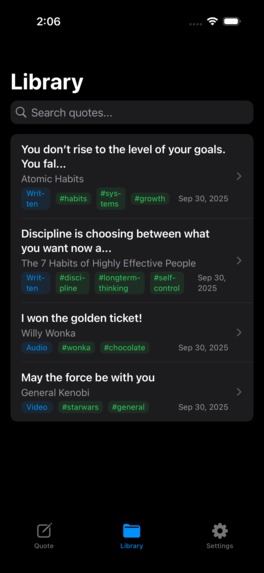
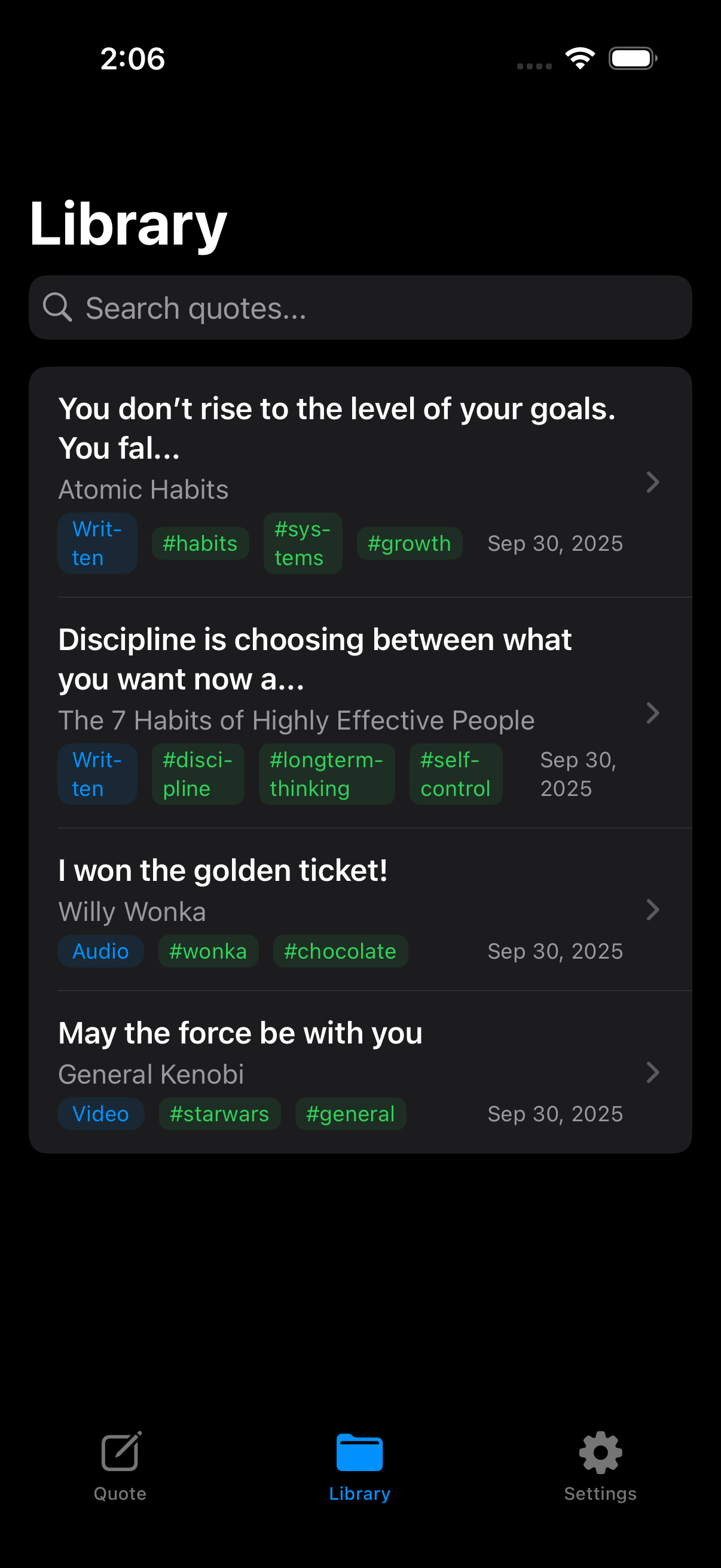
No bezel 2 - Library tab
-
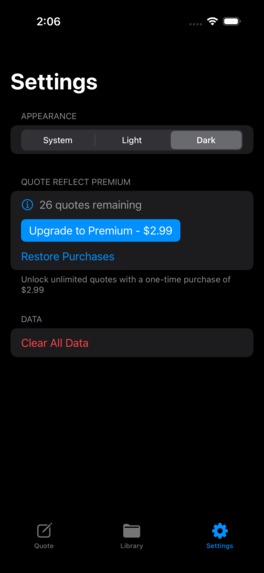
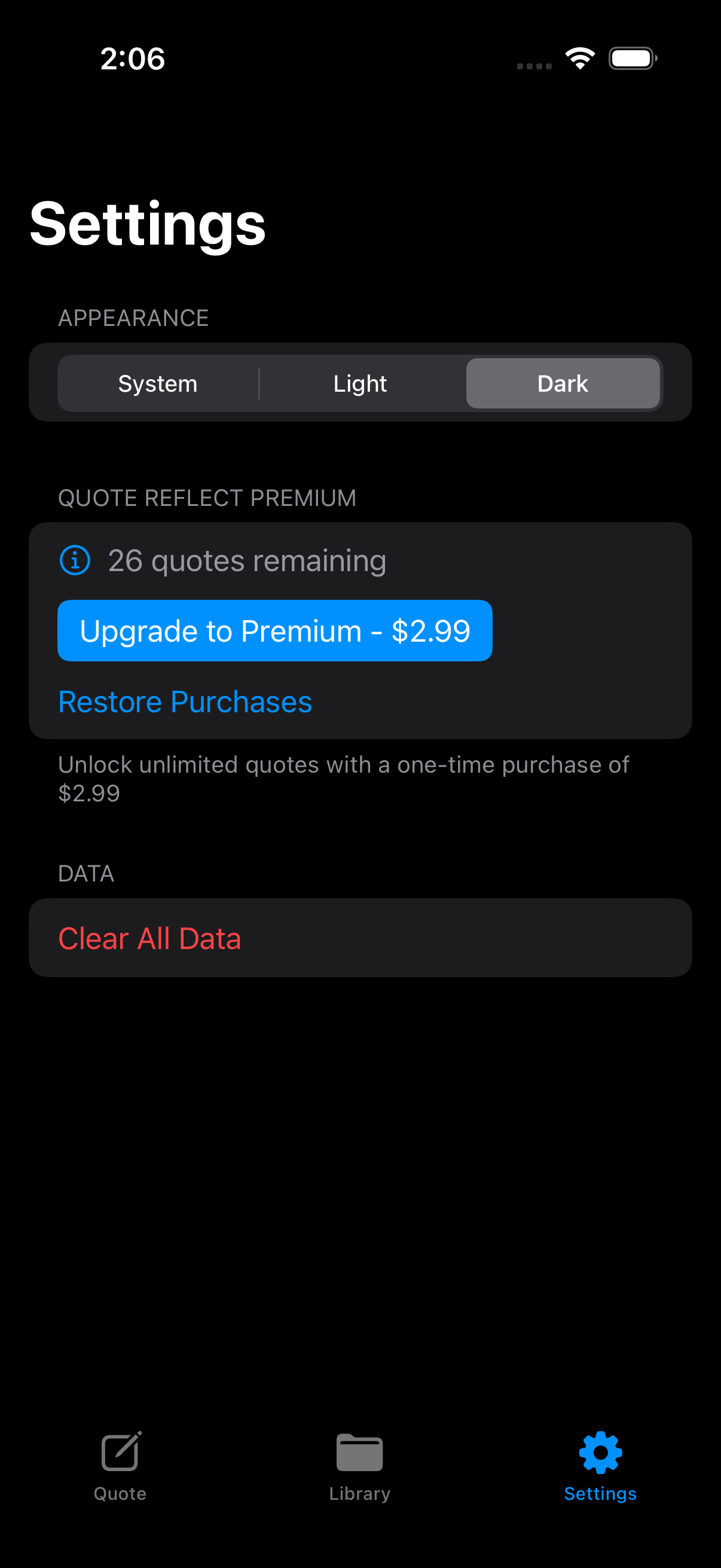
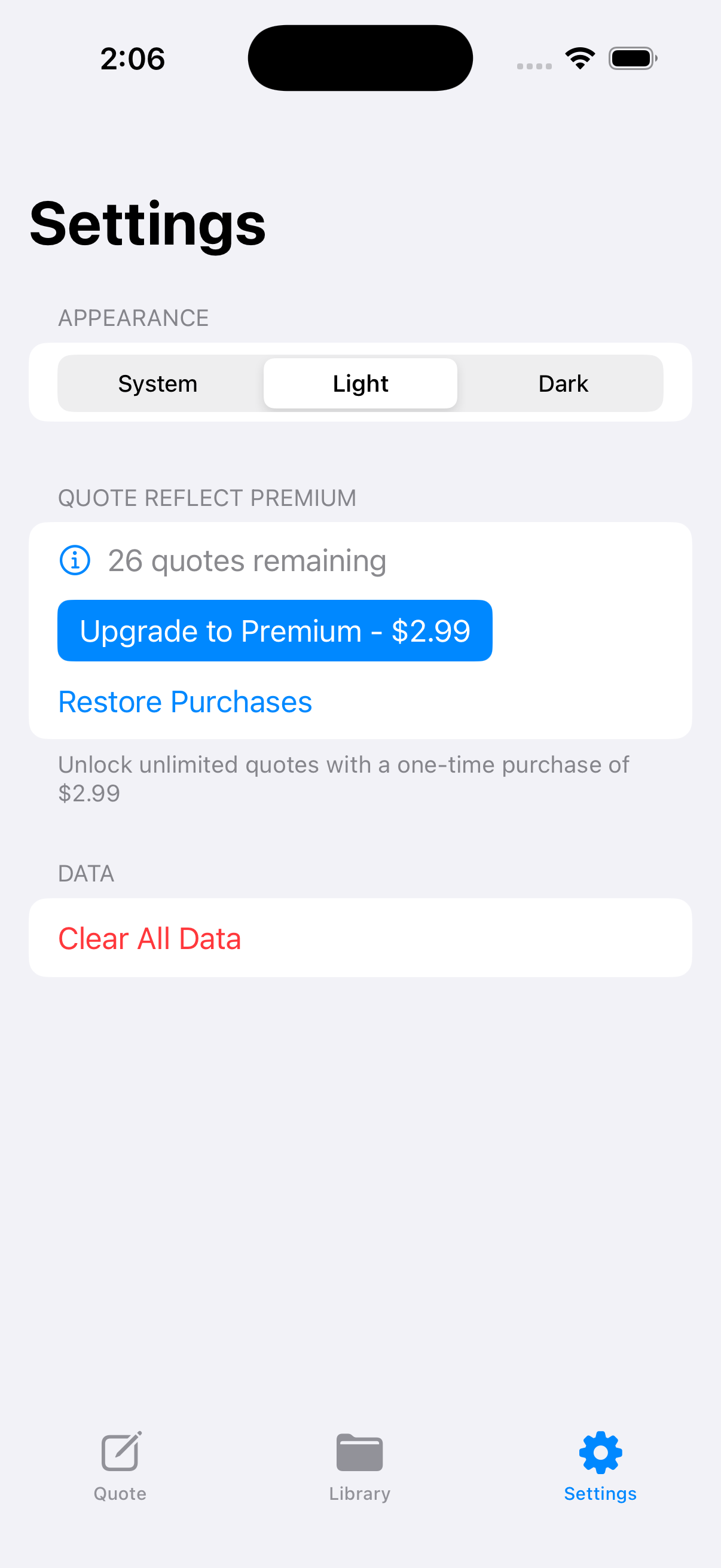
No bezel 3 - settings tab
-
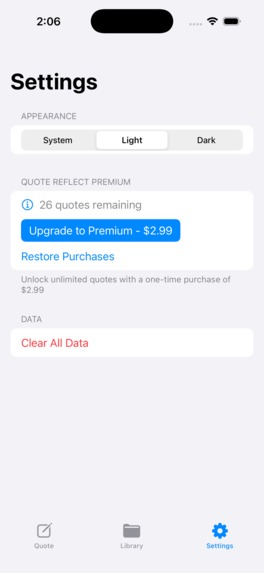
No bezel 4 - settings tab in light mode
-
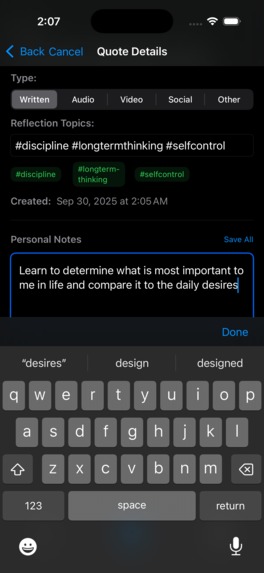
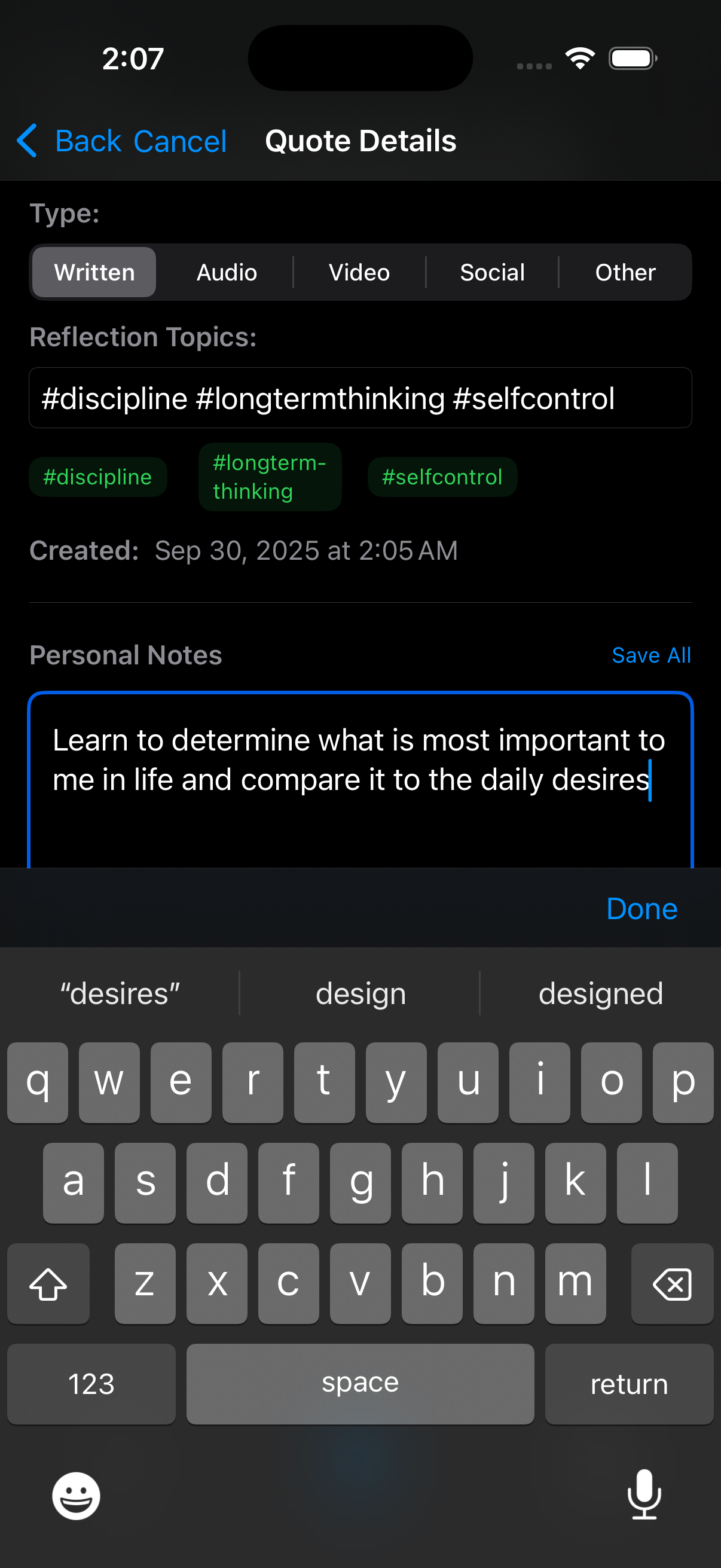
No bezel 5 - detail view of individual quote

Inspiration
Constantly losing track of great insights from books, podcasts, and articles is a frustration of mine. Scattered screenshots, forgotten notes, and buried bookmarks mean valuable ideas disappear right when they're needed most. I wanted to create a dedicated space specifically for quotes and insights, something simple enough to actually use, and not very complex.
What it does
Quote Reflect lets users capture quotes and insights from any content source (books, podcasts, videos, articles, talks) with a simple interface. Users add the quote text, put information on the quote such as the source or media type, and include reflection based tags as well. Users can also add personal notes to each of the listed quotes, and use the search feature to look through the quotes and find specific reflection tags or keywords. The free version supports 30 quotes stored locally on device, while the premium one-time purchase ($2.99) unlocks unlimited quotes with planned cloud sync across devices.
How we built it
This app was built using SkipTools cross platform tool, allowing for iOS and Android builds. For Shipaton, only the iOS version was published at the time of competition close. The app uses SQLite for local data persistence with JSON file storage. RevenueCat SDK handles the premium purchase flow and monetization. I relied a lot on AI assisted coding, specifically Claude and sometimes Codex accelerate development and complete the MVP in under 3 weeks (I became sick mid competition and had to pause development). I also used perplexity for market research, combing through the App Store reviews, as this helped guide future features. I also used tools such as Figma for design work and Elevenlabs for the demo video audio. The paywall and purchase flow were designed using RevenueCat's Paywall editor.
Tools/Resources List:
- RevenueCat SDK: Purchase management and Paywall
- Xcode: development IDE
- Skip: iOS/Android Multiplatform toolchain for SwiftUI
- Android Studio: Required for Skip usage, used for Android app previews
- Figma: design tool
- Youtube: Video capturing
- ElevenLabs: AI Audio for video demo, video creation
- Claude: AI coding support via Claude Code
- ChatGPT: AI coding support via Codex
- Perplexity: AI research support for deep researching, marketing purposes
Challenges we ran into
The biggest challenge was timeline, as I essentially had to go from concept to App Store in approximately 3 weeks while learning SkipTools. I had to make hard MVP scope decisions, cutting features like cloud sync and widgets to ship on time. Navigation bugs in the cross-platform framework required a lot of debugging, as Android would have different layout expectations. iOS 26's new Liquid Glass design launched mid development, forcing me to add a compatibility flag to avoid UI breaks. Creating app store assets (screenshots, icons, descriptions) for both platforms while maintaining feature parity was pretty time consuming. Balancing a 'good enough to ship' app with a 'good enough to compete' app was constant tension.
Accomplishments that we're proud of
Shipped a fully functional app on iOS within a matter of weeks. Successfully integrated RevenueCat for a clean premium purchase experience. Created a genuinely useful app that solves a real problem I personally experience. Maintained focus and shipped an MVP instead of getting lost in feature creep. The app has a clean, simple interface that makes the core functionality more understandable. Built cross-platform capabilities that set up future Android launch without rewriting code.
What we learned
AI assisted development can dramatically accelerate solo app building when used strategically. Scope discipline is everything as ruthlessly cutting 'nice to have' features made shipping possible. Cross-platform frameworks like SkipTools have quirks and pros/cons for cross platform development need to be considered on an individual app basis. For example, whether the app should support the latest and greatest APIs can be a determining factor. RevenueCat makes IAP implementation straightforward and handles platform differences well. Simple, focused apps can be an easier approach to shipping than creating complex apps. Early adopter pricing is believed to be a legitimate strategy that creates urgency without subscription complexity. Subscriptions can be added later with introduction of heavy server side features.
What's next for Quote Reflect: Save Insights
Immediate priority: launch Android version and gather user feedback to validate core value proposition. Planned features include cloud sync via native platform storage (iCloud/Google Drive) and home screen widgets for displaying random saved quotes. More features can be added, but doing so would force a change to the monetization strategy.
Built With
- figma
- skip
- swiftui
- xcode

Log in or sign up for Devpost to join the conversation.