-
-
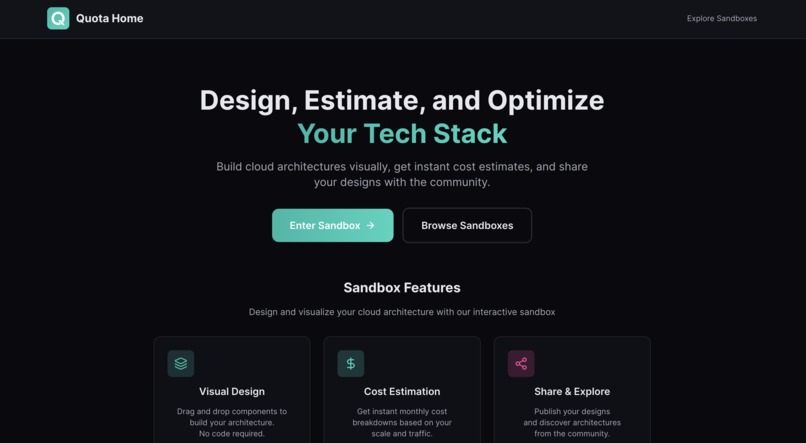
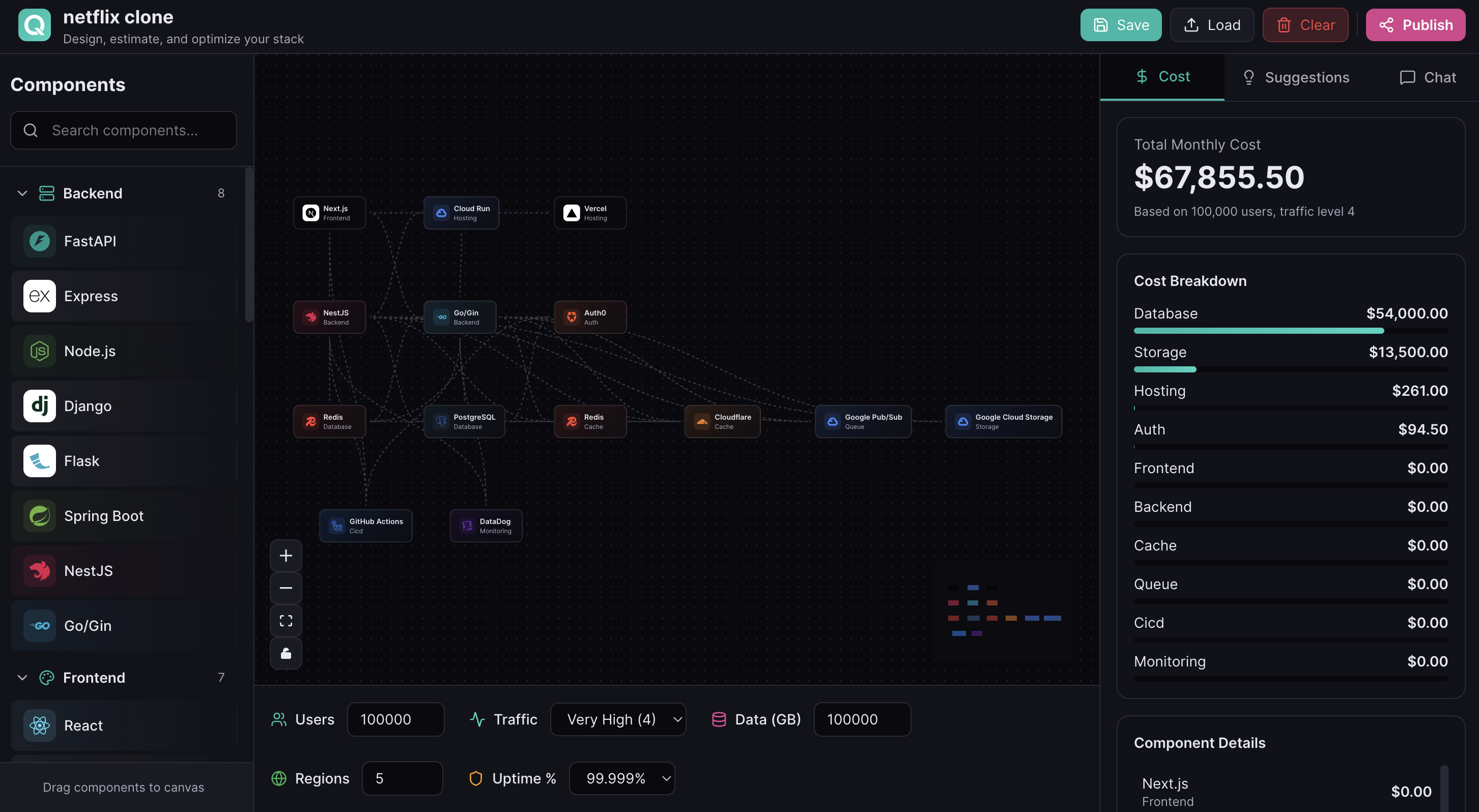
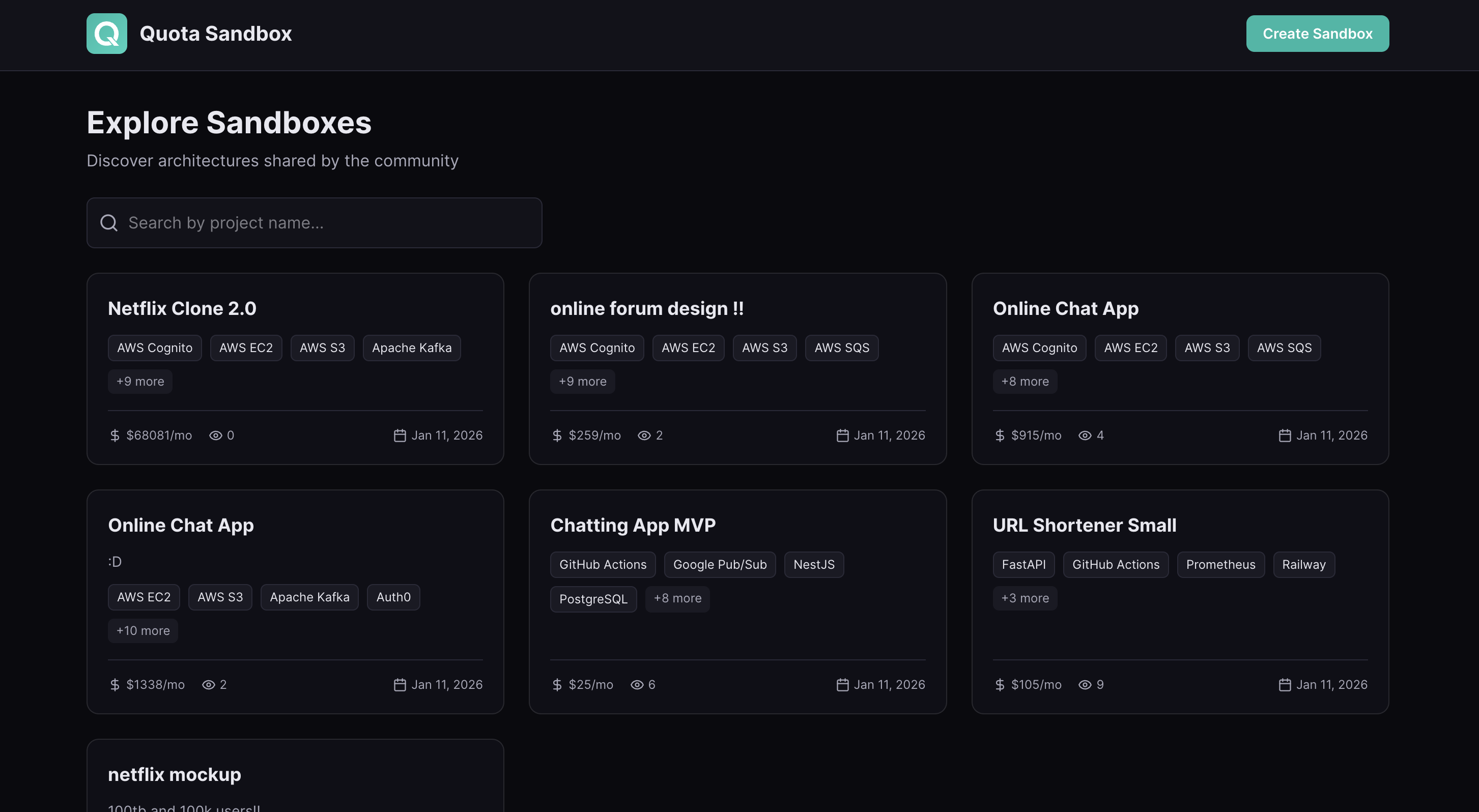
sandbox
-
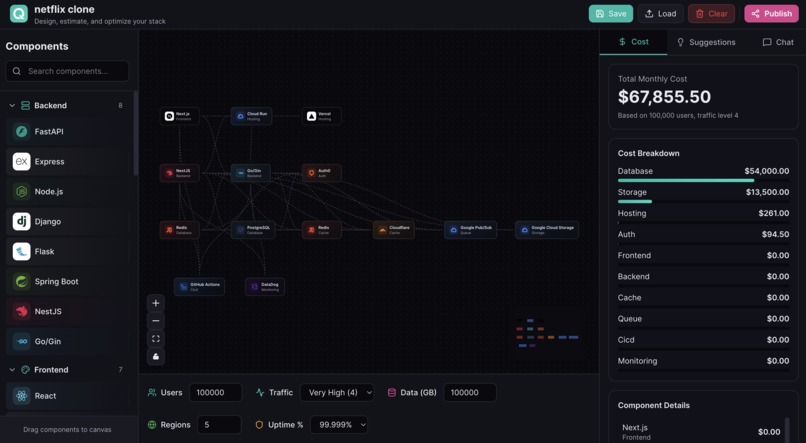
dashboard
-
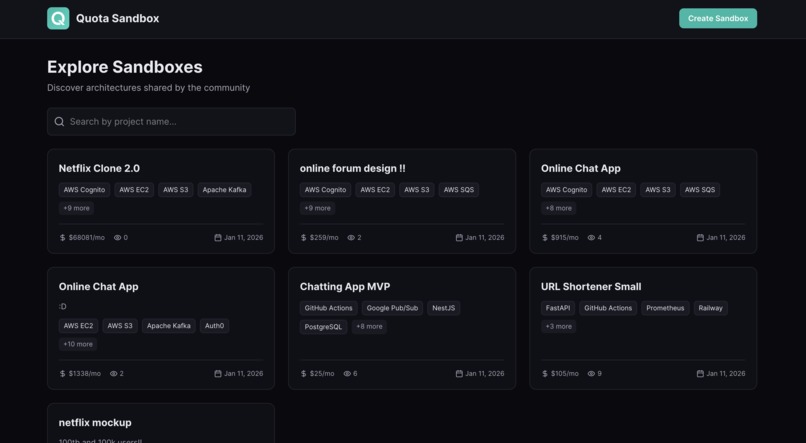
exported dashboards
-
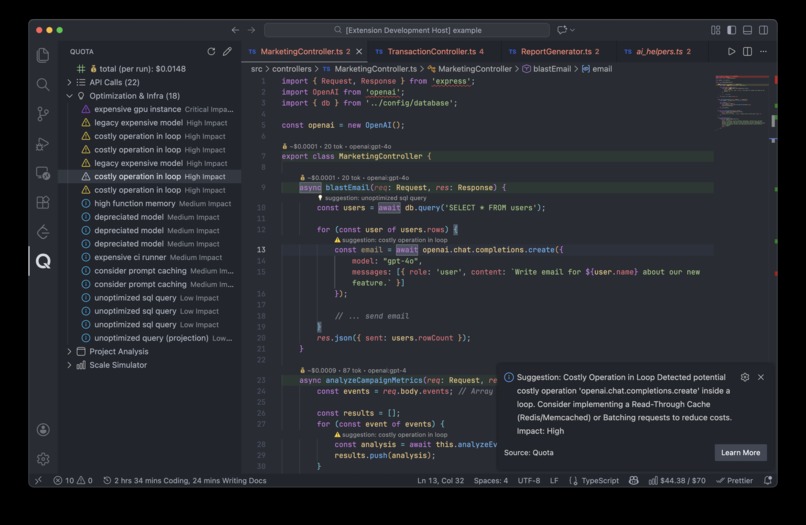
caching suggestions
-
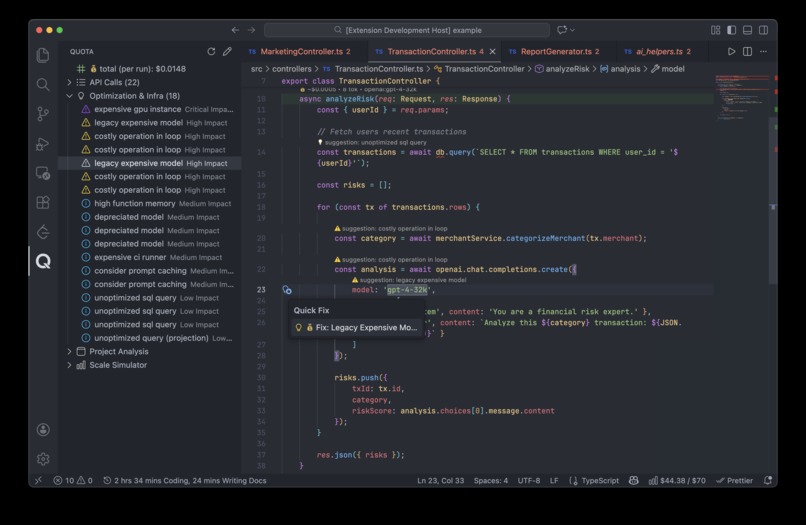
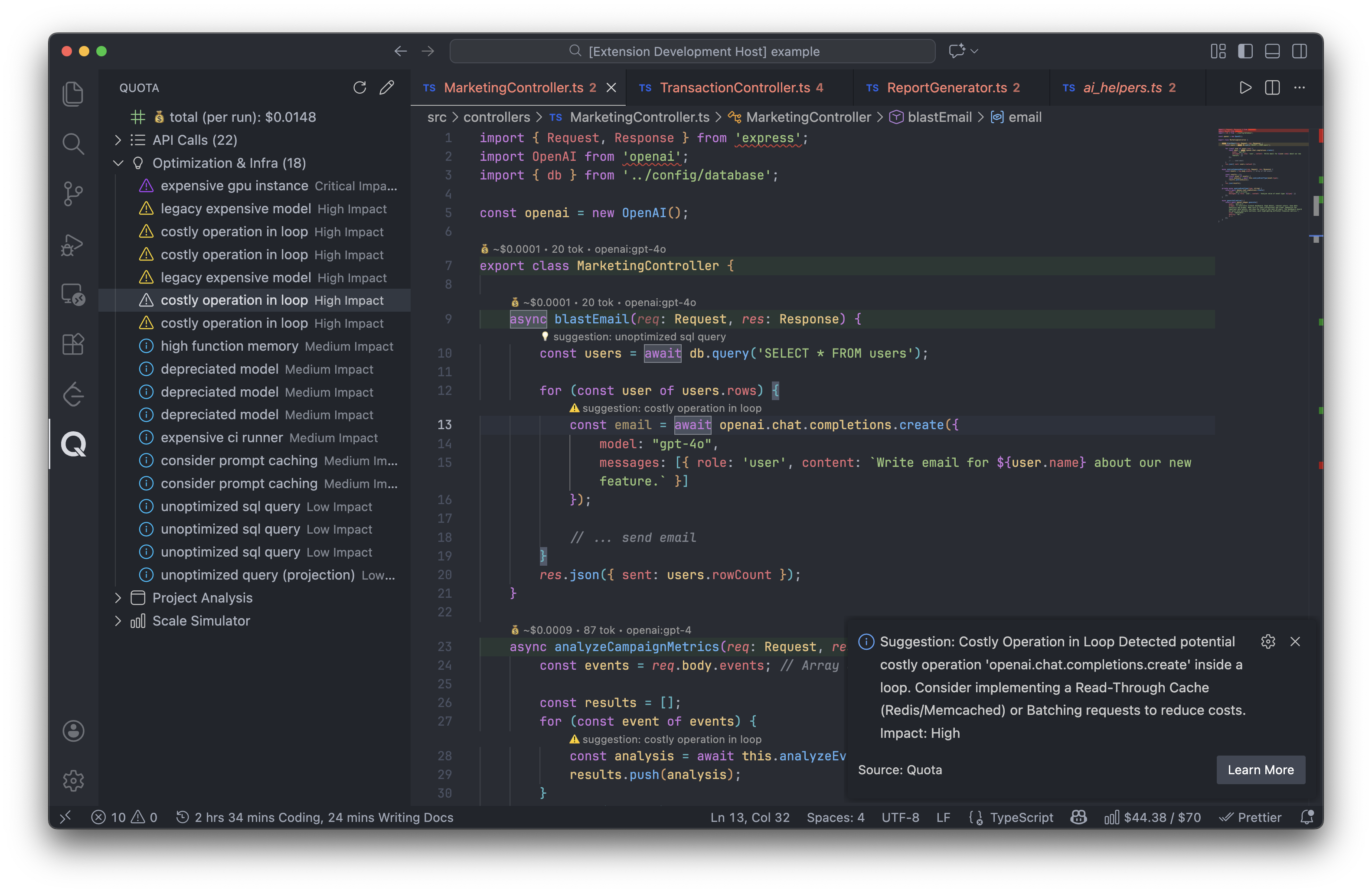
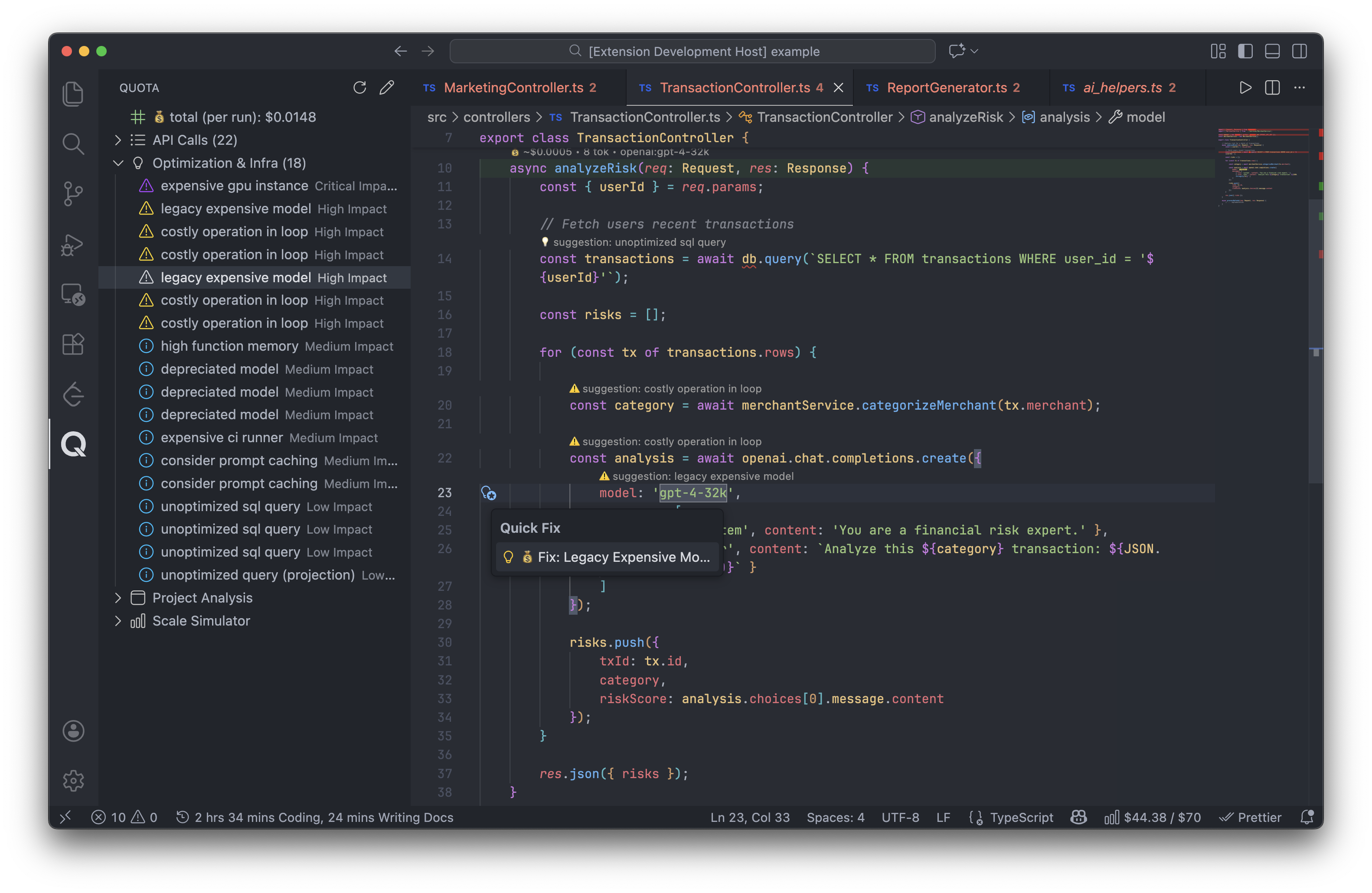
quick fixing feature
Inspiration
Innovation shouldn't come with a surprise bill.
As developers rushing to build the next big thing, we often treat AI as a magic wand. But unlike memory or CPU cycles, AI API calls cost real money—and those costs are currently invisible until the invoice arrives.
We realized that to truly innovate sustainably, engineers need financial intuition built directly into their tools. Whether you're a bootstrapper protecting your runway or an enterprise scaling a unicorn, you can't afford to be blind to your burn rate.
Quota was born to make cost a first-class citizen in the development lifecycle, bridging the gap between "move fast" and "don't go broke."
What it does
Quota is a real-time financial intelligence suite for modern engineering. It catches "financial bugs" before they ship.
- VS Code Extension (The Linter for your Budget): Acts as a real-time cost copilot. It scans your code as you type, flagging expensive API calls (like legacy GPT-4 usage) with a live "heatmap" and suggesting cheaper, faster alternatives instantly. It even features a "Bankruptcy Countdown" that predicts your runway based on your projected scale.
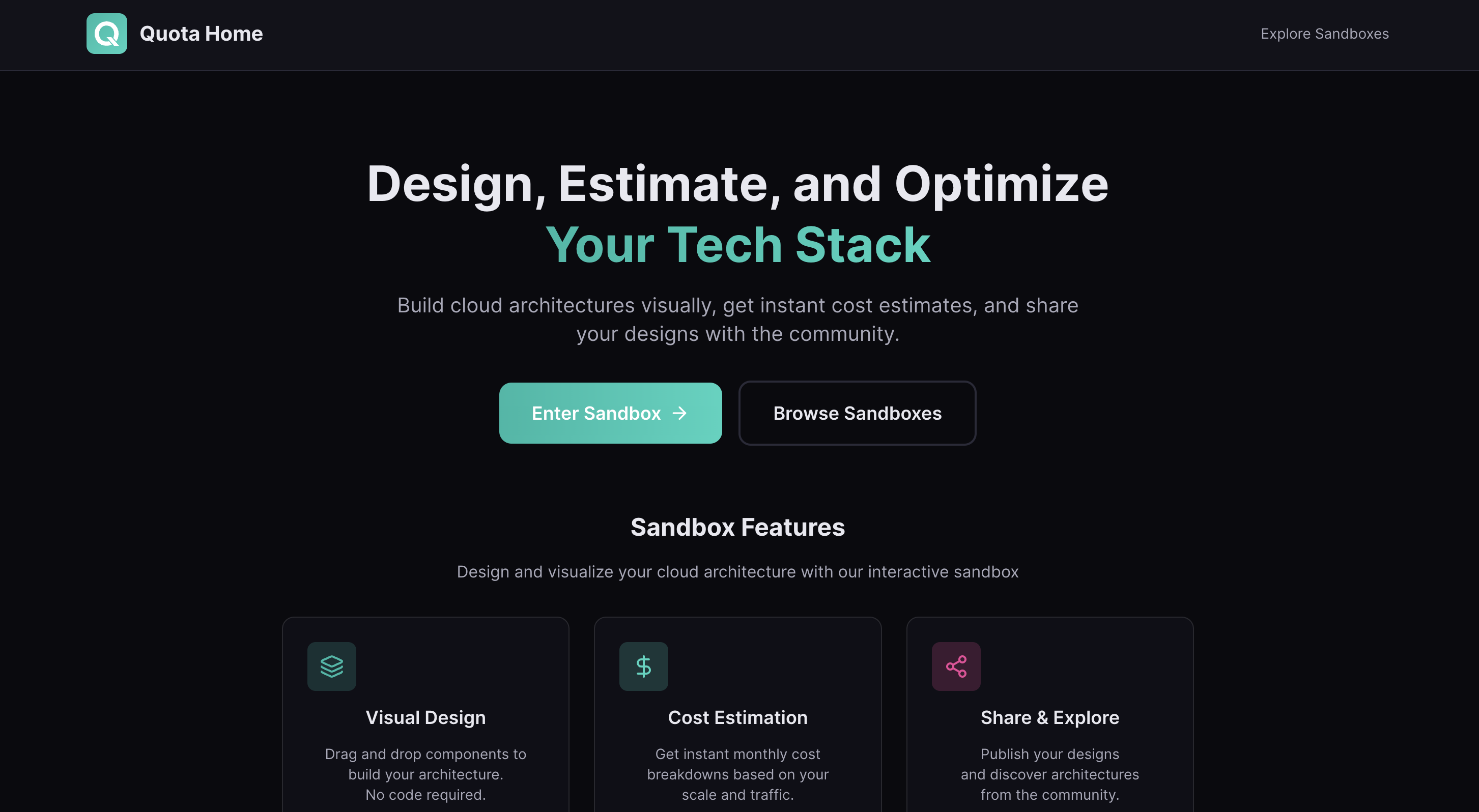
- Web Sandbox (The Architectural Playground): A drag-and-drop canvas for system design. Sketch out your architecture, and Quota's AI agent predicts the infrastructure and AI costs before you write a single line of code. It helps you design for scale from Day 1.
How we built it
We engineered a dual-pronged system to cover the entire development lifecycle:
- The Extension: Built with TypeScript and the VS Code API. We implemented a custom AST parser to identify complex API usage patterns and a heuristic algorithm to estimate token usage in real-time. We engineered a "One-Click Fix" system that programmatically refactors code to use optimized models.
- The Dashboard: A Next.js + React Flow canvas powered by a FastAPI backend. We integrated Google Gemini via LangChain and FAISS vector stores to create a RAG-powered "AI Architect" that understands both system design and pricing models.
Challenges we ran into
The Speed vs. Depth Trade-off: Real-time cost estimation is incredibly tricky. We had to balance the parser's speed (ensuring zero lag in the editor) with the depth of analysis required to find obfuscated API calls.
Context Management: creating accurate architectural suggestions required fine-tuning our RAG system to give precise advice without hallucinating non-existent cloud services or pricing tiers.
Accomplishments that we're proud of
- Thinking outside the box by treating "Cost" as a code quality metric akin to linting errors.
- Building a fully functional AST-based refactoring engine that safely modifying user code.
- Integrating Gemini to provide intelligent architectural reasoning, not just generic autocomplete.
- Shipping a cohesive, polished tool that we actually use to optimize itself.
What we learned
We learned that "hidden tech debt" is often financial. By visualizing the cost of our own project using Quota, we realized how quickly small architectural decisions—like choosing a slightly larger embedding model—compound into massive monthly bills at scale.
What's next for Quota
We plan to expand Quota to track Cloud Infrastructure (AWS/GCP resources) and Database Compute costs. Our vision is to implement CI/CD checks that block pull requests if they exceed budget thresholds, effectively creating a firewall against accidental spending spikes.
Built With
- ast
- gemini
- html
- javascript
- langchain
- mongodb
- next.js
- python
- react
- react-flow
- tailwind
- tree-sitter
- typescript
- vscode


Log in or sign up for Devpost to join the conversation.