-
-
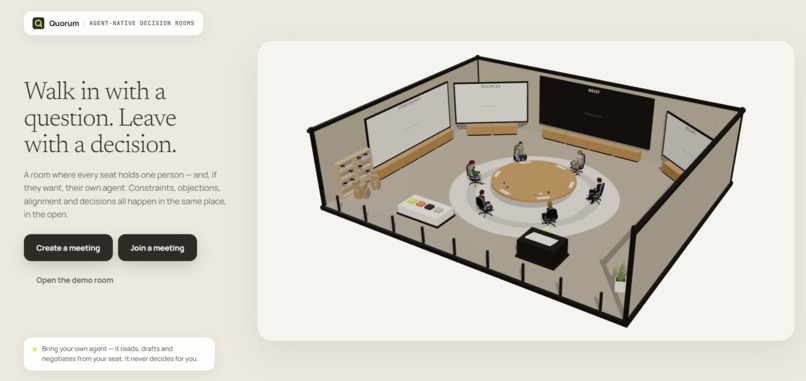
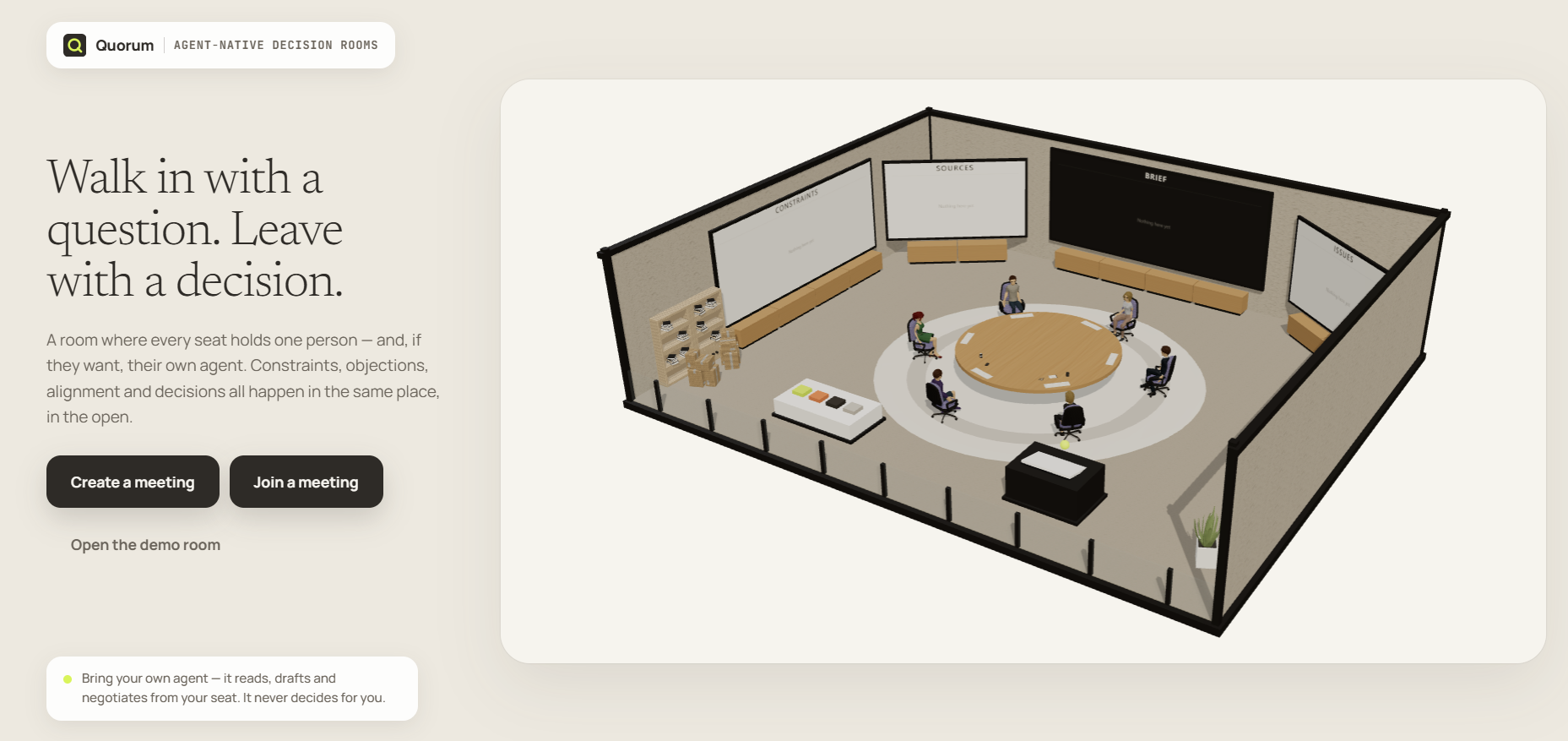
The landing page
-
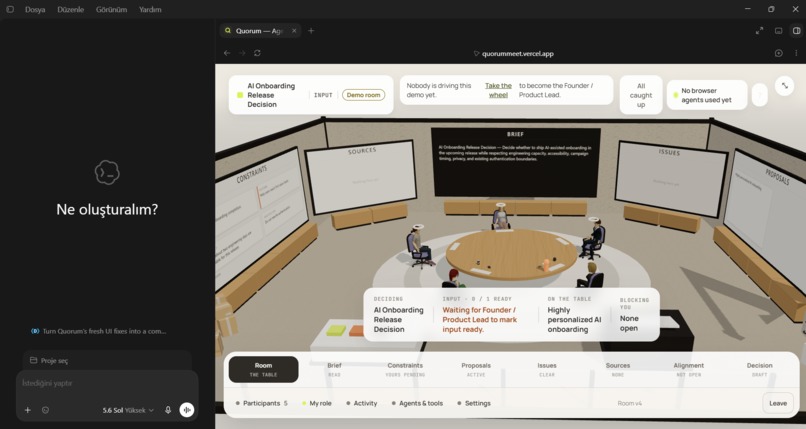
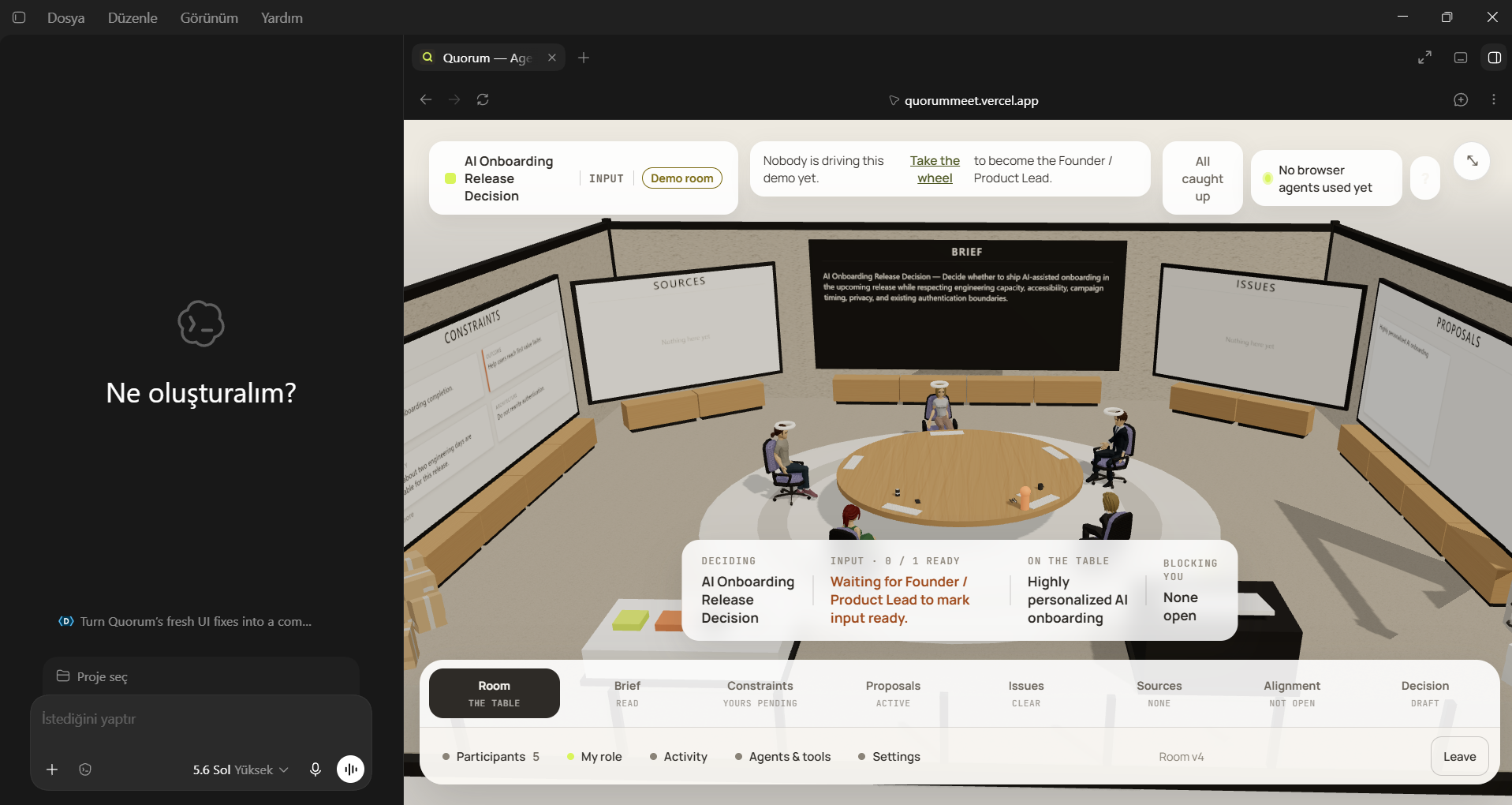
Demo room accesed in ChatGPT Browser
-
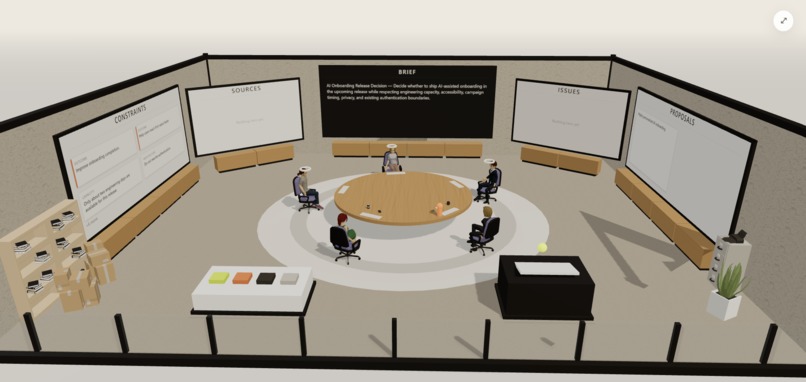
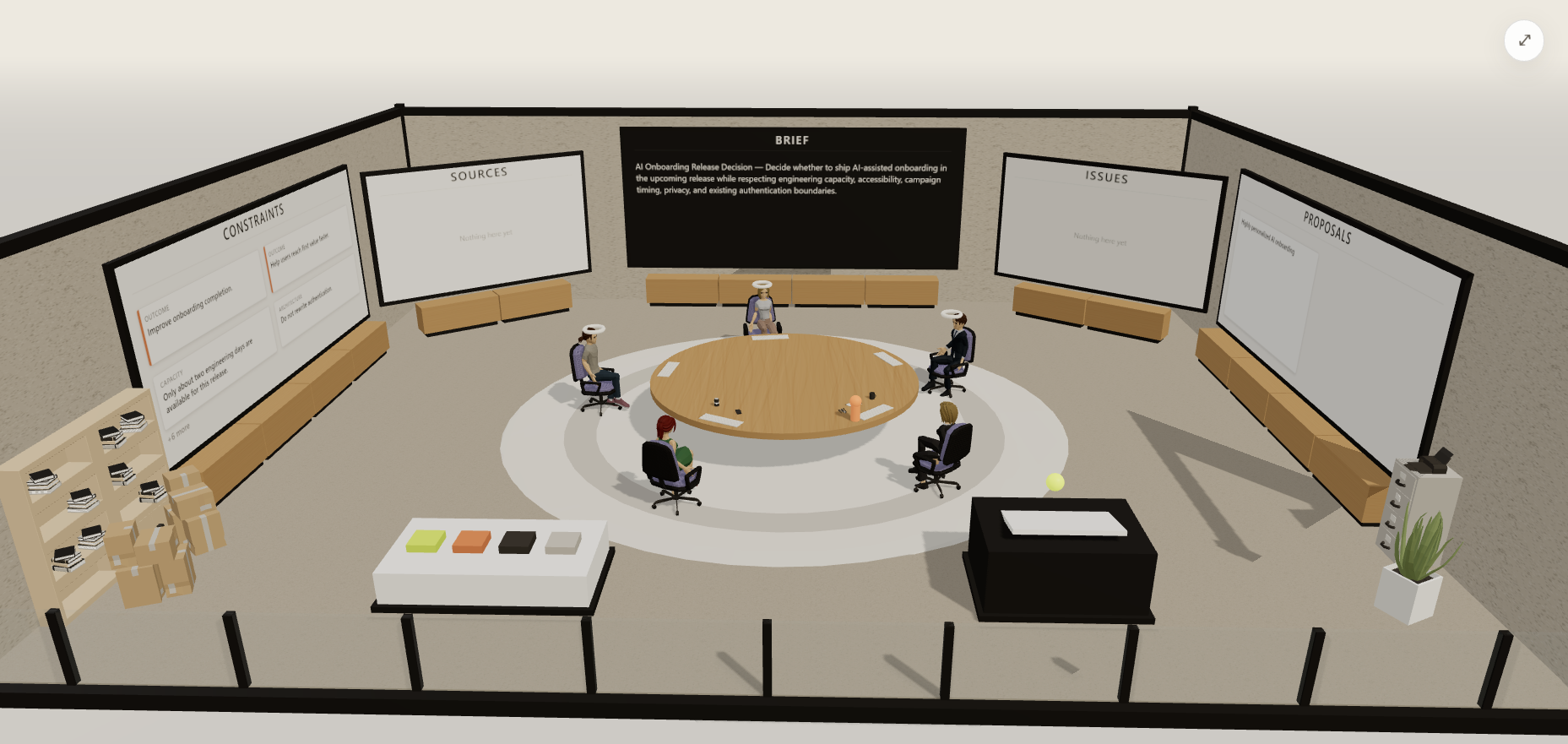
The meeting room
-
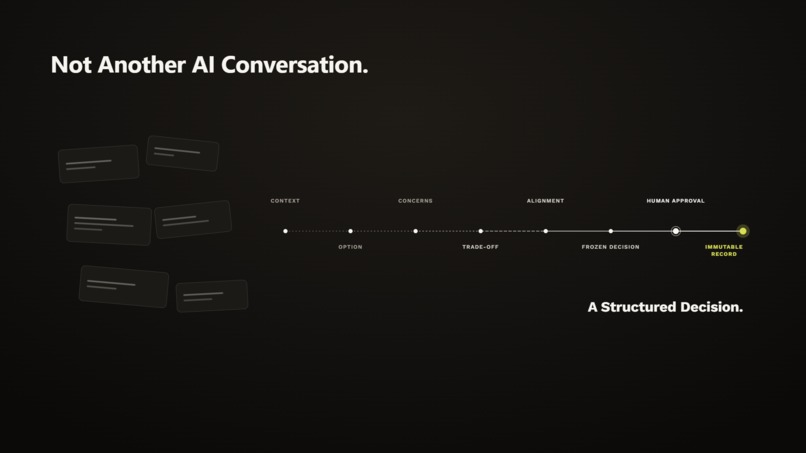
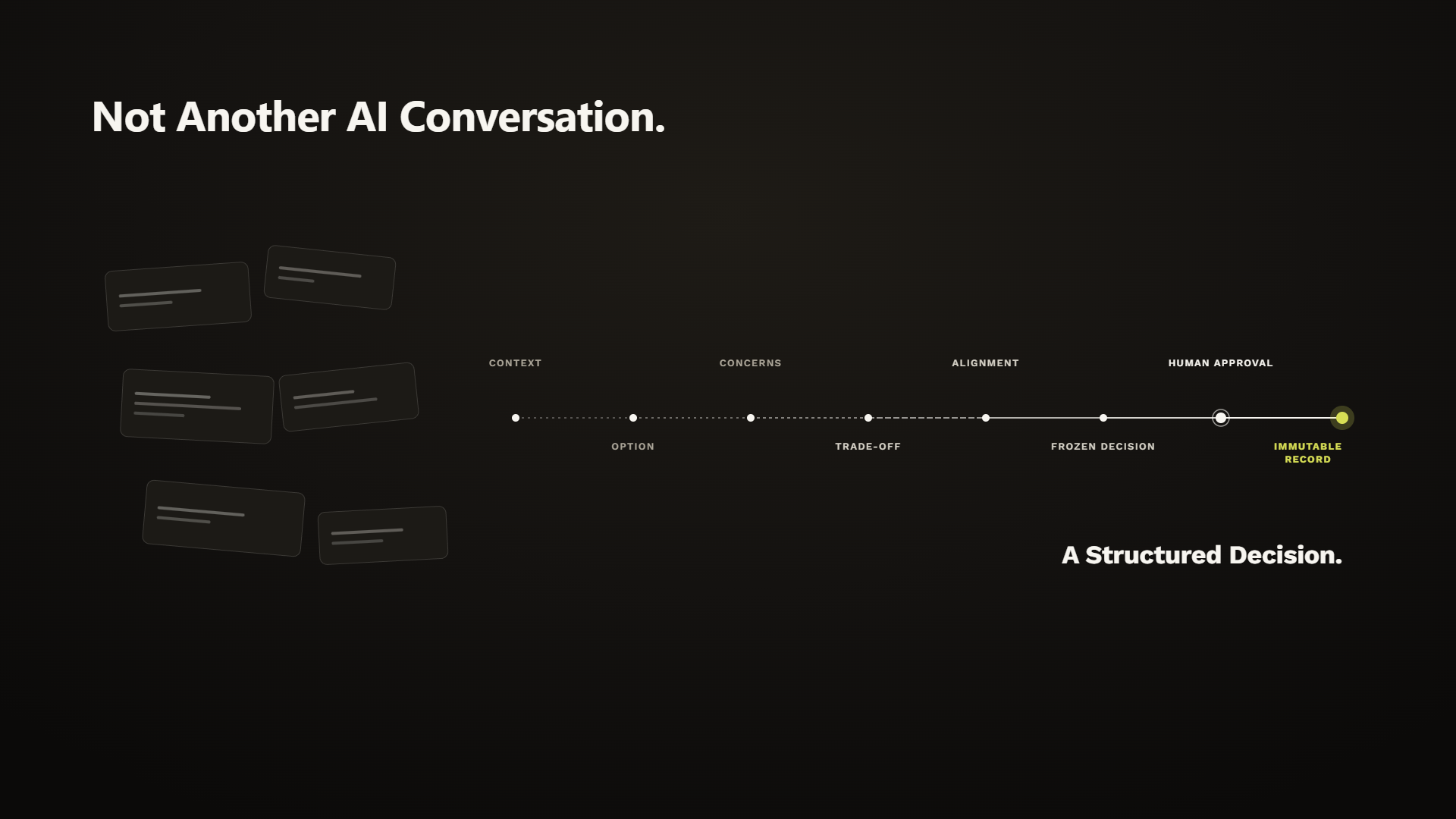
The meeting flow
-
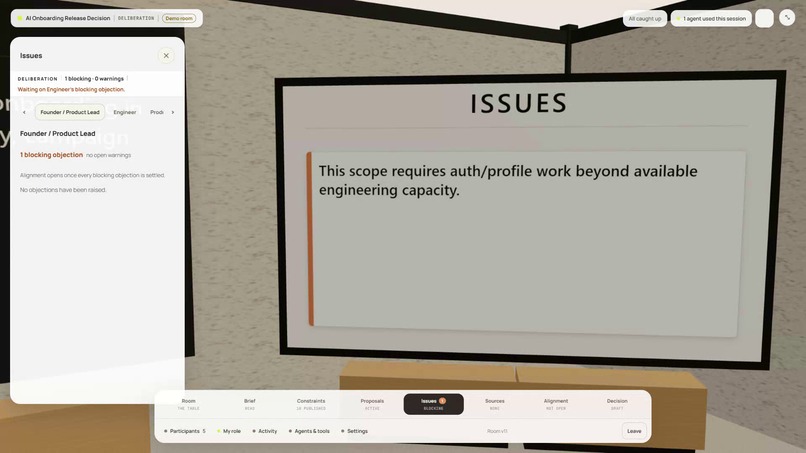
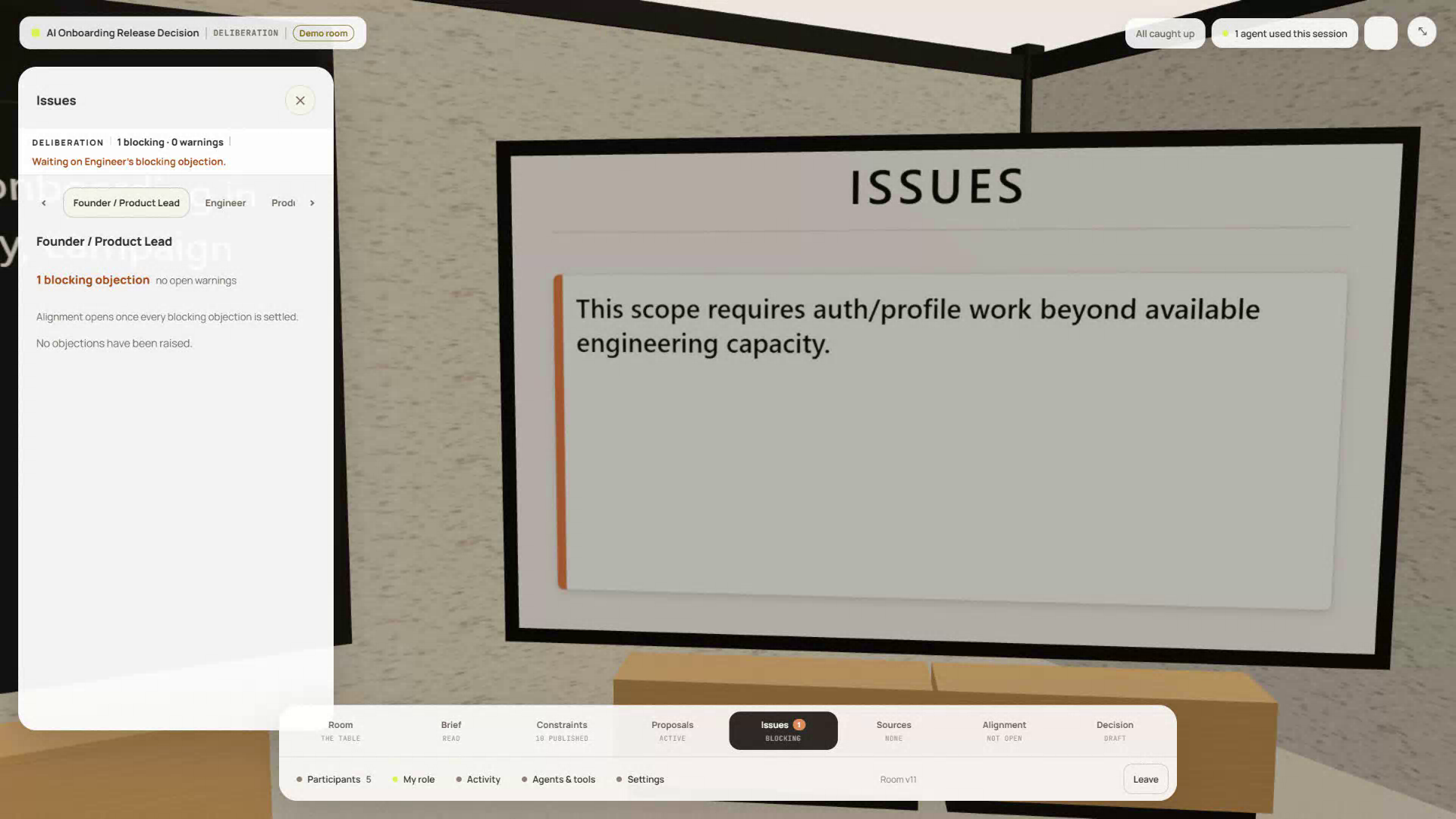
Issues board #1
-
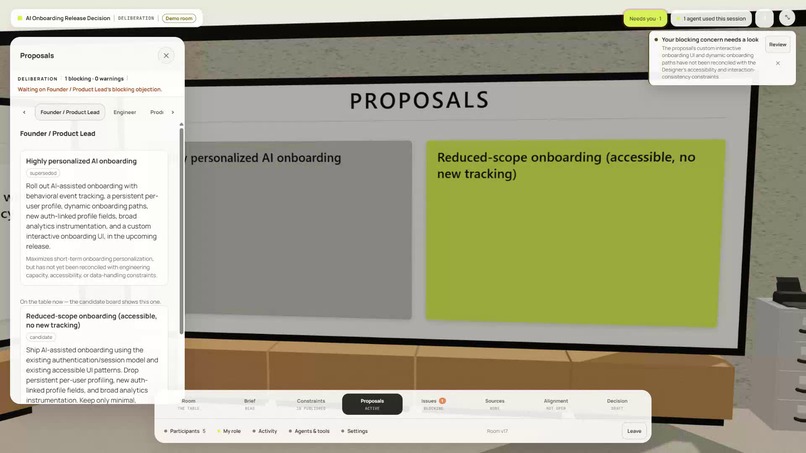
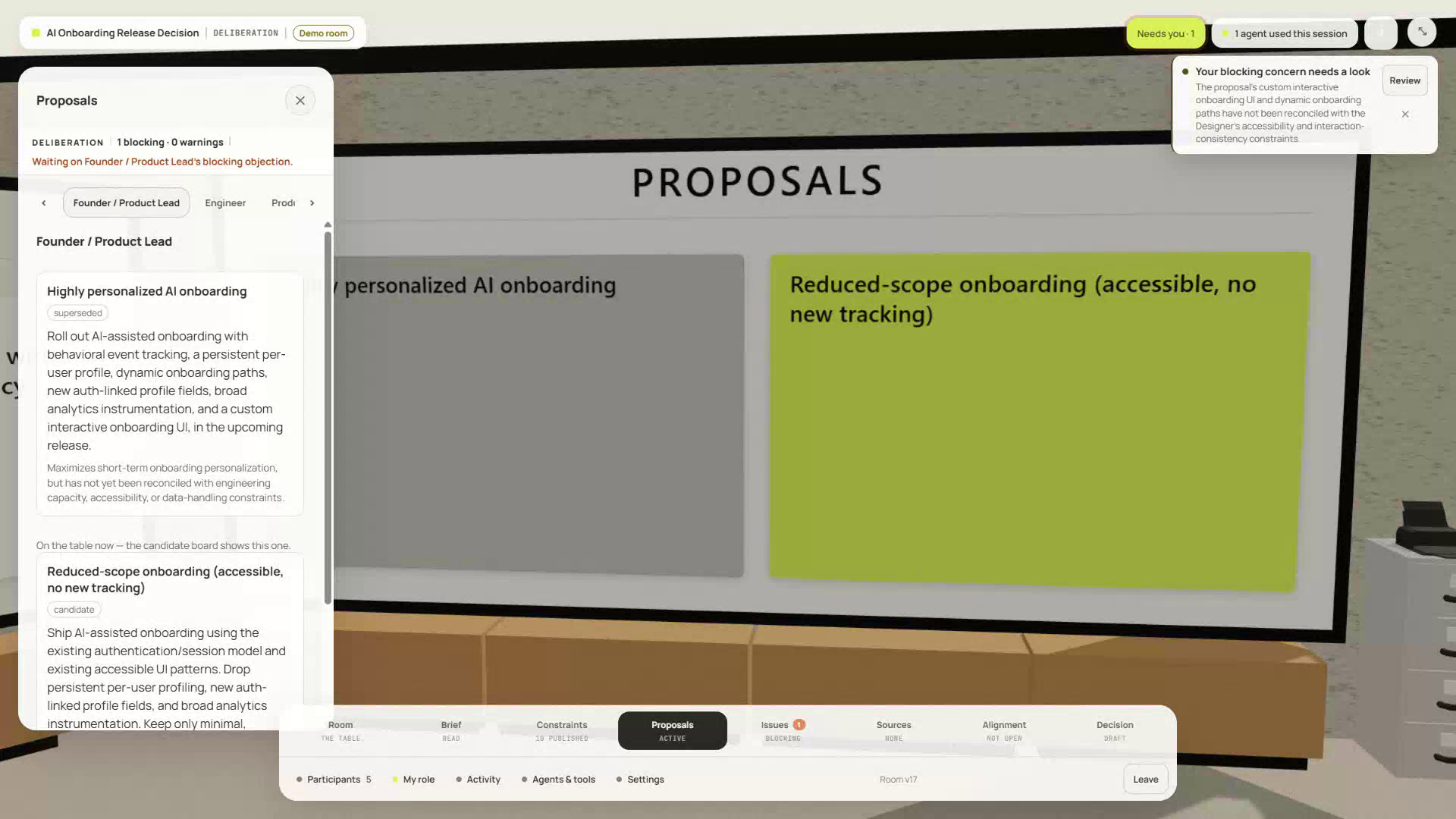
Proposals board #1
-
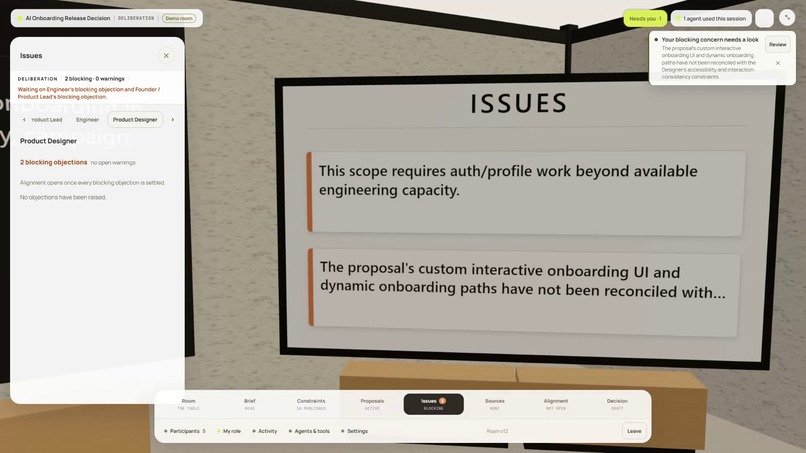
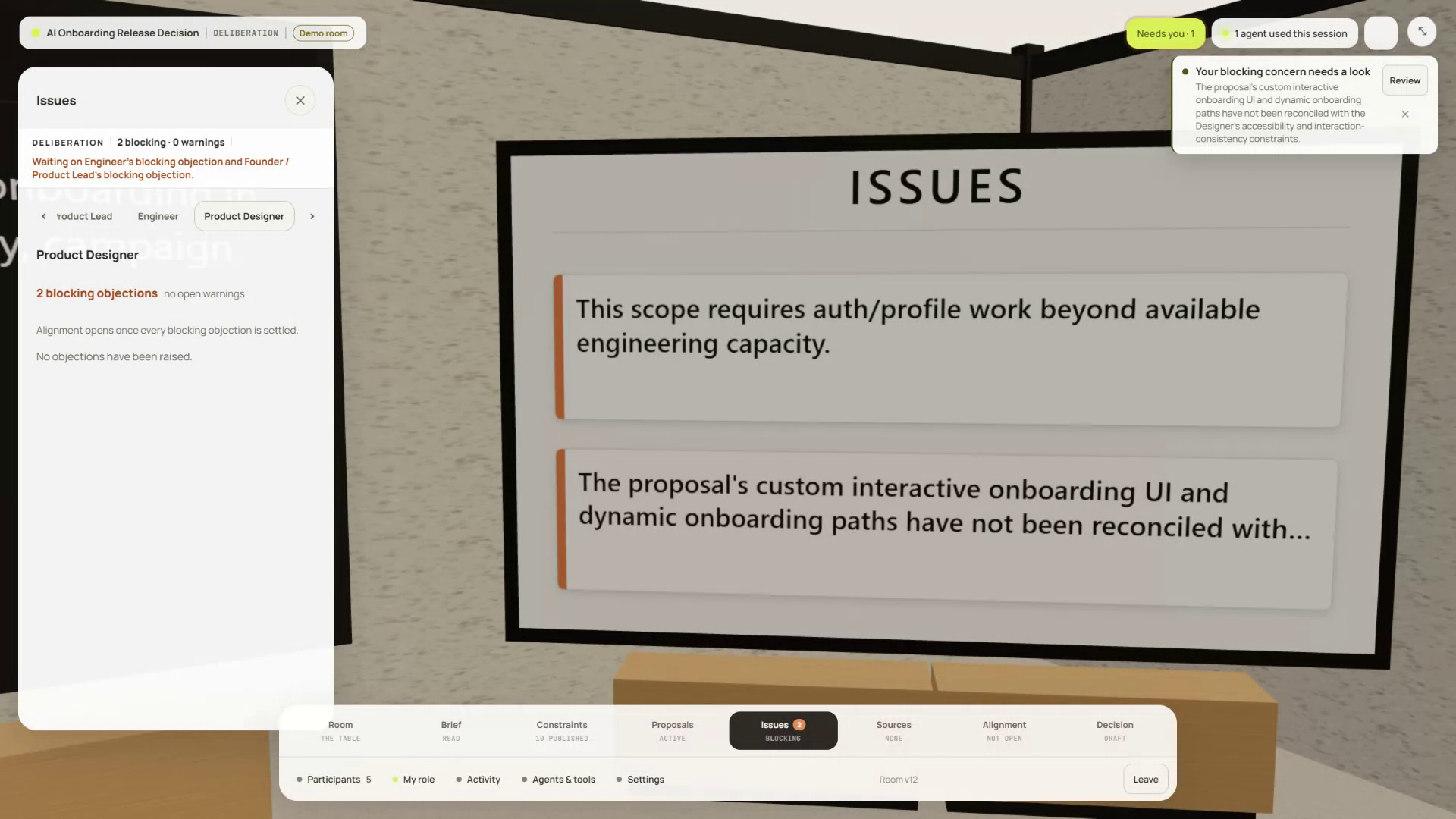
Issues board #2
-
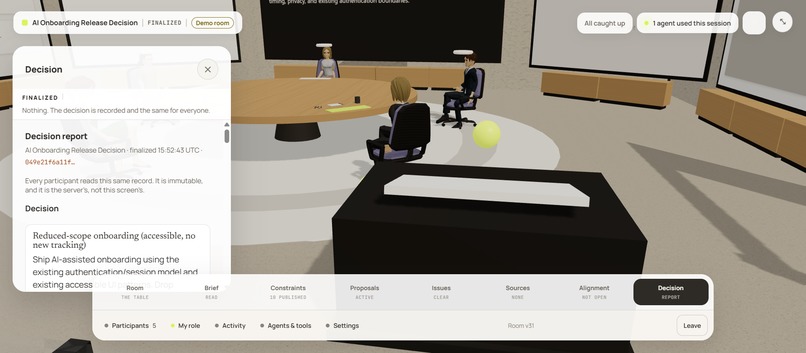
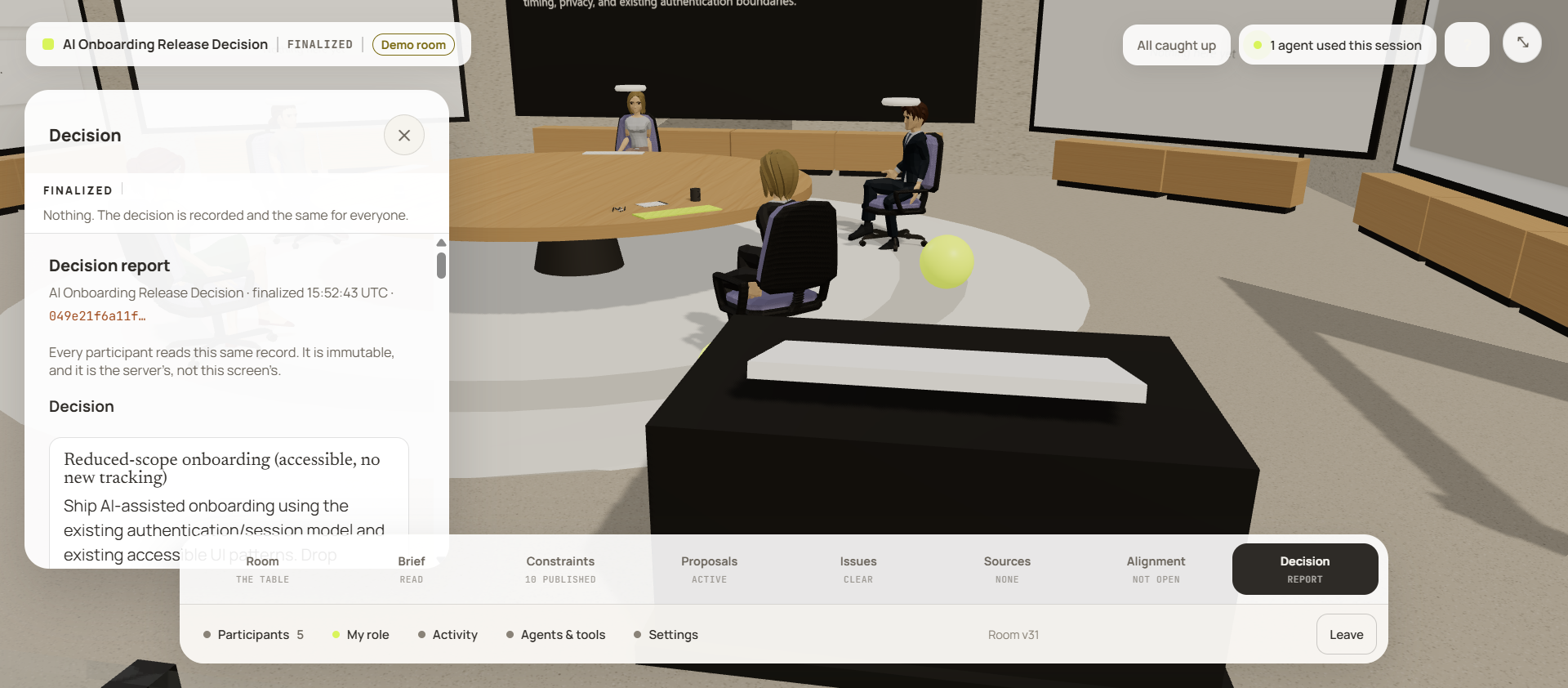
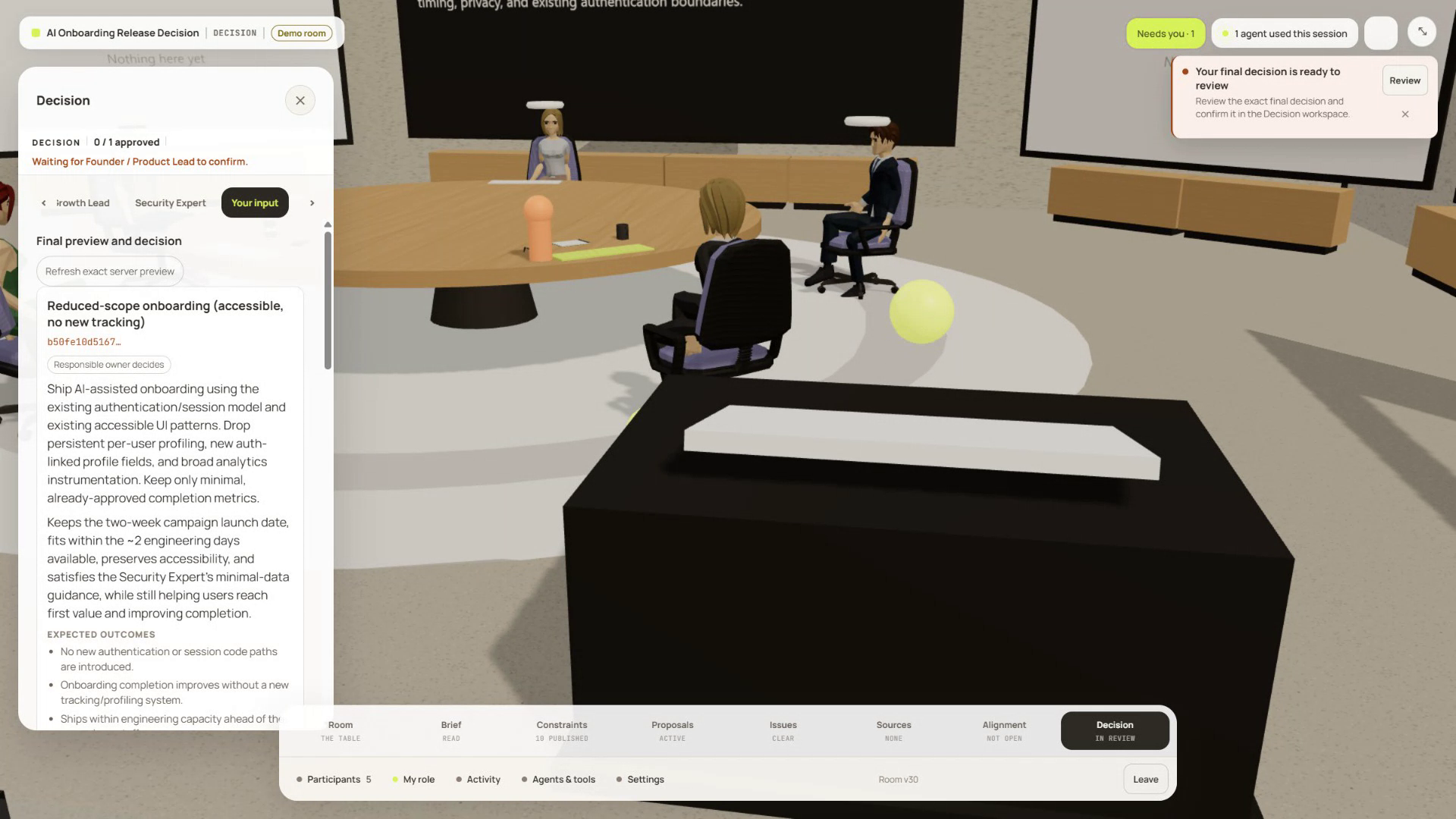
Decision report
-
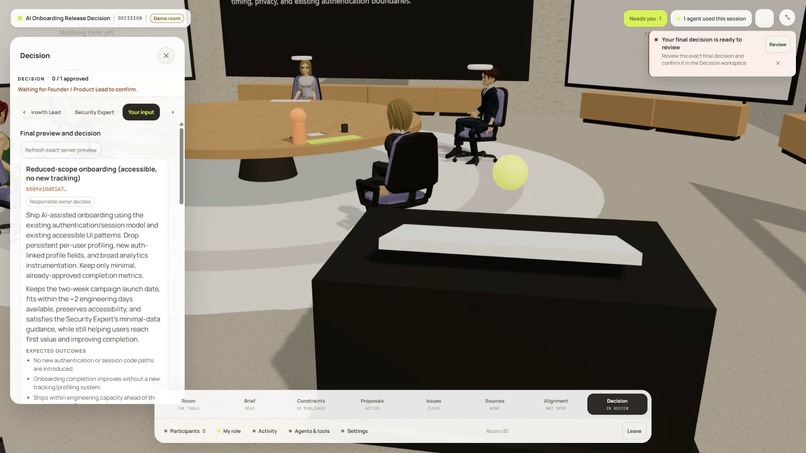
Decision overview
Inspiration
As two co-founders we often find ourselves conflicted on making a product decision, or building a new feature for our app. That's why we came up with Quorum. While the agents are built to agree with users in the current AI scene, Quorum discovers what happens when the agents represent different people, different facts, different constraints, and levels of authority to make a call. Because real decisions rarely have one decision maker.
What it does
Quorum is a WebMCP-native shared decision room: each participant's own browser agent calls real, dynamically-registered WebMCP tools to share context, propose options, raise concerns, and negotiate trade-offs inside one canonical room — while every human keeps a separate identity, and the final approval always requires a specific accountable person's own visible click. The app is fully functional with creating and joining rooms for any decision. Creating and progressing a meeting can be easily done through the WebMCP tools.
How we built it
We built the entire app demo in 6 days for this challenge. We worked parallelly on the project with one of us focusing on the frontend and the other on the backend. Tools are registered with the imperative WebMCP API on document.modelContext.
Conceptually, a tool definition looks like this:
await document.modelContext.registerTool({
  name: "raise_concern",
  description: "Raise a concern against the active proposal during Deliberation...",
  inputSchema: {
    type: "object",
    properties: {
      proposalId: { type: "string", minLength: 1 },
      reason: { type: "string", minLength: 1 },
      severity: { type: "string", enum: ["blocking", "warning"] },
    },
    required: ["proposalId", "reason", "severity"],
  },
  execute: async (input) => {
    /* validate, call the domain layer, return a structured result */
  },
});
We gave the meeting room an interactive, concrete 3D form for not only aesthetics, but for engaging and relating users with what's going on in the meeting.
Challenges we ran into
Building the entire project from scratch in just 6 days was surely a challenge, but a fun one. We rigorously went back and forth with building and testing everything continuously and tried out several designs for the UI/UX, settling on a cozy low-poly 3D office theme. Correctly setting up the demo room was a harder challenge than implementing the user created rooms, as the demo room required simulated seats with no real human supervision. Though all worked out fine in the end.
Accomplishments that we're proud of
We are proud of the entire system, but especially how flawless the WebMCP tools worked the first time we tested the app live. Another accomplishment was making the 3D meeting room visually sound and fully interactive in such a short time.
What we learned
This challenge definitely pushed us to our limits, and personally made me realize how much is achievable with focused work just in a few days. It also familiarized us with the WebMCP and the potential it holds in the future of the web.
What's next for Quorum: Agent-Native Decision Rooms
We initially planned to expand on the idea by making Quorum a place not only for deciding, but also building in real-time with multiple people and their agents, speeding up both the decision and building mechanism of a company. However we later discovered the latter part already has quite been introduced to the market by several companies. That is why we planned Quorum to stay unique where multiple agents are used to emulate different identities instead of acting as one, and retaining a human authority over the process.
Built With
- css
- sql
- supabase
- typescript
- vercel


Log in or sign up for Devpost to join the conversation.