-

-
Quizzle
-
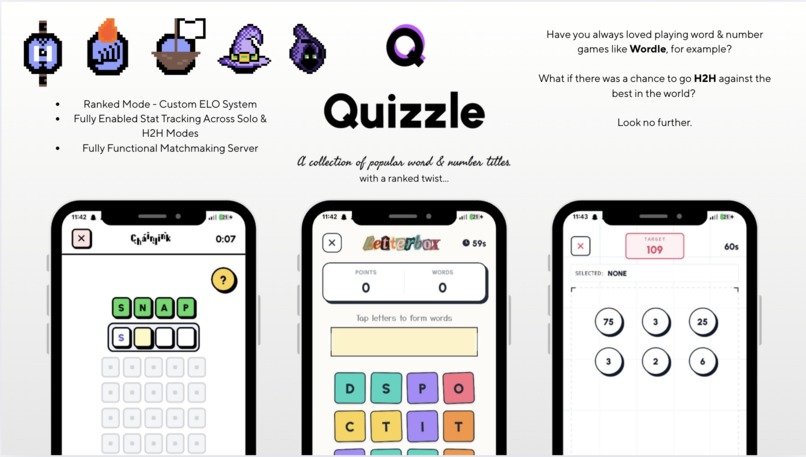

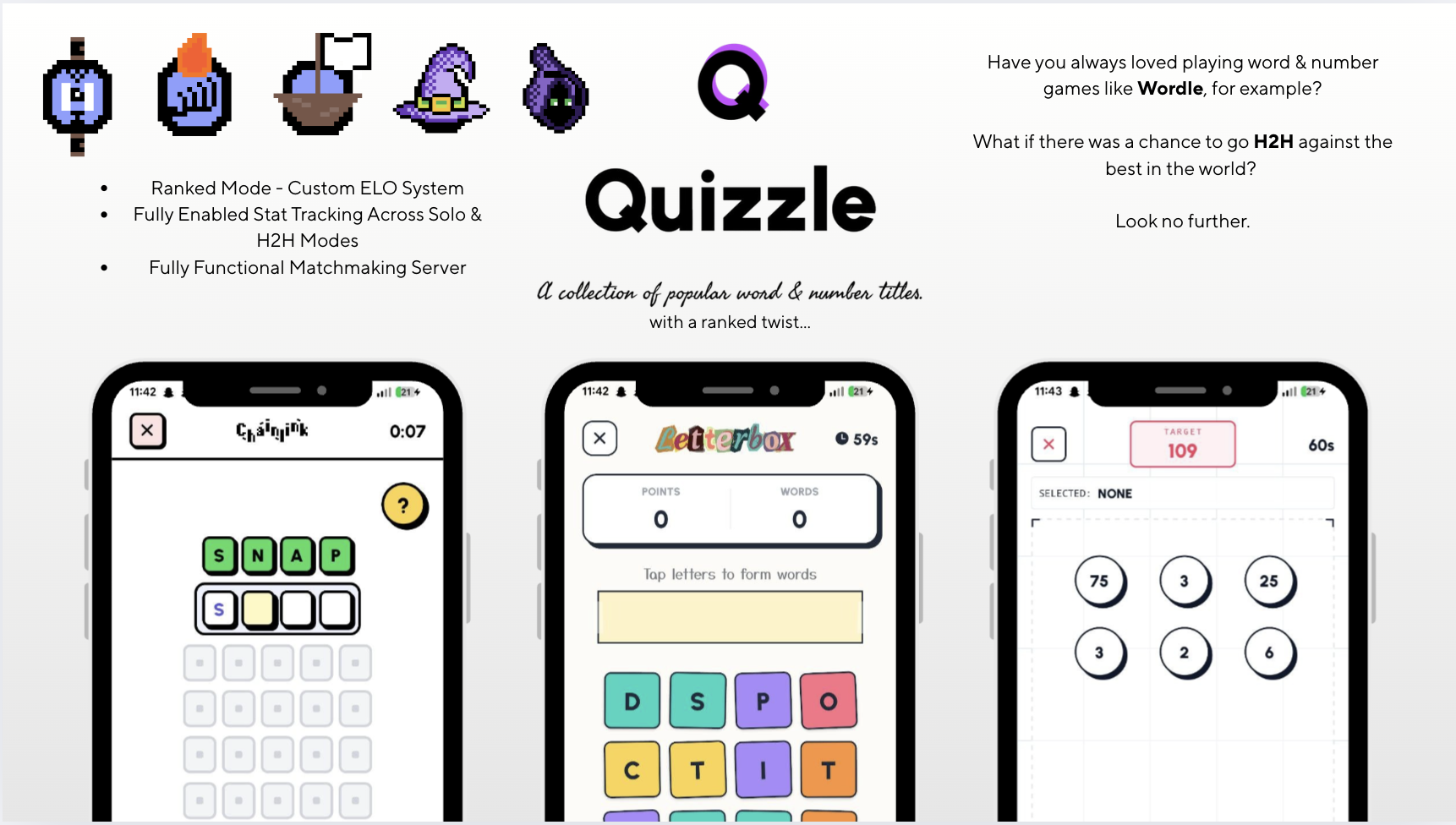
Quizzle - A collection of popular word & number titles.
Inspiration
The beauty of this hackathon, for me, lies in how open-ended it is. There's no rigid problem statement, and this freedom inspired us to build something that we genuinely wanted to play ourselves: Quizzle, a collection of fast-paced, competitive word and number games.
Our goal was simple yet ambitious: create something that people would actually want to pull out during their commute, while waiting in line, or when challenging friends. We didn't want to solve another corporate problem or build yet another productivity app. We wanted to bring back the joy of mobile gaming: quick matches, clever puzzles, and genuine competition.
What We Learned
Over the course of 24 intense hours, we dove deep into several technical domains we'd only touched superficially before:
Real-Time Server Architecture
Managing server load for multiplayer games proved to be far more nuanced than we anticipated. We learned to:
- Implement efficient WebSocket communication using Socket.IO
- Handle simultaneous game rooms with isolated state management
- Build failsafe mechanisms for disconnections and edge cases
- Optimize network traffic by sending only delta updates rather than full game states
Mobile Game Development
Building engaging mobile experiences required understanding:
- Touch gesture systems and haptic feedback patterns
- Animation performance on lower-end devices
- State synchronization between local UI and server authority
- Preventing cheating through client-side manipulation
Game Mechanics & Balance
Designing word and number games taught us about:
- Creating intuitive yet challenging gameplay loops
- Balancing time pressure with strategic depth
- Making failure feel fair rather than frustrating
- Implementing progressive difficulty curves
🛠️ How We Built It
The Stack
Frontend:
- React Native + Expo for cross-platform mobile development
- React Navigation for seamless screen transitions
- React Native Reanimated for 60fps animations
- Socket.IO Client for real-time multiplayer
Backend:
- Node.js + Express for the server
- Socket.IO for WebSocket management
- Supabase (PostgreSQL) for persistent data storage
- Custom matchmaking queue system
Infrastructure:
- Railway for backend hosting
- EAS (Expo Application Services) for mobile builds
- Git/GitHub for version control
The Games
Chainlink (Compound Words)
Players race to complete a chain of compound words, with only the first letter visible. Fast-paced and vocabulary-focused.
LetterBox (Word Building)
Draft letters, then build the longest words possible in 30 seconds. Strategic letter selection meets word-finding skills.
Deadeye (Number Target)
Use six random numbers and mathematical operations to get closest to a target number. Pure logic and calculation under pressure.
What We're Proud Of
- A polished, playable game in just 24 hours
- Full multiplayer infrastructure with matchmaking and ELO
- Three distinct game modes with unique mechanics
- Smooth 60fps animations and engaging UI
- Fair competitive systems that handle edge cases gracefully
- Cross-platform support for iOS and Android
What's Next
Given more time, we'd love to add:
- Leaderboards: Global rankings and friend comparisons
- Daily challenges: Special puzzle modes with unique rewards
- Tournaments: Bracket-style competitions
- More games: Expanding the Quizzle suite
- Social features: In-game chat, friend requests, and spectator mode
Reflections
We didn't just build a game; we built a complete competitive gaming platform with real-time multiplayer, ranking systems, and three polished game modes. We learned about systems we'd never touched before, debugged problems we'd never encountered, and shipped something we're genuinely proud of.
Built With
- babel
- eas
- expo-font
- expo.io
- express.js
- git
- github
- ionicons
- matter.js
- node.js
- postgresql
- react
- react-native
- socket.io
- supabase
- websockets


Log in or sign up for Devpost to join the conversation.