Inspiration
The tagline "Quizzer - Sharpen Your Knowledge, One Quiz at a Time!" draws inspiration from the idea that learning is a continuous process, where each quiz helps to refine and expand your knowledge, much like how repeated practice sharpens a skill. The phrase "one quiz at a time" emphasizes the incremental, yet effective, approach to learning and growth through engaging and interactive quizzes.
What it does
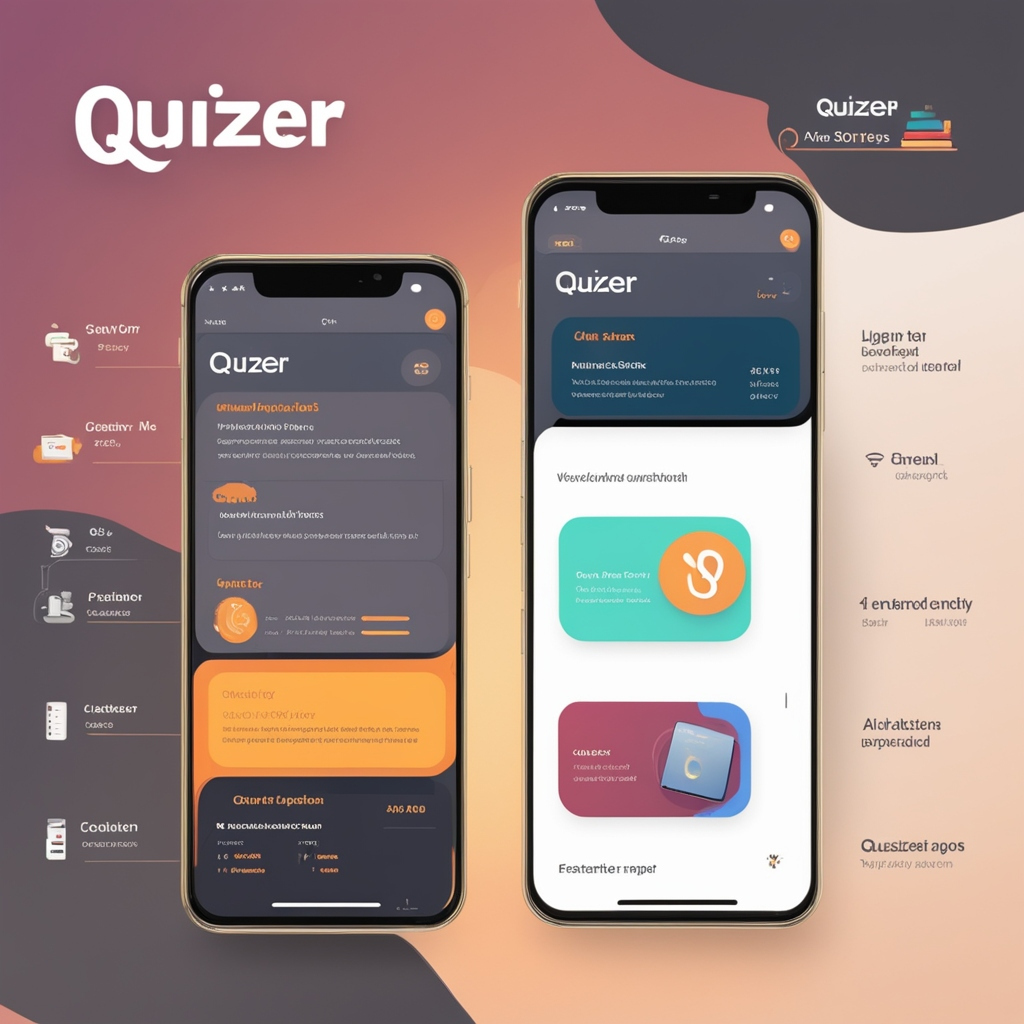
The "Quizzer" app is an interactive platform designed to make learning engaging and fun by allowing users to take quizzes on various topics. It offers a streamlined experience for both quiz creators and participants:
For Users: Quizzer allows users to select from a variety of quizzes, test their knowledge, and receive instant feedback. Users can track their progress, see how they perform over time, and identify areas where they need improvement. The platform supports multiple question types, making it versatile for different learning needs.
For Quiz Creators: Quizzer provides an easy-to-use interface for creating and managing quizzes. Creators can design quizzes with various question formats, set difficulty levels, and organize quizzes into categories. The platform also includes an admin dashboard for monitoring user activity and quiz performance.
In essence, Quizzer serves as a tool to help users improve their knowledge in a fun and interactive way, while also giving creators the tools they need to design and manage quizzes effectively.
How we built it
Quizzer was built using a modern tech stack that ensures a responsive, scalable, and user-friendly experience. Here's a breakdown of how we built it:
1. Frontend: React
- React was chosen for its component-based architecture, allowing us to create reusable UI components like quiz cards, question forms, and score displays.
- Redux was used for state management, helping to manage global states like user authentication, quiz data, and user progress across the app.
- React Router was integrated for seamless navigation between different pages, such as the home page, quiz interface, and user dashboard.
- Tailwind CSS was employed for styling, providing utility-first CSS classes to quickly build and customize the user interface with a consistent design.
2. Backend: Node.js and Express.js
- Node.js was selected for the backend due to its non-blocking, event-driven architecture, which is ideal for handling multiple requests simultaneously.
- Express.js served as the framework for building our RESTful API, managing routes, middleware, and handling requests and responses between the frontend and database.
- MongoDB was used as the database to store user data, quiz information, and results. Its flexible schema and scalability made it a perfect fit for the dynamic nature of the app.
- JWT (JSON Web Tokens) were implemented for secure user authentication, ensuring that only authorized users can access specific features and data.
3. Real-Time Features
- WebSockets (using Socket.io) were integrated to enable real-time updates, such as showing instant feedback on quiz answers and live score tracking.
4. Deployment and Hosting
- The app was deployed on Heroku for the backend and Netlify for the frontend, ensuring a smooth and fast user experience with minimal downtime.
- Continuous Integration/Continuous Deployment (CI/CD) pipelines were set up to automate testing and deployment, ensuring that any changes pushed to the repository are automatically tested and deployed.
5. Testing and Quality Assurance
- Jest and React Testing Library were used to write unit tests for the frontend components, ensuring they behave as expected.
- Mocha and Chai were used for backend testing, verifying the functionality of API endpoints and middleware.
- ESLint and Prettier were used to maintain code quality and consistency across the project.
6. Collaboration Tools
- GitHub was used for version control, enabling team collaboration through branches, pull requests, and code reviews.
- Trello was utilized for project management, helping us to track progress, assign tasks, and manage deadlines.
By combining these tools and technologies, we were able to build a robust, user-friendly, and scalable quiz platform that provides an engaging experience for both quiz takers and creators.
Challenges we ran into
Building Quizzer presented several challenges that required creative problem-solving and teamwork. Here are some of the key challenges we faced:
1. State Management Complexity
- Challenge: Managing state across multiple components, especially with features like user authentication, real-time scoring, and quiz progress tracking, became complex as the app grew in functionality.
- Solution: We implemented Redux to handle global state, allowing us to maintain a consistent state across different components and pages. We also leveraged middleware like Redux Thunk for handling asynchronous actions, which helped streamline data flow and state updates.
2. Real-Time Updates
- Challenge: Implementing real-time updates for features like instant feedback on quiz answers and live score tracking was challenging, particularly in ensuring synchronization between the client and server.
- Solution: We integrated WebSockets using Socket.io, which allowed us to establish a persistent connection between the client and server. This enabled real-time communication, ensuring that users received immediate feedback and updates during quizzes.
3. User Authentication and Security
- Challenge: Ensuring secure user authentication while providing a smooth login and registration experience was a priority. We needed to protect sensitive user data and manage session persistence.
- Solution: We used JWT (JSON Web Tokens) for secure authentication, which allowed us to create stateless sessions and manage user authentication across the app. We also implemented robust validation and encryption practices to protect user credentials.
4. Responsive Design
- Challenge: Designing a user interface that worked seamlessly across different devices (desktops, tablets, and smartphones) required careful planning and testing.
- Solution: We used Tailwind CSS to create a responsive layout with utility-first CSS classes. We also performed extensive testing on various screen sizes and devices to ensure that the app’s UI remained consistent and functional across all platforms.
5. Database Schema Design
- Challenge: Designing a flexible and scalable database schema that could handle dynamic quiz structures, user data, and result tracking was challenging.
- Solution: We chose MongoDB for its flexible document-based schema, which allowed us to store diverse data types and structures. This flexibility enabled us to easily manage complex relationships between quizzes, questions, users, and results.
6. Handling Asynchronous Operations
- Challenge: Coordinating asynchronous operations, such as fetching quiz data from the server and submitting user responses, required careful handling to prevent race conditions and ensure smooth user interactions.
- Solution: We used async/await in combination with Redux Thunk to manage asynchronous operations effectively. This approach allowed us to handle promises and API calls in a clean, readable manner, reducing the risk of errors and improving the overall app performance.
7. Testing and Debugging
- Challenge: Ensuring that the app was bug-free and functioned correctly under different scenarios required thorough testing and debugging.
- Solution: We wrote comprehensive unit tests using Jest and React Testing Library for the frontend, and Mocha and Chai for the backend. Automated testing was integrated into our CI/CD pipeline, ensuring that any issues were caught early during development.
8. Deployment and Scalability
- Challenge: Deploying the app in a way that could handle varying loads and ensuring it was scalable to accommodate growing user numbers was challenging.
- Solution: We deployed the frontend on Netlify and the backend on Heroku, both of which offer scalability options. We also set up monitoring and auto-scaling features to handle increased traffic and maintain optimal performance.
These challenges were critical learning experiences, and overcoming them helped us create a more robust and user-friendly application.
Accomplishments that we're proud of
During the development of Quizzer, we achieved several milestones that we're particularly proud of:
1. Seamless User Experience
- Accomplishment: We successfully created a smooth and intuitive user interface that allows users to easily navigate through quizzes, track their progress, and view their scores. The app's design is responsive, ensuring a consistent experience across devices.
- Why It Matters: A seamless user experience is crucial for user engagement and satisfaction. Our efforts to optimize the UI/UX design resulted in positive feedback from testers, confirming that the app is both functional and enjoyable to use.
2. Real-Time Features Implementation
- Accomplishment: We integrated real-time feedback and scoring using WebSockets, providing users with instant results as they complete quizzes. This feature was challenging to implement but significantly enhanced the interactive aspect of the platform.
- Why It Matters: Real-time features make the app more engaging and responsive, providing immediate feedback that helps users learn more effectively. This accomplishment showcases our ability to implement advanced, dynamic features.
3. Scalable Architecture
- Accomplishment: We designed a scalable architecture that can handle increased user traffic and data without compromising performance. The use of MongoDB for flexible data storage and the deployment strategy on Heroku and Netlify ensured that the app could scale efficiently.
- Why It Matters: Scalability is essential for the long-term success of any web application. Our ability to build a scalable architecture demonstrates our foresight in planning for future growth and our technical expertise in implementing it.
4. Robust Authentication System
- Accomplishment: We implemented a secure and reliable authentication system using JWT, ensuring that user data is protected and that only authorized users can access certain features of the app.
- Why It Matters: Security is a top priority for any application handling personal data. By building a robust authentication system, we ensured that Quizzer provides a safe environment for all users.
5. Efficient State Management
- Accomplishment: We successfully managed the complex state of the application using Redux, allowing for consistent data flow and state updates across various components.
- Why It Matters: Efficient state management is crucial for maintaining the app's performance and reliability. Our ability to handle complex state scenarios effectively reflects our deep understanding of React and Redux.
6. Comprehensive Testing
- Accomplishment: We developed a comprehensive suite of tests for both the frontend and backend, ensuring that the application functions correctly under various conditions. This included unit tests, integration tests, and end-to-end tests.
- Why It Matters: Rigorous testing is vital for delivering a high-quality product. Our commitment to thorough testing ensured that Quizzer is reliable and free of critical bugs, contributing to a stable user experience.
7. Successful Deployment and CI/CD Integration
- Accomplishment: We successfully deployed the application using Heroku and Netlify, integrating CI/CD pipelines to automate testing and deployment processes. This streamlined our development workflow and reduced the time from code changes to deployment.
- Why It Matters: Effective deployment and CI/CD integration are key to maintaining and scaling a web application. Our success in this area demonstrates our ability to manage the entire development lifecycle efficiently.
8. User-Friendly Quiz Creation Tool
- Accomplishment: We developed a powerful yet user-friendly tool for creating and managing quizzes, making it easy for non-technical users to design quizzes with various question types and difficulty levels.
- Why It Matters: Empowering users to create their own content is essential for the growth of the platform. Our quiz creation tool is a key feature that enhances the app's value and usability.
These accomplishments highlight the strengths of our team and the quality of the Quizzer app. We're proud of what we've achieved and are excited about the impact Quizzer can have on users seeking an engaging and educational experience.
What we learned
Throughout the development of Quizzer, we gained valuable insights and skills that have significantly enhanced our technical expertise and collaborative abilities. Here’s what we learned:
1. Advanced State Management with Redux
- Learning: We deepened our understanding of state management in React by effectively using Redux to handle complex state scenarios, such as user authentication, quiz progress tracking, and real-time updates.
- Impact: This experience taught us the importance of choosing the right state management tools for large-scale applications, and we became proficient in managing global state efficiently across multiple components.
2. Real-Time Communication with WebSockets
- Learning: Implementing real-time features using WebSockets was a significant challenge that required us to learn about socket programming, event-driven architecture, and handling asynchronous data streams.
- Impact: This experience enriched our knowledge of building interactive, real-time applications and taught us how to maintain synchronization between the client and server, enhancing the overall user experience.
3. Designing Scalable and Flexible Database Schemas
- Learning: We learned how to design flexible and scalable database schemas using MongoDB, which allowed us to store and manage complex data structures such as dynamic quiz questions and user results.
- Impact: This experience emphasized the importance of planning for scalability and flexibility from the start, ensuring that the app can grow and adapt to future needs without major overhauls.
4. Security Best Practices
- Learning: Developing a secure authentication system using JWT taught us the importance of security in web applications. We learned about encryption, token-based authentication, and safeguarding user data.
- Impact: This knowledge reinforced our commitment to following security best practices, ensuring that user data is protected and the app is resilient against common security threats.
5. Responsive Design Principles
- Learning: Building a responsive UI with Tailwind CSS required us to focus on creating designs that work seamlessly across various devices and screen sizes.
- Impact: We learned how to apply responsive design principles effectively, improving our ability to create user interfaces that offer a consistent experience regardless of the device used.
6. Testing and Quality Assurance
- Learning: Writing comprehensive tests for both frontend and backend components highlighted the importance of automated testing in maintaining code quality and catching bugs early in the development process.
- Impact: We gained practical experience with tools like Jest, Mocha, and Chai, and learned how to integrate testing into CI/CD pipelines to ensure that our application remains robust and reliable.
7. Effective Collaboration and Project Management
- Learning: Working on Quizzer taught us valuable lessons in team collaboration and project management. Using tools like GitHub for version control and Trello for task management helped us stay organized and communicate effectively.
- Impact: This experience improved our ability to work as a team, manage deadlines, and ensure that everyone’s contributions were aligned with the project’s goals.
8. Continuous Integration/Continuous Deployment (CI/CD)
- Learning: Setting up CI/CD pipelines taught us how to automate the testing and deployment process, making our development workflow more efficient and reducing the time from development to production.
- Impact: This experience highlighted the importance of automation in modern software development, ensuring that code changes are quickly and safely deployed without manual intervention.
9. User-Centric Design
- Learning: Designing the quiz creation tool and user dashboard required us to think from the user’s perspective, focusing on ease of use and intuitive design.
- Impact: We learned how to prioritize user experience in our design process, ensuring that the app is not only functional but also user-friendly, making it accessible to a broader audience.
10. Adaptability and Problem-Solving
- Learning: Throughout the project, we encountered various challenges that required us to adapt and find creative solutions. This reinforced our problem-solving skills and our ability to pivot when things didn’t go as planned.
- Impact: This experience taught us the importance of being adaptable and resourceful in software development, preparing us to tackle unexpected challenges in future projects.
These learnings have significantly contributed to our growth as developers and as a team, equipping us with the skills and knowledge needed to tackle future projects with confidence.
What's next for Quizzer
As we look ahead, we have several exciting plans for the future development and expansion of Quizzer:
1. Feature Enhancements
- Personalized Quiz Recommendations: We plan to implement a recommendation system that suggests quizzes based on users' past performance, interests, and learning goals. This will create a more tailored experience for each user.
- Gamification: Adding elements like badges, leaderboards, and achievements to increase user engagement and motivation.
- Social Features: We aim to introduce social features like the ability to challenge friends, share quiz results on social media, and create group quizzes for collaborative learning.
2. Expanding the Quiz Library
- Diverse Topics: We plan to expand the range of quiz topics, covering more subjects and categories to appeal to a broader audience.
- User-Generated Content: We want to enable users to create and share their own quizzes, fostering a community-driven platform where content is continuously evolving.
3. Mobile App Development
- Native Mobile Apps: To reach a wider audience, we plan to develop native mobile apps for both iOS and Android. This will provide a more seamless experience for users on mobile devices, with optimized performance and offline capabilities.
- Push Notifications: We will integrate push notifications to keep users informed about new quizzes, challenges, and achievements, driving user retention and engagement.
4. Advanced Analytics
- Learning Analytics: We plan to introduce advanced analytics that provide users with insights into their learning patterns, strengths, and areas for improvement. This will help users track their progress and set learning goals.
- Admin Dashboard: We also plan to develop a robust admin dashboard that offers detailed analytics on user engagement, quiz performance, and content popularity, helping us optimize the platform.
5. Localization and Accessibility
- Multilingual Support: To cater to a global audience, we plan to introduce multilingual support, allowing users to take quizzes in their preferred language.
- Accessibility Enhancements: We aim to improve the app’s accessibility features, ensuring that it is usable by individuals with disabilities, including screen reader support and keyboard navigation.
6. Monetization Strategies
- Premium Features: We are exploring the possibility of offering premium features, such as advanced analytics, exclusive quizzes, and ad-free experiences, as part of a subscription model.
- Partnerships and Sponsorships: We will look into forming partnerships with educational institutions, content creators, and sponsors to expand the platform's reach and offer more valuable content.
7. Continuous Improvement
- User Feedback Loop: We plan to establish a continuous feedback loop with our users, gathering insights and suggestions to guide future development. This will ensure that Quizzer evolves in line with user needs and expectations.
- Performance Optimization: We will continue to optimize the app’s performance, focusing on faster load times, smoother animations, and reduced latency in real-time features.
8. Community Building
- Online Community: We aim to build an online community around Quizzer, where users can discuss quizzes, share tips, and engage with other learners. This could include forums, social media groups, and community events.
- Content Collaborations: We plan to collaborate with educators, subject matter experts, and influencers to create high-quality, engaging quizzes that offer real educational value.
These next steps will help us expand Quizzer's capabilities, reach a wider audience, and continue to provide a fun and educational experience for our users. We are excited about the future and committed to making Quizzer the go-to platform for quiz enthusiasts and learners worldwide.


Log in or sign up for Devpost to join the conversation.