Inspiration
Students and job seekers often prepare for exams, interviews, and technical assessments using static question banks. These resources do not always adapt to the learner's level or identify what they need to improve.
I wanted to build a platform that could generate fresh questions on demand and support both academic learning and interview preparation.
This led me to create QuizGen AI — an AI-powered platform designed to help students learn, practice, and prepare for interviews.
What it does
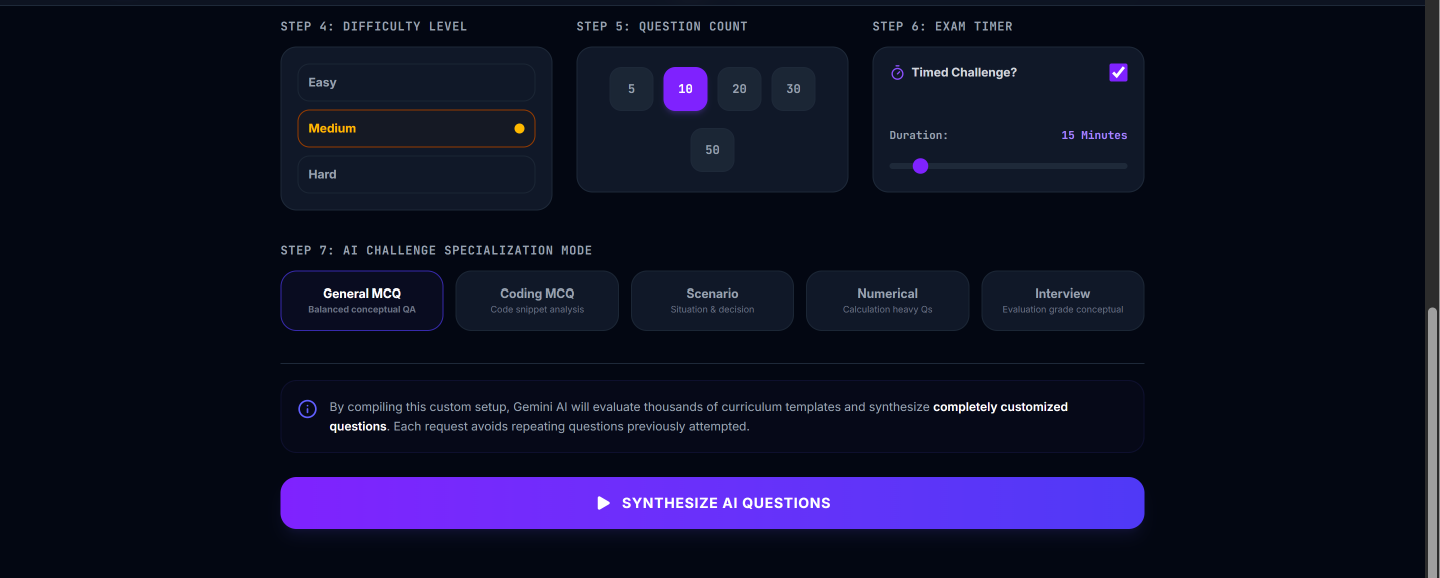
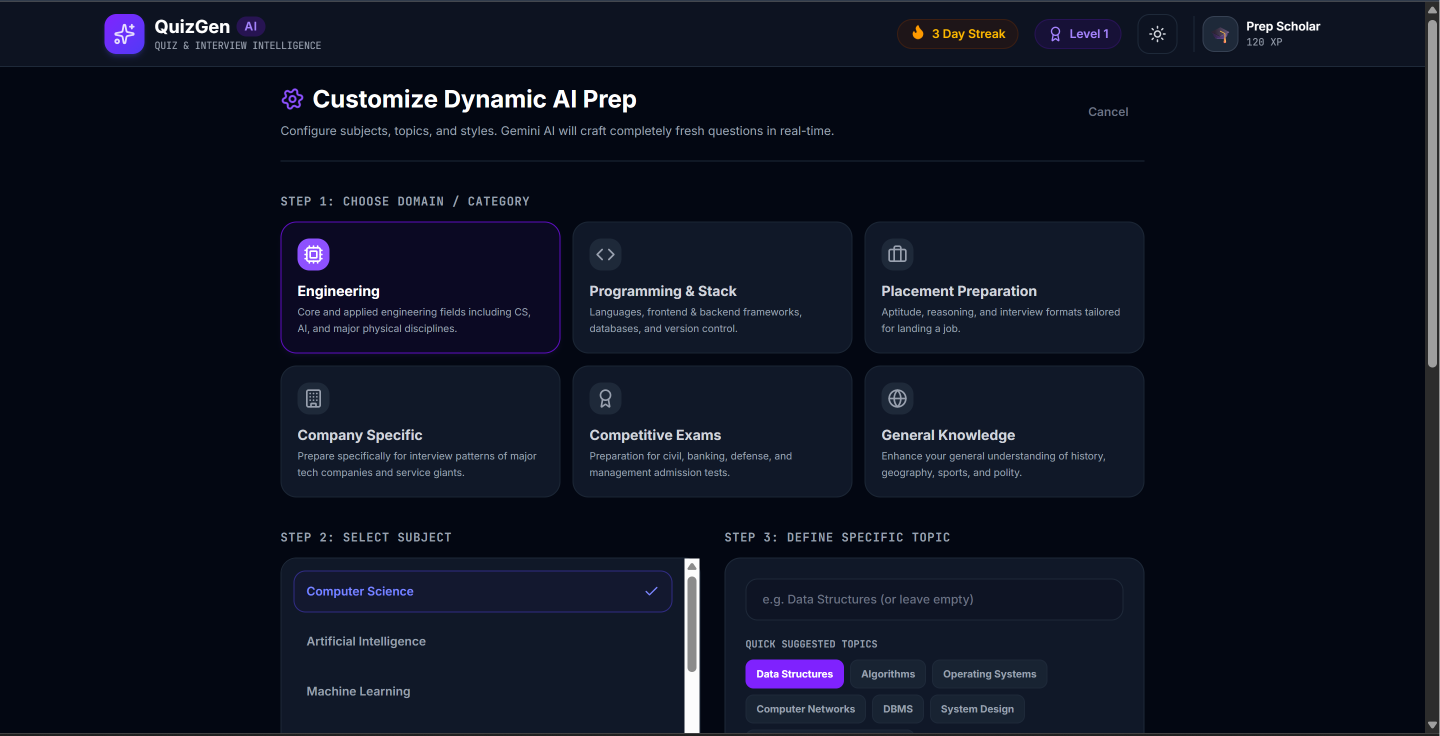
QuizGen AI generates personalized quizzes based on the user's subject, topic, difficulty, and preparation goal.
It is designed for:
- Students practicing academic and technical concepts
- Engineering students preparing for placements
- Job seekers preparing for technical interviews
- Learners who want to practice concepts through interactive quizzes
The platform includes:
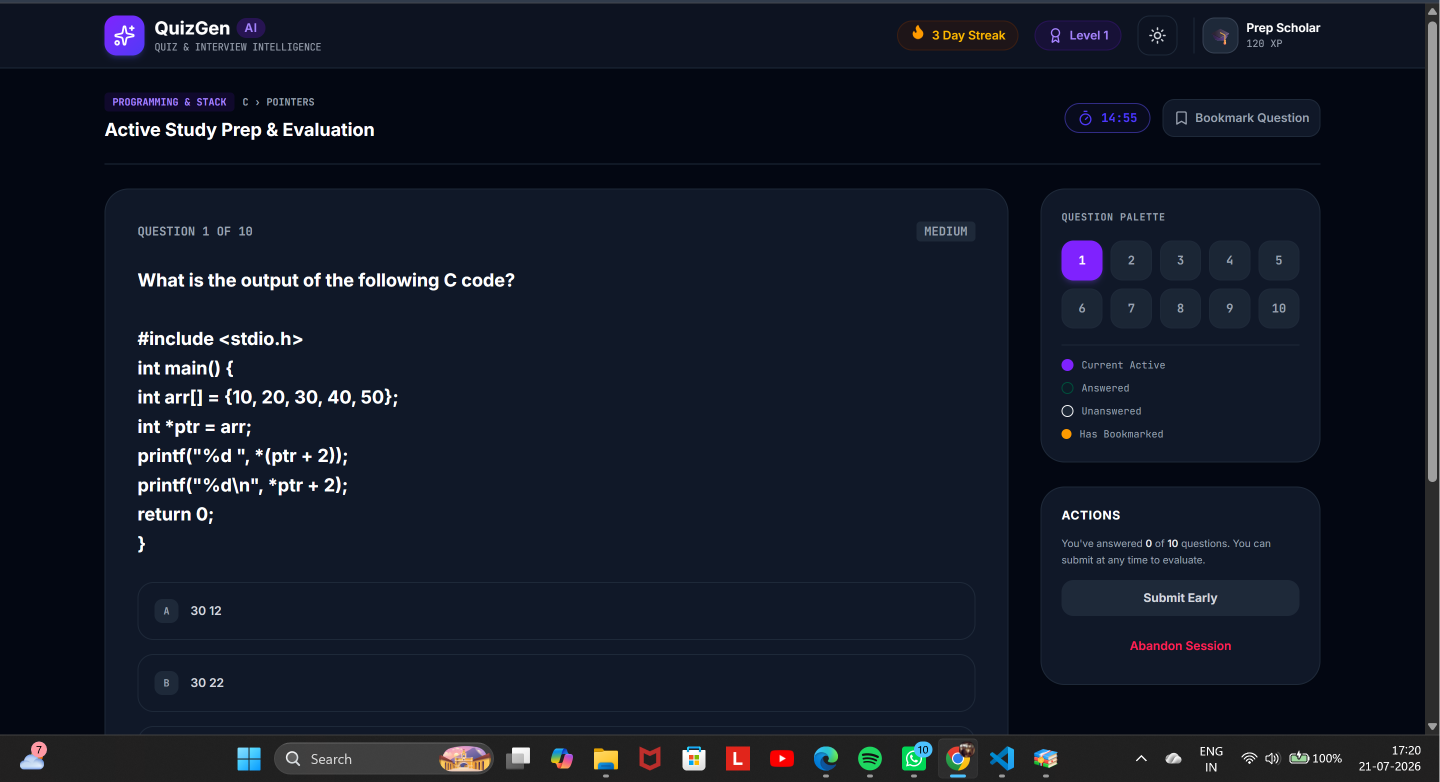
- AI-generated questions
- Technical interview preparation
- Multiple subjects and topics
- Practice, Timed, and Exam modes
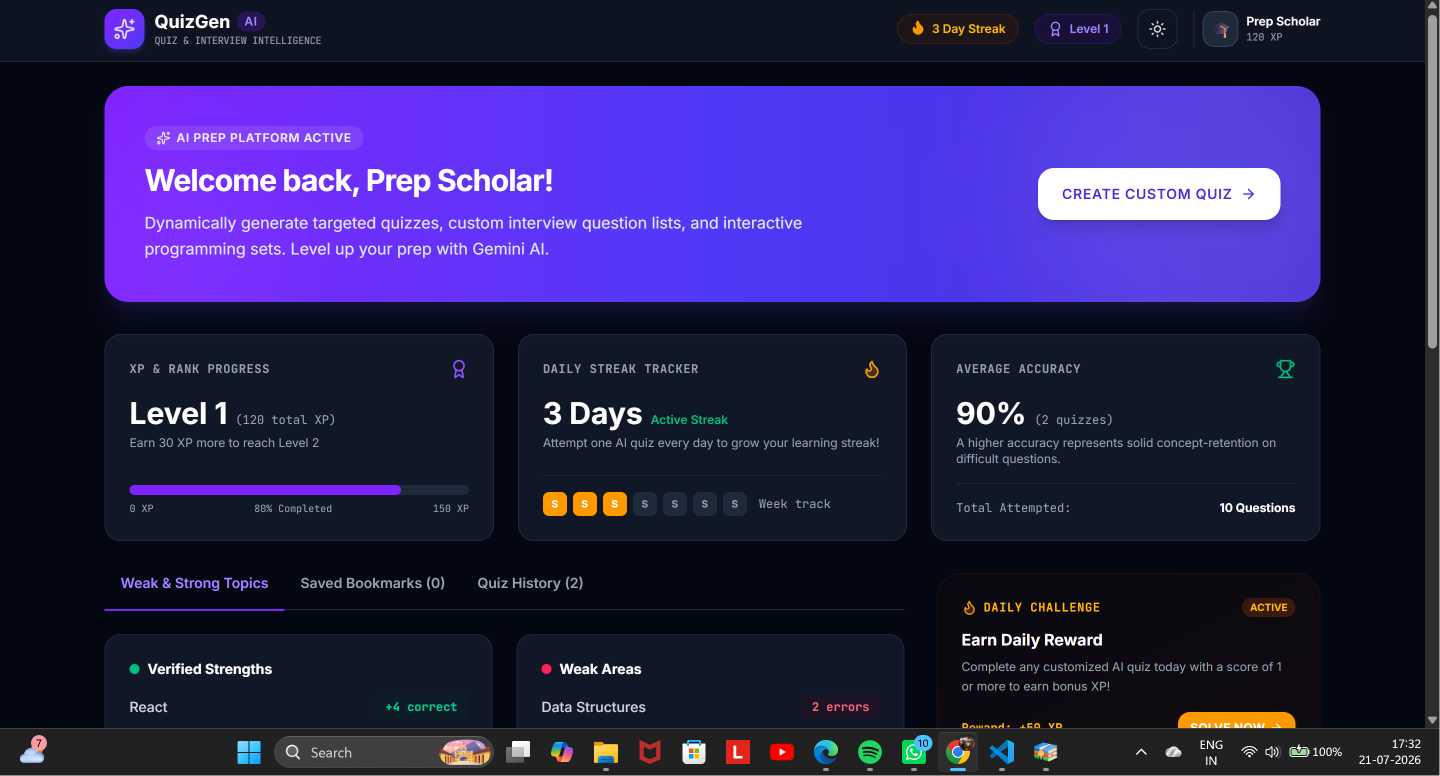
- Automatic scoring
- Performance tracking
- Quiz history
- Weak-area identification
- Personalized practice
- Achievements and learning goals
- AI-powered learning assistance
How I built it
I built QuizGen AI as a modern web application using Next.js, React, TypeScript, and Tailwind CSS.
I integrated generative AI to create structured quiz questions based on the user's selected topic and difficulty.
The quiz engine handles question navigation, answer selection, timers, scoring, and result calculation. User progress and quiz history are stored so learners can track their preparation over time.
I separated AI generation from the core quiz engine so that the application logic remains reliable while AI is used for dynamic content generation and personalization.
Challenges I ran into
One of the biggest challenges was getting AI-generated questions into a consistent structure that the quiz engine could reliably process.
I also had to handle different preparation scenarios, including academic practice and technical interview preparation, while keeping the experience simple and intuitive.
Another challenge was combining AI-generated content with deterministic logic for scoring, timers, answer validation, and progress tracking.
Accomplishments that I'm proud of
I'm proud of turning a simple quiz concept into an AI-powered preparation platform that can serve both students and interview candidates.
Instead of depending entirely on a fixed question bank, QuizGen AI can dynamically generate questions based on the user's selected topic and difficulty.
I also implemented multiple quiz modes, scoring, performance tracking, quiz history, achievements, and personalized practice features.
What I learned
While building QuizGen AI, I learned how to integrate generative AI into a functional application rather than using AI as a standalone feature.
I gained experience with structured AI responses, frontend and backend integration, state management, quiz-engine design, persistent data, scoring systems, and building personalized user experiences.
I also learned that reliable AI applications require validation and deterministic application logic around AI-generated content.
What's next for QuizGen AI
I plan to expand QuizGen AI with more advanced adaptive learning, concept-level weakness detection, AI-generated explanations, personalized study plans, technical interview simulations, HR interview practice, coding challenges, and more detailed preparation analytics.
My long-term goal is to make QuizGen AI an intelligent preparation companion that helps students learn better and helps candidates become more confident for interviews.
Built With
- api
- express.js
- gemini
- react
- render
- tailwind.css
- typescript
- vite

Log in or sign up for Devpost to join the conversation.