-
-
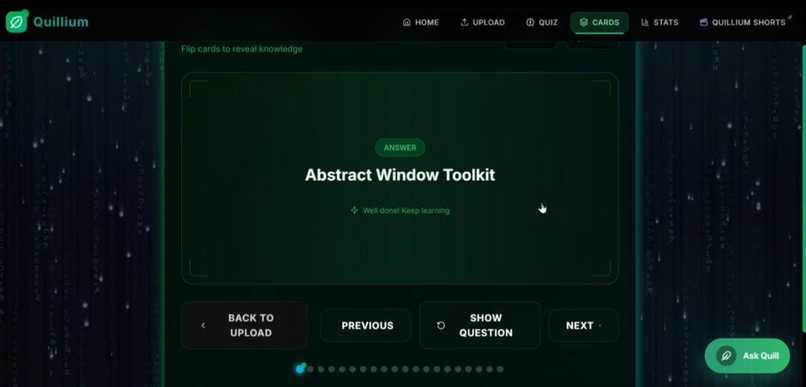
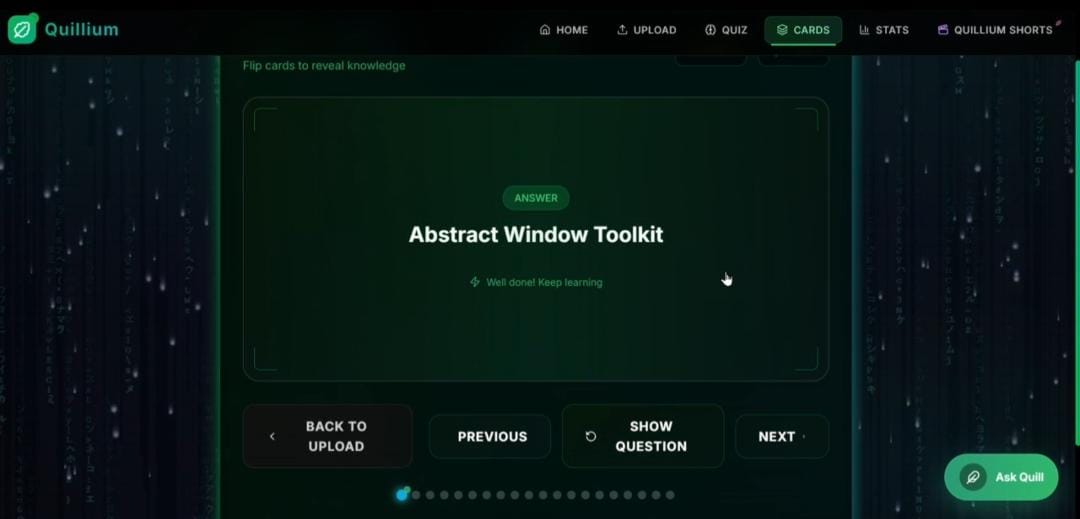
Flashcards section
-
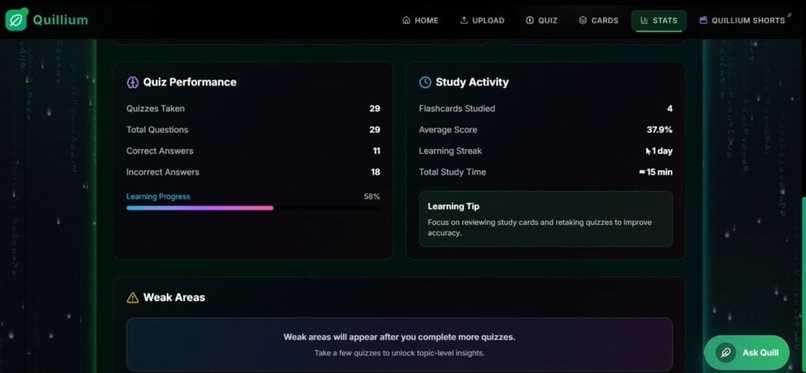
Analysis of weak areas
-
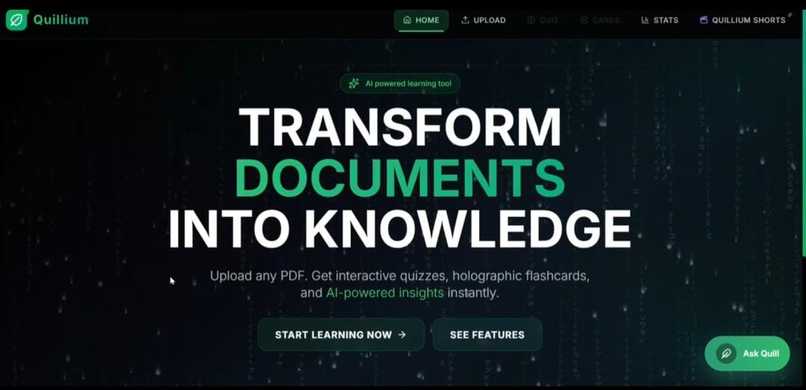
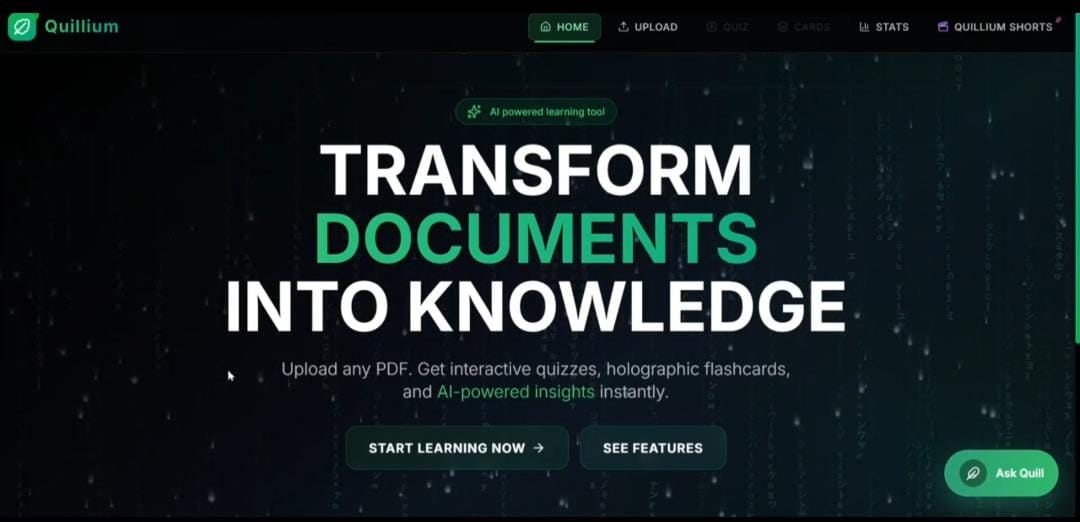
Landing Page
-
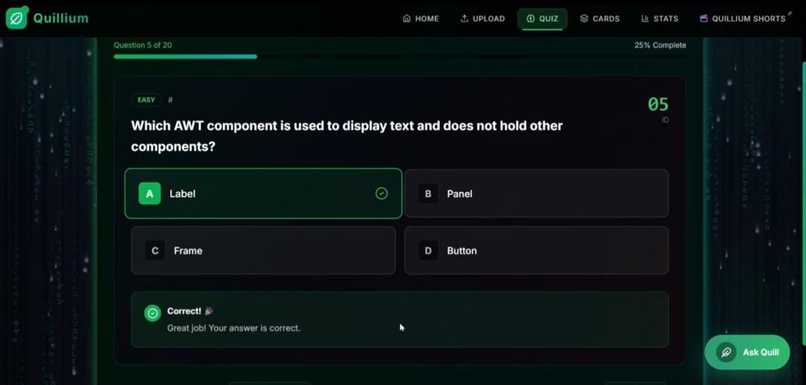
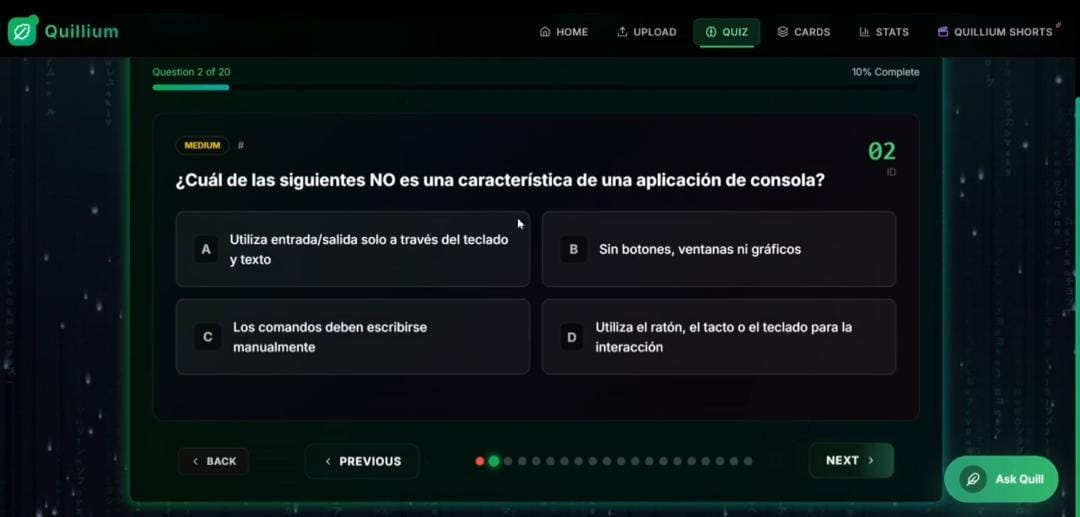
MCQ generation in selected language
-
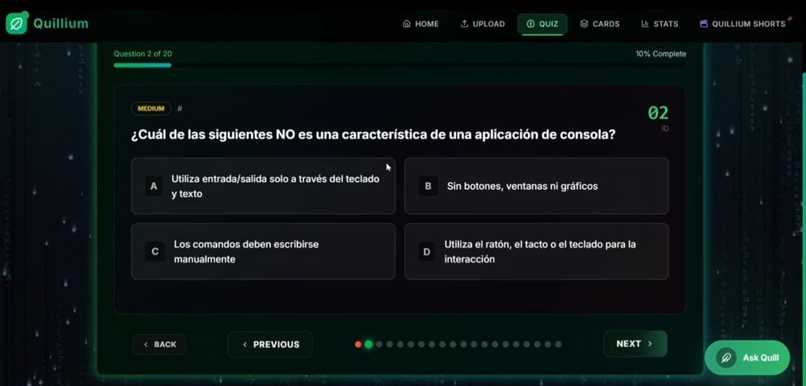
Multilanguage feature
-
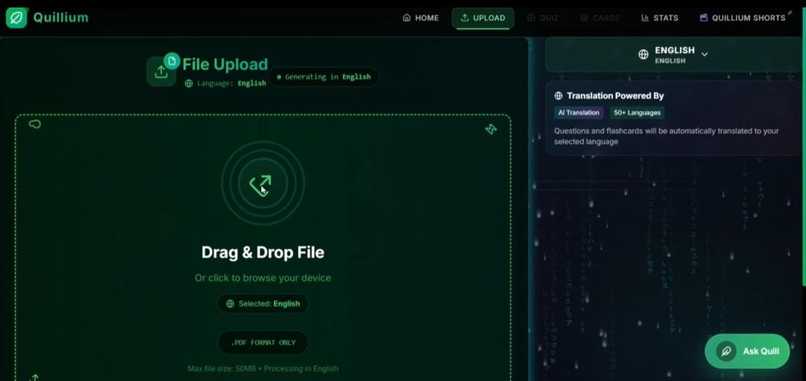
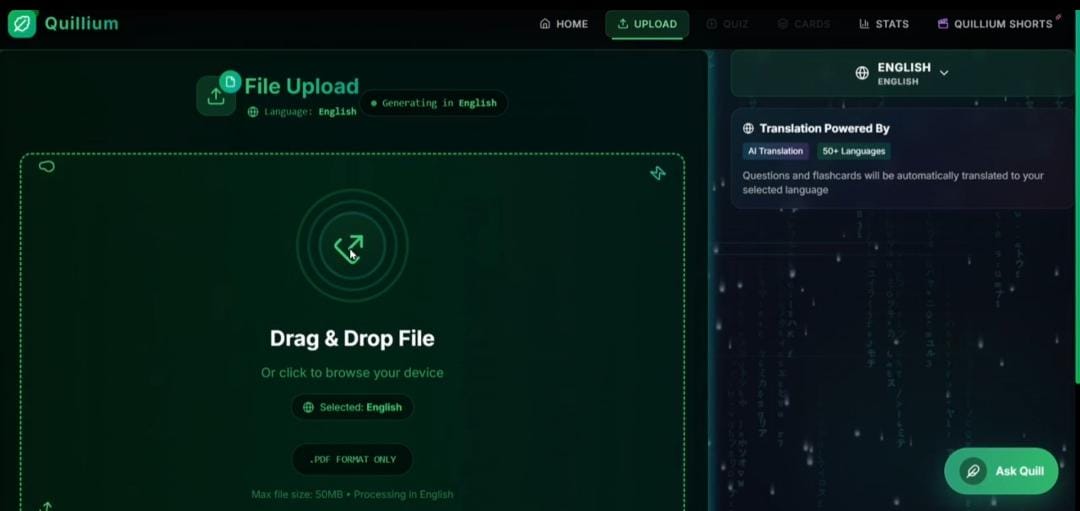
File Upload
-
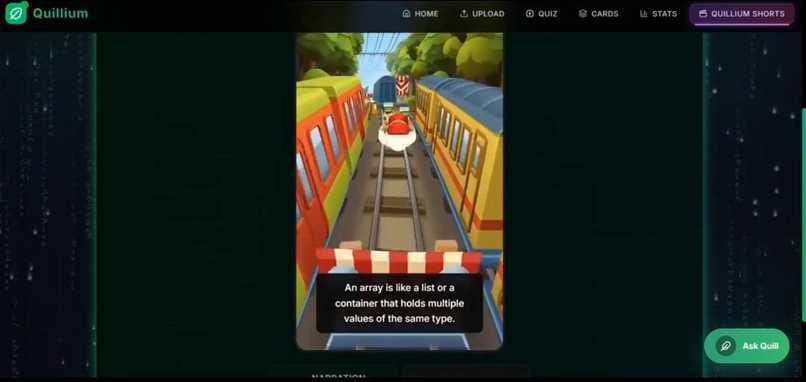
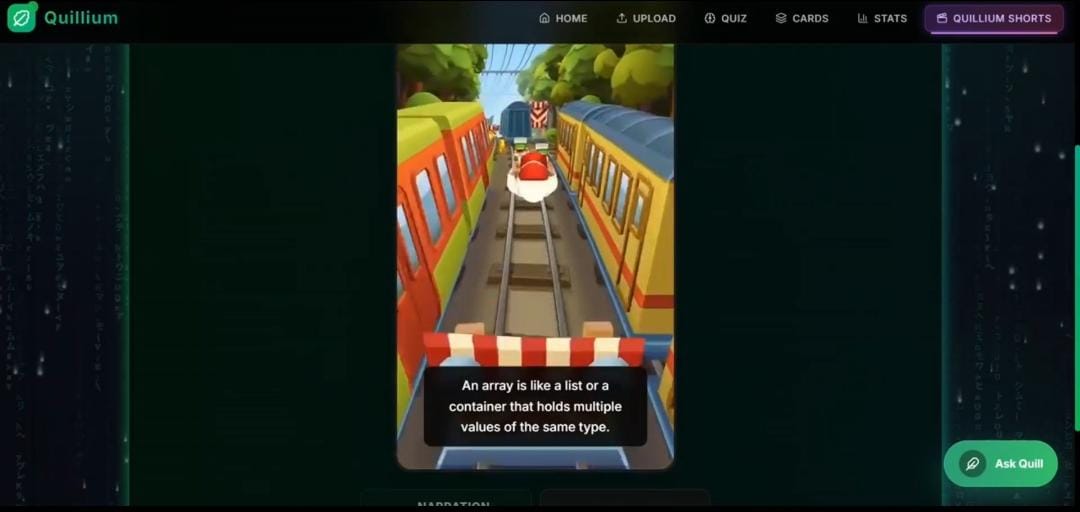
AI generated shorts feature
-
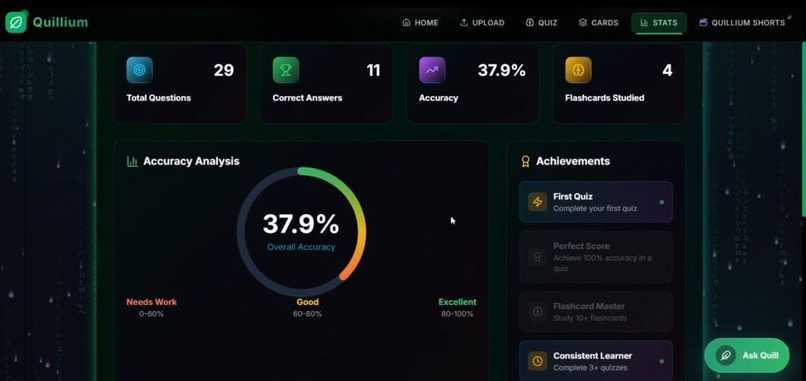
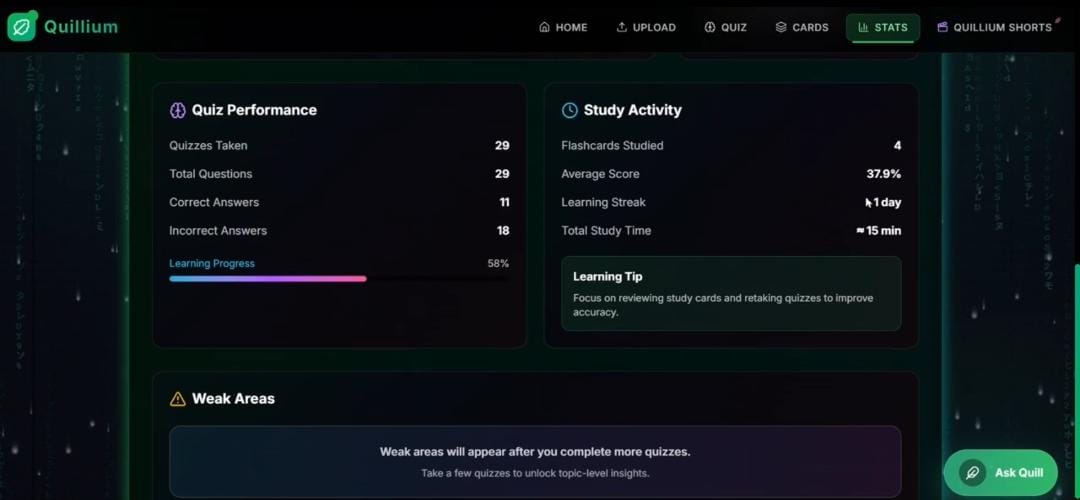
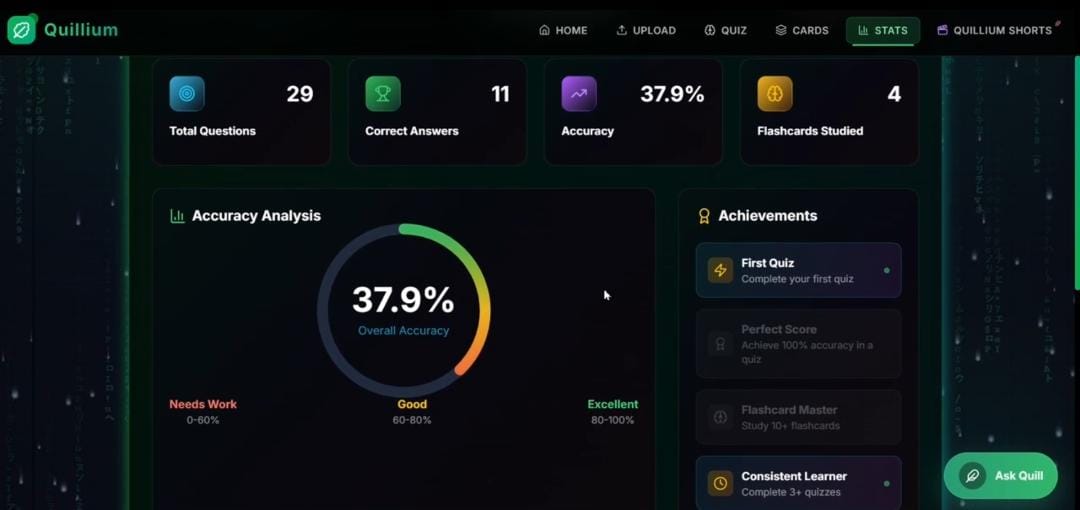
Progress dashboard
-
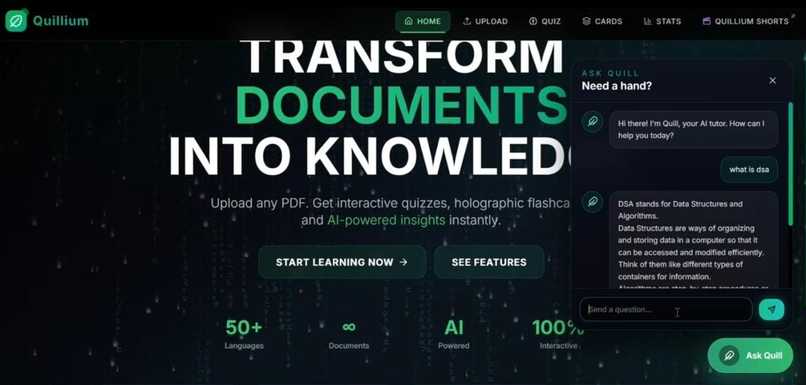
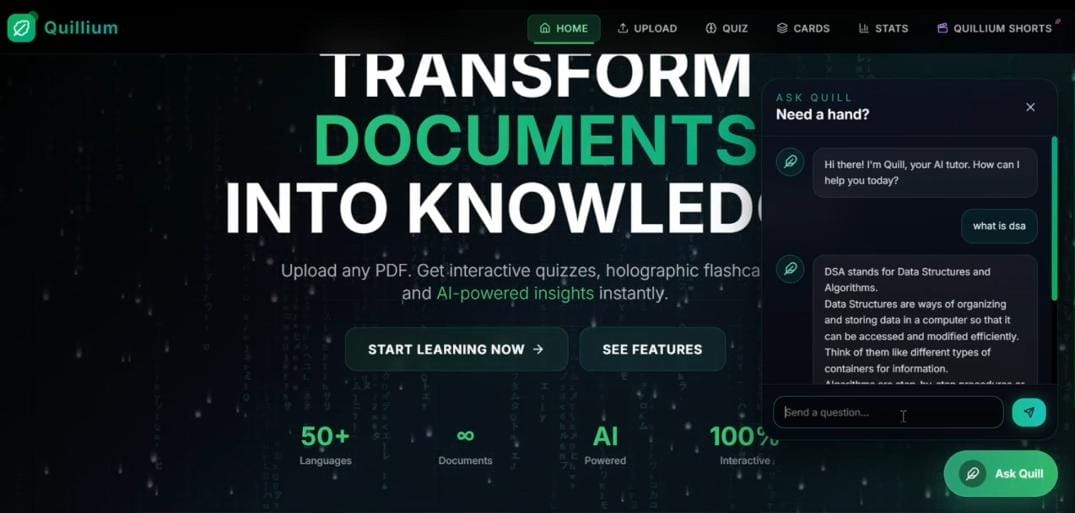
Quill - AI chatbot for instant answers
Inspiration
Educational content today is abundant, but accessibility is not.
Many students—especially those from non-English-speaking backgrounds—struggle to learn from dense, static PDFs such as lecture notes, textbooks, and public documents. These resources are often locked behind language barriers and lack interactivity, making learning passive and discouraging.
Quillium AI was inspired by a simple yet powerful question:
“What if any PDF could become a personalized, interactive learning companion—available in your own language?”
Our goal is to bridge the gap between content availability and meaningful learning, using technology for social good.
What It Does
Quillium AI transforms static PDFs into an interactive, multilingual learning experience.
Given any PDF, the platform can:
- Translate content into 50+ global languages
- Generate AI-powered flashcards
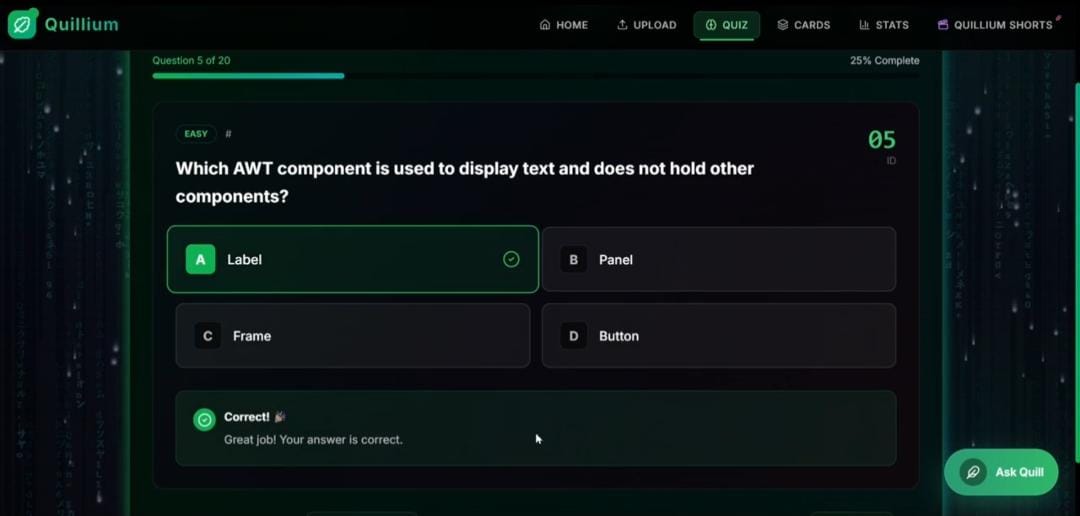
- Create MCQ-based quizzes in the user’s chosen language
- Show clear right/wrong feedback instantly
- Track learning progress based on accuracy and time
- Automatically detect weak areas and focus topics
- Generate AI-powered learning shorts for low-attention-span learners
- Provide instant academic support via the Quill chatbot
This makes Quillium especially valuable for students, educators, NGOs, and self-learners across different linguistic and educational backgrounds.
How We Built It
The system is designed with clean separation of concerns, scalability, and extensibility in mind.
Frontend
- Built using Next.js
- Styled with Tailwind CSS
- Provides an intuitive UI for:
- PDF upload
- Language selection
- Viewing quizzes, flashcards, shorts, and progress
- PDF upload
- Optimized for responsiveness and accessibility
Backend
- Built with FastAPI
- Handles:
- PDF processing and text extraction
- Quiz and flashcard orchestration
- Progress tracking and analytics
- PDF processing and text extraction
- Designed for high performance and easy extensibility
AI Layer
- Powered by the Gemini API
- Responsible for:
- Multilingual translation with contextual accuracy
- Generating MCQs, flashcards, and learning shorts
- Structuring unstructured PDF text into meaningful educational units
- Powering Quill, the AI chatbot for instant doubt resolution
- Multilingual translation with contextual accuracy
This modular architecture allows Quillium AI to remain open-source friendly, community-driven, and future-ready.
Challenges We Ran Into
PDF Variability
PDFs come in many formats and structures, making consistent text extraction and interpretation challenging.
Maintaining Context Across Languages
Ensuring translations preserved educational meaning—not just literal text—required careful prompt engineering and iterative testing.
Balancing Simplicity & Power
We aimed to keep the UI simple and intuitive, while delivering advanced AI-driven capabilities under the hood.
Each challenge pushed us to design a more robust and thoughtful solution.
Accomplishments That We're Proud Of
- Built a fully functional end-to-end learning platform
- Enabled 50+ language support, promoting inclusivity and global access
- Converted passive PDFs into interactive quizzes and flashcards
- Implemented weak-area detection to guide focused learning
- Designed AI-generated learning shorts for modern attention spans
- Integrated Quill, an AI chatbot for instant academic assistance
- Implemented learning progress tracking with meaningful insights
- Designed a scalable full-stack architecture using Next.js and FastAPI
- Focused on accessibility-first design
What We Learned
Through building Quillium AI, we gained valuable insights into:
- Designing AI systems for real-world social impact
- Handling unstructured data like PDFs effectively
- Building multilingual and inclusive user experiences
- Integrating large language models responsibly
- Structuring scalable full-stack applications
- Understanding how small UX decisions can significantly improve learning outcomes
What's Next for Quillium
- Mobile-first and offline support for low-connectivity regions
- Text-to-speech and speech-to-text for visually impaired and differently-abled learners
- Educator dashboards for tracking student progress and customizing content
- Adaptive learning paths based on performance and weak areas
- Support for scanned PDFs, images, and handwritten notes
- Partnerships with schools, NGOs, and community learning centers
- Open-source expansion, enabling global developer collaboration
Quillium AI’s journey has just begun.
We envision it evolving into a global, inclusive learning ecosystem where quality education is accessible to everyone—regardless of language, background, or learning style.
Built With
- fastapi
- gemini
- javascript
- next
- pymupdf
- tailwindcss
- typescript
- uvicorn

Log in or sign up for Devpost to join the conversation.