-
-
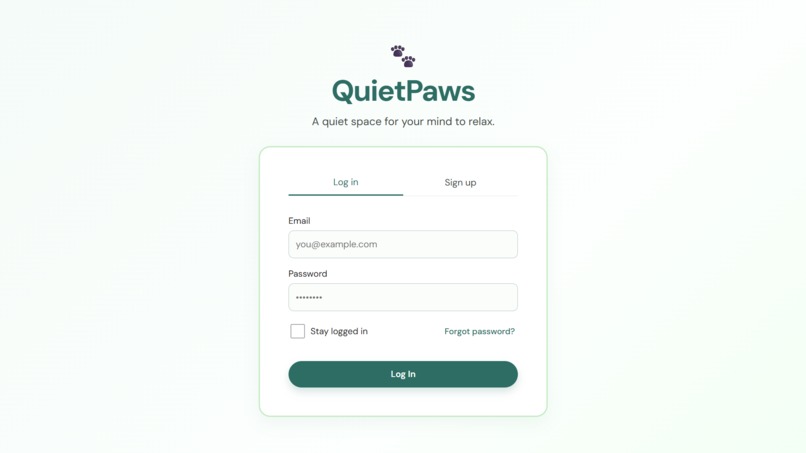
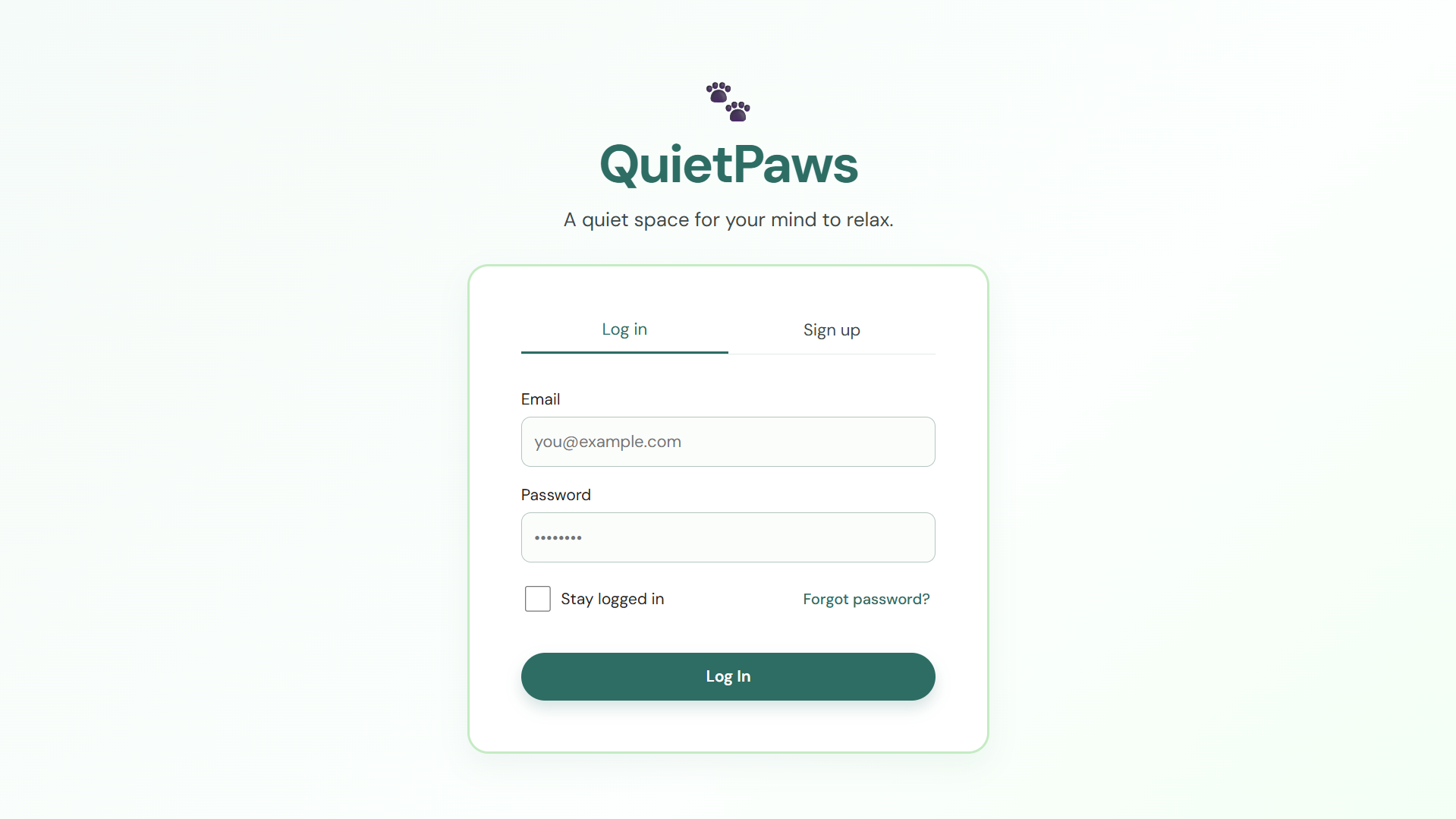
Login/Sign-up page
-
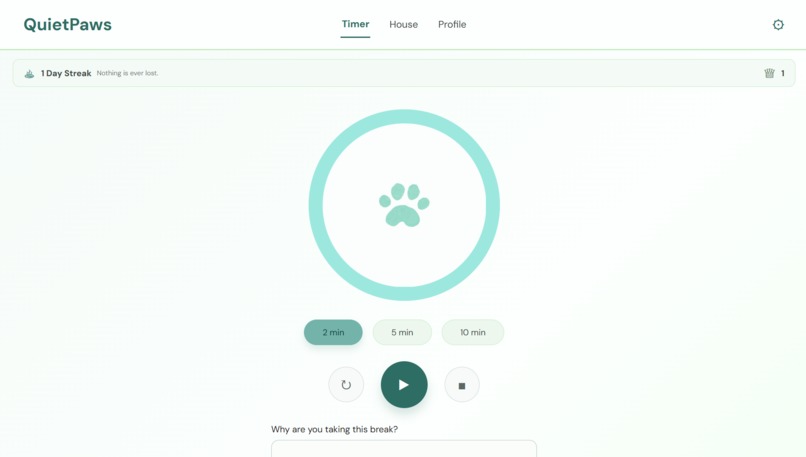
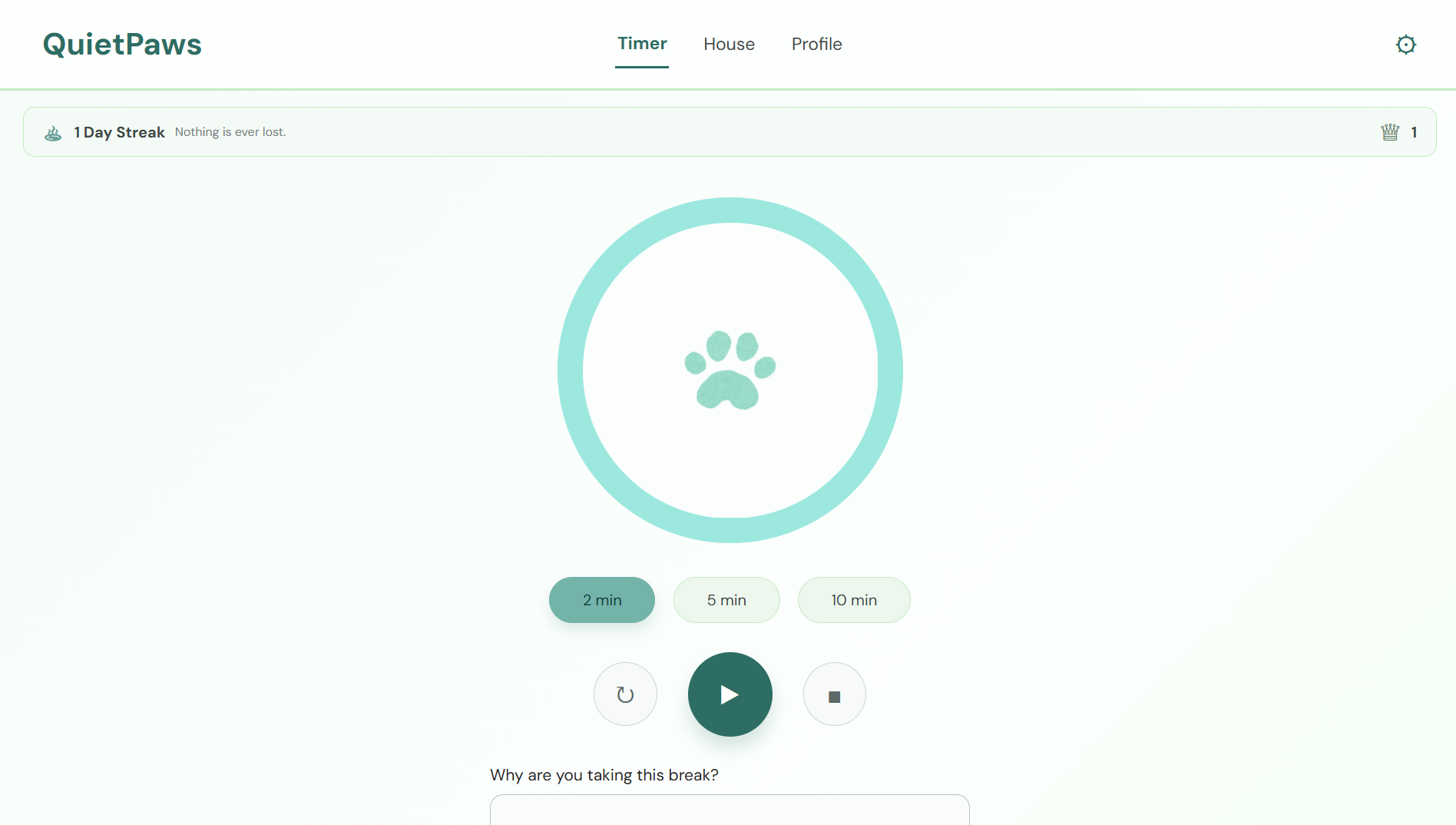
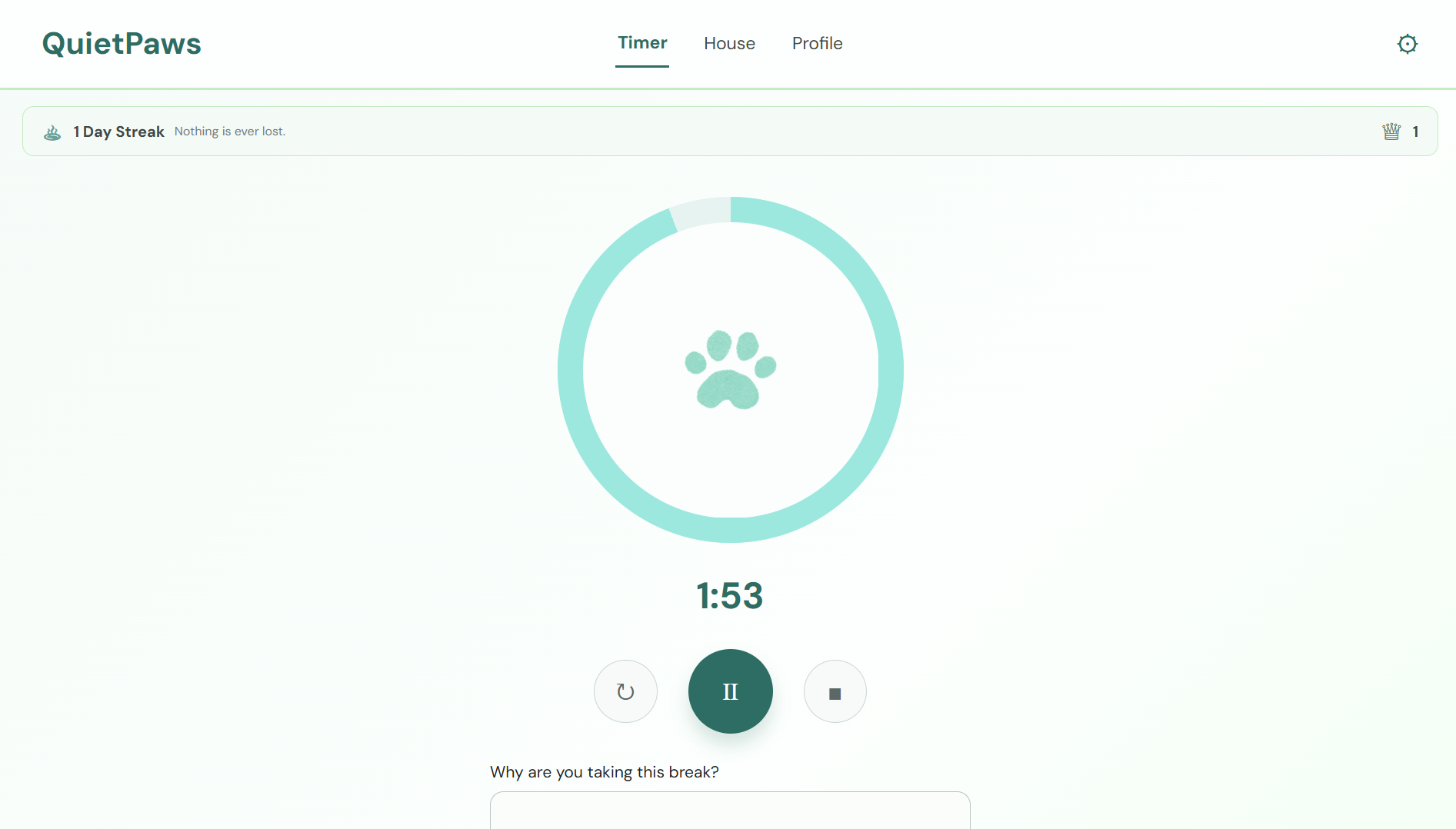
Timer page
-
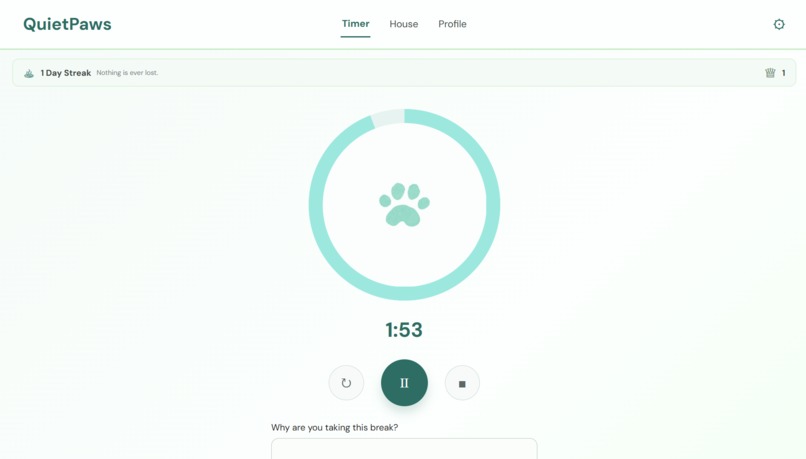
Timer start
-
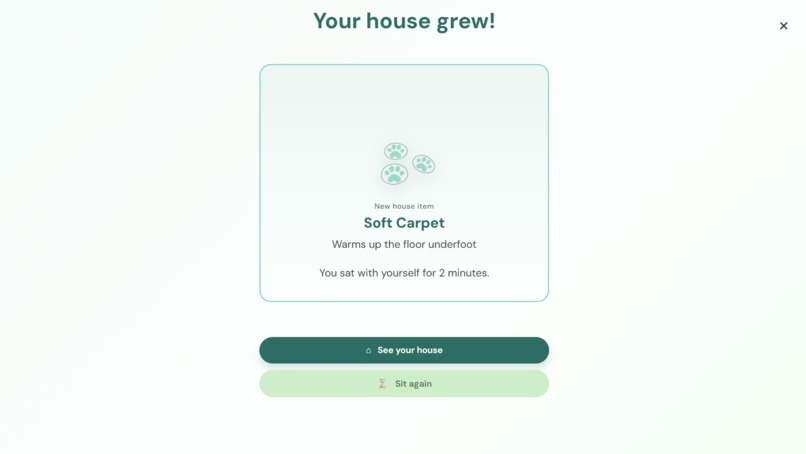
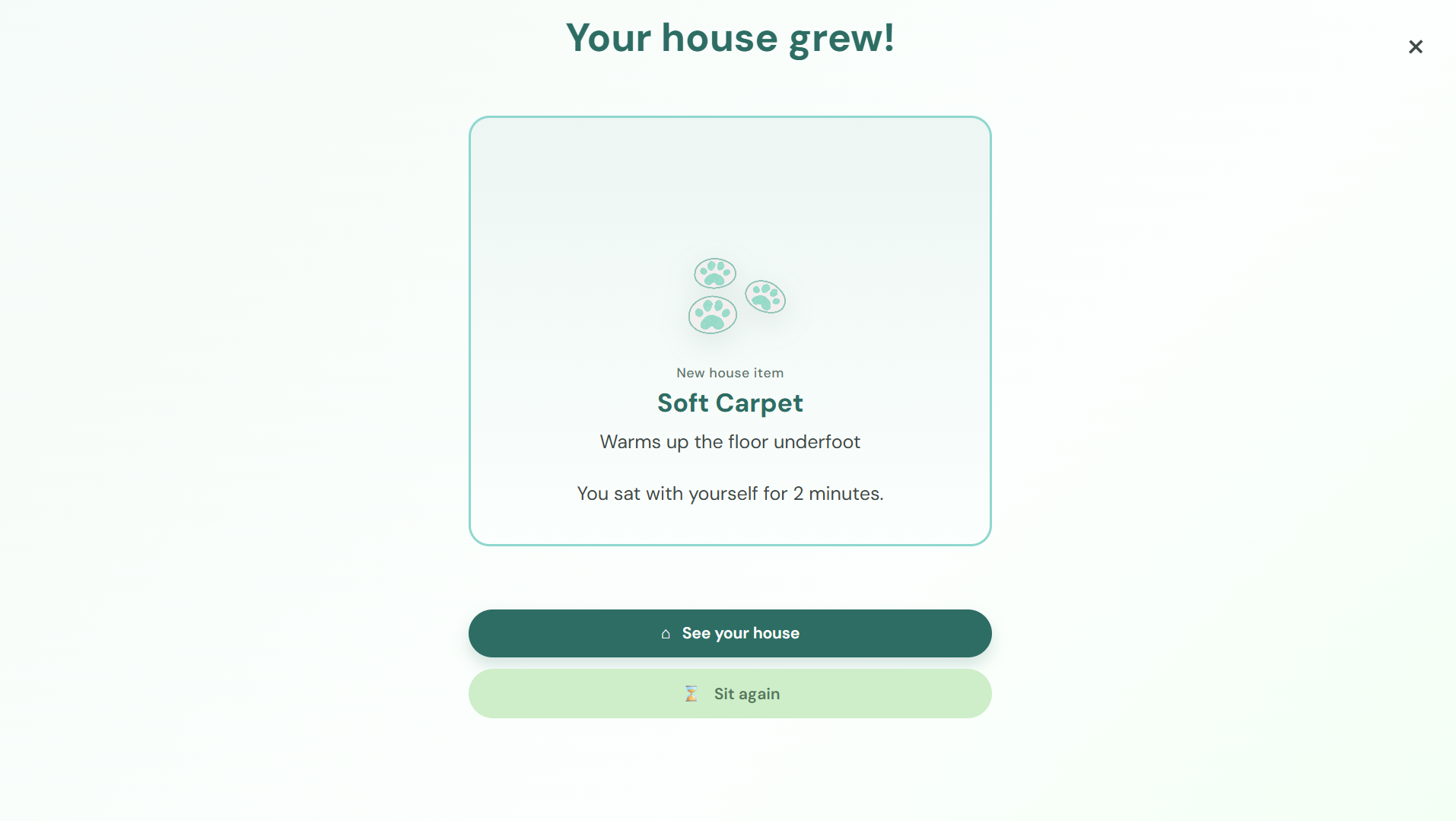
Reward reveal
-
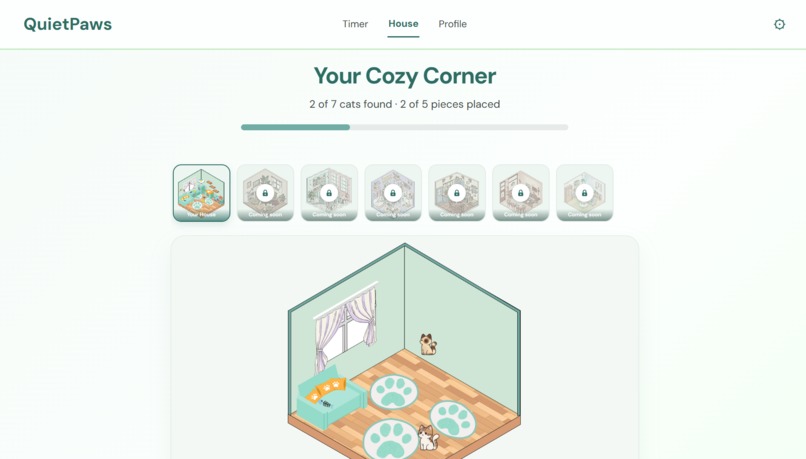
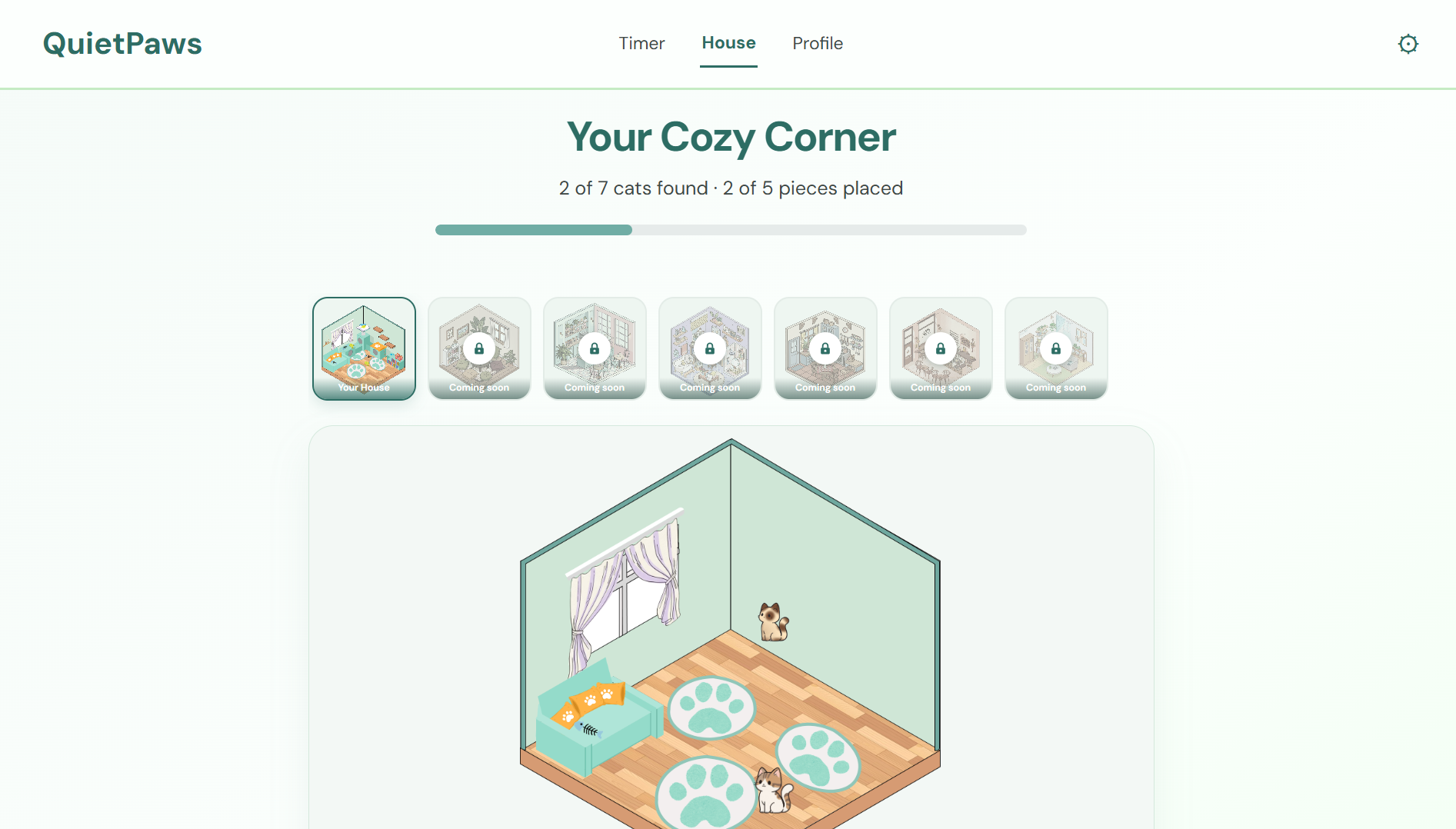
Cozy room
-
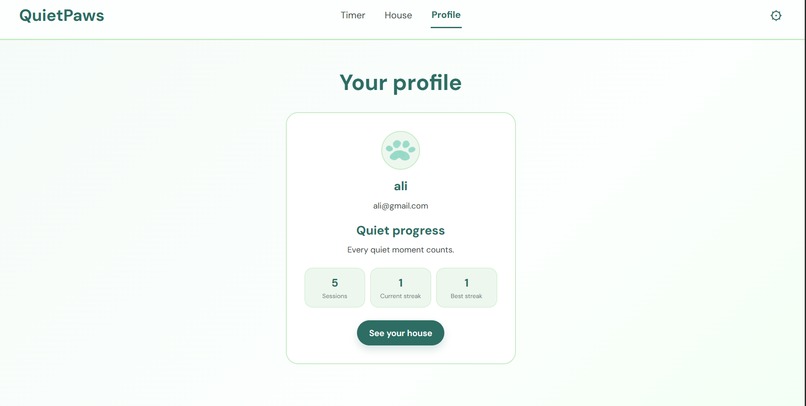
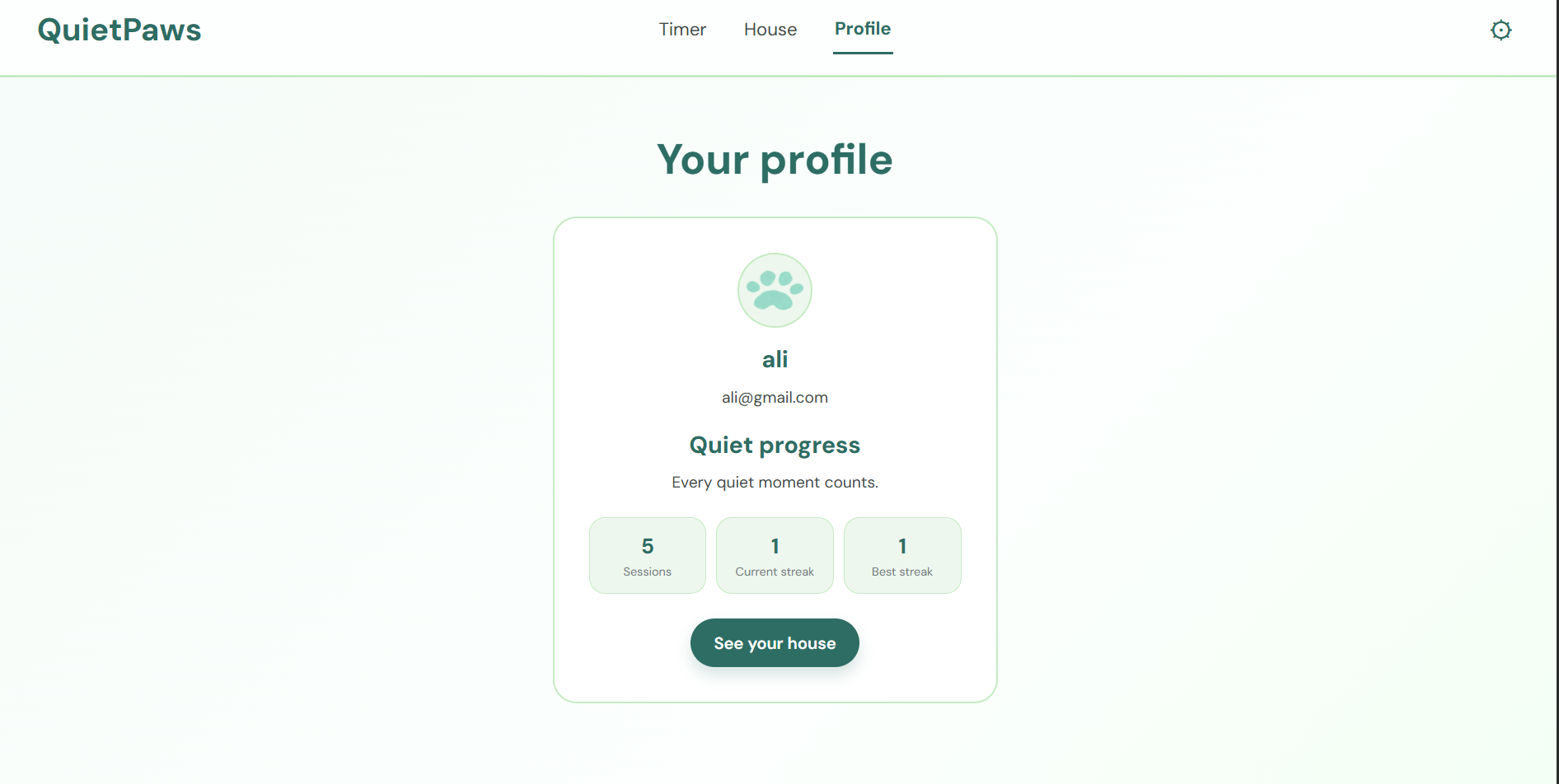
Profile page
Inspiration
The idea for QuietPaws came from something very simple: taking a break is easy to ignore. When we spend hours studying, coding, working, or even just staying focused on something for a long time, we usually know that we should take a break, but actually doing it can feel difficult. Sometimes when we finally take a break, we ended up scrolling through social media or watching something, which doesn't always feel like a proper mental break. We wanted to make something that encouraged people to pause without making the experience feel like another task they had to complete.
That is where the idea of QuietPaws came from. We wanted to create a small and cozy digital space where someone could step away from whatever they were doing for few minutes, slow down, and have some quiet time. We also wanted the experience to feel personal instead of just being a normal timer. That's why we decided to use a cozy house and cats as part of the experience. The idea was that every time a user completed a break, they would recieve something that would help their little house grow. This gave the break a small sense of progress and made it something the user could actually look forward to.
What QuietPaws Does
QuietPaws is a wellness-focused web application that encourages users to take intentional breaks from studying, coding, working, or other activities that require long periods of concentration. The main idea is not just to tell someone to "take a break." Instead, QuietPaws tries to make the break itself feel like a experience.
A user can start a break session and choose a reason for taking the break. We also added the option for users to write their own reason because we didn't want to limit them to a few predefined choices. Someone might want to take a break because they feel tired, need to clear their head, want to stretch, or simply feel like they have been working for too long.
Once the break starts, the user gets some time away from their work. After completing the session, they receive a small reward. The reward can be used to gradually build and personalize their QuietPaws house. The house is one of the main parts of the experience because we wanted the user's progress to feel visible. Instead of completing a timer and immediately forgetting about it, the user gets something that stays with them and becomes part of their little space.
How We Built It
We started with the idea of making a wellness project for the hackathon, but we didn't had the complete concept figured out immediately. We discussed different ideas and eventually focused on the problem of people not taking proper breaks while studying or working. From there, we started thinking about how we could make a normal break timer more interesting.
The cat and house idea came from wanting the experience to feel calm and comforting. We decided that cats could represent the rewards and that the house could become a place where the user could see the things they had collected. After settling on the idea, we divided the work between the team members. We worked on different parts of the application at the same time, which meant we had to communicate with each other quite a lot about what was being changed and what still needed to be done.
We didn't build everything perfectly from the beginning. A lot of the work was actually going back and forth between designing something, implementing it, seeing how it looked, and then changing it again. We also used Git and GitHub to work on the project together. Since different people were working on different parts, we used branches instead of everyone directly changing the same code. This helped us work separately and then bring the changes together.
The backend was developed separately by our backend teammate. It handled the data and functionality that the frontend needed. Once the different parts were ready, we worked on connecting the frontend and backend so that the application could work as one project instead of looking like separate pieces. We also had to add and organize the images and interactive house elements so that they fit into the experience properly.
Challenges We Faced
One of the biggest challenges was not actually writing the code, but putting everyones work together. Since we were working as a team, different parts of the project were being developed at the same time. Sometimes a change in one part affected another part, and we had to figure out how to combine everything without breaking what someone else had already done. Git was also something we had to actively use during the project. We worked with different branches and had to learn how to move our work from our individual branches into the main project. We had to deal with things like making commits, merging changes, checking what had changed, and making sure we were working with the latest version of the project.
Another challenge was the frontend itself. We wanted QuietPaws to feel calm and simple, but we also wanted it to have enough interaction to make it interesting. It was easy to keep adding ideas, but we had to think about whether each feature actually helped the main purpose of the application. Also the project did not always behave the same way on everyone's laptop. Something that was working properly on one person's laptop could behave differently or even stop working on another person's system. We had to spend a lot of time checking the code, comparing our setups, finding what was causing the differences, and making changes so that the project work properly for everyone.
We also had limited time, so we couldn't implement every idea we discussed. We had to focus on getting the main experience working first and leave some of the additional ideas for later.
What We Learned
This project taught us a lot about working on an actual shared project instead of just building something individually.
One of the biggest things we learned was how different it feels when multiple people are working on the same codebase. When working alone, we can change anything whenever we want. In a team, we have to think about how my changes affect everyone else's work. We also got more comfortable with Git and GitHub through actually using them for a project. Before this, Git was something we mostly practiced through smaller projects. Working with a team made it much clearer why branches, commits, and merging are important. On the technical side, we learned more about connecting frontend work with backend functionality and how important it is for both sides of a project to follow an agreed structure.
We also learned that building a project isn't only about making the features work. The way the user experience those features matters too. For QuietPaws, we didn't want the application to feel like a normal productivity tool with a timer added to it. We wanted the entire experience to feel slower, calmer, and more enjoyable.
What's Next
There are still many things we would like to improve in QuietPaws.
We would like to add more types of break activities so that users are not always doing the same thing during their break. We would also like to expand the house system. More cats, furniture, decorations, rooms, and customization options could make the user's space feel more personal. Another thing we would improve is personalization. The application could eventually remember the user's break habits and suggest different types of breaks depending on what they usually choose. We would also like to spend more time refining the visual design and improving the experience on different screen sizes. Since we were working within a hackathon timeframe, some parts had to be kept simple so that we could focus on completing the main idea. Most importantly, we would want to test QuietPaws with real users. Getting a feedback from people who actually use the application would help us understand whether the experience really makes them want to take a break or whether there are parts that feel unnecessary or confusing.


Log in or sign up for Devpost to join the conversation.