-
-
Deck 01
-
Deck 02
-
Deck 03
-
Deck 04
-
Deck 05
-
Deck 06
-
Deck 07
-
Deck 08
-
Deck 09
-
Deck 10
-
Deck 11
-
Deck 12
-
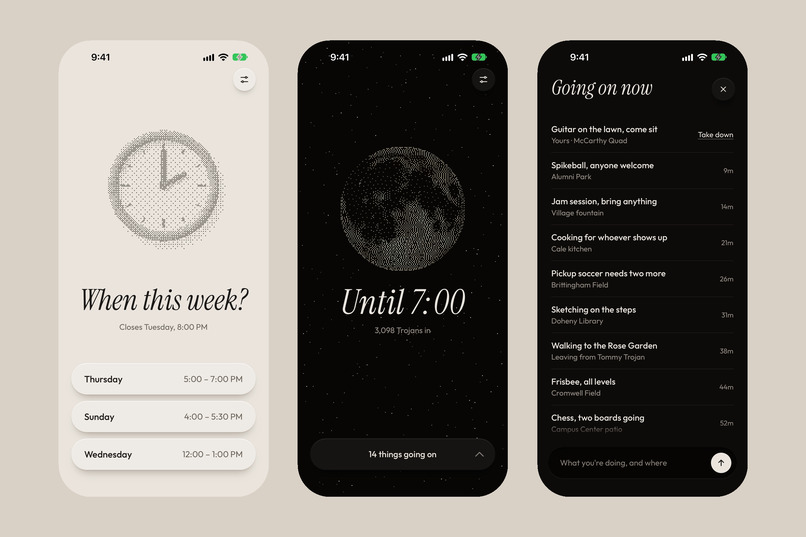
Screens 1: vote, quiet hours, board
-
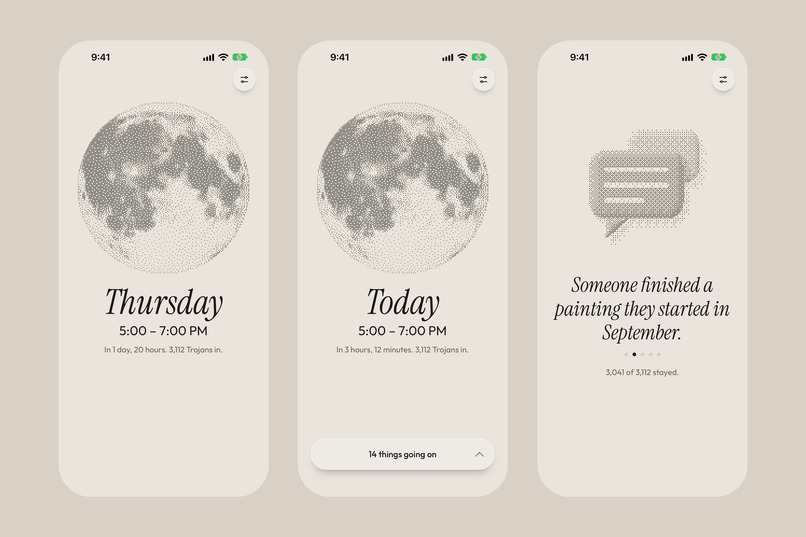
Screens 2: window set, day of, recap
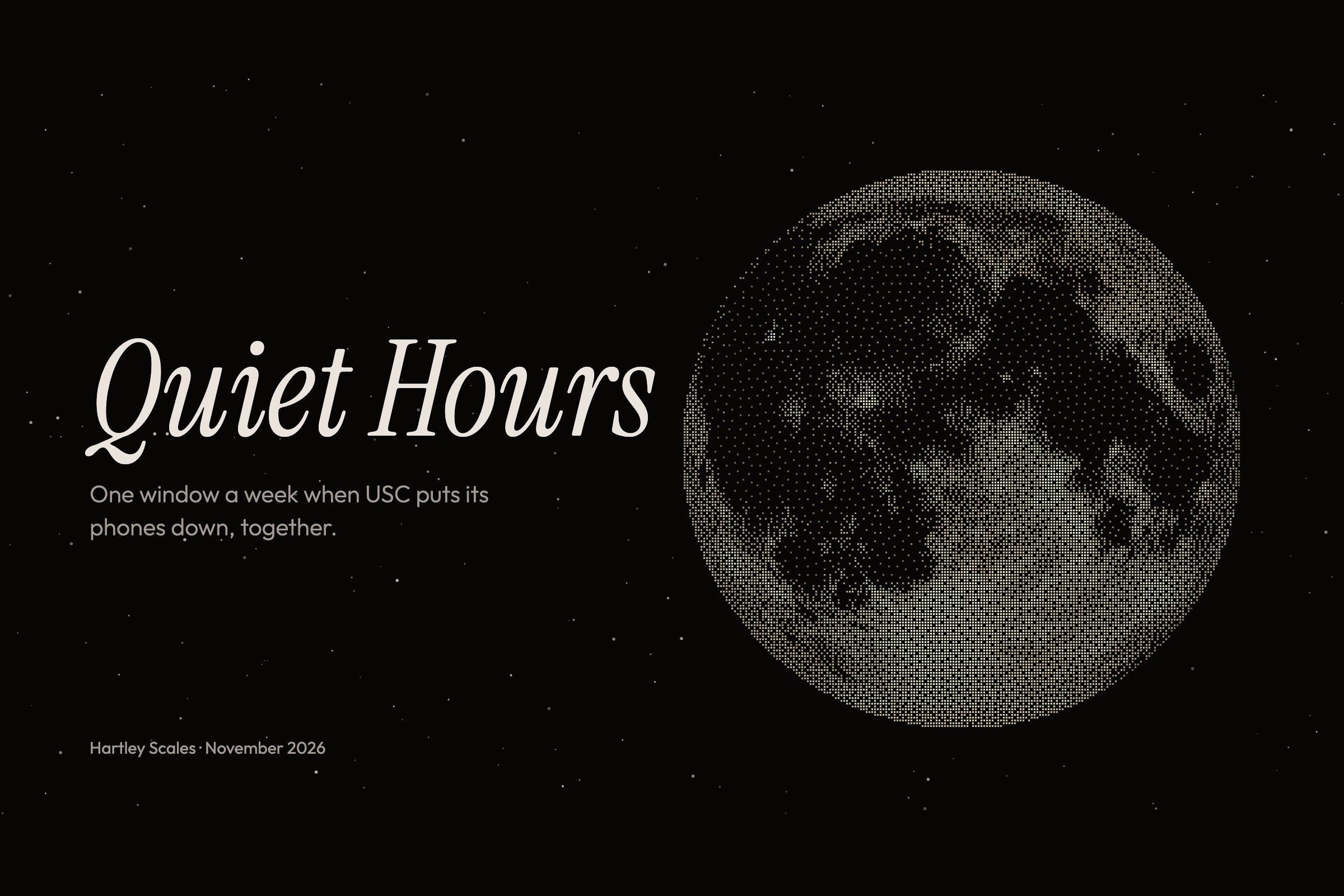
Inspiration
I can't put my phone down. Neither can almost anyone my age. I don't much like scrolling and I could reach my friends in simpler, less hostile ways. But there is something about moving with the herd. When everyone around you has their head down, looking up means standing alone.
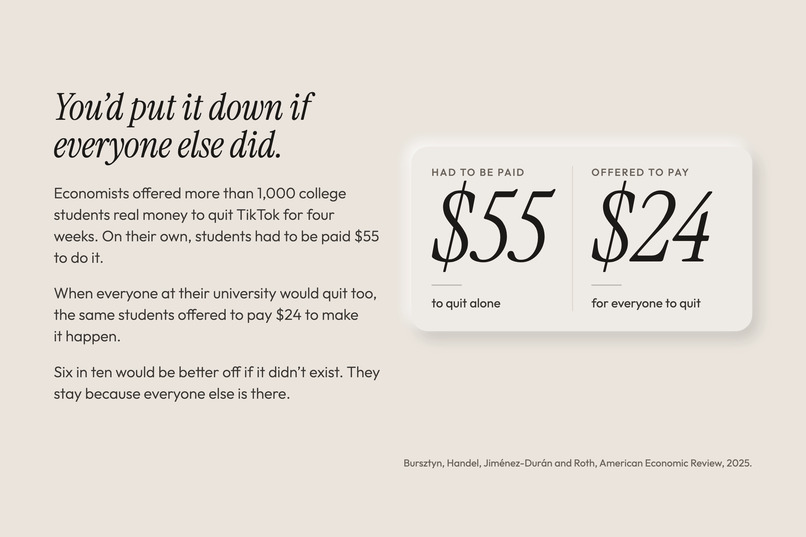
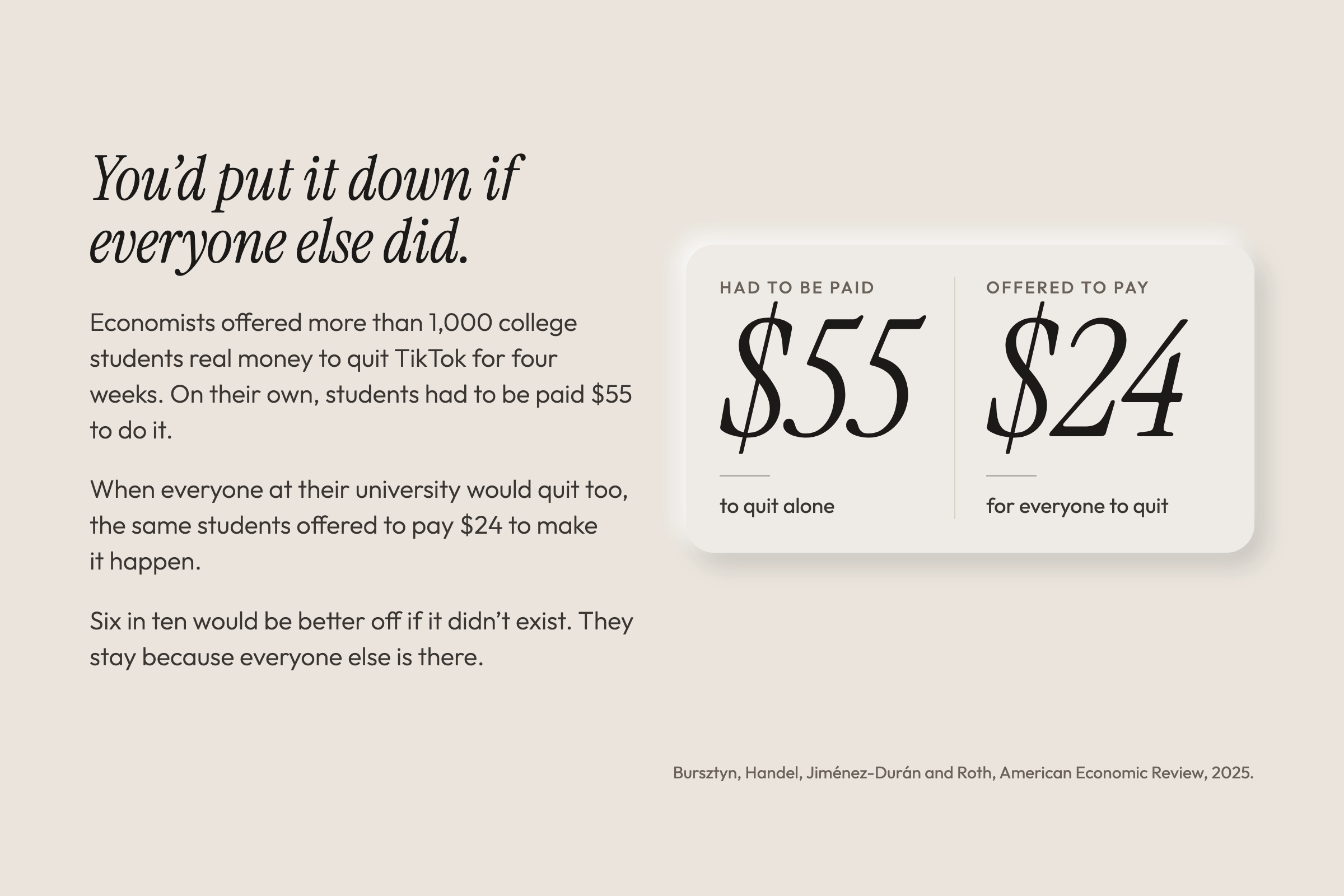
This has been measured. Economists offered college students real money to quit TikTok for four weeks and found that, on average, it took $55 to get one of them to do it. But, told that everyone in their university would quit as well, the same students flipped the equation and offered to pay $24 to make it happen (Bursztyn et al., American Economic Review, 2025). We are a generation that collectively wants to quit but won't because of the collective.
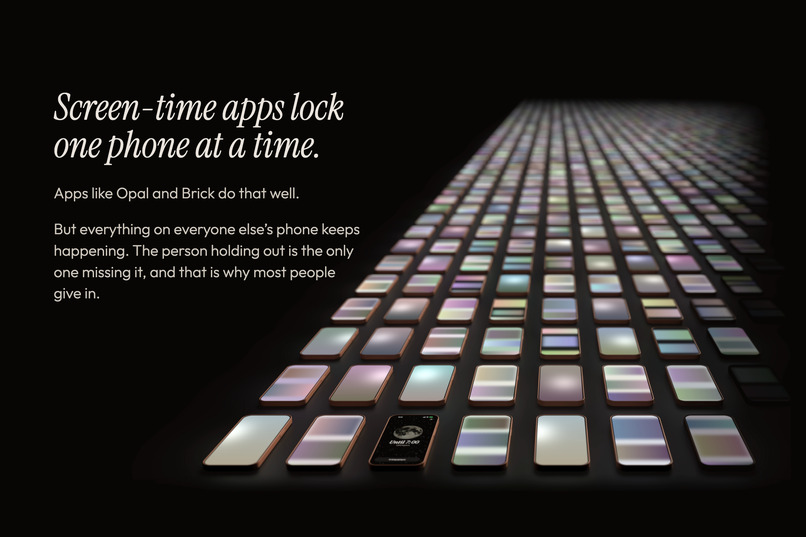
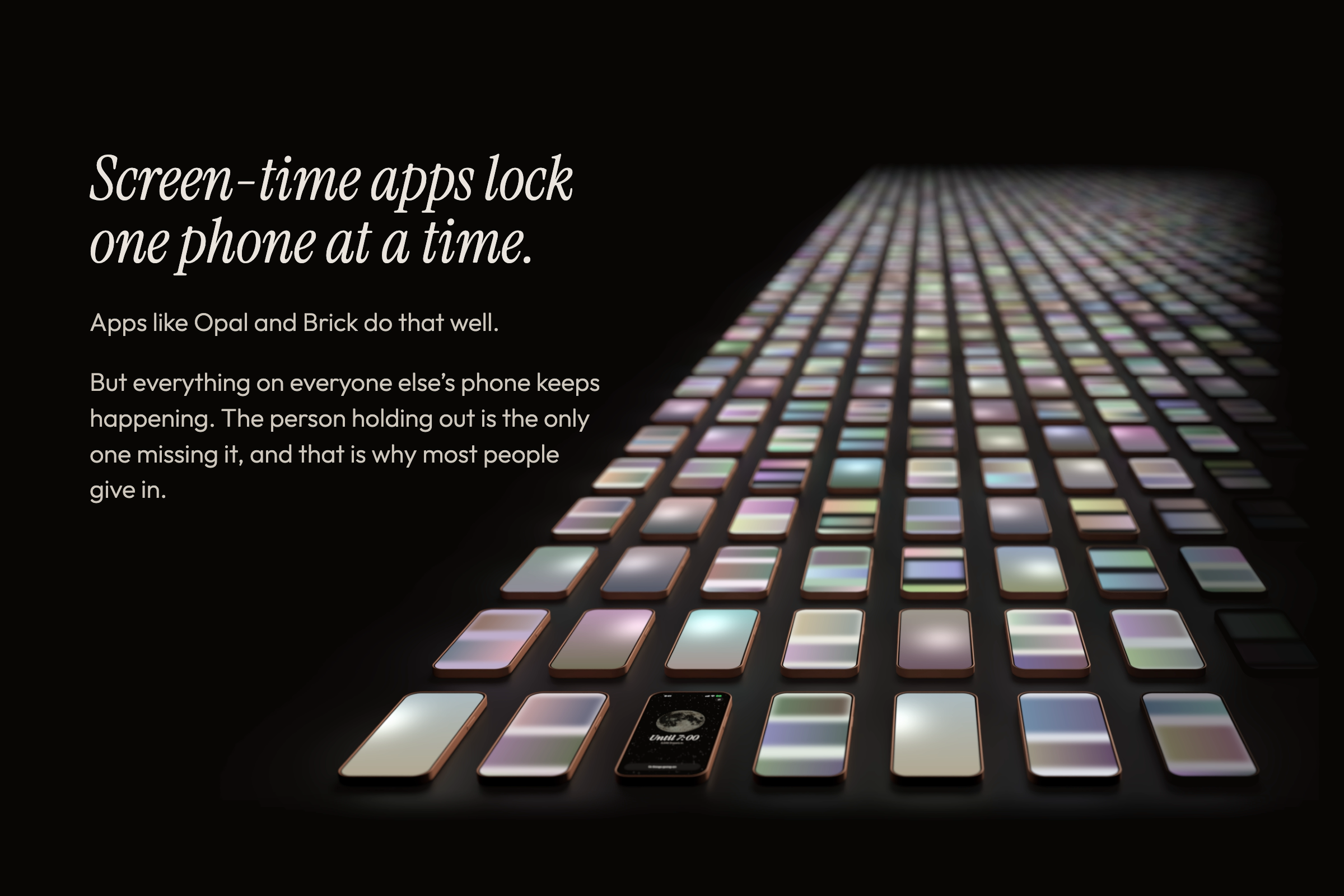
That is why screen-time management apps usually don't work. The person holding out is the minority, and the one left out.
That is what I want to fix.
What it does
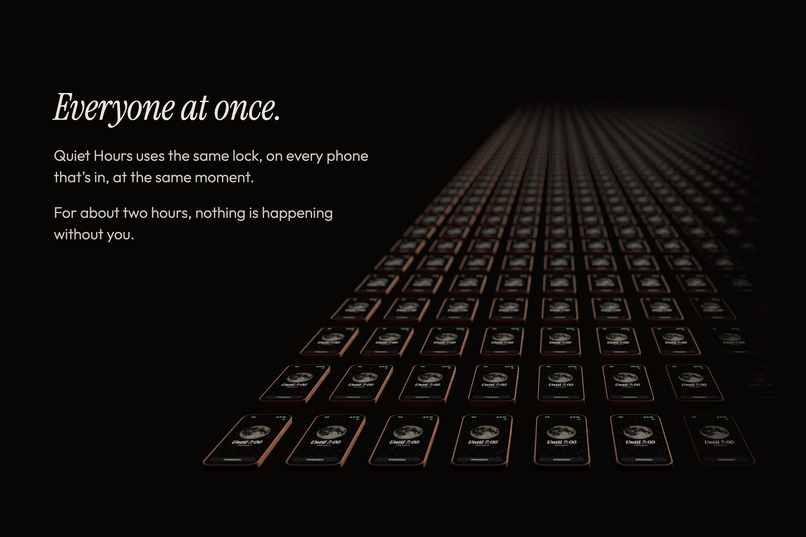
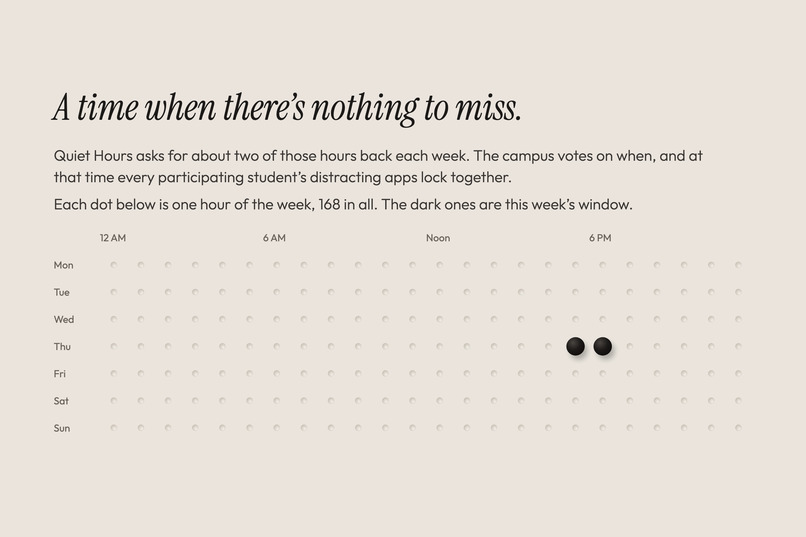
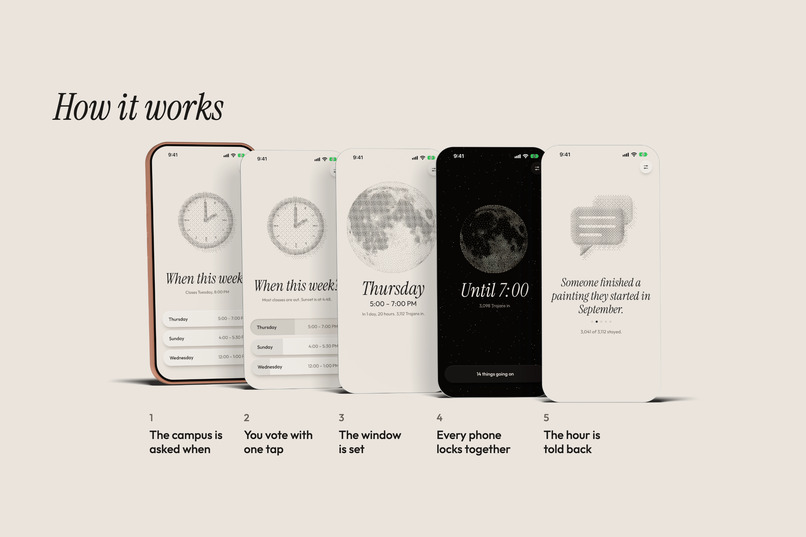
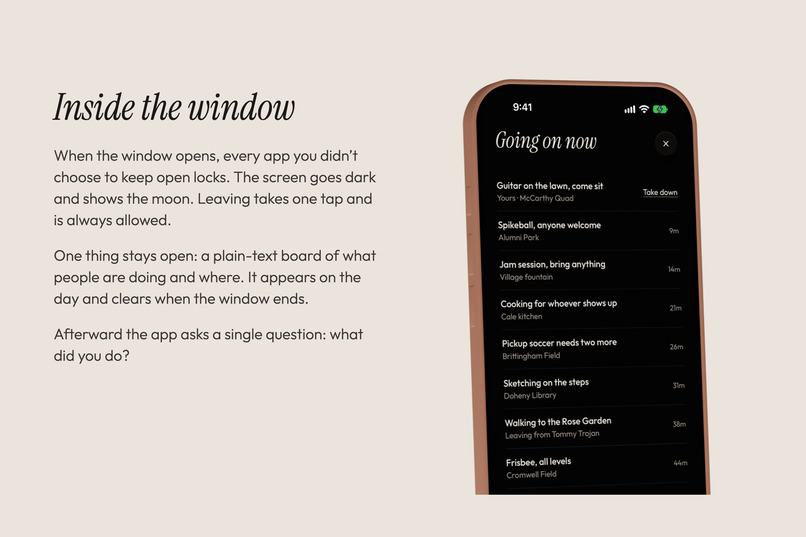
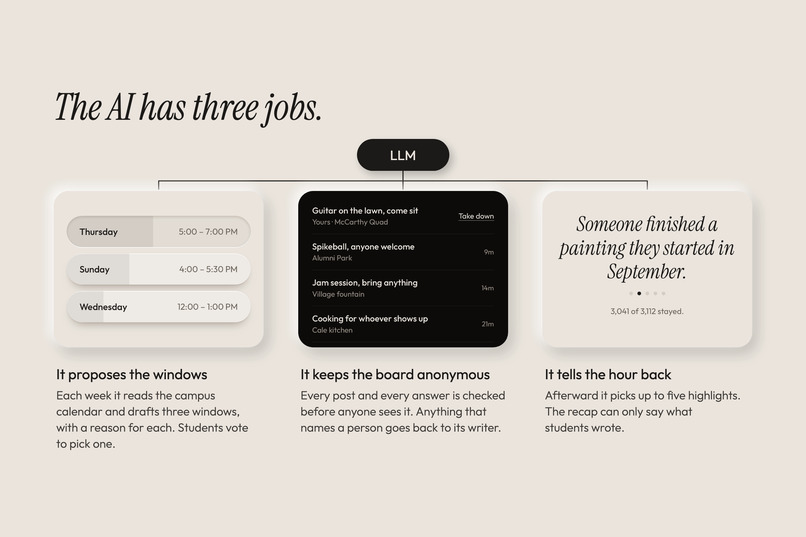
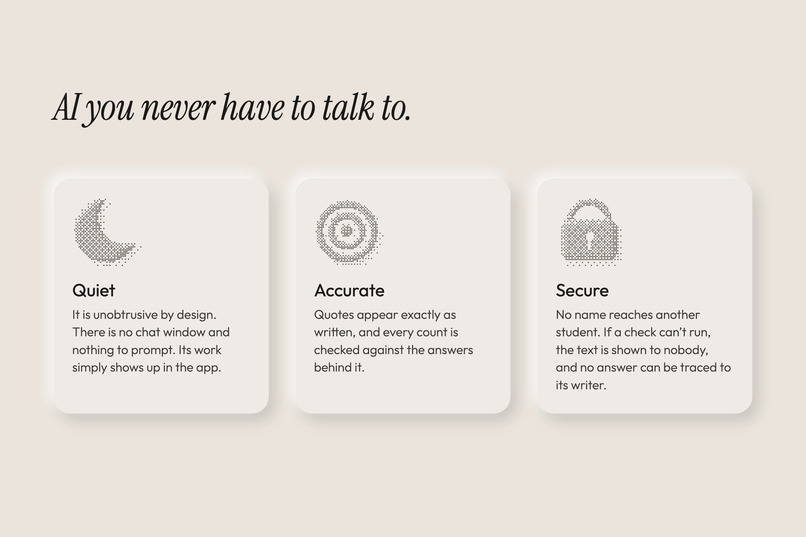
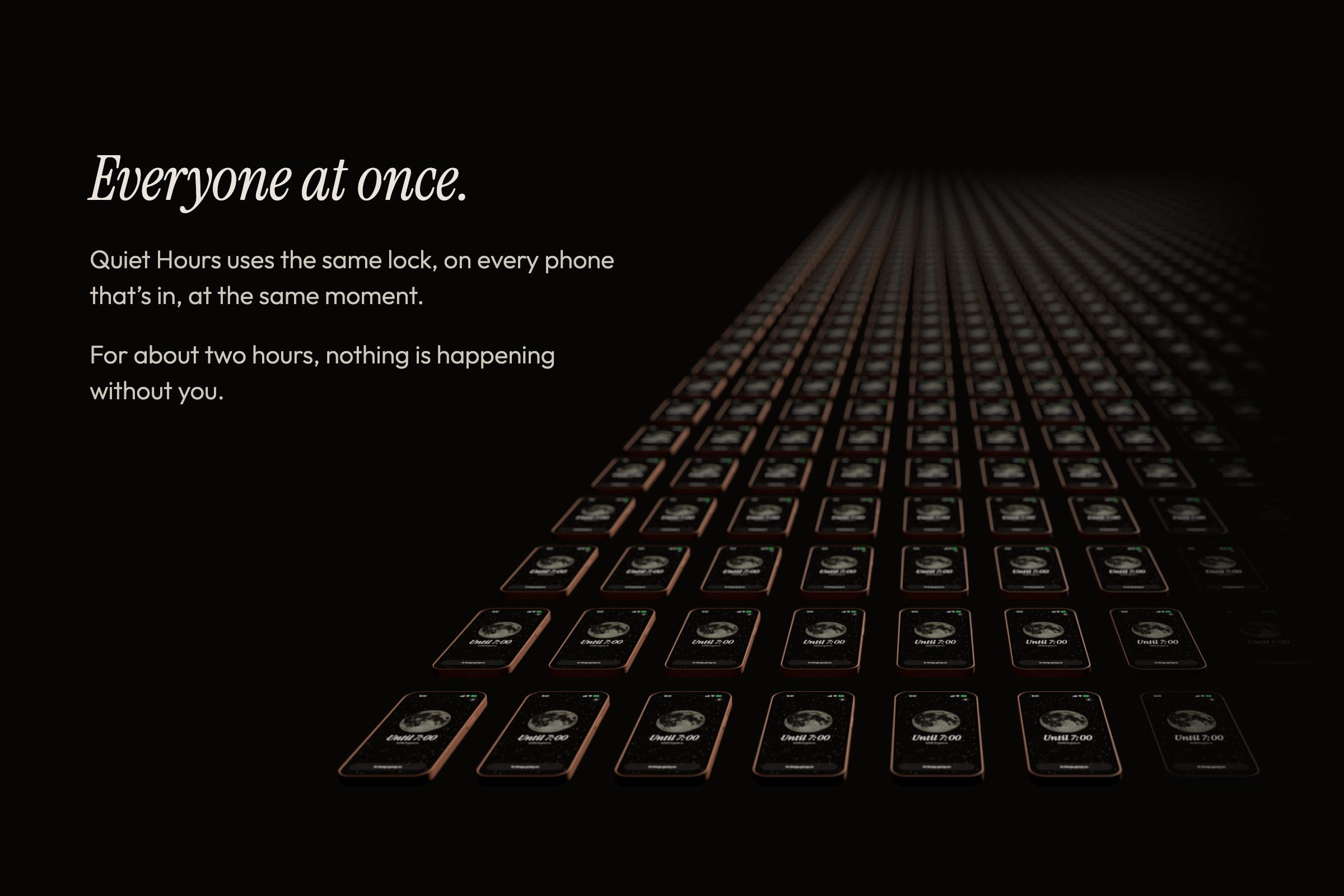
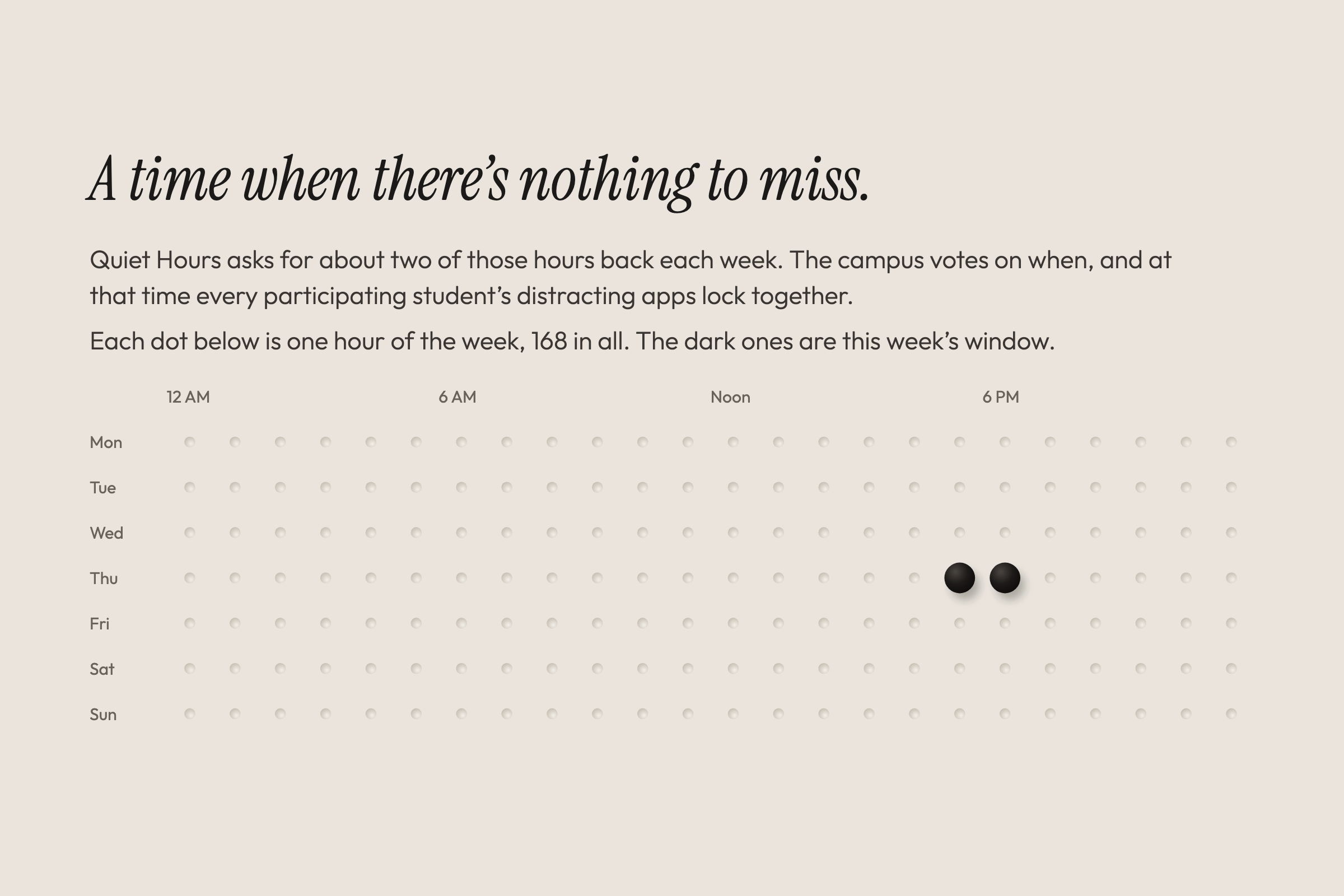
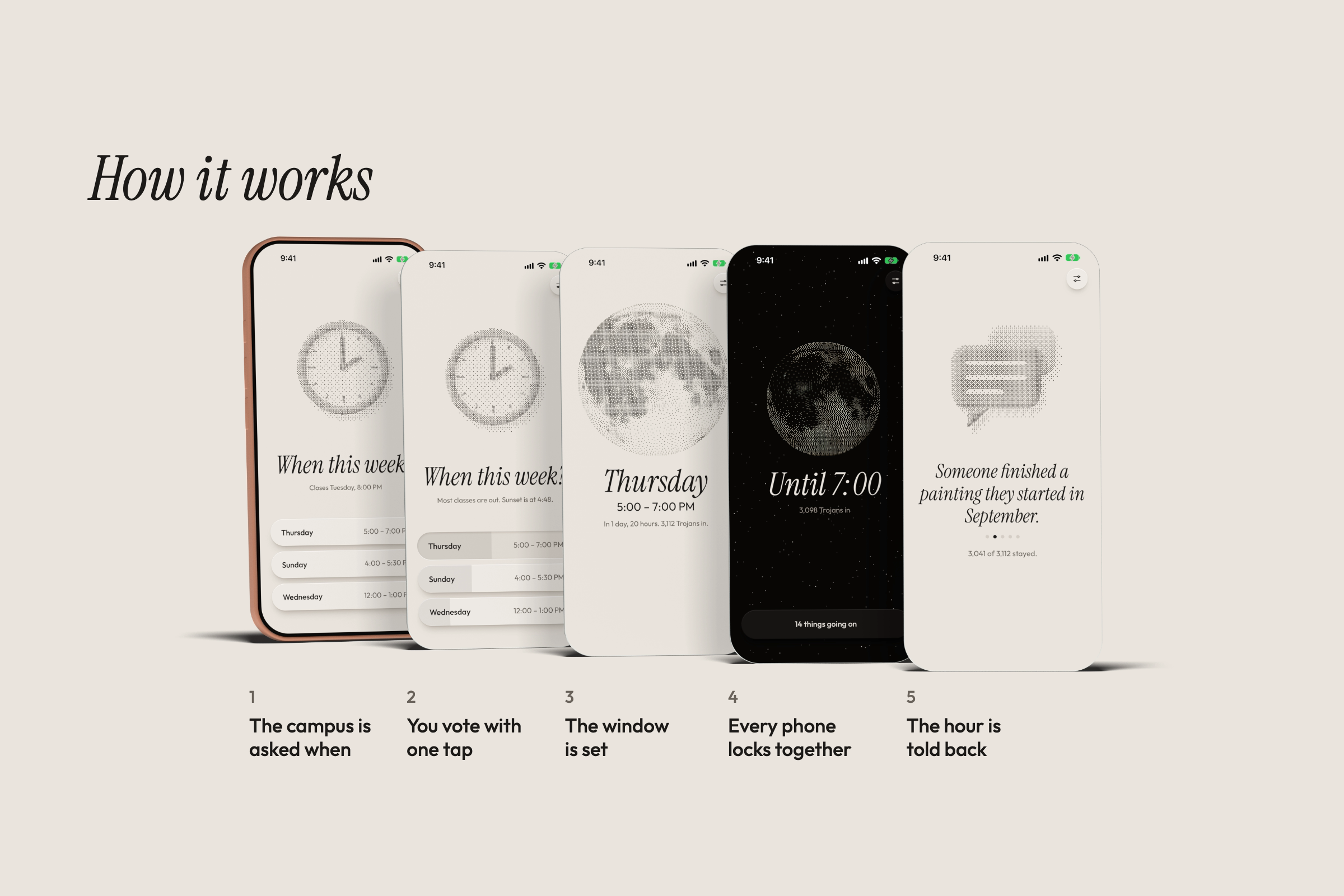
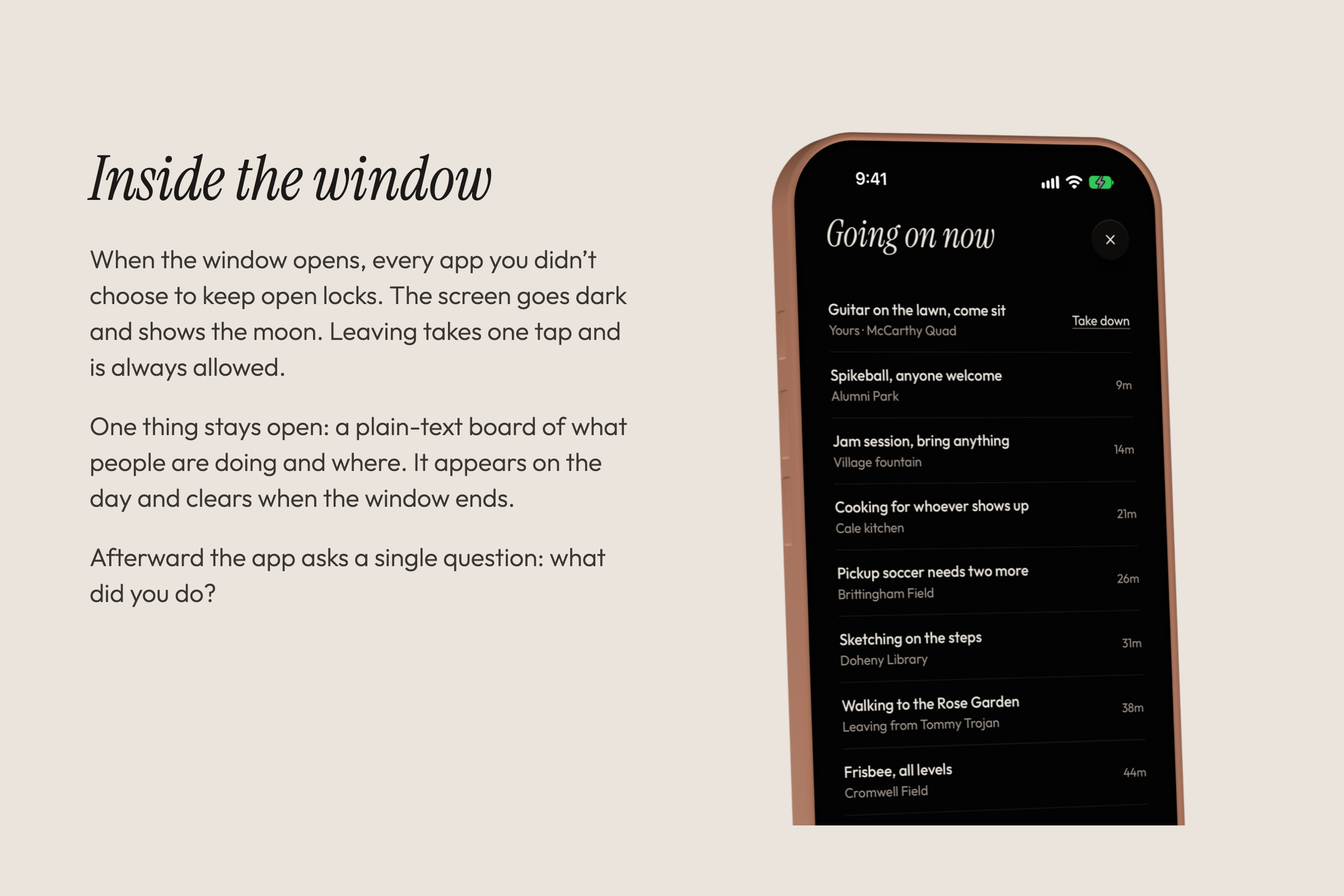
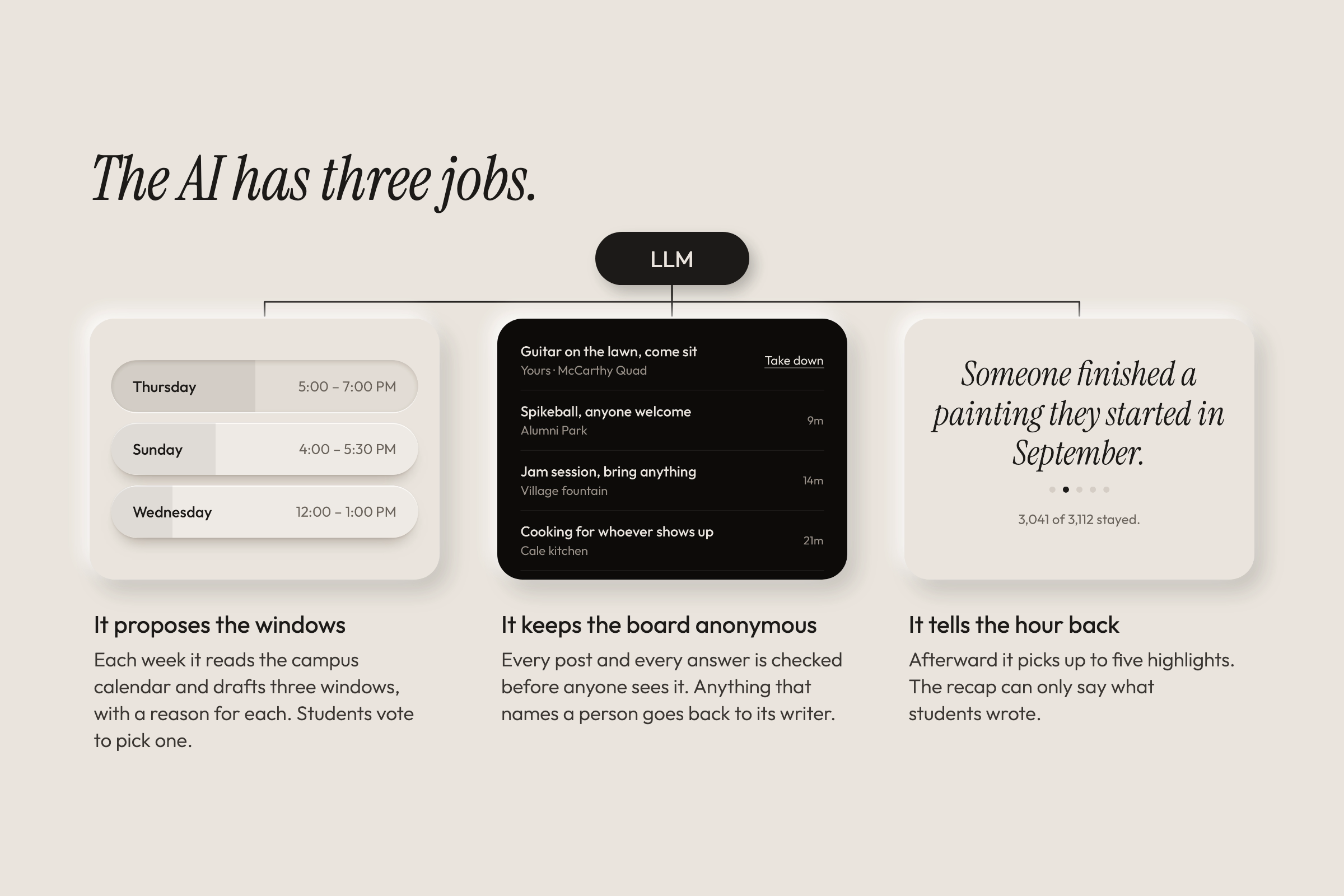
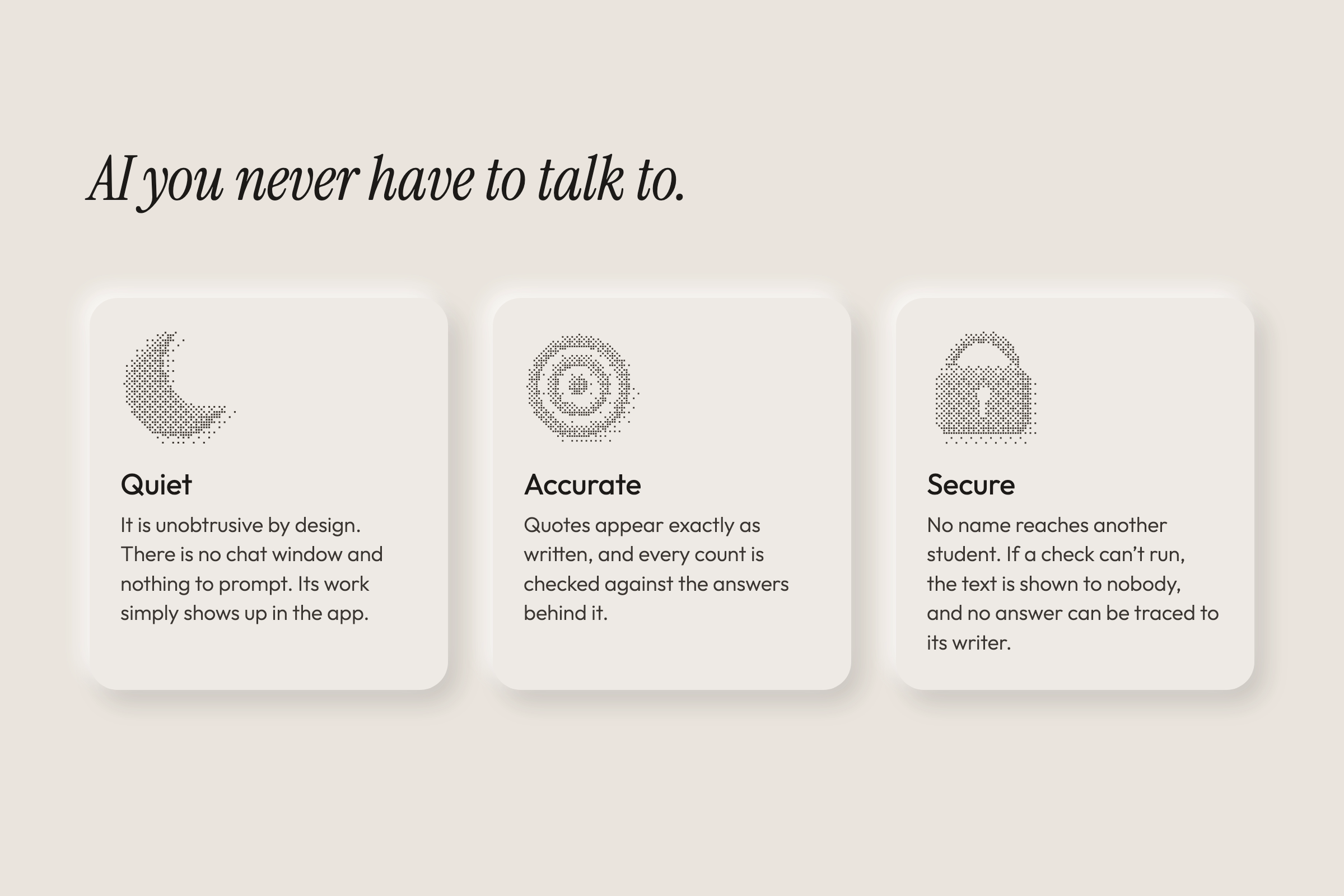
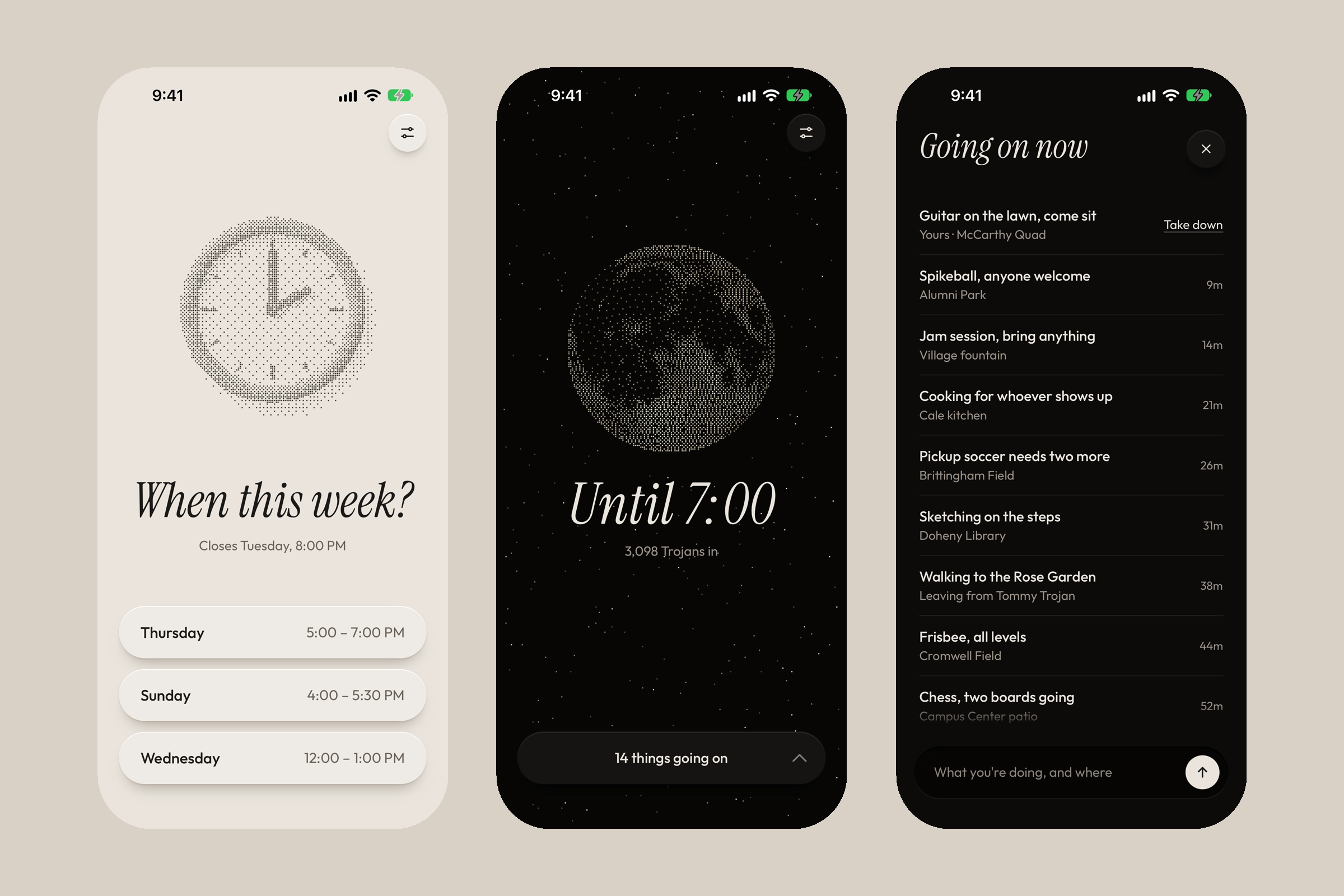
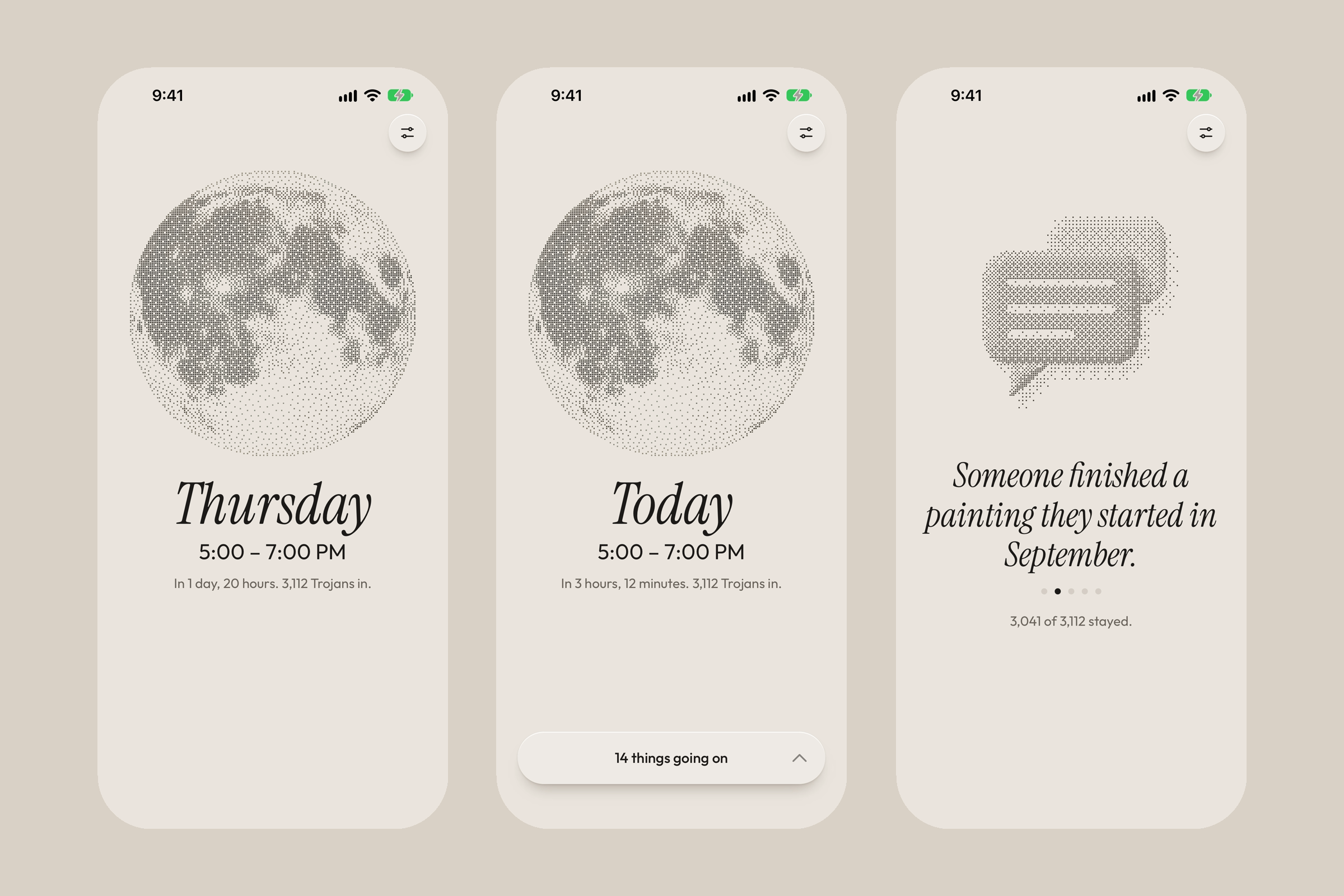
Once a week, at a time the campus votes on, every USC student with the Quiet Hours app has their distracting apps lock together for about two hours. The apps you choose to keep, such as Phone and Maps, stay open, and anyone can leave with one tap. During the window, students can post what they are doing and where on a plain-text board, so anyone can see what's going on and what they might like to join. Afterward the app asks one question: what did you do? It turns those answers into a few highlights from the hours.
It is a time when there's nothing to miss.
How I built it
Engineered with AI agents (Claude Fable 5.2 + Opus 5.5): A native SwiftUI iPhone app on Apple's Screen Time frameworks, a TypeScript server on Cloudflare Workers and D1 with 118 passing tests, Claude Opus 5.5 through the Claude API, and a web demo of the same screens.
Challenges
I agonized over the UI for quite a while. I went back and forth between designs and honestly thought every iteration would be "it". But seeing each one built never quite landed for me. I am very happy with the idea and how it works, and the interface is very close.
What I learned
The idea that finally clicked for me is building from essence. I start with the experience I want someone to have and the values I want the thing to hold, before the technology, the route, or any part of the product. From there, the product is the smallest set of parts that serves that essence. Anything else is cut. It sounds simple in theory and is not at all in execution. I have by no means mastered it, I just finally see its shape.
What's next for Quiet Hours
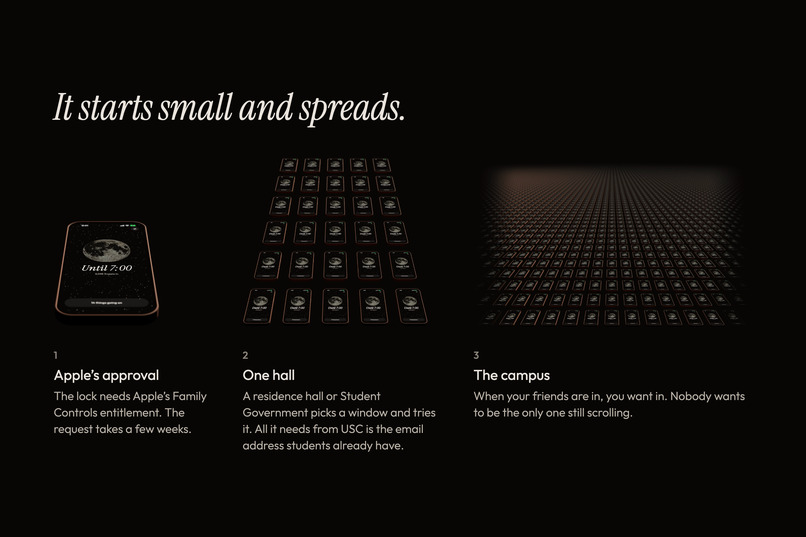
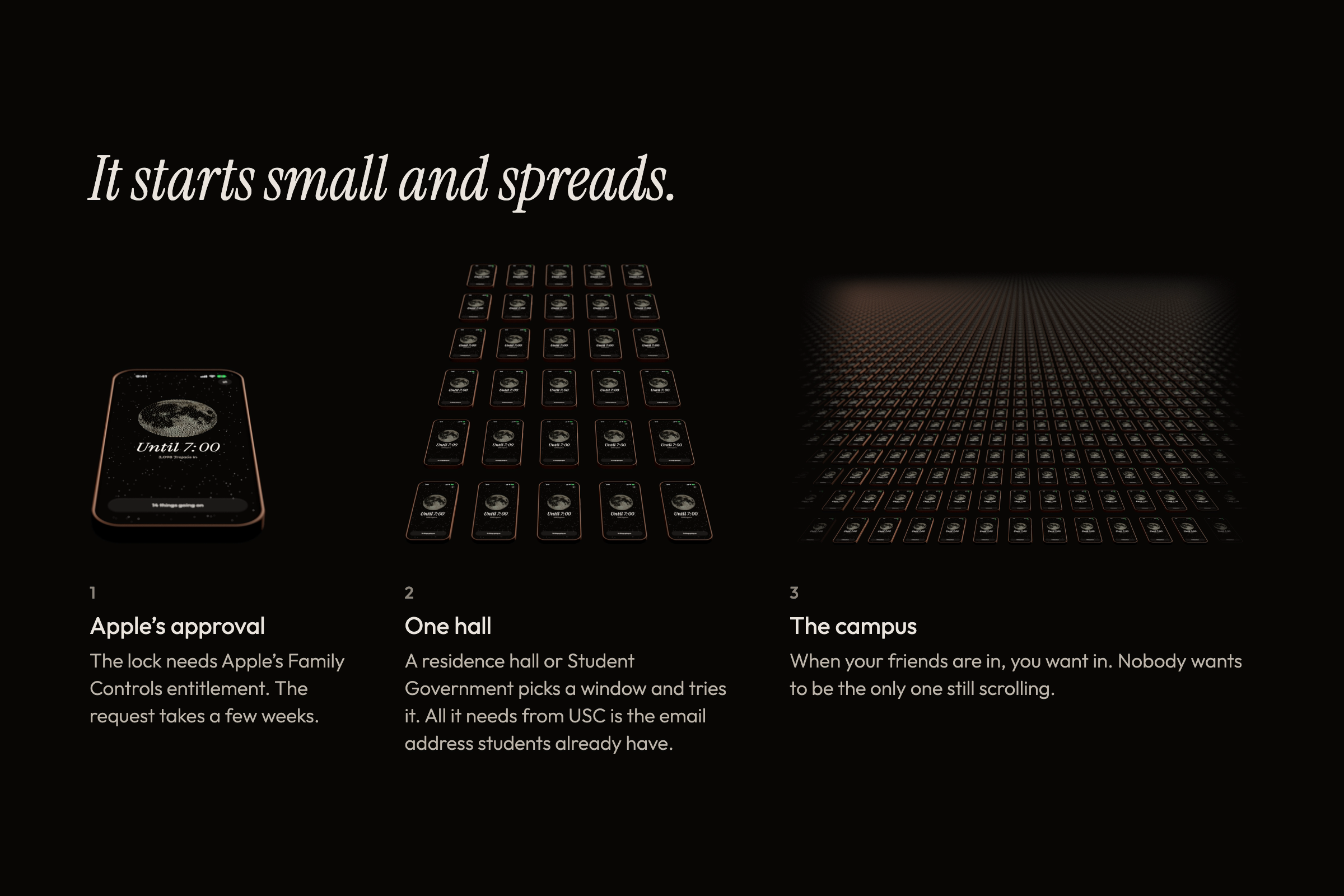
First comes Apple's approval. The lock is written on its Screen Time frameworks, and Apple switches that capability on only for approved developer teams, which takes a few weeks. Alongside that come general polish and a few small features, such as a window whose length adjusts from week to week. Then one residence hall or Student Organization tries the thing, and it compounds from there, friend by friend.
Built With
- activitykit
- api
- claude
- cloudflare
- code
- css
- d1
- hono
- html
- javascript
- screen
- swift
- swiftui
- time
- typescript
- vitest
- workers
