## Inspiration
What if a sound left something behind that you could pick up and investigate?
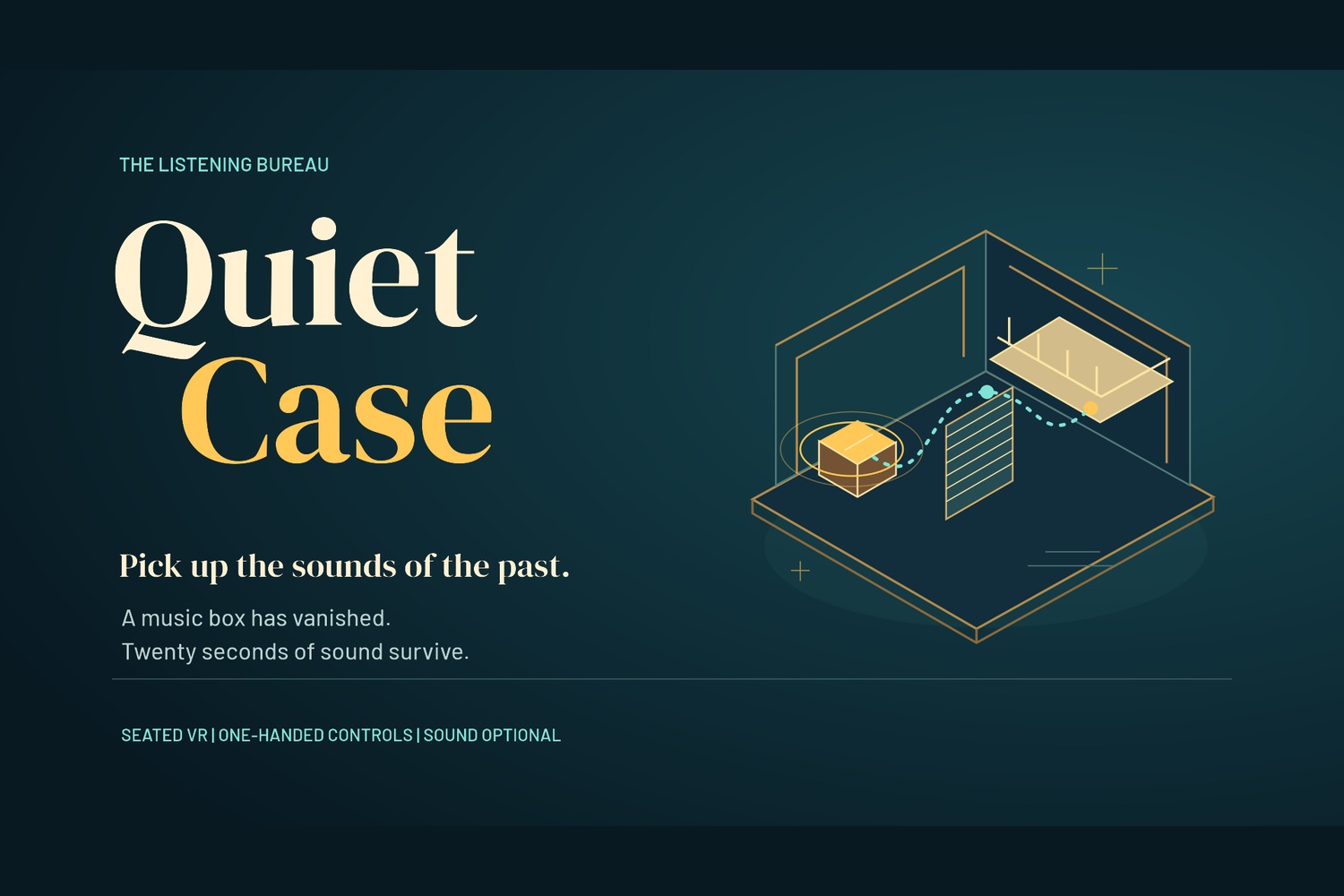
Detective games often ask us to read about what happened. We wanted players to examine it: a rhythm, a position, a trail through space. Quiet Case turns that idea into a miniature detective toybox, designed for seated, hands-first VR.
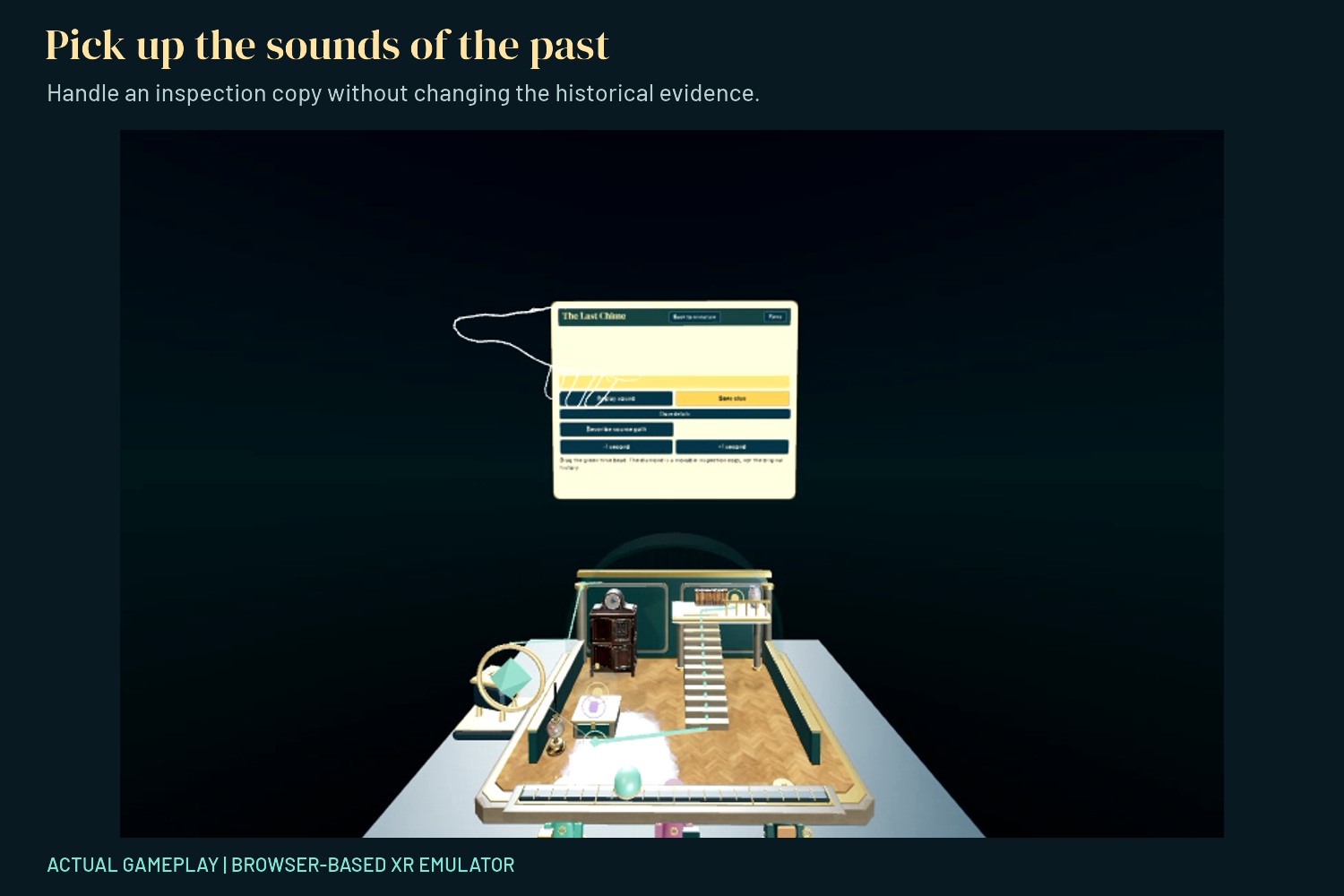
Our guiding promise: Pick up the sounds of the past.
## What it does
An object has disappeared. Twenty seconds of recorded sound survive. Your task is to discover who moved it and where it ended up.
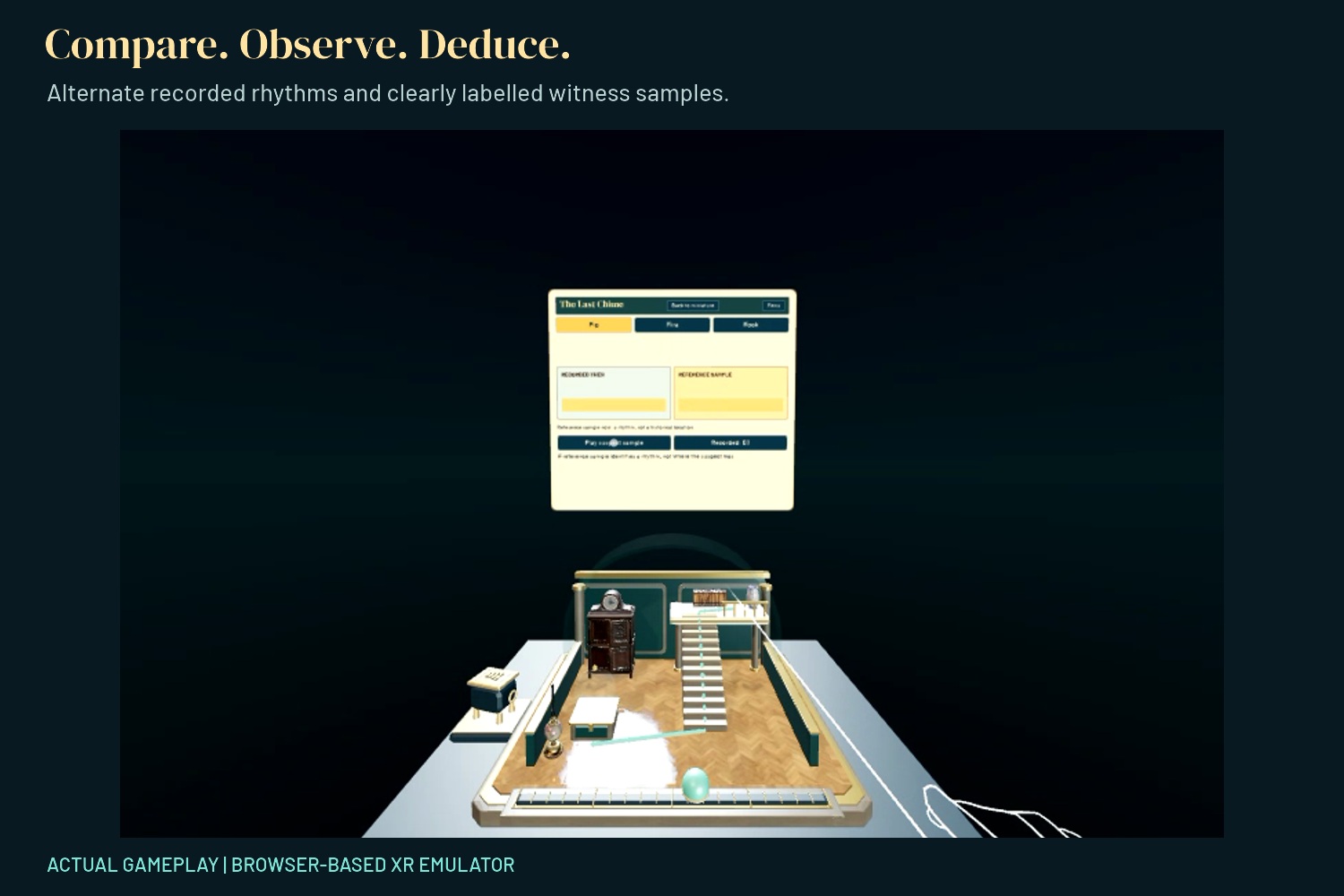
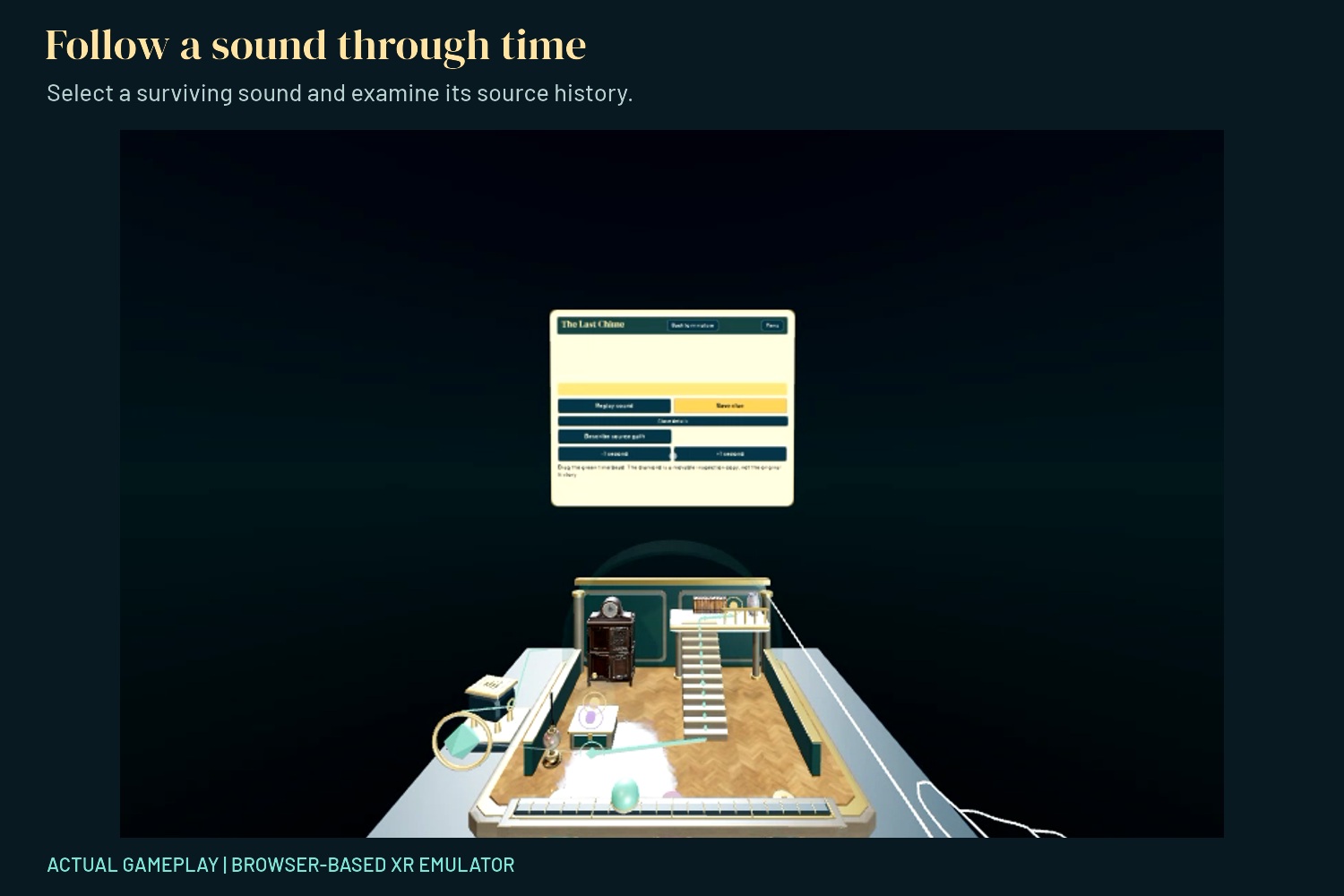
Explore a miniature world, select a surviving sound, and replay or scrub its source history. Follow its movement through the scene, compare recorded rhythms with witness samples, and save observations as evidence. Then build a theory and watch the miniature reconstruct what happened.
There are two playable mysteries:
- The Last Chime: investigate a missing music box in a clockwork museum.
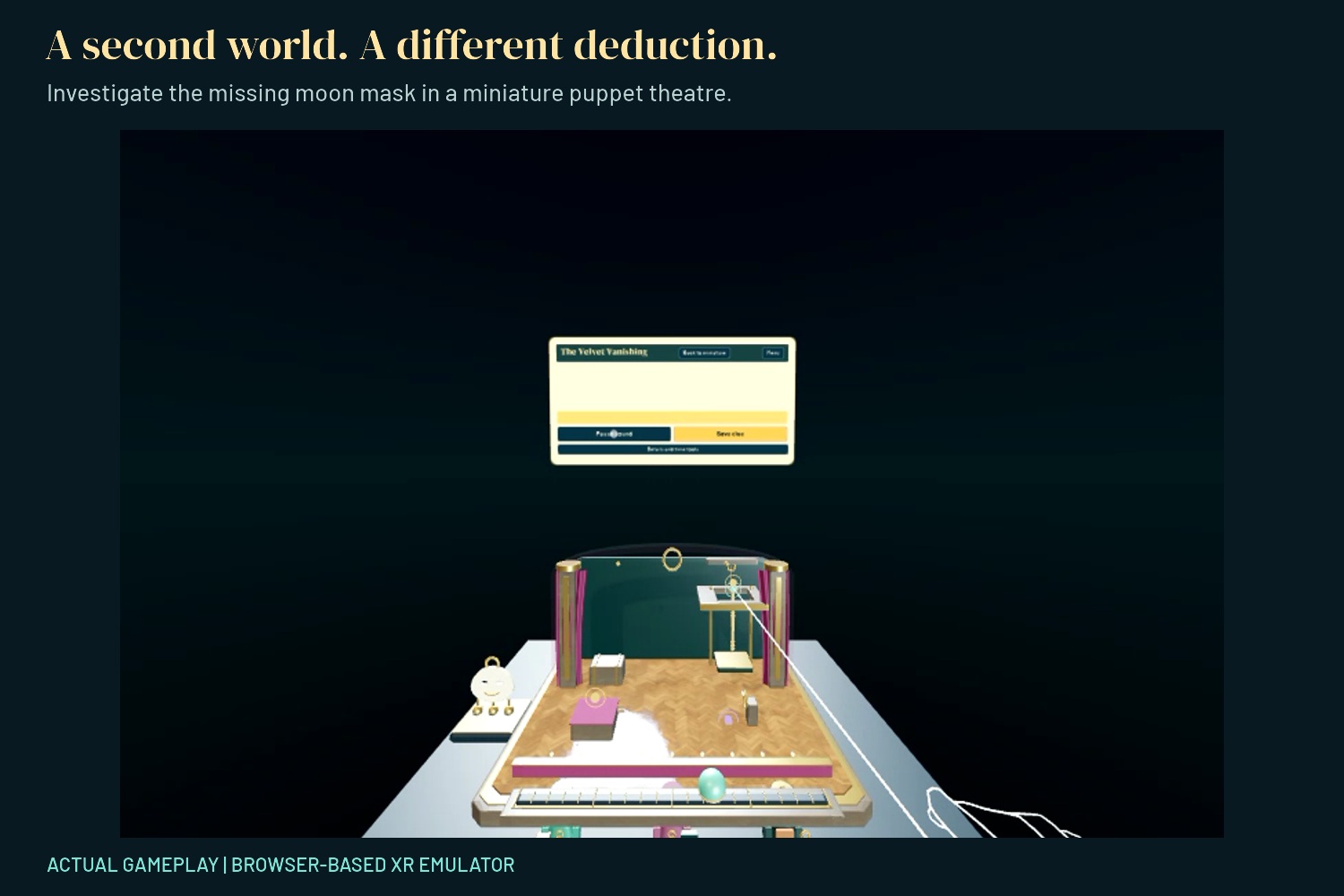
- The Velvet Vanishing: investigate a missing moon mask in a puppet theatre, where an object's journey and its mover's journey are not necessarily the same.
You can examine history, but you cannot change it. Solving the mystery means connecting observations, not simply guessing an answer.
## Designed around the player
The game introduces its controls through a short, playable lesson. During investigation, one contextual surface opens at a time, keeping attention on the miniature rather than a dashboard.
Every meaningful sound has equivalent visible rhythms, captions and source-history information. Sound is optional. Players can use one hand, choose button alternatives to dragging, adjust the board's position and size, and enable reduced motion. Hints are requested, not forced. Incorrect theories preserve progress, with no timer or penalties.
## How we built it
Quiet Case uses Meta's Immersive Web SDK, TypeScript, Three.js and WebXR, with spatial interfaces authored in UIKitML. Web Audio generates the evidence sounds and interaction feedback locally.
One canonical timeline drives source positions, audio, visible rhythms and reconstruction. Moving an inspection copy never changes the historical evidence. Each mystery retains its own progress, while comfort preferences carry between cases.
The game is hosted as an HTTPS static website on Microsoft Azure. No account, backend or external AI service is required to play.
## Challenges and lessons
Our biggest design challenge was making investigation feel like detective work rather than operating an audio tool. We replaced a crowded interface with contextual observations, staged theory-building and side-by-side rhythm comparisons.
Keeping playback, scrubbing, interruptions and reconstruction synchronized was equally important. We learned that clear feedback and reliable recovery matter as much as visual polish.
## What we accomplished
Two complete mysteries share one interaction language but require different deductions. Both include onboarding, evidence collection, witness comparisons, requested hints, explanatory reconstructions and saved progress.
The final release passed 38 unit tests, six production-browser tests and 60 emulated-hand checks, alongside CI and deployed-file verification. Testing used browser-based XR emulation; physical Quest performance, tracking and comfort remain unverified.
## What's next
Our next priorities are physical Quest testing and uncoached first-time playtests, followed by improvements based on observed confusion, readability and reach. Future mysteries would introduce new deductions rather than simply repeat the same puzzle in another setting.
Built With
- azure
- css3
- html5
- meta-immersive-web-sdk
- playwright
- three.js
- typescript
- uikitml
- vite
- vitest
- web-audio-api
- webxr
