-
-
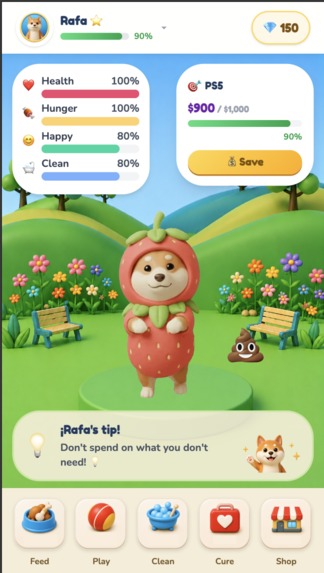
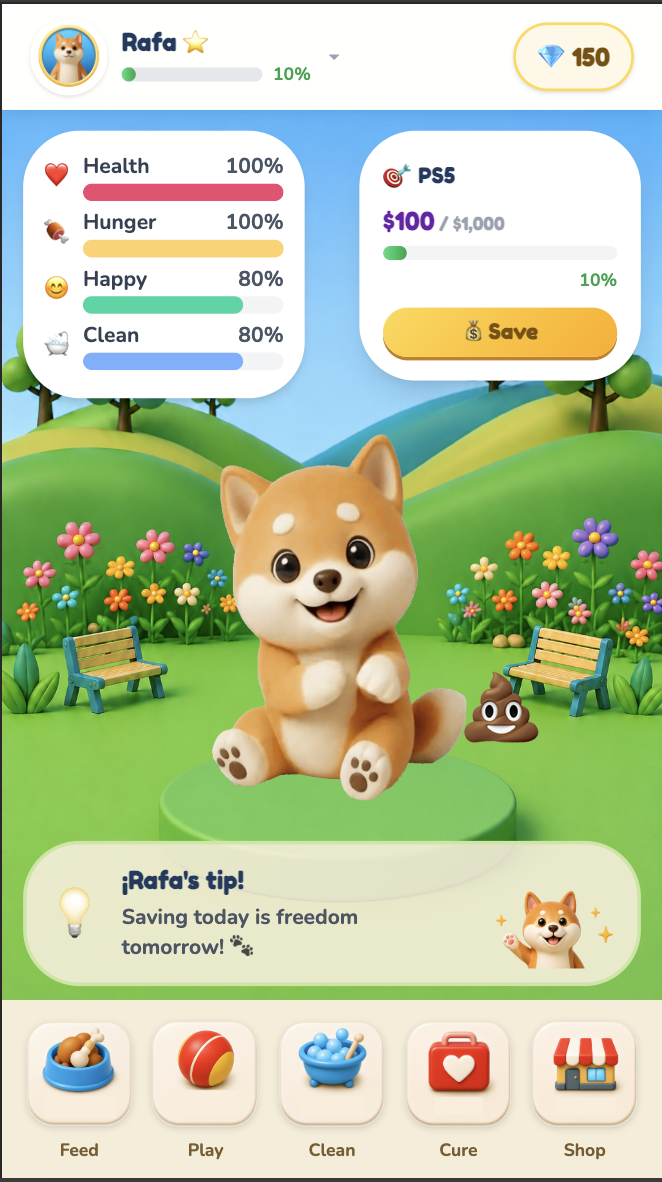
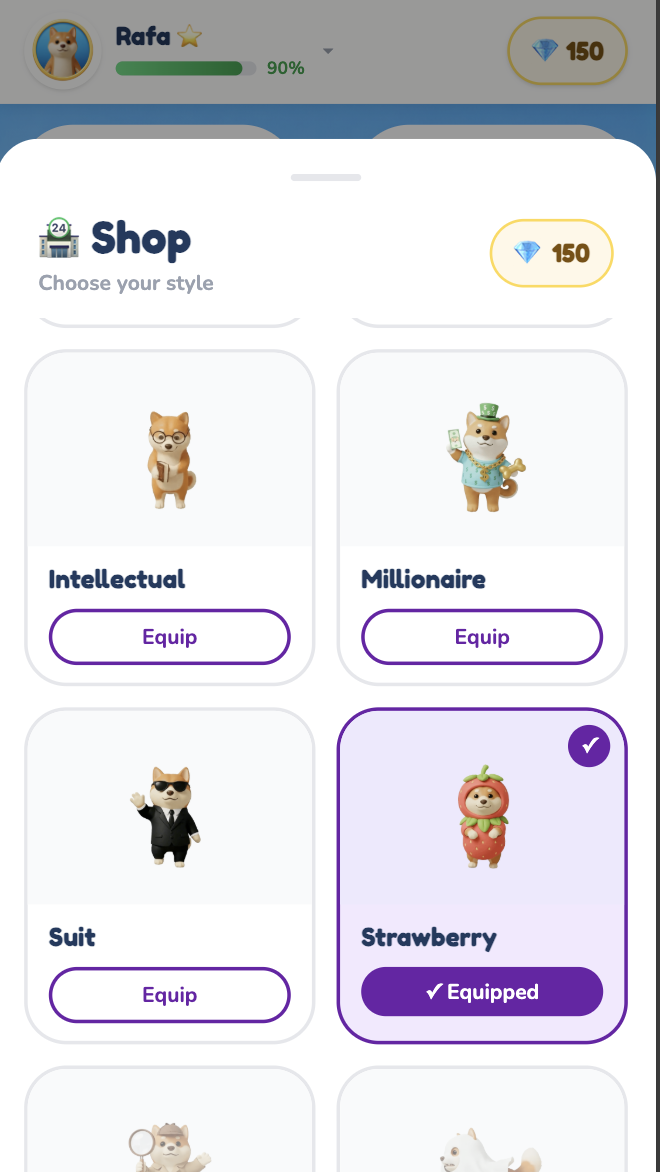
Adult version + skin from store
-
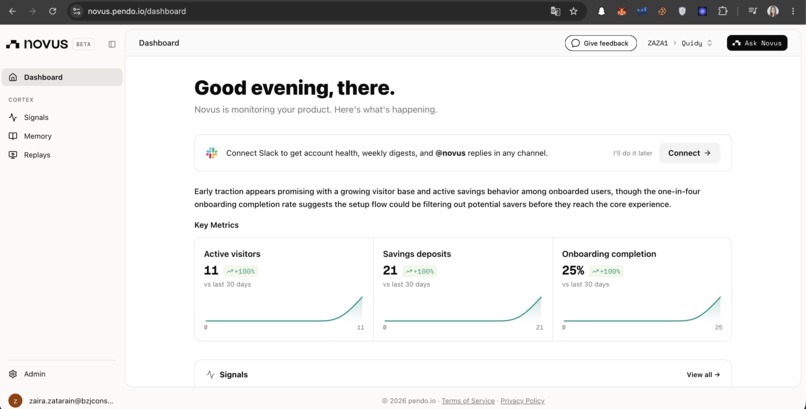
-
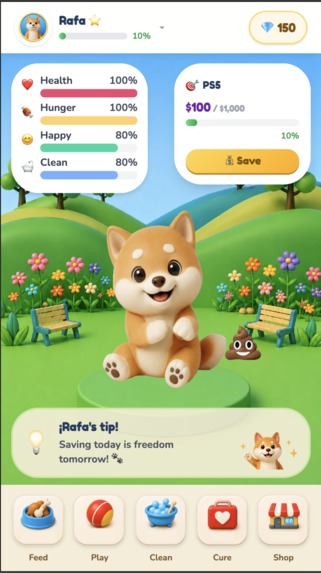
Baby version
-
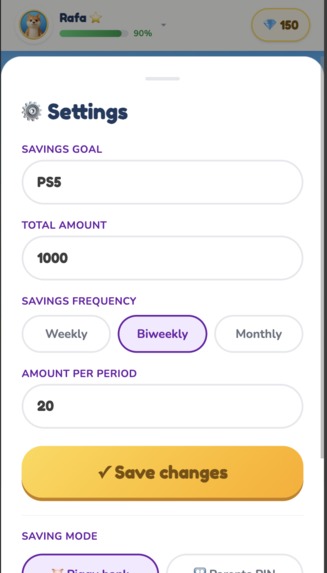
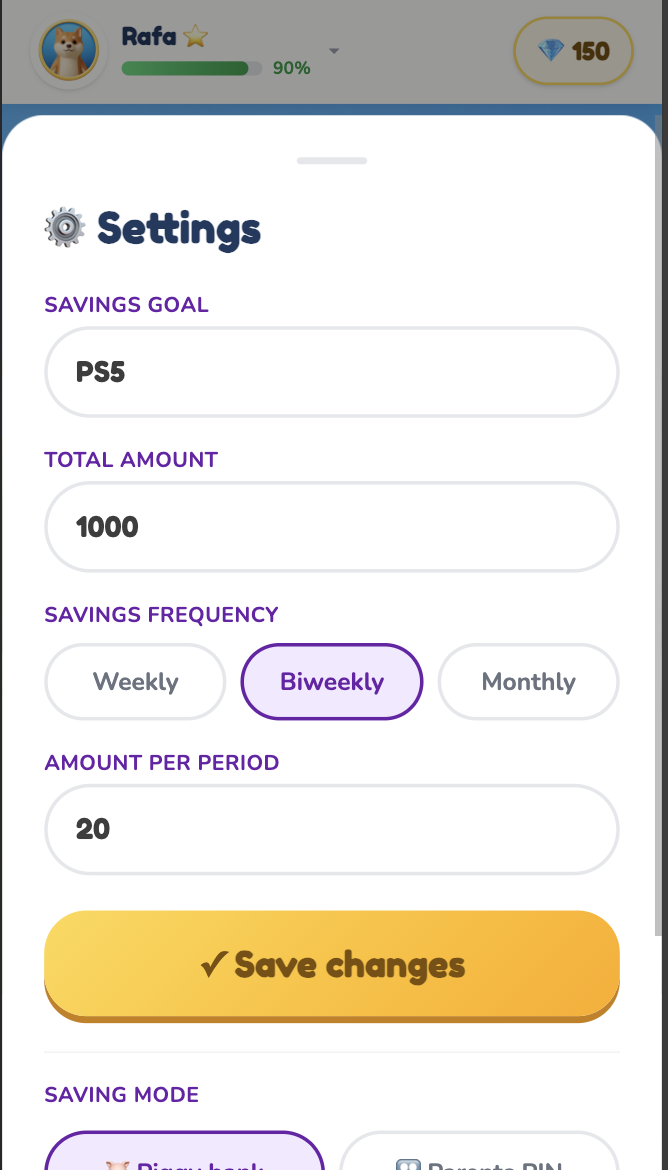
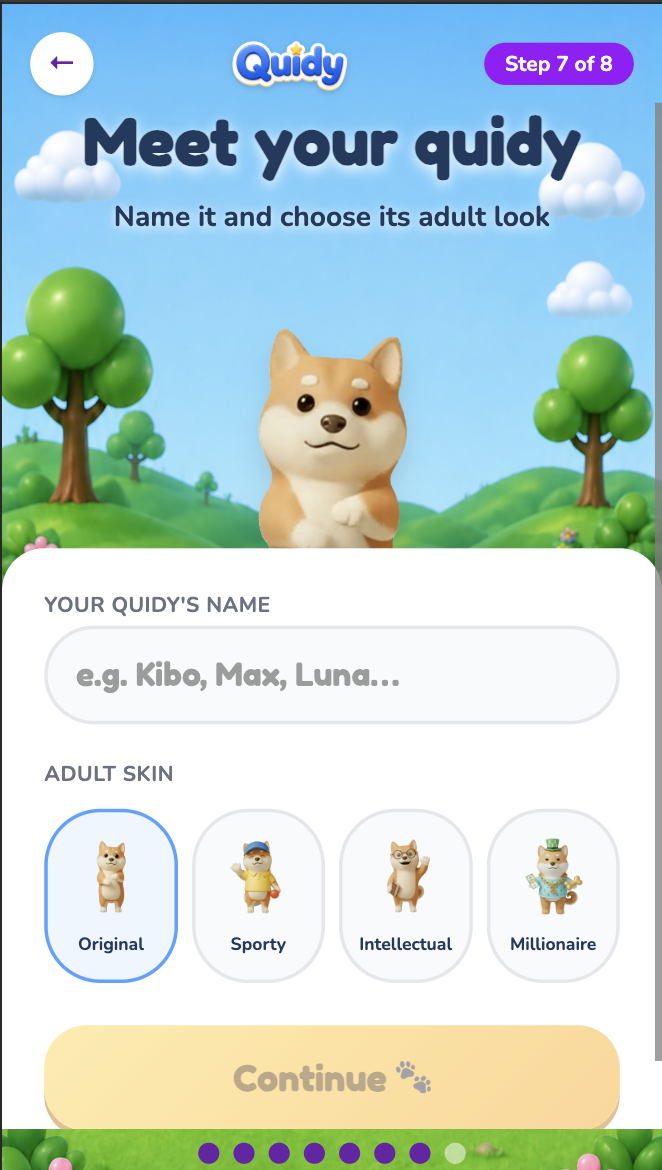
Configuration screen
-
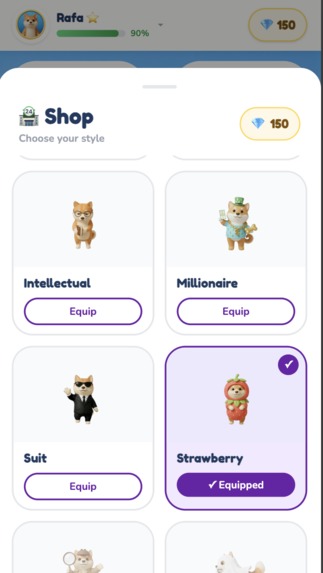
Store options for buy new skin
-
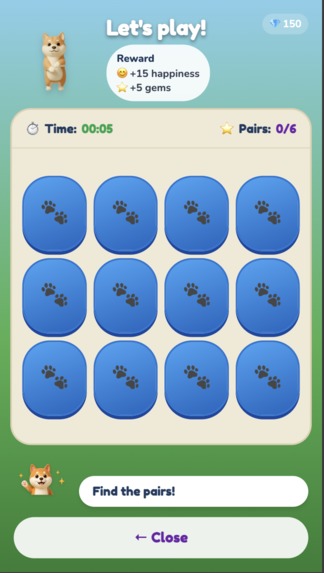
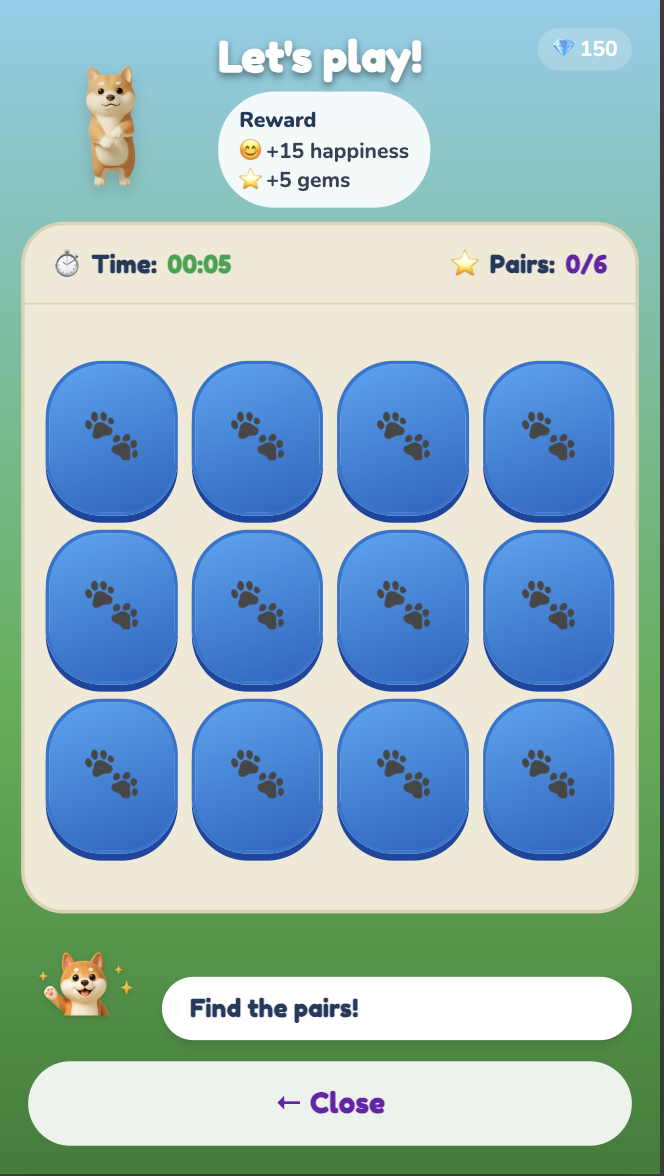
Game for happiness
-
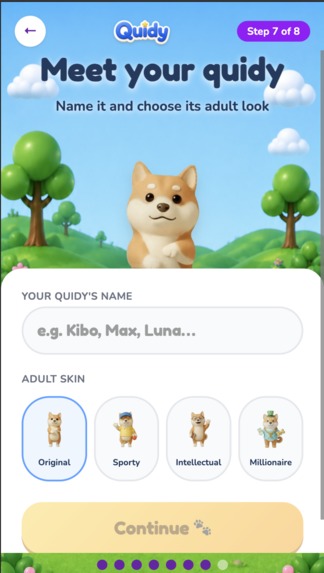
Meet the quidy
-
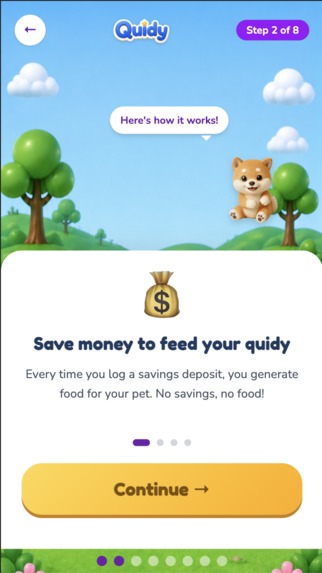
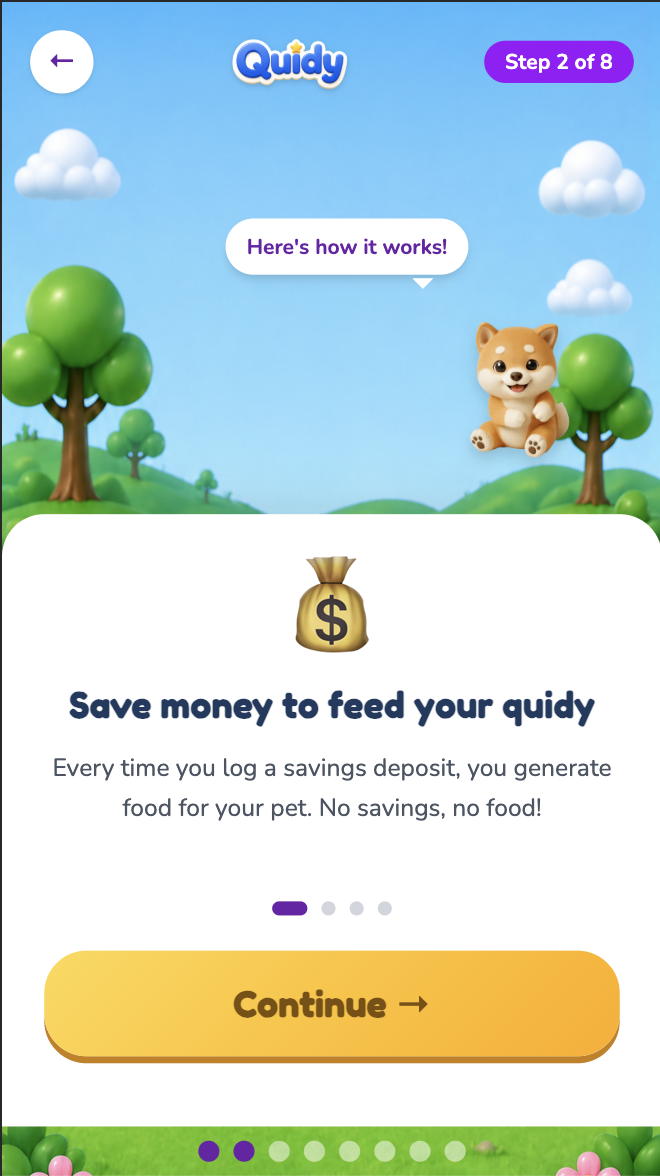
Instructions
-
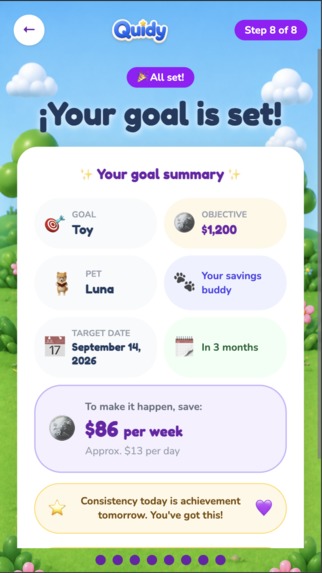
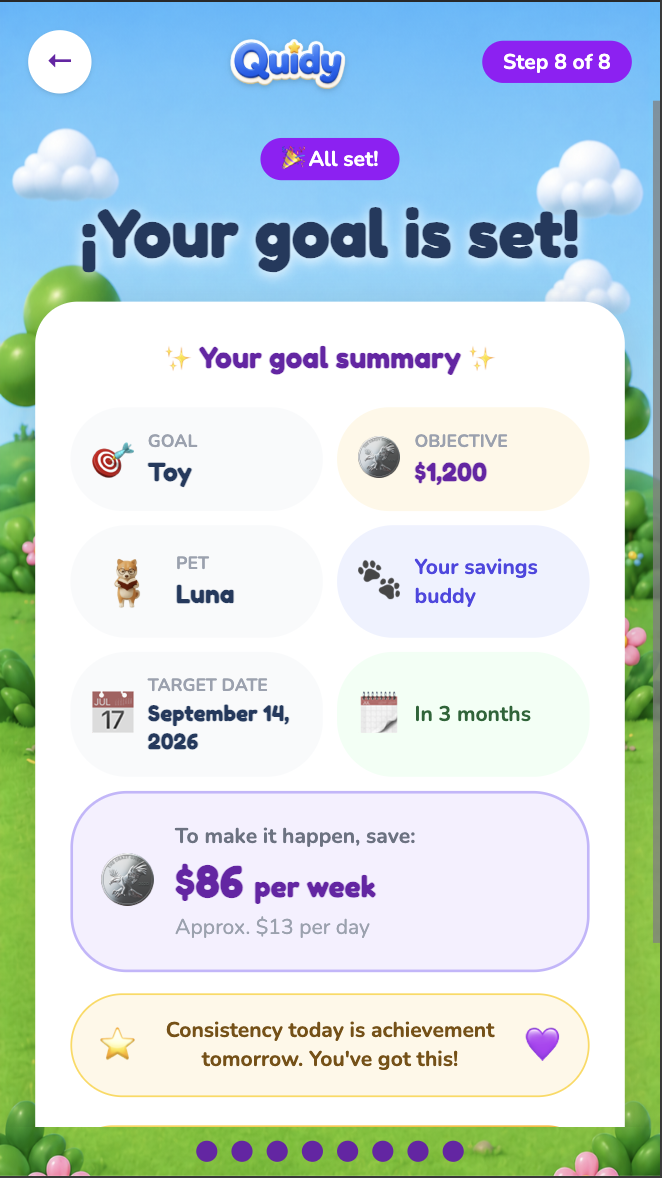
Goal set
-
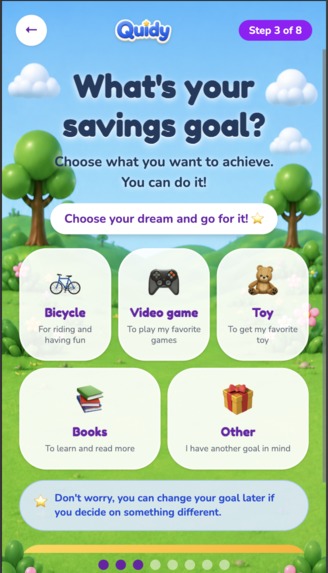
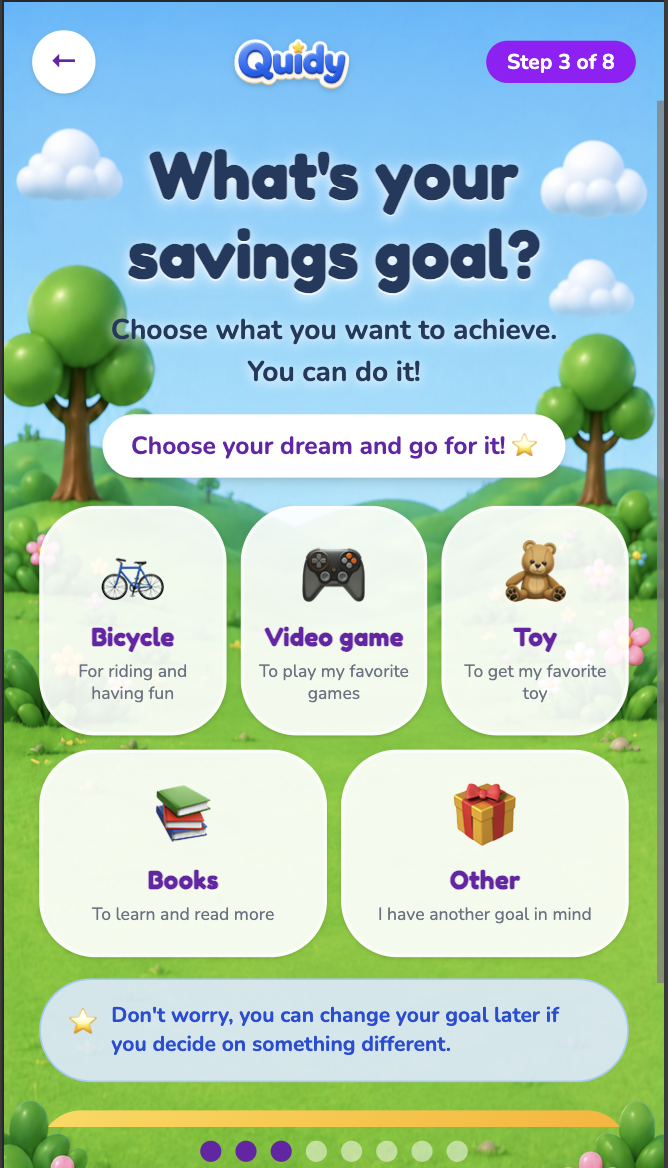
Savings goal
-
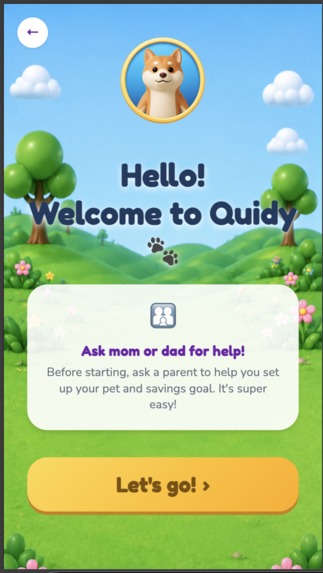
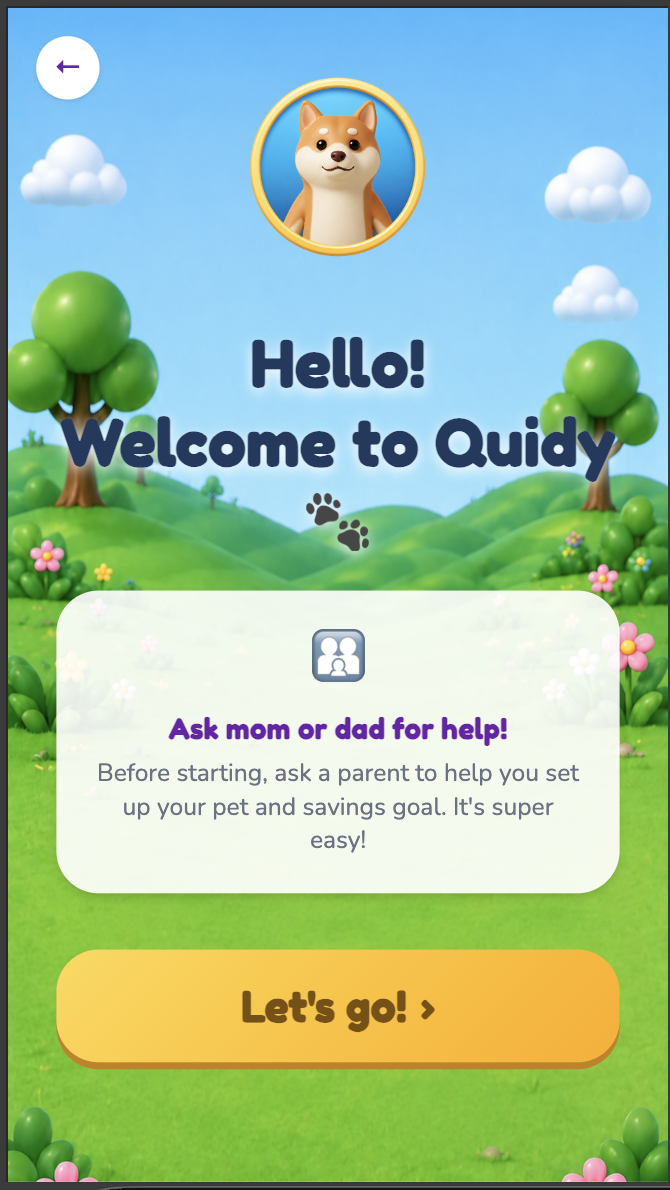
Welcome
Quidy 🐾 — The Savings Companion for Kids
Inspiration
Saving money is one of the most important life skills, yet most children never develop the habit early enough. Financial literacy in Latin America is often introduced too late, and when it is, it usually feels complicated, intimidating, or simply boring.
We wanted to create something kids would genuinely want to come back to every day—something that feels less like a lesson and more like an adventure.
That led us to a simple question:
What if saving money felt like taking care of something you love?
From that idea, Quidy was born.
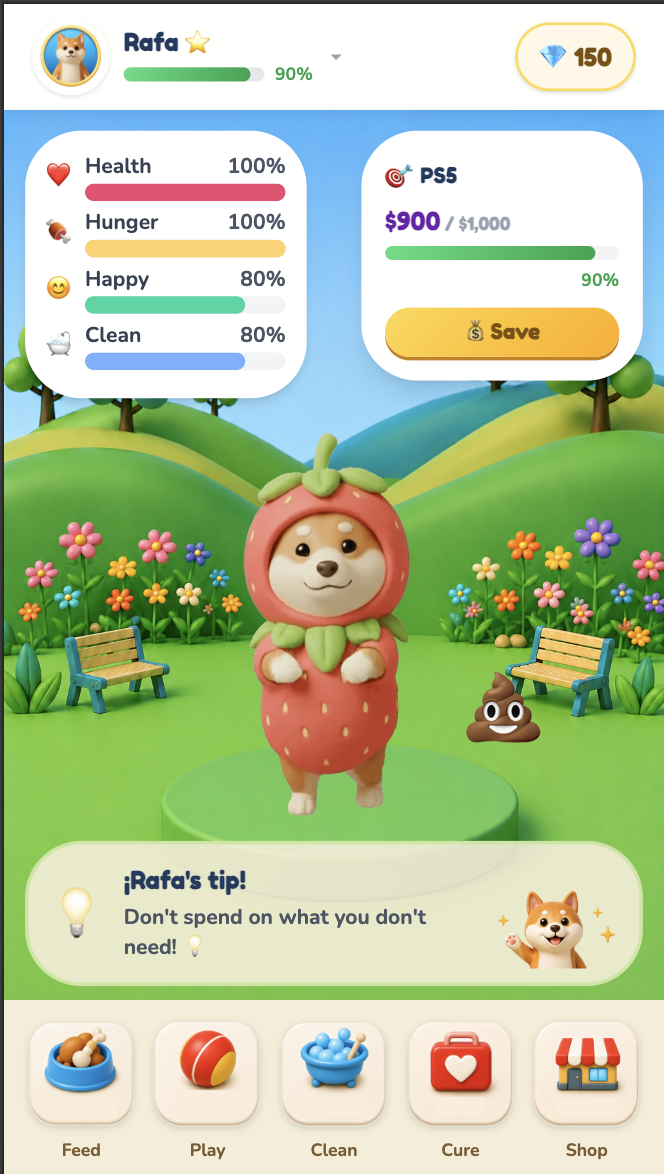
Quidy transforms saving from an abstract concept into an emotional and interactive experience. Instead of watching numbers grow on a screen, children care for a virtual companion that reflects their saving habits. When they save, their pet thrives. When they stop, their pet needs attention.
It's a Tamagotchi-inspired experience designed to help children build healthy financial habits through play.
What It Does
Quidy is a gamified savings companion designed for children aged 8–12.
Kids create a savings goal—whether it's a bicycle, a toy, a video game, or something special they want—and begin their savings journey alongside their virtual pet.
Quidy transforms saving from an abstract concept into a visible and emotional experience.
Instead of simply tracking numbers, children care for a companion that reflects their progress. Every deposit becomes a positive action for their pet, reinforcing consistency through play and creating a stronger emotional connection to saving.
Key Features
- 🎯 Goal Setting — Define a savings goal, amount, and target date
- 🐾 Living Companion — A virtual pet that reacts to progress and encourages consistency
- 📈 Visual Progress Tracking — Clear and simple goal tracking designed for kids
- 🔔 Habit Reminders — Gentle nudges to keep the streak alive
- 📱 PWA-First Experience — Accessible from any device without requiring an app store
Quidy doesn't manage real money.
Instead, it helps children develop the mindset, motivation, and habits that make saving money possible in the real world.
How We Built It
We went from concept to working product in under 10 days as part of the Mind the Product Hackathon.
Frontend
- React 19 + TypeScript + Vite
- Tailwind CSS 4 for styling
- Framer Motion for all character animations and transitions
- Progressive Web App (PWA) configuration for cross-device support
Backend
- Supabase — PostgreSQL database with Row Level Security (RLS) for per-user data isolation and Auth for secure, passwordless onboarding
Infrastructure
- Vercel with auto-deploy on push to main via GitHub
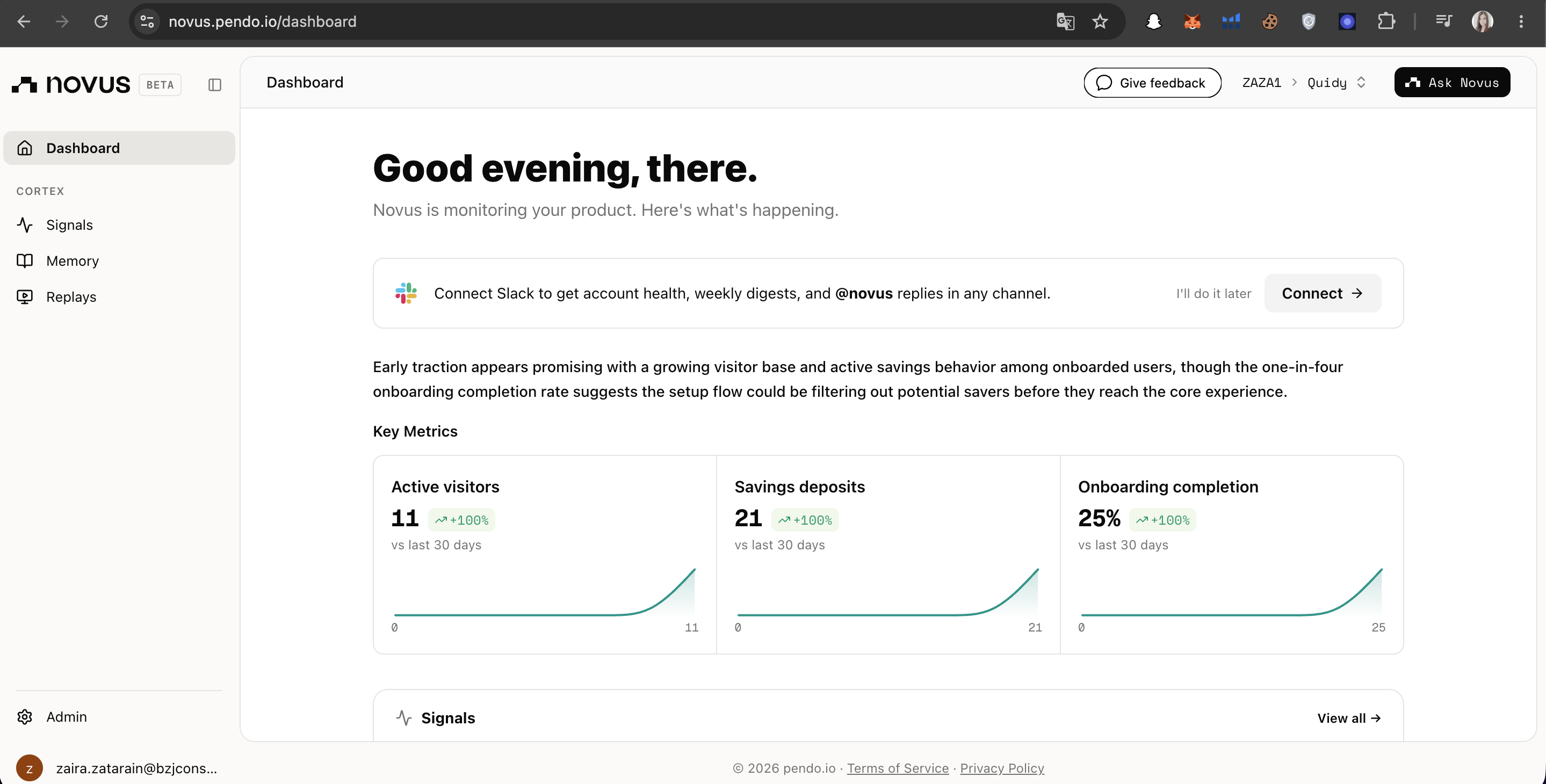
- Pendo for product analytics and user behavior insights
Team of 4
- Alma — Product strategy, UX design, user flows, gamification, and visual identity
- Zaira — Product strategy, Frontend and backend development, architecture, and implementation
- Camila — Research, ideation, audio design, testing, and quality assurance
- Karina — Research, ideation, user feedback, visual assets, and quality assurance
Every design and product decision was guided by a simple principle:
Would a child understand this in less than 10 seconds?
If the answer was no, we simplified it.
Challenges We Ran Into
1. Designing for Children Instead of Adults
One of our biggest challenges was understanding that good UX for adults does not automatically translate into good UX for kids.
Children require:
- Lower cognitive load
- Clearer visual cues
- Simpler navigation
- Stronger emotional feedback
We constantly simplified screens, reduced unnecessary decisions, and focused on making every interaction intuitive and rewarding.
2. Balancing Fun and Financial Education
We didn't want Quidy to become "just another game."
The challenge was creating something entertaining enough to encourage daily engagement while still reinforcing healthy financial habits.
Finding that balance between fun and purpose shaped nearly every feature.
3. Building a Complete Experience in Under Two Weeks
From onboarding flows and mascot interactions to achievements, missions, friends, and goal tracking, we had to prioritize relentlessly.
The biggest challenge wasn't building features—it was deciding which ideas not to build.
4. PWA vs. Native App
We made an early decision to go PWA instead of native to maximize reach without requiring an app store download. But PWAs come with real constraints: limited access to device APIs, inconsistent behavior across iOS and Android, and tricky offline support. We had to make deliberate tradeoffs and test constantly across devices to get the experience to feel native enough.
5. Animations that feel alive, not janky
Making Quidy feel like a real companion — not just a bouncing PNG — required careful work with Framer Motion. Getting the character to react contextually to user actions (goal created, savings added, milestone reached) without killing performance was a real balancing act.
Accomplishments That We're Proud Of
- 🚀 Built a fully functional product from scratch in under 12 days
- 🎨 Created a cohesive visual identity and lovable companion character
- 📱 Delivered a responsive PWA experience accessible on any device
- 🔒 Implemented secure user authentication and data isolation with Supabase RLS
- 🧩 Designed a complete savings journey, from onboarding to goal completion
- 🤝 Successfully collaborated as a cross-functional team of four under tight deadlines
- 💬 Received genuinely enthusiastic feedback from real users — including kids who really used the app
Most importantly:
We transformed a traditionally boring topic into something children can emotionally connect with.
What We Learned
The biggest lesson we learned is that children do not connect with money itself.
They connect with stories, emotions, characters, and progress.
By turning saving into caring for a companion, we discovered that financial habits become easier to understand, more engaging, and more rewarding to maintain.
We also learned that simplicity matters more than features.
Every screen, interaction, and decision was evaluated through one question:
Would a child understand this without help?
That principle shaped the entire product.
Another important lesson was validating ideas quickly. The moments where potential users smiled, got excited, or became confused taught us far more than hours of internal discussion.
What's Next for Quidy
We see Quidy as the beginning of a larger financial learning ecosystem for children.
We want:
- 🌎 LATAM expansion — Localization for Mexico, Colombia, Argentina,
Future versions could include:
- 🐣 Pet evolution and unlockable companions
- 🎯 Daily and weekly savings missions
- 👨👩👧 Parent accounts and family challenges
- 👥 Expanded social features and shared goals
- 🎮 Educational mini-games focused on financial concepts
- 🏅 Real-world rewards tied to savings milestones
- 🌎 Localization for different LATAM countries and cultures
Our vision is simple:
Help children build healthy financial habits before they ever need a bank account.
Final Thoughts
Quidy isn't really about money.
It's about helping children build the confidence, discipline, and habits they'll carry for the rest of their lives.
If we can make saving feel exciting today, we can help create a generation that feels more prepared for tomorrow.
Built With
- claude
- framer
- gif
- novus
- postgtres
- pwa
- react
- supabase
- typescript
- vercel


Log in or sign up for Devpost to join the conversation.