QuickStud-E
Inspiration
Studying often involves hours of manual work before learning even begins. Students spend valuable time creating flashcards, organizing notes, and deciding what information matters most. We wanted to remove that friction by letting AI handle the tedious preparation so learners can focus on understanding and retaining knowledge.
QuickStud-E was inspired by a simple question:
What if any educational resource could become a personalized study experience in seconds?
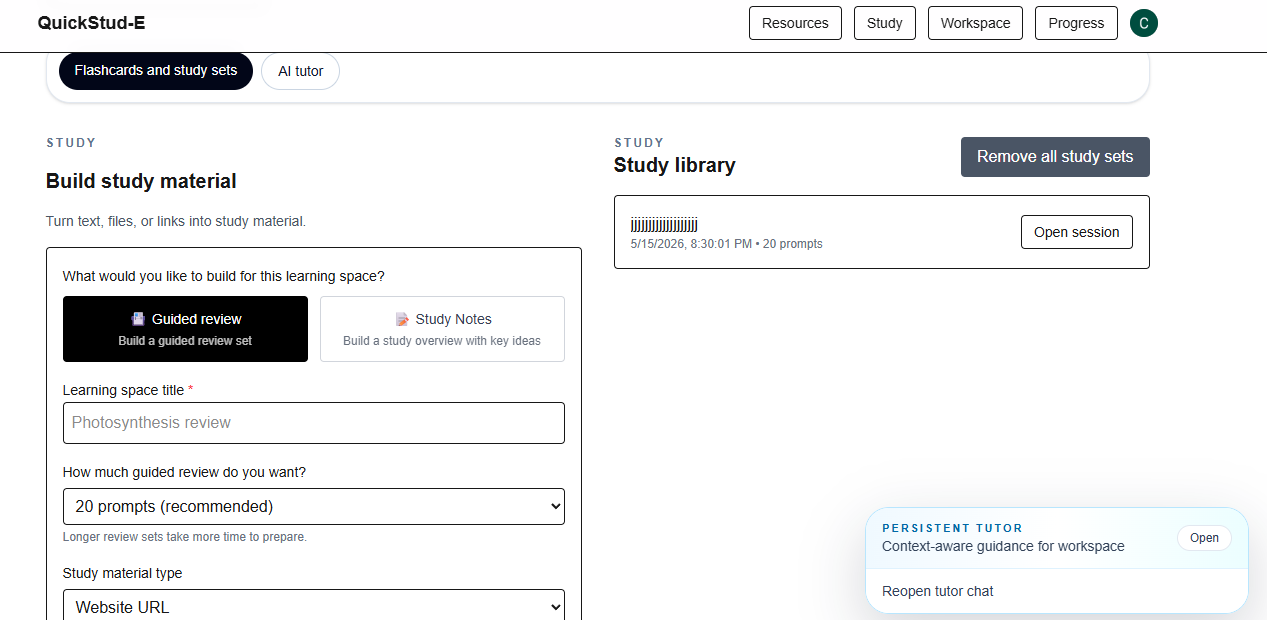
Whether the source is a PDF, PowerPoint, website, YouTube video, or plain text, QuickStud-E transforms it into interactive flashcards that are ready to study immediately.
What it does
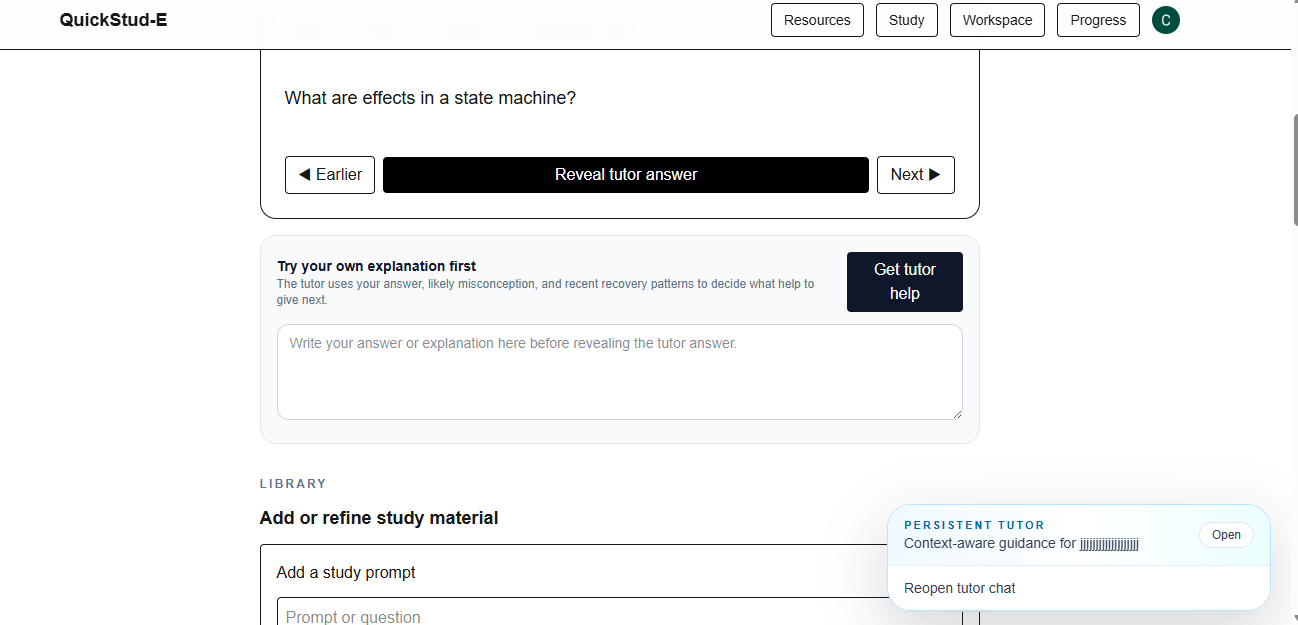
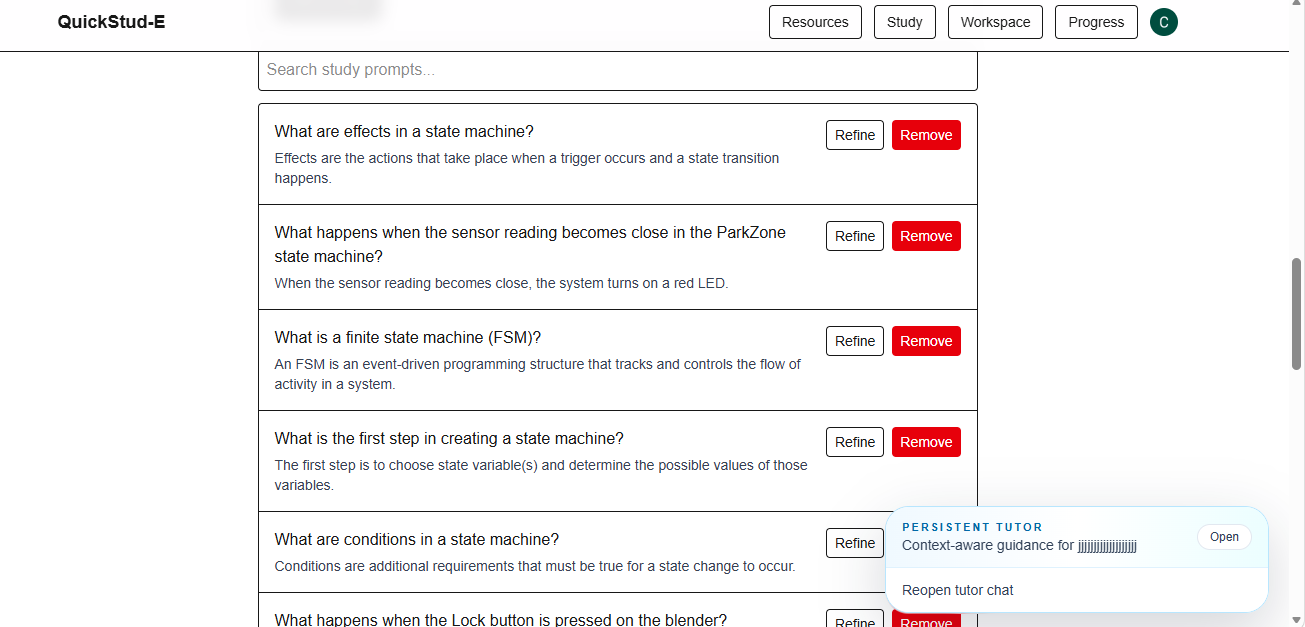
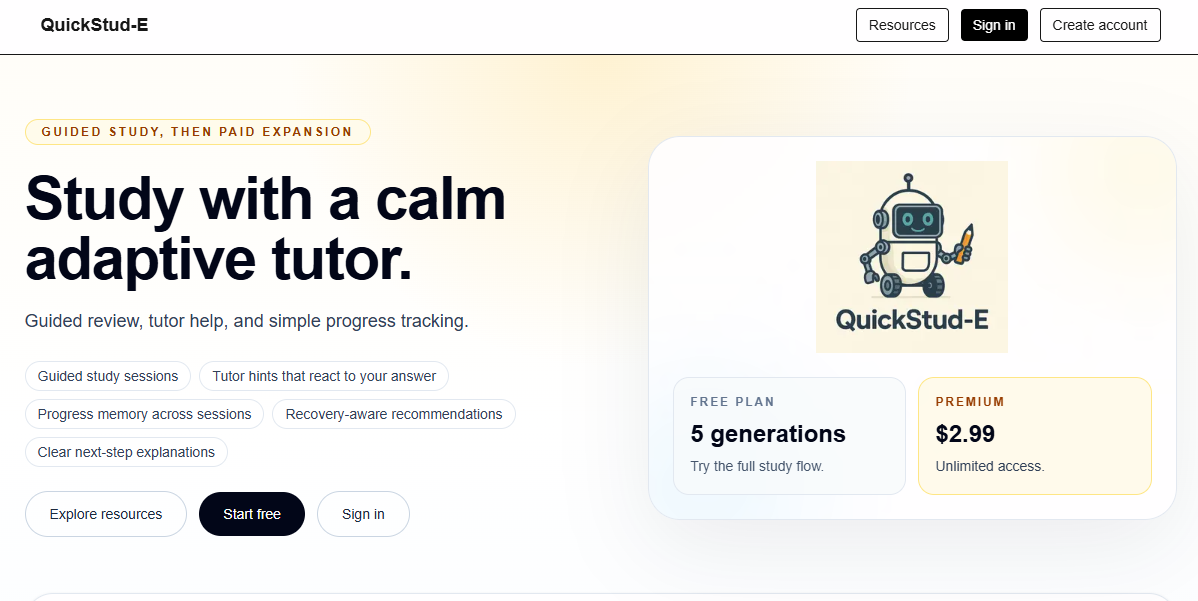
QuickStud-E is an AI-powered study platform that converts educational content into high-quality flashcards.
Users can:
- 📄 Upload PDFs, PowerPoint presentations, or text files
- 🌐 Generate flashcards from websites
- ▶️ Create flashcards from YouTube videos
- 🤖 Automatically generate question-and-answer pairs using AI
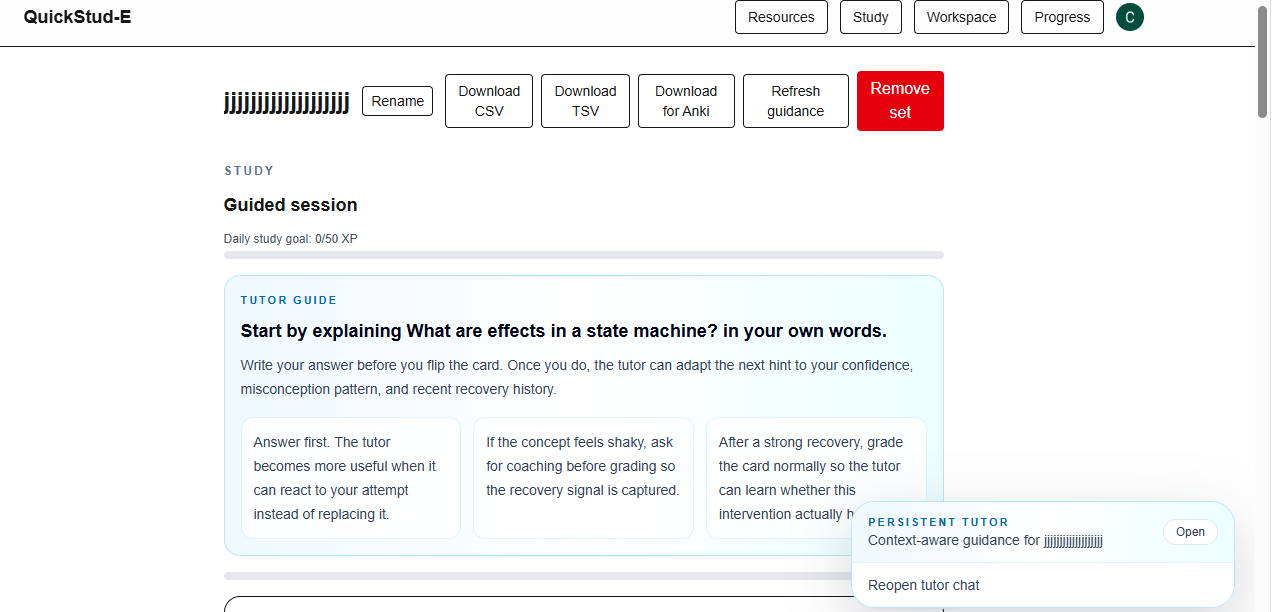
- 📚 Organize flashcards into decks
- 🔁 Review material using spaced repetition
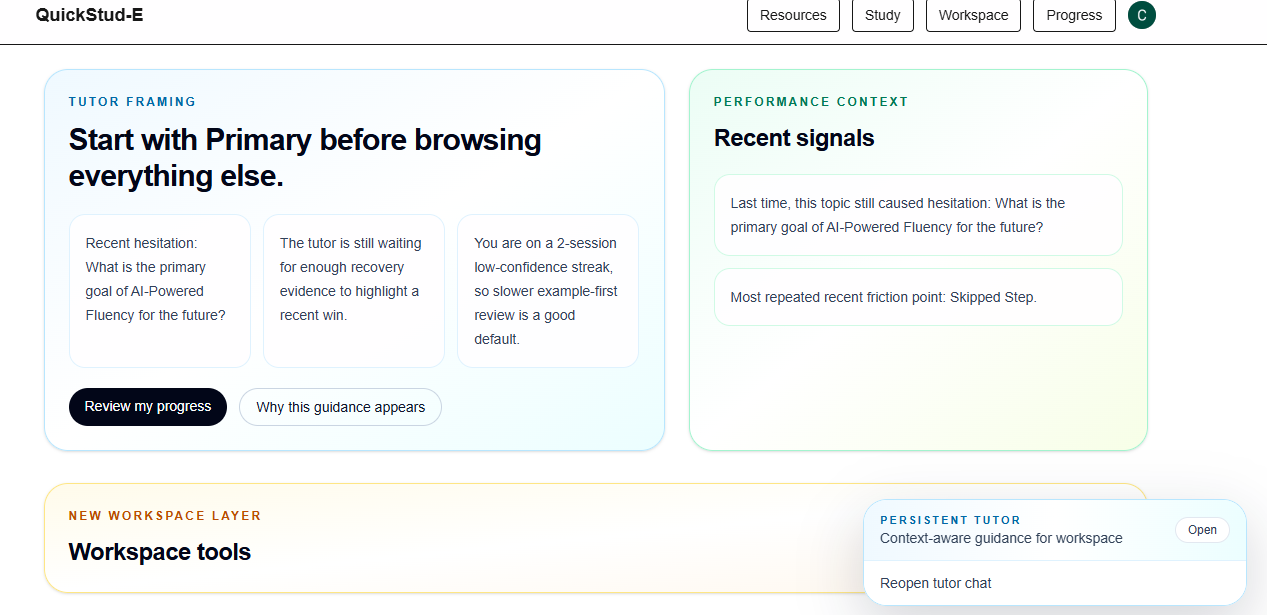
- 📈 Track progress over time
- 💾 Export flashcards for offline use
Instead of spending time building study materials, students can begin learning almost immediately.
How we built it
QuickStud-E was built as a modern full-stack web application using:
- Next.js (App Router)
- React
- TypeScript
- Tailwind CSS
- OpenAI API for flashcard generation
- Prisma ORM
- PostgreSQL
- Clerk Authentication
- Vercel for deployment
The workflow is straightforward:
- The user uploads learning material.
- The application extracts text from the source.
- AI analyzes the content and generates structured flashcards.
- Flashcards are validated and stored in a PostgreSQL database.
- Users review their decks using a spaced repetition algorithm that schedules future reviews based on previous performance.
This architecture keeps the interface simple while allowing powerful AI capabilities behind the scenes.
Challenges we ran into
One of the biggest challenges was handling multiple types of educational content.
Each source has different extraction requirements:
- PDFs require text parsing.
- PowerPoint presentations contain text distributed across slides.
- Websites must be cleaned before processing.
- YouTube videos depend on transcript availability.
Another challenge was producing consistently useful flashcards. Large language models are incredibly capable, but they still require carefully designed prompts and validation to ensure responses are structured, accurate, and useful for studying.
Finally, integrating spaced repetition with AI-generated content required balancing automation with educational effectiveness so that reviews remain personalized over time.
Accomplishments that we're proud of
We're especially proud that QuickStud-E can take a wide variety of educational resources and turn them into study-ready flashcards in just a few seconds.
We're also proud of creating a clean, approachable interface that hides much of the technical complexity behind an experience that feels simple for students.
Perhaps most importantly, QuickStud-E demonstrates how AI can eliminate repetitive work while keeping the learner at the center of the experience.
What we learned
Building QuickStud-E reinforced several important lessons:
- AI performs best when paired with deterministic software rather than replacing it entirely.
- Educational tools benefit from reducing friction more than adding features.
- Good prompt engineering is only part of the solution—validation and thoughtful UX are equally important.
- Students value speed, clarity, and reliability above novelty.
The project also deepened our understanding of full-stack AI application development, document processing, authentication, cloud deployment, and scalable application architecture.
What's next for QuickStud-E
We're excited to continue expanding the platform with features such as:
- More adaptive learning algorithms
- Personalized study recommendations
- Collaborative class decks
- Rich multimedia flashcards
- Mobile applications
- AI tutoring and explanations for difficult concepts
- Analytics that help students identify knowledge gaps before exams
Our long-term vision is to build an AI study companion that helps learners spend less time preparing to study—and more time actually learning.
Built With
- clerk
- git
- github
- gpt-5
- neon
- next.js
- node.js
- openai-api
- postgresql
- prisma
- react
- tailwind-css
- typescript
- vercel
- vercel-blob

Log in or sign up for Devpost to join the conversation.