-
-
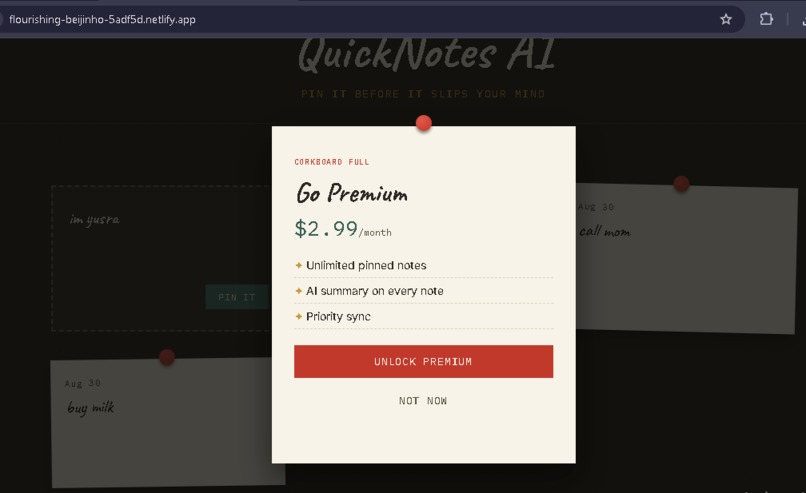
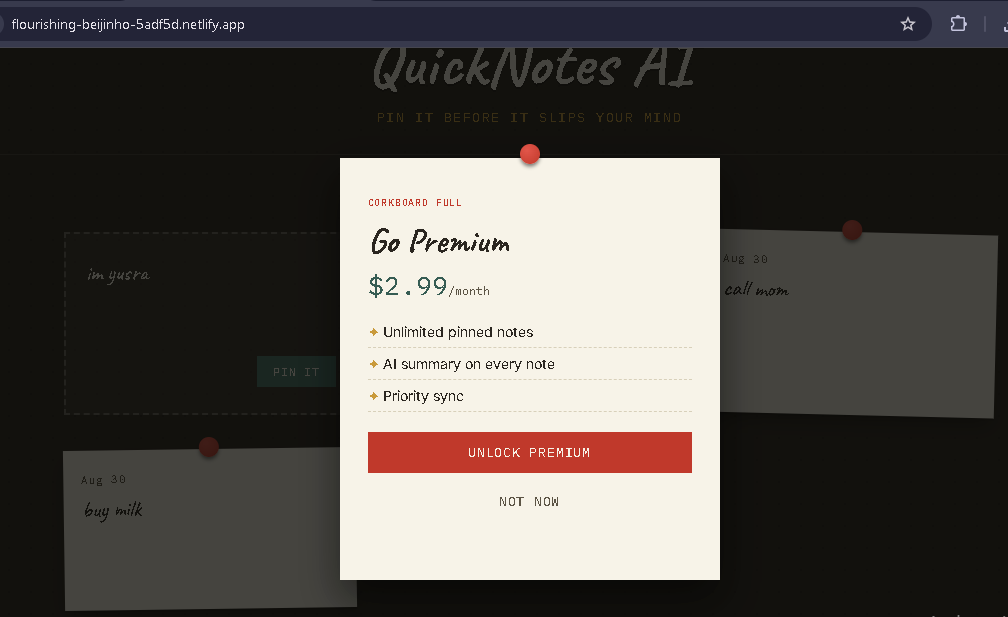
RevenueCat-powered paywall
-
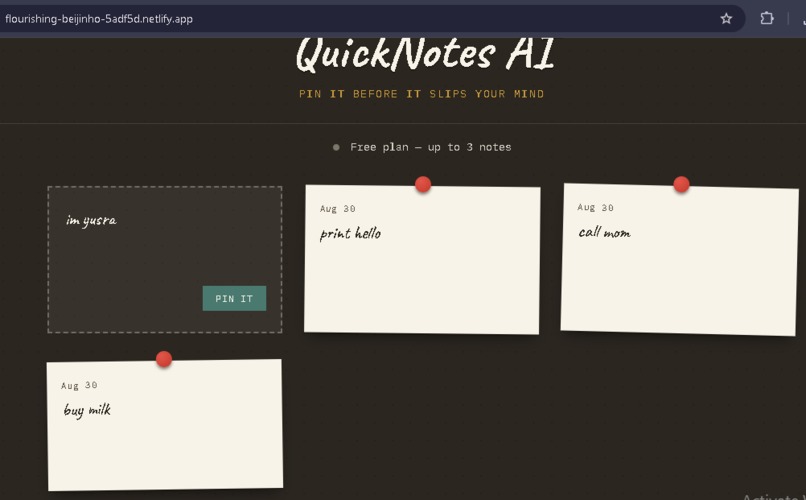
Pinning notes on the corkboard
-
Inspiration
I wanted to build something simple but real for the RevenueCat Shipathon — a productivity app that actually demonstrates a working subscription paywall, not just a mockup. Sticky notes are something everyone understands, so I built a "corkboard" style notes app and used RevenueCat to gate a premium tier.
What it does
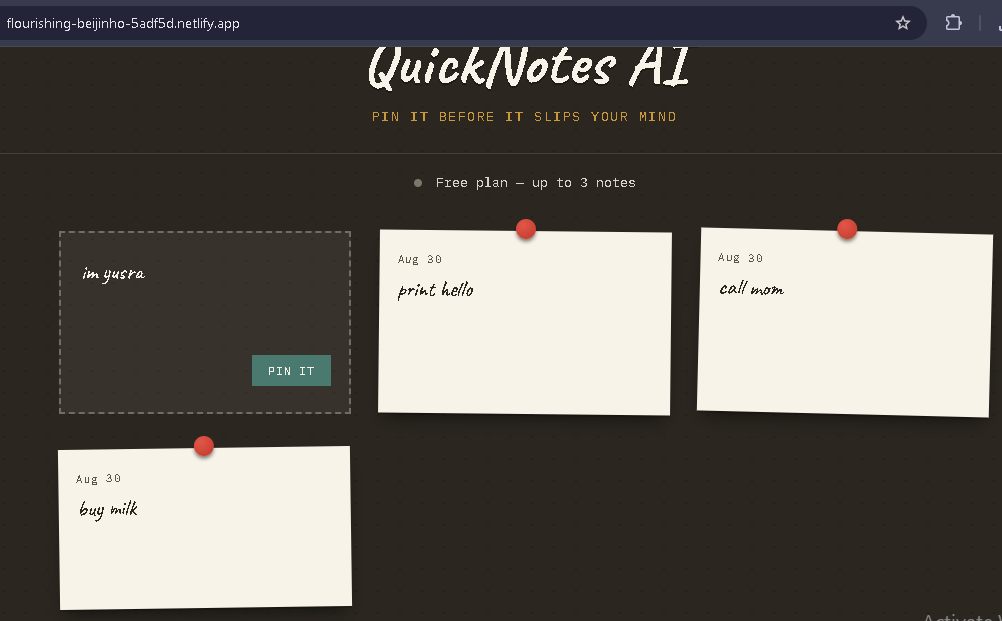
QuickNotes AI lets you pin quick notes to a digital corkboard. Free users can pin up to 3 notes. Once the board is full, a paywall (built and hosted with RevenueCat) offers a Premium plan that unlocks:
- Unlimited pinned notes
- An AI-style summary tag on every note
- Priority sync
How I built it
- Frontend: a single-page HTML/CSS/JS app with a hand-drawn, corkboard visual theme
- Monetization: RevenueCat's
purchases-jsSDK, configured with an entitlement (quicknotes_ai_pro), a product, an offering, and a RevenueCat-hosted paywall built with the AI paywall editor - Hosting: deployed on Netlify
Challenges I ran into
The biggest challenge was payment processor availability — Stripe (which RevenueCat Billing relies on) doesn't yet support sellers based in Pakistan, so I wasn't able to complete a fully live checkout in this environment. The RevenueCat SDK integration, entitlement checks, and paywall trigger logic are all fully wired up and functional; only the final live payment step is blocked by regional payment provider support.
What I learned
I learned how RevenueCat separates products, entitlements, and offerings, and how the SDK checks entitlement status independently of the underlying payment processor — which made it possible to build and test the entire user-facing flow even without live billing.
What's next
Connecting a payment processor with Pakistan support (or a business Stripe account in a supported region) to enable live purchases, plus building out real AI-powered note summarization.
Built With
- css
- html
- javascript
- netlify
- revenuecat

