Problem Statement
Digital Student Service Corner Management System
1. Introduction
In educational institutions, the student service corner is responsible for handling a wide range of student-related administrative tasks such as fee-related queries, registration assistance, document verification, grievance handling, and general information dissemination. Traditionally, these services are offered through manual, in-person interactions, where students must physically visit the service counter even for minor inquiries.
With an increasing student population, this manual approach has become inefficient and problematic. Students often stand in long queues, experience uncertainty regarding waiting times, and lose valuable academic hours. At the same time, service counter staff are burdened with repetitive questions, leading to reduced productivity and increased stress.
2. Existing System and Its Limitations
The current system followed in many colleges is walk-in based and paper-driven, with limited digital support.
Major Problems in the Existing System:
Overcrowding and Chaos During peak academic periods (admissions, exams, fee deadlines), the service counter becomes overcrowded, causing disorder and confusion.
Time Wastage for Students Students are required to visit the counter even for small information that could be shared digitally.
Repetitive Queries Staff repeatedly answer the same questions, reducing efficiency.
Lack of Transparency Students have no idea about:
- Current queue status
- Expected waiting time
- Availability of staff
Manual Queue Management Physical queues are difficult to manage and lead to frustration.
Poor Communication Channels Important updates are not always communicated in a timely and organized manner.
3. Problem Definition
The key problem is the absence of a centralized, intelligent, and digital platform that can:
- Provide real-time information
- Handle routine student queries automatically
- Manage service counter visits efficiently
- Reduce unnecessary physical presence
- Improve communication between students and college authorities
4. Proposed Solution Overview
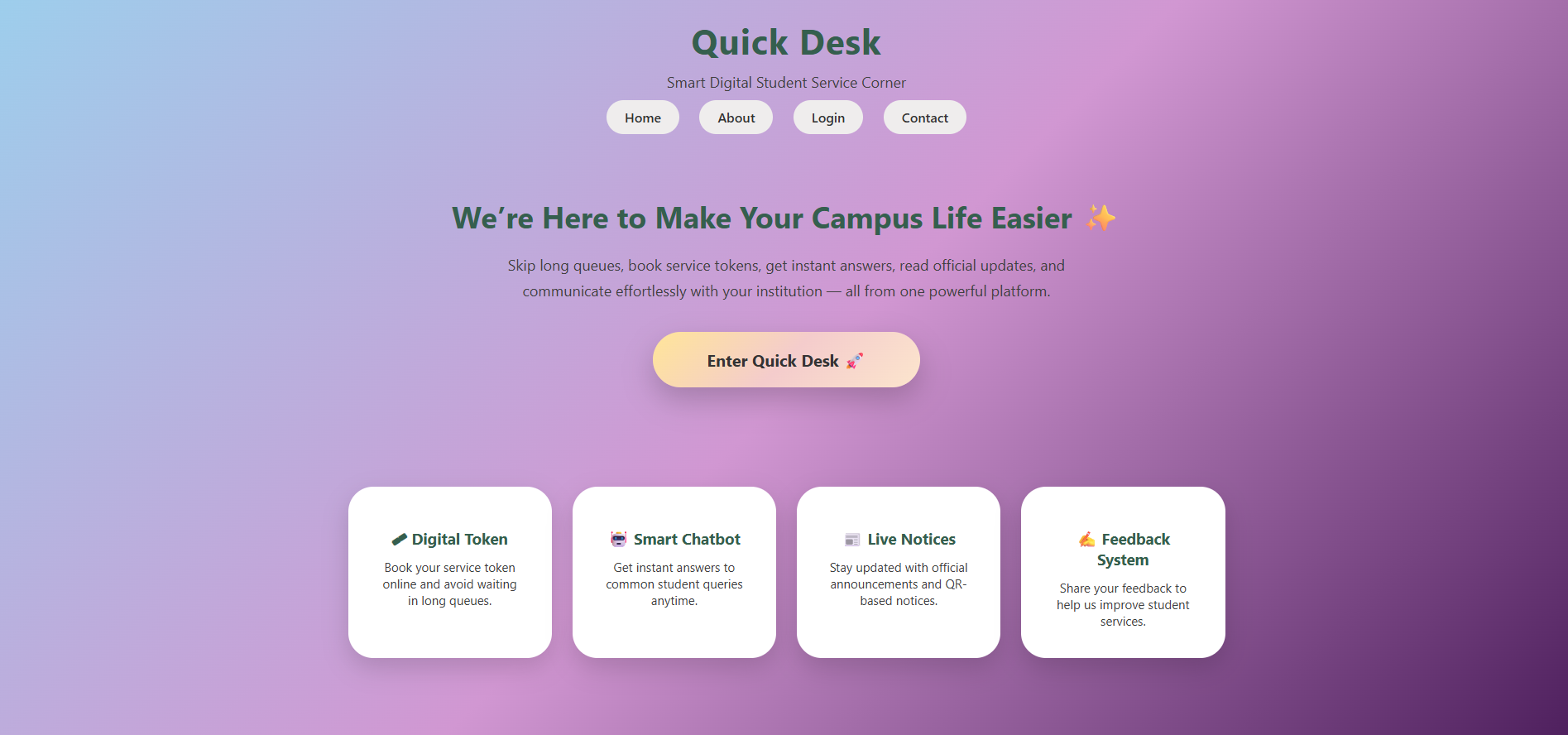
To address these challenges, a Digital Student Service Corner Management System is proposed. This system is implemented as a formal, web-based platform developed using Python frameworks, integrated with selected Google services to ensure security, automation, and scalability.
The system digitizes the entire student service process—from information access and query handling to appointment scheduling and feedback collection.
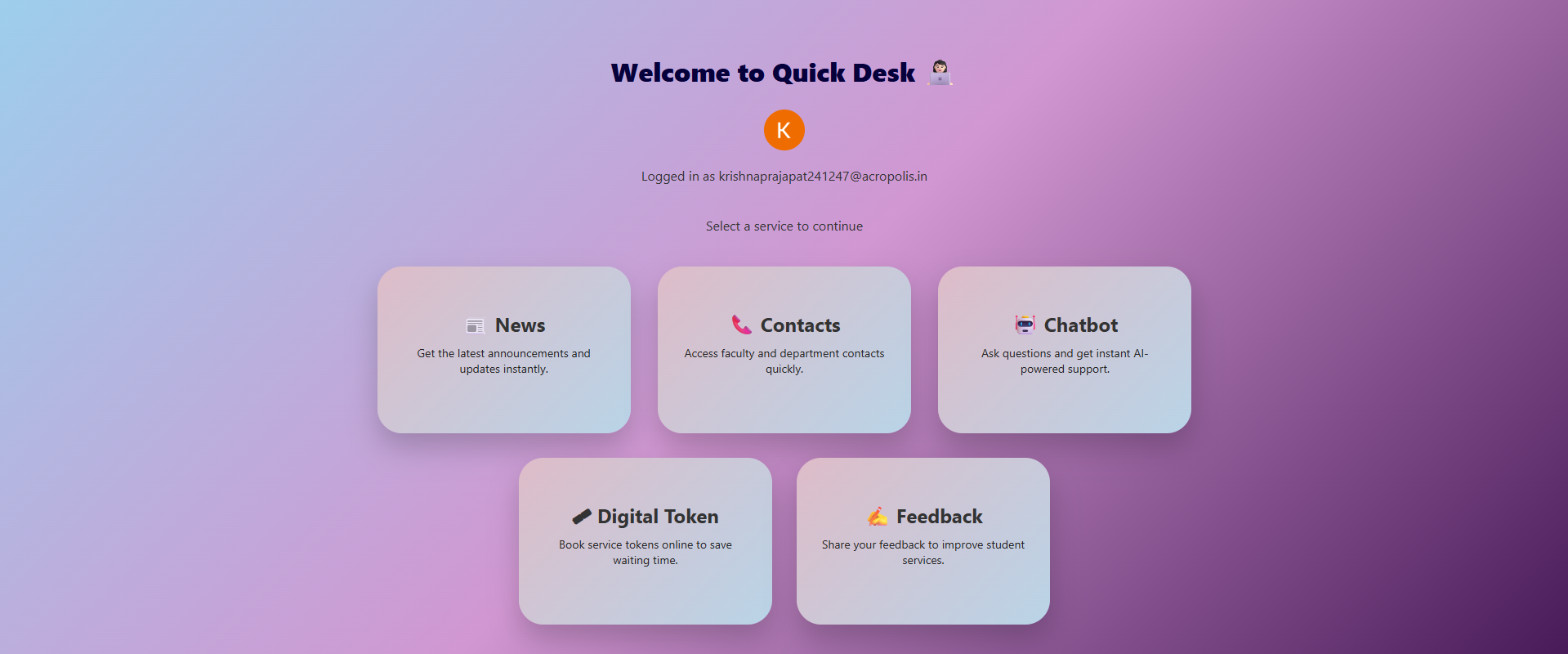
5. Detailed Explanation of System Components
5.1 Centralized Information Portal
This module acts as the primary information hub for students.
Features:
- College announcements and notices
- Examination and registration updates
- Fee payment details including QR codes and links
- Guidelines and procedures for common services
Impact:
- Students no longer need to visit the service counter for basic information
- Ensures consistent and official communication
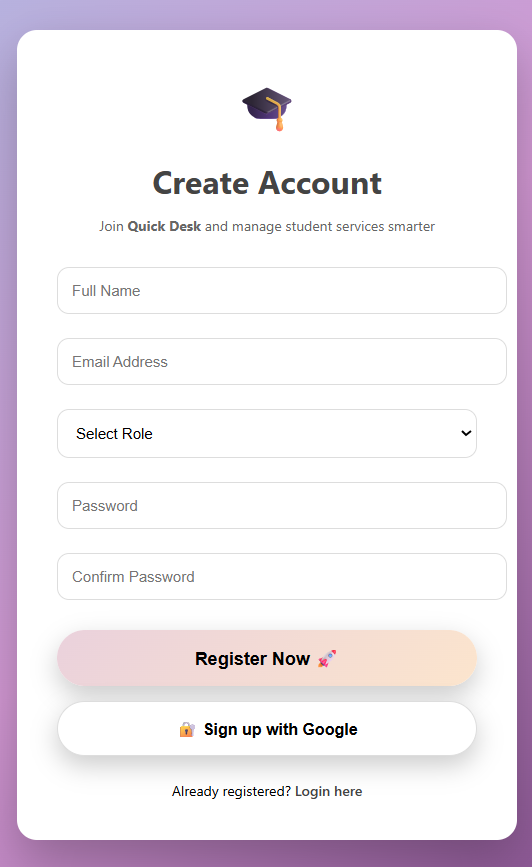
5.2 Secure Login System Using Google Sign-In
To ensure secure access, the system uses Google OAuth 2.0 authentication.
How It Works:
- Users log in using their official Google account
- Google verifies identity
- System grants access without storing passwords
Advantages:
- High security
- Reduced login complexity
- Prevents fake or unauthorized access
5.3 Intelligent Chatbot Using Dialogflow
An NLP-based chatbot is integrated to handle student queries.
Functionality:
Answers common questions related to:
- Fees
- Registration
- Office timings
- Procedures
Uses intent recognition and keyword analysis
Escalation Mechanism:
If the chatbot cannot answer:
- The query is forwarded to service staff
- Staff must respond within a defined time limit
- Student is notified via email
Benefits:
- Reduces workload on staff
- Provides 24/7 assistance
- Improves response time
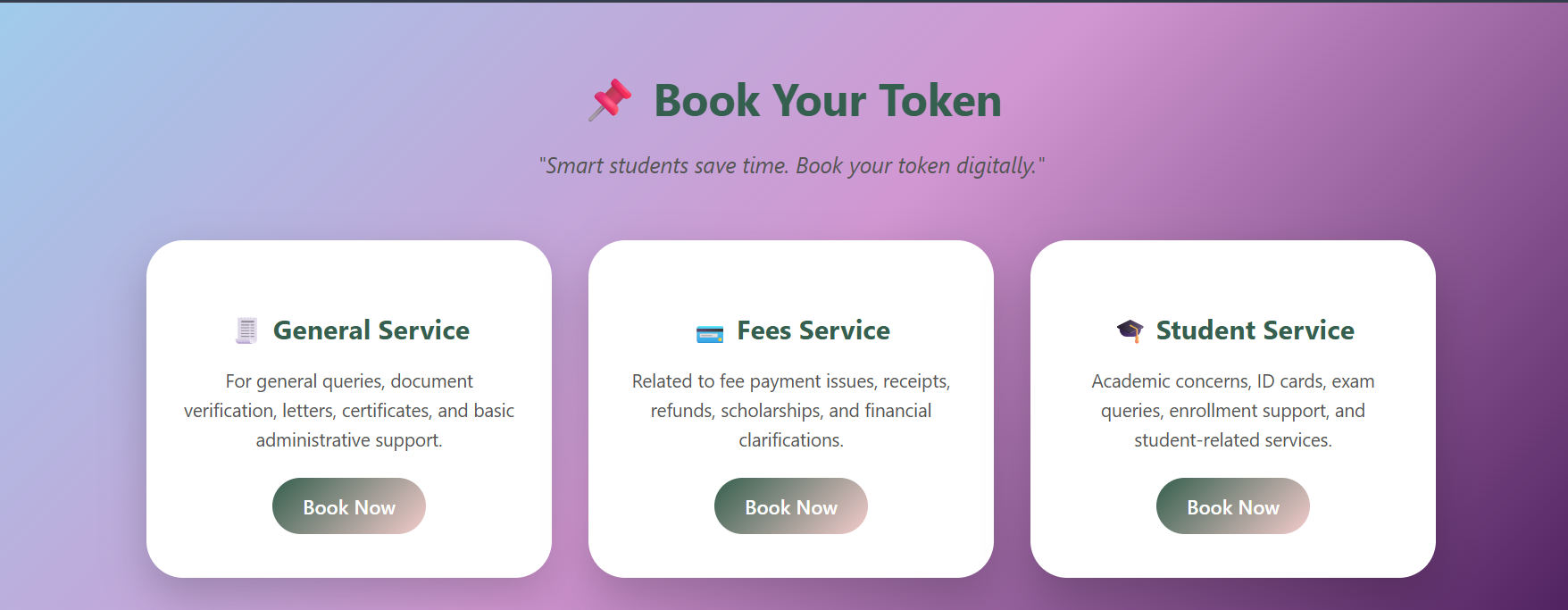
5.4 Digital Token and Appointment Management System
When a physical visit is necessary, the system provides a digital token-based appointment mechanism.
Key Features:
- Online token generation
- Real-time queue display
- Estimated waiting time calculation
Example:
Current token: 161 Student token: 163 Estimated waiting time: 5 minutes
Scientific Basis:
- Based on queueing theory
- Uses average service time to calculate wait duration
Impact:
- Eliminates physical queues
- Reduces overcrowding
- Improves service predictability
5.5 Automated Notification System Using Gmail API
To keep students informed, the system uses Gmail API for automated notifications.
Notifications Sent For:
- Token generation
- Appointment reminders
- Query responses
- Important announcements
Benefits:
- Reliable communication
- Reduces uncertainty
- Improves trust and transparency
5.6 Feedback System Using Google Forms
To measure service quality, a feedback mechanism is integrated.
How It Works:
- Students submit feedback through Google Forms
- Responses are stored in Google Sheets
- Authorities review and analyze feedback
Purpose:
- Continuous improvement
- Student satisfaction analysis
- Accountability
5.7 Emergency Contact Information Module
A dedicated section provides:
- Names of authorities
- Designations
- Contact numbers and emails
This ensures immediate access to help during emergencies.
6. Technologies and Concepts Used
Technical Stack:
- Python (Django / FastAPI)
- HTML, CSS, JavaScript
- SQL Database
Google Tools:
- Google Sign-In
- Gmail API
- Dialogflow
- Google Forms
Scientific Concepts:
- Queueing Theory
- OAuth 2.0
- NLP (Natural Language Processing)
- Event-driven architecture
7. Objectives of the Proposed System
- Reduce crowding at the service counter
- Minimize time wastage
- Improve communication efficiency
- Automate routine processes
- Enhance student experience
- Support scalable administration
8. Expected Outcomes
- Organized service management
- Faster query resolution
- Reduced physical dependency
- Improved staff productivity
- Data-driven administrative decisions
9. Conclusion
The Digital Student Service Corner Management System provides a comprehensive solution to the inefficiencies of traditional student service operations. By integrating Python-based web development with Google authentication, intelligent chatbot services, automated notifications, digital token management, and feedback systems, the platform ensures an efficient, transparent, and student-friendly environment. This system not only reduces chaos at the service counter but also establishes a modern, scalable model for digital campus administration.


Log in or sign up for Devpost to join the conversation.