

Inspiration
We've all been there, having a brilliant idea, a tutorial to share, or a story to tell, but the thought of creating yet another account just makes us leave it altogether.
Around 73% of users abandon content creation due to signup friction (according to my initial findings). Meanwhile, developers spend hours in terminals but are forced into clunky web interfaces just to share their knowledge with the community.
I realized the problem isn't lack of good ideas - it's the barriers preventing people from sharing them. What if we could eliminate every obstacle between inspiration and publication?
What it does
QuickBlog Ecosystem aims to democratize content publishing by removing friction while serving diverse user preferences:
💻 CLI Tool - For Developers & Power Users
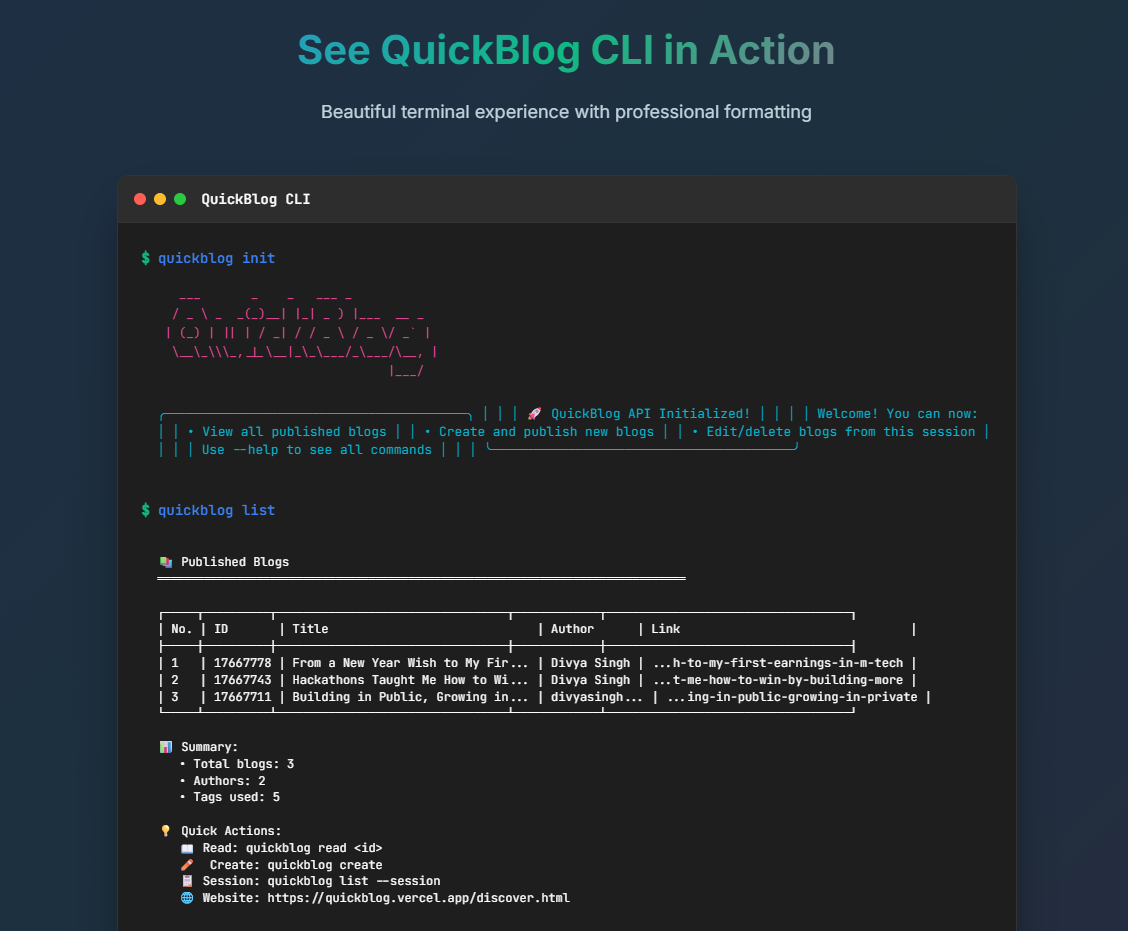
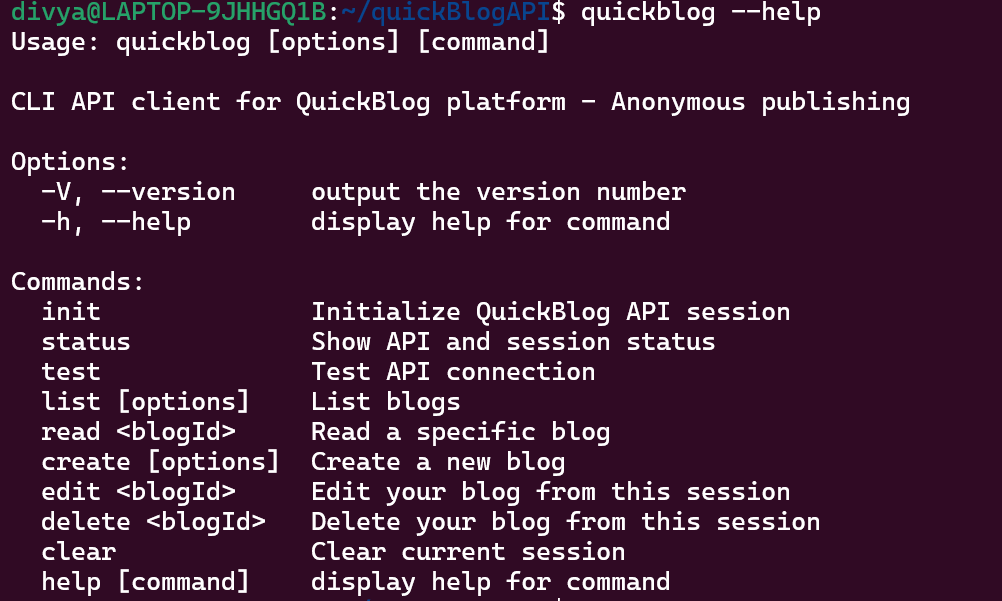
- Instant Publishing: quickblog create and you're writing - no browser needed
- Workflow Integration: Publish directly from your development environment
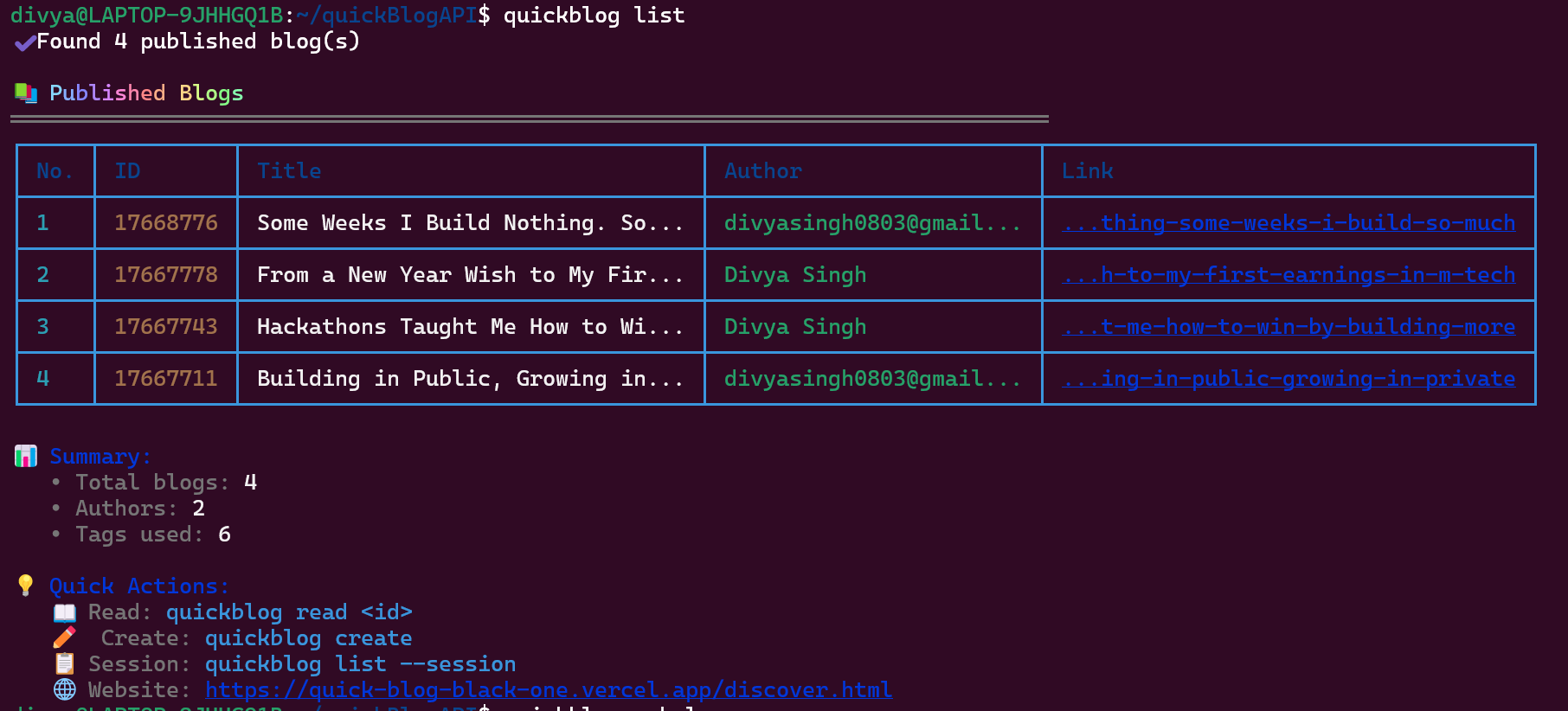
- Session Management: Track and manage your content locally without accounts
- File Integration: Import existing markdown documentation or write interactively
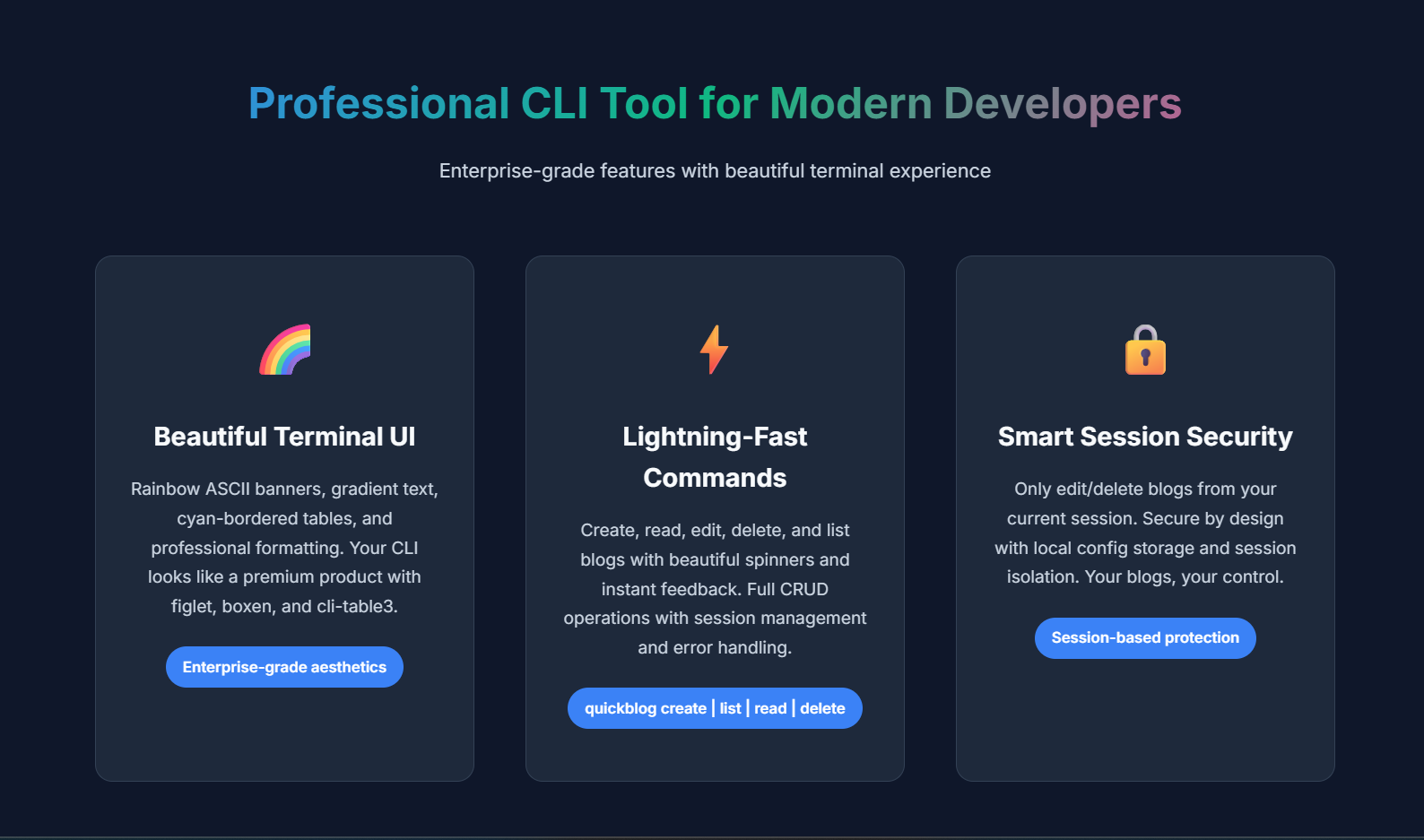
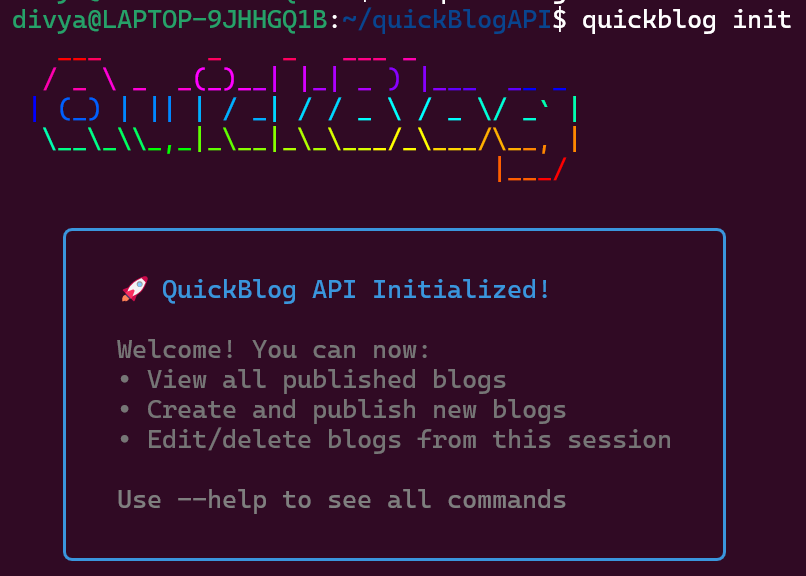
- Beautiful Terminal UI: Professional interface that makes CLI approachable
🌐 Web Platform - For Everyone Else
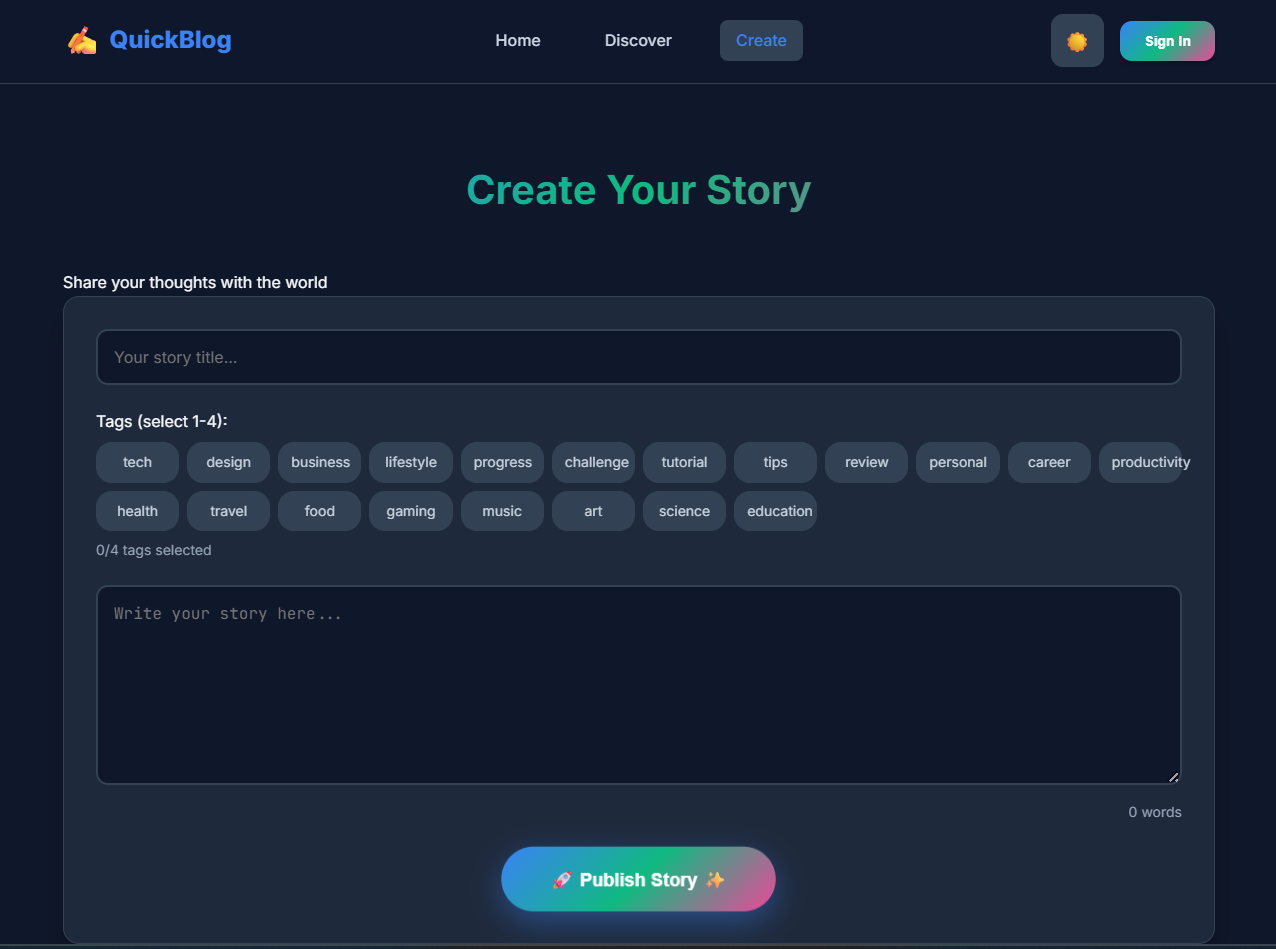
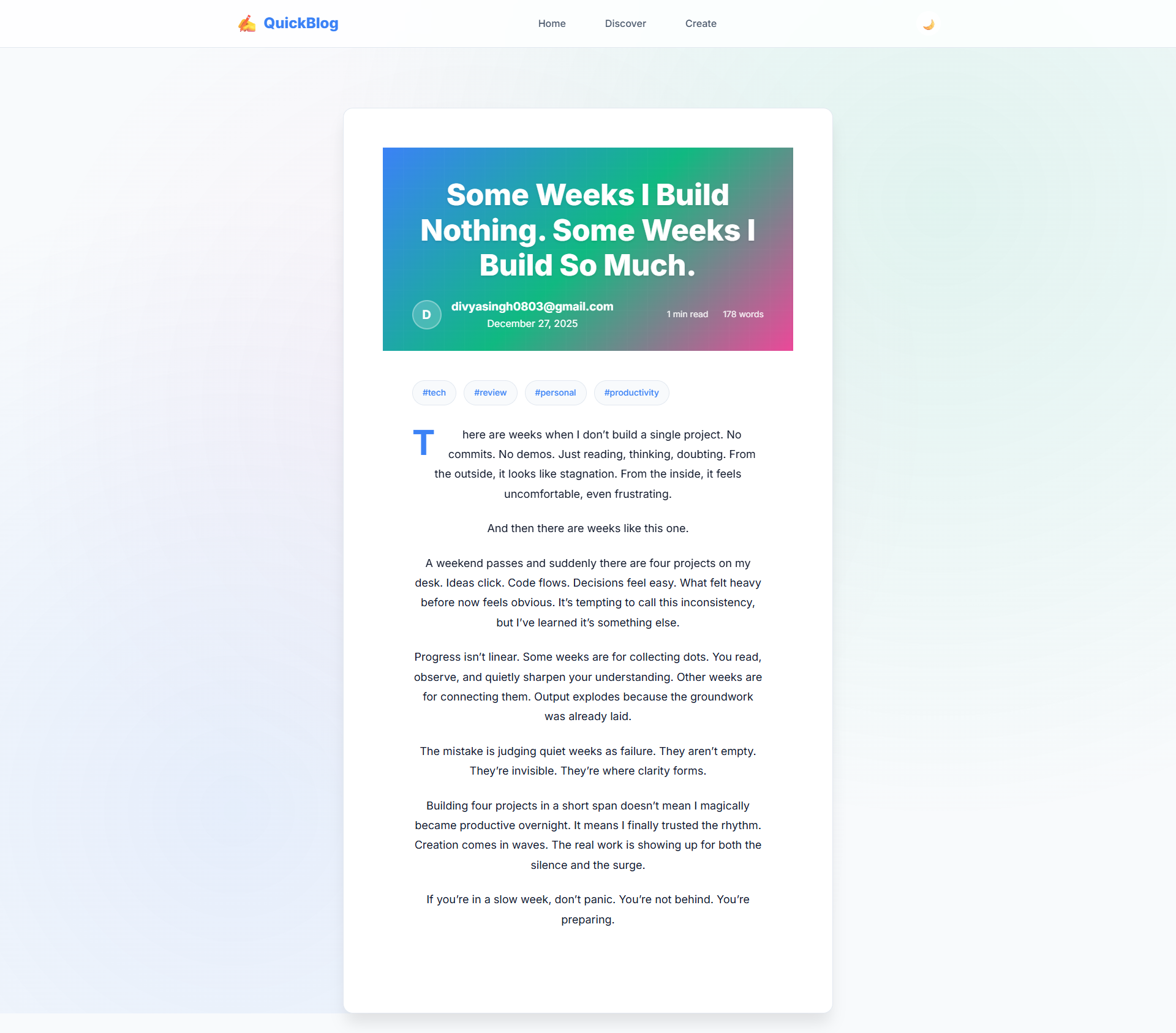
- Zero-Friction Publishing: Write and publish immediately - simple authentication process
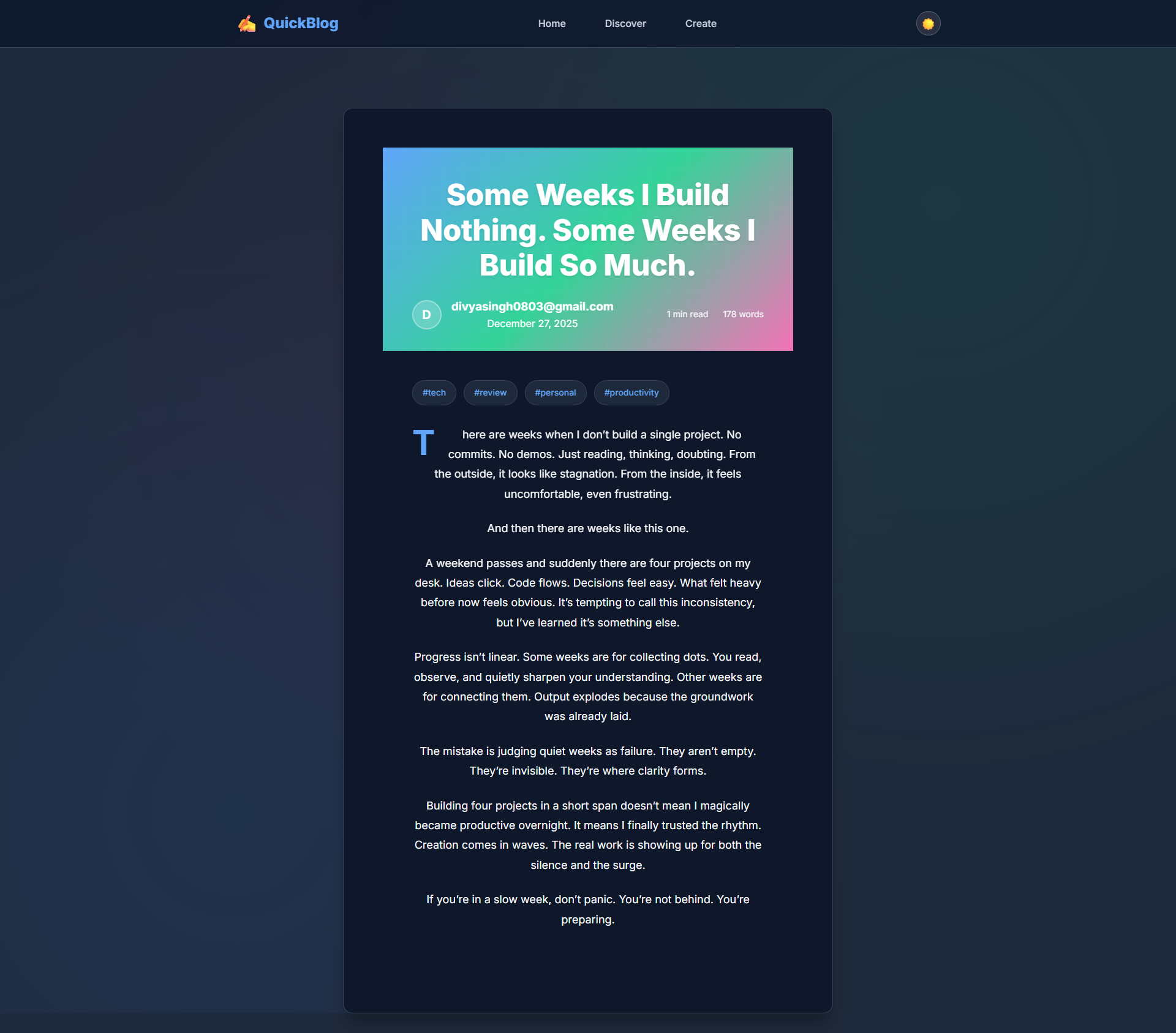
- Professional Design: Clean, responsive interface that works on any device
- Accessibility First: Screen reader compatible, keyboard navigation, proper contrast
- Smart Features: Real-time word counting,, SEO-friendly URLs
🌍 Real-World Impact
- Students: Share research and projects without institutional email requirements
- Developers: Document solutions and tutorials from their terminal
- Writers: Publish thoughts instantly without platform lock-in
- Educators: Create and share content without IT department approval
- Anyone: Express ideas without digital identity requirements
How I built it
I began with the terminal interface because that's where I spend most of my time. Using Commander.js, I built a professional command structure that feels natural to developers - quickblog create, quickblog list, quickblog delete. But I didn't want just another boring CLI tool, so I invested heavily in the visual experience with figlet ASCII art, gradient-string rainbow text, & cli-table3 for beautiful data formatting. The result is a terminal interface that actually makes you excited to use it.
Once the CLI was solid, I realized not everyone lives in terminals. The web interface needed to match the CLI's instant-publish philosophy, so I built it with vanilla JS - no framework bloat, just clean code that loads fast. The responsive design uses modern CSS Grid and Flexbox to work perfectly on everything from phones to ultrawide monitors.
The backend runs on Express.js with a unified API design that elegantly serves both CLI JSON requests and web form submissions. Redis Cloud provides the sub-ms performance that makes publishing feel instant, there's something satisfying about hitting enter and seeing your content live immediately. The session-based architecture lets users manage their content without traditional accounts (for CLI/API), solving the anonymous publishing puzzle.
I deployed everything on Vercel with comprehensive error handling because nothing kills the publishing mood like a 500 error. The system gracefully degrades when services are down, if Redis is having issues, you can still publish & your content appears when everything's back online. Cross-platform compatibility was tested across Windows, Linux, and mobile devices to ensure the "publish anywhere" promise actually works.
Every optimization focused on reducing the time between having an idea and seeing it published. Sub-sec response times, smart caching, & minimal JS ensures that the technical infrastructure never gets in the way of creativity.
Challenges I ran into
Anonymous User Experience Challenge: How do you provide content management without traditional accounts? Solution: Session-based architecture where CLI tracks locally published content, allowing full CRUD operations while maintaining privacy.
Accessibility at Scale Challenge: Making both web and CLI interfaces accessible to all users. Solution: Implemented proper ARIA labels, keyboard navigation, screen reader compatibility, and high contrast modes.
Global Performance Challenge: Ensuring fast publishing speeds for users worldwide. Solution: Redis Cloud's global distribution + Vercel's edge network provides sub-sec response times globally.
CLI Adoption Barrier Challenge: Many users are intimidated by command-line tools. Solution: Beautiful terminal UI with clear instructions, helpful error messages, and ASCII art that makes CLI feel approachable and fun.
Accomplishments that I'm proud of
♿ Accessibility Excellence
- WCAG 2.1 AA compliant web interface
- Screen reader optimized with proper semantic HTML
- Keyboard navigation throughout entire platform
- High contrast modes for visually impaired users
🚀 Technical Innovation
- Anonymous publishing architecture that still enables content management
- Dual interface mastery serving completely different user types seamlessly
- Sub-ms performance with Redis Cloud integration
- Production-grade reliability with comprehensive error handling
💡 Social Impact
- Democratized publishing - no email, phone, or identity required
- Reduced digital divide - works on any device, any connection speed
- Privacy-first approach - no tracking, no data collection, no ads
- Educational accessibility - students can publish without institutional barriers
What I learned
Building this project taught me that anonymous architecture actually works for content platforms. You don't need traditional user accounts to provide useful content management features - session-based tracking is simpler & more privacy-friendly. I also discovered that CLI tools can be genuinely beautiful & user-friendly with proper design investment. The terminal doesn't have to be intimidating if you use colors, formatting, & clear feedback. Redis performance really matters too, users immediately notice when things are fast, and sub-ms responses make the whole experience feel professional and snappy.
I learned to start with the core functionality first, then enhance with JS - progressive enhancement actually works. Building the web interface to work without JS and then adding the nice-to-have features on top created a more robust foundation. Simple solutions often work best, and I caught myself over-engineering several times before stepping back to simpler approaches that were more maintainable and user-friendly.
Different users really do have different preferences - developers genuinely love the CLI interface while others prefer the web version, and both groups are equally valid. Performance expectations are incredibly high in 2025 - users expect sub-sec response times and get frustrated with anything slower( I'm one of them). I also realized that every extra step in the publishing process creates friction that kills creativity, so eliminating barriers became more important than adding features.
What's next for QuickBlog Ecosystem
- Immediate Improvements
I want to add a rich text editor to the web interface because plain text areas feel dated in 2025. Image upload with drag-and-drop would make the platform more complete for content creators who want to include visuals. Better integration with the system editor for CLI users would improve the writing experience, letting people use their preferred editor instead of the basic terminal input.
- Technical Enhancements
Export functionality is high on my list, being able to generate PDFs or markdown files from published content would add real utility. I'm also considering API endpoints that would let other developers integrate with the platform, though I want to keep it simple & not over-engineer the solution. Performance optimizations like edge caching could make the global experience even faster.
- Long-term Vision
The goal is to keep it simple and friction-free while adding genuinely useful features. I don't want to build the next Medium or WordPress, but just a tool that makes publishing as easy as having an idea. Maybe custom themes for the web interface, maybe better mobile apps, but only if they maintain the core philosophy of instant publishing without barriers.
QuickBlog Ecosystem started because I was annoyed with existing platforms & built something I actually wanted to use. It turns out other people have the same frustrations with signup friction and complex interfaces. The best validation is that it solves a real problem I experience daily, and if it helps other people publish their ideas more easily, I'm glad.
Built With
- axios
- bcrypt
- boxen
- cli-table3
- commander.js
- cors
- css3
- express.js
- figlet
- html5
- javascript
- node.js
- ora
- picocolors
- redis-cloud


Log in or sign up for Devpost to join the conversation.