Inspiration
Many accident victims do not receive help quickly because people nearby may not know emergency numbers, may be afraid to get involved, or cannot explain the situation clearly. We wanted to build a solution that makes emergency reporting faster, easier, and safer using AI. QuickAlert AI was created to help communities respond to accidents in real time and potentially save lives.
What it does
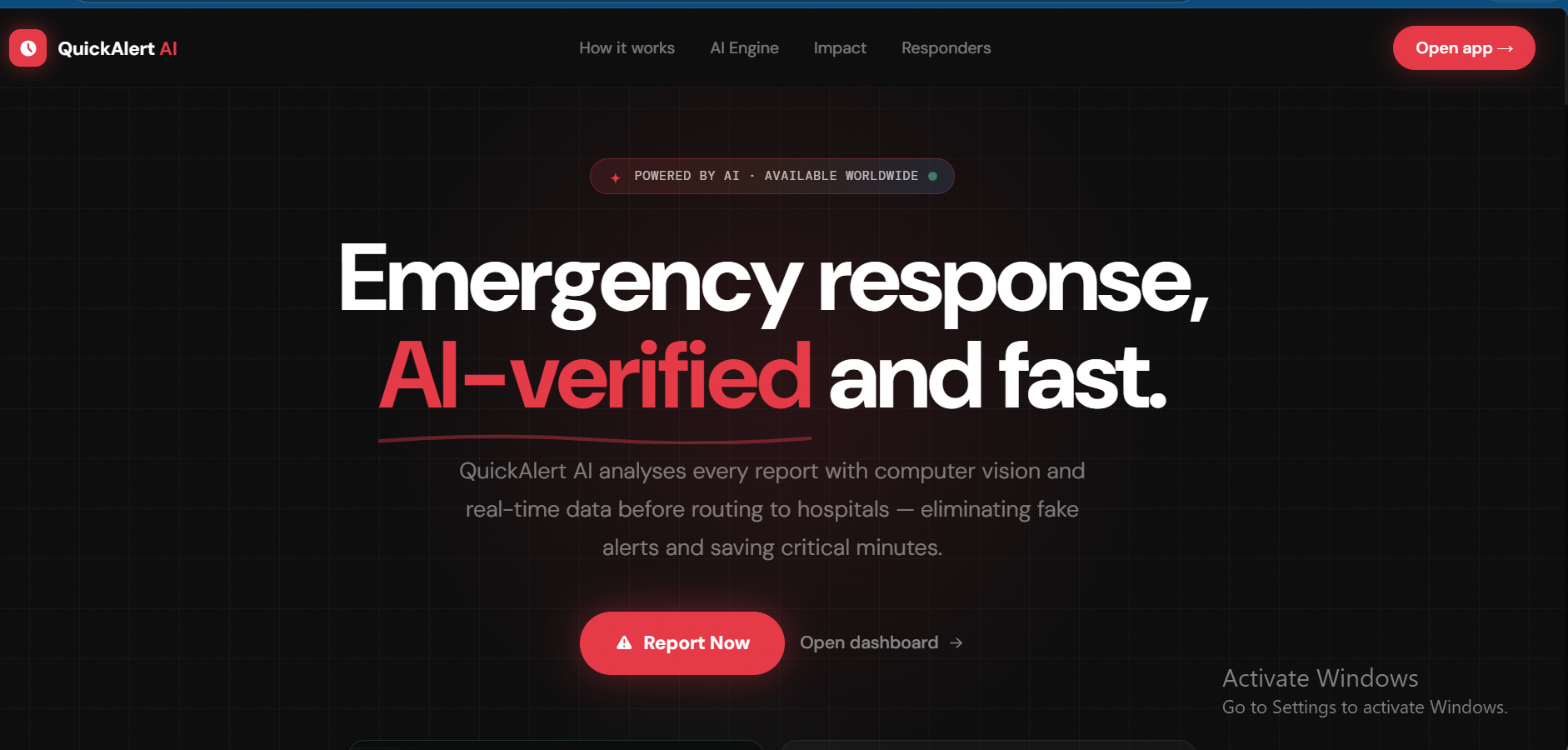
QuickAlert AI is an AI-powered emergency reporting platform that allows users to anonymously report accidents and emergencies in real time. The platform can collect important details such as location, type of accident, and severity, then quickly send alerts to responders or nearby contacts. It helps reduce delays during emergencies and improves community safety.
Features include:
Anonymous accident reporting AI-assisted emergency analysis Real-time alerts and notifications Location sharing for faster response Simple and beginner-friendly interface
How we built it
We built QuickAlert AI using modern web technologies and AI tools.
Tech stack:
Frontend: Next.js, Typescript Styling: Tailwind CSS AI integration: Gemini Database & backend: Firebase Maps & location features for emergency tracking
The AI helps analyze reports and identify the emergency type so the system can respond faster and more effectively.
Challenges we ran into
One of our biggest challenges was designing a system that is simple enough for users during stressful emergencies while still collecting useful information. We also faced challenges integrating AI responses and handling real-time notifications and location data efficiently.
Another challenge was building and testing everything within a limited hackathon timeframe.
Accomplishments that we're proud of
We are proud of building a project that focuses on real community impact and public safety. QuickAlert AI is more than just a technical project — it is a solution that could help people receive emergency assistance faster.
We are also proud that we successfully combined AI, real-time reporting, and accessibility into one platform with a clean and user-friendly experience.
What we learned
Through this project, we learned:
How to integrate AI into real-world problem solving The importance of user experience in emergency situations Team collaboration and rapid prototyping How technology can create social impact beyond just coding
We also improved our frontend development, API integration, and problem-solving skills.
What's next for QuickAlert AI
In the future, we plan to:
Add direct integration with emergency services Support voice-based emergency reporting Improve AI accuracy for detecting emergency severity Add multilingual support for accessibility Create a mobile app version Implement offline/SMS emergency reporting for areas with poor internet access
Our goal is to make QuickAlert AI a reliable emergency response platform that can help save lives globally.
Built With
- cloudinary
- gemini
- nextjs
- tailwindcss
- typescript


Log in or sign up for Devpost to join the conversation.