-
-
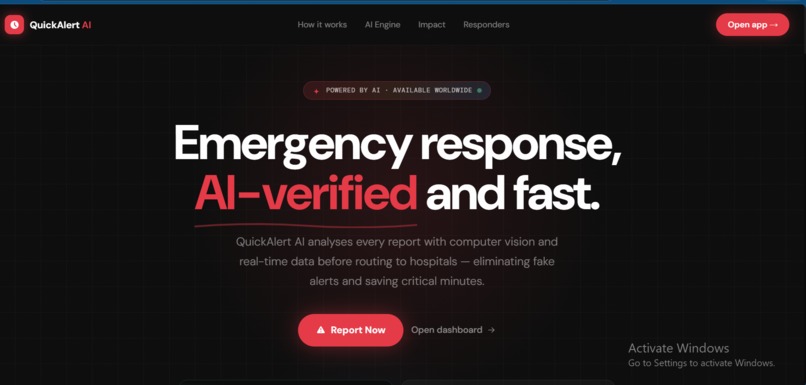
landingpage
Inspiration
Emergencies often require immediate action, yet many incidents go unreported or are delayed because people don't know who to contact or responders struggle to assess the urgency of incoming reports. We wanted to create a smarter, faster, and more accessible emergency reporting platform that empowers citizens to report incidents instantly while helping emergency services prioritize and respond more effectively using artificial intelligence.
What it does
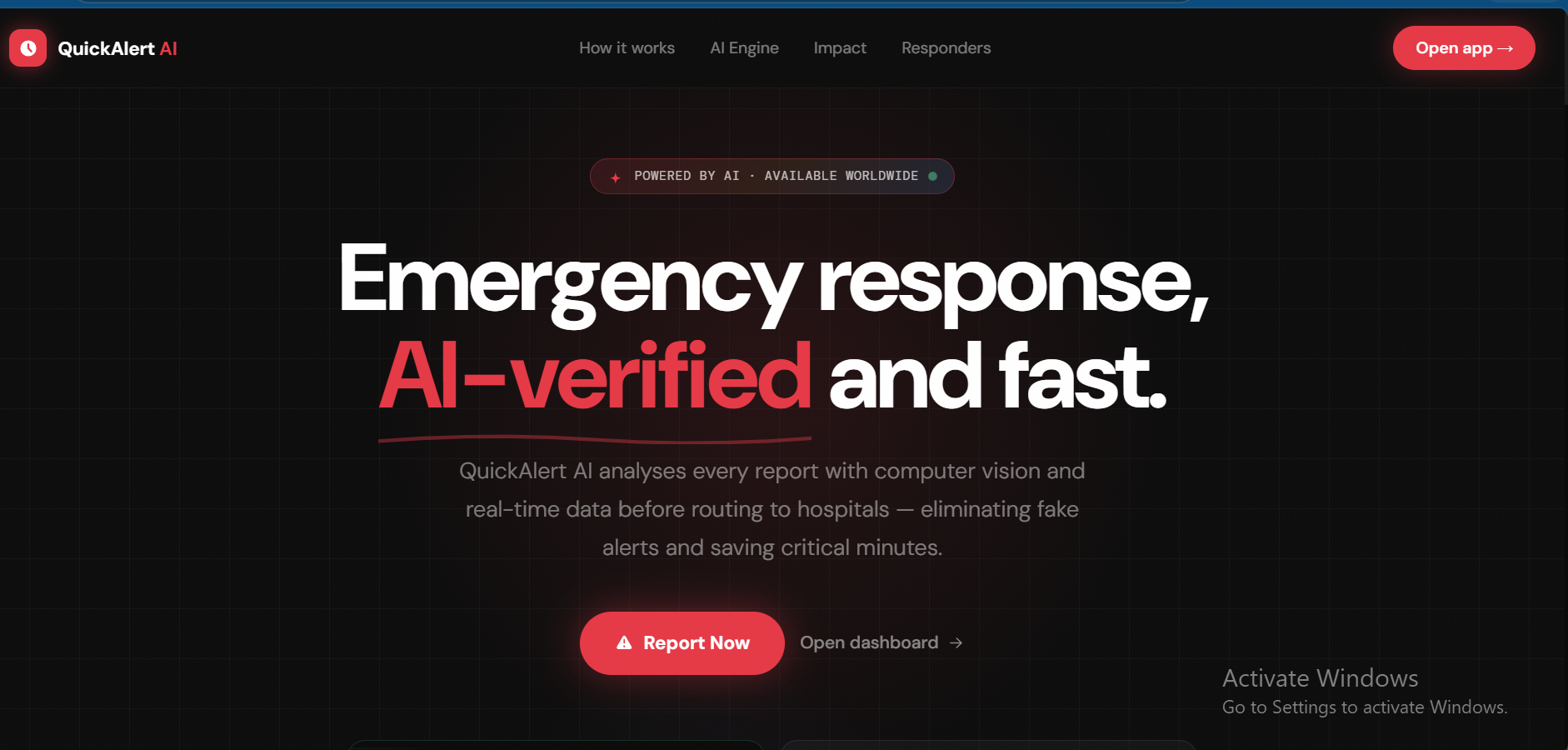
QuickAlert AI is an AI-powered emergency reporting and intelligent response platform that enables users to report emergencies such as accidents, fires, crimes, medical incidents, floods, and other public safety issues in seconds.
The platform analyzes reports using AI to determine the severity of each incident, categorize emergencies, identify duplicate reports, and provide responders with actionable insights. Users can include descriptions, images, videos, and locations to help responders understand the situation quickly.
Emergency teams receive a real-time dashboard showing incoming incidents, severity levels, affected locations, and recommended response priorities, enabling faster and more informed decision-making.
How we built it
We built QuickAlert AI using modern web technologies, including Next.js, TypeScript, Tailwind CSS, and AI-powered services for intelligent incident analysis. The platform combines geolocation, real-time updates, image support, and AI-assisted classification to provide accurate emergency assessments. We designed a responsive user interface that allows citizens to submit reports quickly while giving emergency responders a centralized dashboard for monitoring incidents.
Challenges we ran into
One of our biggest challenges was designing an emergency reporting workflow that remained simple enough for users during stressful situations while still collecting enough information for responders. We also worked on balancing AI-driven incident classification with a clean and intuitive user experience, ensuring reports could be submitted within seconds without overwhelming users.
Accomplishments that we're proud of
We're proud of creating a platform that demonstrates how AI can improve emergency response by reducing response times and helping authorities prioritize critical incidents. We successfully combined intelligent incident analysis, location-based reporting, real-time updates, and an easy-to-use interface into a solution with real-world social impact. Our responsive design ensures accessibility across both desktop and mobile devices.
What we learned
This project reinforced the importance of designing technology for high-pressure situations where speed, clarity, and reliability are essential. We also learned how artificial intelligence can support—not replace—human decision-making by helping responders process information more efficiently and allocate resources where they are needed most.
What's next for QuickAlert AI
Our future roadmap includes live integration with emergency service agencies, multilingual support, offline emergency reporting, AI-powered disaster prediction, responder dispatch optimization, voice-based reporting, community safety alerts, drone and IoT integration, predictive analytics, and a mobile application to make emergency reporting even faster and more accessible worldwide.
Built With
- ai
- firbase
- gemini
- nextjs
- tailwindcss
- typescript


Log in or sign up for Devpost to join the conversation.