Inspiration
In many countries, including Nigeria, accident victims are often left without help not because people don’t care, but because they are afraid. Bystanders fear being blamed, questioned, or held responsible if they intervene. As a result, critical minutes are lost, and lives are sometimes lost too.
QuickAlert AI was inspired by this real-world problem: How can we make it easier and safer for anyone to help without fear?
We wanted to create a system where reporting an emergency is instant, anonymous, and effective, removing the hesitation that costs lives.
What it does
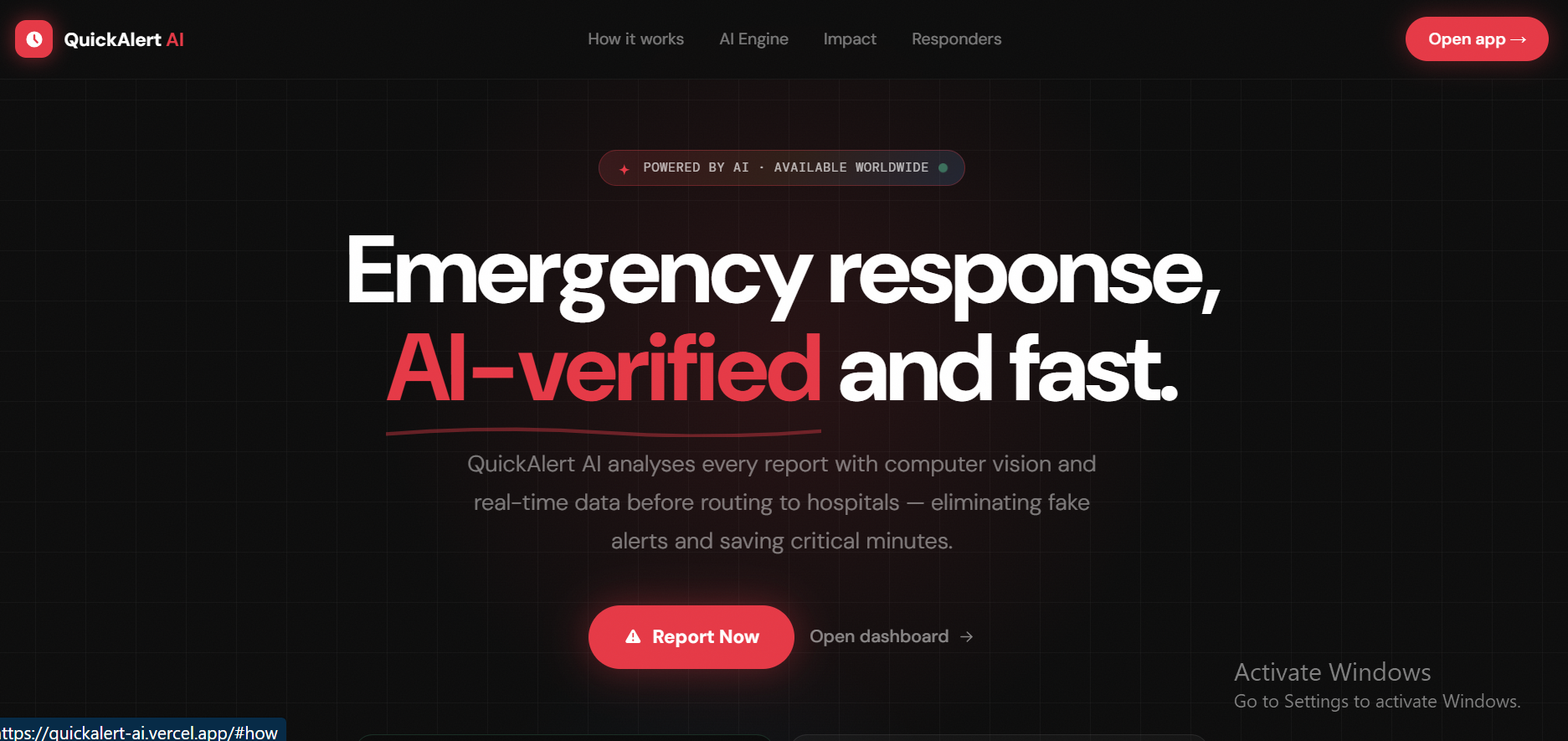
QuickAlert AI is an AI-powered emergency response system that allows anyone to report an accident or injured person in seconds using a live camera.
Users simply open the app and tap a button to report an incident The system captures a live video feed (not uploads) to prevent fake reports An AI agent analyzes the scene in real time to: Detect if an injury is present Estimate urgency level (critical, moderate, low) The system automatically sends a structured alert to the nearest registered hospitals The reporter remains completely anonymous
QuickAlert AI turns passive bystanders into active responders without putting them at risk.
How we built it
We designed QuickAlert AI as a multi-agent system aligned with modern healthcare AI architecture:
Reporter Interface (Frontend) Built with React for a fast, simple one-tap experience Verification Agent (AI) Uses a vision-capable AI model to analyze live video input and validate emergencies Dispatch Agent Processes verified incidents and routes them to the nearest hospitals using location data Hospital Receiver System Displays incoming alerts with context (location, urgency, AI analysis)
We simulated healthcare interoperability using structured JSON inspired by FHIR standards to ensure compatibility with real-world systems.
Challenges we ran into
False reporting & trust We had to design a system that reduces fake alerts without requiring user identity
Real-time verification Processing live video input quickly while keeping the system lightweight
Balancing simplicity and functionality Ensuring the app is easy enough for anyone to use in an emergency
Healthcare realism Designing something that could realistically integrate into hospital workflows
Accomplishments that we're proud of
Built a system that addresses a real-life, high-impact problem Designed an anonymous reporting flow that encourages participation Implemented an AI verification layer instead of relying on trust Created a multi-agent architecture aligned with modern standards Delivered a concept that could work in both developed and developing regions
What we learned
Real-world problems are often behavioral, not just technical Simplicity is critical in emergency systems AI is most powerful when used to reduce friction and build trust Designing for healthcare requires thinking about safety, reliability, and speed
What's next for QuickAlert AI
Integrate with real hospital systems using full FHIR support Improve AI accuracy for better injury and risk detection Add offline/low-network support for rural areas Build partnerships with hospitals and emergency responders Expand into a global emergency response network
Built With
- cloudinary
- firebase
- gemini
- nextjs
- tailwindcss
- typescript


Log in or sign up for Devpost to join the conversation.