Inspiration
During natural disasters and medical emergencies, timely access to help can be the difference between life and death. We were inspired by real-world incidents where people couldn’t reach hospitals, ambulances, or police on time due to lack of proper information or coordination. We wanted to build a solution that connects people in distress with emergency services instantly and intelligently.
What it does
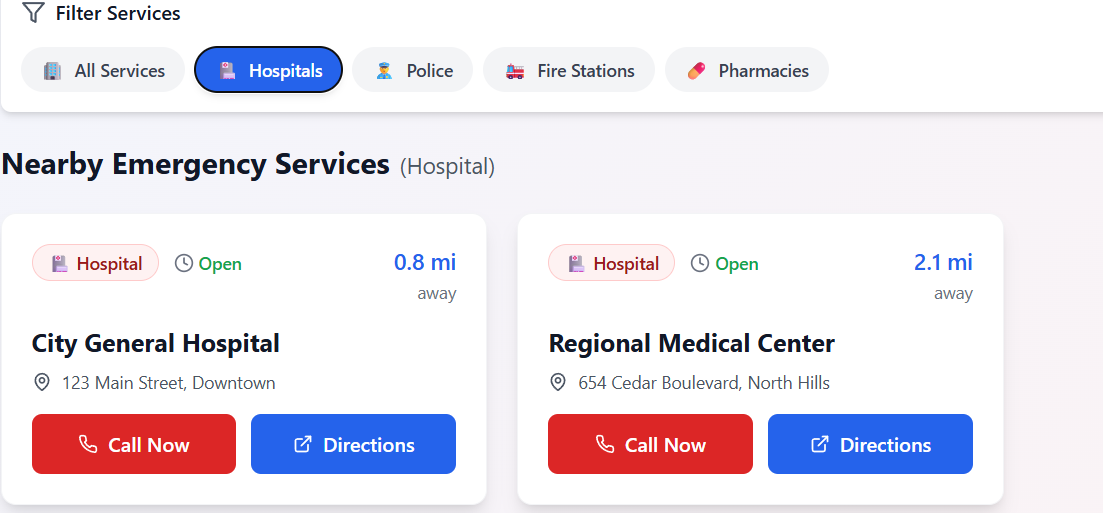
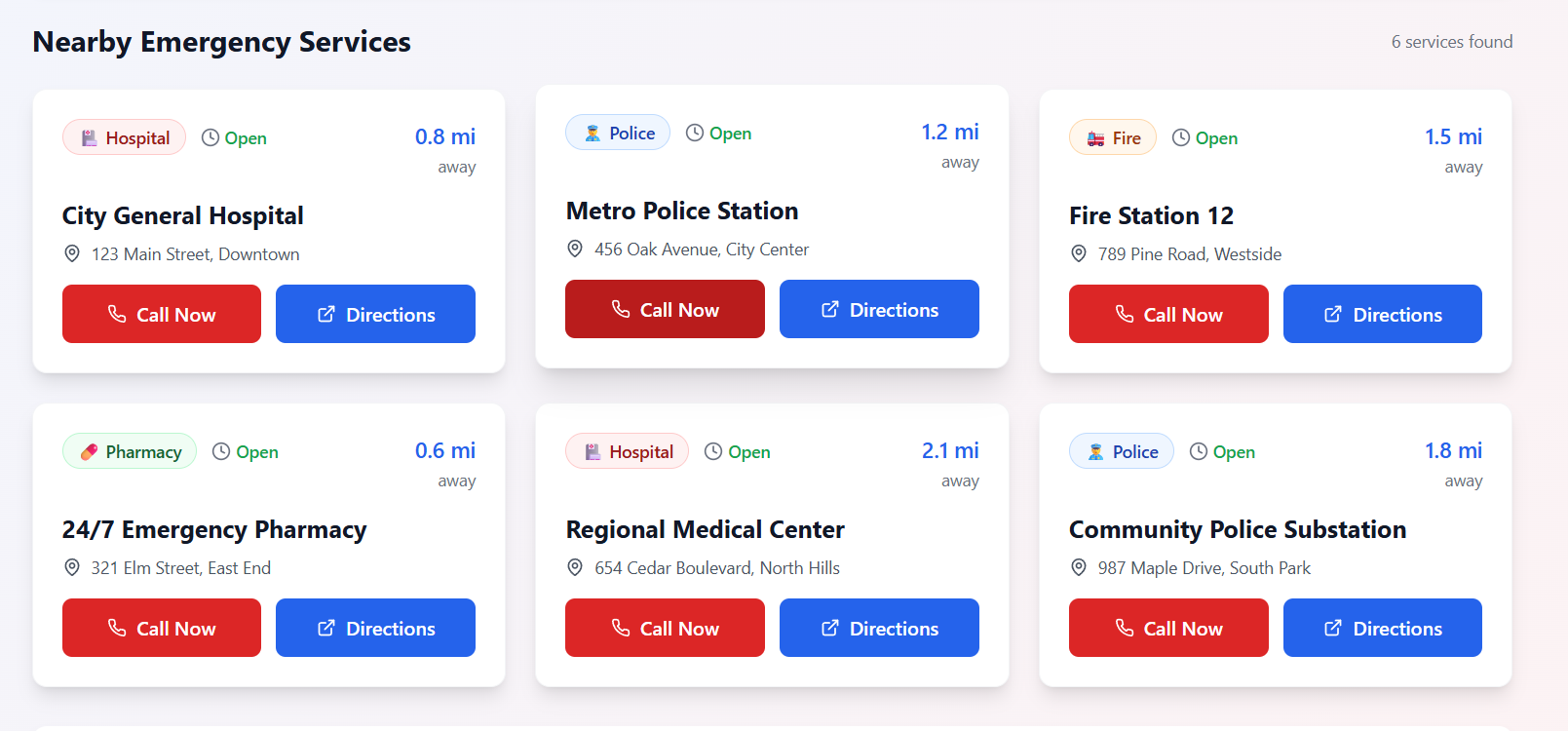
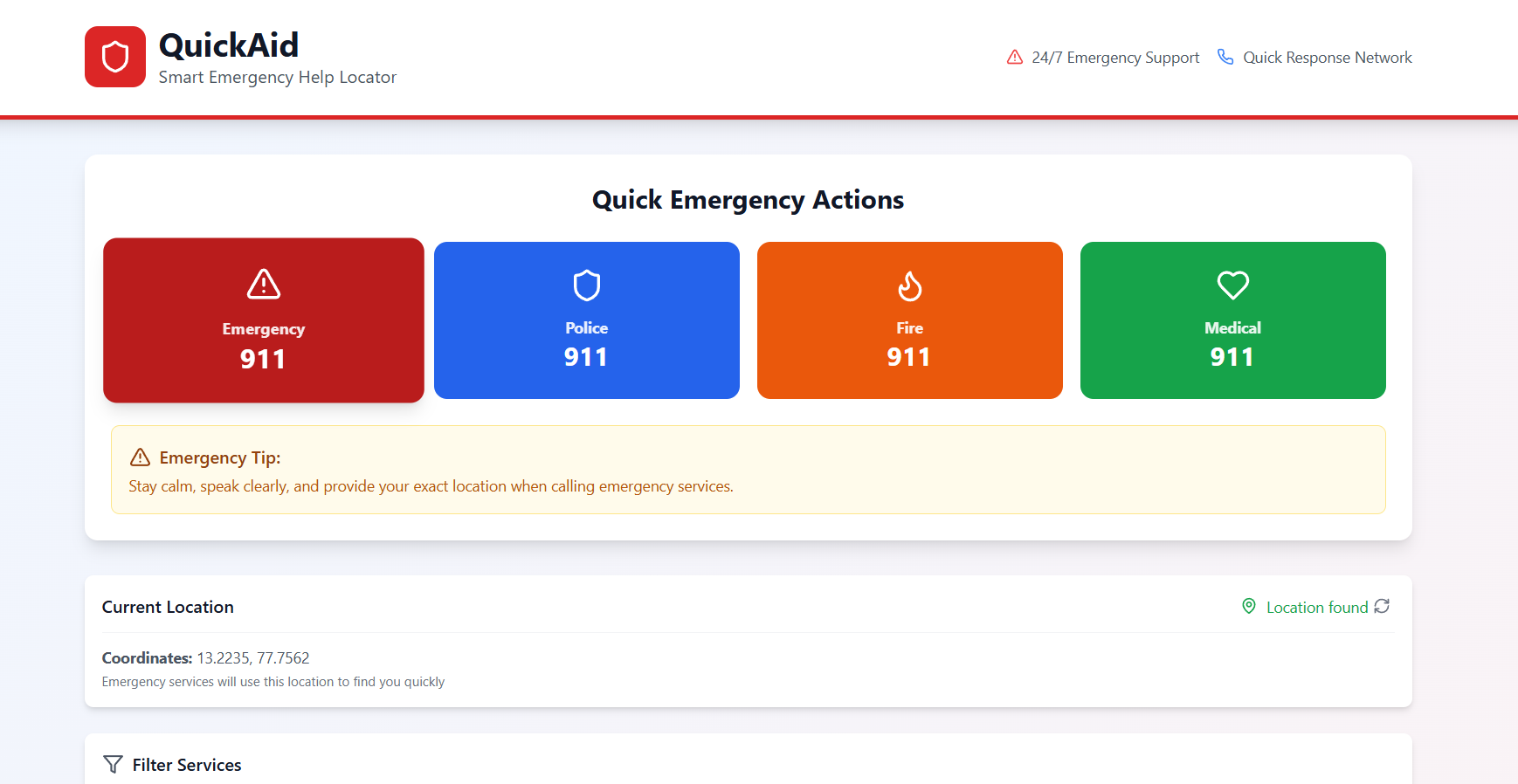
QuickAid is a smart emergency help locator that uses real-time geolocation, maps, and user input to direct users to the nearest help resources like hospitals, police stations, ambulances, and even blood donors. With one tap, users can notify emergency contacts or authorities. It also allows crowdsourced alerts and stores basic medical profiles for quicker response in crises.
How we built it
We used the following tech stack: Frontend: React.js (web) / Flutter (mobile) Backend: Node.js + Express Database: MongoDB APIs Used: Google Maps API for geolocation, Firebase Auth for user login Deployment: Vercel (frontend) and Render (backend)
Challenges we ran into
Integrating live geolocation with Google Maps API and syncing updates in real time. Making the interface simple enough for emergency use but still feature-rich. Ensuring data privacy, especially for users’ health and location details. Coordinating asynchronous requests during alert broadcasts and push notifications.
What we learned
How to build and deploy a full-stack app with real-time APIs. Best practices for designing emergency systems and working under tight constraints. Improved our collaboration skills and agile development workflow
What's next for QuickAid: Smart Emergency Help Locator
Add voice-command-based emergency triggers for accessibility. Partner with local emergency departments for direct API access. Integrate offline support and multi-language options. Launch as a Progressive Web App (PWA) for better reach.
Built With
- github
- google-maps
- mongodb
- mongodbatla
- node.js
- postman
- react.js
- rendre
- vercel

Log in or sign up for Devpost to join the conversation.