-
-

QuickAid's Logo and slogan
-
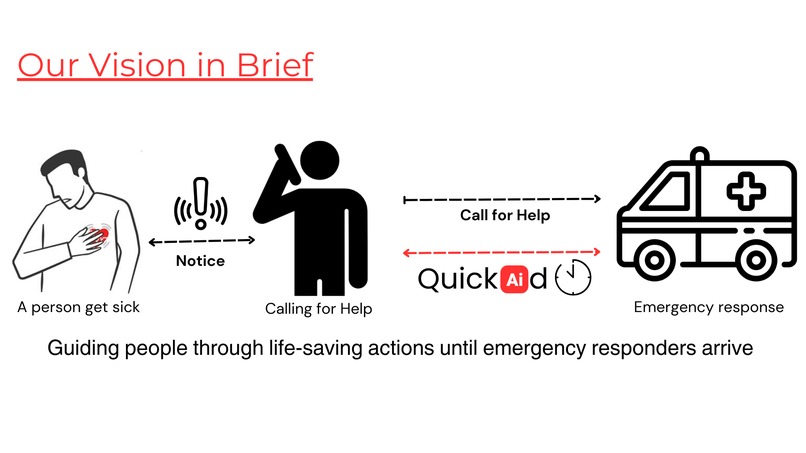
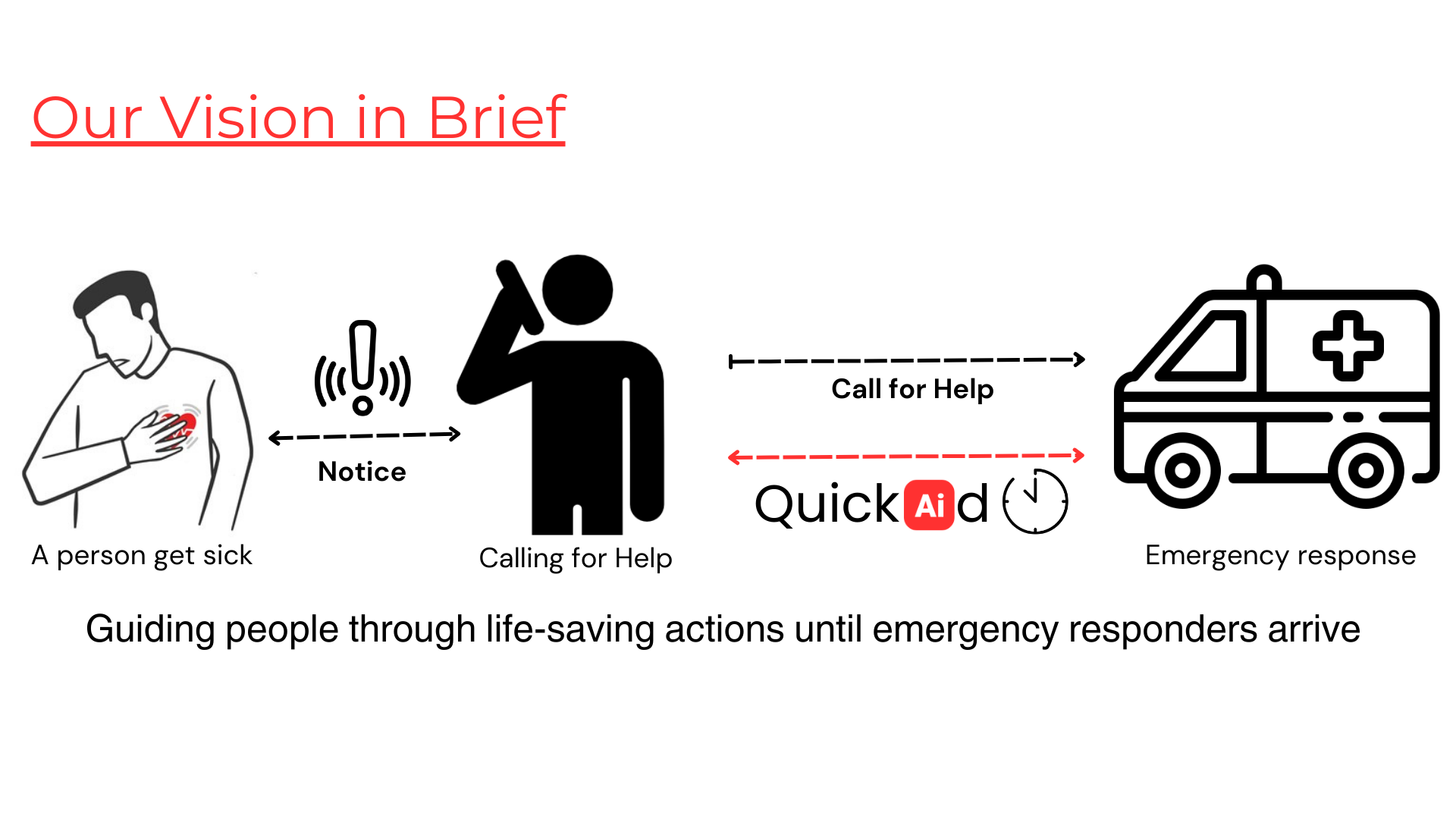
QuickAid's Vision
-
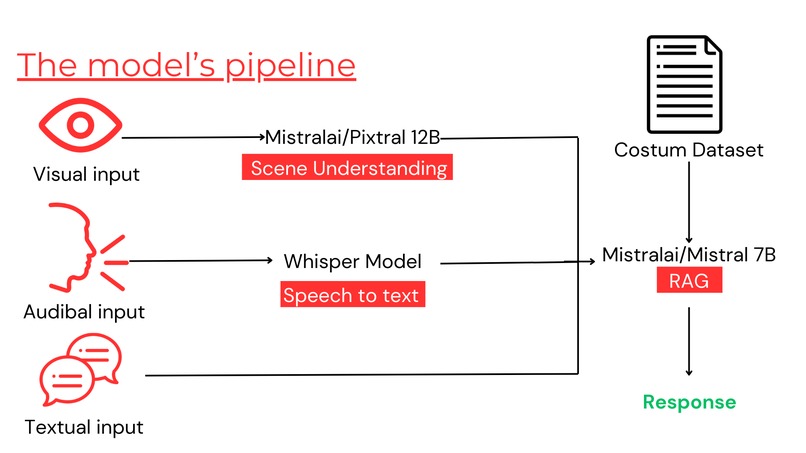
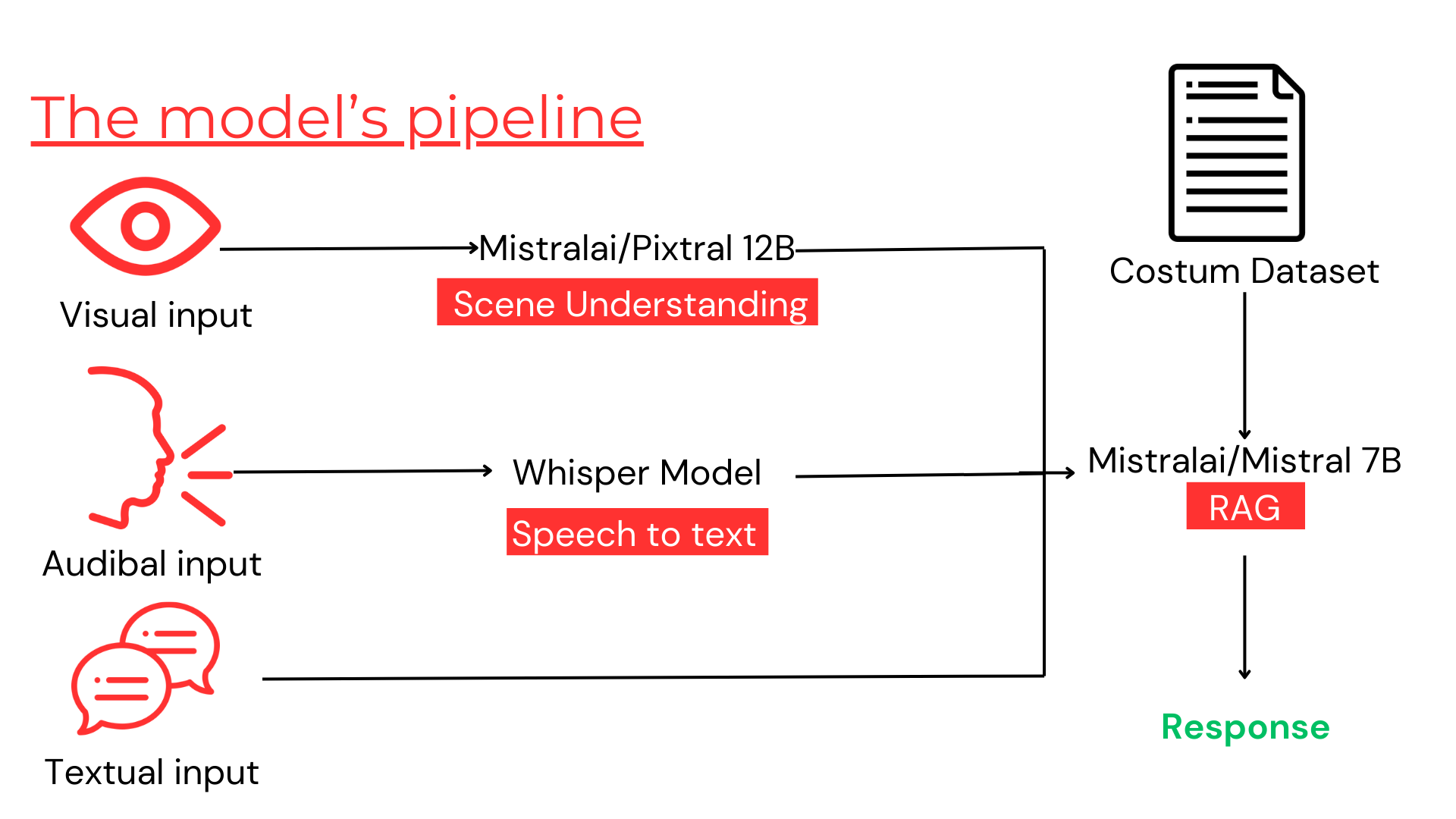
QuickAid's pipeline
-
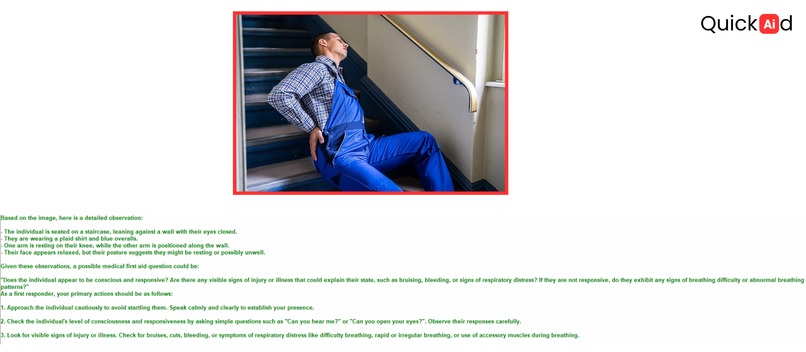
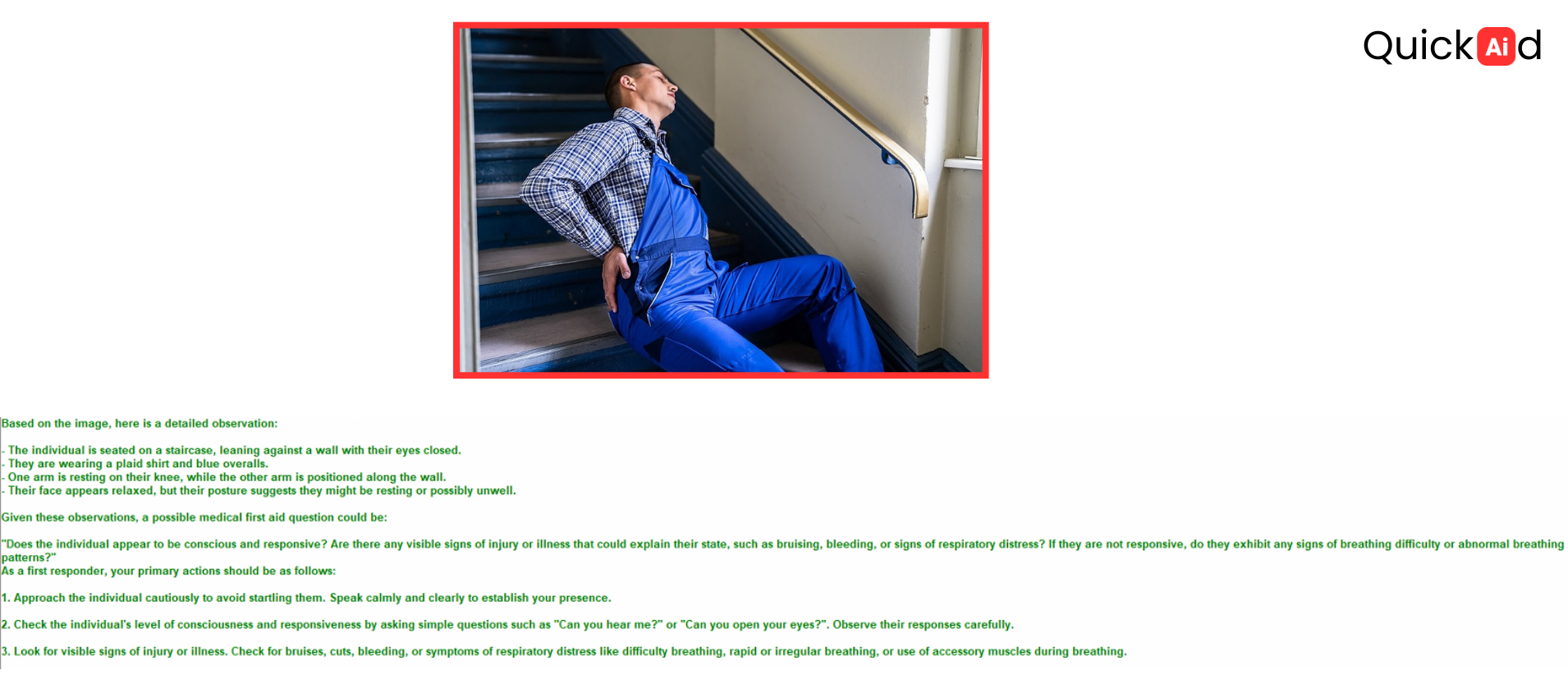
QuickAid's Results 1
-
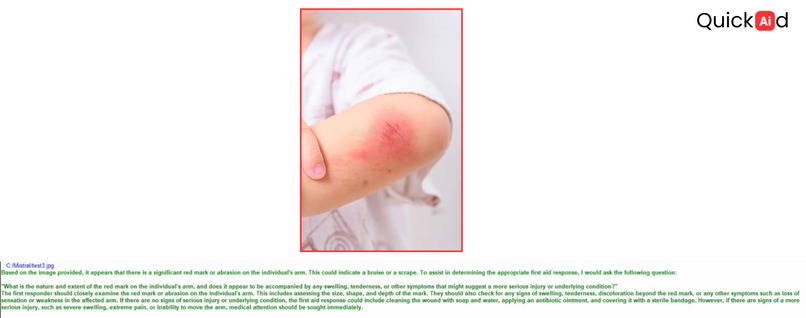
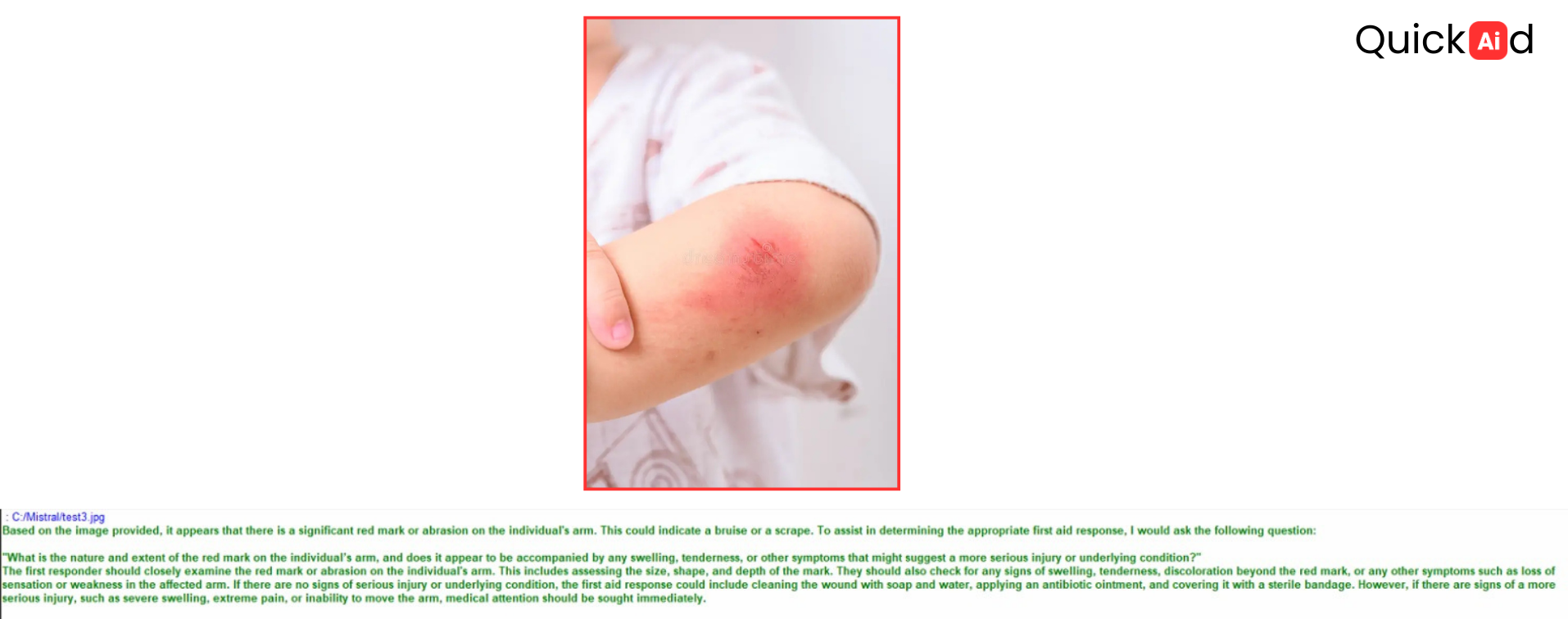
QuickAid's Resuts 2

Inspiration
The project was inspired by the need for immediate first aid during medical emergencies when professional help isn’t yet available. Timely assistance can make a life-or-death difference, and we wanted to create a tool that empowers individuals to take action.
What it does
QuickAId uses multiple types of data (visual, audible, and textual) to generate real-time, step-by-step first aid instructions for situations such as performing CPR, stopping bleeding, or stabilizing injuries.
How we built it
- Data Collection: Gathered datasets containing medical records cleaned and structured the data to ensure coverage of various scenarios.
- Model Design: Developed separate models for processing visual, audible (speech-to-text), and textual inputs.
- Interface Development: Created a user-friendly interface for delivering instructions via text, audio, or visual formats.
Challenges we ran into
- Data Availability: Finding quality datasets for medical emergencies was challenging
- Real-Time Processing: Ensuring low-latency responses demanded optimization techniques.
- Accuracy: Validating the model’s output to avoid providing incorrect instructions was crucial, requiring rigorous testing.
Accomplishments that we're proud of
- Successfully integrated multimodal inputs to deliver accurate first aid guidance.
- Optimized the model for real-time use without compromising reliability.
- Developed a tool that could potentially save lives by bridging the gap before emergency responders arrive.
What we learned
We learned the complexities of handling multimodal data and integrating different AI techniques, from computer vision to natural language processing. The project highlighted the importance of balancing model performance with real-world applicability, especially for life-critical tasks.
What's next for QuickAId
- Expanding the Dataset: Incorporating more diverse medical scenarios to improve accuracy.
- User Testing and Feedback: Conducting real-world trials to refine the system.
- Deployment on Mobile Devices: Optimizing the model to make it accessible on smartphones.
Built With
- finetunning
- huggingface
- mistral
- pixtral
- pixtral12b
- python
- rag
- transformers
- whisper


Log in or sign up for Devpost to join the conversation.