-
-
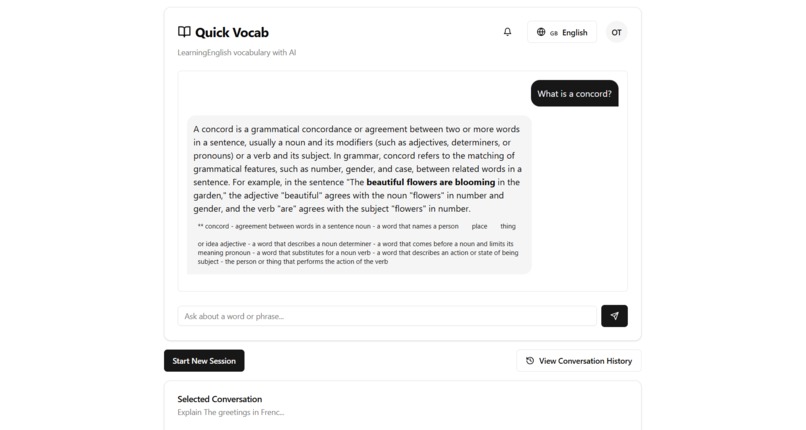
homescreen of quick-vocab ai
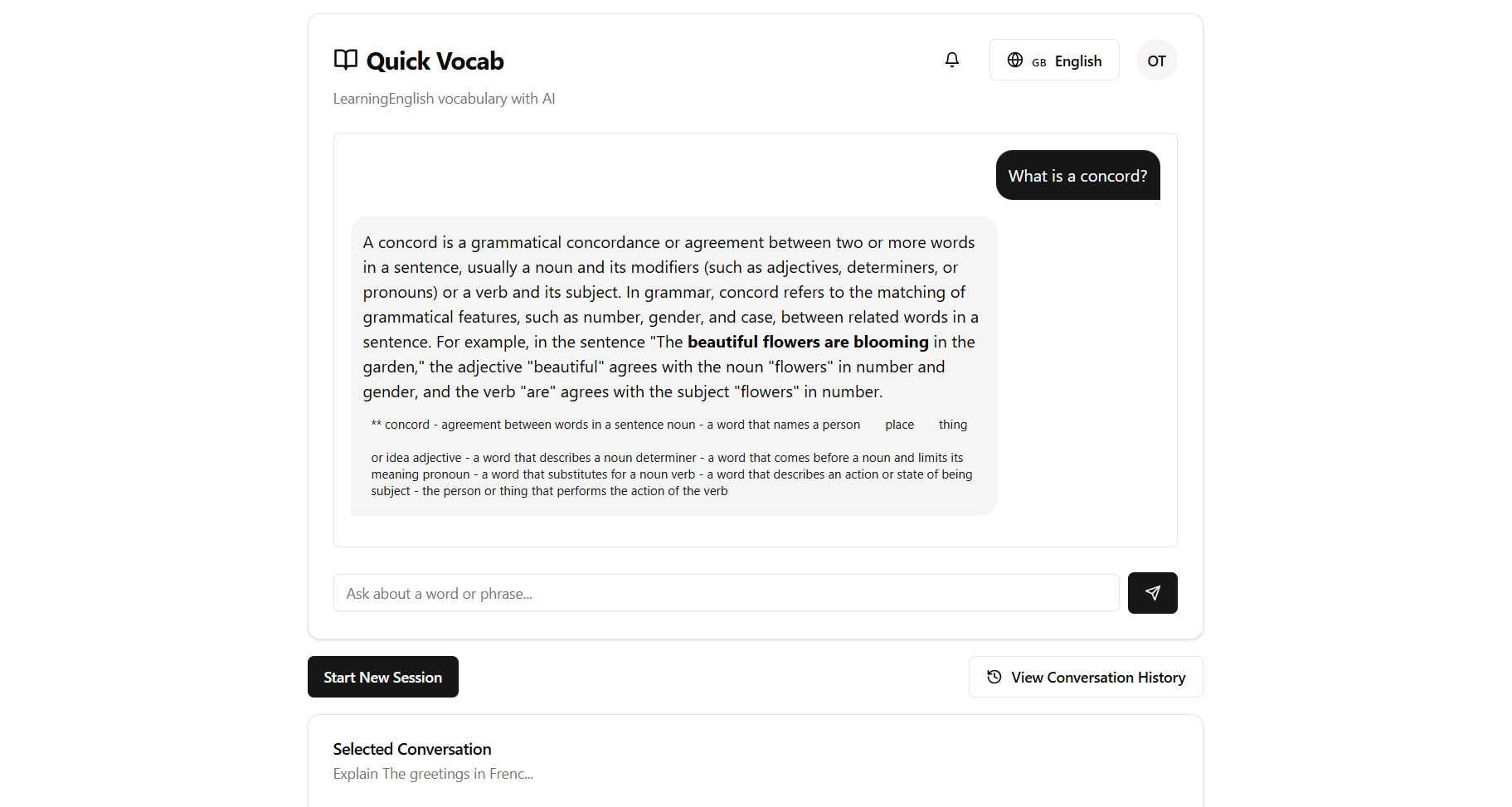
Quick-Vocab: Build Your Vocabulary Fast
Inspiration
The inspiration for Quick-Vocab came from recognizing the need for a modern, AI-powered vocabulary learning tool. With Gemini 1.5's advanced language understanding capabilities, we saw an opportunity to create a more intelligent and personalized learning experience that adapts to each user's needs.
What it does
Quick-Vocab leverages Appwrite and Gemini 1.5 to deliver:
- AI-powered word suggestions based on user's learning patterns
- Smart definitions and contextual examples generated by Gemini 1.5
- Real-time progress tracking and authentication via Appwrite
- Personalized quizzes and exercises
- Spaced repetition system for effective learning
- Clean, responsive UI built with React and TypeScript
How we built it
Our tech stack includes:
- TypeScript for type-safe development
- React for the frontend framework
- Appwrite for backend services:
- Authentication
- Database
- Storage
- Real-time updates
- Gemini 1.5 API for:
- Word analysis
- Example generation
- Context understanding
- Material UI for component design
- Vite for fast development and building
Challenges we ran into
- Managing Gemini 1.5 API rate limits and response times
- Implementing real-time synchronization with Appwrite
- Handling TypeScript type safety with AI-generated content
- Optimizing API calls to minimize costs
- Ensuring consistent user experience across devices
- Managing state with multiple async operations
Accomplishments that we're proud of
- Successfully integrated Gemini 1.5 for intelligent word analysis
- Built a scalable architecture using Appwrite's backend services
- Achieved type safety throughout the application with TypeScript
- Adding support for multiple languages
- Created a responsive and intuitive user interface
- Implemented efficient real-time updates for user progress
- Maintained clean code architecture despite complex integrations
What I learned
- Working with AI APIs (Gemini 1.5) effectively
- Appwrite's backend-as-a-service capabilities
- TypeScript best practices in a React application
- State management patterns for AI-powered applications
- Real-time database synchronization techniques
- Performance optimization for AI-heavy applications
What's next for Quick-Vocab
- Implementing more advanced Gemini 1.5 features
- Adding offline support using Appwrite's storage
- Introducing collaborative learning features
- Enhancing the AI-powered quiz generation
- Developing a mobile-first PWA version
- Implementing advanced analytics for learning patterns
- Creating a Chrome extension for contextual learning
Built With
- appwrite
- gemini-1.5-pro
- react
- shadcn
- typescript

Log in or sign up for Devpost to join the conversation.