-
-
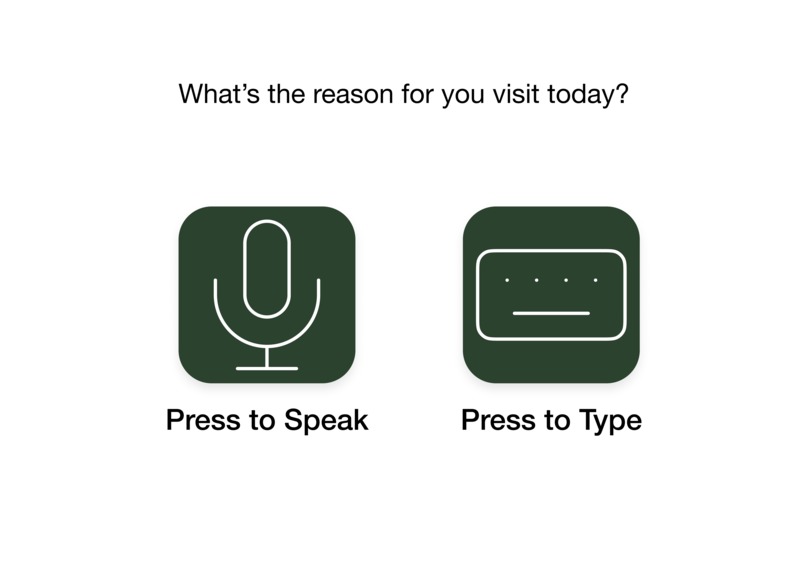
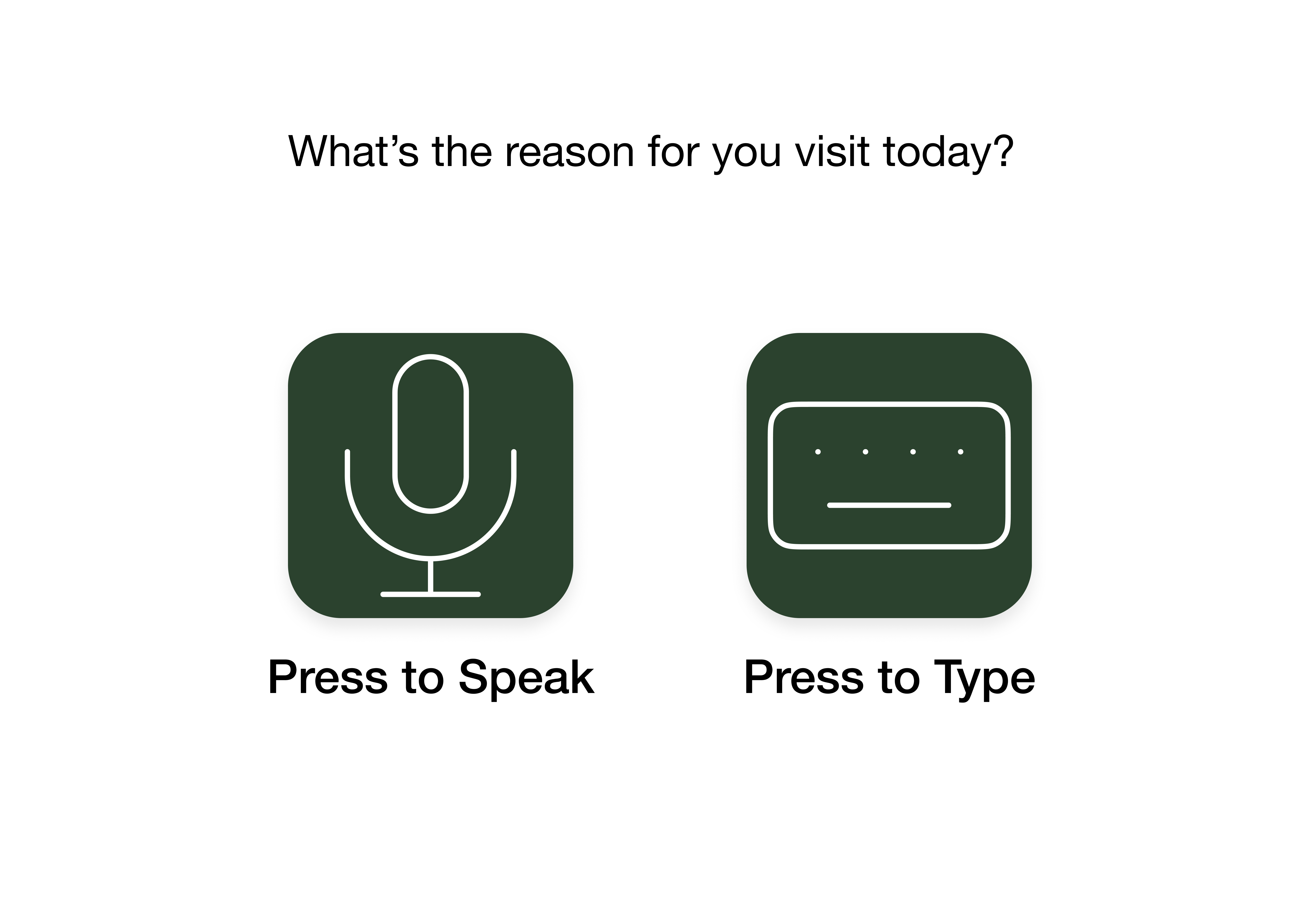
Patients input their symptoms either through speech or text
-
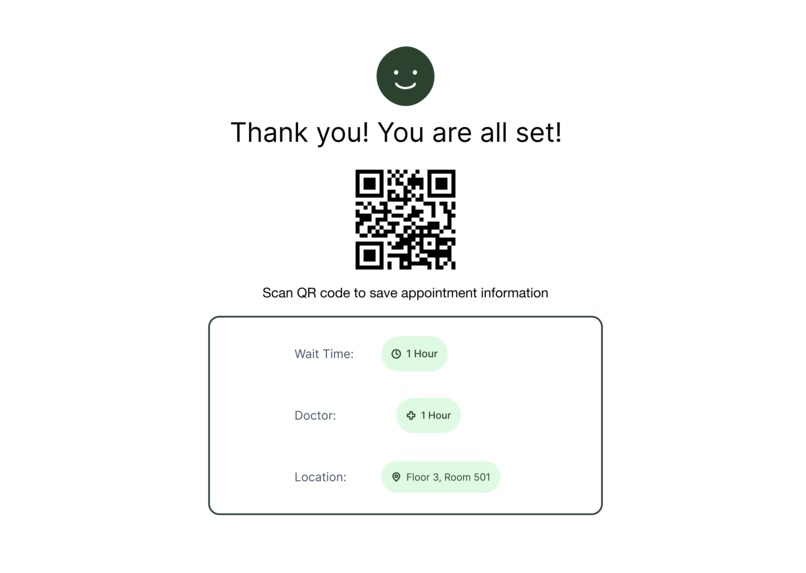
Patients receive information about their check up after they finish checking in
-
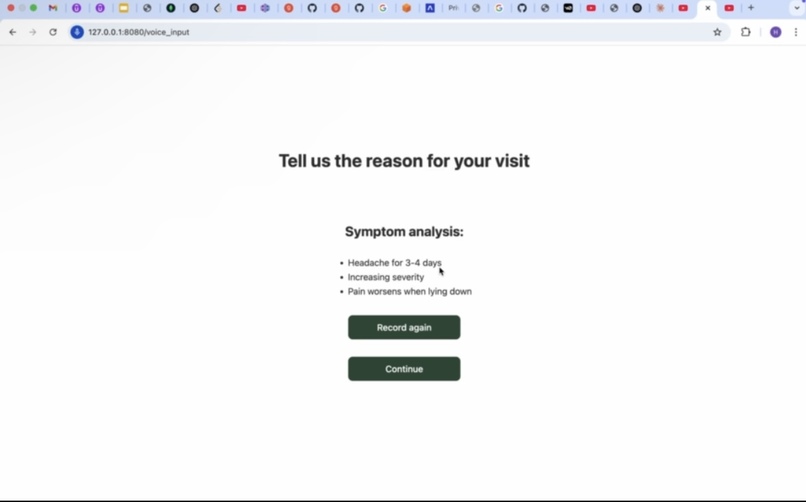
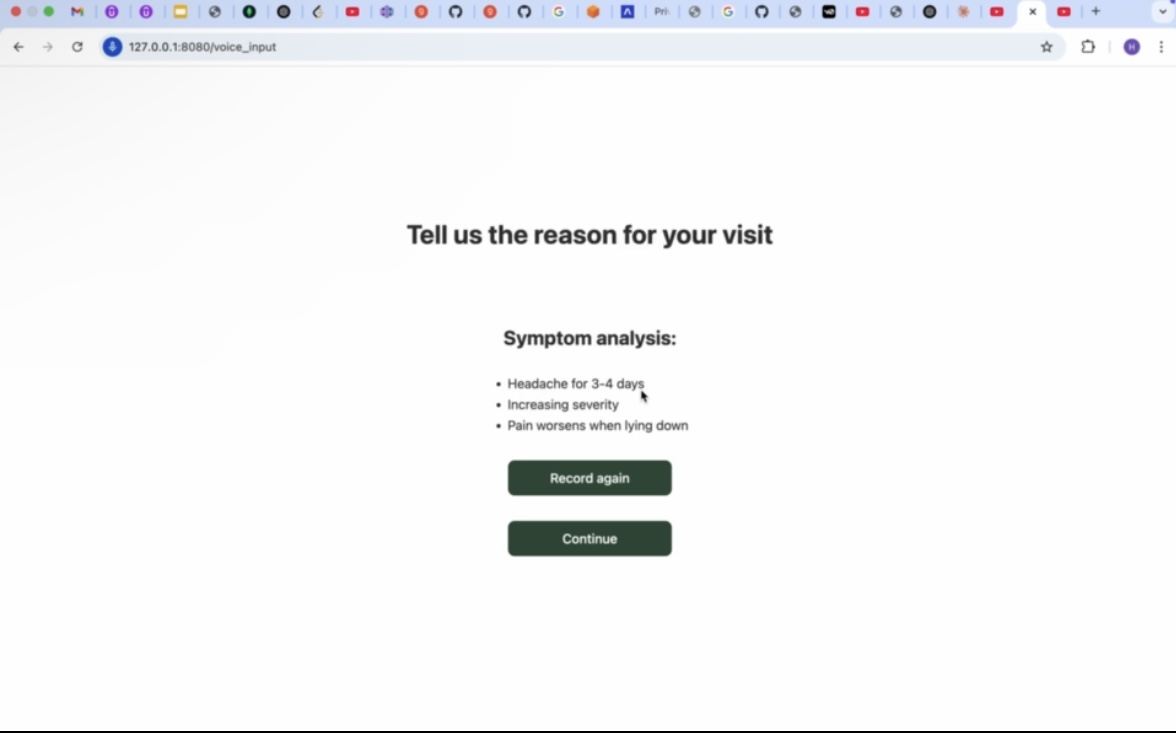
Perplexity does a summarization of symptoms the patient is experiencing
-
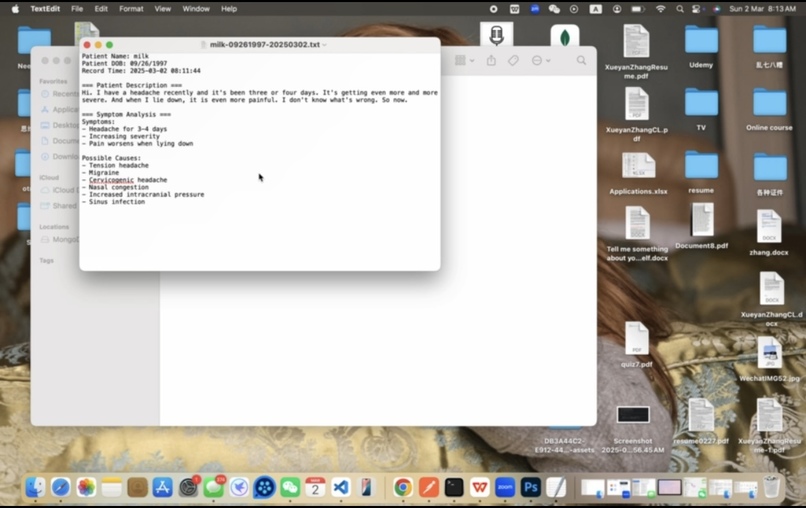
A txt file (place holder) for doctors to see what the patient is experiencing and also a list of possible causes


Inspiration
We were inspired by wanting to improve the workflow for hospitals since they are understaffed and checking in can be a hassle for people. One of our teammates experienced watching an elderly man struggle with checking in and this is was got us thinking on how we could improve the process.
What it does
Allows you to check in through a tablet kiosk by scanning your ID and you can also speak through the mic and it will send your information through their system to the doctor and notify them of the urgency.
How we built it
We used python Flask as backend and we had assembly and perplexity api to achieve speaking to texts and retrieve keywords form the texts, and we used V0 for the frontend and also figma for UI design.
Challenges we ran into
Cross-language Integration: Coordinating between Flask backend and V0 frontend required robust API design. AI Model Selection: Finding the right balance of speed and accuracy for medical transcription and analysis. User Experience Design: Creating interfaces that work for all patients, including elderly and those with disabilities.
Accomplishments that we're proud of
Successfully integrating Assembly AI and Perplexity AI to create a seamless voice-to-document pipeline, also we're able to create simple interface integrated with the backend.
What we learned
We gained practical experience with AI integration, API orchestration, and accessibility-first design principles. Most importantly, we learned that solving even a seemingly simple problem in healthcare can have profound impacts on people's experiences during vulnerable moments.
What's next for Quick Check
Mobile Application: Developing a native mobile experience for both patients and providers. More accessibility tools: Develop screen readers and volume setting for people with disabilities Vital checks: Integrate tools to check vitals, like blood pressure, current temperature, and full body scans, to look at abnormalities to be put inside the notes for doctors


Log in or sign up for Devpost to join the conversation.