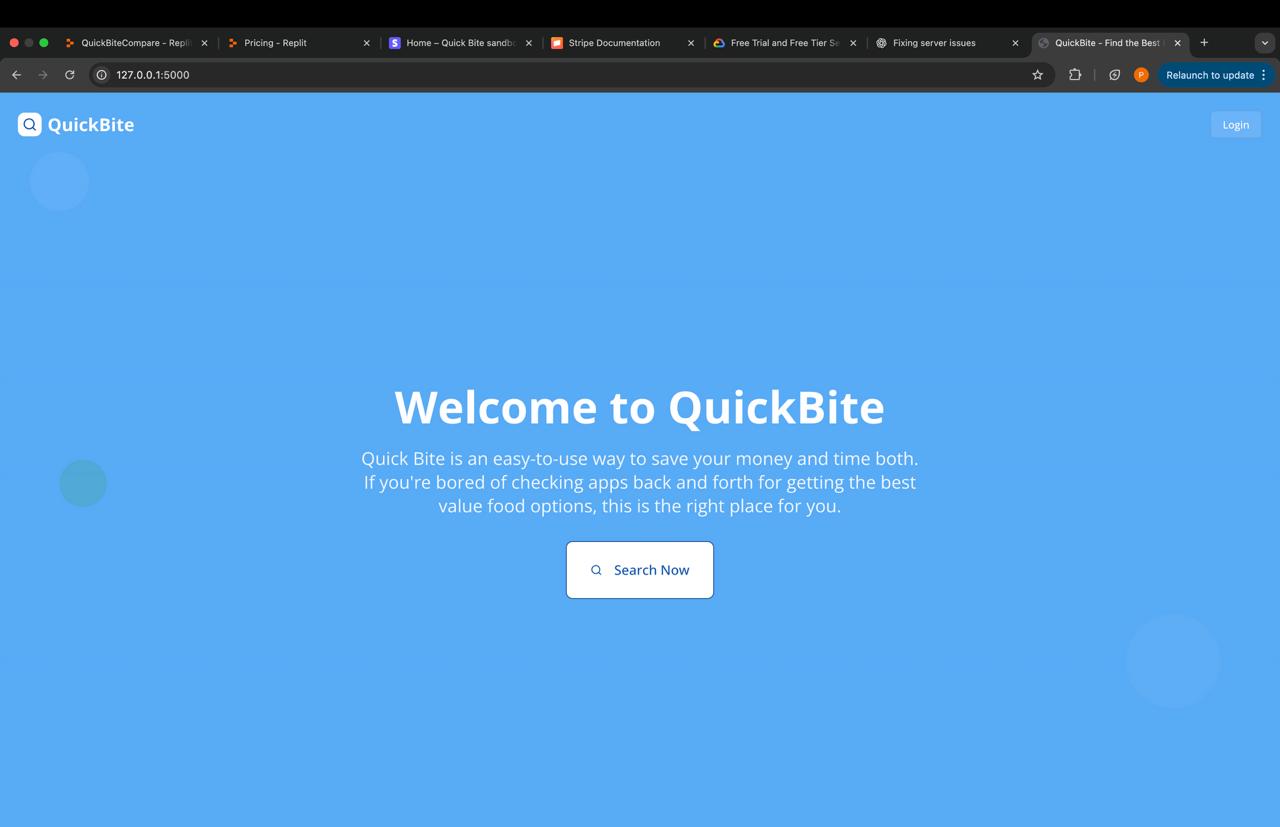
Inspiration: As students, ordering can be quite expensive, hence me and my friends often found ourselves in situation where we juggle between delivery apps to find the best price for the desired order. Hence Quick Bite was born.
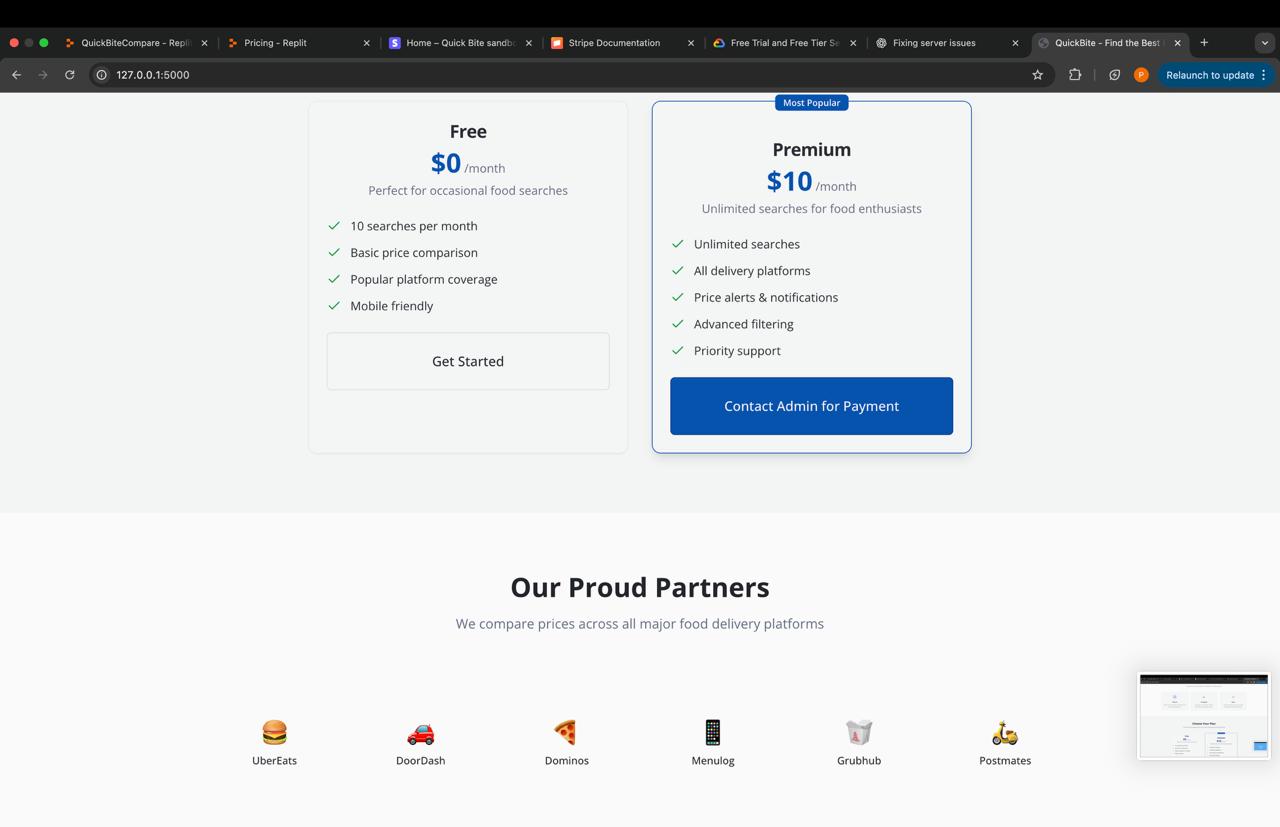
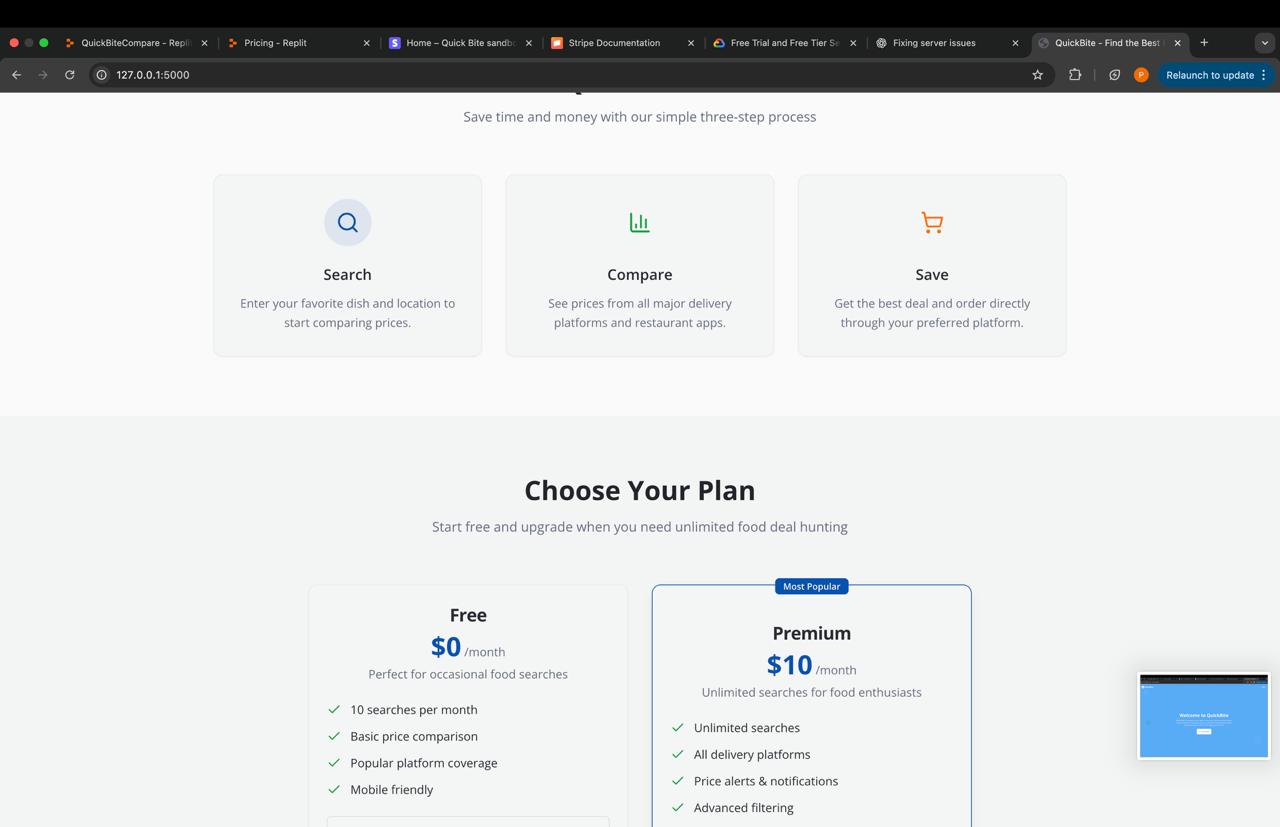
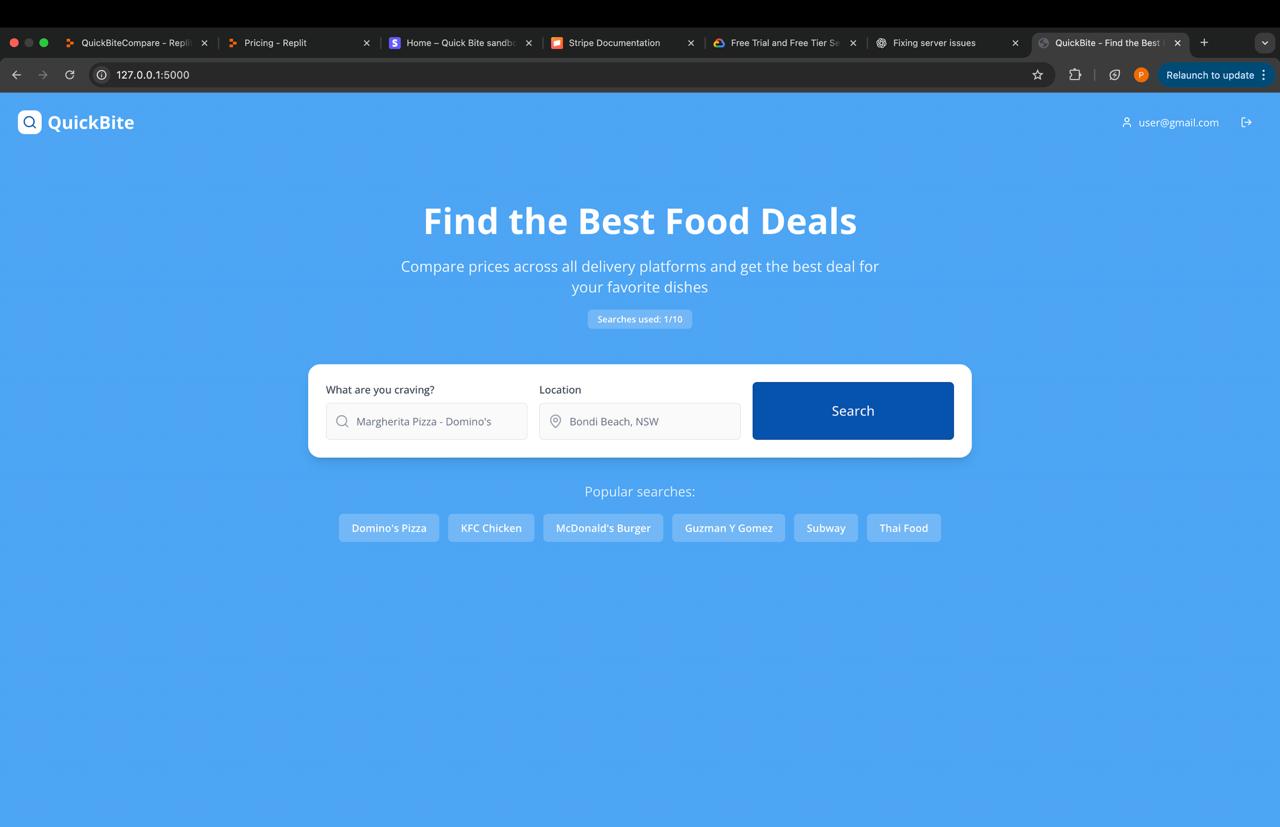
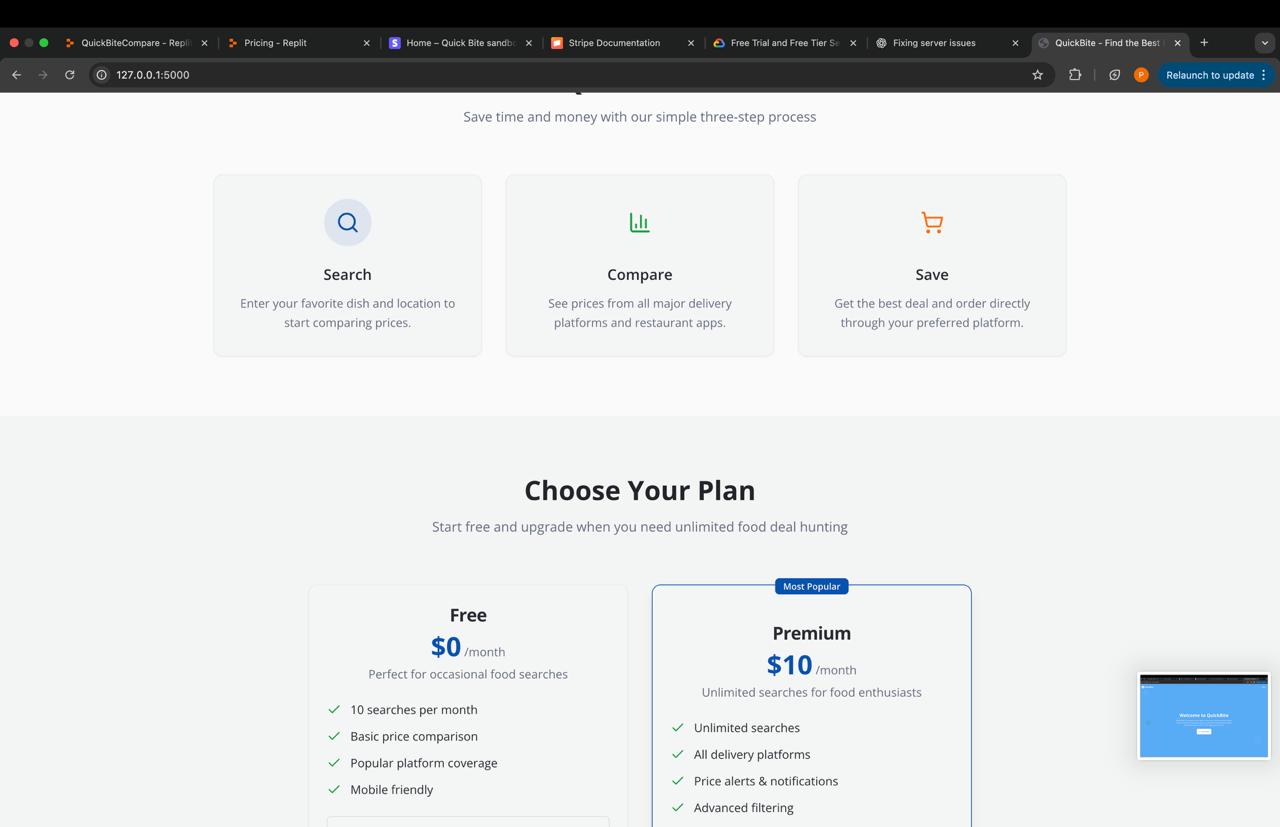
What it does: It merges existing delivery apps to find the best option by comparing item price, any ongoing offers on item, store location and delivery time, delivery cost and gives the best possible platform to order from.
How we built it: We built Quick Bite with a modern full-stack approach. The frontend is powered by React with TypeScript for scalable, type-safe components, and styled with Tailwind CSS for a clean, responsive design. On the backend, we used Node.js with Express to handle API routes and communication, while SQLite3 provided a lightweight relational database that was simple to set up and perfect for rapid prototyping in a hackathon setting.
For authentication and security, we integrated Google Cloud, which streamlined user login and identity management while ensuring scalability for future growth. This stack allowed us to move quickly, combine multiple services, and deliver a smooth user experience when comparing food delivery options across platforms like Uber Eats, DoorDash, and MenuLog.
Challenges we ran into: To deliver a seamless and intuitive user experience we would need API's from the delivery platforms to fetch real time menu prices and ongoing offers and delivery cost. However being students developers , the platforms refrain us from accessing their APIs which are accessible only by their partners. Hence we had to hardcode real data to make the prototype realistic.
Accomplishments that we are proud of: We are proud that, as second-year Computer Science students, we were able to take a real problem we face daily and transform it into a working prototype within the hackathon’s limited time. We built a full-stack web application from scratch using modern tools like React, Tailwind, Node.js, and Google Cloud authentication, which was our first time combining all these technologies together.
We’re also proud of the clean and intuitive UI/UX we designed, the way we were able to simulate real-world delivery data despite not having official APIs, and how smoothly we collaborated as a team under pressure. Most importantly, we’re proud that Quick Bite represents a solution that resonates with students like us — saving both money and time while ordering food.
What we learned? Through Quick Bite, we learned how to take an idea from a common student problem and turn it into a working prototype in a limited timeframe. We gained hands-on experience with building a full-stack app from scratch, integrating frontend and backend smoothly, and setting up Google Cloud authentication. We also learned how to manage challenges like the lack of official APIs from delivery platforms, and how to work around them with realistic mock data while still keeping the user experience believable. Most importantly, we learned the value of team collaboration, rapid prototyping, and prioritizing features that deliver the most impact within a hackathon setting.
What's next for Quick Bitte? We want to target students and by helping them out and gaining word of mouth validation, with enough market traction, we look forward to become partners of food delivery platform giants like Uber Eats and DoorDash to be able to provide the seamless and intuitive user experience we have always dreamt of.

Log in or sign up for Devpost to join the conversation.