-
-
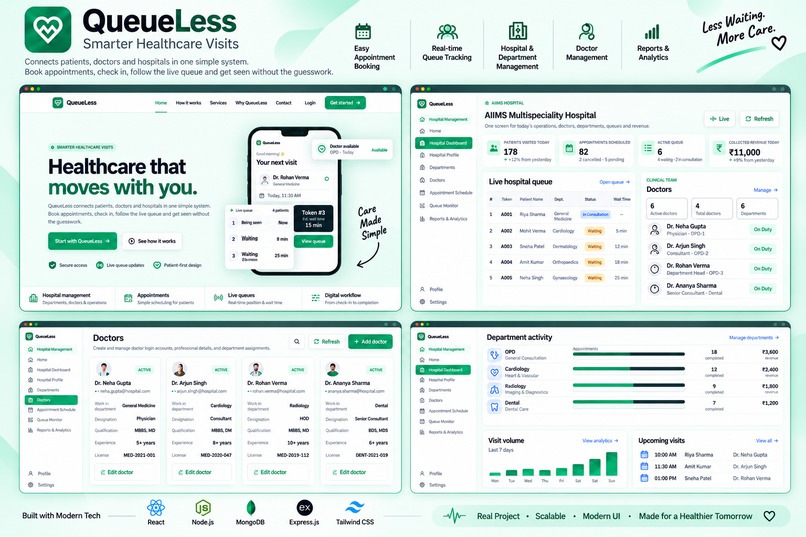
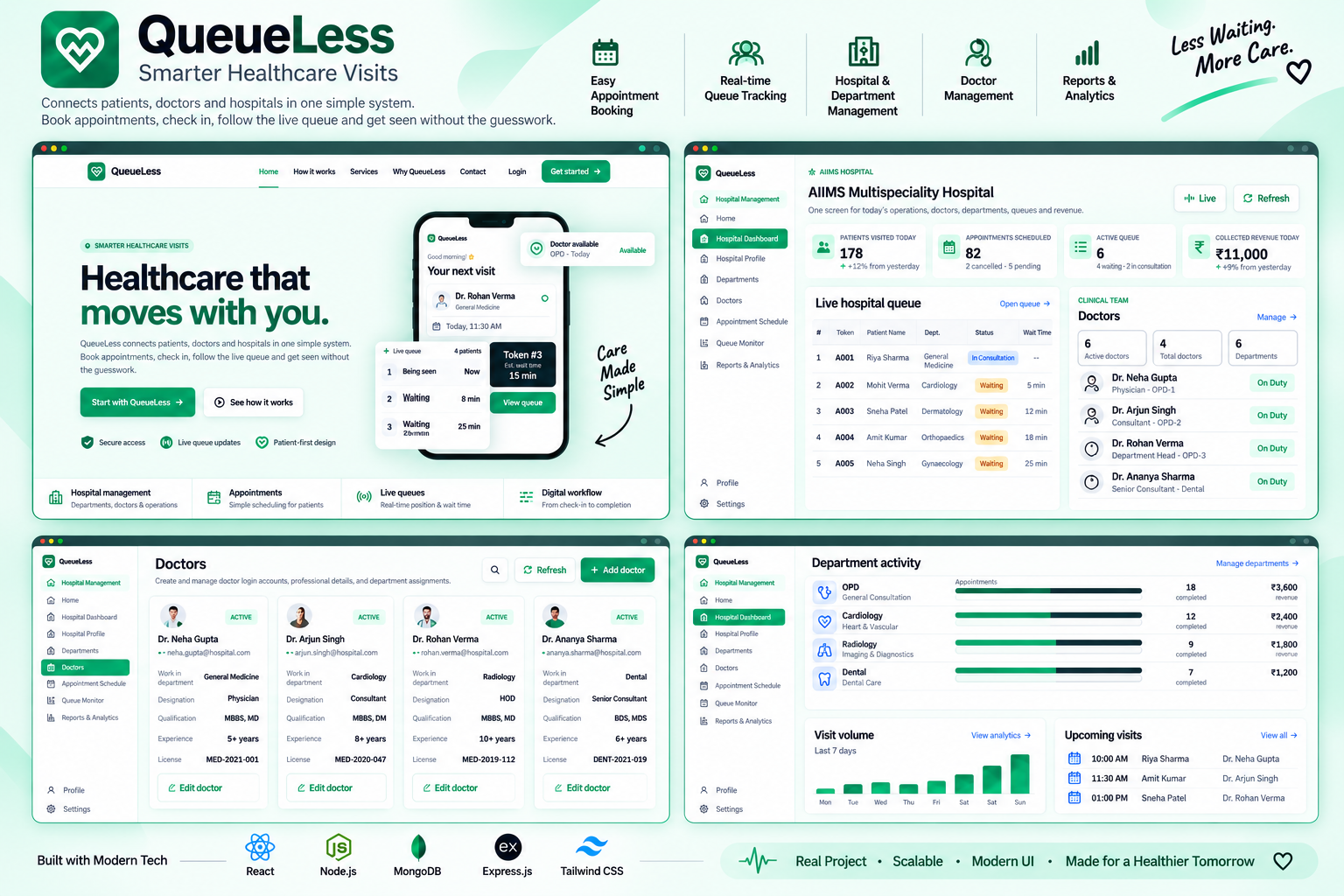
QueueLess: Complete hospital management platform with patient, doctor, and admin workflows.
-
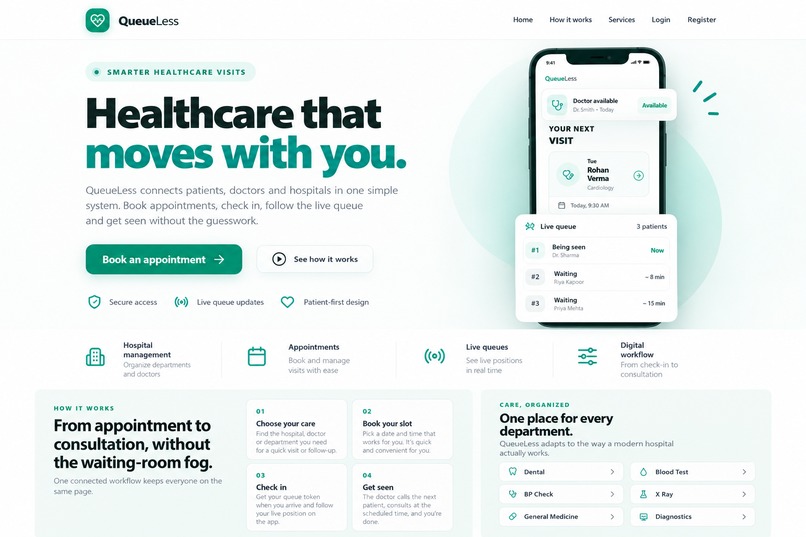
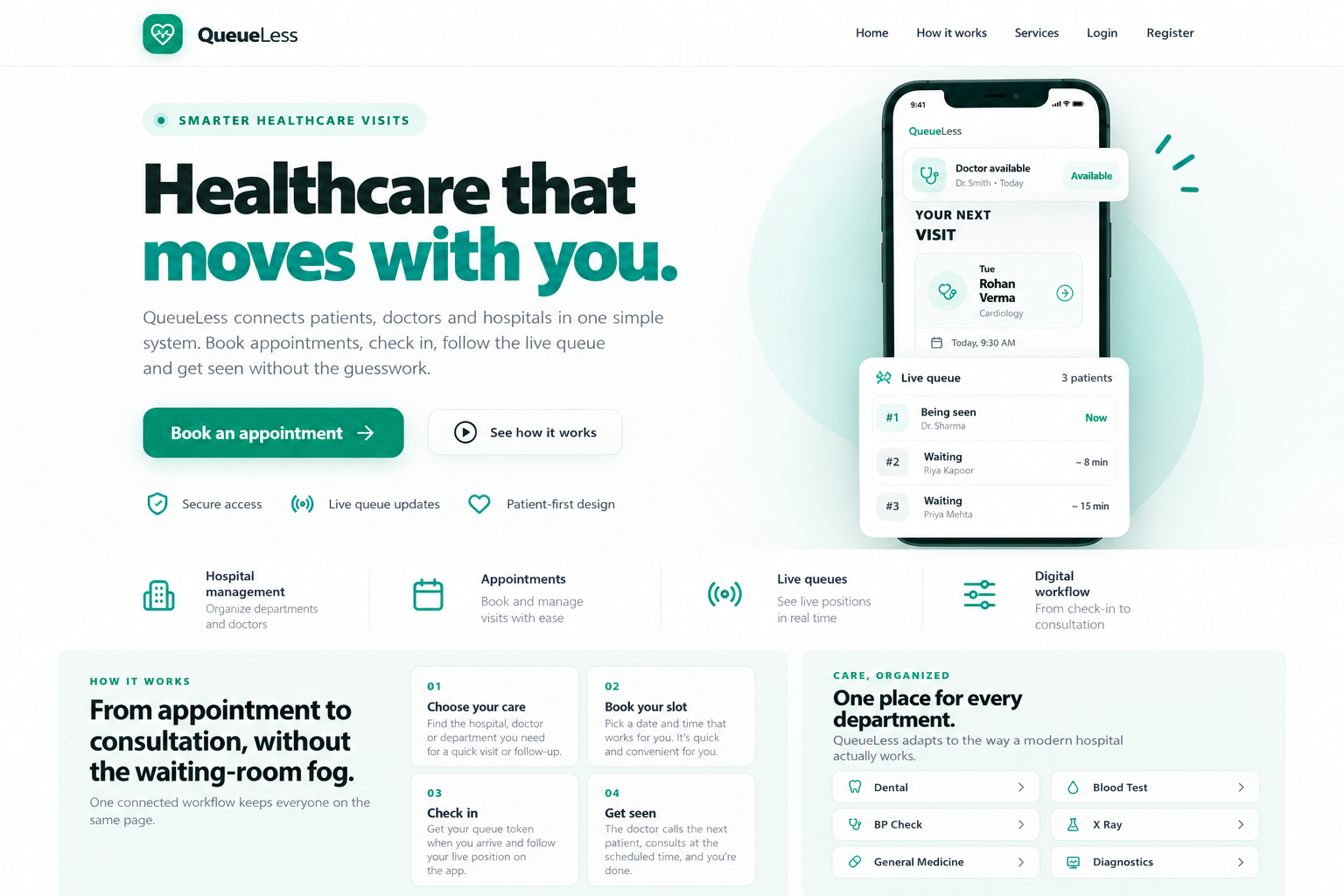
QueueLess landing page: appointments, live queues, and connected hospital services in one platform.
-
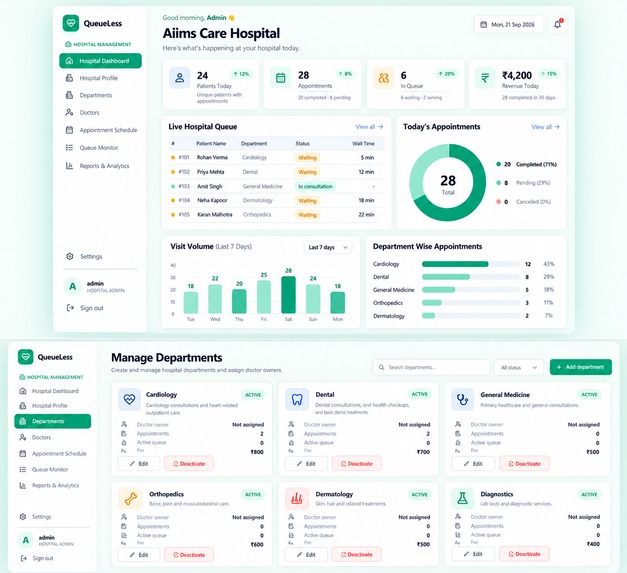
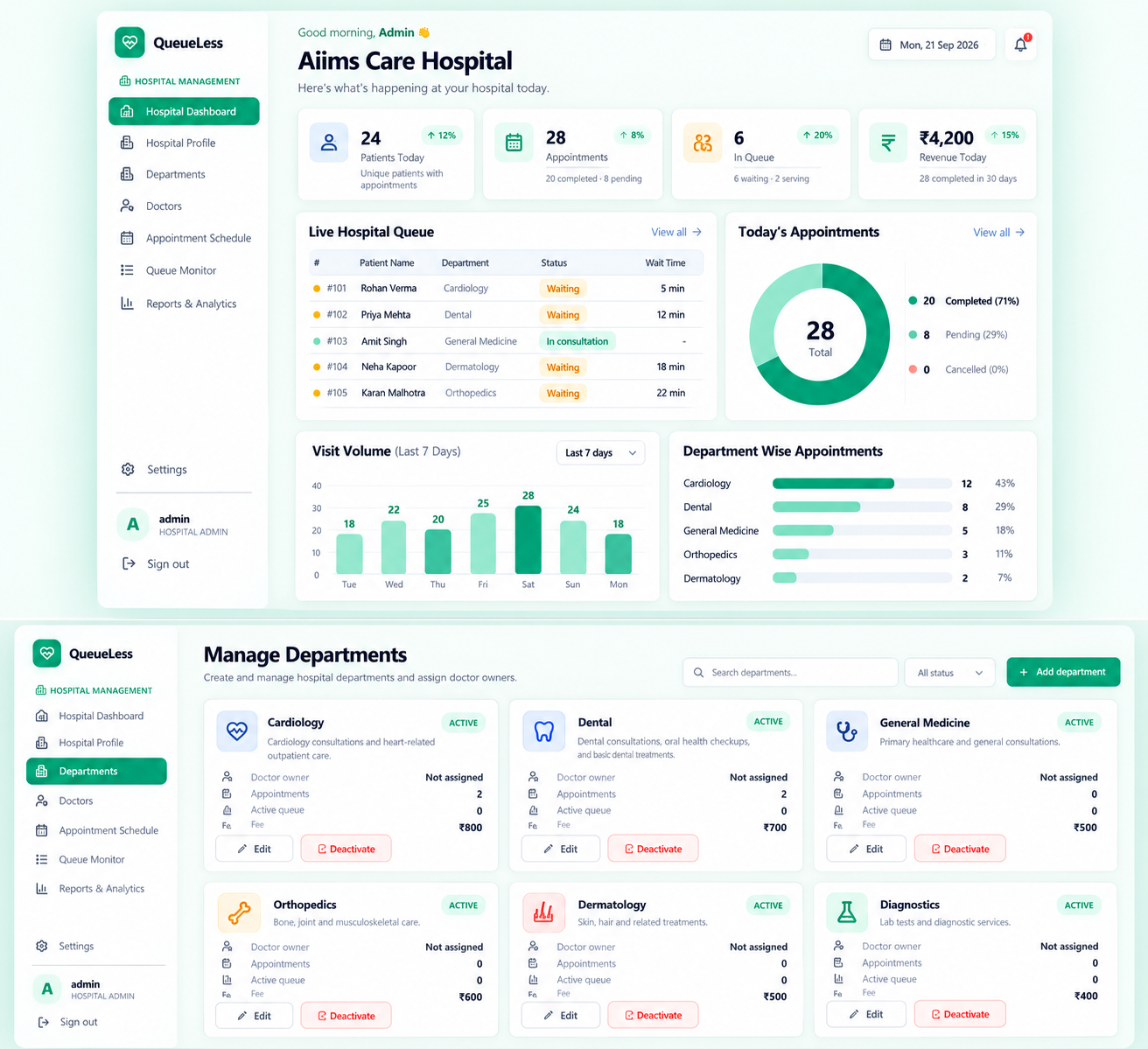
Hospital dashboard: monitor appointments, active queues, doctors, departments, and daily operations.
-
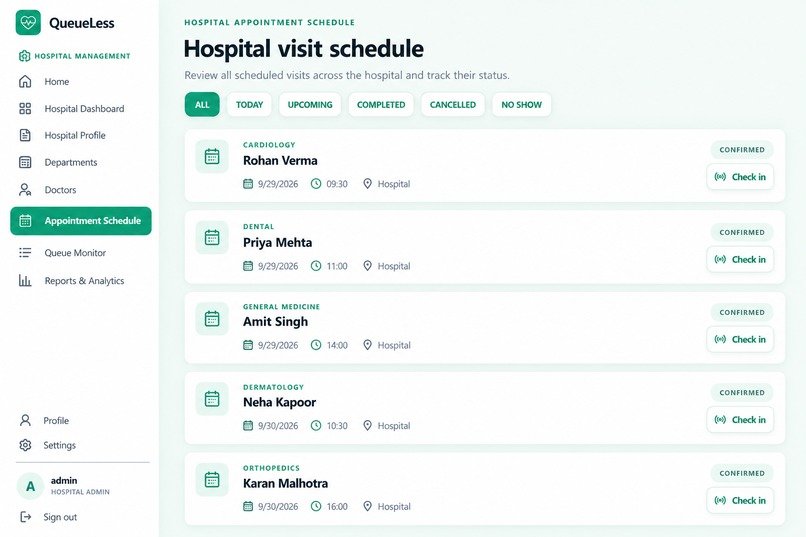
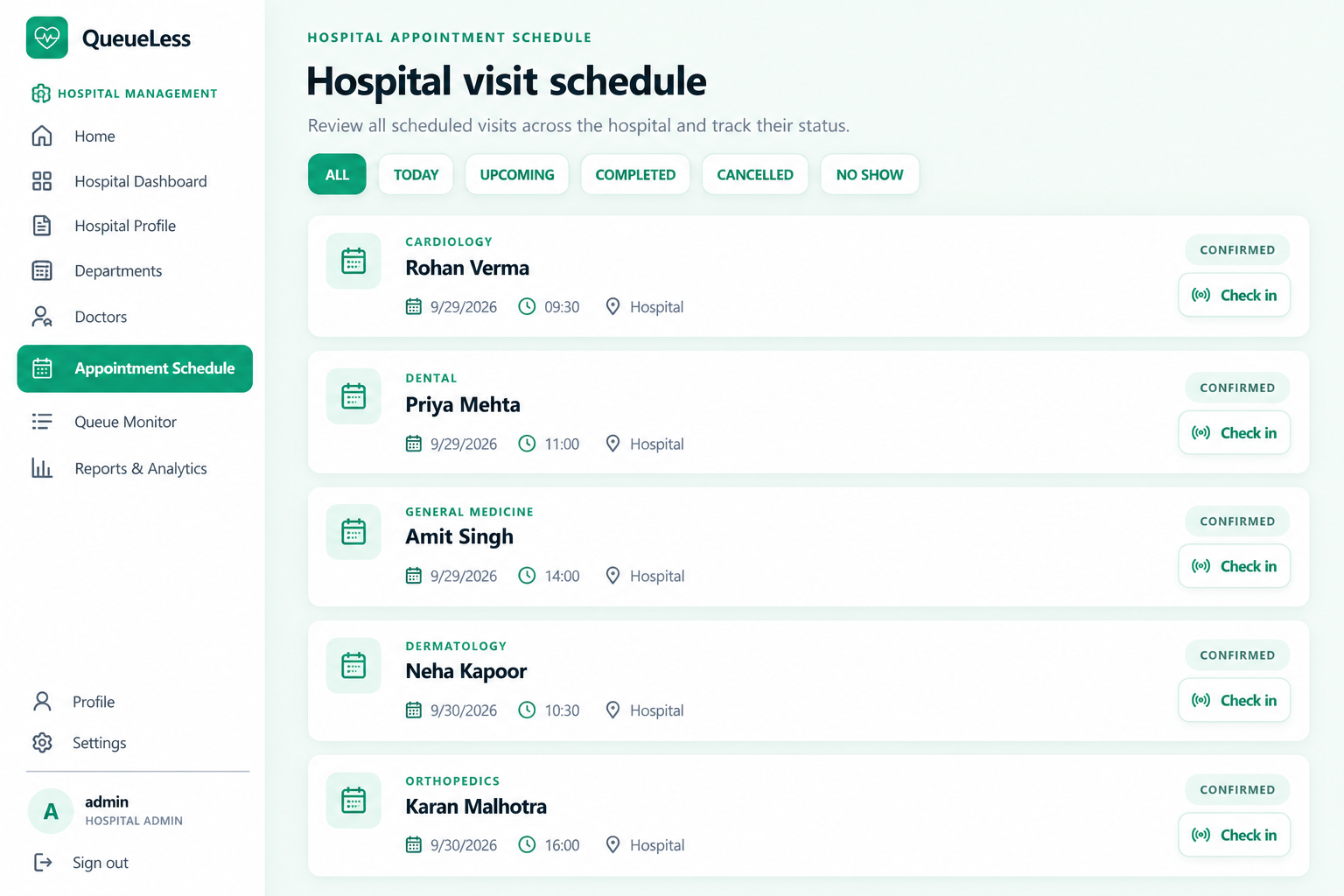
Appointment schedule: manage hospital visits, appointment status, and patient check-ins.
-
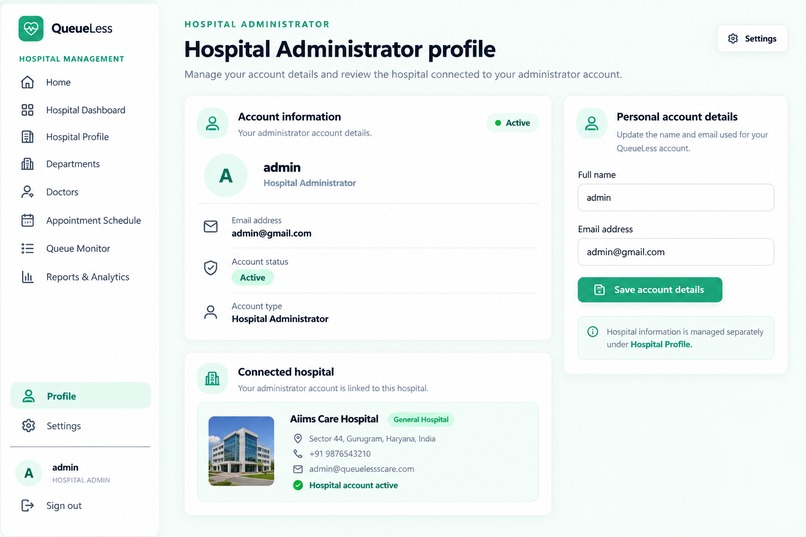
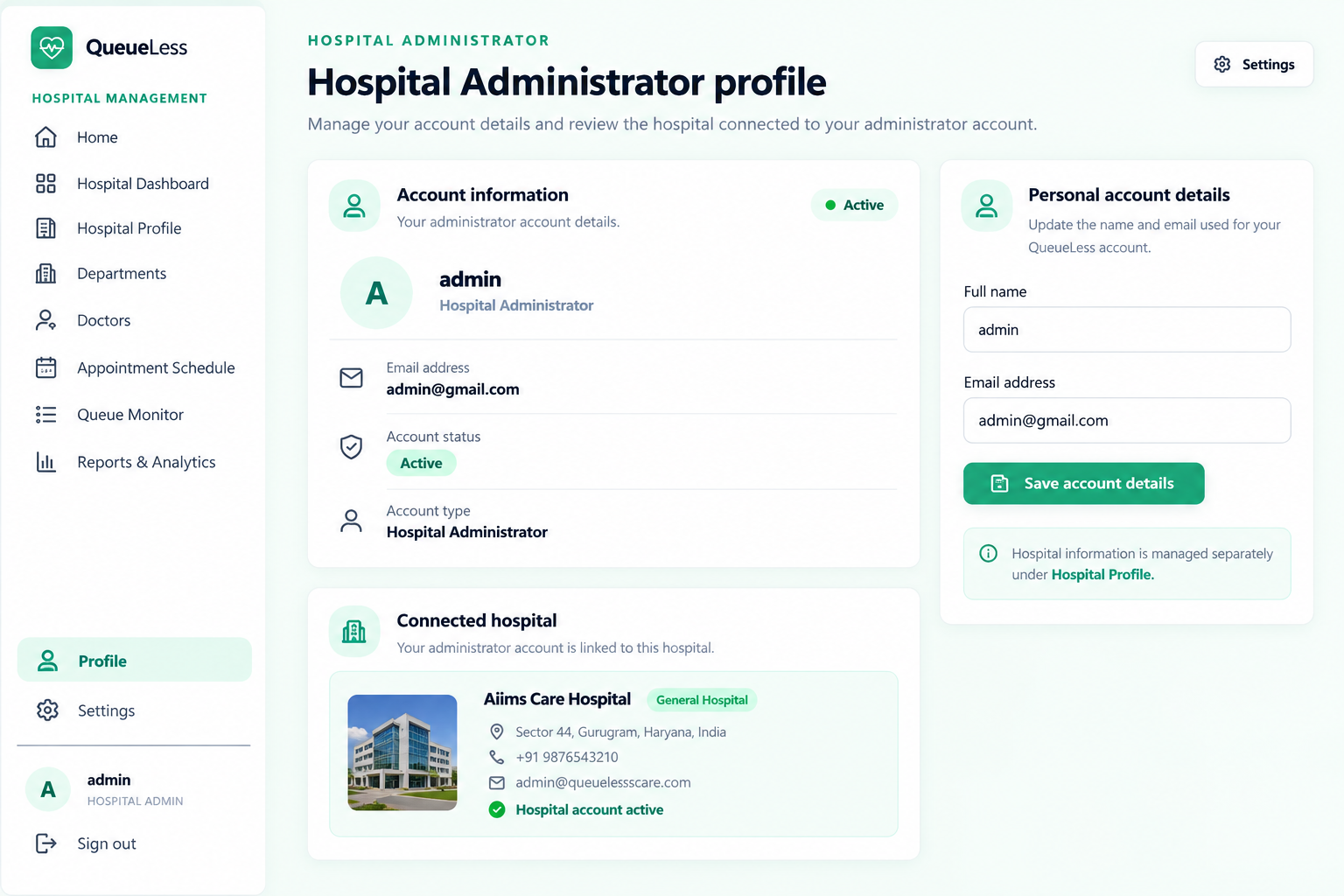
Administrator profile: manage account details and the connected hospital.
demo access credentials for this website is provided at the end of this about section!!!!
Inspiration
Waiting in hospitals can be frustrating for patients and difficult for staff to manage. Patients often know their token or appointment number, but they do not know how long they will actually have to wait.
This inspired us to build QueueLess, a hospital queue and appointment management platform designed to make waiting more predictable and improve patient flow.
What it does
QueueLess connects patients, doctors, and hospital administrators in one platform.
For Patients
- Register and securely log in
- Browse hospital departments and doctors
- Book appointments
- View upcoming appointments
- Join and monitor queues
- Track their position and waiting information
For Doctors
- Access a dedicated clinical dashboard
- View appointments
- Monitor the patient queue
- Manage their assigned department workflow
For Hospital Administrators
- Create and manage the hospital profile
- Create departments
- Add and manage doctors
- Assign doctors to departments
- Configure consultation duration and fees
- Monitor appointments and queues
- Access hospital management and analytics features
How we built it
QueueLess was built as a full-stack web application using the MERN stack.
- Frontend: React + Vite
- Backend: Node.js + Express.js
- Database: MongoDB Atlas
- Real-time communication: Socket.IO
- Authentication: Token-based authentication
- Deployment: Vercel for the frontend and Render for the backend
The application uses role-based access so that patients, doctors, and administrators see the functionality relevant to them.
Innovation
Instead of treating a queue as simply a list of people waiting, QueueLess is designed around the idea of making the waiting process more organized and predictable.
The platform combines appointments, departments, doctors, consultation durations, and live queue information into one system.
Future versions can build on this foundation with more advanced wait-time prediction, historical queue analysis, intelligent staff allocation, no-show prediction, and dynamic appointment scheduling.
Challenges
One of the biggest challenges was connecting multiple user roles and workflows into a single application.
We also had to handle authentication, protected routes, appointment and queue management, real-time updates, database integration, and deployment of the frontend and backend as separate services.
During deployment, we also had to configure environment variables and CORS correctly so that the Vercel frontend could communicate securely with the Render backend.
What we learned
Building QueueLess gave us practical experience with full-stack development, REST APIs, authentication, MongoDB, role-based access control, real-time communication with Socket.IO, and cloud deployment.
More importantly, it helped us understand how a software product can connect different users around one real-world problem instead of solving only one part of the workflow.
What's next
Future versions of QueueLess could introduce:
- Intelligent wait-time prediction
- Historical queue analytics
- No-show probability estimation
- Dynamic appointment scheduling
- Smarter staff allocation
- Multi-location hospital management
- Patient notifications
- Calendar and communication integrations
QueueLess: Know your wait. Plan your time. Serve smarter.
Demo Access
The live demo is available at:
https://queue-less-multi-tenant-saas.vercel.app/
Patient Demo
Email: [email protected] Password: user1234
Doctor Demo-1
Email: [email protected] Password: Doctor@12345
Doctor Demo-2
Email: [email protected] Password: Doctor@12345
Admin Demo
Email: [email protected] Password: admin1234 These accounts are provided only for evaluating the deployed demo.
Built With
- api
- atlas
- express.js
- javascript
- jwt
- mongodb
- node.js
- react
- rest
- socket.io
- vercel
- vite


Log in or sign up for Devpost to join the conversation.