-
-
-
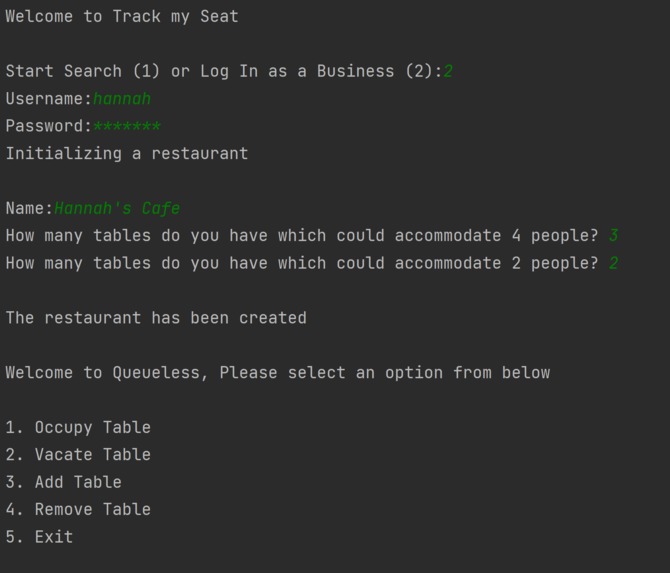
Owner End of the Software
-

Logo

Inspiration
It's a warm, sunny day; you walk out to get food at your favorite place, only to find no place available to enjoy the wholesome dining experience. This has only gotten common after COVID-19 thanks to capacity limits, and even when the limits will be gone, people crave the convenience they once had of reserving, reserving, and reserving. And hence comes the need for Queueless!
What it does
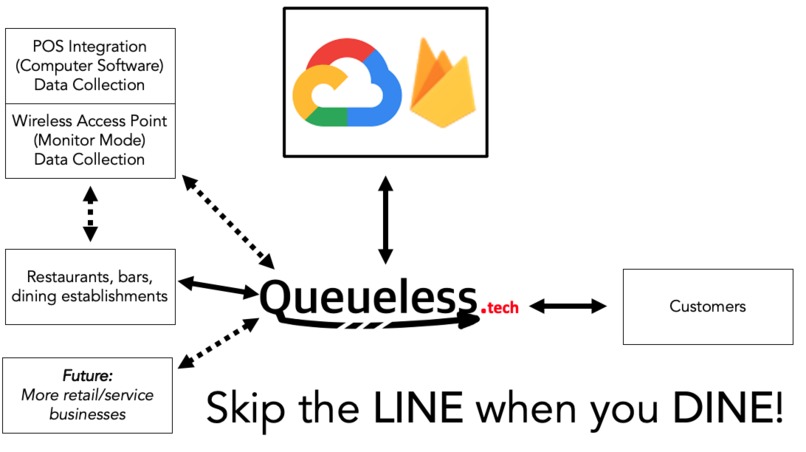
Free for customers, and subscription-based for businesses who choose to participate, Queueless gives live status of the number of tables and seats available in the restaurants of your choosing. As a result, small restaurant owners would get a constant supply of happy customers who prefer last-minute plans.
How we built it
Used Python for early development and proof-of-concept, such as on the Restaurant Owner side of "operations". Google Cloud/Firebase is used for the database. And HTML and Google Maps API for deployment and User Search end.
What's next for Queueless (for Restaurants)
Predicting when the tables will be vacant if all are occupied based on each restaurant's history and . Expanding this to other business like barber shops, bars etc.


Log in or sign up for Devpost to join the conversation.