-
-
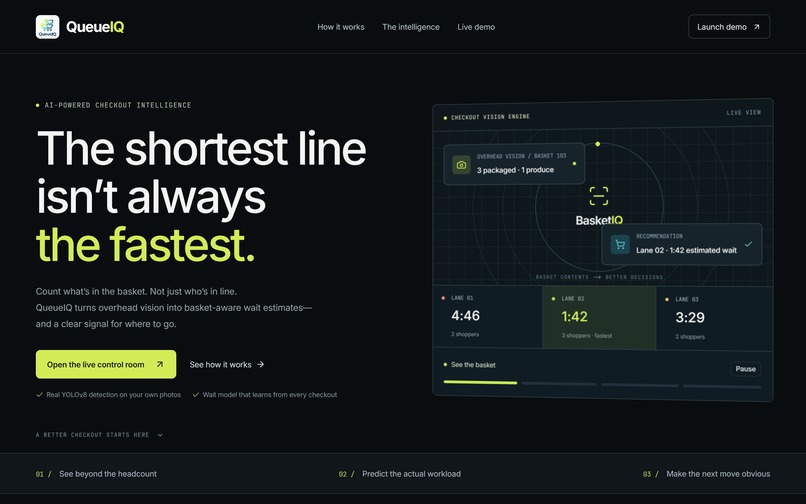
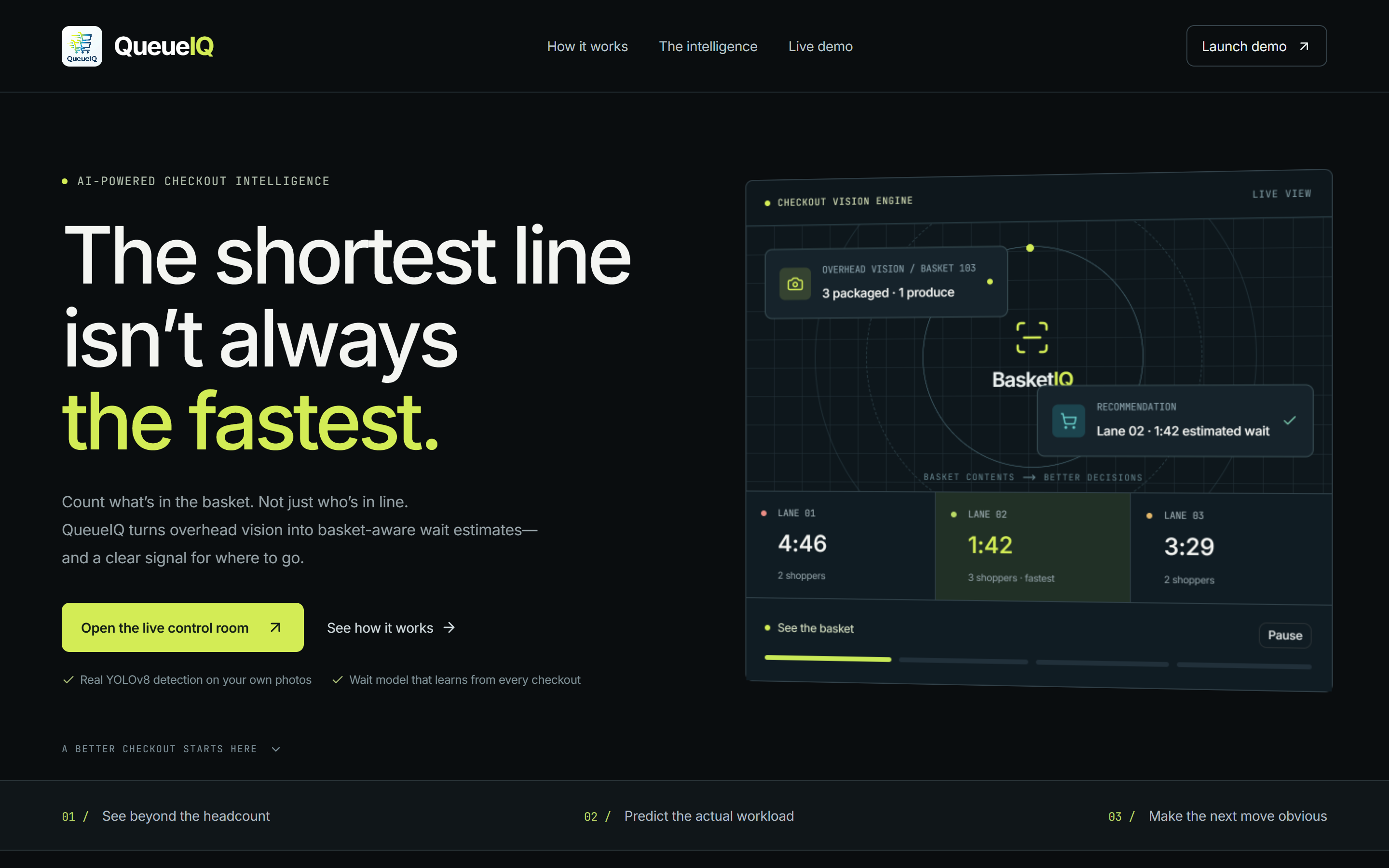
The shortest line isn't always the fastest: QueueIQ reads what's in each basket, not just how many people are waiting.
-
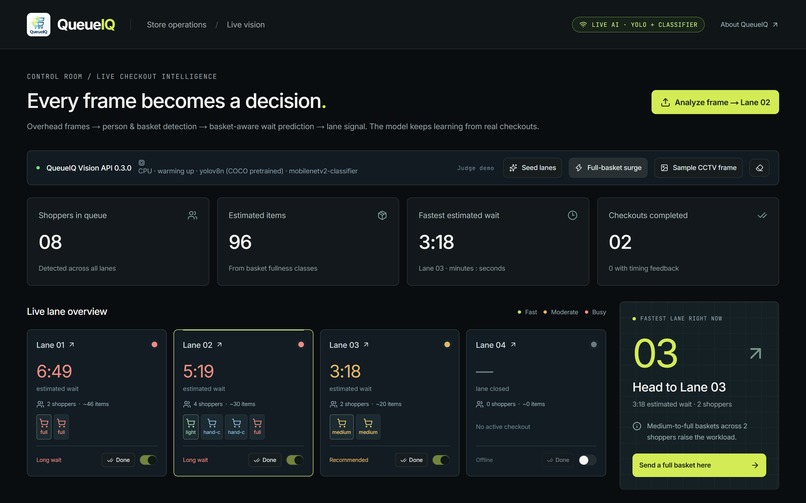
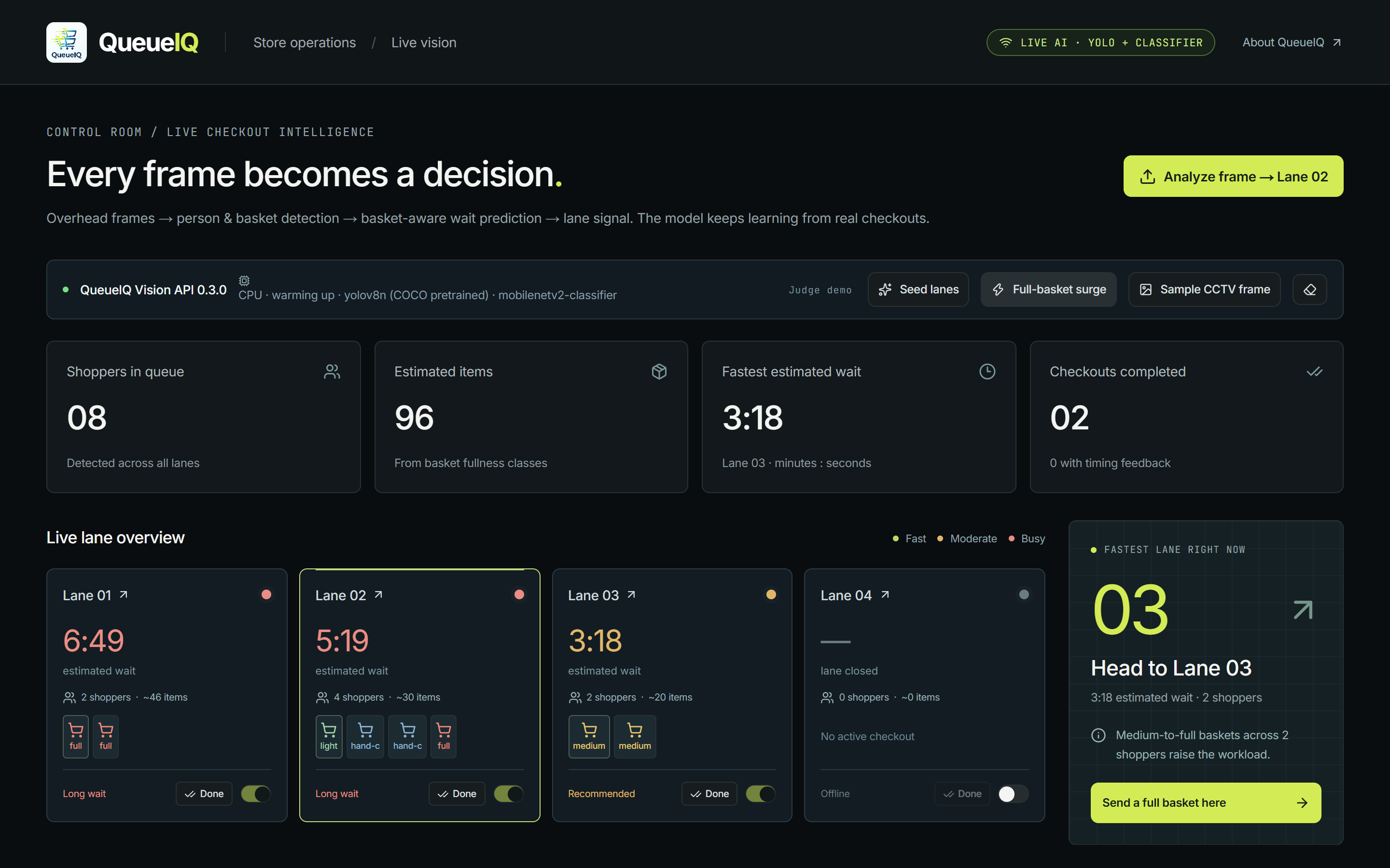
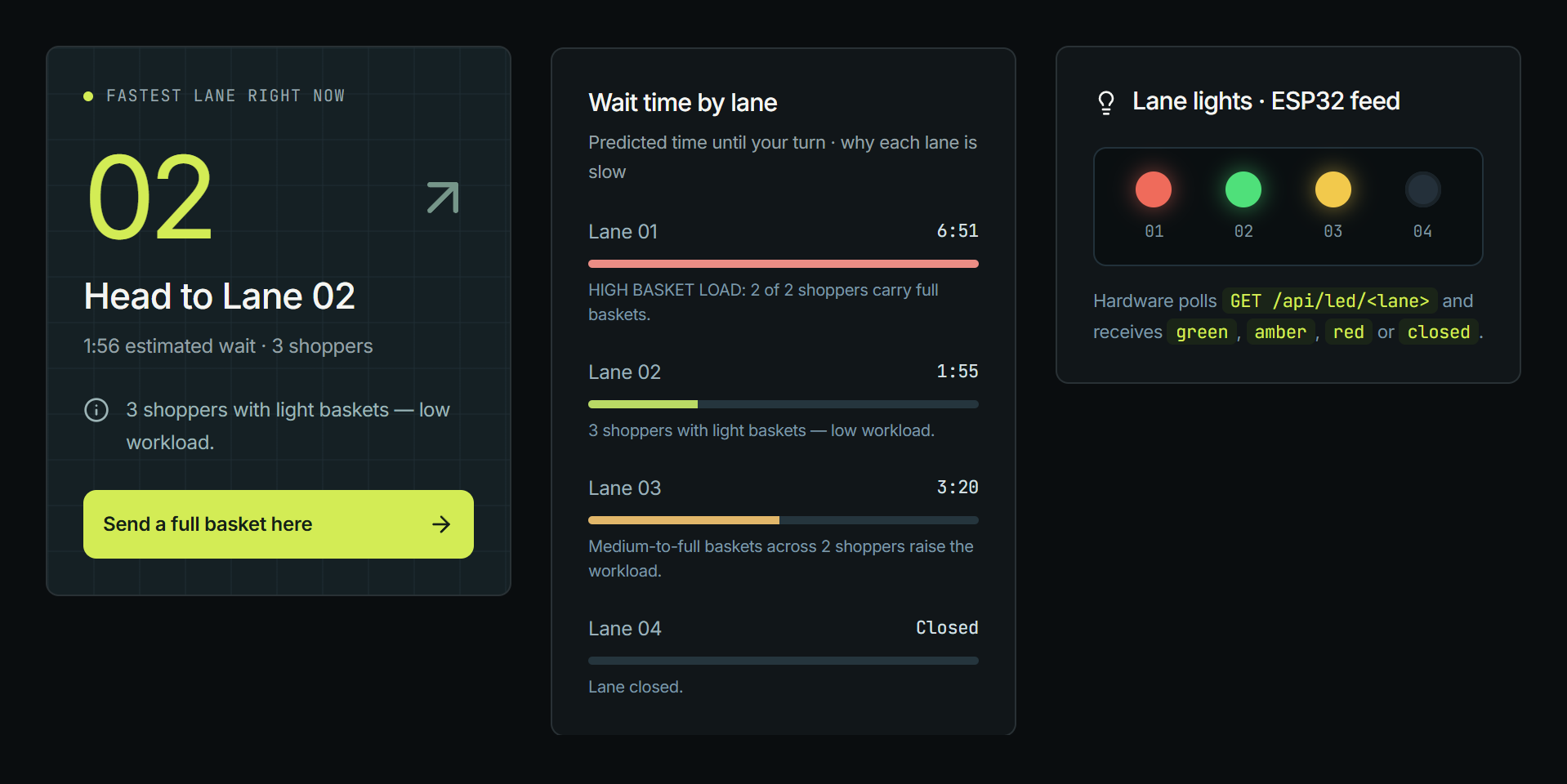
One full-basket shopper joins Lane 02, its light turns red, and QueueIQ instantly reroutes shoppers to Lane 03.
-
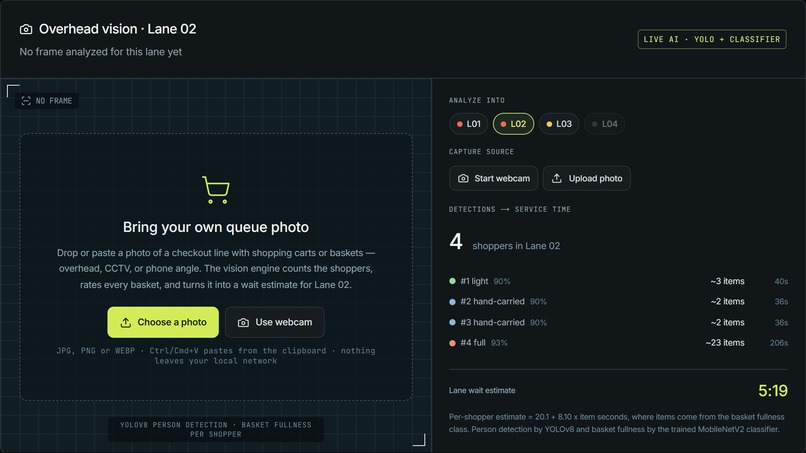
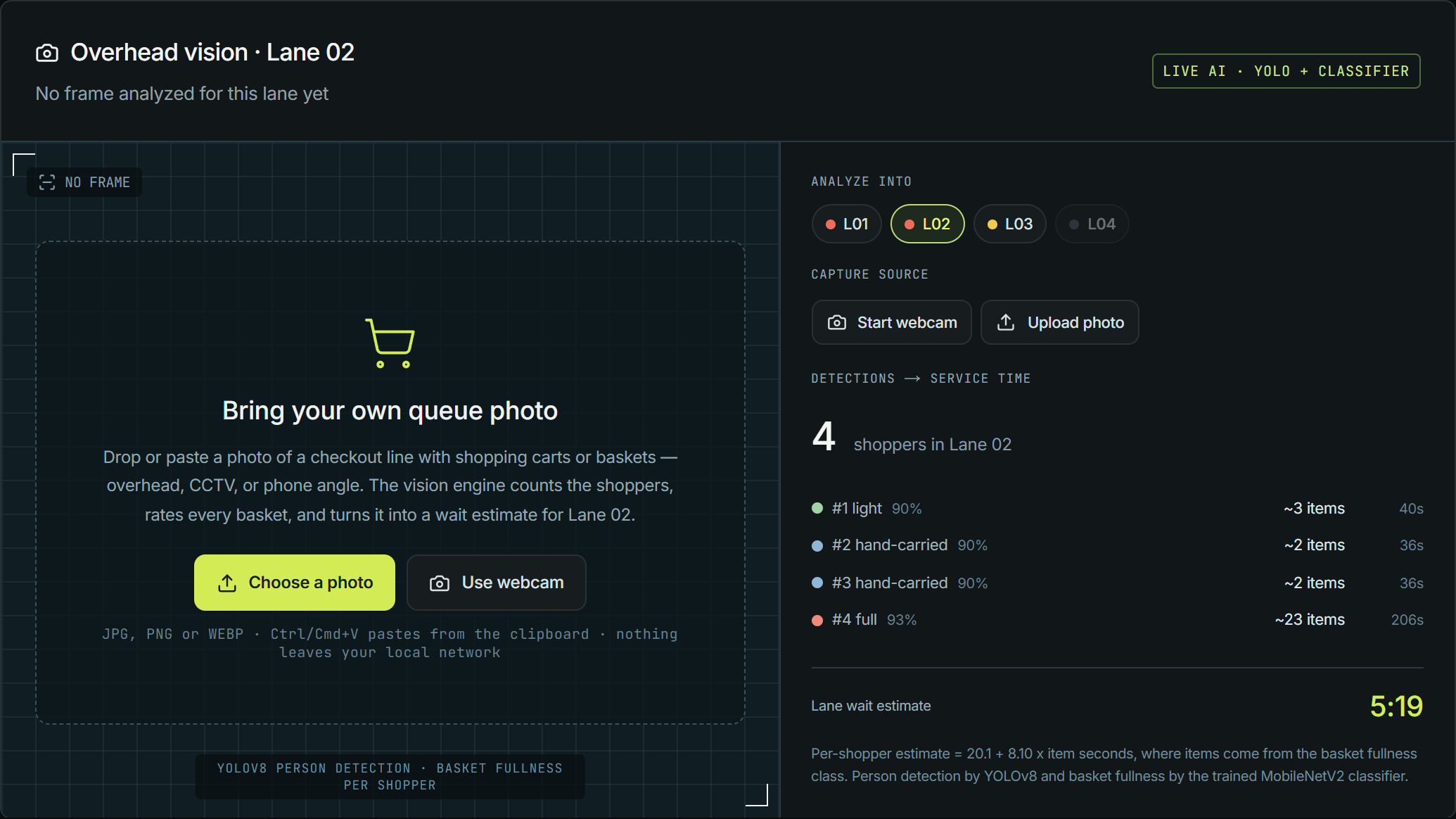
Drop or paste a queue photo: the vision engine detects shoppers, rates each basket, and estimates the lane's wait.
-
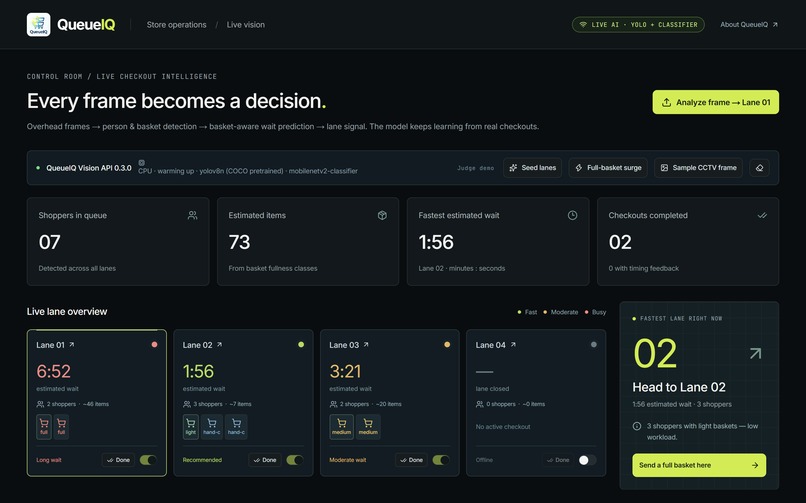
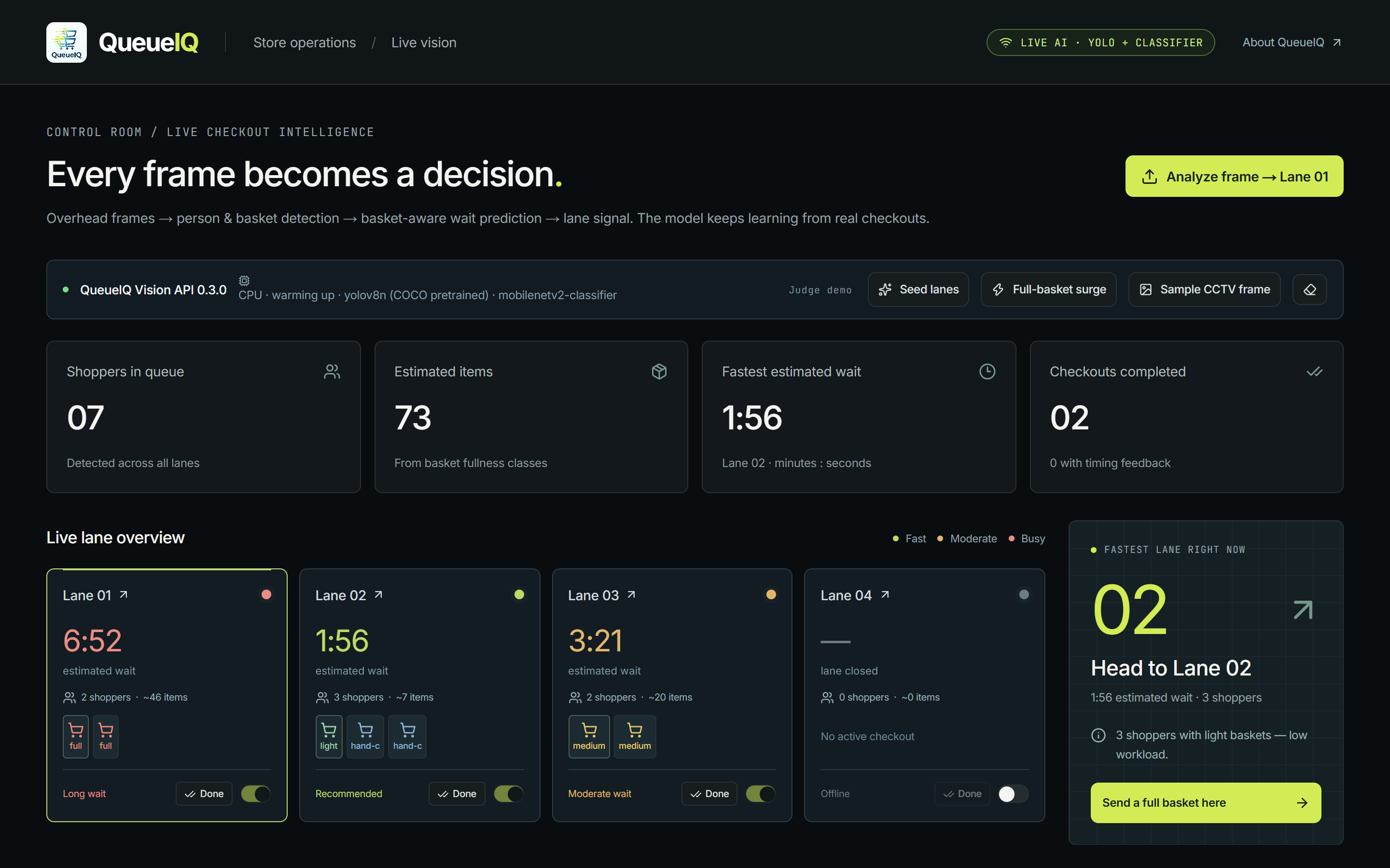
Live control room: Lane 01 has 2 shoppers with full baskets (red), while Lane 02 has 3 light loads and is recommended.
-
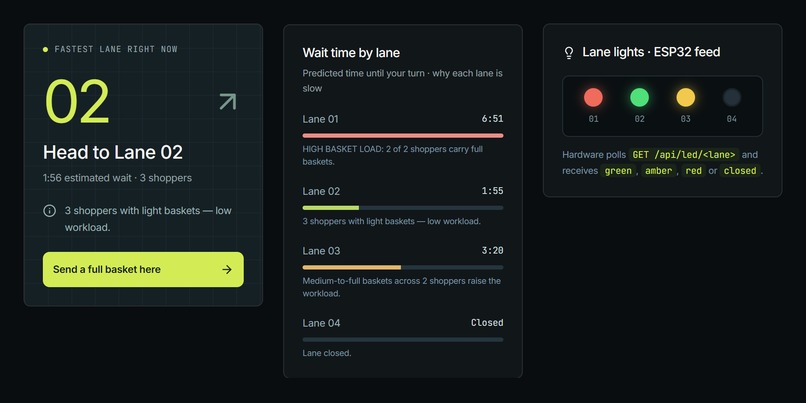
Each lane shows its predicted wait and the reason, like HIGH BASKET LOAD, with matching signals for ESP32 lane lights.
-
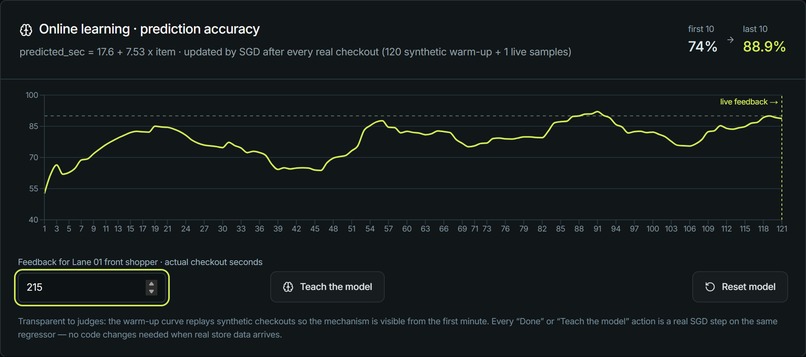
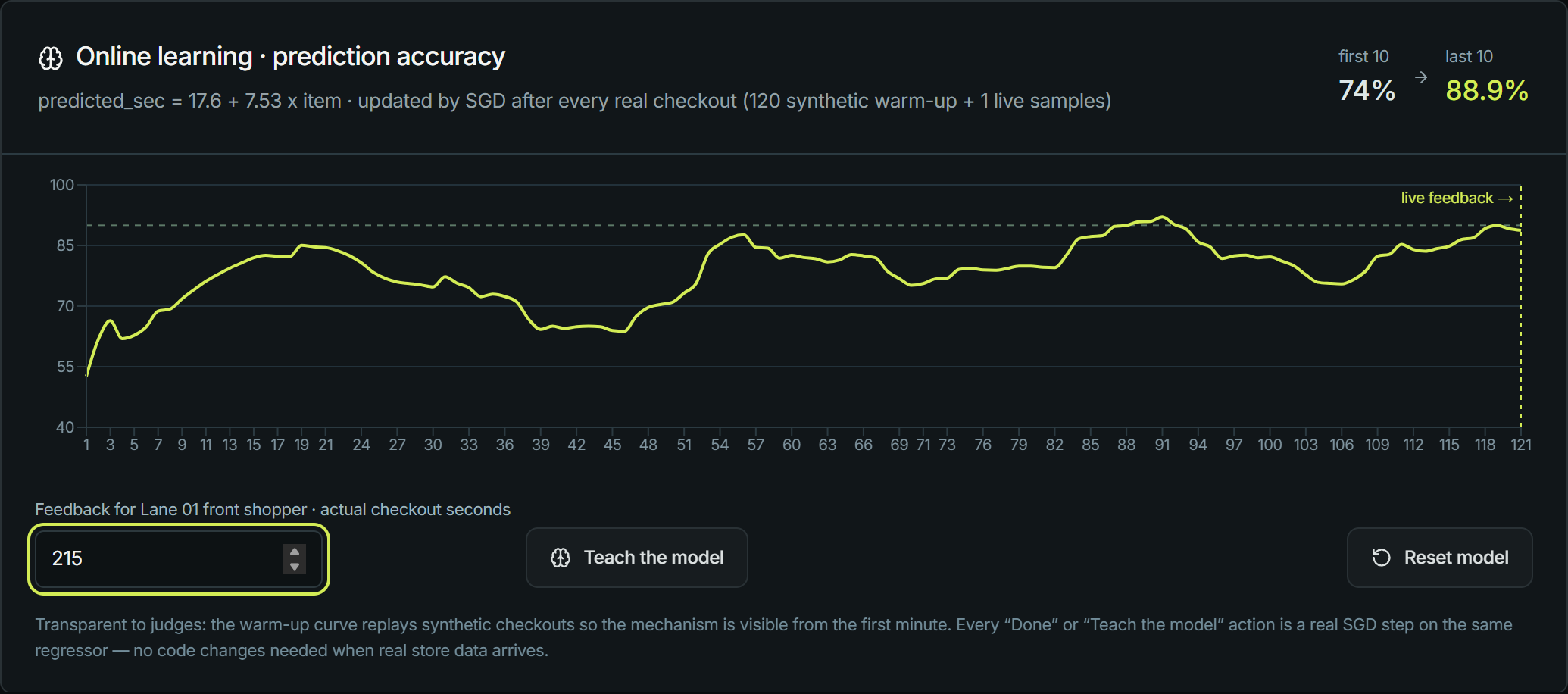
The wait-time model learns from every real checkout, lifting accuracy from 74% to 88.9% as feedback comes in.
Inspiration
We noticed that choosing the shortest checkout line at a supermarket isn't always as simple as counting people. A line with fewer customers can actually take longer if they have significantly more items. We wanted to build a system that could understand the real-time state of every checkout line and predict which one would be the fastest.
What it does
QueueIQ uses computer vision to monitor checkout lines in real time. It estimates the number of customers, queue size, and shopping load, then predicts the expected waiting time for each line.
Based on these predictions, QueueIQ automatically assigns each line a status:
🟢 Green — Fastest 🟡 Yellow — Normal 🔴 Red — Slow
This information can be displayed through physical LED indicators and a real-time dashboard, helping customers choose faster lines and helping supermarket staff identify congestion.
How we built it
QueueIQ combines computer vision, real-time analytics, and predictive modeling.
Computer Vision — Detects and tracks customers and shopping carts from overhead cameras. Queue Analytics — Calculates queue size, customer density, and estimated shopping load. Prediction Engine — Estimates waiting time based on the current queue and historical checkout performance. Real-time Dashboard — Visualizes the status and predicted waiting time of every checkout line. LED System — Physical indicators change between green, yellow, and red based on the predicted queue performance. Backend — Stores queue and checkout data for analysis and continuous improvement. Challenges we ran into
One of our biggest challenges was estimating checkout time from visual information alone. The number of people in a queue doesn't necessarily represent how long they will take to checkout.
We also had to consider challenges such as accurately tracking customers, estimating shopping load, handling changes in the queue, and keeping predictions updated in real time.
Accomplishments that we're proud of
We built a system that goes beyond simply counting people in a queue.
QueueIQ can understand, compare, and predict the performance of multiple checkout lines in real time and translate those predictions into an intuitive physical indicator.
We're especially proud of connecting the computer vision system with a real-time dashboard and physical LED indicators, creating a complete system from camera → AI → prediction → physical action.
What we learned
We learned that building an effective AI system isn't just about choosing the right model. The hardest part is often connecting imperfect real-world data to a useful decision.
We also learned how computer vision, real-time systems, predictive analytics, and hardware can work together to solve a practical problem.
What's next for QueueIQ
We want QueueIQ to become a complete checkout optimization platform.
Future improvements could include:
More accurate item and cart-load estimation Improved waiting-time prediction using historical data Predicting congestion before it happens Automatically recommending when staff should open additional checkout lanes Integration with self-checkout systems Analytics for supermarket managers Customer-facing mobile or digital signage integration Learning from actual checkout times to continuously improve predictions
Our long-term goal is to make checkout lines smarter, faster, and more efficient — for both customers and supermarkets.
Built With
- checkout
- computer-vision
- fastapi
- image-classification
- mobilenetv2
- object-detection
- online-learning
- people-counting
- pytorch
- queue-management
- retail
- smart-retail
- supermarket
- transfer-learning
- ultralytics
- wait-time-prediction
- yolo-world
- yolov8


Log in or sign up for Devpost to join the conversation.